
Are Energy Drinks Worse Than Coffee? A Detailed Comparison
Energy drinks are worse than coffee due to their additive cocktail. While caffeine levels can overlap, energy drinks combine it with stimulants like taurine and guarana. This synergistic mix, often consumed rapidly, creates a higher risk of adverse events like arrhythmias, particularly for young people or those with health conditions.
Most people get this wrong because they only count the sugar. They see 27 grams in a can and think that’s the whole story. It’s not. The problem is the synergistic, poorly studied mix of taurine, guarana, and high-dose caffeine hitting your system all at once. That’s what emergency room doctors see when someone comes in with arrhythmias.
This guide breaks down the caffeine content using published data, explains the ingredient risks beyond the buzz, and lays out the specific scenarios where choosing an energy drink over coffee isn’t just unwise, it’s dangerous.
Key Takeaways
- A 16oz can of Monster Energy has 160mg of caffeine, but a 16oz Starbucks Grande coffee can have over 310mg. Coffee often wins the pure caffeine-per-ounce contest.
- Energy drinks add stimulants like taurine and guarana, which have unknown synergistic effects with caffeine. This cocktail is linked to a ten-fold increase in emergency department visits between 2007 and 2011.
- The American Academy of Pediatrics states energy drinks have “no therapeutic benefit” and should not be consumed by children or adolescents.
- For healthy adults, the 400mg daily caffeine limit from the Dietary Guidelines applies to all sources. One large energy drink can exceed half that limit before you count your morning coffee.
- The NCAA bans caffeine concentrations over 15 micrograms/mL in urine, a level easily breached by a single high-potency energy drink, risking an athlete’s eligibility.
The Caffeine Numbers Don’t Lie
Forget the marketing. The question “are energy drinks worse than coffee” starts with a simple comparison of milligrams. According to a 2013 peer-reviewed analysis in the Journal of Analytical Toxicology, the ranges are stark. Energy drink caffeine content spanned from 50 to 505 mg per serving. Coffee beverages ranged from 3 mg (decaf) to 330 mg.
Look at the specific brands. A standard 16-fluid-ounce can of Monster Energy (the green original) contains 160 mg of caffeine. An 8.4-fluid-ounce Red Bull has 80 mg. Now compare that to coffee. That same study cites a Starbucks Grande (16 fl oz) Pike Place Roast at 310 mg. A Dunkin’ Donuts large (20 fl oz) hot coffee comes in around 270 mg.
A 2013 review in the Journal of Analytical Toxicology found caffeine content in energy drinks ranged from 50 to 505 mg per serving, while coffee beverages ranged from 3 mg (decaffeinated) to 330 mg per serving. Variability within each category is high, but the upper extreme belongs solely to energy drinks.
The table below makes the common servings clear. Notice the serving size disparity, energy drinks often pack their punch into smaller volumes.
| Beverage | Serving Size | Caffeine (mg) | Caffeine per fl oz |
|---|---|---|---|
| Monster Energy (Original) | 16 fl oz | 160 | 10.0 |
| Red Bull (Original) | 8.4 fl oz | 80 | 9.5 |
| Starbucks Grande Pike Place | 16 fl oz | 310 | 19.4 |
| Dunkin’ Large Hot Coffee | 20 fl oz | 270 | 13.5 |
TL;DR: Coffee typically delivers more caffeine per fluid ounce than a standard energy drink. The danger of energy drinks isn’t their base caffeine level, it’s everything else added to it.
More Than Just Caffeine: The Additive Cocktail
This is where the comparison leaves the track. Coffee is seed water. It contains caffeine, antioxidants, and hundreds of natural compounds from the roasted bean. An energy drink is a manufactured stimulant delivery system.
The label lists taurine, guarana, L-carnitine, and B-vitamins in megadoses. Taurine is an amino acid. Guarana is a plant seed containing its own caffeine (often listed separately as “guarana extract,” hiding additional caffeine). The American Academy of Pediatrics’ 2011 clinical report flagged these ingredients specifically, noting their effects, especially in combination with caffeine, “are not well established.”
The body doesn’t process these in isolation. The NCBI Bookshelf energy drink entry details how these compounds can have synergistic pharmacodynamic effects. This means taurine might amplify caffeine’s impact on your heart rate or nervous system in a way that isn’t predictable from studying caffeine alone. It’s an unregulated experiment in a can.
Common mistake: Assuming the caffeine content is the only active ingredient, the taurine and guarana in energy drinks create an unstudied synergistic effect that can push a manageable 160mg of caffeine into arrhythmia territory, especially in a young or sensitive system.
I learned this the hard way years ago, before I understood the chemistry. I drank a large, high-potency energy drink before a long drive, thinking it was equivalent to two cups of coffee. The jitters were different, sharper, with a chest-tightening anxiety that coffee never caused. I checked the label later: 200mg caffeine, plus taurine, guarana, and “energy blend.” That was the last time. The experience mirrors what the UC Davis nutrition health info sheet warns professionals about: the aggregate stimulant effect is greater than the sum of its parts.
Documented Risks and Who Should Avoid Them
The medical literature and regulatory actions paint a clear picture of elevated risk. In October 2012, the FDA announced it was investigating five deaths and one non-fatal heart attack potentially linked to Monster Energy drinks. That same year, the family of a 14-year-old girl sued Monster, alleging her fatal cardiac arrhythmia was caused by drinking two 24-ounce cans in 24 hours.
These aren’t anomalies. The AAP report cited a ten-fold increase in energy drink-related emergency department visits between 2007 and 2011. The presenting symptoms are typically cardiovascular (palpitations, hypertension) or neurological (seizures, anxiety attacks).
Compare this to the health dialogue around coffee, which is largely focused on managing intake for sleep or anxiety. You don’t see headlines about FDA investigations into black coffee. The Consumer Reports caffeine risk analysis specifically singles out energy drinks as risky for teens due to this combination of high caffeine and additives.
The following table outlines the stark difference in official stance between the two beverages for vulnerable groups.
| Group | Energy Drink Guidance | Coffee Guidance |
|---|---|---|
| Children & Adolescents | American Academy of Pediatrics: “should not be consumed” | Generally discouraged due to caffeine, but no specific prohibition on the beverage itself. |
| Pregnant Women | Often advised to avoid due to additive unknowns and high caffeine. | Typically advised to limit caffeine to <200mg/day; coffee is a monitored source. |
| Athletes (NCAA) | High risk of exceeding banned urinary caffeine concentration (15 µg/mL). | Caffeine is permitted but monitored; easier to dose precisely with coffee. |
| Individuals with Heart Conditions | Explicitly warned against due to arrhythmia risk. | Often advised to limit or avoid caffeine; risk profile is for caffeine alone. |
TL;DR: Authoritative bodies issue specific warnings and prohibitions against energy drinks for the young, pregnant, and those with heart conditions. Coffee receives guidelines about moderation.
Caffeine Timing and the Crash Effect

The experience of the buzz matters. Coffee’s caffeine release feels gradual. You sip it over minutes. The caffeine in espresso hits faster, but it’s still a single compound from a natural source.
Energy drinks are engineered for a spike. You often chug a cold, sweet 16-ounce can. The sugar causes a glucose rush. The caffeine and guarana hit. The taurine modulates neurotransmitters. The result is a sharper, more intense onset of stimulation. The crash is equally engineered, when the sugar and stimulants wear off, the drop is steep. This rollercoaster stresses your adrenal and metabolic systems.
For sustained energy and focus, the slower release from coffee, or even the L-theanine-modulated release from green tea benefits, is far more sustainable. It’s the difference between a steady climb and a bottle rocket.
I prefer the steady ascent of a well-brewed coffee over the rocket-fuel spike of an energy drink every time. Not because it’s “more natural,” but because the crash three hours later doesn’t derail my entire afternoon. I can plan around it.
Making the Safer Choice: A Practical Framework
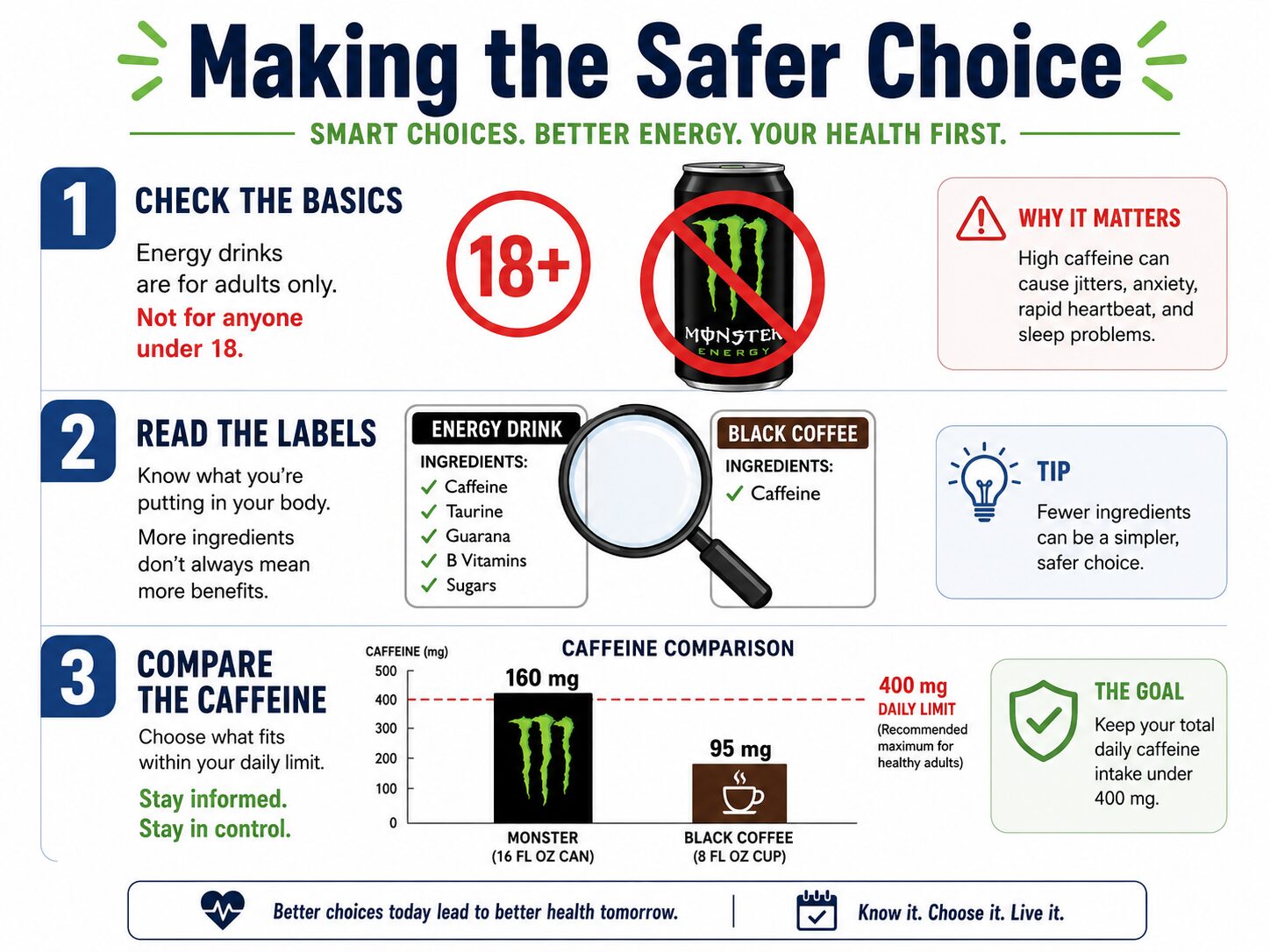
So when is an energy drink the worse choice? Almost always, but let’s be specific. Use this decision checklist.
- Check your age. If you’re under 18, the answer is simple. The AAP says no. The developing neurological and cardiovascular system is more vulnerable to the stimulant cocktail. Choose a tea vs coffee benefits comparison for a gentler option.
- Audit the full label. Look past caffeine. See taurine? Guarana? “Proprietary energy blend”? That’s your signal for heightened risk. If you need a benchmark, look at a Monster vs coffee caffeine comparison to see the additive-free alternative.
- Know your total daily dose. The Dietary Guidelines for Americans set a 400mg caffeine ceiling for healthy adults. One 16oz Monster (160mg) plus a Starbucks Grande (310mg) blows past that limit by lunch. Track all sources, including Coca-Cola caffeine or black tea caffeine.
- Consider the context. Chugging a cold energy drink before a workout on an empty stomach is a recipe for jitters and nausea. A warm coffee sipped with food provides a more manageable lift.
- Listen to your body. Coffee causing anxiety? Try a lower-caffeine option like a cappuccino caffeine serving. If an energy drink ever causes heart palpitations, chest tightness, or severe anxiety, stop immediately and don’t repeat the experiment.
The framework isn’t about fear. It’s about recognizing that a Red Bull vs coffee caffeine comparison is the start of the conversation, not the end. The additives change the equation.
Frequently Asked Questions
Can one energy drink a day be okay?
For a healthy adult, one standard 80-160mg caffeine energy drink a day likely falls within the 400mg daily limit. However, “okay” ignores the additive risk. The consistent daily intake of taurine and guarana alongside caffeine is not well-studied for long-term effects. Switching to coffee eliminates that unknown.
Are sugar-free energy drinks safer?
They remove the sugar crash and calories, but they retain the core risk: the mix of caffeine with other stimulants. A sugar-free Rockstar or Monster still contains taurine, guarana, and the same synthetic cocktail. The cardiovascular and neurological risks from the stimulant synergy remain.
Why do I crash harder after an energy drink than coffee?
Two reasons. First, the sugar in regular energy drinks causes an insulin spike and subsequent glucose drop, compounding the stimulant crash. Second, the sharper, more intense onset of stimulation from the combined ingredients creates a more pronounced withdrawal when they wear off. The crash is by design.
Is the caffeine in coffee healthier than in energy drinks?
The caffeine molecule is identical. The “health” difference is in the delivery system and the co-travelers. Coffee delivers caffeine with antioxidants and other natural coffee compounds. Energy drinks deliver it with a suite of additional stimulants and additives. The latter system carries a higher risk of adverse effects.
Do energy drinks actually dehydrate you more than coffee?
Both caffeine and taurine have mild diuretic effects, but the water content of the beverage largely offsets this. A 16oz energy drink or coffee will not cause net dehydration in a hydrated person. The dehydration myth often stems from people using these drinks instead of water, not alongside it.
The Bottom Line
Are energy drinks worse than coffee? On a spectrum of risk, yes. A can of Monster or Red Bull presents a more complex pharmacological challenge to your body than a cup of black coffee. The evidence isn’t just in the sugar content, it’s in the FDA investigations, the AAP prohibitions, and the emergency room visit statistics.
Coffee has its own cautions, chiefly around dosage and individual sensitivity. But its risk profile is for caffeine, a single, well-understood compound. Energy drinks gamble with a blend. For sustained, manageable energy, brewing a cup of coffee or even opting for a tea caffeine content alternative is the simpler, safer bet. Save the rocket fuel for situations where you truly understand the potential cost.
