
Caffeine in Coke vs Coffee | The Numbers They Don’t Tell You
Caffeine in Coke vs coffee is a comparison of serving size, product type, and tolerance. A 12-oz Coke has 34mg caffeine, while the same volume of brewed coffee has ~140mg. Coffee’s higher concentration delivers more, but Coke’s sugar accelerates absorption, creating a faster, shorter buzz.
Most comparisons stop there. They miss the real story hiding in the other Coke variants and the physical reason coffee’s buzz feels different. The biggest mistake is comparing a 12-ounce Coke to a single espresso shot and declaring coffee the winner. Volume matters. So does the rest of the can.
This guide breaks down the exact milligrams in every major Coke product, explains why Diet Coke secretly has more caffeine than the original, and shows you how to match your desired buzz without the sugar crash.
Key Takeaways
- A 12 fl oz Coca-Cola Classic has 34mg of caffeine. Diet Coke has 46mg. Coffee averages 95mg per 8 fl oz, or about 140mg for a 12 fl oz mug.
- Compare by volume, not by drink. A single espresso shot (64mg) has less caffeine than a can of Coca-Cola Energy (114mg).
- Diet Coke’s higher caffeine (46mg vs 34mg) compensates for the missing sugar’s stimulant effect, a formula holdover from the 1980s.
- Coffee’s caffeine release is slower, leading to a sustained alertness. Coke’s sugar causes a rapid spike and crash.
- For a mild, studied alertness boost, a can of Coke matches the 32mg dose shown effective in a 2004 Psychopharmacology study.
The Caffeine Showdown: Coke vs Coffee
Forget vague claims. The fight is decided by the label.
Coca-Cola publishes its caffeine content per 12 fluid ounces. Coffee doesn’t have a standard label, but decades of lab testing give us reliable averages. Put them side by side in the same 12-ounce serving, and the gap is massive.
A 2004 study in Psychopharmacology found a low 32mg dose of caffeine, roughly a can of Coke, improved sustained attention in fatigued individuals without adverse effects. This is the documented sweet spot for mild, functional alertness.
| Beverage (12 fl oz / 355 mL) | Caffeine (mg) | Equivalent in Coffee |
|---|---|---|
| Coca-Cola Classic | 34 mg | ~3.5 fl oz of brewed coffee |
| Diet Coke | 46 mg | ~4.8 fl oz of brewed coffee |
| Coca-Cola Zero Sugar | 34 mg | ~3.5 fl oz of brewed coffee |
| Coca-Cola Plus Coffee | 69 mg | ~7.2 fl oz of brewed coffee |
| Coca-Cola Energy | 114 mg | 12 fl oz of brewed coffee |
| Brewed Coffee (avg.) | 140 mg | (baseline) |
| Cold Brew Coffee (avg.) | 150–200 mg | 1.1–1.4x brewed coffee |
The table reveals two truths. First, only Coca-Cola Energy approaches a mug of coffee’s caffeine content. Second, the standard colas. Classic, Zero Sugar, contain less than a third of the caffeine in the same volume of coffee.
TL;DR: In a volume-for-volume fight, coffee contains over four times the caffeine of a regular Coke. The only Coke that competes is the Energy variant.
Why Does Diet Coke Have More Caffeine?
It’s the odd one out. While Coca-Cola Classic and Coca-Cola Zero Sugar both sit at 34mg per 12 ounces, Diet Coke jumps to 46mg. This isn’t a mistake. It’s a formula relic with a metabolic reason.
Diet Coke launched in 1982. The marketing premise was a taste as close to original Coke as possible, but without sugar or calories. The problem is sugar isn’t just sweetener; it’s a stimulant. It provides a rapid glucose hit that synergizes with caffeine. Remove the sugar, and the caffeine “kick” feels weaker, even if the milligrams are the same.
The Coca-Cola Company’s flavor chemists bumped the caffeine in Diet Coke to compensate. The extra 12 milligrams per can aimed to replicate the perceived energy lift of the original formula. It worked. The formula stuck, and forty years later, that 46mg spec is still printed on every can.
Common mistake: Assuming “zero sugar” means “more caffeine.” Coca-Cola Zero Sugar has the classic 34mg, not Diet Coke’s 46mg. The “Zero” refers to sugar and calories, not a caffeine increase.
This historical quirk explains the persistent online confusion in forums where drinkers swear Diet Coke is “stronger.” It is, by about 35 percent. That difference is enough to feel, especially if you’re sensitive to caffeine or switching between the two diet options.
For a deeper look at how other sugar-free options stack up, our article on sugar-free energy drinks breaks down the ingredients beyond just caffeine.
How Much Caffeine Is in Your Coffee?
Coffee’s caffeine is a moving target. The number changes with the bean, the roast, the grind, the brew method, and the serving size. Anyone who gives you a single number is selling you a myth.
Start with the bean. Coffea arabica beans, which make up most specialty coffee, contain about 1.2% caffeine by weight. Coffea robusta beans, used in instant coffee and some espresso blends, nearly double that at 2.2%. Your first variable is right there.
Then the roast. The old tale that dark roast has more caffeine is backwards. Caffeine is remarkably stable under heat. As beans roast longer and lose mass (water evaporates, sugars caramelize), the caffeine concentration per bean increases slightly. But by weight, dark and light roasts are essentially equal. A scoop of dark roast beans might have marginally more caffeine because they’re denser, but the difference is within a few milligrams.
The real dictator is your brewing method.
- Drip or Pour-Over (8 fl oz / 240 mL): 95–165 mg. The average is 95mg. This is the standard “cup of coffee” most studies reference.
- Espresso (1 fl oz / 30 mL shot): 64 mg. It’s concentrated, but the serving is tiny. Two shots match a can of Diet Coke.
- Cold Brew (8 fl oz / 240 mL): 150–200 mg. The long steep time extracts more caffeine, making it the most potent common format.
- Instant Coffee (8 fl oz / 240 mL): 60–80 mg. Often made from robusta beans, but the processing and smaller serving size used lowers the total.
TL;DR: Your average 8-ounce mug of drip coffee has about 95mg of caffeine. To match a 12-ounce can of Coca-Cola Classic (34mg), you’d need just over 3 ounces of coffee, about four large sips.
The Buzz: How Coke and Coffee Caffeine Feel Different

Milligrams are only half the equation. How your body receives them is the other half, and it’s where Coke and coffee diverge completely.
Coffee’s caffeine release is slow. The drink is a complex slurry of oils, acids, and plant compounds. These elements modulate absorption. You get a gradual rise in alertness that peaks around 45 minutes to an hour after drinking. It’s a sustained, smooth lift. This is why a morning coffee can stave off the afternoon crash, if you don’t overdo it.
Coke’s caffeine delivery is a sprint. The high-fructose corn syrup (or artificial sweeteners in the diet versions) causes a rapid spike in blood glucose. Your body responds with an insulin surge. The combination of quick sugar and caffeine hits your system like a one-two punch. You feel a sharp, jittery energy lift within 10–15 minutes. Then, about an hour later, the insulin drags your blood sugar back down. The crash is real. You feel fatigued, foggy, and often crave another hit.
This difference in “caffeine experience” is why you can sip a large coffee over an hour and feel steady, but chug a Coke and feel wired then sluggish. The vehicle matters as much as the payload.
If you’re exploring other rapid-delivery caffeine sources, understanding the caffeine in energy drinks versus coffee is crucial, as they often mimic Coke’s fast-and-crash profile.
Matching Your Desired Effect
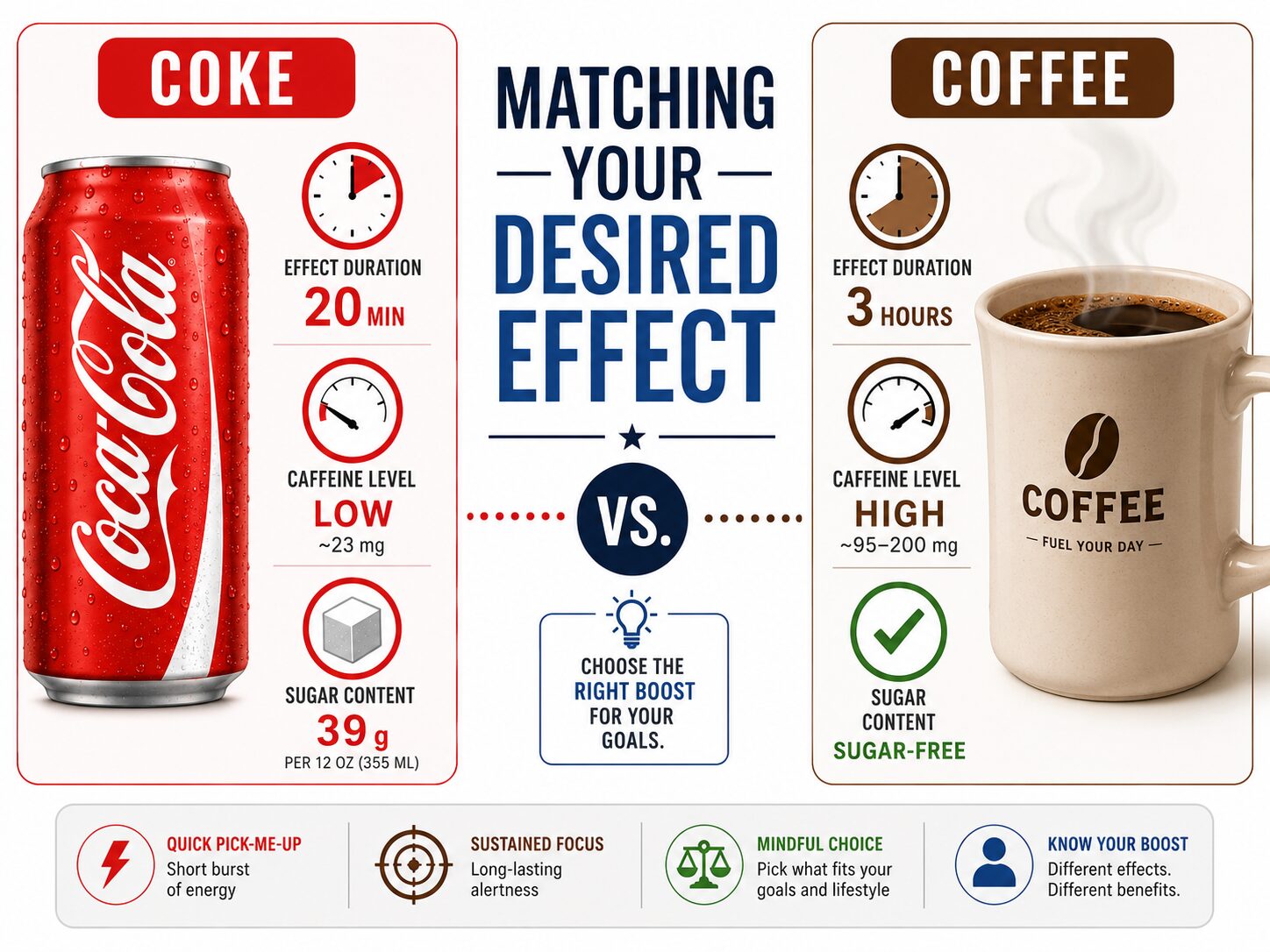
Choosing between Coke and coffee isn’t about which has “more” caffeine. It’s about what kind of alertness you need, when you need it, and what side effects you’ll tolerate.
When to reach for the Coke:
- The 3 PM Slump: You need a quick, 20-minute mental reset to power through the last hours of work. A can’s 34-46mg provides a studied, mild attention boost without overstimulation.
- Caffeine Sensitivity: You get jitters or anxiety from coffee. A Coke’s lower dose lets you test your tolerance.
- Social Settings: You want the ritual and taste of a cold soda without committing to a coffee’s longer-lasting effects.
When coffee is the better tool:
- Sustained Focus: You have a three-hour deep work session or a long drive. Coffee’s slow release and higher total caffeine will maintain alertness.
- Pre-Workout: The vasodilating effects of coffee can improve blood flow. Coke’s sugar spike can lead to an energy crash mid-exercise.
- Sugar Avoidance: You’re managing blood sugar or cutting empty calories. Black coffee has almost none. A can of Classic Coke has 39 grams.
I used to grab a Diet Coke for afternoon meetings, thinking the caffeine would help. It did, for about 25 minutes. Then the artificial sweetener aftertaste and the crash left me more distracted than before. I switched to a small, 6-ounce pour-over. The focus lasted through the two-hour session without the jitters or the crash. The dose was similar, but the delivery made all the difference.
For those times when you want coffee’s sustained energy but in a colder, sometimes sweeter format, knowing the caffeine in iced tea vs coffee offers another valuable comparison.
Health and Hydration Considerations

Caffeine is a drug. Both Coke and coffee are vehicles for it, but they carry very different baggage.
Coffee, in its pure form, is a source of antioxidants like chlorogenic acid. Moderate consumption (3–4 cups daily) is linked in numerous studies to a lowered risk of Parkinson’s, Type 2 diabetes, and certain liver diseases. The health debate centers on the additives: sugar, cream, syrups.
Coke’s health profile is dominated by its sugar content. A 12-ounce can contains 39 grams of sugar, about 10 teaspoons. The American Heart Association recommends a max of 36 grams per day for men and 25 grams for women. One can exceeds that. Even the diet versions, while zero-calorie, contain artificial sweeteners like aspartame (Diet Coke) and acesulfame potassium (Coke Zero Sugar), which remain controversial for long-term health impacts.
Hydration is another key difference. Caffeine is a mild diuretic, but the fluid in both beverages still contributes to your daily water intake. The myth that coffee dehydrates you is just that, a myth. However, Coke’s high sugar content can have an osmotic effect, potentially drawing water into the intestines and away from hydration if consumed in large quantities.
If you’re looking to reduce caffeine but keep the ritual, exploring the health benefits of tea vs coffee can provide gentler alternatives with their own antioxidant profiles.
Frequently Asked Questions
Does Coke or coffee have more caffeine?
Coffee has significantly more caffeine per comparable serving. A 12-ounce mug of brewed coffee contains about 140mg of caffeine. A 12-ounce can of Coca-Cola Classic has 34mg. You would need to drink over four cans of Coke to match the caffeine in one mug of coffee.
Why does Diet Coke have more caffeine than regular Coke?
Diet Coke has 46mg of caffeine per 12 oz, while regular Coke has 34mg. This is a deliberate formula choice dating back to its 1982 launch. Without sugar to provide a synergistic energy kick, Coca-Cola’s chemists increased the caffeine to try to replicate the perceived “boost” of the original.
Can Coca-Cola Energy replace my morning coffee?
In terms of raw caffeine, yes. A 12-ounce Coca-Cola Energy has 114mg, which is close to an 8-ounce cup of coffee (95mg). However, the experience differs. Coffee provides a slower, more sustained release of caffeine. Coke Energy, with its added sugars, B-vitamins, and guarana, creates a sharper, faster spike in energy that may lead to a more pronounced crash.
Is the caffeine in coffee healthier than in Coke?
The caffeine molecule is identical. The health difference lies in the delivery vehicle. Black coffee is virtually calorie-free and contains antioxidants. Coke contains high amounts of sugar or artificial sweeteners. Therefore, the source of your caffeine (coffee) is generally considered healthier than the source (Coke), all else being equal.
How does espresso compare to Coke?
single 1-ounce shot of espresso contains about 64mg of caffeine. That’s nearly double the caffeine in a 12-ounce can of Coca-Cola Classic (34mg) and more than a can of Diet Coke (46mg). However, because the espresso serving is so small, its caffeine is more concentrated but the total amount is still less than a full cup of drip coffee. For a detailed breakdown, see our guide on espresso caffeine content.
What has more caffeine, Coke or black tea?
12-ounce can of Coke (34-46mg) generally has more caffeine than an 8-ounce cup of black tea (40-70mg), though the ranges overlap. However, when compared ounce-for-ounce, strong black tea can rival Coke. The brewing time and tea variety greatly affect the final count, as explained in our comparison of black tea caffeine levels.
The Bottom Line
The numbers don’t lie. Coffee delivers more caffeine per serving than Coke, full stop. But “more” isn’t always what you need. For a mild, quick lift, a can of Coke’s 34 to 46 milligrams is a precise tool. For sustained, crash-free focus, coffee’s slow release is the champion.
The real choice isn’t between drinks; it’s between types of alertness. Want a sharp, 30-minute reboot? Grab the Coke. Facing a long, demanding stretch of work? Brew the coffee. And if you’re watching your sugar, remember that Diet Coke’s caffeine bump is a metabolic workaround, not a free pass, the aftertaste and potential for a crash are still part of the deal.
Know your milligrams, know your method, and pick the right tool for the job.
