Cappuccino Caffeine vs Coffee: Analyzing the Starbucks Data
Cappuccino caffeine content is lower than brewed coffee because of serving size, not milk dilution. A standard single-shot cappuccino has about 75mg of caffeine. An 8oz brewed coffee from Starbucks contains 155mg. Espresso is concentrated, but you consume less liquid, resulting in a lower total caffeine dose per drink.
Most people get this wrong because they focus on the milk. They see a big milky drink and assume it’s weak, or they see a small dark coffee and assume it’s strong. The reality is counterintuitive. A double-shot cappuccino can easily out-caffeinate a small cup of weak drip coffee.
This guide breaks down the numbers from real coffee shops like Starbucks and McDonald’s, explains why bean type and roast level matter more than foam, and shows you how to predict the kick in your next order.
Key Takeaways
- A single-shot cappuccino has roughly 75mg of caffeine; a double has about 150mg. Milk doesn’t reduce this number, it just adds volume.
- An 8oz cup of brewed coffee ranges from 95mg to 165mg of caffeine. The higher end comes from light-roasted Arabica or any Robusta blend.
- Robusta beans contain nearly twice the caffeine of Arabica beans. A cappuccino made with a Robusta blend could match the caffeine of a large Arabica-brewed coffee.
- Dark roasts have slightly less caffeine by weight than light roasts. Longer roasting burns off a small percentage of the caffeine, so a dark roast espresso shot may be a few milligrams weaker.
- Always check the espresso shot count on the menu. A “Tall” cappuccino at some chains is a single shot; a “Grande” might be a double. That’s the biggest variable.
How Much Caffeine is in a Cappuccino?
The number comes from the espresso. A single shot of espresso, which is the foundation of any cappuccino, typically delivers between 64mg and 75mg of caffeine. Starbucks publishes their single espresso shot at 75mg. Caffè Nero lists theirs around 65mg per shot.
A Starbucks Tall Cappuccino, made with one shot of espresso, contains 75mg of caffeine. Their official nutrition calculator shows this is consistent across milk types, whole, skim, or almond milk don’t change the caffeine, only the calories and fat.
The milk and foam in a cappuccino add volume and texture, but they add zero caffeine. This is the first myth to dismantle. A “wet” cappuccino with more steamed milk has the same caffeine content as a “dry” one with more foam. Both start with the same espresso base.
TL;DR: Your cappuccino’s caffeine comes entirely from its espresso shot(s). A single shot means about 75mg; a double means about 150mg. The milk is just along for the ride.
How Much Caffeine is in a Cup of Coffee?
Brewed coffee is a different beast. Caffeine content here is less concentrated but spread over a larger volume. An 8oz cup of drip or pour-over coffee can range from 95mg to a whopping 165mg of caffeine.
The massive range isn’t random. It’s dictated by two things: the coffee-to-water ratio and the bean itself. A strong brew using a high coffee-to-water ratio (like 1:15) with a light-roasted Arabica bean lands on the higher end. A weaker brew (1:18) with a dark roast sits on the lower end.
| Brewing Method | Typical Caffeine (8oz serving) | Key Factor |
|---|---|---|
| Drip Coffee | 95–165 mg | Coffee-to-water ratio is the biggest variable. |
| Pour-Over | 80–140 mg | Technique and pour speed affect extraction. |
| French Press | 80–135 mg | Longer steep time doesn’t linearly increase caffeine. |
| Cold Brew | 100–200 mg | Long steep time with high coffee concentration. |
Common mistake: Assuming a “strong”-tasting dark roast has more caffeine, the bitter taste comes from roasted compounds, not extra caffeine. Dark roasts actually have slightly less caffeine by weight than light roasts.
Why does light roast have more? The roasting process slightly degrades caffeine. A longer, darker roast burns off a small percentage. It’s a marginal difference per bean, but it adds up across a scoop of grounds.
The Direct Comparison: Cappuccino vs Coffee

Put the numbers side-by-side and the picture gets clearer. A standard single-shot cappuccino gives you a concentrated 75mg hit in a 6-12oz cup. A standard 8oz cup of drip coffee delivers a more gradual 95-165mg.
The cappuccino loses on total milligrams. But it wins on caffeine concentration per ounce.
Where this flips is when you start modifying the standard. Order a double-shot cappuccino, and you’re at 150mg. That’s more than a weak cup of drip coffee. Now imagine that double shot is made with Robusta beans. You could be looking at 200mg or more, surpassing even a strong cup of Arabica-brewed coffee.
The serving size illusion is real. We perceive a large cup of black coffee as “more” caffeine. But if that large cup is 16oz of a weak brew (maybe 160mg total), a 12oz double-shot cappuccino with 150mg is essentially the same kick in a smaller, milkier package.
Why Your Cappuccino’s Caffeine Isn’t What You Think
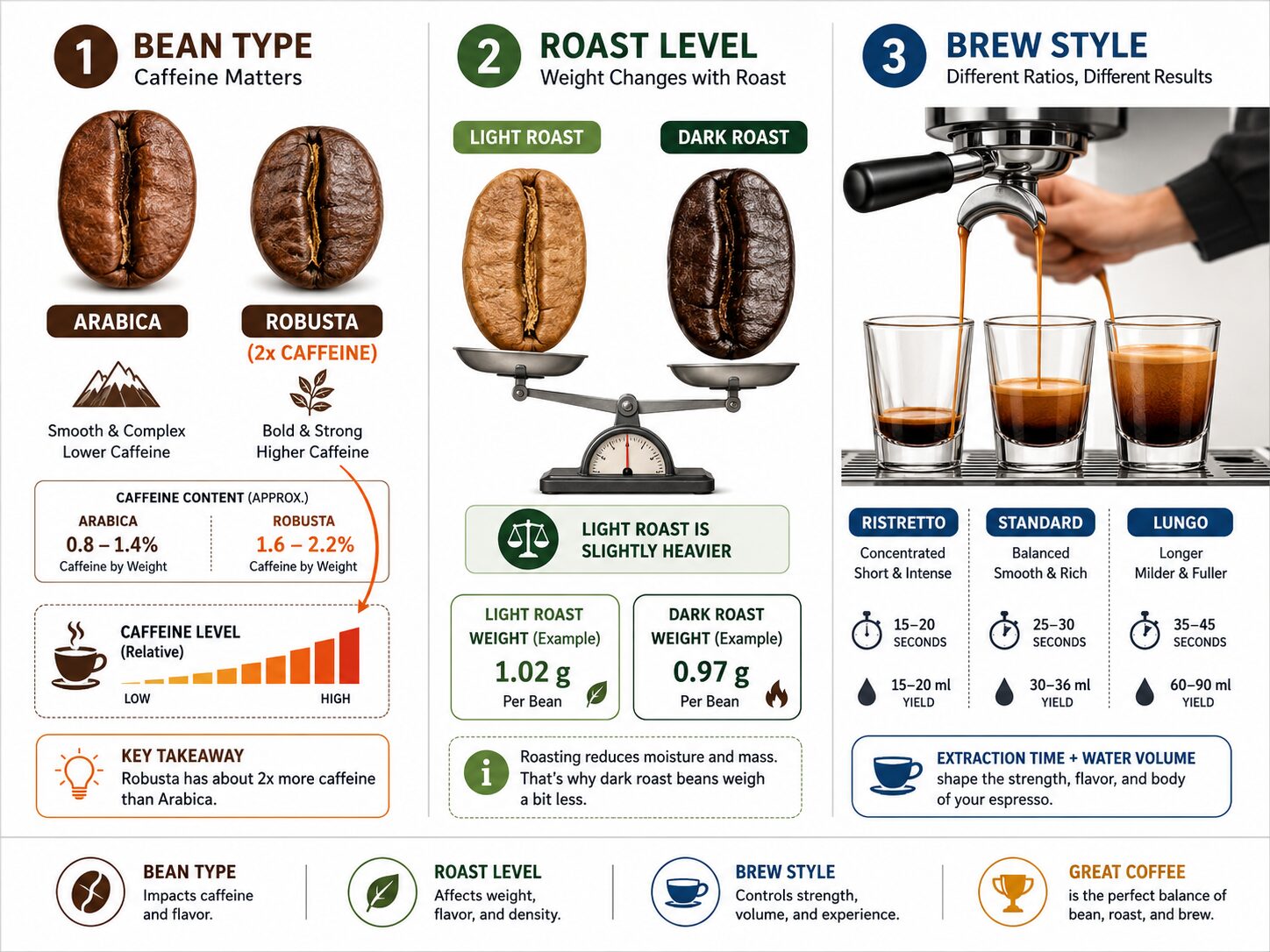
Three hidden variables most menus don’t tell you change everything: bean type, roast level, and the barista’s recipe.
First, bean type. Coffea canephora, or Robusta, has nearly double the caffeine of Coffea arabica. Many commercial espresso blends, especially for grocery store pods or cheaper cafes, use a portion of Robusta to boost caffeine and crema. If your cappuccino is made from a Robusta-heavy blend, that “75mg per shot” estimate is wrong. It could be 110mg or more.
Second, roast level. As covered, dark roast means marginally less caffeine per bean. That fancy third-wave light roast espresso in your artisan cappuccino? It might be packing 5-10% more caffeine than the dark roasted espresso at the chain down the street, even with the same shot volume.
Third, the barista. The standard “single shot” is about 1 ounce of liquid espresso. But there’s no universal law. Some shops pull ristrettos (shorter, more concentrated) or lungos (longer, more diluted). The Starbucks nutrition calculator tool is precise because their machines are programmed. Your local shop might have more variation.
TL;DR: The printed “75mg” is a best guess for a single shot of a standard Arabica blend. Your actual caffeine intake depends on the bean, the roast, and the hand on the lever.
Does Milk Reduce Caffeine?
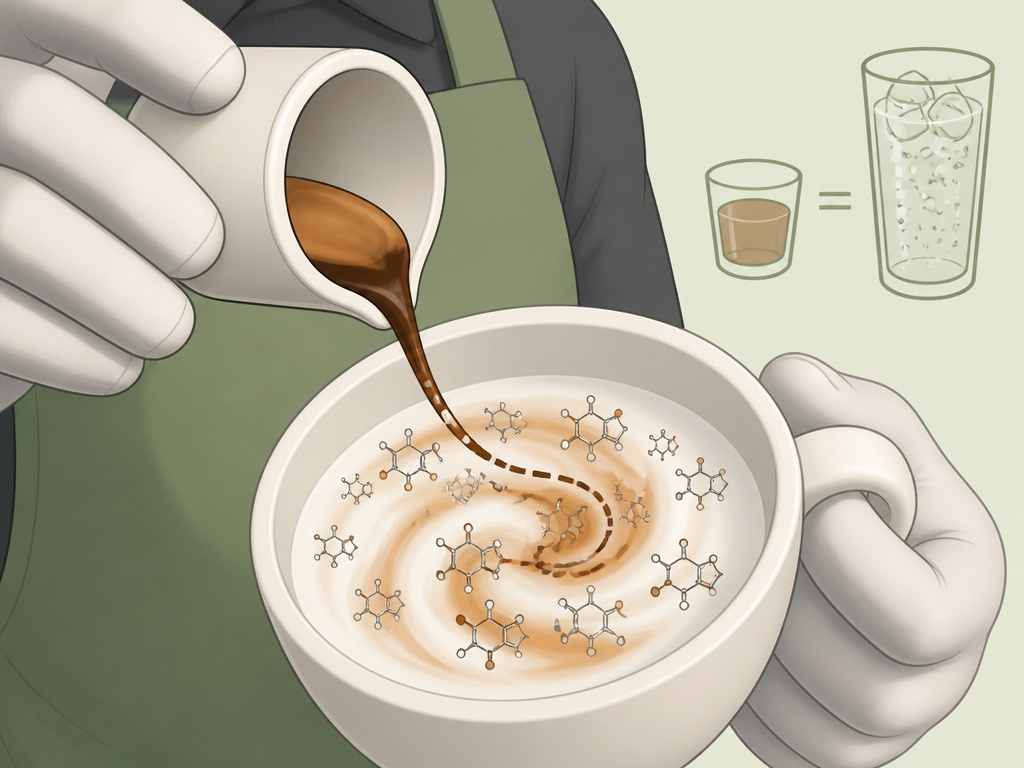
No. Milk contains no caffeine. It cannot reduce the caffeine that’s already in the espresso.
This misconception is why people are confused. They see a large, milky drink and assume the caffeine is “watered down.” The caffeine molecules from the espresso don’t disappear when hot milk hits them. They’re just distributed in a larger volume of liquid.
Think of it like a shot of whiskey in a pint glass of soda. The whiskey’s alcohol content doesn’t change because you added soda. You just have a larger, less intense-tasting drink. A cappuccino is an espresso shot in a glass of steamed milk and foam.
The practical effect is on perception and consumption speed. A milky, smoother cappuccino might be easier to drink quickly, leading you to ingest the caffeine faster than sipping a hot black coffee. But the total milligrams ingested are locked in the moment the espresso is pulled.
Factors That Actually Change Caffeine Content
If milk doesn’t matter, what does? This is where you should focus your attention.
- Number of Espresso Shots: This is the biggest lever. A single-shot cappuccino has X caffeine. A double-shot has 2X. Always check the menu description, “Grande” or “Large” sometimes means a double shot.
- Coffee Bean Type (Arabica vs. Robusta): As stated, Robusta beans can have nearly double the caffeine of Arabica. This is a primary reason why some espresso caffeine content claims vary so widely.
- Roast Level: Light roasts retain slightly more caffeine than dark roasts. The difference per shot is small (maybe 5-10mg), but it’s real.
- Brew Time and Temperature: For brewed coffee, a longer brew time (like in a French press) extracts more caffeine, but only up to a point. After 4-5 minutes, you’ve pulled most of it out. Higher water temperature also increases extraction.
- Coffee-to-Water Ratio: This is the master variable for brewed coffee. More grounds per cup equals more potential caffeine. The standard brewed coffee vs Americano comparison hinges on this: an Americano is espresso diluted with water, so its caffeine is fixed by the shot count, while brewed coffee’s caffeine scales with the scoops.
| Factor | Effect on Cappuccino Caffeine | Effect on Brewed Coffee Caffeine |
|---|---|---|
| More Espresso Shots | Increases linearly (75mg per added shot) | Not applicable |
| Robusta Beans | Can increase by 50-100% per shot | Can increase by 50-100% per scoop |
| Lighter Roast | Slight increase (5-10mg per shot) | Slight increase per scoop |
| Longer Brew Time | Not applicable (espresso fixed at ~25 sec) | Increases, but plateaus after ~4 min |
| Higher Coffee:Water Ratio | Not applicable (espresso fixed ratio) | Major increase |
How to Choose Based on Caffeine Needs
Don’t pick a drink by its size or color. Pick it by the caffeine outcome you want.
You want a predictable, moderate caffeine boost: A single-shot cappuccino is your friend. You’re getting a known quantity (around 75mg) in a pleasant package. It’s consistent across most cafes.
You need a major jolt and don’t like black coffee: Order a double-shot cappuccino or latte. You’ll get 150mg+ without the bitterness of a large dark brew. This is where knowing your espresso vs brewed coffee caffeine baseline pays off.
You’re sensitive to caffeine or cutting back: Seek out single-origin Arabica beans (naturally lower in caffeine) and stick to a single shot. Or, consider switching to a beverage with a fundamentally different caffeine release rates profile, like tea.
You’re comparing it to other sources: Remember that a can of Monster Energy caffeine or a Red Bull caffeine drink often contains 80-160mg of caffeine plus sugar and other stimulants. A double cappuccino is a cleaner source of a similar dose.
Frequently Asked Questions
Does a cappuccino have more caffeine than a latte?
No. Both drinks use the same espresso base. A latte has more steamed milk and less foam, but the caffeine content is identical if they use the same number of shots. A 12oz latte and a 12oz cappuccino with one shot each both have about 75mg of caffeine.
Which has more caffeine: cappuccino or Americano?
An Americano is espresso diluted with hot water. A single-shot Americano and a single-shot cappuccino have the same caffeine (about 75mg). The Americano will taste stronger because it isn’t muted by milk, but the stimulant payload is the same.
Is caffeine in cappuccino bad for you?
At typical consumption levels (1-2 shots), caffeine is safe for most healthy adults. The European Food Safety Authority (EFSA) considers up to 400mg per day safe. A cappuccino fits well within that. The health impacts are more about what you add, sugars and syrups, than the caffeine itself.
Does decaf cappuccino have caffeine?
Yes, a small amount. Decaffeinated espresso shots still contain about 3-15mg of caffeine per shot. So a decaf cappuccino isn’t caffeine-free; it’s low-caffeine.
Can I get a triple-shot cappuccino?
Absolutely. Just ask. A triple-shot cappuccino would deliver around 225mg of caffeine, putting it in the same league as a large energy drinks vs coffee drink. Be prepared for a very strong coffee flavor cutting through the milk.
Before You Go
Forget the old rule that black coffee is always stronger. A double-shot cappuccino can easily out-caffeinate a weak cup of drip. The real controls are the espresso shot count and the bean type.
If you need a reliable moderate dose, the single-shot cappuccino is a classic for a reason. If you need power, ask for a double, or find a shop that uses a Robusta blend. And if you’re tracking intake for health reasons, remember that the milk only adds calories in milk, not caffeine. Your total is locked in when the portafilter clicks into place.
