
Tea vs Coffee: Health Benefits, Pros and Cons, and Evidence
Tea vs coffee health benefits depend on your specific goal: sustained focus, heart health, gut support, or bone density. Tea provides calm alertness from L-theanine, while coffee offers sharper stimulation and strong research for reducing diabetes and certain cancer risks. Match the drink’s chemical profile to your needs.
Most comparisons stop at “tea has antioxidants, coffee has caffeine.” That misses the real decision. The winner isn’t universal. It changes based on whether you need to concentrate for three hours without jitters, protect your heart, or improve your gut microbiome.
This guide breaks down the evidence from clinical trials and meta-analyses. You’ll see which drink takes the lead for five specific health outcomes, why the caffeine experience is fundamentally different, and how to choose your cup based on the clock and your body.
Key Takeaways
- Tea’s L-theanine promotes alpha brain waves for focused calm, while coffee’s pure caffeine spikes alertness with a higher crash risk.
- A 2013 meta-analysis in the American Journal of Clinical Nutrition found regular green tea consumption is linked to a reduced risk of cardiovascular disease and stroke.
- Coffee contains soluble fiber (about 1-1.5 grams per cup) that acts as a prebiotic, a benefit absent in tea.
- Long-term habitual tea drinking was associated with higher bone mineral density in older women in a 2009 JAMA Internal Medicine study.
- For afternoon or evening consumption, tea is the objective winner due to its lower caffeine impact and sleep-preserving compounds.
The Caffeine & L-Theanine Effect
This is the most immediate difference you feel. Coffee’s stimulation is a straight line up and down. Tea’s is a gentle hill.
Coffee delivers caffeine fast. It blocks adenosine receptors in your brain, delaying fatigue. The result is sharp, jangling alertness. The 2018 recall of certain coffee K-Cup pods due to foreign material highlights the industrial scale of coffee production, but the caffeine molecule itself is simple and potent. The crash comes when the adenosine backlog hits.
Tea also has caffeine, but it packages it with L-theanine. This amino acid crosses the blood-brain barrier and promotes alpha brain wave activity, the state associated with wakeful relaxation. A 2017 systematic review in Phytomedicine concluded L-theanine significantly impacts attention and alertness. The combination creates focused calm. You’re awake but not wired.
Common mistake: Assuming a cup of tea and a cup of coffee offer the same “caffeine experience”, the presence of L-theanine fundamentally changes the neurochemical response, spreading the stimulation over a longer period and reducing jitteriness.
Your choice here dictates your next three hours. Need to power through a task immediately? Coffee. Need to settle in for deep, sustained concentration? Tea. The caffeine content in tea is lower, and its release is moderated, which is a key factor in its different stimulation profile.
TL;DR: Coffee for a sharp jolt; tea for calm, sustained focus.
The Heart & Bone Health Evidence
Both beverages show promise, but the mechanisms and strength of evidence diverge.
For cardiovascular health, green tea has a strong pedigree. A 2013 meta-analysis of 13 studies in the American Journal of Clinical Nutrition linked regular green tea consumption to a reduced risk of cardiovascular disease and stroke. The credit goes to catechins like EGCG, which may improve blood vessel function and lower LDL cholesterol oxidation.
Coffee’s relationship with heart health is more complex. Unfiltered coffee (like French press) contains diterpenes that can raise LDL cholesterol. Filtered coffee removes most of these. Large observational studies often show a neutral or slightly protective link between coffee consumption and heart failure risk. The health benefits of black tea also contribute to vascular health, though often through different antioxidant compounds called theaflavins.
The surprise win for tea is bone density. A 2009 study in JAMA Internal Medicine followed older Chinese women and found long-term habitual tea drinkers had higher bone mineral density at the hip and spine. Researchers theorize the flavonoid content in tea may inhibit bone breakdown. Coffee has not demonstrated a similar benefit; in very high intake, its mild diuretic effect could theoretically increase calcium excretion, but the evidence isn’t strong.
| Health Area | Tea’s Edge | Coffee’s Edge | Key Compound |
|---|---|---|---|
| Cardiovascular | Strong link to reduced stroke risk (Green tea) | Neutral/positive with filtered brewing | Tea: Catechins (EGCG) |
| Bone Density | Associated with higher BMD in long-term drinkers | No established positive association | Tea: Flavonoids |
| Blood Sugar | May improve insulin sensitivity | Stronger evidence for reduced Type 2 diabetes risk | Coffee: Chlorogenic acid |
Coffee’s Gut Health & Longevity Claims
Here’s where coffee fights back hard. The claim that coffee has more fiber than orange juice is essentially true. The brewing process extracts soluble fiber from the grounds, about 1 to 1.5 grams per cup. This fiber acts as a prebiotic, feeding beneficial gut bacteria. Tea contributes virtually no dietary fiber.
This gut-friendly fiber may partly explain coffee’s impressive links to longevity and reduced disease risk. Massive cohort studies consistently show coffee drinkers have a lower risk of death from all causes, including cardiovascular disease and certain cancers like liver and endometrial cancer. The health impacts of caffeine are part of a broader picture that includes these other bioactive components.
Coffee is also the clear winner in the data volume. As noted in a YouTube analysis, coffee has been studied much more extensively than tea. The evidence base for its association with reduced risk of Parkinson’s disease, Type 2 diabetes, and liver cirrhosis is robust and repeated. A comprehensive PMC tea molecular mechanisms review details tea’s pathways, but the population-level data for coffee is currently larger.
I switched to a single morning coffee for years, citing the longevity studies. It gave a clean start. But by 3 PM, I’d be drained and reaching for a sugary snack. That’s when I learned the data doesn’t account for the afternoon crash and its secondary effects. Now my rule is coffee before noon, tea after.
TL;DR: Coffee’s fiber and massive study base support strong longevity claims, but your personal energy management matters more than population statistics.
How to Choose Your Daily Drink (A Practical Guide)
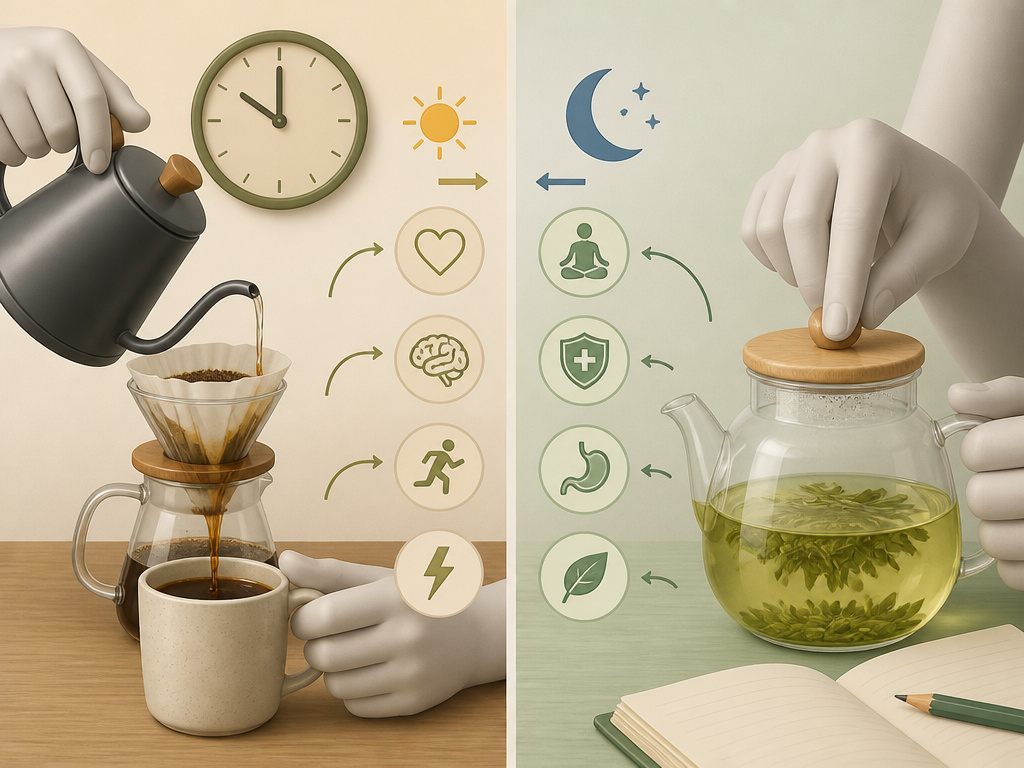
Forget a permanent winner. Match the drink to the time of day and your immediate objective.
Drink Coffee When:
- It’s before noon and you need rapid alertness.
- Your focus is on physical tasks or powering through administrative work.
- You prioritize gut health and the prebiotic fiber boost.
- You’re using a paper filter to remove cholesterol-raising diterpenes.
Drink Tea When:
- It’s afternoon or evening and you want focus without sleep disruption.
- You’re engaging in deep work, study, or creative tasks requiring calm concentration.
- Your goal is cardiovascular or bone health support, as with green tea vs coffee.
- You have a sensitive stomach and find the acidity of tea and coffee from coffee problematic.
The preparation method locks in or throws away benefits. Steep tea for 3-5 minutes to fully extract L-theanine and antioxidants. Under-steeping leaves most of the good stuff in the leaves. For coffee, a light roast preserves more chlorogenic acid than a dark roast. And remember, adding sugar, syrup, or high-calorie creamers turns either beverage into a dessert, negating most metabolic benefits. The calorie content of milk in your latte can quickly add up.
The Verdict on Sleep and Anxiety
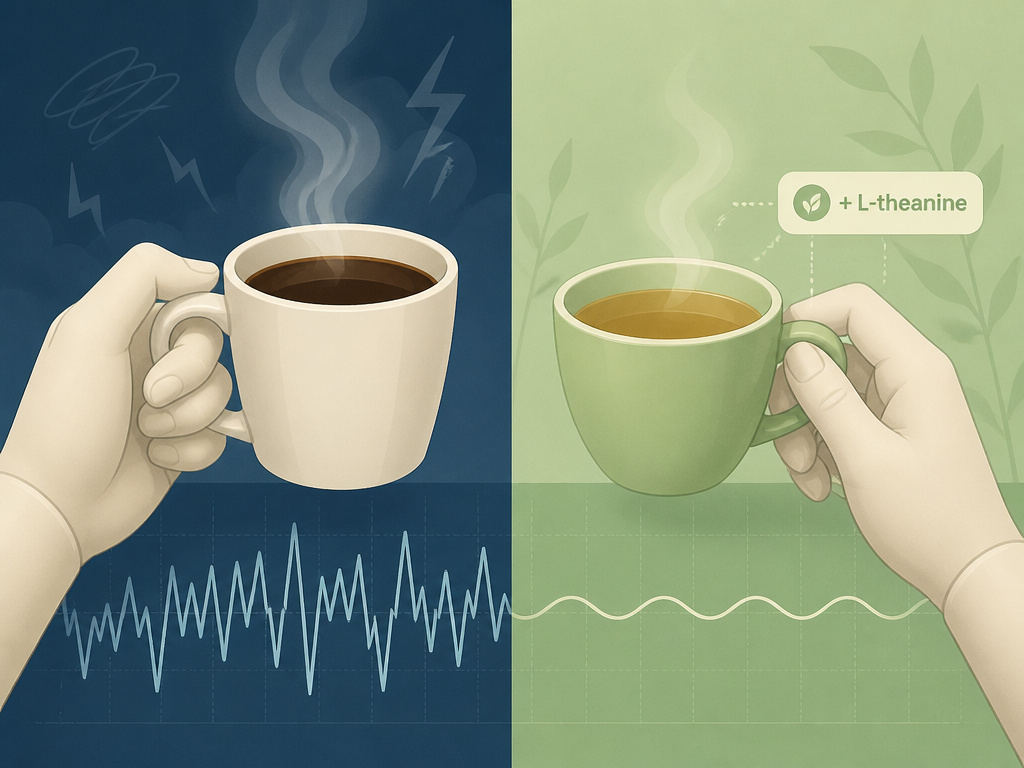
This is a non-negotiable win for tea. The combination of less caffeine and the presence of L-theanine makes tea the objectively better choice for anyone concerned about sleep or anxiety.
Coffee’s higher caffeine dose and lack of calming co-compounds make it more likely to delay sleep onset, reduce sleep quality, and provoke anxiety in sensitive individuals. The crash can also exacerbate feelings of fatigue and irritability.
Tea, particularly when steeped for a shorter time (1-2 minutes) to reduce caffeine extraction further, can provide a gentle lift without these drawbacks. The L-theanine directly promotes relaxation without sedation. Historical associations of tea with contemplation aren’t just cultural, they’re biochemical. For a detailed look at the clinical evidence behind this calming effect, the PMC black tea clinical trials review the data.
Common mistake: Drinking coffee after 2 PM and blaming “stress” for poor sleep, the caffeine half-life is 5-6 hours, meaning a 3 PM coffee still has half its potency in your system at 8 PM.
If you struggle with sleep or anxiety, your first intervention should be replacing all afternoon and evening coffee with tea. The difference is often measurable within days.
Frequently Asked Questions
Does tea have more antioxidants than coffee?
Yes, by concentration. Tea, especially green tea, is exceptionally rich in catechins like EGCG. Coffee contains different antioxidants, primarily chlorogenic acid. Both are beneficial, but tea often wins in direct antioxidant capacity assays.
Can I drink both tea and coffee in the same day?
Absolutely. A common and effective pattern is coffee in the morning for an alertness boost and tea in the afternoon for sustained focus without sleep disruption. Monitor your own sleep and anxiety to find your personal cutoff time for caffeine.
Is decaf coffee or tea a healthy alternative?
Yes. Decaffeinated versions retain most of the other beneficial antioxidants and compounds. Decaf coffee still contains the prebiotic fiber. Decaf tea still contains L-theanine and catechins. They are excellent options for reducing caffeine intake while keeping the other health benefits.
Which is better for weight loss, tea or coffee?
Both may offer mild metabolic benefits. Coffee can slightly increase metabolic rate and fat oxidation. Green tea’s EGCG may also modestly boost metabolism. However, neither is a magic bullet. The biggest factor is what you put in your drink, adding sugar or cream negates any minor calorie-burning effects.
How does the caffeine in an espresso shot compare to tea?
single 1-ounce espresso shot caffeine contains about 63 mg of caffeine. An 8-oz cup of black tea has about 47 mg. So, ounce-for-ounce, espresso is more concentrated, but a standard serving of tea provides a similar total dose with a slower release due to L-theanine.
The Bottom Line
The tea vs coffee debate is a misdirect. The real question is: what do you need right now? The evidence gives us clear scripts.
Pick coffee for its robust, fiber-driven gut benefits, its strong association with longevity in population studies, and that unmistakable morning jolt. Choose tea for its unique calm-focus synergy, its gentler impact on sleep and anxiety, and its targeted support for heart and bone health.
Your optimal routine likely includes both. Use coffee as a strategic tool for morning energy and leveraging its extensive health research. Use tea as your default afternoon beverage and for any task requiring deep, relaxed concentration. This approach, detailed in the Springer Discover Food review, respects the biochemical reality of each plant. The winner isn’t in the cup. It’s in correctly matching the cup to the moment.
