
Caffeine in Red Bull vs Coffee | The 80mg vs 95mg Showdown
Caffeine in Red Bull vs coffee is a question of numbers and experience: a standard 250ml can of Red Bull contains 80mg of caffeine, while an average 8oz cup of brewed coffee holds about 95mg. Coffee delivers a higher dose of caffeine for a longer, steadier alertness, while Red Bull offers a faster, sharper spike aided by taurine and B vitamins.
Most people grab one or the other based on habit, taste, or convenience. They assume “energy drink” means more caffeine. That’s the wrong starting point.
The real difference isn’t just the milligrams. It’s how your body uses them, what else is in the can, and when you’ll regret your choice three hours later. This is about matching the chemical profile to your actual day.
Key Takeaways
- Red Bull’s caffeine is fixed at 80mg per can across all its varieties; coffee’s caffeine varies from 80mg to over 200mg depending on bean, brew, and cup size.
- The taurine in Red Bull can amplify caffeine’s stimulant effect on your central nervous system, creating a sharper initial “hit” that also crashes faster.
- Coffee provides a wider window of alertness with fewer auxiliary ingredients, making it better for sustained mental tasks, while Red Bull fits short-burst physical performance.
- Avoiding the sugar in regular Red Bull doesn’t change the caffeine, but it does avoid the insulin spike that deepens the energy crash later.
- Your personal caffeine sensitivity matters more than the brand on the can, what feels like a jolt to one person is a gentle nudge to another.
The Caffeine Numbers Are Clear. And Surprising
Forget estimates. The official Red Bull ingredient pages list the same figure for every 250ml can: 80 milligrams of caffeine. This holds for the original, Sugarfree, Zero, and all the Editions like Watermelon and Blueberry. It’s a controlled, predictable dose.
Coffee is the wild west. An 8-ounce cup of brewed coffee averages 95mg, but that’s just a midpoint. A light-roast pour-over from a high-altitude Ethiopian bean can push 140mg. A diner mug of dark roast might be under 80mg. The variability makes direct comparison messy.
The conversation often stops at these numbers. It shouldn’t.
A standard 250ml can of Red Bull energy drink contains 80mg of caffeine, as published on the official Red Bull ingredient specification pages for the original, Sugarfree, Zero, and all Edition varieties. An 8-fluid-ounce cup of brewed coffee provides an average of 95mg of caffeine, with significant variation based on bean origin, roast level, and brewing method.
TL;DR: Red Bull gives you a precise 80mg dose every time; coffee offers a highly variable range starting around 95mg per standard cup.
Why 95mg Feels Different Than 80mg
Caffeine is caffeine at the molecular level. But its effects are shaped by what travels with it into your bloodstream. Coffee delivers caffeine alongside a host of naturally occurring acids, oils, and antioxidants. These compounds can slow absorption slightly, leading to a more gradual rise in alertness.
Red Bull pairs its 80mg with taurine, an amino acid, and a suite of B vitamins. The taurine is key. Research suggests it may modulate neurotransmitters in the brain, potentially amplifying caffeine’s stimulant effect on the central nervous system. This isn’t about more caffeine, it’s about making the existing caffeine feel more potent for a shorter period.
The result is two distinct energy profiles. Coffee’s climb is a steady ramp. You feel awake, then more awake, and the plateau lasts. Red Bull’s profile is a steep spike. The onset is faster and more pronounced, but the descent back to baseline is steeper too. It’s the difference between a sustained push and a sharp shove.
This explains why someone might say a can of Red Bull “hits harder” than a cup of coffee, even though the coffee technically contains more caffeine. The sensation is more intense, not the dose.
Documented Use Cases: What The Studies Actually Say
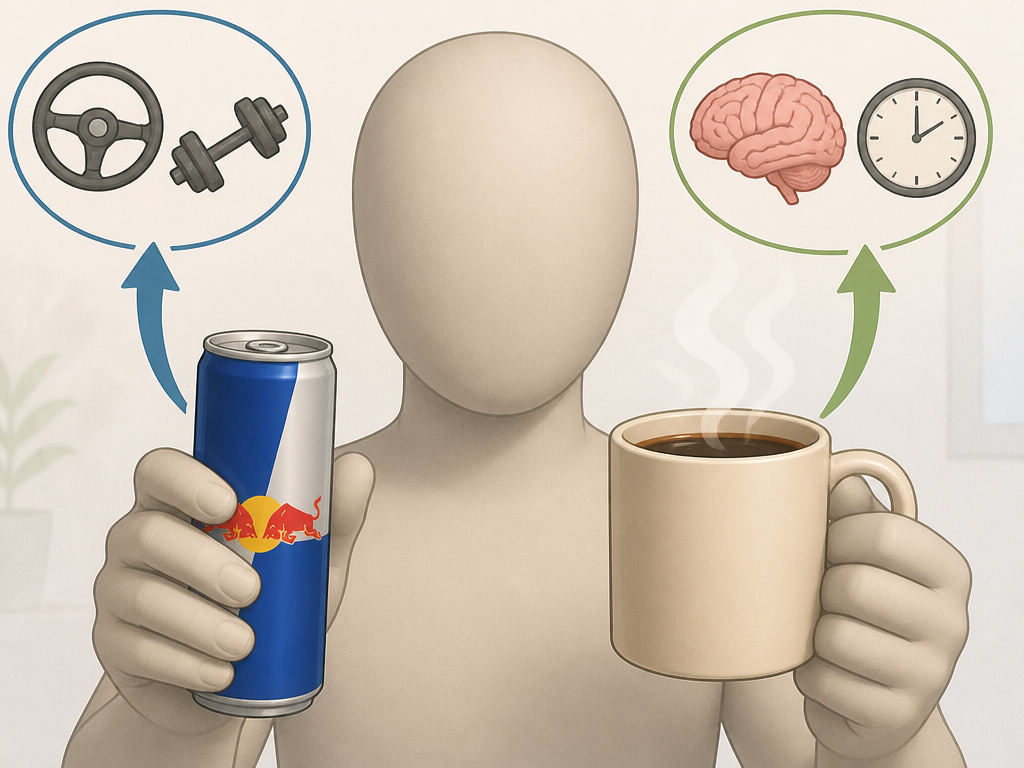
You can find a thousand opinions online. Look at the peer-reviewed journals instead. They show these beverages are tools for specific jobs.
A 2002 study published in Psychopharmacology had sleep-deprived subjects drink Red Bull before a long, monotonous driving simulation. The drink significantly reduced subjective sleepiness and improved measurable driving performance, like lane deviation. The combination of caffeine and taurine was effective at combating drowsy-driver fatigue.
For physical bursts, a 2007 paper in the Journal of Strength and Conditioning Research found Red Bull consumed 45 minutes before exercise improved peak and mean power output in trained athletes during repeated anaerobic cycling tests. The quick-up, quick-down energy profile matched the demand of short, intense effort.
Coffee’s evidence base is broader and leans cognitive. The sustained release of caffeine supports prolonged attention, memory recall, and complex problem-solving over multi-hour sessions. It’s the fuel for a morning of deep work, not a pre-game warm-up.
| Your Goal | Better Fit | Key Reason |
|---|---|---|
| A 2-hour drive at night | Red Bull | Caffeine+taurine combo reduces sleepiness per driving-study data. |
| A 90-minute gym session | Red Bull | Shown to boost anaerobic power output when timed 45 mins prior. |
| A 4-hour writing or coding block | Coffee | Steadier caffeine delivery supports sustained concentration. |
| Managing daily alertness | Coffee | Avoids the sharp spike-and-crash cycle of frequent energy drinks. |
| A quick 30-minute task surge | Red Bull | Faster perceived onset can provide immediate momentum. |
TL;DR: Research backs Red Bull for combating drowsiness and short athletic bursts, while coffee is the proven choice for hours of mental focus.
The Sugar Question. And The Crash That Follows
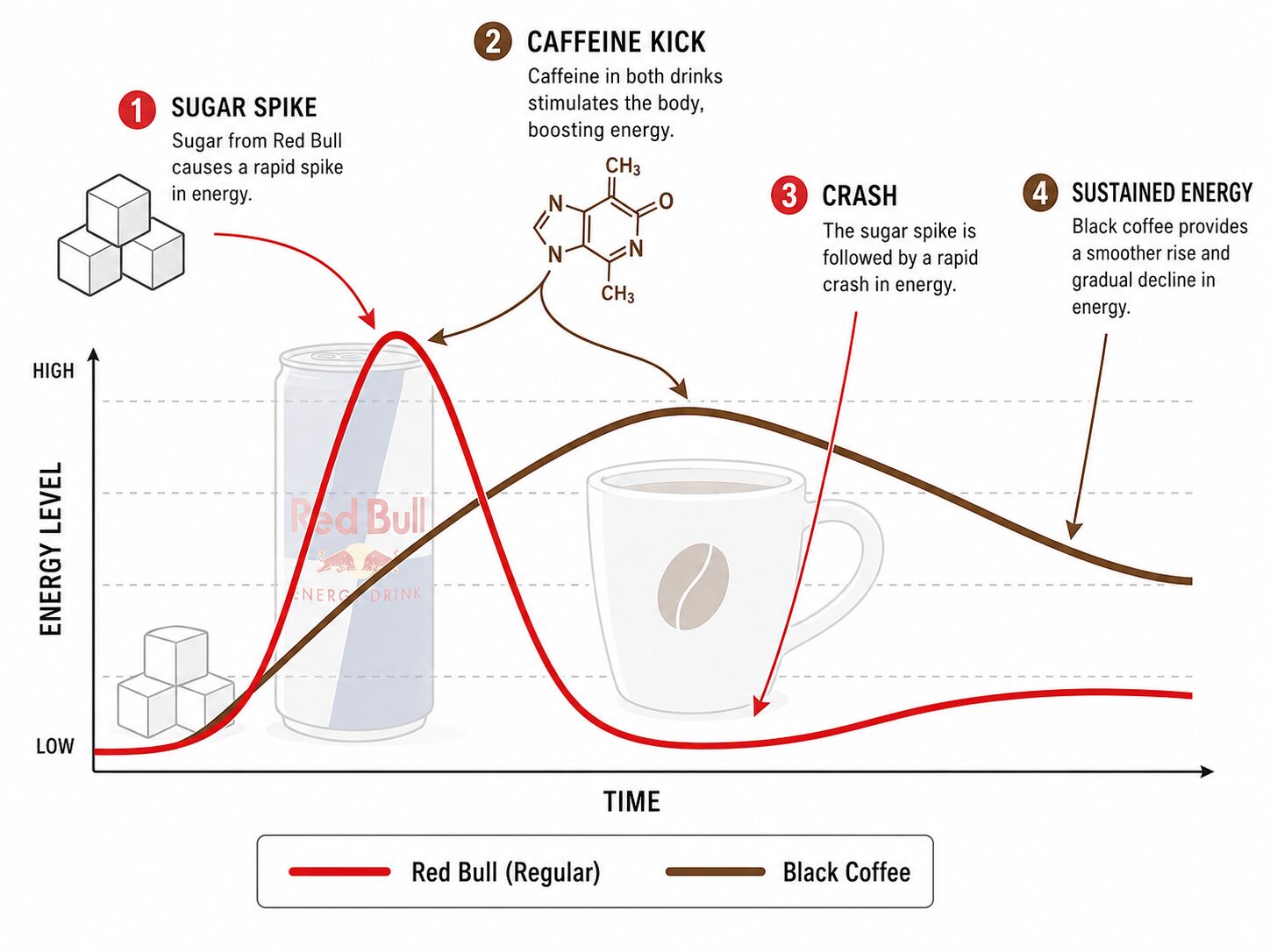
A regular 250ml Red Bull contains 27 grams of sugar. That’s about seven teaspoons. The Sugarfree and Zero versions swap that for artificial sweeteners like aspartame and acesulfame K. The caffeine remains 80mg.
Here’s the physical consequence the marketing doesn’t highlight. The sugar causes a rapid blood-glucose spike. Your body answers with a rush of insulin to manage it. That often leads to a reactive blood-sugar drop a couple of hours later. When that crash meets the fading effects of the caffeine, you get a double-dip fatigue.
Common mistake: Choosing regular Red Bull for a late-afternoon energy bump, the sugar crash will compound the caffeine comedown right around dinner, leaving you more drained than when you started.
Sugarfree versions avoid this specific metabolic rollercoaster. But the fundamental caffeine-and-taurine spike still has a shorter half-life than coffee’s delivery. The crash is less about sugar and more about the stimulant profile itself.
Coffee, especially black, introduces no sugar. The energy curve is less jagged. The decline is gradual. You might feel a gentle return to baseline, not a sudden drop off a cliff. This is a major reason why the health impacts of energy drinks are scrutinized more heavily than coffee’s.
How Your Body Changes The Math
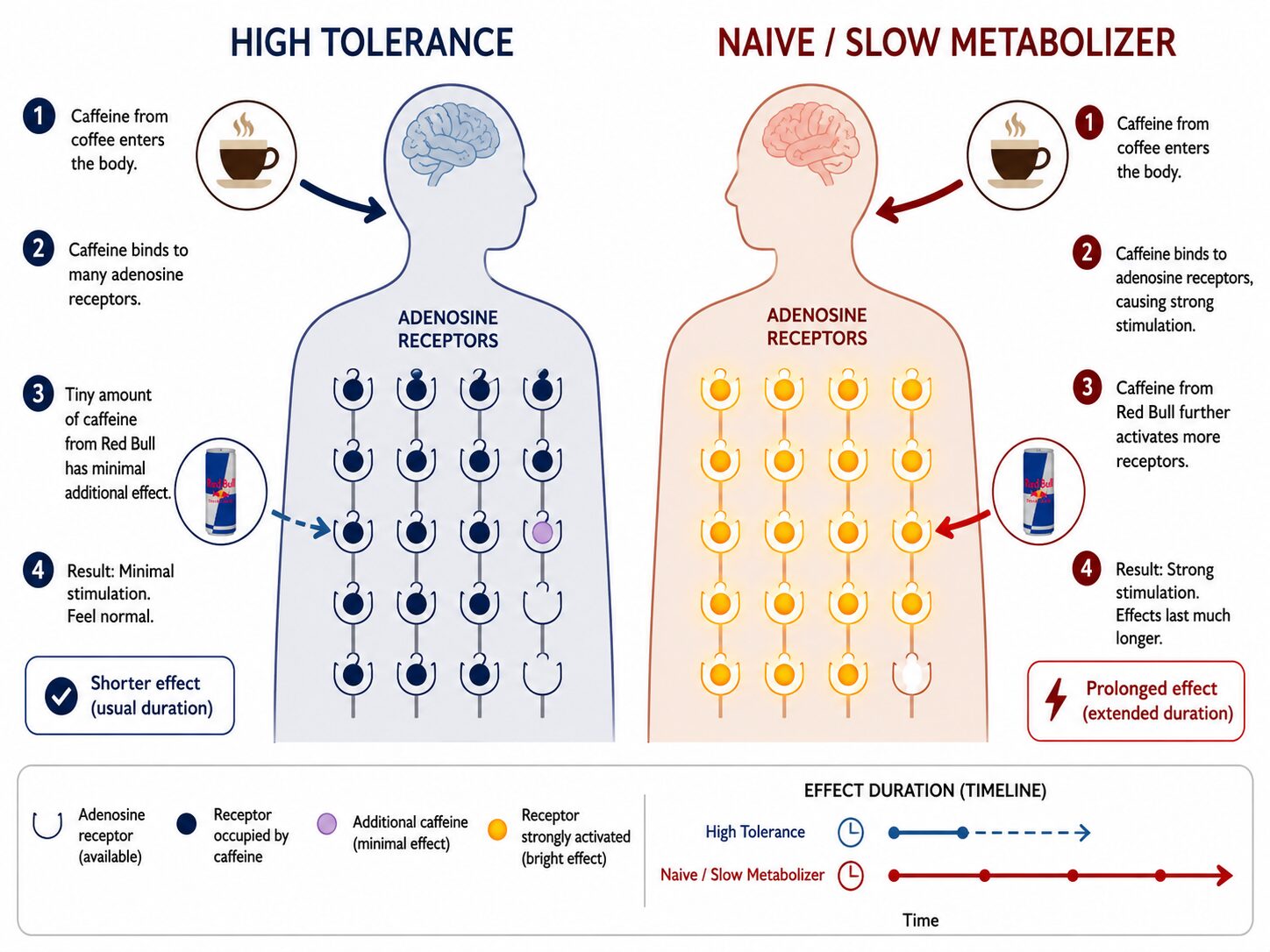
A published spec is one thing. Your neurology is another. Caffeine tolerance is real. If you drink two coffees every day, your adenosine receptors are already crowded. An 80mg Red Bull might register as a faint blip.
Conversely, someone caffeine-naive will feel both beverages intensely. For them, the caffeine effects comparison between different sources is stark because their baseline response is undamped.
Genetics also play a role. Some people metabolize caffeine quickly, breaking it down in a few hours. Others are slow metabolizers, feeling the effects much longer. A fast metabolizer might prefer Red Bull’s punchy, brief action. A slow metabolizer could find that same can leads to jitters that last all afternoon, making a single cup of coffee the smarter limit.
Listen to your own reaction. Note the timing. Does the “energy” feel clean or anxious? When does it wear off? That feedback is more valuable than any comparison chart. It directly informs a strategy for managing caffeine intake across different days and demands.
Side-By-Side: Choosing Your Daily Driver
So which one should you reach for? It comes down to the anatomy of your day.
Pick Red Bull if:
- You need a guaranteed, portable 80mg dose (the can is the measuring cup).
- Your task is short (under 2 hours) and requires a sharp, immediate kick.
- You’re facing physical exertion or have to shock yourself out of drowsiness.
- You want the Sugarfree or Zero option to avoid sugar entirely.
Pick Coffee if:
- You need sustained mental fuel for a long morning or afternoon.
- You enjoy the ritual and taste, and want to avoid the “energy drink” label.
- You want to fine-tune your dose by adjusting beans, grind, and brew method.
- Your goal is a steady state of alertness without a pronounced crash.
The caffeine in soda from a cola is a distant third in this race, often delivering less than half the caffeine with even more sugar. This isn’t a three-way contest.
For a similar caffeine dose in a different form, understand that a standard cup of coffee has a clearer lineage to a pure, unblended stimulant experience. An espresso shot compresses that dose into a tiny volume, changing the kinetics again. The Monster Energy caffeine content often exceeds Red Bull’s, creating an even more aggressive spike.
Frequently Asked Questions
Does Red Bull have more caffeine than coffee?
No. A standard 250ml can of Red Bull contains 80mg of caffeine. An average 8oz cup of brewed coffee contains about 95mg. Coffee typically delivers more caffeine per serving.
Why does Red Bull feel stronger if it has less caffeine?
Red Bull contains taurine and B vitamins alongside caffeine. Evidence suggests taurine can amplify caffeine’s initial stimulant effect on your nervous system, creating a sharper, faster “hit.” The high sugar content in regular Red Bull also causes a blood-sugar spike that contributes to the intense, rush-like feeling, followed by a quicker crash.
Is Red Bull worse for you than coffee?
It depends on the metric. Regular Red Bull has high sugar, which coffee lacks. The caffeine-and-taurine combo may lead to more pronounced jitters or crashes for some people. Coffee, especially black, is a simpler beverage with antioxidants. For long-term daily use, most health assessments favor coffee over sugary energy drinks.
How long does caffeine from Red Bull last compared to coffee?
The caffeine molecule is identical, so the half-life in your body is similar (typically 4-6 hours). However, the perceived energy boost from Red Bull tends to peak faster and fade more noticeably due to the taurine interaction and potential sugar crash. Coffee’s alertness curve is generally smoother and longer-lasting.
The Bottom Line
The numbers don’t lie. You get a consistent 80mg from a Red Bull can and a variable but higher average from coffee. But your experience is built on more than milligrams.
Red Bull is a tactical tool. It’s for the specific moment when you need a fast, unmistakable jolt with a known dose, and you’re willing to trade duration for intensity. Coffee is a strategic fuel. It’s for building a baseline of sustained alertness, enjoying the craft, and avoiding the rollercoaster.
Know the specs. Understand the studies. Then match the chemical reality to the shape of your day. Your energy is too valuable to leave to marketing.
