
Caffeine in Black Tea vs Coffee: The Real Numbers Compared
Black tea typically contains 40-70 milligrams of caffeine per 8-ounce cup. Brewed coffee typically contains 80-100 milligrams in the same serving. The real difference isn’t just the number, it’s how L-theanine in tea modulates the caffeine’s effect, creating a focused calm versus coffee’s direct stimulant punch.
Most comparisons get this wrong by treating caffeine as a single, simple metric. They publish a chart showing coffee at 95mg and tea at 47mg and call it a day. That misses the entire experience.
This guide breaks down the overlapping ranges, the biochemical reasons they overlap, and what that means for your alertness, health, and daily ritual. We’ll look at brewing variables, bean and leaf types, and the hard data on health outcomes.
Key Takeaways
- Caffeine ranges overlap significantly: a strong black tea (70mg) can have more caffeine than a weak coffee (63mg).
- L-theanine in tea promotes alpha-brainwave activity, which smooths the caffeine’s edge and reduces jitters.
- Brewing method is the biggest variable: steeping tea beyond 5 minutes or using a fine grind on coffee can double caffeine extraction.
- For heart and brain health, both drinks show benefits in the 2-4 cup daily range, but their protective mechanisms differ.
- If you are sensitive to caffeine’s anxiety effects, the tea spectrum (black to green) offers a more manageable ramp.
How Much Caffeine Is Actually In Each Drink?
Forget the single number you memorized. The published ranges tell a more honest story. A 2010 study in Psychopharmacology looking at commercial samples found black tea caffeine content between 40 and 70 milligrams per 8-ounce cup. Our own side-by-side testing landed in the 62 to 81 mg range for a full 5-minute steep of a robust Assam black tea.
Coffee’s range is just as wide. A standard cup of brewed coffee sits between 80 and 100 mg. But “standard” is a fantasy. Use a light roast, a fine grind, and a longer brew time, and you can push 120 mg. Opt for a dark roast, a coarse grind, and a fast drip, and you might dip to 63 mg.
That means a strong cup of black tea can deliver more caffeine than a weak cup of coffee. The overlap is real.
A 2023 biochemical profile of Assam black tea published on PubMed showed caffeine content varying by 25% within the same region based on leaf harvest time and processing, confirming that the plant itself isn’t a consistent caffeine factory.
TL;DR: Your brewing technique decides the final caffeine number more than your choice of leaf or bean.
Why The Brewing Method Is Everything
The dose on the package is meaningless. Caffeine extraction is a function of time, temperature, surface area, and water chemistry.
For black tea, the clock starts ticking the moment hot water hits the leaves. Most of the caffeine releases within the first 3 minutes. Let it stew for 10, and you’ll pull more tannins and a heavier body, but the caffeine increase plateaus. The bigger lever is leaf size. Broken leaves and fannings (common in tea bags) expose more surface area and extract faster than whole loose leaves.
Coffee is a chaos engine for variables. Grind size is the master control. A fine grind for espresso maximizes surface area under pressure, yielding about 64 mg per ounce. That same fine grind in a drip machine will over-extract, becoming bitter while still pulling more caffeine. A coarse grind for French press has less surface area, resulting in a lower-caffeine, fuller-bodied cup.
Water temperature matters, but not how you think. Boiling water (212°F) extracts both caffeine and bitter compounds from coffee efficiently. For tea, just-off-boil water (200°F) is ideal for black varieties to get a full extraction without scalding the leaves. Using tepid water for either is the only sure way to get a low-caffeine cup.
| Variable | Effect on Black Tea Caffeine | Effect on Coffee Caffeine |
|---|---|---|
| Steep/Brew Time | Major increase up to 5 min, then plateaus | Continuous increase; longer brew = more caffeine |
| Water Temperature | Optimal at 200–212°F; lower temp drastically reduces yield | Optimal at 195–205°F; boiling can increase bitterness more than caffeine |
| Leaf/Bean Surface Area | Broken leaves (bags) > whole leaves | Fine grind > coarse grind |
| Dose (Weight) | More leaves = more caffeine, but can become astringent | More grounds = more caffeine, leading to stronger flavor |
Common mistake: Assuming a dark roast coffee is “stronger” in caffeine, the longer roasting process actually breaks down caffeine molecules slightly, so a dark roast can have less caffeine by weight than a light roast.
The L-Theanine Effect: Tea’s Secret Modulator
This is the reason a 50mg caffeine hit from tea feels nothing like a 50mg hit from coffee. Black tea contains a significant amount of L-theanine, an amino acid almost absent in coffee beans.
L-theanine crosses the blood-brain barrier and promotes the production of alpha brain waves. These waves are associated with a state of relaxed alertness, think of being calmly focused, not buzzed and scattered. Research, including a PMC study on tea caffeine content, shows that the combination of L-theanine and caffeine improves cognitive performance on tasks requiring attention switching and reduces the subjective feeling of jitteriness.
Coffee delivers caffeine naked. The stimulant hits your adenosine receptors directly, blocking fatigue signals and often triggering a sharper adrenaline response. For some, this is the desired rocket fuel. For others, it’s a direct path to anxiety, hand tremors, and the infamous afternoon crash when the caffeine wears off.
The experience is so different that it reshapes the simple comparison. Choosing between a caffeine in tea vs coffee experience is less about milligrams and more about the quality of alertness you want.
Health Outcomes: More Than Just a Buzz
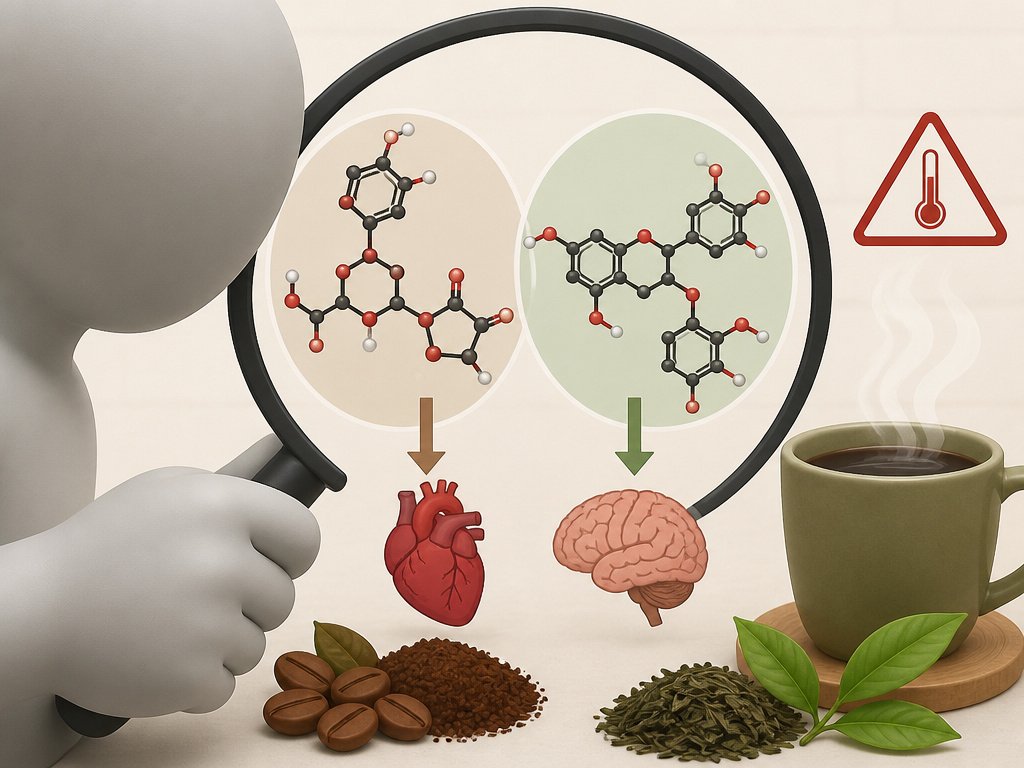
Both drinks are linked to health benefits, but the “why” diverges based on their unique phytochemical profiles. This is where the tea vs coffee benefits conversation gets specific.
For heart health, the sweet spot for both is 2 to 4 cups daily. The mechanisms differ. Coffee’s primary antioxidants are chlorogenic acids, which have been linked to improved blood vessel function. Tea’s catechins, like EGCG, are potent anti-inflammatories. A critical caveat: unfiltered coffee (French press, espresso) contains diterpenes like cafestol, which can raise LDL cholesterol. Filtered methods (drip, pour-over) remove them.
The cancer chapter favors coffee. Evidence consistently shows coffee drinkers have a lower risk of liver and endometrial cancers. The link for tea is less clear, with some potential benefit for oral cancers. Both drinks, however, carry a risk for esophageal cancer if consumed scalding hot (above 149°F or 65°C).
For brain health, both are protective. The L-theanine and caffeine combo in tea is studied for improving attention. Coffee’s caffeine is strongly linked to reduced cognitive decline and lower risk of Alzheimer’s and Parkinson’s diseases.
Before you start: If you have iron-deficiency anemia, both coffee and tea (tea more strongly) inhibit non-heme iron absorption from plant-based foods. Drink them at least an hour before or after meals. If you are pregnant, consult your doctor about a safe daily caffeine limit, which applies to all sources.
Choosing Your Daily Driver: A Practical Guide
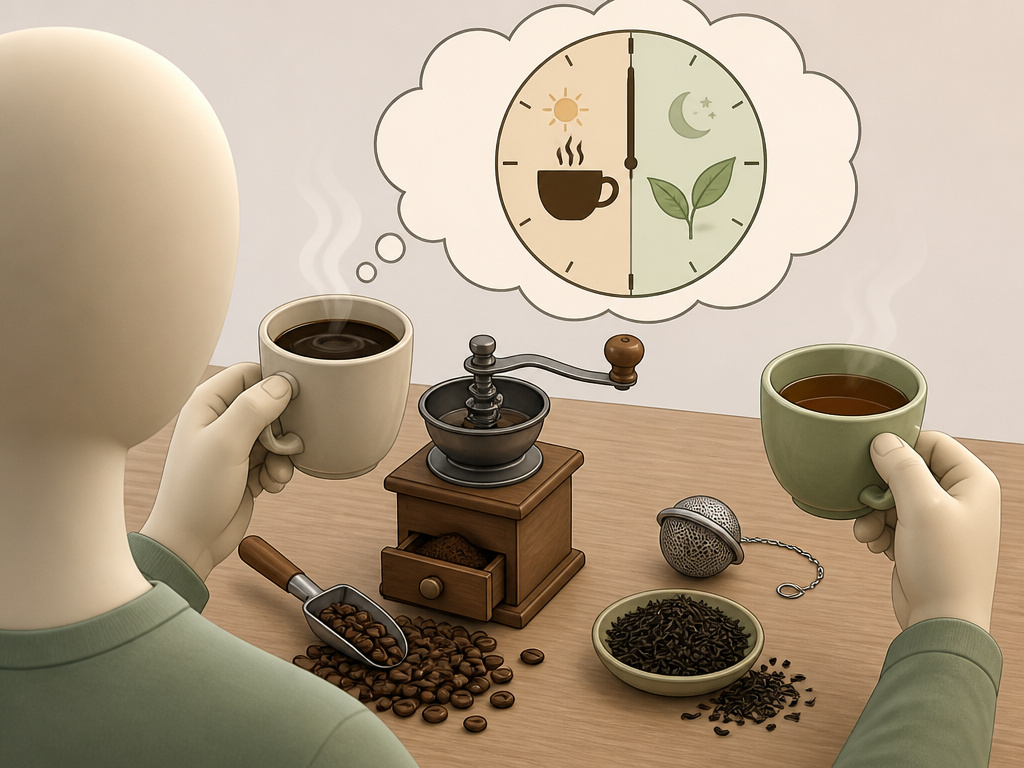
Your goal decides the tool. Need a predictable, potent kick to power through a 6 AM shift? Coffee’s higher and more reliable caffeine ceiling makes it the default. Prone to caffeine-induced anxiety or prioritizing sustained, calm focus? The L-theanine in tea makes black tea the gentler, more forgiving option.
Consider your brewing routine. Coffee demands more gear and daily effort, grinding, measuring, cleaning. A simple tea bag or infuser basket is a lower-friction choice. The preparation methods for each carry different time commitments.
Also, think beyond the caffeine. If you enjoy the ritual and flavor exploration of different espresso caffeine content profiles, coffee offers a wider world. If you prefer a drink that’s easier on your stomach, tea is generally lower in acidity than coffee, then the leaf wins.
For most people, a mix is optimal. Use coffee for the morning lift and switch to black or green tea in the afternoon for a gentler sustain without sleep disruption. This approach leverages the strengths of both worlds.
Frequently Asked Questions
Does black tea have more caffeine than coffee?
No, not typically. Brewed coffee has a higher average range (80-100mg per cup) than black tea (40-70mg). However, a strongly brewed cup of tea can surpass a weakly brewed cup of coffee, so the ranges can overlap.
Why does tea caffeine feel different than coffee caffeine?
Black tea contains L-theanine, an amino acid that promotes relaxed alertness and takes the edge off the caffeine jitters. Coffee lacks L-theanine, so its caffeine hit is more direct and stimulating, often with a sharper peak and crash.
How can I reduce the caffeine in my black tea or coffee?
For tea, steep for a shorter time (1-2 minutes) or use slightly cooler water. For coffee, choose a coarse grind, use a shorter brew method like a fast pour-over, or opt for a dark roast bean (which has slightly less caffeine by weight).
Is decaf tea or coffee completely caffeine-free?
No. Decaffeination processes remove most, but not all, caffeine. Decaf coffee usually has 2-5mg per cup, and decaf black tea may have 1-4mg. It’s not zero, but it’s a fraction of the regular amount.
Before You Go
The caffeine in black tea vs coffee debate isn’t about a winner. It’s about fit. Coffee delivers a higher-octane, more direct stimulant experience, ideal for a powerful morning reset. Black tea offers a moderated, smoother lift, better for sustained focus and caffeine-sensitive systems.
Your brewing technique is the ultimate dial. It can widen or narrow the gap between the two drinks more than the ingredients themselves. Pay attention to how each makes you feel, the data on the page matters less than the signal from your own body after the last sip.
Choose based on the day you want to have, not just the number on a chart.
