
Tea vs Coffee Caffeine: How L-Theanine Changes the Effects
Tea vs coffee caffeine differs in both amount and effect due to L-theanine. Black tea has ~50mg caffeine, green tea ~28mg, and coffee ~100mg per cup. However, tea’s L-theanine synergizes with caffeine, promoting calm alertness without coffee’s jittery spike, fundamentally changing the neurological and health impact of your drink.
Most comparisons stop at the milligram count. They miss the chemical conversation happening in your cup. Tea isn’t just weak coffee. The presence of L-theanine changes the entire neurological experience, and the other plant compounds in each drink pull levers on everything from your heart to your cancer risk.
This guide breaks down the numbers, the neuroscience, and the long-term health evidence. You’ll learn which drink matches your need for a sharp jolt or steady calm, and how to brew for maximum benefit without unintended side effects.
Key Takeaways
- Tea’s L-theanine promotes alpha brain waves for calm alertness, smoothing caffeine’s edge, coffee lacks this compound entirely.
- Unfiltered coffee (French press, Turkish) contains diterpenes that can raise LDL cholesterol; filtered, instant, or tea do not.
- For cancer prevention, especially liver cancer, the epidemiological evidence is stronger and more consistent for coffee drinkers.
- Let any tea or coffee cool below 65°C (149°F) before drinking to eliminate the associated risk of esophageal cancer.
- If you have low iron, consume tea or coffee at least an hour before or after meals to minimize non-heme iron absorption inhibition.
How Does Caffeine in Tea Compare to Coffee?
The numbers show overlap, but averages tell a clearer story. Ground, brewed coffee typically delivers about 100 mg of caffeine per 8-ounce cup. Instant coffee drops to roughly 60 mg. For tea, black tea sits near 50 mg, green tea around 28 mg, but potent varieties like matcha (powdered green tea) can reach 70 mg and yerba mate up to 85 mg.
A 2015 study analyzing commercial samples found caffeine content in black tea ranged from 14 to 61 mg per cup, while green tea ranged from 24 to 39 mg, highlighting significant variation based on leaf source and processing.
The brewing method is the wild card. A strong black tea steeped for five minutes can rival a weak cup of coffee. A single espresso shot has about 63 mg, but because it’s consumed in a 1-ounce volume, the per ounce concentration is high, a detail that matters when comparing it to a large mug of black tea. The type of coffee bean (Arabica vs. Robusta) and tea leaf (Camellia sinensis varietal) set the baseline, but water temperature and steeping time write the final recipe.
TL;DR: Brewed coffee (~100 mg) generally has more caffeine than black tea (~50 mg), but specific types like matcha and brewing methods can narrow or reverse the gap.
The L-Theanine and Caffeine Synergy
This is the non-negotiable difference. Tea leaves contain L-theanine, an amino acid that crosses the blood-brain barrier. Coffee beans do not. L-theanine increases alpha brain wave activity, which is associated with a state of relaxed alertness. When combined with caffeine, as it naturally is in tea, it modulates the stimulant’s effects.
The result is a different kinetic profile. Coffee caffeine often delivers a sharp peak in alertness within 30-45 minutes, followed by a noticeable crash as adenosine receptors rebound. The caffeine from tea, paired with L-theanine, comes up slower and sustains longer. You get focus without the frenetic edge. This is why the tea and coffee comparison isn’t just about strength, it’s about character. For tasks requiring sustained concentration, like coding or writing, the tea profile is superior. For a rapid, physical wake-up, coffee wins.
The synergy also mitigates common caffeine side effects. The jitters, anxiety, and post-caffeine crash are primarily linked to coffee’s solitary caffeine spike. The calming effect of L-theanine provides a buffer. If coffee makes you feel overstimulated or disrupts your sleep even when consumed early, switching to tea is not a step down in alertness, it’s a step toward a more functional, sustainable form of it.
Health Impacts Beyond Caffeine
Both drinks are powerhouses of polyphenols, but their portfolios differ. Coffee’s standout compounds are chlorogenic acids, potent antioxidants. Tea is rich in catechins, a type of flavonoid with strong anti-inflammatory properties. These compounds drive many of the long-term health benefits independently of caffeine.
| Health Aspect | Coffee Evidence | Tea Evidence | Key Consideration |
|---|---|---|---|
| Heart Health | Linked to lower risk at 2-5 cups/day. | Similar benefit, but black tea benefit may plateau above 4 cups. | Unfiltered coffee raises LDL cholesterol via diterpenes. |
| Cancer Risk | Strong, consistent link to lower liver & endometrial cancer risk. | Possible link to lower oral cancer risk; evidence for others is unclear. | Both drinks increase esophageal cancer risk if consumed above 65°C (149°F). |
| Brain Health | Reduced cognitive impairment & dementia risk at 2-4 cups/day. | Similar protective association observed. | The L-theanine in tea may offer additional neuroprotective support. |
| Metabolic Health | Linked to lower risk of type 2 diabetes and metabolic syndrome. | Green tea shows a particularly strong, dose-responsive benefit. |
The cholesterol caveat with coffee is critical. Diterpenes (cafestol and kahweol) are oils present in coffee that raise LDL cholesterol. Paper filters trap them. That means French press, Turkish, and boiled coffee are the culprits. Switching to filtered drip, pour-over, or instant coffee removes the risk. This is a tangible, immediate health edit you can make.
The temperature warning is non-negotiable. The International Agency for Research on Cancer classifies drinking very hot beverages (above 65°C) as a probable carcinogen for esophageal cancer. This applies equally to tea and coffee. Let it sit for a few minutes. The health benefits are in the chemistry, not the heat.
Who Should Choose Tea? Who Should Choose Coffee?

Your physiology and daily goals should dictate the choice. This isn’t about which is universally better; it’s about which is better for you right now.
Choose tea if you:
- Experience jitters, anxiety, or heart palpitations with coffee.
- Have issues with insomnia, even when cutting off caffeine early.
- Need sustained, calm focus for detailed work over several hours.
- Are managing high LDL cholesterol and prefer unfiltered brewing methods.
- Want the anti-inflammatory benefits of catechins, particularly from green tea.
Choose coffee if you:
- Want a rapid, pronounced wake-up effect for physical activity or morning inertia.
- Are prioritizing the epidemiological evidence for liver cancer risk reduction.
- Don’t experience negative side effects from its caffeine profile.
- Prefer the taste and ritual of coffee, and consume it filtered or as instant.
- Are looking for a high concentration of chlorogenic acid antioxidants.
For those who enjoy both, consider timing. Use coffee as a strategic tool for a morning jumpstart or pre-workout. Use tea for afternoon focus without sabotaging sleep. The caffeine in black tea vs coffee makes it a viable afternoon switch. If you’re curious about other high-caffeine sources, our look at energy drinks vs coffee details a much riskier profile.
Brewing Variables That Change the Equation

You can’t talk about caffeine content without talking about preparation. Assuming all cups are equal is the most common mistake.
For Coffee:
- Grind size: Finer grinds increase surface area, extracting more caffeine.
- Brew time: Longer contact time (like cold brew steeping for 12-24 hours) extracts more caffeine, though cold brew is often diluted.
- Bean type: Robusta beans contain nearly twice the caffeine of Arabica beans.
- Roast level: Contrary to myth, darker roasts have slightly less caffeine by weight because the bean loses mass, but the difference per scoop is minimal.
For Tea:
- Water temperature: Boiling water (100°C) extracts caffeine and catechins more aggressively than water at 80°C.
- Steeping time: This is the biggest lever. A tea bag steeped for 1 minute yields far less caffeine than the same bag steeped for 5 minutes.
- Leaf form: Powdered tea (matcha) you consume whole delivers 100% of the leaf’s caffeine. Loose-leaf or bagged tea only extracts a portion.
- Oxidation level: Black tea (fully oxidized) generally has more caffeine than green tea (minimally oxidized), but leaf age and cultivar matter more.
Common mistake: Brewing tea with boiling water and a long steep to “get more caffeine,” then wondering why it tastes bitter, that bitterness is from excessive tannins, and the caffeine plateaued minutes ago.
If you love iced versions, know that cold brewing tea extracts caffeine more slowly but thoroughly over many hours. Compare that to the iced tea caffeine content of a traditionally brewed and then chilled tea, which will be lower. For coffee, a standard cold brew coffee caffeine concentration is typically higher per ounce before dilution.
The Additive Problem
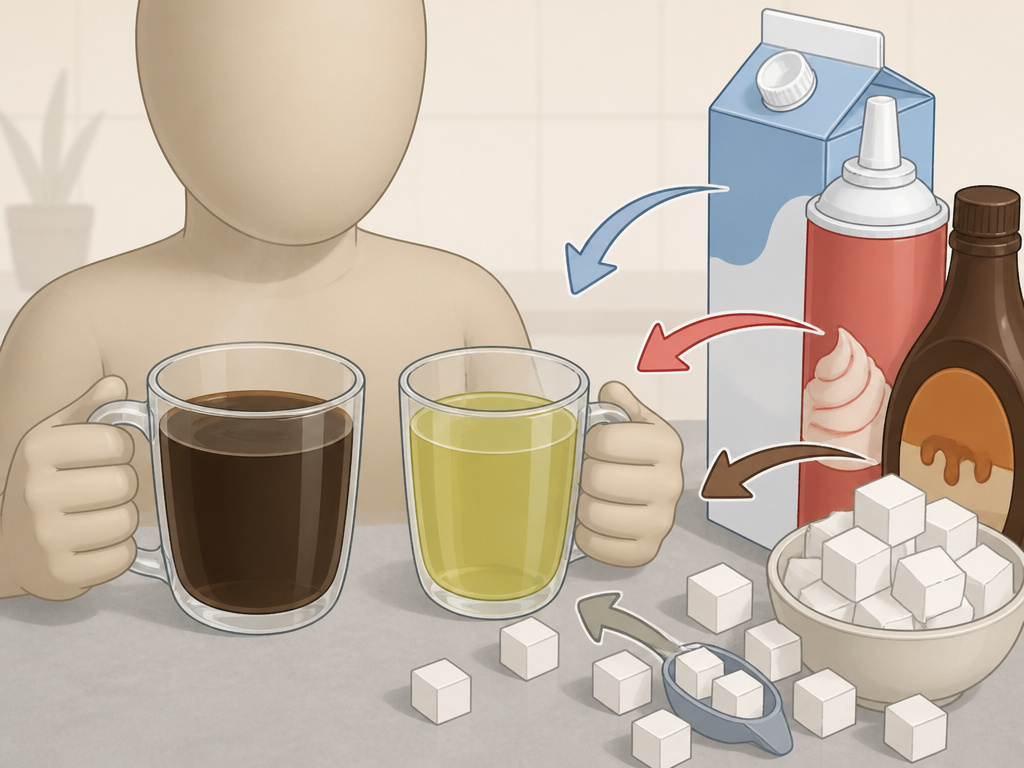
The health discourse around tea and coffee assumes you’re drinking them straight. The reality for many people includes milk, sugar, flavored syrups, and whipped cream. These additives can completely overwrite the health benefits.
A daily large latte with syrup can add hundreds of empty calories and dozens of grams of sugar, contributing to metabolic issues that the coffee itself may help protect against. Similarly, sweetened iced tea or a “green tea” drink loaded with honey undermines the point. The beverage’s health potential is in the brewed plant material, not the dessert you add to it. If you need to add something, opt for a splash of milk (which may bind to some polyphenols but is fine) or a cinnamon stick for flavor.
Frequently Asked Questions
Does decaf coffee or tea still have caffeine?
Yes. Decaffeinated coffee is not caffeine-free. A cup of decaf coffee typically contains 2-5 mg of caffeine. Decaf tea follows a similar pattern. If you are extremely sensitive or must avoid caffeine entirely for medical reasons, assume decaf still has a trace amount.
Which is more acidic, tea or coffee?
Coffee is generally more acidic, with a pH often around 5, while tea is closer to a neutral 7. However, perceived acidity and actual gastric impact vary. The acidity of tea and coffee is influenced by roast, brew time, and individual stomach sensitivity.
Is the caffeine in soda different from tea or coffee?
The caffeine molecule is identical. However, soda like cola delivers that caffeine alongside a massive bolus of sugar (or artificial sweeteners) and phosphoric acid. The health impact of a soda is dominated by these other ingredients, not the caffeine. The health impacts of caffeine from clean sources like tea and coffee are studied in isolation from these compounding factors.
How does an espresso shot compare to a cup of tea?
single 1-ounce espresso shot has about 63 mg of caffeine. This is comparable to a cup of black tea (~50 mg) and more than a cup of green tea (~28 mg). However, you drink the espresso in seconds, leading to a faster, sharper spike. You sip tea over minutes, leading to a gentler rise. The espresso caffeine content is highly concentrated per ounce.
Can I drink tea or coffee if I’m pregnant?
Most health authorities recommend limiting caffeine intake during pregnancy to 200 mg per day. This equates to about two cups of coffee or four cups of black tea. It’s crucial to count all sources, including soda and chocolate. Consult your healthcare provider for personalized advice.
Why does tea sometimes make me feel more tired?
This is usually due to tannins, not caffeine. Tannins can bind to iron, and if you consume tea with a meal, it can inhibit the absorption of non-heme iron (from plant sources). This can lead to feelings of fatigue if your iron stores are low. Drink tea between meals, not during.
Before You Go
The caffeine in tea versus coffee debate isn’t a contest with one winner. It’s a toolkit with two specialized instruments. Reach for coffee when you need a decisive, energetic break-through. Reach for tea when you need to settle into a long, focused session. Pay attention to how each makes your body feel, the absence of jitters is data, not weakness.
Remember the two non-negotiable rules: filter your coffee if you drink it daily, and let any hot drink cool. Your choice between these two ancient beverages can be a powerful lever for your daily energy and long-term health. Don’t let habit dictate it. Choose intentionally.
