
Is Coffee Safe During Pregnancy? Caffeine Limits Explained
This post contains affiliate links. As an Amazon Associate, we earn from qualifying purchases.
Coffee is safe during pregnancy if caffeine intake stays under 200mg daily, per ACOG. However, caffeine’s half-life triples during pregnancy, so a single serving can linger over 15 hours. New advice suggests spacing consumption to one serving every 24-36 hours, not daily, to prevent buildup during critical fetal development.
Moderate caffeine intake, under 200 milligrams per day, is considered safe during pregnancy by major health organizations like ACOG and the WHO. This limit is based on decades of observational data linking higher intake to increased risks. However, caffeine’s metabolism slows dramatically during pregnancy, with its half-life extending up to threefold. New pharmacokinetically justified advice suggests spacing consumption to one serving every 24-36 hours, not daily.
Most people miss the half-life change. They think a daily 200mg limit means one coffee every morning. But caffeine lingers. It builds up. By late pregnancy, a single cup’s effects can stretch over 15 hours, overlapping with the next day’s dose if you drink daily. That overlap matters during critical fetal development windows.
This guide walks through the official limits, the metabolic shift you won’t hear about in generic advice, and the specific drinks and timing that keep you and your baby safe.
Key Takeaways
- The consensus safe limit is 200mg of caffeine per day, equivalent to about one 12oz cup of brewed coffee.
- Caffeine’s half-life extends up to threefold during pregnancy, meaning it stays in your system much longer; spacing drinks to every 24-36 hours is a newer, more cautious approach.
- Avoid consuming caffeine within 1-2 hours of taking iron supplements; it significantly impairs absorption and can lead to maternal anemia.
- Chicory coffee and guarana are not recommended due to miscarriage concerns and extremely high caffeine concentration.
- Herbal teas like raspberry leaf, peppermint, ginger, and dandelion root are excellent, caffeine-free alternatives with benefits for nausea, sleep, and uterine tone.
What’s the Official Caffeine Limit for Pregnancy?
Major health authorities agree on a number. The American College of Obstetricians and Gynecologists (ACOG), the World Health Organization (WHO), and the European Food Safety Authority (EFSA) all recommend a daily maximum of 200 milligrams. The Government of Canada and the UK’s Food Standards Agency set a slightly higher ceiling of 300mg.
Common mistake: Assuming “one cup of coffee” equals the limit, a standard 12oz brewed coffee contains about 137mg, but a Starbucks tall (12oz) packs roughly 225mg. You could hit the 200mg limit with a single drink from a chain.
The 200mg threshold isn’t arbitrary. It’s drawn from population studies observing outcomes. Research, like the European multicentre study cited in a peer-reviewed caffeine safety article, found a significant increase in subfecundity risk for women consuming 500mg or more daily. The odds ratio was 1.45. For low birth weight and preterm birth, the risk curve climbs steadily above 300mg.
TL;DR: Stick to 200mg daily. That’s roughly one home-brewed cup, not a large chain coffee.
Why Caffeine Half-Life Doubles in Pregnancy
Your body processes caffeine slower when you’re pregnant. The half-life, the time it takes for your system to clear half of the substance, can stretch from a normal 5-6 hours to over 15 hours in late pregnancy. This isn’t a minor slowdown. It’s a fundamental metabolic shift.
The mechanism involves liver enzymes. CYP1A2, the primary enzyme that breaks down caffeine, is suppressed by pregnancy hormones. The clearance rate drops. Caffeine lingers.
That changes how you should apply the daily limit. If you drink a 200mg coffee at 8 a.m., by 8 p.m. you still have about 100mg circulating. By 8 a.m. the next day, you have 50mg. If you then drink another 200mg coffee, you’re starting the day with a 250mg baseline, not a fresh 200mg. This overlap is why a newer, pharmacokinetically justified recommendation from recent research, like the updated caffeine guidelines review, suggests a different rule: limit caffeine to one beverage every 24 to 36 hours, not per day.
The stakes are highest in the first trimester. Organs are developing. A MotherToBaby caffeine fact sheet notes that exposure above 500mg daily in the third trimester correlates with observable effects in newborns: faster heart rates, shaking, increased breathing rate, and more time awake. The half-life extension means those exposures are cumulative.
How Much Caffeine Is Actually in Your Drink?
You can’t manage a limit without knowing the numbers. Most people think “a cup” is a unit. It’s not.
| Drink | Serving Size | Approximate Caffeine (mg) |
|---|---|---|
| Brewed coffee | 12 oz (standard mug) | 137 |
| Starbucks tall coffee | 12 oz | 225 |
| Black tea | 8 oz | 47 |
| Coca-Cola | 12 oz can | 34 |
| Monster Energy drink | 16 oz can | 160 |
| Bang Energy drink | 16 oz can | 300 |
The variance is huge. A Bang Energy drink hits the 300mg Canadian limit in one serving. A Starbucks tall exceeds the 200mg ACOG limit. Meanwhile, an 8oz black tea has only 47mg, and a can of Coke has 34mg.
This is where the caffeine content in tea becomes a practical tool. Tea offers a gentler ramp. If you need a morning lift, switching from coffee to black tea cuts your dose by more than half. Iced tea, especially if you cold-brew it yourself, can be even milder, as explored in our guide on caffeine in iced tea.
Common mistake: Counting “cups” instead of milligrams, you might have two home-brewed coffees and still be under 300mg, or one Starbucks tall and be over 200mg.
The Iron Absorption Problem Nobody Talks About
Caffeine interferes with non-heme iron absorption. That’s the iron from plants and supplements, not from meat. The polyphenols in coffee and tea bind to iron, making it less available to your body.
During pregnancy, your iron needs skyrocket. Anemia is a common complication. The maternal-fetal health caffeine update explicitly advises avoiding caffeine-containing beverages around the time of iron supplementation. The recommended gap is 1 to 2 hours.
If you take your iron pill with your morning coffee, you’re wasting a portion of the supplement. Over weeks, this can tip you into deficiency. The fix is simple: take your iron at lunch or dinner, or wait at least two hours after your coffee.
I scheduled my prenatal vitamin for noon. The morning coffee ritual stayed, but the iron got absorbed. My midwife noted the difference in bloodwork at the 28-week check.
What to Drink Instead of Coffee
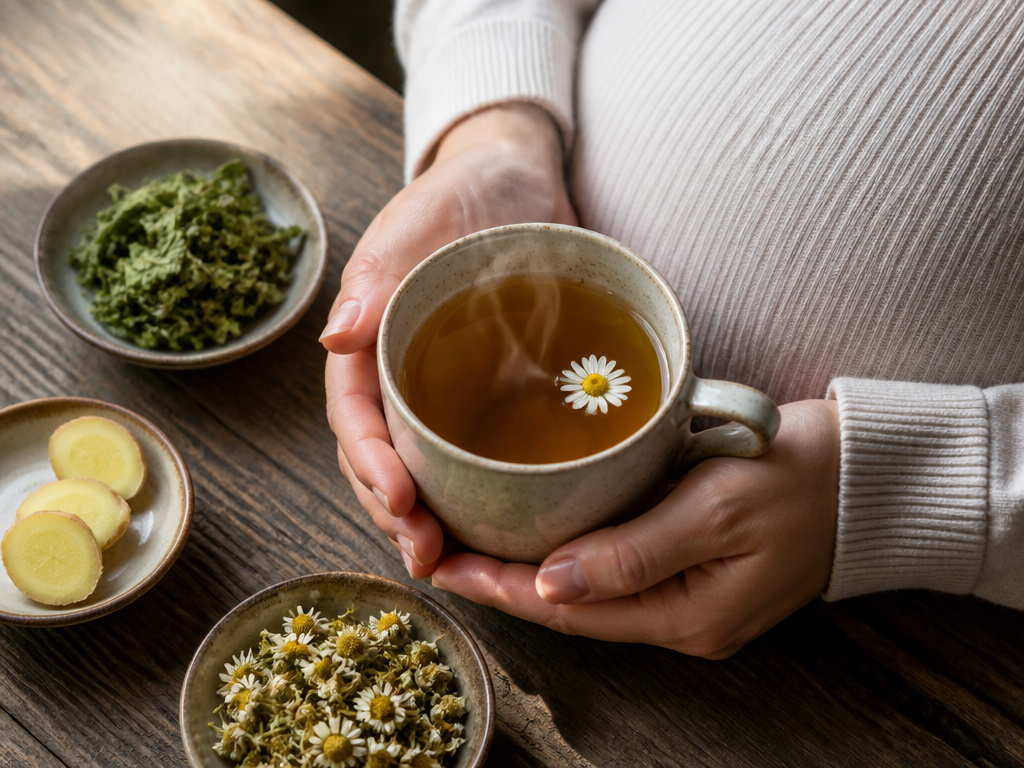
You don’t have to give up a warm morning ritual. Herbal teas are caffeine-free and many have pregnancy-friendly benefits.
- Raspberry leaf tea – Supports uterine tone. Avoid in the first trimester. From the second trimester onward, one cup daily is safe. In the third trimester, up to two cups.
- Peppermint tea – Calms nausea and acid reflux. Safe throughout pregnancy.
- Ginger tea – Excellent for morning sickness. Safe throughout pregnancy.
- Chamomile tea – Promotes relaxation and sleep. Safe throughout pregnancy.
- Dandelion root tea – Tastes vaguely like coffee. Mix with coconut milk and a touch of honey. No caffeine, no sugar spike.
Chicory coffee, often marketed as a coffee alternative, is not recommended for pregnant women due to historical concerns about miscarriage. Guarana, a plant-based stimulant, contains a very high concentration of caffeine and warrants extreme caution.
For a deeper look at the health benefits of tea as a replacement, our comparison breaks down antioxidants and side effects. The green tea benefits article details L-theanine, a compound that provides calm alertness without the coffee jitters.
Are Energy Drinks Worse Than Coffee?
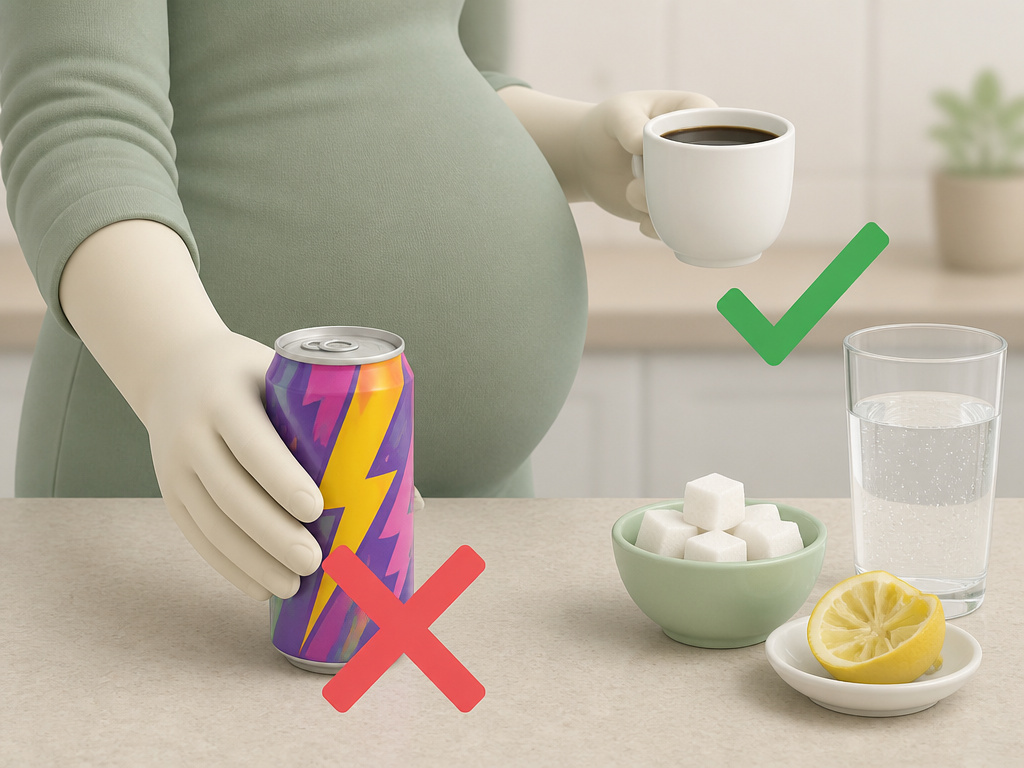
Yes. Absolutely.
Energy drinks like Monster and Bang pack caffeine alongside high sugar loads, artificial dyes, and other stimulants like taurine. The energy drink risks are compounded during pregnancy. The sugar contributes to excessive weight gain, pre-eclampsia risk, and can impact childhood metabolism. The American Heart Association recommends pregnant women limit free sugar intake to six teaspoons per day. One can of Monster has about 54 grams of sugar, that’s over 13 teaspoons.
Furthermore, the caffeine in these drinks is often synthetically derived and hits faster. A Red Bull caffeine content comparison shows even the smaller can surpasses a cup of tea. They are the worst choice.
If you crave a fizzy lift, try sparkling water with a squeeze of citrus. Or cold-brew a low-caffeine tea.
How to Track Your Intake Without Obsessing
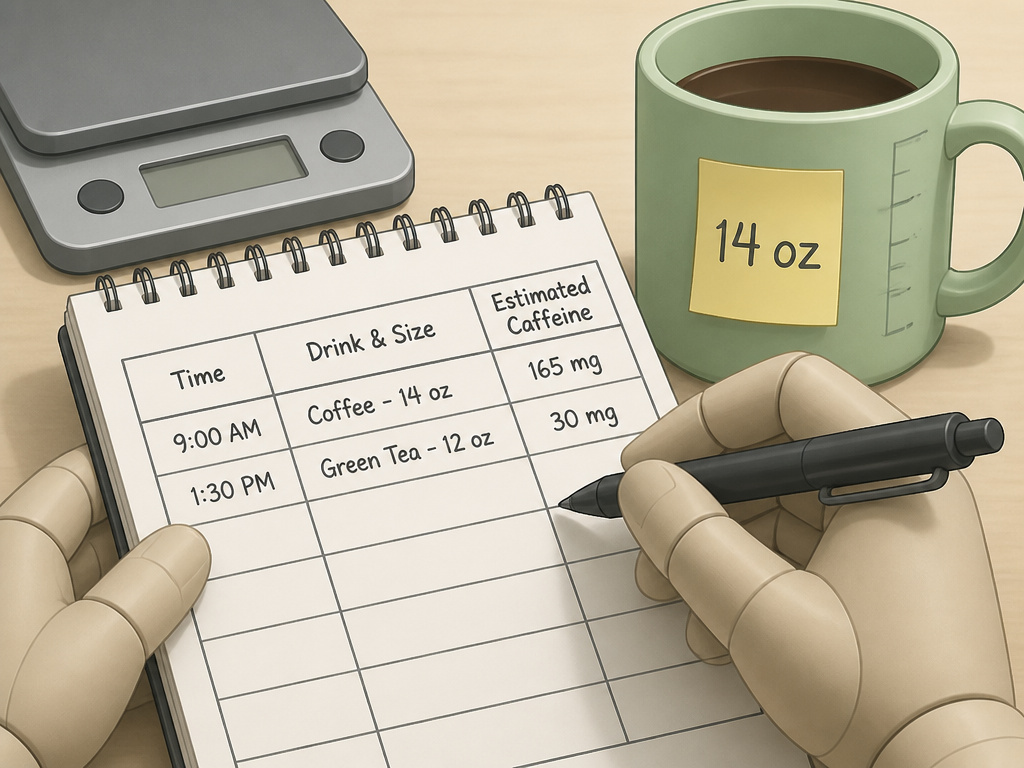
You don’t need a spreadsheet. Use a simple three-point check.
- Know your drink’s number. Refer to the table above or the Center for Science in the Public Interest’s caffeine chart.
- Space it out. If you drink coffee today, skip it tomorrow. The 24-36 hour rule accounts for the extended half-life.
- Watch the sugar. Read labels. A flavored latte can have 30g of sugar. A soda has 39g. That’s your entire daily sugar allowance in one beverage.
Bulletproof coffee, coffee blended with fats like butter or coconut oil, is sometimes suggested as a healthier option because the fats slow caffeine absorption. It still contains the same caffeine dose, however. The slower release might reduce jitters, but it doesn’t change the total milligrams entering your system.
For those who enjoy the ritual, decaf coffee is perfectly safe. It contains only 2 to 5mg per cup. You could drink forty cups and still not hit the limit.
Frequently Asked Questions
What happens if I exceed 200mg of caffeine occasionally?
The risk is cumulative, not instantaneous. An occasional 300mg day is unlikely to cause harm if your overall pattern stays under 200mg most days. Consistent daily intake above 300mg, however, is linked in studies to increased risks of low birth weight and preterm delivery.
Can I drink coffee while breastfeeding?
Yes, but caffeine passes into breast milk. The general advice is to limit intake to 200-300mg per day and observe your baby for signs of irritability or sleep disturbance. Our detailed guide on caffeine while breastfeeding covers timing and dosage.
Is cold brew safer during pregnancy?
Cold brew coffee often has a higher caffeine concentration per ounce than hot-brewed coffee because of the longer extraction time. A 12oz cold brew can contain 200mg or more. Check the brand’s specifics. It’s not inherently safer.
Does caffeine cause miscarriage?
High caffeine intake, particularly above 500mg daily, has been associated with an increased risk of miscarriage, especially in the first trimester. The association is stronger with very high intake. Moderate intake under 200mg is not linked to a significant increase.
When should I stop drinking caffeine entirely?
Some women choose to eliminate caffeine entirely during the first trimester due to the critical development period. Others reduce intake and space it out. There’s no mandatory stop point, but the first trimester is the most sensitive window.
Before You Go
The 200mg daily limit is the consensus. The half-life extension is the twist. Your liver slows down. Caffeine stays.
Space your drinks. Separate caffeine from iron. Skip energy drinks entirely. Herbal teas are your best friend, raspberry leaf after the first trimester, peppermint for nausea, dandelion root for a coffee-like ritual.
One home-brewed cup a day is likely fine. One Starbucks tall might already be over. Know your numbers. Track the sugar. Your baby’s development isn’t about a single day’s choice, but the pattern over months.
{
“@context”: “https://schema.org”,
“@type”: “HowTo”,
“name”: “How to Manage Caffeine Intake Safely During Pregnancy”,
“totalTime”: “PT5M”,
“step”: [
{
“@type”: “HowToStep”,
“name”: “Calculate your daily caffeine”,
“text”: “Check the caffeine content of your preferred drinks. One 12oz brewed coffee averages 137mg. A Starbucks tall has about 225mg. A Monster Energy drink contains 160mg.”
},
{
“@type”: “HowToStep”,
“name”: “Apply the 200mg daily limit”,
“text”: “Keep your total daily caffeine intake under 200 milligrams, as recommended by ACOG and EFSA. This is roughly one standard cup of brewed coffee.”
},
{
“@type”: “HowToStep”,
“name”: “Space out consumption”,
“text”: “Due to caffeine’s extended half-life during pregnancy, consider limiting intake to one caffeinated beverage every 24 to 36 hours instead of daily.”
},
{
“@type”: “HowToStep”,
“name”: “Avoid caffeine with iron supplements”,
“text”: “Separate caffeine consumption from iron supplementation by at least 1 to 2 hours to prevent impaired absorption and risk of maternal anemia.”
},
{
“@type”: “HowToStep”,
“name”: “Choose safer alternatives”,
“text”: “Switch to herbal teas like raspberry leaf (second trimester onwards), peppermint, ginger, or dandelion root. Avoid chicory coffee and guarana.”
}
]
}
{
“@context”: “https://schema.org”,
“@type”: “FAQPage”,
“mainEntity”: [
{
“@type”: “Question”,
“name”: “What happens if I exceed 200mg of caffeine occasionally?”,
“acceptedAnswer”: {
“@type”: “Answer”,
“text”: “The risk is cumulative, not instantaneous. An occasional 300mg day is unlikely to cause harm if your overall pattern stays under 200mg most days. Consistent daily intake above 300mg, however, is linked in studies to increased risks of low birth weight and preterm delivery.”
}
},
{
“@type”: “Question”,
“name”: “Can I drink coffee while breastfeeding?”,
“acceptedAnswer”: {
“@type”: “Answer”,
“text”: “Yes, but caffeine passes into breast milk. The general advice is to limit intake to 200-300mg per day and observe your baby for signs of irritability or sleep disturbance. Our detailed guide on caffeine while breastfeeding covers timing and dosage.”
}
},
{
“@type”: “Question”,
“name”: “Is cold brew safer during pregnancy?”,
“acceptedAnswer”: {
“@type”: “Answer”,
“text”: “Cold brew coffee often has a higher caffeine concentration per ounce than hot-brewed coffee because of the longer extraction time. A 12oz cold brew can contain 200mg or more. Check the brand’s specifics. It’s not inherently safer.”
}
},
{
“@type”: “Question”,
“name”: “Does caffeine cause miscarriage?”,
“acceptedAnswer”: {
“@type”: “Answer”,
“text”: “High caffeine intake, particularly above 500mg daily, has been associated with an increased risk of miscarriage, especially in the first trimester. The association is stronger with very high intake. Moderate intake under 200mg is not linked to a significant increase.”
}
},
{
“@type”: “Question”,
“name”: “When should I stop drinking caffeine entirely?”,
“acceptedAnswer”: {
“@type”: “Answer”,
“text”: “Some women choose to eliminate caffeine entirely during the first trimester due to the critical development period. Others reduce intake and space it out. There’s no mandatory stop point, but the first trimester is the most sensitive window.”
}
}
]
}
