
Iced Tea Caffeine vs Coffee: Which Drink Energizes Better?
Iced tea typically contains 14-61mg of caffeine per 8oz serving, while a same-sized cup of drip coffee ranges from 65-120mg. Coffee wins on pure caffeine volume, but the caffeine in tea is moderated by L-theanine, an amino acid that creates a calmer, longer-lasting alertness without the jitters or crash common with coffee.
Most comparisons stop at the raw numbers. They miss the real question: which one gives you a better, more functional energy? The answer isn’t in a milligrams chart. It’s in how the two drinks interact with your brain chemistry, how you brew them, and what you’re actually trying to achieve before 3 p.m.
This guide breaks down the caffeine in iced tea vs coffee beyond the basic stats, covering how brewing changes everything, why a tea buzz feels different, and how to pick the right drink for your day.
Key Takeaways
- Brewing method dictates caffeine yield. Espresso has more caffeine per ounce than drip coffee, but you drink less of it. A 2oz double espresso (80-100mg) often has less total caffeine than a 12oz drip coffee (100-180mg).
- L-theanine in tea changes the game. This amino acid, absent in coffee, promotes alpha brain waves associated with relaxed focus. It smooths out caffeine’s sharp edges, trading the coffee “spike and crash” for a steadier, longer alertness.
- Bottled iced tea is a wild card. A 20oz bottle of Lipton Green Tea Citrus has about 35mg of caffeine, while a same-sized Pure Leaf Sweet Tea can have over 100mg. Always check the label, brand and recipe matter more than the “tea” label.
- Grind size and steeping time are your dials. Finer coffee grounds and longer steep times extract more caffeine. For tea, boiling water and a 5-minute steep pulls nearly double the caffeine of a 2-minute steep with 175°F water.
- The “freshness” myth can mislead. While coffee roasters preach 2-4 weeks post-roast for peak flavor, some espresso blends actually benefit from 4-8 weeks of rest, developing more complexity. Don’t toss old beans based on date alone.
How Much Caffeine is in Iged Tea vs Coffee?
The numbers you see everywhere, 14-61mg for tea, 65-120mg for coffee, are correct but useless without context. They assume an 8oz cup of a standard brew. Your reality is different.
A 2018 study in Food Chemistry confirmed that brewing method is the single biggest variable for coffee caffeine content. Drip coffee machines extract efficiently, often landing in the 100mg range. A single shot of espresso (1oz) might only have 40-50mg, but because it’s concentrated, we think of it as stronger. Cold brew, steeped for 12-24 hours, can hit 200mg per 8oz serving.
Common mistake: Assuming espresso has more total caffeine than drip coffee, a standard 2oz double espresso has 80-100mg, while a 12oz mug of drip coffee can easily reach 150mg. You’re comparing ounces to cups.
For iced tea, the type of tea is the first filter. Black tea leaves naturally contain more caffeine than green or white leaves. But the brewing process for iced tea often uses higher leaf-to-water ratios or longer steep times to combat dilution from ice, which can push it to the higher end of its range.
TL;DR: Compare serving sizes, not drink types. A 20oz bottled iced tea might have less caffeine than a single shot of espresso. Always check the label or know your brew.
The L-Theanine Difference: Why Tea Feels Smoother
This is the part most caffeine charts ignore. Tea contains L-theanine, an amino acid almost entirely absent in coffee. According to a 2014 review in Nutrients, L-theanine increases alpha brain wave activity, which is linked to a state of relaxed alertness.
The effect is pharmacological, not psychological. When you drink tea, the caffeine stimulates. The L-theanine simultaneously takes the edge off. You get focus without the anxiety, energy without the handshake. A cup of black tea might have a quarter of the caffeine of a cup of coffee, but the presence of L-theanine makes that smaller dose more effective for sustained mental tasks.
Coffee gives you a bolt. Tea gives you a tide.
I switched to strong iced black tea during afternoon work sessions after one too 3 p.m. coffee jitters left me rewriting the same email four times. The tea focus lasts longer and doesn’t end with a headache. I miss the ritual of the espresso machine, but I don’t miss the crash.
The synergy is so recognized that some nootropic supplements combine caffeine and L-theanine in a 1:2 ratio to mimic tea’s effect. Your body already knows the formula.
| Compound | Found In | Primary Effect | Onset / Duration |
|---|---|---|---|
| Caffeine | Coffee, Tea | Stimulates central nervous system, increases alertness | Fast (15-45 min), shorter duration (3-5 hours) |
| L-Theanine | Tea (mainly green & black) | Promotes alpha waves, reduces anxiety, improves focus | Slower, moderates caffeine’s peak, extends calm alertness |
| Chlorogenic Acids | Coffee (especially light roast) | Antioxidants, may slightly slow caffeine absorption | Gradual, contributes to longer-term health effects |
TL;DR: The caffeine in tea is chaperoned by L-theanine. This combo provides a calmer, longer-lasting alertness compared to the raw, jittery stimulation of coffee caffeine.
How Brewing Method Changes Everything
You can’t talk about caffeine content without talking about extraction. Water temperature, contact time, grind size, and pressure determine how much caffeine leaves the leaf or bean and enters your cup.
For coffee, the coffee-to-water ratio and grind size are your primary levers. A finer grind exposes more surface area. A higher ratio (more coffee grounds to water) means more available caffeine to extract. A review in Comprehensive Reviews in Food Science and Food Safety details how methods like French press (full immersion, longer time) extract differently than pour-over (percolation, controlled time).
Espresso machines use high pressure to force water through finely-ground coffee in 25-30 seconds. It’s efficient per ounce, but the total yield is small. Cold brew sits for half a day, pulling caffeine and oils slowly without heat, resulting in a high total caffeine concentration.
For iced tea, the process is often a double extraction: a hot, concentrated brew is poured over ice, which dilutes it. If you start with 2 cups of boiling water and 4 tea bags, steep for 5 minutes, then pour over 2 cups of ice, your final drink is stronger than if you just cold-brewed bags in the fridge overnight.
Common mistake: Brewing tea with boiling water for a full 5 minutes for maximum flavor, then wondering why your iced tea makes you twitchy. You’ve maximized caffeine extraction. For a gentler drink, use water at 175-185°F and steep for 2-3 minutes before icing.
Here’s how different methods stack up for an 8oz serving:
| Beverage & Method | Typical Caffeine Range (8oz) | Key Extraction Factor | Best For |
|---|---|---|---|
| Drip Coffee | 95–120 mg | Medium grind, hot water percolation | Consistent, high-caffeine mornings |
| Espresso (1oz shot) | 40–50 mg per shot | Fine grind, high pressure (9 bar), short time | Concentrated flavor, milk drinks |
| Cold Brew Coffee | 100–200 mg | Coarse grind, cold water, 12–24 hour steep | Smooth, low-acid, high-caffeine |
| Black Iced Tea (hot brew) | 25–48 mg | Boiling water, 3–5 minute steep, then ice | Classic sweet tea, afternoon lift |
| Green Iced Tea (hot brew) | 15–30 mg | 175°F water, 2–3 minute steep, then ice | Gentle, antioxidant-rich focus |
| Bottled Iced Tea | 5–50 mg (varies wildly) | Commercial extraction, often from concentrate | Convenience, but check the label |
TL;DR: Your brewing technique is a caffeine dial. Finer grinds, hotter water, longer times, and higher pressure all turn it up. Iced tea made from a 5-minute boiling steep has nearly twice the caffeine of a 2-minute 175°F steep.
Black Tea, Green Tea, and the Coffee Spectrum
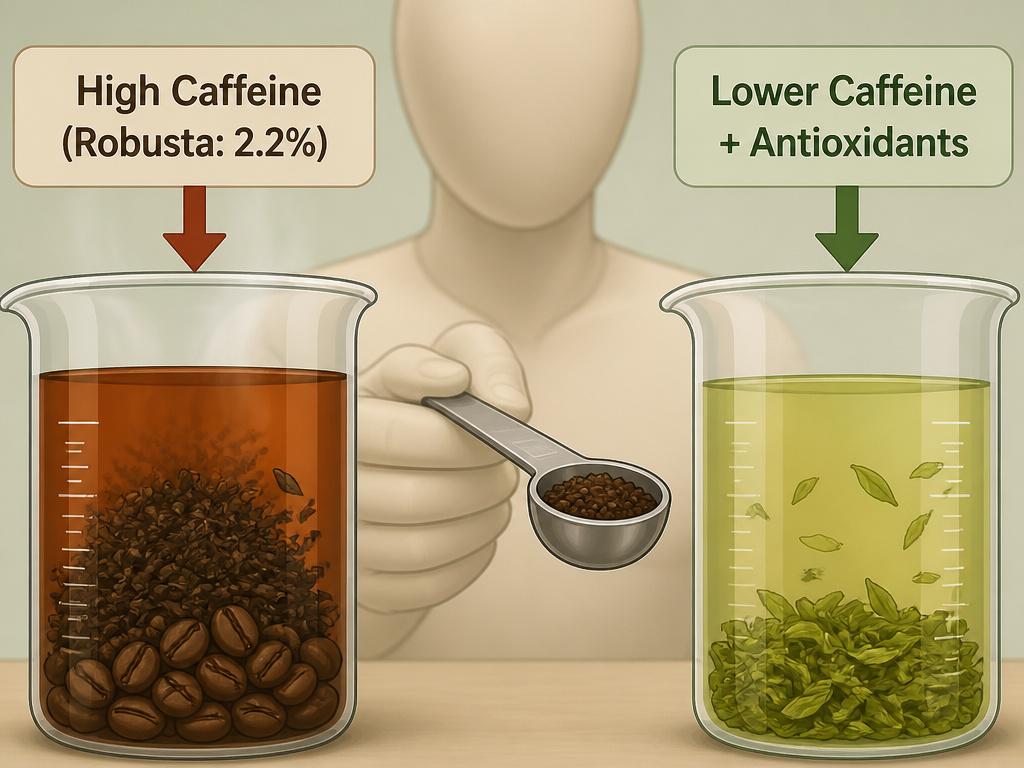
Not all teas are equal, and neither are all coffees. The range within each category is vast.
Black tea is the most oxidized, which concentrates its caffeine and flavor. A robust Assam black tea steeped strong will sit at the top of the tea caffeine range. Green tea is less processed, retaining more of its natural L-theanine and a compound called EGCG, a powerful antioxidant. Its caffeine content is generally lower.
On the coffee side, the bean species matters. Coffea arabica (Arabica) beans have about 1.2% caffeine by weight and are prized for flavor. Coffea canephora (Robusta) beans have nearly double the caffeine, around 2.2%, and are often used in espresso blends for their crema and kick, but they can taste harsher. The roast level is a red herring. Dark roast beans lose a small percentage of their mass (and thus caffeine) during longer roasting, but the difference per scoop is minimal. The bitter, robust flavor of dark roast is often mistaken for “more caffeine,” a myth the Specialty Coffee Association has worked to dispel.
Your choice here isn’t just about milligrams. It’s about the accompanying compounds. Choosing a high-antioxidant green tea benefits provides a different health profile than a dark, single-origin espresso. The acidity comparison between the two is also a major factor for stomach sensitivity.
Bottled Iced Tea: The Wild Card
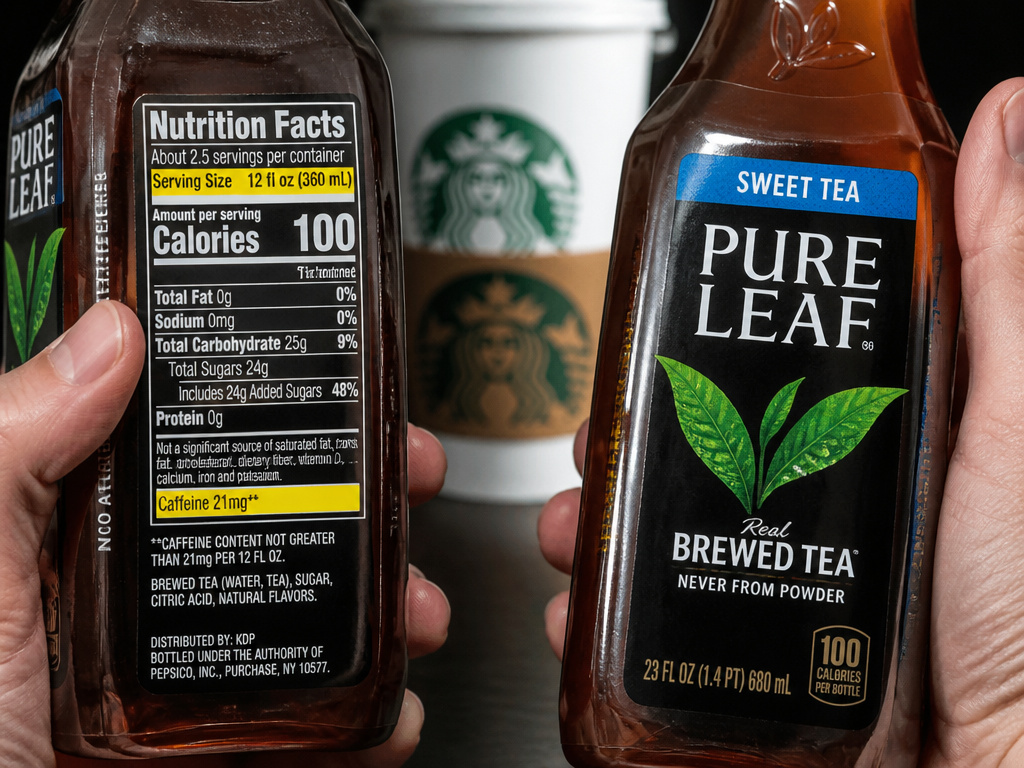
The “iced tea” you buy in a bottle or can is a completely different beast from homemade. Manufacturers use tea concentrates, extracts, and “natural flavors” that dramatically alter the final product. The caffeine content is not standardized.
For example, a 20oz bottle of Lipton Green Tea Citrus lists about 35mg of caffeine. A same-sized Pure Leaf Sweet Tea has over 100mg. Both are “iced tea,” but one has triple the caffeine of the other. This variability makes a direct caffeine comparison with brewed coffee almost meaningless unless you’re checking the Nutrition Facts panel.
I picked up a “zero sugar” bottled tea for a road trip, assuming it was a mild choice. Two hours later, I was wired. The label read “35mg per 8oz,” but the bottle was 23oz. I’d consumed over 100mg without realizing it. Now I scan for the total caffeine per container, not just per serving.
The lesson is simple. If you’re managing your intake, treat bottled tea like an energy drink. Read the label. The serving size trick is real.
Choosing Your Drink: Context is Everything
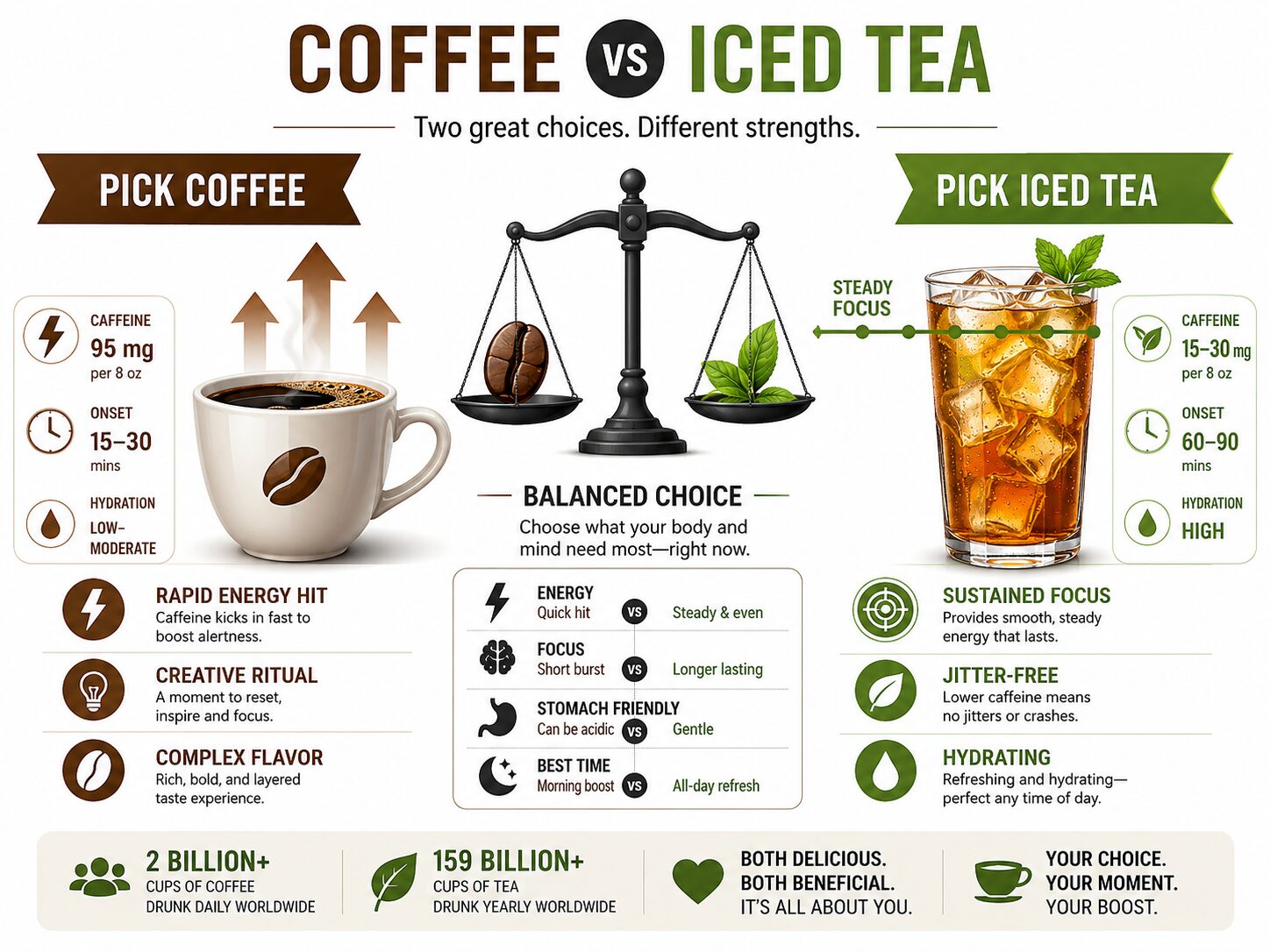
So, iced tea or coffee? It depends on the job.
Pick coffee when:
- You need a rapid, decisive energy hit to power through a physical task or shake off deep fatigue.
- You’re engaging in a creative ritual, the smell, the grind, the pour is part of the process.
- You’re drinking it for pleasure, not just stimulation, and appreciate the complex flavor profiles of single-origin beans.
Pick iced tea when:
- You need sustained, jitter-free focus for hours of mental work, writing, or study.
- You’re sensitive to caffeine’s anxious side effects but still need to be alert.
- You’re hydrating in hot weather and want flavor without the diuretic effect of a large coffee.
- You’re watching your caffeine consumption later in the day but still want a gentle lift.
For those comparing specific drinks, the debate between black tea vs black coffee often comes down to acidity and ritual. Milk-based drinks like a cappuccino change the equation again by diluting the espresso base.
The final factor is you. Some people are fast metabolizers of caffeine via the CYP1A2 enzyme gene; they process it quickly and feel less effect. Others are slow metabolizers, where caffeine lingers and impacts sleep. Pay attention to how you feel four hours after your last cup.
Frequently Asked Questions
Does iced tea have more caffeine than hot tea?
No, not inherently. Iced tea is often brewed hot first, then cooled. If you use the same amount of tea leaves and the same steep time, the caffeine content is identical. The difference comes from dilution, pouring a hot concentrate over ice adds water, which lowers the caffeine per ounce in the final glass unless you account for it.
Is caffeine in tea healthier than caffeine in coffee?
“Healthier” is the wrong frame. Tea provides caffeine alongside beneficial compounds like L-theanine and polyphenols (e.g., EGCG in green tea). Coffee provides caffeine alongside chlorogenic acids and other antioxidants. The health benefits of tea and coffee are well-documented but different. For pure stimulation, the source matters less than the dose and your personal tolerance.
Which has more caffeine: espresso or iced tea?
By volume, espresso has far more caffeine, 40-50mg per ounce compared to iced tea’s 2-8mg per ounce. But you drink them in different quantities. A single 1oz shot of espresso has less total caffeine (40-50mg) than a 16oz bottle of many commercial iced teas (which can contain 70-100mg). Always compare total milligrams in your actual serving.
Can I get decaf iced tea?
Yes. Decaffeinated tea exists, typically processed using the ethyl acetate or CO2 method to remove most of the caffeine. Decaf iced tea will have trace amounts (usually 1-5mg per 8oz), similar to decaf coffee. The flavor profile changes slightly, often becoming milder.
Does steeping tea longer increase caffeine?
Yes, but with diminishing returns. Most caffeine extracts within the first 3-5 minutes of steeping. After that, you’re pulling more bitter tannins, which can overwhelm the flavor. For maximum caffeine with reasonable taste, a 5-minute steep is the practical limit.
The Bottom Line
Comparing caffeine in iced tea vs coffee on milligrams alone misses the point. Coffee delivers a sharper, more intense stimulant effect, perfect for a morning jumpstart or a pre-workout boost. Iced tea, thanks to L-theanine, offers a smoother, more sustained alertness that won’t leave you crashing before lunch.
Your best choice depends on the task at hand and your own biology. Need to power through a heavy physical chore? Reach for the coffee. Facing an afternoon of focused computer work? The steady lift of a strong black iced tea might serve you better. And if you’re grabbing a bottle off the shelf, read the label, the caffeine levels there are a lottery.
Know your brew, know your serving, and listen to how your body responds. That’s how you find your perfect balance.
