
Do Coffee Frappes Have Caffeine? The Numbers You Need
Yes, coffee frappes have caffeine, typically 100–155 mg in a 16 oz drink from a major chain. This comes from the coffee or espresso base, not added syrups. The amount varies by brand, size, and recipe, placing it between a standard cup of drip coffee and a strong espresso drink.
People get this wrong because they assume the sweetness and blended texture mean it’s just a milkshake. They see the whipped cream and caramel drizzle and mentally file it under “dessert,” forgetting the core ingredient is still coffee. A grande Caramel Frappuccino has more caffeine than a can of cola.
This guide breaks down the exact caffeine numbers from Starbucks, McDonald’s, and Dunkin’, shows you how to spot the hidden caffeine in menu names, and gives you a blueprint for making a controlled-caffeine version at home.
Key Takeaways
- A medium (16oz) coffee frappe from McDonald’s or Starbucks packs about 100 mg of caffeine, similar to a strong cup of brewed coffee.
- Dunkin’s medium (24oz) frozen coffee drinks contain significantly more—up to 297 mg of caffeine—due to larger size and a more concentrated coffee base.
- The word “frappe” alone doesn’t guarantee caffeine. “Creme-based” or fruit-flavored versions like the Starbucks Vanilla Bean Frappuccino contain zero coffee.
- You can order a decaffeinated Espresso Frappuccino at Starbucks, but the decaf espresso shots still contain trace caffeine (about 3-15 mg per shot).
- A homemade Greek frappé made with two tablespoons of instant coffee delivers roughly 120-150 mg of caffeine, putting you in control of the dose.
What Exactly Is a Coffee Frappe?
The name causes the first point of confusion. In its original form, a frappé is a Greek iced coffee drink made by shaking instant coffee, sugar, and water until frothy, then pouring it over ice. This is the drink detailed in the Wikipedia entry on frappé coffee. It contains caffeine because its sole source of flavor is instant coffee.
The modern Greek frappé is a direct descendant of this method, relying on the agitation of instant coffee granules to create its signature foam and bitter, caffeinated kick.
In the United States, chains like Starbucks trademarked the term “Frappuccino.” This created a category of blended, milkshake-like beverages that may or may not contain coffee. When they do contain coffee, it’s typically in the form of a coffee frappuccino base (a sweetened, coffee-flavored syrup) or brewed espresso shots. The preparation standards for these espresso-based drinks are outlined in professional resources like the William Angliss Institute coffee workbook.
So, you have two parallel definitions: the traditional, caffeine-forward Greek frappé, and the modern commercial blended beverage where caffeine is an optional ingredient. Your first clue is always in the name on the menu.
TL;DR: “Frappe” can mean a simple Greek iced coffee or a complex blended dessert. Only versions with “coffee,” “espresso,” or “mocha” in the name contain significant caffeine.
How Much Caffeine Is in a Coffee Frappe?
The answer isn’t a single number. It’s a spreadsheet. Caffeine content depends entirely on three factors: the brand’s recipe, the size you order, and whether extra espresso shots are added.
For a direct comparison, here are the sourced numbers from the primary nutrition pages of the three largest chains. These are not estimates.
| Brand & Drink (Size) | Caffeine (mg) | Notes |
|---|---|---|
| Starbucks Coffee Frappuccino (Grande, 16oz) | 110 | The baseline coffee-flavored blend. |
| Starbucks Espresso Frappuccino (Grande, 16oz) | 155 | Uses brewed espresso shots instead of coffee syrup. |
| Starbucks Caramel Frappuccino (Grande, 16oz) | 100 | Coffee-based with caramel syrup; a popular choice. |
| McDonald’s Caramel Frappé (Medium, 16oz) | 100 | Their standard coffee frappe lineup. |
| McDonald’s Mocha Frappé (Medium, 16oz) | 100 | Same coffee base, different flavor syrup. |
| Dunkin’ Coffee Coolatta with Cream (Medium, 24oz) | 183 | Larger size with a coffee extract base. |
| Dunkin’ Caramel Swirl Frozen Coffee (Medium, 24oz) | 297 | The highest on this list due to a potent coffee concentrate. |
Common mistake: Assuming a “medium” is the same volume everywhere — A Dunkin’ medium is 24 ounces, 50% larger than a Starbucks or McDonald’s 16-ounce medium. This alone explains why their caffeine content comparison shows such high numbers.
The Dunkin’ numbers are the outliers. Their frozen coffee drinks use a coffee concentrate, not a diluted syrup. Combined with the larger cup, you’re looking at a caffeine bomb. A medium Caramel Swirl Frozen Coffee has nearly triple the caffeine in espresso shots used in a standard doppio.
Compare this to other common sources. That 100 mg in a McDonald’s frappé is double the caffeine in soda from a can of Coke. It’s also in the same ballpark as the caffeine in cappuccinos, though a cappuccino’s caffeine comes from a more concentrated espresso shot.
TL;DR: Expect 100-155 mg in a 16oz chain frappe. Dunkin’ is the exception, with 180-300 mg in their 24oz cups due to size and a stronger coffee concentrate.
Which Frappes Have No Caffeine?
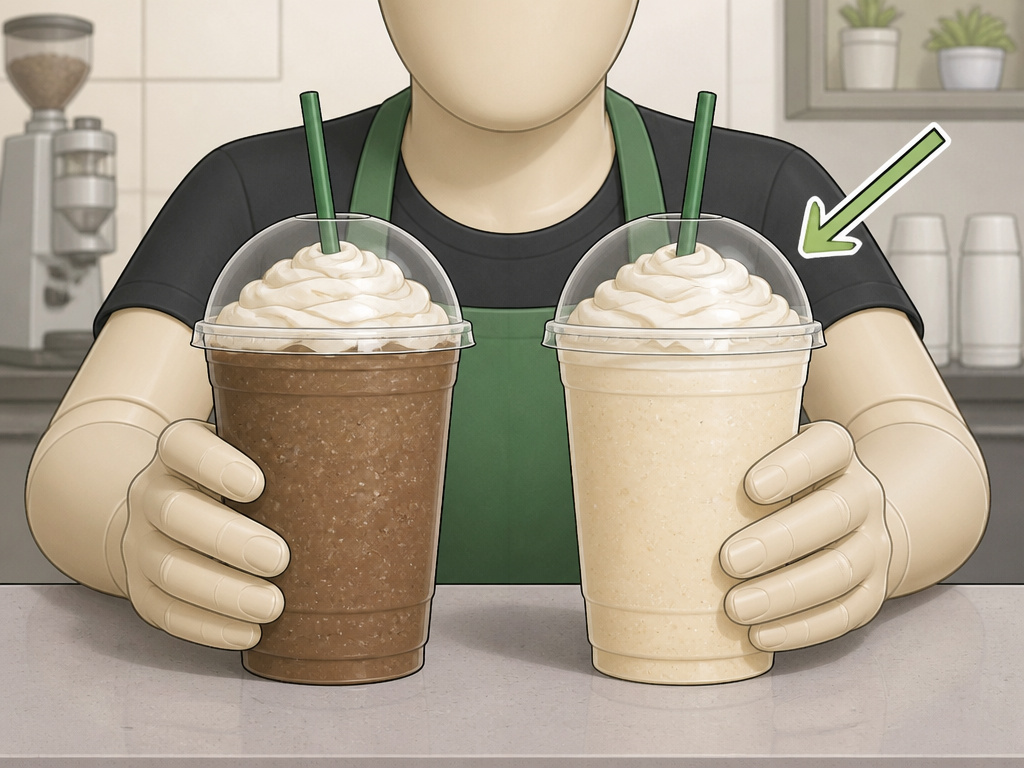
You can want the texture without the buzz. Several popular blended drinks are intentionally built without a coffee component.
These are typically labeled as “Creme Frappuccino” at Starbucks or given clearly fruit-based names. They get their thickness from a base syrup that contains no coffee. Common examples include: * Starbucks Vanilla Bean Creme Frappuccino * Starbucks Strawberry Creme Frappuccino * Starbucks Double Chocolaty Chip Creme Frappuccino (unless made with mocha sauce, which contains minimal caffeine)
The critical word is “Creme.” It signals the barista to use a non-coffee base. If you order a “Vanilla Bean Frappuccino” without specifying “Creme,” you might still get the coffee base by default in a busy store.
I watched a barista make this error during a morning rush. A customer ordered a “Vanilla Bean Frappuccino,” got the standard coffee-based version, and took two sips before complaining about a bitter aftertaste. The drink was remade. Now I always listen for the “Creme.”
There is a catch. Some ingredients add trace caffeine. Chocolate-flavored syrups (mocha, dark chocolate) contain a small amount from the cocoa. Matcha powder is another source. If you are highly sensitive, you need to ask.
For a caffeine-free experience, stick to the vanilla, strawberry, or plain chocolate chip creme versions. Verify with the barista that you want the non-coffee base.
TL;DR: Look for “Creme” in the name or explicitly fruit-based flavors. These use a non-coffee base syrup, but chocolate or matcha additions introduce trace caffeine.
How to Order a Decaf Coffee Frappe
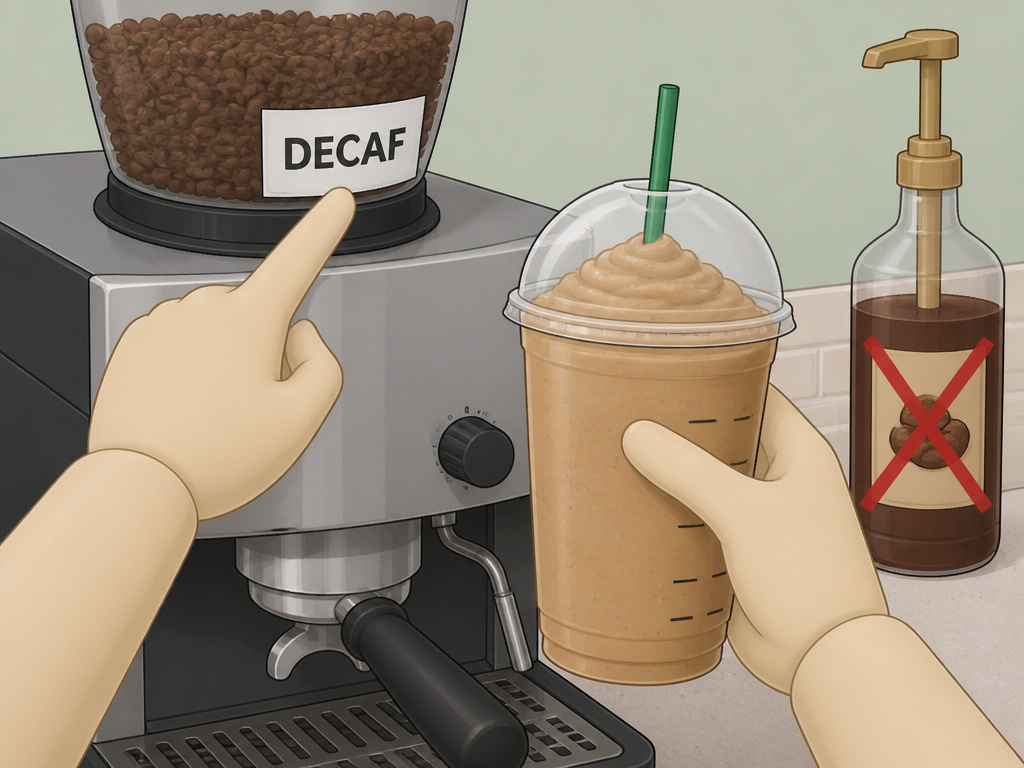
You love the taste of coffee but not the 3 a.m. ceiling stare. Most major chains can accommodate this, but the process and outcome differ.
At Starbucks, you can order any Espresso Frappuccino—like the Espresso or Mocha variety—with decaffeinated espresso shots. This substitutes the primary caffeine source. A decaf espresso shot still contains 3-15 mg of caffeine, but that’s a reduction of over 90% compared to the standard 155 mg in a grande.
The barista must use the decaf espresso hopper on their machine. During peak hours, remind them as they start the drink. The taste is nearly identical; the decaffeination process removes caffeine but aims to preserve the flavor compounds.
Other chains, like McDonald’s, may not offer a decaf coffee frappe option. Their frappé base is a pre-made, caffeinated coffee syrup. There’s no decaf version of that syrup in standard operations. Your only option is to choose a non-coffee frappe or a different beverage entirely.
Before you start: If you have a severe caffeine sensitivity or are pregnant, consult your doctor. “Decaf” does not mean caffeine-free. Trace amounts remain, and cross-contamination with regular espresso equipment is possible.
This is a key distinction between a frappe and a hot brewed coffee. Swapping to decaf brew is simple. Swapping a pre-formulated, chilled coffee syrup is not. Your success depends entirely on the chain’s recipe flexibility.
TL;DR: Starbucks can make decaf espresso frappes. Other chains often cannot, as their coffee base is a pre-mixed, caffeinated syrup.
How to Make a Low-Caffeine or Decaf Frappe at Home
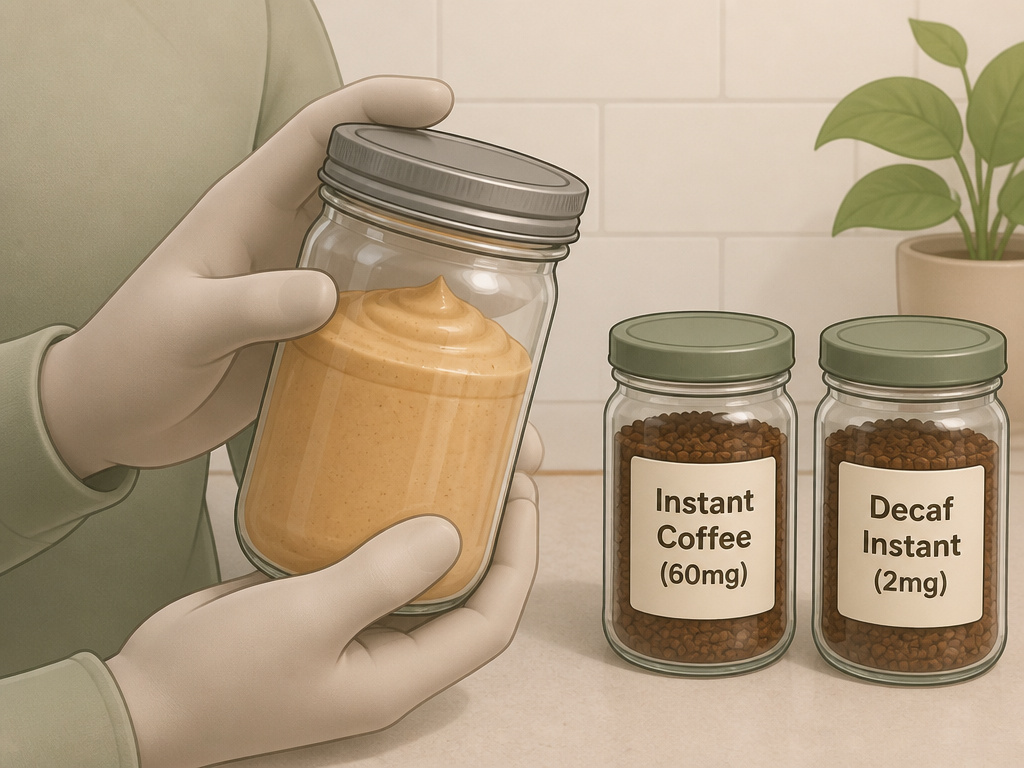
This is where you have complete control. The caffeine level is determined by your choice of coffee base.
The classic Greek frappé method is the simplest template. You need a shaker or a jar with a tight lid. 1. Add two tablespoons of instant coffee. This is your caffeine source. Regular instant coffee delivers about 60-75 mg of caffeine per tablespoon. 2. Add two tablespoons of sugar and two tablespoons of cold water. 3. Shake vigorously for 30 seconds until a thick, pale brown foam forms. 4. Pour over a glass full of ice. Top with cold water or a splash of milk.
To modify the caffeine, you have two direct levers. First, use decaffeinated instant coffee. It contains about 2-4 mg per tablespoon. Second, reduce the number of tablespoons. One tablespoon of regular instant will give you a 60 mg drink, comparable to a strong cup of black tea caffeine.
The commercial blended style is trickier to replicate without a powerful blender. The goal is the creamy texture. For a low-caffeine version, start with a single shot of decaf espresso (or half a cup of cold brew made with decaf beans) as your base. Add ice, milk, and your preferred sweetener or flavor syrup. Blend until smooth.
The advantage of homemade is cost and precision. You know exactly what went in. You’re not guessing about standard coffee caffeine levels from a corporate syrup tank.
TL;DR: Use decaf instant coffee or a single decaf espresso shot as your base. The Greek shaking method gives you authentic texture without a blender.
Caffeine Comparison: Frappes vs. Other Drinks
Is a frappe a “coffee drink” or a “dessert drink” when it comes to stimulation? Putting its caffeine content next to common benchmarks provides clarity.
| Beverage (Typical Serving) | Approx. Caffeine (mg) | Frappe Equivalent |
|---|---|---|
| Brewed Coffee (8oz) | 95 | A grande Starbucks Coffee Frappuccino (110 mg) has slightly more. |
| Single Espresso Shot (1oz) | 64 | It takes about 2.5 shots to match a McDonald’s Caramel Frappé (100 mg). |
| Black Tea (8oz) | 47 | A frappe has more than double the tea caffeine content. |
| Can of Cola (12oz) | 34 | A frappe has triple the caffeine in Coca-Cola. |
| Starbucks Caramel Frappuccino (Grande, 16oz) | 100 | The baseline for this comparison. |
| Dunkin’ Caramel Swirl Frozen Coffee (Medium, 24oz) | 297 | Exceeds the caffeine in a Monster Energy can (160 mg). |
| Decaf Espresso Frappuccino (Grande) | 10-25 | Similar to a cup of hot chocolate caffeine. |
The table shows a coffee frappe is a legitimate source of caffeine, not a placebo. It sits firmly in the “coffee drink” category, outpacing tea and soda by a wide margin. The Dunkin’ version ventures into energy drink caffeine territory.
This matters for your daily intake. The FDA cites 400 mg per day as a level not generally associated with dangerous effects. One large Dunkin’ frozen coffee covers 75% of that. Pair it with a morning cup of drip coffee, and you’ve likely exceeded it.
Think of it this way. The sugar and cream mask the coffee’s bitterness, but they don’t neutralize the caffeine. Your body processes the 100 mg from a frappe exactly the same as the 100 mg from a black drip coffee. The delivery system is just sweeter and colder.
TL;DR: A standard coffee frappe has caffeine comparable to a strong cup of coffee, far more than tea or soda. Large Dunkin’ versions rival energy drinks.
Frequently Asked Questions
Does a caramel frappe have caffeine?
Yes, if it’s a coffee caramel frappe. At McDonald’s and Starbucks, the caramel flavor is a syrup added to a coffee base. A medium McDonald’s Caramel Frappé has 100 mg of caffeine. Always check the full name on the menu.
Is there a decaf frappe at Starbucks?
You can order a decaf version of any Espresso Frappuccino. Ask for “decaf espresso shots” in drinks like the Espresso Frappuccino or Mocha Frappuccino. The decaf shots reduce caffeine to about 10-25 mg per grande. You cannot decaffeinate a Coffee Frappuccino, as its base is a pre-made coffee syrup.
Which frappes have the least caffeine?
The “Creme” based frappes have the least, typically 0 mg if they contain no chocolate or matcha. The Starbucks Vanilla Bean Creme Frappuccino is a prime example. For coffee flavor with minimal caffeine, a decaf Espresso Frappuccino is your best bet.
How much caffeine is in a homemade frappe?
It depends on your coffee. Two tablespoons of standard instant coffee contain about 120-150 mg of caffeine. Using decaf instant coffee drops this to 5-10 mg. You control the dose completely.
Can I get a coffee frappe without coffee?
No, by definition. If you remove the coffee, it becomes a different beverage—a “creme” frappe or a milkshake. You can order a coffee-flavored syrup in a creme base, but it will not taste like coffee and will contain no caffeine.
Are frappes worse for you than coffee?
This question often masks a concern about energy drink risks from sugar and caffeine combos. Frappes typically contain significantly more sugar and calories than black coffee due to syrups, whipped cream, and base mixes. The caffeine content is similar, but the overall nutritional profile is closer to a dessert.
The Bottom Line
Coffee frappes are caffeinated beverages. A standard medium from Starbucks or McDonald’s delivers a solid 100 mg, right in the heart of coffee territory. Dunkin’ serves a heavier hit, with up to 300 mg in their larger cups.
The word “frappe” isn’t a caffeine guarantee. You must read the full menu name. Look for “coffee,” “espresso,” or “mocha.” See “creme” or a fruit name? That’s your signal for a caffeine-free alternative.
If you need to limit intake, you have options. Order a decaf espresso frappe at Starbucks, or make your own with decaf instant coffee. You keep the flavor and texture but ditch most of the stimulant. Remember that the whipped cream and syrup add plenty of sugar, but they don’t cancel out the caffeine working in your system.
