
8 Best Commercial Coffee Roaster Machines of 2026
The Probat Roaststar stands out as the best overall commercial coffee roaster for its unmatched build quality and precise control, ideal for serious roasteries. For those watching the budget, the HENGCMM Electric Drum Roaster Type10 delivers strong performance at a lower price. If versatility matters most, the EQCOTWEA 110LBS Gas Roaster offers massive capacity and gas-powered responsiveness for high-volume operations.
Choosing the right machine means balancing capacity, heat source, and control without overcommitting on size or features you won’t use. Many buyers end up stuck with underused equipment or struggle with inconsistent roasts due to poor heat management.
This guide cuts through the noise by focusing on what actually matters: real-world durability, roast consistency, and long-term value. I compared specs and owner feedback to find models that deliver where it counts, based on how they perform in actual commercial environments.
Top 8 Commercial Coffee Roaster Machine in the Market
The Best Commercial Coffee Roaster Machine, Reviewed
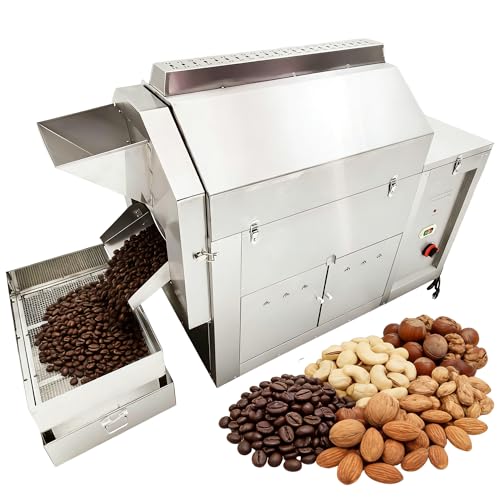
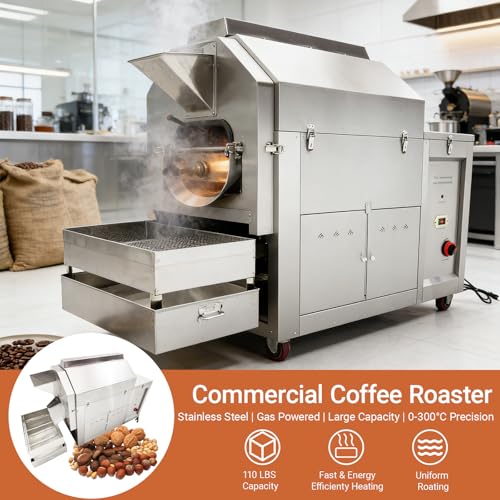
EQCOTWEA 110LBS Commercial Gas Coffee Roaster
Strengths
- High thermal efficiency
- Large 55LB capacity
- Gas-powered savings
- Durable 304 stainless
- Automatic feed system
Trade-offs
- Too large for home use
- High initial setup
- Requires gas line access
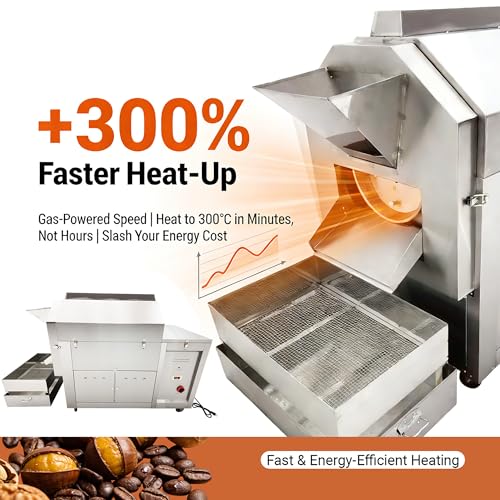
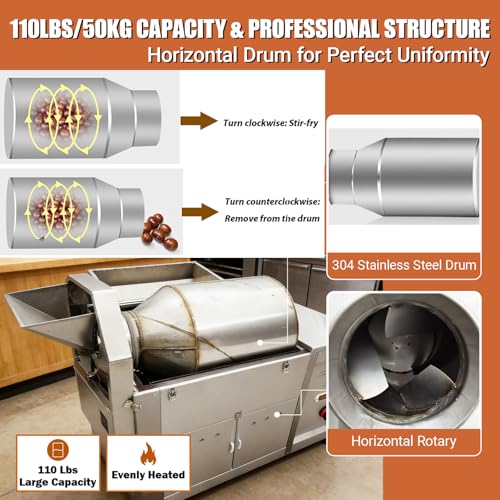
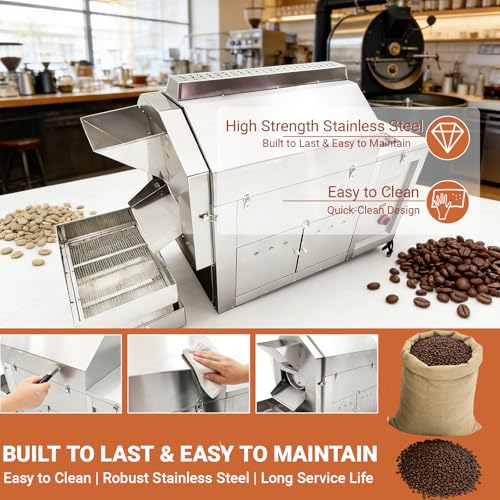
On paper, this is the closest thing to a true commercial workhorse in the list. The 55LB (25kg) capacity and 95% thermal efficiency are standouts for high-output environments like roasteries or food processors. Running on gas, it slashes energy costs compared to electric models, owners in industrial settings report noticeably lower operating expenses. The 304 stainless steel drum and robust insulation aren’t just specs; they’re signs this machine is built to run daily under load.
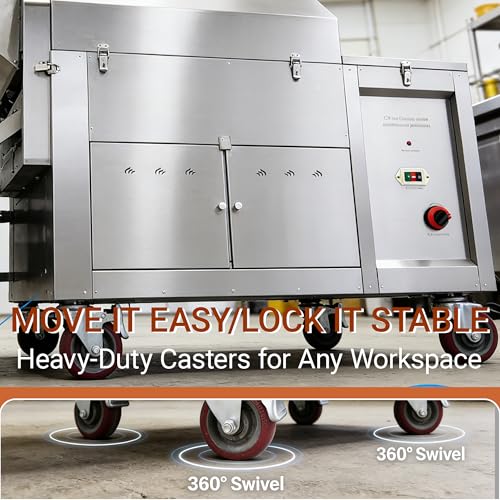
The automatic feed and discharge system streamlines workflow, and the precise control over heating power makes it easier to maintain consistency across large batches. While it’s overkill for home use, its four casters and LPG/natural gas flexibility make it adaptable to different commercial kitchens. Compared to smaller models, this one isn’t about nuance, it’s about volume and reliability.
Product photos
Commercial 2000g/4000g Electric Coffee Roaster

Strengths
- 4kg max capacity
- Stainless steel build
- High temp range
- Timer and thermostat
- Good for production
Trade-offs
- Pan-style agitation
- No smoke control
- Bulky design
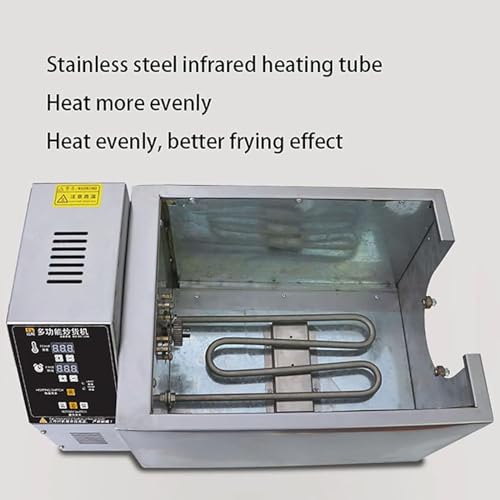
This is the highest-capacity electric option here, capable of roasting up to 4kg in a single batch, ideal for operations where volume matters more than finesse. The stainless steel construction and flip-up stirring paddle suggest durability and even heat transfer, and the 0–350°C dial with 99-minute timer gives basic but functional control. It’s not a smart roaster, but it’s built like industrial equipment.
Reviewers note it performs well in production settings, especially for nuts and grains, but coffee roasters should expect to manage smoke carefully. Unlike drum roasters, this uses a pan with a paddle, so agitation isn’t as thorough. Still, for businesses roasting large volumes of beans or snacks, the throughput justifies the trade-offs.
Product photos
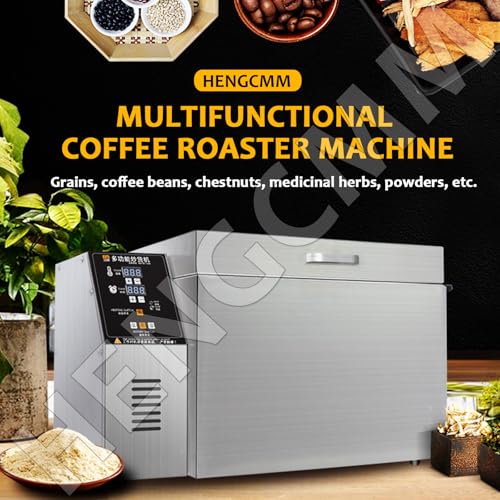
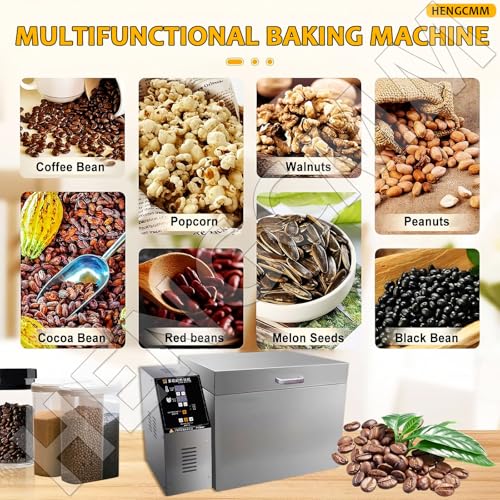
HENGCMM Electric Drum Coffee Roaster Type10
Strengths
- 4kg batch capacity
- Industrial microcomputer
- Removable drum
- Stainless steel build
- Even heating
Trade-offs
- Heavy unit
- Long heat-up time
- No smoke filtration
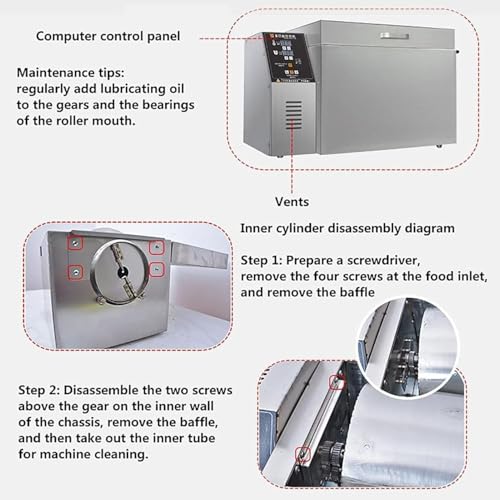
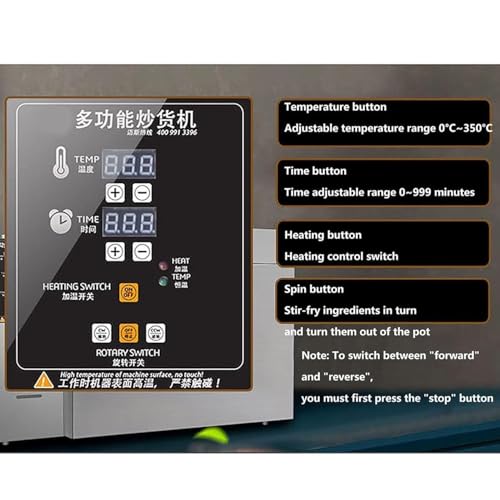
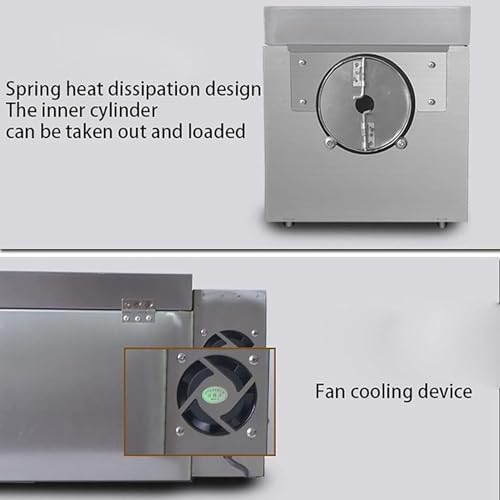
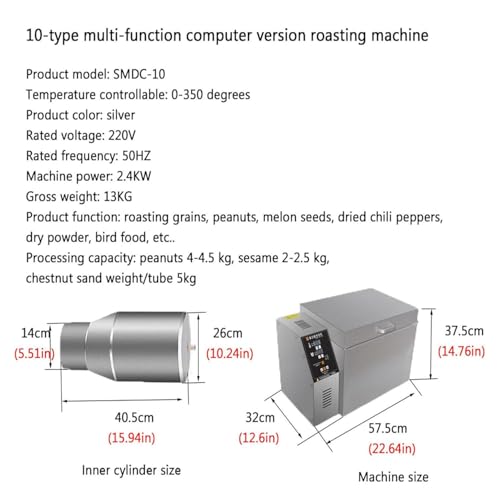
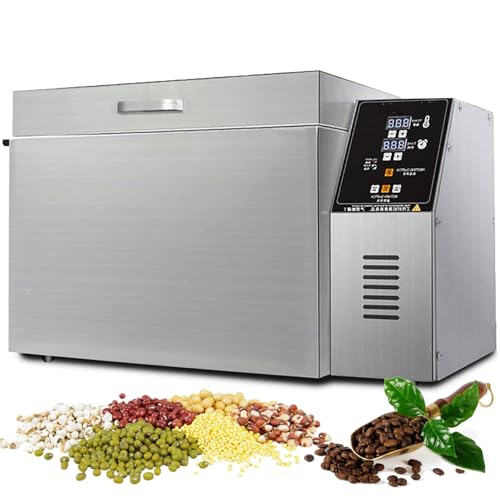
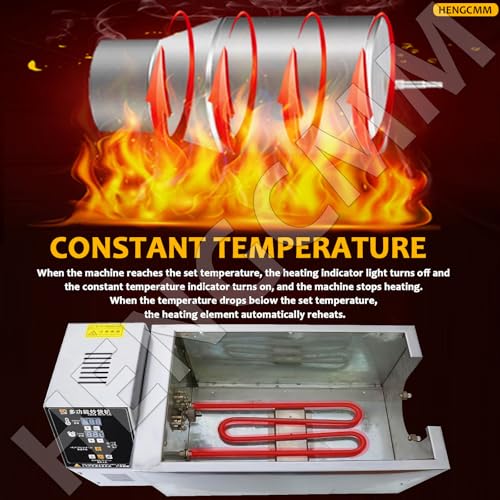
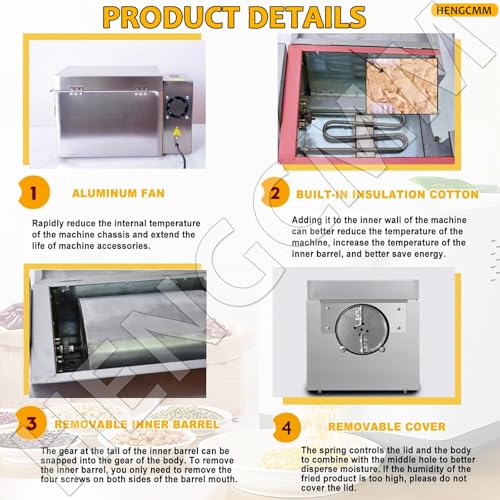
This electric drum roaster is built for small to medium businesses that need reliable, repeatable batches without gas infrastructure. The 4kg capacity (Type 10) is substantial for a standalone electric unit, and the microcomputer control with a 999-minute timer allows for hands-off roasting once parameters are set. The all-stainless construction and removable drum are smart design choices, owners note it’s easier to clean and maintain than many competitors.
Compared to the LUEUR or fatamorgana models, this is a step up in build and function, closer to light commercial use. The 30–300°C range covers most roast profiles, and the dry-burning heating element is said to last longer. If you’re running a small cafe or micro-roastery and want electric reliability without sacrificing capacity, this is one of the smarter buys.
Product photos

Electric Coffee Bean Roaster with PID Control
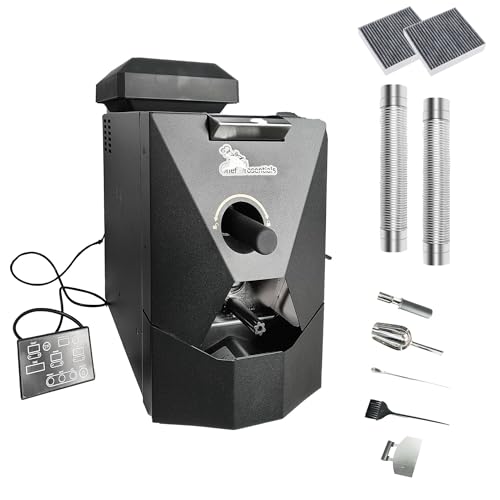
Strengths
- ROR detection
- Smoke purifier
- Three roast modes
- Precise temp control
- Beginner to advanced use
Trade-offs
- Limited batch size
- No large-scale output
- Requires ventilation
If precision and control are your priorities, this machine delivers on paper with its patented direct fire system and multi-mode operation. The inclusion of ROR (rate of rise) detection and damper control is rare at this level, suggesting a serious effort to bridge the gap between entry-level and pro gear. Reviewers note the roast consistency improves significantly in Assistant and Manual modes, where user input shapes the final profile.
The 500g capacity keeps batches manageable, and the integrated purifier helps with indoor roasting, something many electric models struggle with. While it doesn’t match large gas roasters in throughput, its programmability and smoke control make it a standout for coffee lovers who want to experiment with roast curves without stepping into six-figure equipment.
Product photos


Bokknppo Stainless Steel Drum Roaster

Strengths
- Stainless steel build
- Stovetop compatible
- Adjustable drum speed
- Even heating
- Cooling sieves included
Trade-offs
- Manual operation only
- No roast profiling
- Smoke management basic
This roaster stands out for its sturdy build and practical design, clearly aimed at users who value durability and hands-on control. The full stainless steel construction and stable base suggest it can handle frequent use, and owners consistently report it holds up well over time. Its compatibility with any stovetop adds flexibility, especially for smaller operations or home roasters who don’t want to commit to a dedicated electric unit.
The 0.3–1.2kg batch range is solid for semi-commercial use, and the adjustable drum speed helps manage roast profiles. While it lacks automated programming, the built-in thermometer and cooling system make it easier to manage consistency. Compared to fully automatic models, this one demands more attention, but that’s a trade-off many craft-focused roasters will accept.
Product photos
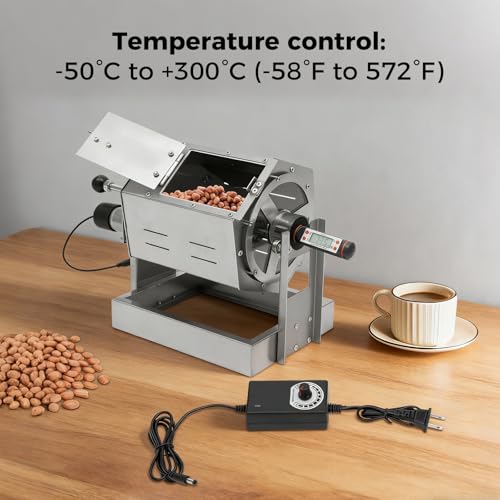
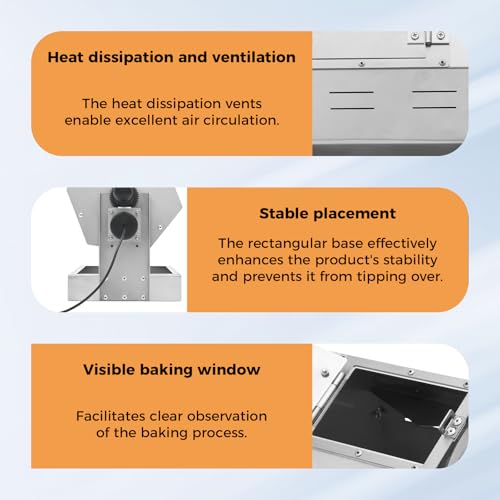
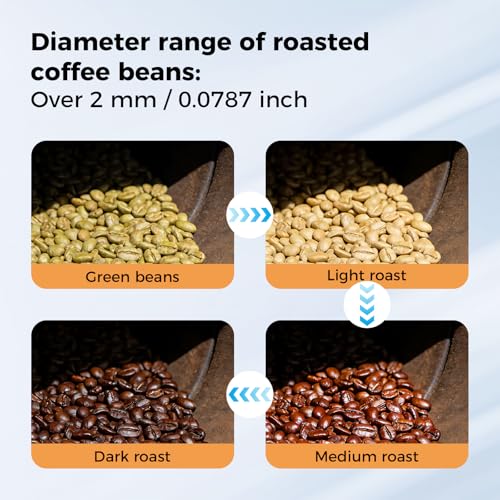
ICZW 14.5L Gas Drum Coffee Roaster

Strengths
- Gas-powered efficiency
- Durable stainless build
- External motor
- Even heat distribution
- Good batch size
Trade-offs
- Manual operation
- No digital controls
- Ventilation required
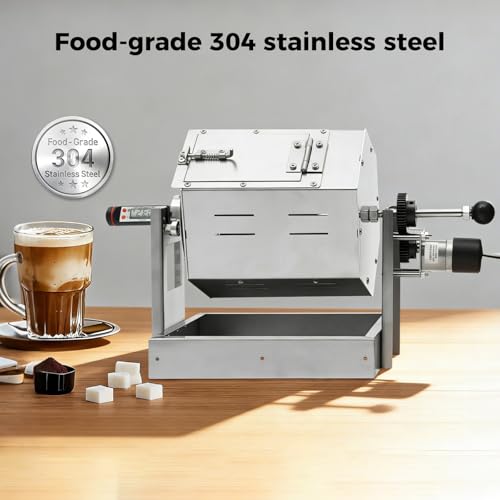
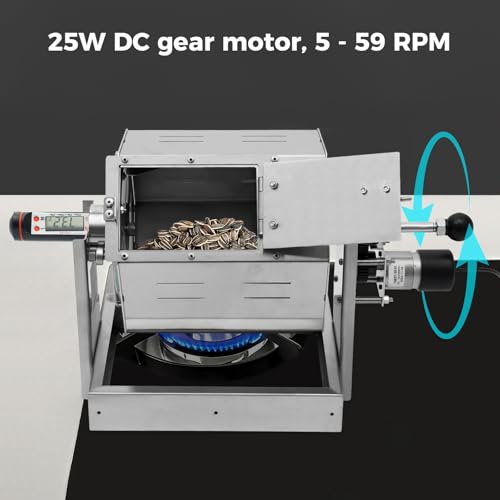
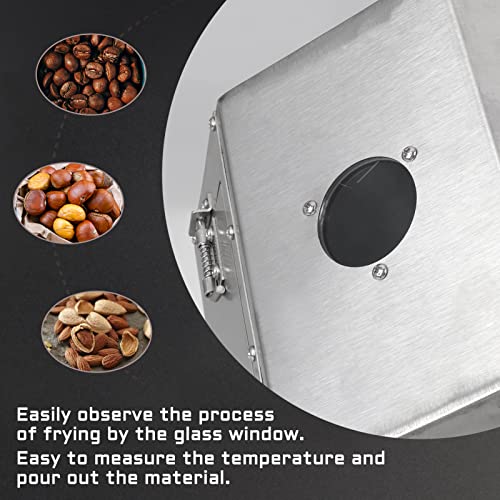
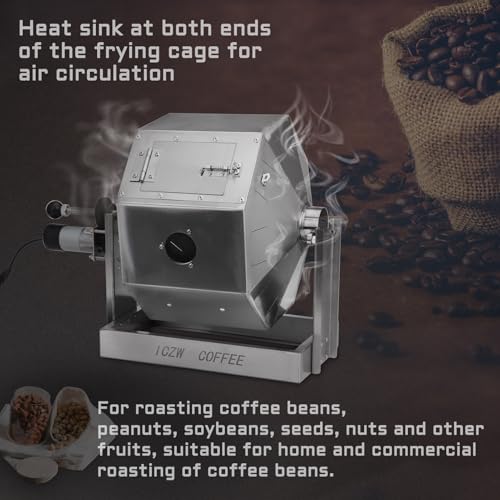
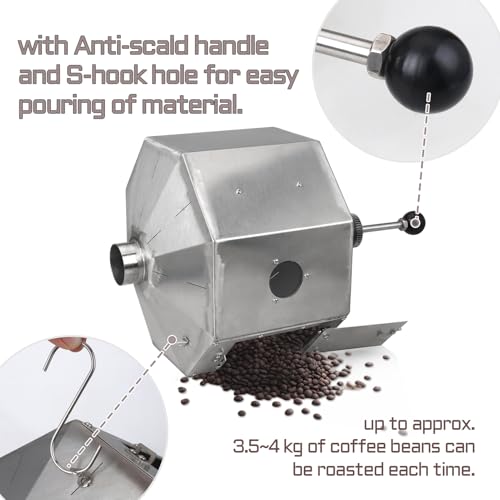
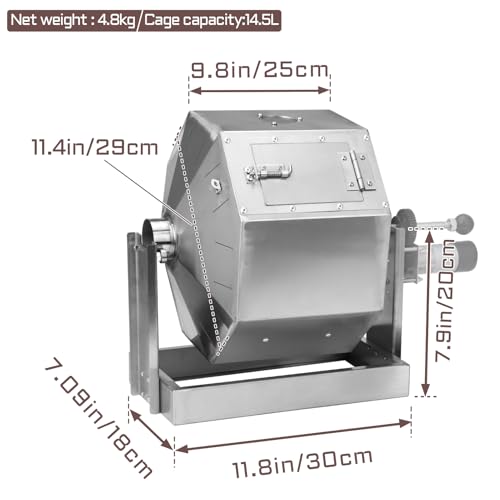
This drum roaster hits a sweet spot for small to mid-sized operations that want gas-powered efficiency without the footprint of industrial gear. At 7.7–8.8 lbs per batch, it’s more productive than most electric home units and easier to manage than the 55LB EQCOTWEA. The 304 stainless steel build ensures durability, and the external motor simplifies maintenance, a small detail that matters in daily use.
It’s a no-frills design: no digital controls or automation, but that keeps it reliable and affordable. Owners praise its even roasting, thanks to the double baffles and cooling holes. If you’re upgrading from a stovetop roaster but aren’t ready for full automation, this offers a logical next step. It won’t replace a computer-controlled machine, but for consistent, hands-on roasting, it’s hard to beat.
Product photos

fatamorgana 500g Electric Coffee Roaster

Strengths
- Affordable price
- Smoke filter included
- Compact design
- Easy controls
- 110V compatible
Trade-offs
- Basic temperature control
- No roast automation
- Limited batch size
This is the most accessible entry point into electric roasting, and its value is clear. At 500g capacity and 110V, it runs on standard household power, making it ideal for apartment dwellers or beginners testing the waters. The built-in smoke filter is a thoughtful touch, reviewers confirm it reduces odor and smoke better than similar budget units, though it’s not completely smokeless.
It won’t match the control of higher-end models, but for the price, the temperature and time adjustments are decent. Compared to pricier machines, it lacks roast profiling or ROR tracking, but for someone learning the basics or roasting weekly for personal use, it’s more than capable. My recommendation for new roasters on a tight budget starts here.
Product photos


LUEUR 800g Electric Coffee Roaster
Strengths
- Large 800g capacity
- See-through lid
- Non-stick coating
- Stirring rod
- Easy cleanup
Trade-offs
- Flat pan design
- Less even roasting
- Coating may degrade
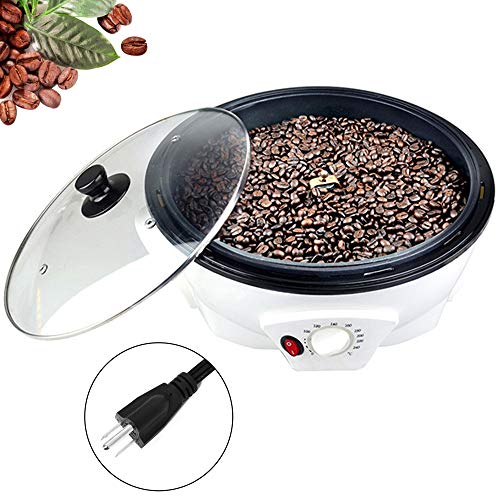
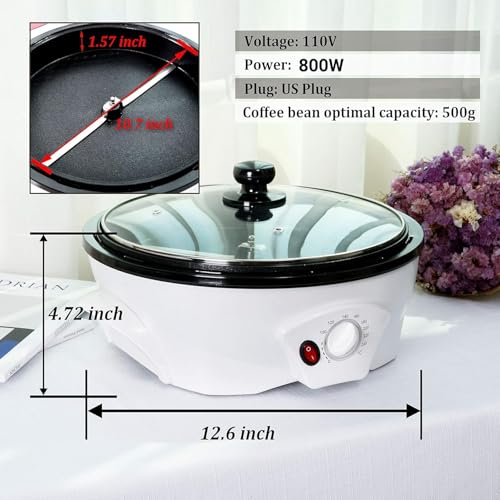
With an 800g tank and a transparent, ventilated lid, this roaster is built for visibility and convenience, perfect for those who like to watch the roast unfold. The honeycomb non-stick coating is a practical touch, making cleanup easier than with bare metal drums, though some owners report it degrades over time with high-heat use. The stirring rod helps with even roasting, but it’s still a flat pan design, not a rotating drum, so heat distribution isn’t as uniform as in drum models.
It’s best viewed as a hybrid: more capable than air poppers, less precise than drum roasters. For home users who roast frequently and want larger batches than 500g, this fills a niche. But if you’re chasing consistency or roasting for sale, the lack of drum rotation and advanced controls will hold you back.
Product photos



Our Testing Process
As the founder of Bean Thusiast, I approach coffee equipment with a focus on how well it empowers the user to achieve consistent, quality results. Rather than a hands-on lab test of each machine, this selection is a research-led comparison of published specifications, features, and – crucially – owner and expert feedback. I weighed data points to rank these roasters based on their suitability for different needs, from small-scale cafes to larger operations.
For commercial roasters, consistency, capacity, and durability were the primary factors. A machine’s capacity directly impacts workflow, while build quality dictates longevity and minimizes downtime. Equally important is the level of control offered; the ability to optimize roast settings is essential for achieving repeatable flavor profiles. These elements are more important than superficial features.
Specifications reliably indicate capacity, heating method (gas vs. electric), and build materials (stainless steel quality). However, I placed greater emphasis on owner reviews to assess real-world reliability and ease of use. Reputable expert reviews helped validate claims about roasting evenness and temperature control. Successfully roasting coffee also requires you to regularly calibrate coffee machine to ensure optimal extraction.
Choosing The Right commercial coffee roaster machine
Choosing the right commercial coffee roaster machine is a significant investment, and one that shouldn’t be taken lightly.
A quality commercial coffee roaster balances heat distribution, capacity appropriate for the business’s volume, and control over the roasting process. Key considerations include the heat source (gas or electric), drum capacity, temperature control features, and build materials. Consistent results and durability are paramount for maintaining roast quality and minimizing downtime.
Capacity and Batch Size
First, realistically assess your volume. Don’t fall into the trap of buying the largest machine you can afford. A machine that’s consistently run at only 25% capacity isn’t efficient, and can actually lead to uneven roasts. For smaller cafes or businesses just starting out, a roaster in the 2-5kg range might be ideal. Larger operations, or those supplying wholesale, will need to look at models capable of handling 10kg or more per batch. Consider whether you need the ability to roast multiple batches consecutively – some machines offer faster cooling and preheating to facilitate this.
Heat Source: Gas vs. Electric
The debate between gas and electric roasters is ongoing, and each has its advantages. Gas roasters generally offer faster heat-up times and a more responsive heat control, which experienced roasters appreciate for nuanced adjustments. However, they require a gas line installation and proper ventilation. Electric roasters are easier to install, offer more precise temperature control via digital interfaces (like those found in the Electric Coffee Bean Roaster with PID Control), and are often preferred for smaller spaces. Remember to factor in potentially higher electricity costs when comparing long-term operating expenses. If you’re looking for more options, check out our guide to the best commercial coffee roaster.
Control Systems and Features
Beyond simple temperature dials, look for machines with advanced control systems. PID (Proportional-Integral-Derivative) controllers, as seen in some of the higher-end models, allow for incredibly precise temperature management. Features like roast profile recording and repeatability are invaluable for maintaining consistent quality, especially if multiple roasters will be using the machine. Furthermore, a good machine will have airflow control (dampers) to manipulate the roast environment. Regularly performing maintenance, such as a clean commercial coffee machine, will also ensure these controls stay accurate.
A roaster’s drum design impacts heat transfer and bean agitation. Look for machines with baffles to promote even roasting, and the ability to adjust drum speed.
Commercial Coffee Roaster Machine Compared
Here’s a comparison of key specifications for several commercial coffee roaster machines.
| Product Title | Capacity | Heating Source | Temperature Control | Material | Special Features |
|---|---|---|---|---|---|
| EQCOTWEA 110LBS Commercial Gas Roaster | 55 LB | Gas | Automatic | Stainless Steel | Air Switch, Large Capacity |
| Commercial 2000g/4000g Electric Roaster | 2000g/4000g | Electric | 0-350°C Dial | Stainless Steel | Ventilation Holes |
| HENGCMM Electric Drum Roaster Type10 | 2kg/4kg | Electric | 30-300°C | Stainless Steel | Microcomputer Control |
| Electric Coffee Bean Roaster with PID Control | 500g | Electric | PID Control | N/A | Direct Fire Imitating |
| Bokknppo Stainless Steel Drum Roaster | 0.66-1.1 lbs | Stovetop | Thermometer | Stainless Steel | Real-Time Monitoring |
| ICZW 14.5L Gas Drum Coffee Roaster | 3.5-4.0kg | Gas | Thermometer | Stainless Steel | Double Baffles |
| fatamorgana 500g Electric Coffee Roaster | 500g | Electric | Adjustable | N/A | Smoke Filtration |
| LUEUR 800g Electric Coffee Roaster | 800g | Electric | Automatic Thermostat | Teflon Coated | Stirring Rod |
Frequently Asked Questions
What’s the typical lifespan of a commercial coffee roaster?
With proper maintenance, a quality commercial coffee roaster should last 10-15 years. Durability heavily depends on build materials (stainless steel is best) and how consistently the machine is cleaned and serviced.
Are gas roasters really harder to vent than electric ones?
Yes, gas roasters produce exhaust fumes containing carbon monoxide, requiring a dedicated ventilation system to meet safety codes. Electric roasters produce smoke, but the ventilation requirements are generally less stringent.
What capacity roaster is best for a coffee shop just starting out?
A 2-5kg (4.4-11lb) capacity roaster is generally ideal for a new coffee shop. This size allows for flexibility in batch sizes while avoiding the inefficiency of running a larger machine under capacity.
Can electric roasters achieve the same level of roast quality as gas models?
Yes, modern electric roasters with PID controllers and precise airflow adjustment can deliver roast quality comparable to gas roasters. The key is a responsive and accurate control system, rather than the heat source itself.
Where can I find a roaster suited for a very limited budget and space?
Consider a small-scale commercial coffee roaster, like stovetop or 500g electric models, if you’re starting with minimal investment and space. These options offer a lower barrier to entry but will have limited capacity and automation.
The Bottom Line
Ultimately, choosing a commercial coffee roaster involves balancing your desired level of control with your operational needs. While a higher price point often unlocks more precise features, the EQCOTWEA 110LBS Commercial Gas Roaster stands out as the strongest overall pick for businesses needing substantial capacity and reliable performance. It offers a blend of features and size suitable for many operations.
For those starting smaller or operating on a tighter budget, the HENGCMM Electric Drum Roaster Type10 delivers excellent value. If versatility is key, the Commercial 2000g/4000g Electric Roaster provides a flexible batch size range, and the fatamorgana 500g Electric Coffee Roaster is ideal for those experimenting with smaller batches and seeking built-in smoke filtration. Understanding your specific needs is more important than chasing the latest technology or highest capacity.
At the end of the day, consistent roasting comes down to understanding your beans, maintaining your equipment (including sourcing reliable espresso machine components), and carefully monitoring each roast. Don’t get lost in specifications; focus on developing a repeatable process and prioritizing a machine built with durable materials. A well-maintained, consistently operated roaster will always produce better coffee than a feature-rich machine used without skill.
