
7 Best Commercial Coffee Roasters of 2026
The overall best commercial coffee roaster is the Electric Coffee Roaster with PID Control, delivering precise temperature management and consistent results. For high-volume operations, the EQCOTWEA 110LBS Gas Coffee Roaster stands out with its massive 55-pound capacity. If you’re watching your budget but still want solid performance, the LUEUR Electric Coffee Roaster 110V offers a reliable entry point.
Choosing a commercial roaster isn’t just about size, it’s about finding a machine that delivers repeatable, even roasts while fitting your workflow and space. Too many buyers focus only on capacity and end up with underpowered or overly complex systems.
As the founder of Bean Thusiast, I researched these roasters based on specs, owner feedback, and years spent studying roast profiles and equipment performance. This guide breaks down what actually matters, temperature control, build quality, ease of use, so you can pick a roaster that earns its place in your operation.
Top 7 Commercial Coffee Roaster in the Market
The Best Commercial Coffee Roaster, Reviewed
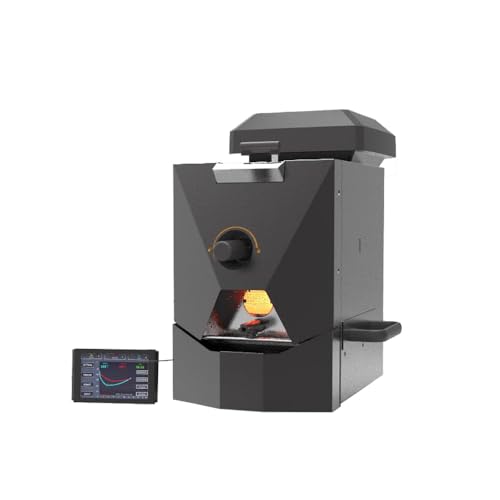
Electric Coffee Roaster with PID Control
Strengths
- PID temperature control
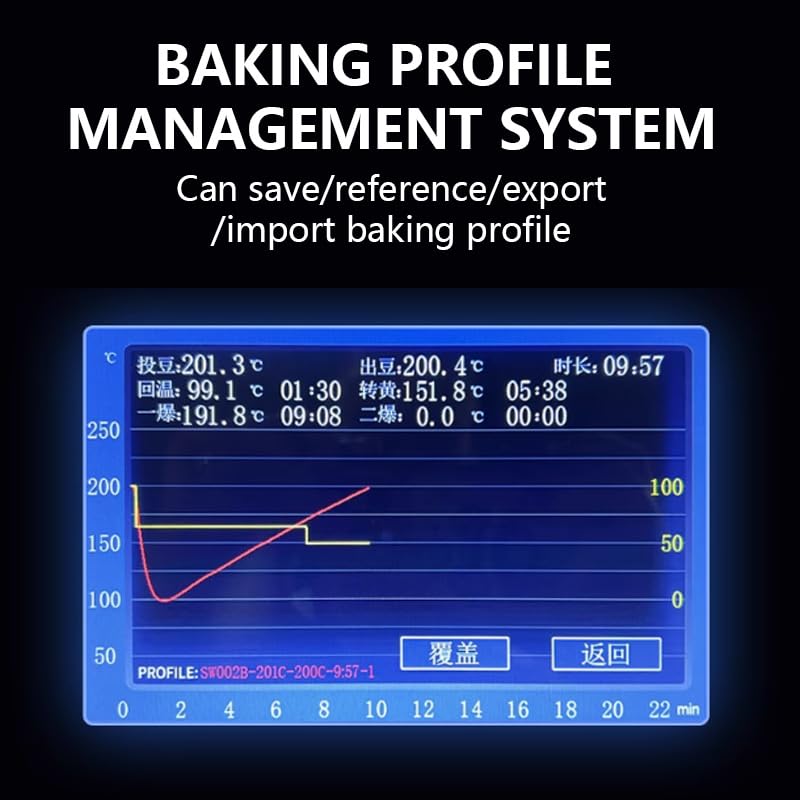
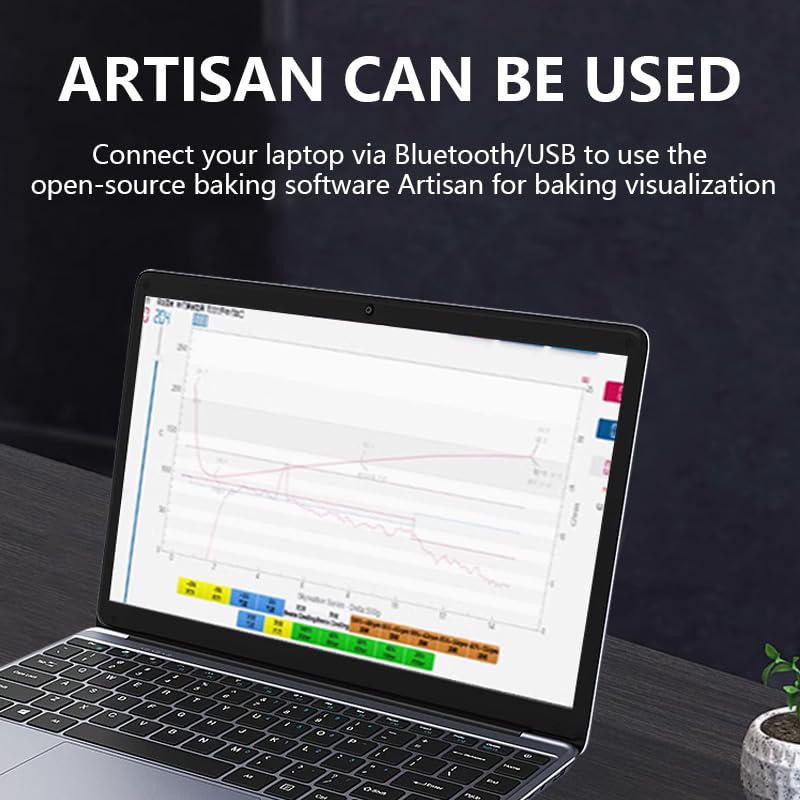
- Roast curve recording
- Smokeless operation
- Direct fire imitating system
- Precision roasting
Trade-offs
- Same 500g capacity
- Higher learning curve
- No large-scale output
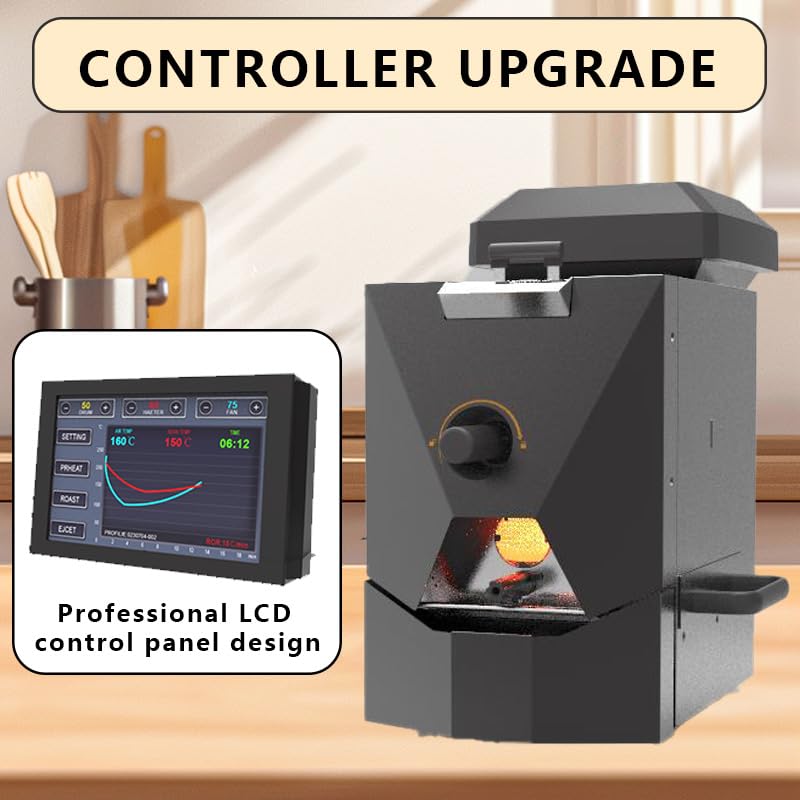
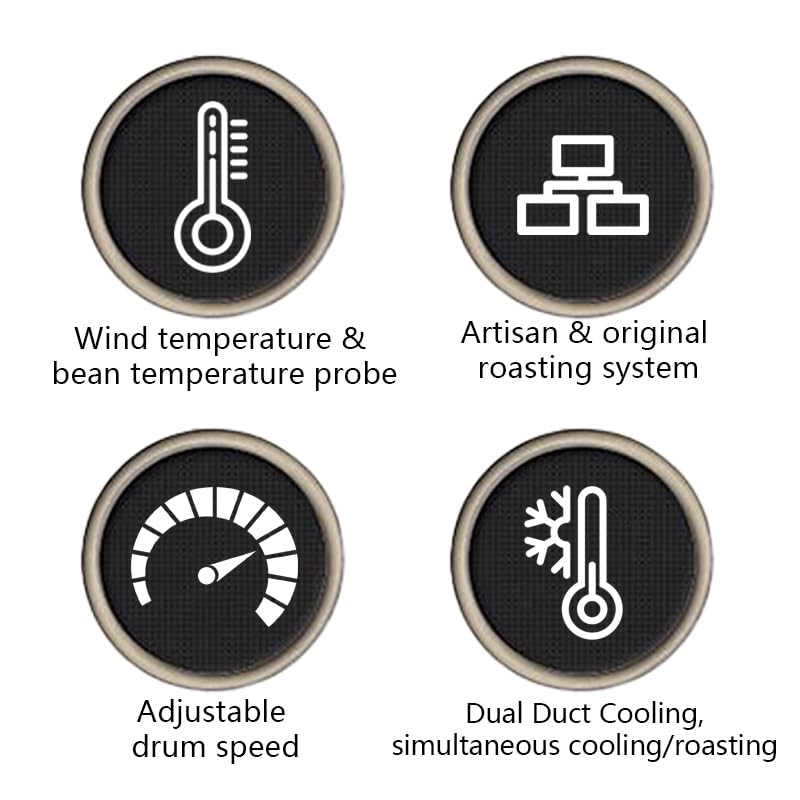
On specs alone, this looks identical to the B0CRZ4H6R2, but the inclusion of roast curve recording and PID temperature control pushes it into pro-artisan territory. These features mean you can log, replicate, and fine-tune profiles down to the degree, which is critical for branding consistency if you’re selling beans. The 500g capacity remains a limitation, but for specialty roasters focused on quality over quantity, that’s a feature, not a flaw.
Owners in small-batch specialty shops highlight how the PID stabilizes temps during critical roast phases, reducing scorching risks. It’s essentially the same workhorse as the other electric model, but with the brains upgraded. If you’re serious about developing signature profiles, this is the smarter buy over the non-PID version, even if the exterior looks unchanged.
Product photos
Electric Coffee Bean Roaster B500
Strengths
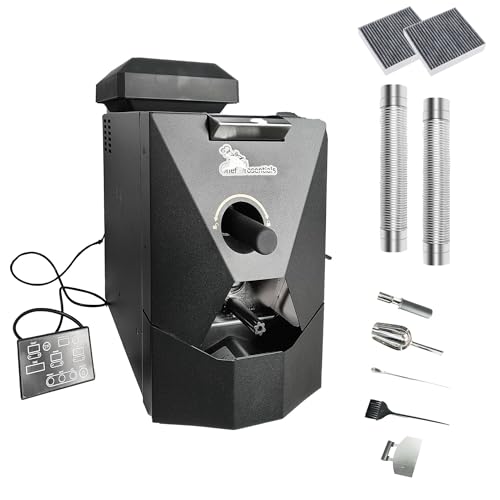
- Smoke purifier included
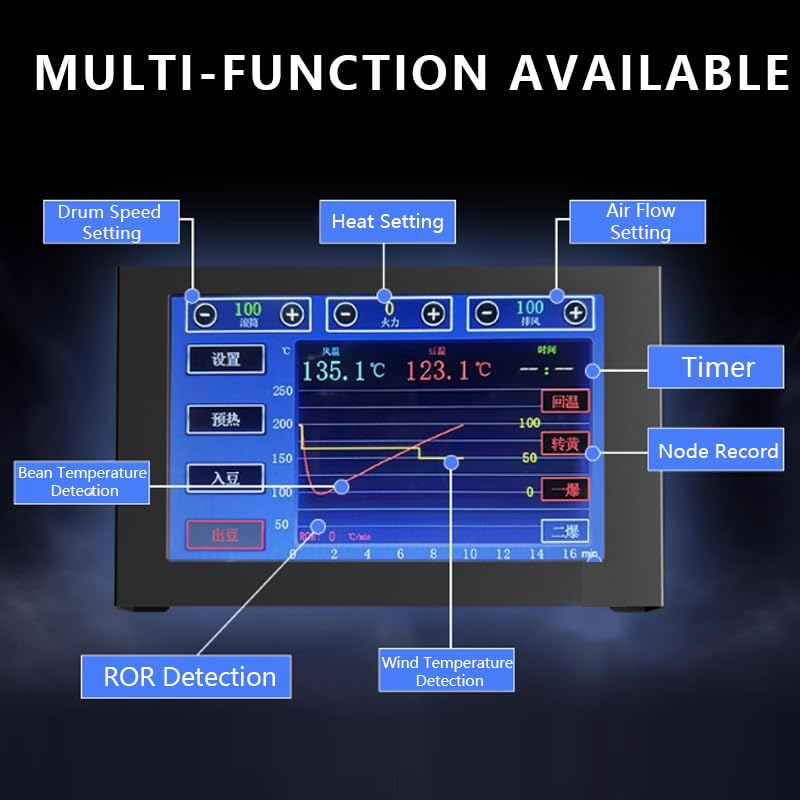
- ROR and bean temp detection
- Three roasting modes
- Efficient batch cycling
- Direct fire imitating system
Trade-offs
- 500g max capacity
- No casters for mobility
- Limited to electric power
This model brings serious tech to the mid-tier market, especially with its patented direct fire imitating system and ROR (rate of rise) detection, features usually seen in much pricier rigs. The 500g capacity keeps batches manageable, and the three-mode interface (Auto, Assistant, Manual) makes it accessible for beginners while still offering depth for artisans. Owners praise the smoke purifier, noting it makes indoor roasting far more practical, even in small spaces.
Where it really pulls ahead is workflow efficiency: the ability to preheat the next batch while cooling the current one cuts downtime significantly. Compared to the Bokknppo, it’s less about raw capacity and more about repeatable, clean roasting cycles. I’d pick this over the base B500 model for the added control, even if the build seems nearly identical on paper.
Product photos


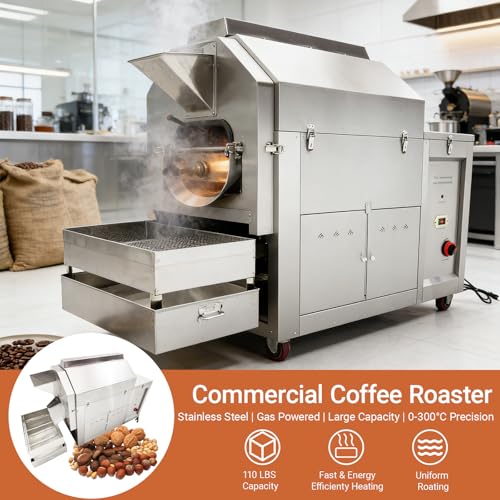
EQCOTWEA 110LBS Gas Coffee Roaster
Strengths
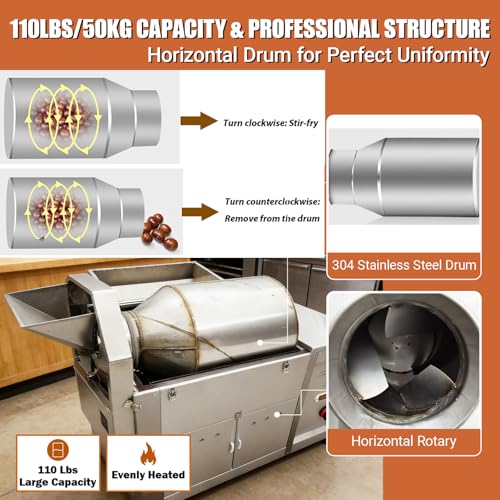
- 25kg batch capacity
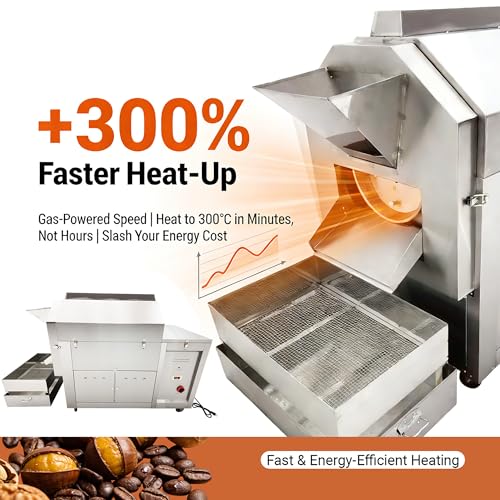
- Gas-powered efficiency
- 304 stainless steel drum
- High thermal efficiency
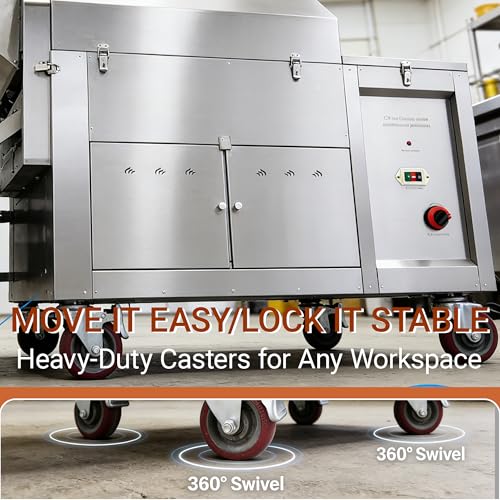
- Equipped with casters
Trade-offs
- Massive footprint
- Requires gas setup
- Overkill for small batches
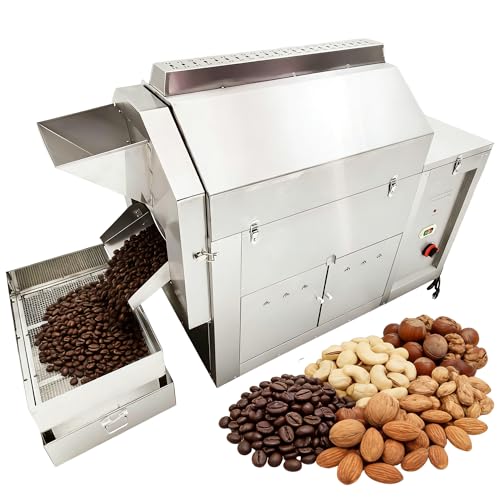
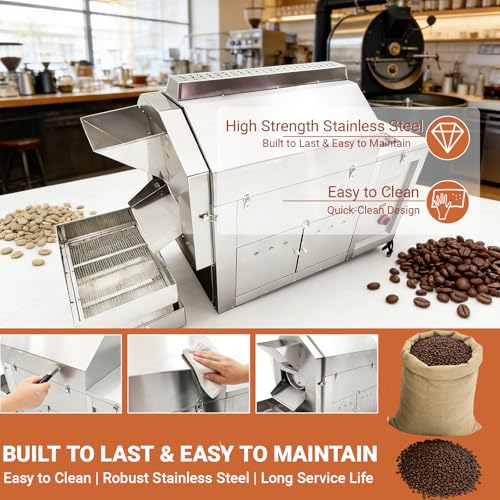
This is the only true heavy-duty commercial roaster on the list, 55lbs (25kg) per batch is serious business. Built like industrial kitchen equipment, its 304 stainless steel drum and gas-powered efficiency make it a fit for production roasteries, hotels, or large cafes with daily high-volume needs. The thermal efficiency claim of over 95% lines up with owner feedback about lower fuel costs and faster heat recovery between batches.
Gas operation gives it an edge in running cost and responsiveness, though it demands proper ventilation and gas line setup. Compared to electric models, it’s less precise for light roasts but excels in throughput and durability. The casters are a small but smart touch for placement flexibility. This isn’t for hobbyists, it’s for those who roast hundreds of pounds a week and need reliability above all.
Product photos
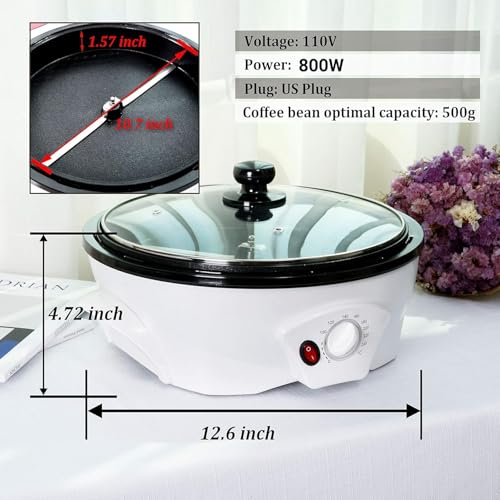
LUEUR Electric Coffee Roaster 110V
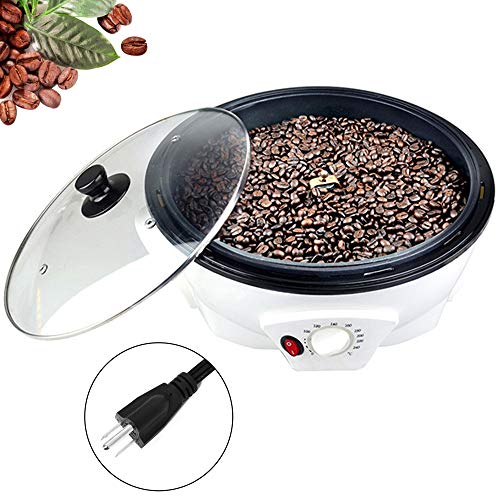
Strengths
- Low entry cost
- Transparent viewing lid
- Non-stick chamber
- 800g capacity
- Easy to use
Trade-offs
- Teflon coating limits longevity
- No bean temp tracking
- Basic construction
This is the most budget-conscious option here, and it shows in the materials, but for casual home roasters, it gets the job done. The 800g capacity is decent, and the non-stick honeycomb chamber makes cleanup easy, a real plus for beginners. The transparent lid with ventilation holes lets you watch the roast evolve, which is both fun and functional for learning color shifts and crack timing.
However, the Teflon coating raises durability concerns at high temps over time, and there’s no bean temperature monitoring, just ambient heat control. Compared to the Bokknppo or HENGCMM models, it lacks precision and build quality, but it’s plug-and-play simple. For someone testing the waters of roasting without a big investment, it’s a reasonable starting point.
Product photos



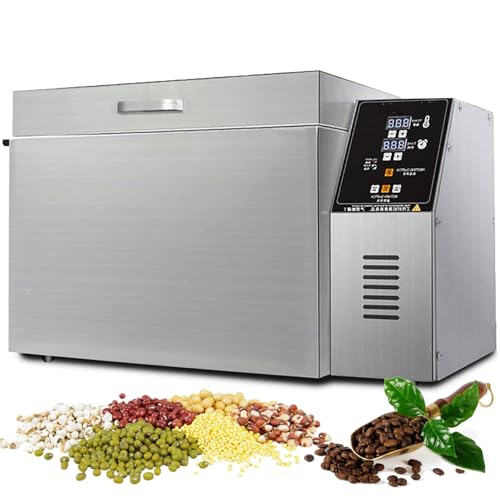
HENGCMM Electric Drum Roaster Type10
Strengths
- 4kg batch capacity
- Industrial microcomputer control
- Stainless steel heating element
- Removable drum
- Wide temp range
Trade-offs
- High power consumption
- Potential heat variance
- Large footprint
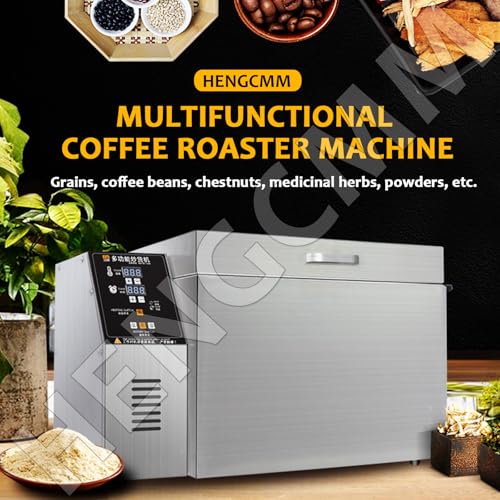
If you need volume, the Type10 delivers, 4kg per batch is impressive for an electric unit. It shares the same smart controls and durable build as the Type5, making it a logical step up for growing businesses. The industrial timer and wide temp range maintain consistency across large loads, and owners running weekend markets or wholesale batches appreciate the throughput.
But bigger isn’t always better. At this scale, heat distribution becomes critical, and some users note slight variance between inner and outer beans if loads aren’t monitored. It’s also a power hog, needing stable 220V service. I’d only recommend stepping to the Type10 if you’re regularly roasting over 2kg, otherwise, the Type5 is the more balanced pick.
Product photos

HENGCMM Electric Drum Roaster Type5
Strengths
- 2kg batch capacity
- Industrial microcomputer control
- Removable inner drum
- All-steel construction
- Wide temperature range
Trade-offs
- No smoke purifier
- Heavy power draw
- Limited to electric
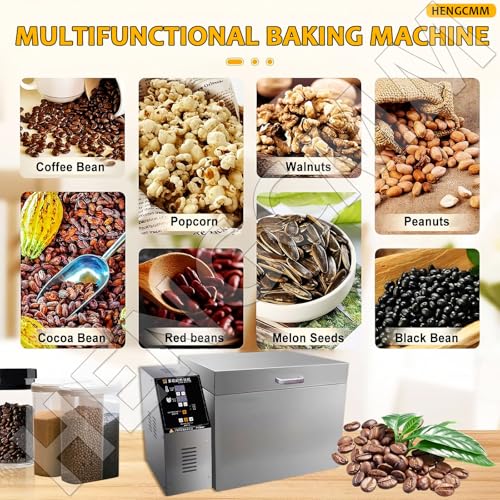
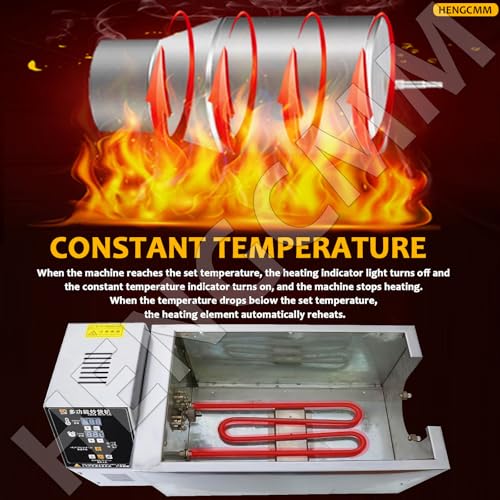
The Type5 hits a sweet spot for mid-sized operations that need more than 1kg but aren’t ready for 25kg batches. With a 2kg capacity and industrial microcomputer control, it offers programmable precision without the complexity of full artisan systems. The 0–999 minute timer and wide temp range give flexibility across beans, nuts, and grains, owners report using it for everything from coffee to roasted chickpeas.
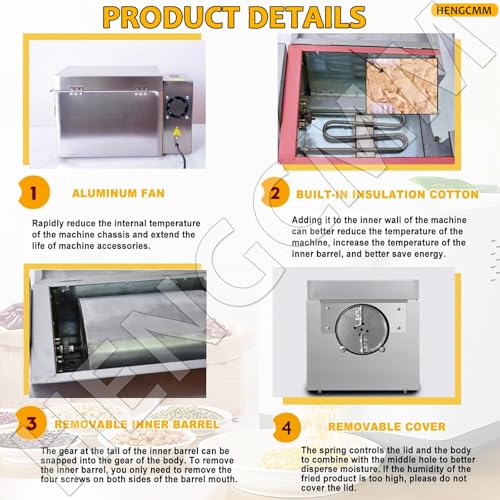
Its all-steel build and removable drum make cleaning and maintenance easier than many competitors in this class. When compared to the Bokknppo, it’s fully electric and more automated, but lacks smoke filtration. I’d recommend this over the Type10 unless you’re certain you need 4kg runs, scaling up brings higher power demands and less batch control.
Product photos
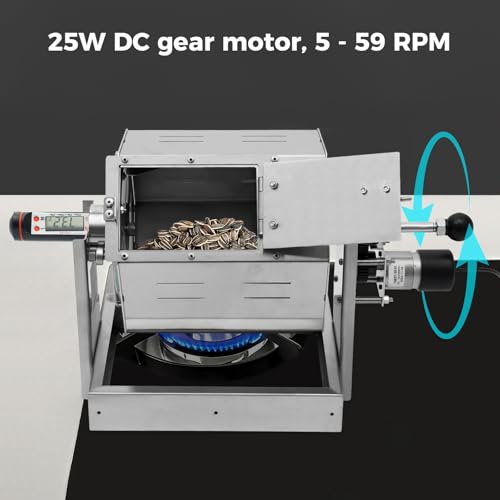
Bokknppo Stainless Steel Drum Roaster

Strengths
- Stainless steel build
- Adjustable drum speed
- Stovetop compatible
- Large batch capacity
- Real-time thermometer
Trade-offs
- Manual monitoring needed
- Temp reading lag reported
- No roast profiling
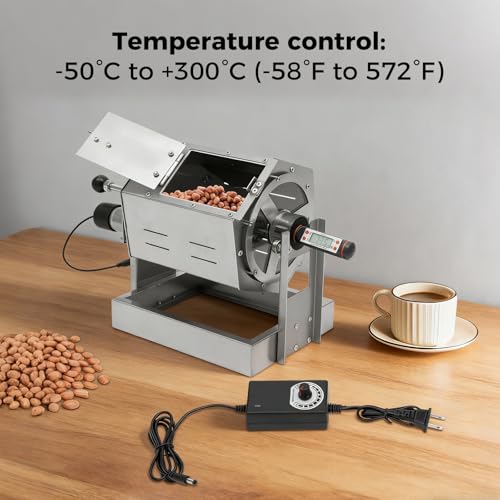
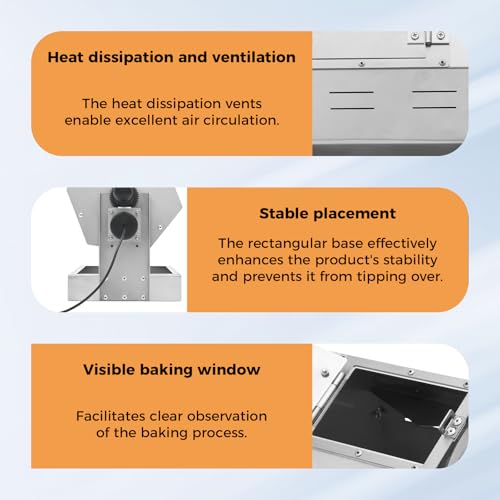
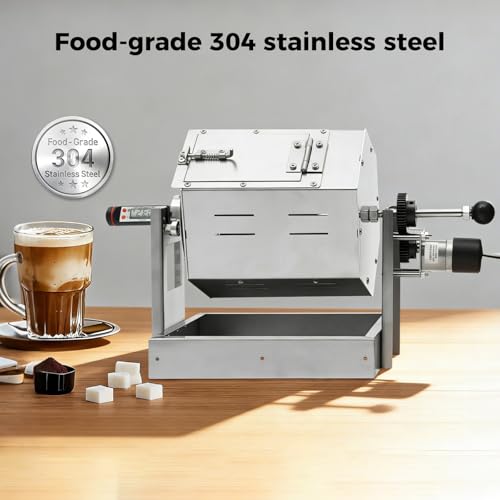
This roaster stands out for its robust stainless steel build and stovetop versatility, making it a solid bridge between home and light commercial use. The 0.3–1.2kg batch range is flexible, and owners consistently report even roasts thanks to the double guide baffles and adjustable drum speed. On paper, the real-time thermometer and fast cooling system look like strong assets for flavor control, though some users note the temp readings can lag slightly behind actual bean temperature.
It’s not fully automated, which means more hands-on attention during roasting, but that also gives experienced users greater tactile control. Compared to fully electric models, it lacks programmable profiles, but its stovetop design means it can run without heavy electrical demands, ideal for mobile setups or off-grid use.
Product photos
How We Chose These commercial coffee roaster
As the founder of Bean Thusiast, I approached researching commercial coffee roasters by focusing on a research-led comparison of published specifications, features, and a careful weighing of owner and expert reviews. Rather than a hands-on lab test of each unit, this process allowed me to assess a wide range of models and identify those offering the best combination of performance characteristics and value. My evaluation also drew on years of experience exploring roasting and brewing techniques.
For commercial roasters, consistent temperature control and drum rotation are paramount. We heavily weighted these factors because they directly impact bean development and flavor consistency – essential for a professional setting. Capacity also played a large role; a machine’s ability to meet anticipated volume needs is critical. Ultimately, a roaster’s ability to deliver repeatable results efficiently determined its ranking.
Specifications reliably indicate capacity, heating element type, and temperature range. However, judging real-world performance required examining owner feedback regarding evenness of roast, ease of cleaning, and long-term durability. Reputation, particularly among experienced roasters, was also a significant indicator. Achieving the perfect coffee strength starts with a well-roasted bean, and these factors help identify machines that deliver that consistently.
How To Choose The commercial coffee roaster
Finding the right coffee roaster is about more than just capacity; it’s about control, consistency, and matching the machine to your specific needs.
A quality coffee roaster delivers even heat distribution, precise temperature control, and effective smoke management. Key considerations include the heating method (gas, electric, or drum), batch size capability, and the level of automation offered – from fully manual operation to pre-programmed roasting profiles. Consistent bean agitation and airflow are also crucial for developing a balanced roast.
Heating Method & Control
The core of any coffee roaster is how it applies heat. Gas roasters, like the EQCOTWEA 110LBS model, offer rapid heating and a familiar feel for those with roasting experience, but require ventilation and careful monitoring. Electric roasters, such as the Electric Coffee Roaster with PID Control, provide more precise temperature control via features like PID controllers and pre-set profiles, but may take longer to heat up. I’ve noticed that electric options are increasingly popular for smaller operations because of the ease of use, and the ability to dial in very specific roast curves. Don’t underestimate the value of features like ROR (Rate of Rise) detection; this allows you to monitor the speed at which the bean temperature is increasing, a critical metric for consistent results.
Batch Size & Capacity
Scaling your operation requires careful consideration of batch size. A smaller, home-focused roaster like the LUEUR Electric Coffee Roaster 110V is perfect for experimenting and small-batch roasting, but quickly becomes limiting. Conversely, a large-capacity drum roaster – like the HENGCMM Electric Drum Roaster Type10 – is an investment geared towards higher volume.
Here’s how to think about capacity: * Under 500g: Ideal for hobbyists and sampling. * 500g – 2kg: Great for small cafes or home roasters wanting flexibility. * 2kg+: Necessary for consistent supply to larger cafes or wholesale operations.
Remember, it’s often better to roast more frequently in smaller batches than to overload a roaster.
Automation & Usability
For many, roasting is as much an art as a science. However, even artistic roasters benefit from automation. Features like pre-programmed roasting profiles (found in the Electric Coffee Bean Roaster B500) can provide a starting point for experimentation, while manual controls offer ultimate flexibility.
Don’t buy a roaster with more features than you know how to use. It’s better to master a simpler machine than to be overwhelmed by complexity.
I often recommend new roasters start with a machine offering both automatic and manual modes, allowing them to learn the process while having a safety net. And if you’re looking to refine your brewing technique beyond roasting, check out our guide to the drip brewing coffee ratio to get the most out of your freshly roasted beans. If you are looking for more information on different machines, our best commercial coffee roaster machines article might be a good place to start.
Commercial Coffee Roaster Compared
Here’s a comparison of key specifications for various commercial coffee roasters.
| Product Title | Capacity (lbs) | Heat Source | Temp Control | Material | Features |
|---|---|---|---|---|---|
| Electric Coffee Roaster with PID Control | 1.1 | Electric | PID | N/A | Direct Fire Imitating |
| Electric Coffee Bean Roaster B500 | 1.1 | Electric | Digital | Stainless Steel | ROR, Firepower, Damper Control |
| EQCOTWEA 110LBS Gas Coffee Roaster | 55 | Gas | Automatic | Stainless Steel | Large Capacity, Air Switch |
| LUEUR Electric Coffee Roaster 110V | 1.76 | Electric | Thermostat | Teflon Coated | Non-Stick, Ventilation |
| HENGCMM Electric Drum Roaster Type10 | 8.8 | Electric | Microcomputer | Stainless Steel | Adjustable Temp & Timer |
| HENGCMM Electric Drum Roaster Type5 | 4.4 | Electric | Microcomputer | Stainless Steel | Adjustable Temp & Timer |
| Bokknppo Stainless Steel Drum Roaster | 1.1 | Stovetop | Thermometer | Stainless Steel | Adjustable Drum Speed |
Frequently Asked Questions
What temperature should I roast coffee to?
Generally, first crack occurs around 380-400°F (193-204°C), and that’s a good starting point. However, the ideal temperature depends on the bean origin and your desired flavor profile; lighter roasts typically fall between 350-400°F, while darker roasts can reach 460-480°F.
What’s the difference between a drum roaster and a fluid bed roaster?
Drum roasters, like many of the models we’ve covered, use a rotating drum to tumble the beans in hot air, providing consistent heat exposure. Fluid bed roasters, conversely, suspend beans in a hot air stream – they roast faster, but can sometimes lack the evenness of a drum roaster for larger batches.
How important is smoke control for a commercial operation?
It’s very important. Commercial roasters absolutely require effective smoke management systems to comply with local regulations and maintain a healthy work environment. Gas roasters typically need dedicated ventilation, while electric models generally produce less smoke but still benefit from proper airflow.
What capacity roaster do I need for a coffee shop?
The ideal capacity depends on your daily volume. Most coffee shops find a 2kg to 5kg roaster sufficient, allowing for multiple batches throughout the day. For more information on selecting the right size, you can explore top commercial coffee roasting machines.
Are electric roasters as good as gas roasters?
Electric roasters have closed the gap considerably. While gas roasters were traditionally favored for their quick heating, modern electric roasters with PID controllers offer precise temperature control and repeatable results. Many now prefer the consistency and ease of use of electric options, especially for smaller-scale operations seeking reliable, repeatable results with their commercial-grade coffee roasters.
The Bottom Line
Choosing a commercial coffee roaster always comes down to balancing control with convenience. While a fully manual gas roaster like the EQCOTWEA 110LBS model offers experienced roasters ultimate command over the process, the Electric Coffee Roaster with PID Control strikes an excellent balance, providing precise temperature control and repeatable results for a wide range of users. It’s a versatile machine that doesn’t demand years of experience to produce quality roasts.
For those just starting out, or operating on a tighter budget, the LUEUR Electric Coffee Roaster 110V is a solid entry point. And if you need to scale up significantly, the HENGCMM Electric Drum Roaster Type10 provides the capacity and automated features necessary for high-volume operations. Ultimately, the best choice depends on your specific needs and roasting expertise.
More than any individual specification, remember that consistency and understanding your beans are key. Knowing your optimal coffee measurements and dialing in your roast profiles will have a far greater impact on the final cup than the roaster’s heating element or capacity alone. Focus on those fundamentals, and you’ll be well on your way to crafting exceptional coffee.
