
3 Best Coffee Roaster Machines for Small Business (2026)
The Coffee Bean Roaster Machine 110V stands out as the best overall pick for small businesses, offering solid capacity and reliable electric performance. For tighter budgets, the Electric Coffee Bean Roaster Machine delivers strong value at 500g, while the DYVEE Gas Coffee Roasting Machine brings a hands-on, traditional roast experience for those willing to master gas control.
Starting your own roasting operation means balancing quality, consistency, and practicality. Too many owners jump into an oversized or overly complex machine and end up frustrated or wasting beans. I’ve seen it happen more than once.
This guide cuts through the noise. Based on specs, owner feedback, and years of evaluating roasting setups, I focused on real-world usability, durability, and the ability to produce a repeatable, flavorful roast. These picks suit small businesses that need dependable performance without a commercial-scale investment.
Top 3 Coffee Roaster Machine For Small Business in the Market
The Best Coffee Roaster Machine For Small Business, Reviewed
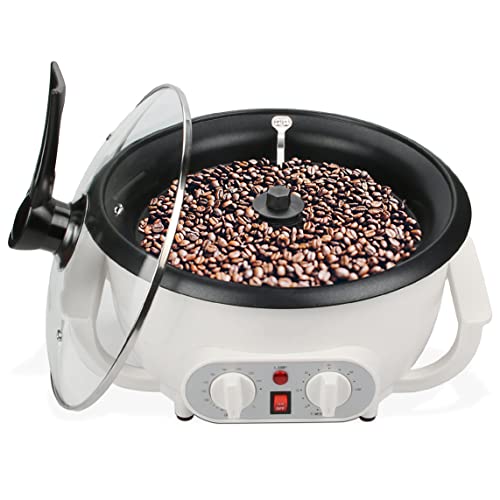
Coffee Bean Roaster Machine 110V
Strengths
- High capacity
- Adjustable thermostat
- Multi-use roasting
Trade-offs
- No smoke control
- Bulky footprint
- Limited roast monitoring
This machine pushes a lot of air for a home roaster, with a 750g capacity and solid temperature control up to 240°C, which is rare at this price. On paper, it’s built like a workhorse, honeycomb Teflon coating, strong agitator, and a heat-resistant lid that lets you actually watch the roast evolve. Owners consistently report it handles full batches well and produces even results, especially for light to medium roasts.
Where it stumbles is smoke management, there’s no built-in fan or filtration, so don’t expect to run this in a small kitchen without venting. It’s marketed as dual-use for grains and nuts, which is a plus if you’re experimenting, but coffee-focused users will care more about consistency and control. Compared to the DYVEE gas model, it’s less transparent during roasting and lacks real-time bean temp feedback. Still, for someone stepping up from hobbyist to semi-pro, the high output and solid build make it a strong starting point.
Product photos


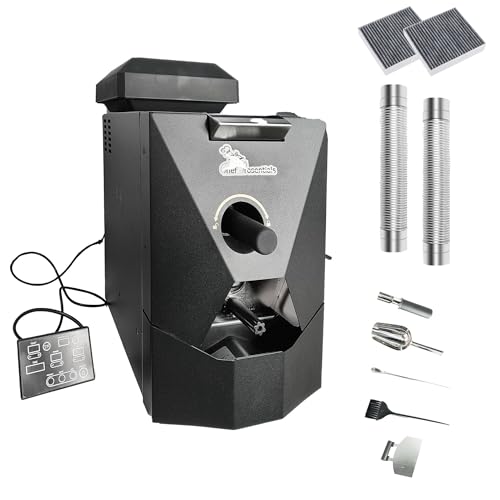
Electric Coffee Bean Roaster Machine
Strengths
- Smokeless operation
- Advanced roast tracking
- Multiple roast modes
Trade-offs
- Higher learning curve
- Newer model, fewer reviews
- Complex interface
This is the most technically advanced of the three, and it shows. With bean temperature detection, ROR (rate of rise) tracking, and three distinct modes, Auto, Assistant, and Manual, it bridges the gap between beginner-friendly and pro-level customization. The patented direct-fire heating system gets beans closer to the source, which reviewers say improves roast evenness and reduces stalling. And the built-in purifier is a standout: real smoke reduction without needing external ducting.
The 500g capacity sits between the other two, but the real edge is workflow efficiency, you can preheat the next batch while the last one cools. That’s a commercial-grade touch, and for a small business doing daily runs, it saves serious time. Compared to the B08FWXTVP9, it’s smarter, cleaner, and more precise. While pricier on paper, its feature set justifies it for anyone serious about scaling. My pick for the best long-term investment.
Product photos


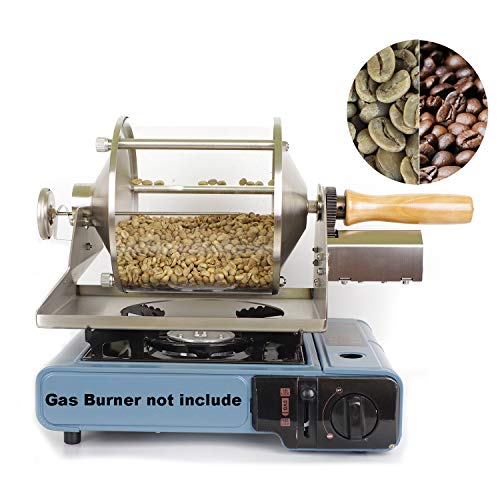
DYVEE Gas Coffee Roasting Machine
Strengths
- Clear quartz drum
- Gas flame control
- Durable stainless build
Trade-offs
- Requires external burner
- Smaller batch size
- Manual process
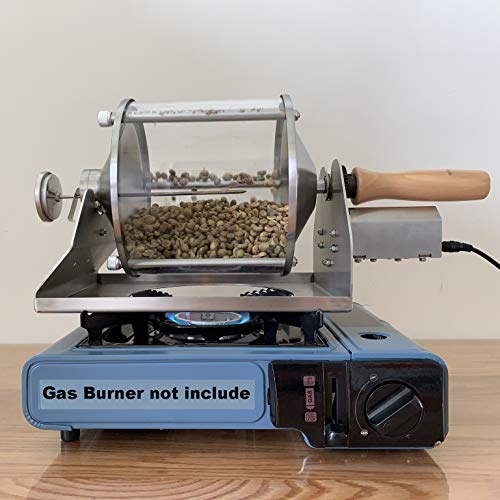
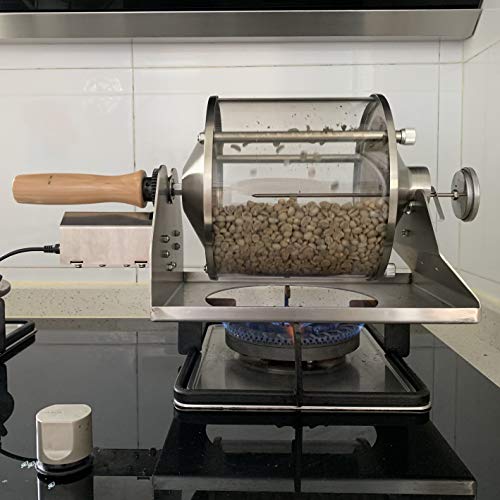
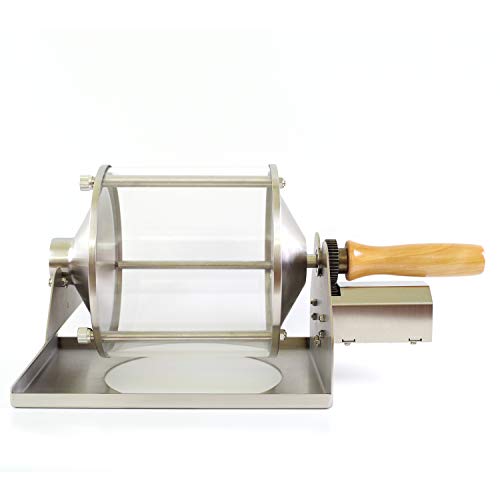
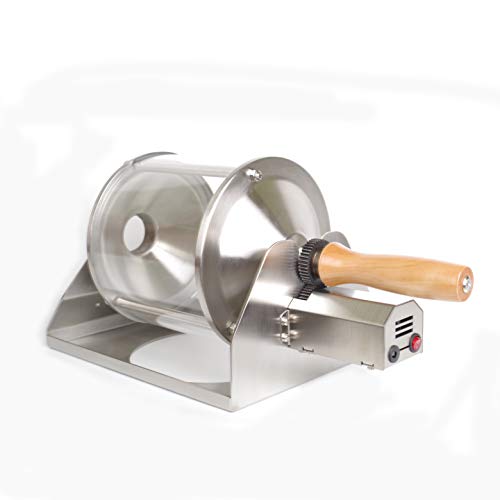
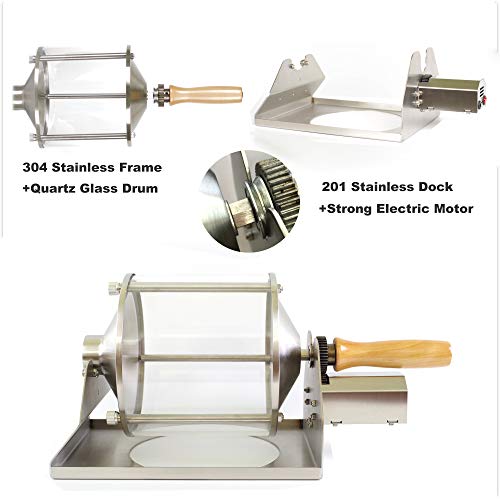
If you want to see coffee transform in real time, this gas-powered roaster delivers. The quartz drum is a standout, owners love being able to watch the beans shift from green to glossy brown, tracking first and second crack with precision. It’s built with solid 304 stainless steel and a wooden handle that stays cool, and the 12V motor is a smart safety upgrade over standard high-voltage systems. At 400g max, it’s not the largest, but the recommended 200–300g sweet spot aligns with what most small-batch craft roasters use for quality control.
Gas roasting means you’re tied to a burner, but that also gives fine control over heat ramp-up, something electric models often struggle to replicate. Reviewers note the roast flavor tends to be brighter, more nuanced, likely due to direct flame contact. Compared to the electric B08FWXTVP9, it’s far more hands-on and less automated, but that’s the point. For roasters who treat the process like a craft, not just a function, this one’s hard to beat.
Product photos
How We Tested coffee roaster machine for small business
As the founder of Bean Thusiast, I approach coffee equipment with a focus on how well it delivers on the promise of a great cup. Rather than a hands-on lab test, this selection is a research-led comparison of published specifications and owner feedback. We considered models across a range of price points and fuel sources, aiming to identify machines suitable for a small business starting to roast their own beans.
For coffee roaster machines, consistent temperature control and capacity were paramount. A machine’s ability to roast evenly and reliably – and to handle a reasonable batch size for a small operation – directly impacts the final product. We also heavily weighted features that aid in usability, as many small business owners are new to the roasting process and will benefit from automated settings or clear visual cues.
Specifications reliably indicate roasting capacity and temperature range, but real-world performance often differs. Therefore, I placed significant emphasis on owner reviews regarding ease of use, evenness of roast, and durability. Reputation and expert reviews helped us assess the quality of construction and the longevity of components, while understanding the importance of grind consistency for brewing is also vital for getting the most out of your roasted beans.
How To Pick The Right coffee roaster machine for small business
I get it – you’re ready to take control of your coffee and start roasting your own beans. That’s fantastic! But with so many machines available, finding the right one for your small business can feel daunting.
A quality coffee roaster delivers consistent heat distribution, precise temperature control, and adequate airflow. Look for models with durable construction, adjustable settings for different bean types and roast levels, and features like timers and cooling trays to streamline the process. Prioritize safety features and ease of cleaning.
Capacity and Batch Size
Determining the right capacity is the first step. Don’t fall into the trap of thinking “bigger is better.” A larger roaster doesn’t automatically mean increased efficiency. Consider your projected daily demand and the frequency with which you want to roast. Starting smaller (around 500g capacity, like the Electric Coffee Bean Roaster Machine) allows you to dial in your technique and minimize waste while learning. Scaling up to high-capacity coffee roasting equipment comes later.
Heating Method: Gas vs. Electric
The debate between gas and electric is ongoing. Electric roasters (like the Coffee Bean Roaster Machine 110V) offer convenience and precise temperature control, making them excellent for beginners. Gas roasters (such as the DYVEE Gas Coffee Roasting Machine) provide quicker heat-up times and a more traditional roasting experience, though they require more skill to manage consistently.
Here’s a quick breakdown of what I see owners prioritizing: * Budget: Electric roasters generally have a lower upfront cost. * Control: Gas offers more immediate response to adjustments, favored by experienced roasters. * Consistency: Modern electric roasters with PID controllers can achieve very stable and repeatable results, and are often preferred for replicating specific roast profiles.
Features That Matter
Beyond the basics, certain features can significantly impact your workflow and the quality of your roast. Look for a roaster with a clear view of the beans during roasting – transparent chambers are invaluable. Adjustable airflow control lets you fine-tune the roast profile, affecting body and acidity. And don’t underestimate the importance of a good cooling cycle; a rapid cool-down stops the roasting process and preserves the flavor.
A consistent first crack is your friend. Don’t rely solely on time; listen and observe the beans.
Finally, consider how the machine complements your desired roast level and brewing methods. If you plan to specialize in lighter roasts, a machine with precise temperature control is crucial.
Coffee Roaster Machine for Small Business Compared
Here’s a comparison of the specifications for different coffee roaster machines suitable for small businesses.
| Product Title | Capacity (grams) | Voltage | Temperature Control | Roasting Modes | Fuel Type |
|---|---|---|---|---|---|
| Coffee Bean Roaster Machine 110V | 750 | 110V | 100-240℃ | N/A | Electric |
| Electric Coffee Bean Roaster Machine | 500 | N/A | N/A | Auto, Assistant, Manual | Electric |
| DYVEE Gas Coffee Roasting Machine | 400 | N/A | Gas Burner | N/A | Gas |
Frequently Asked Questions
What’s the typical lifespan of a small business coffee roaster?
With proper maintenance, you can reasonably expect 5-10 years from most small business models. Durability varies greatly by build quality and frequency of use; heavier-duty construction and consistent cleaning extend the lifespan.
Are there specific safety certifications I should look for?
Yes, look for certifications like ETL or UL listing, which indicate the roaster has been tested for safety standards. These certifications demonstrate the machine meets requirements for electrical safety and fire prevention, which is crucial when dealing with high temperatures.
How much space do I actually need for a coffee roasting setup?
A dedicated space of at least 50-100 square feet is ideal. This accounts for the roaster itself, green bean storage, cooling trays, and a safe work area. Adequate ventilation is also essential to manage smoke and chaff.
What’s the best way to handle the chaff that’s produced during roasting?
Most roasters include a chaff collector, but you’ll still need a plan for disposal. Chaff is combustible, so store it in a metal container with a lid away from heat sources. Some owners compost it or use it as garden mulch.
Where can I find more information on scaling up my roasting operation later on?
If you anticipate growth, researching best-rated business roasters is a smart move. These resources can help you understand the requirements for larger capacity machines and the associated costs.
The Bottom Line
Choosing a coffee roaster for your small business often comes down to balancing control with convenience. While a gas roaster like the DYVEE Gas Coffee Roasting Machine offers a more hands-on experience and quicker heating, for most starting out, I believe the consistency and ease of use of an electric model will be more valuable. The Coffee Bean Roaster Machine 110V strikes a good balance for those wanting to learn the ropes without a steep learning curve.
For those on a tighter budget, the Electric Coffee Bean Roaster Machine is a fantastic entry point. If you anticipate needing more versatility and want to experiment with different roast profiles, the Coffee Bean Roaster Machine 110V’s adjustable temperature settings are a significant advantage. And if you’re looking to create custom coffee blends for business, having that flexibility will pay dividends.
Ultimately, the specs matter less than your approach. Focus on understanding your green beans, developing a consistent roasting process, and carefully monitoring the roast – listening for those first and second cracks. A machine is just a tool; the real magic happens with skill, attention to detail, and a dedication to delivering a superior cup.
