
How to Clean a Coffee Machine Thoroughly with Easy Steps
To clean a coffee machine, follow a three-part system: wipe the exterior daily, wash removable parts after each use, and run a descaling cycle with manufacturer-approved solution every 3-6 months. The exact steps depend on your machine type, drip, single-serve, or espresso, but skipping any part of this system leads to clogged tubes, bitter coffee, and component failure.
Most people think a quick rinse of the carafe is enough. They miss the mineral scale building up inside the heating element and the coffee oils solidifying in the brew path. Your next cup tastes off because yesterday’s residue is today’s stale flavor.
This guide breaks down the cleaning process for every major machine type. You’ll get the daily wipe-down, the weekly deep clean, and the non-negotiable descaling schedule that keeps your machine running for years.
Key Takeaways
- Descaling is not cleaning. Descaling removes mineral deposits from hard water; cleaning removes coffee oils and residue. You must do both.
- Use the manufacturer’s recommended products. Generic descalers or vinegar can void warranties and damage internal seals on many modern machines.
- Dry parts thoroughly before reassembly. Dampness in the grinder of a super-automatic or the filter basket of a drip machine promotes mold and mildew growth.
- Clean the hidden parts. The shower screen on an espresso machine and the exit needle on a Keurig clog first, causing weak flow and inconsistent brews.
- Set a calendar reminder. Without one, the 3-month descaling interval slips to 6 months, and by then the scale is thick enough to affect heating time and taste.
The Daily, Weekly, Monthly System
Coffee machine maintenance works on three overlapping timelines. Daily tasks prevent immediate mess, weekly tasks tackle buildup, and monthly or quarterly tasks address internal wear.
The drip tray and carafe need attention after every use. Letting old coffee sit even overnight invites bacterial growth and a sour smell that transfers to your next brew. Wipe the tray with a damp cloth and wash the carafe with mild soap.
Weekly, focus on parts that touch ground coffee. For drip machines, this means the filter basket and the permanent metal filter if you use one. Soak them in warm soapy water, then scrub with a soft brush to dislodge the fine silt that accumulates. For pod machines like a Keurig K-Duo Essentials, the manual dictates cleaning the K-Cup pod holder and exit needle weekly to prevent clogging.
Monthly tasks are for the internal pathways you don’t see. On an espresso machine like the Breville Barista Express Impress, this includes running a cleaning cycle with their specific cleaning tablet and cleaning disc. On a super-automatic like the De’Longhi Magnifica S Smart, you remove and rinse the infuser, the part that presses the coffee puck, under running water.
Common mistake: Only cleaning visible parts, the internal brew group or water lines develop a biofilm of coffee oils and minerals within 30 days, and your coffee will carry a stale, bitter note regardless of bean freshness.
TL;DR: Clean what you see daily, wash coffee-contact parts weekly, and service internal mechanics monthly.
Descaling Is Not Cleaning
This is the point of confusion that ruins machines. Cleaning removes organic coffee residue. Descaling dissolves inorganic mineral deposits from your water. If you have hard water, limescale builds up inside the heating element and narrow tubes.
Manufacturers are explicit about their solutions. Breville recommends Breville Descaler for its machines. Keurig states to use Keurig Descaling Solution. De’Longhi specifies De’Longhi descaler. Using white vinegar or a generic citric acid powder is a gamble. The acetic acid in vinegar can linger and corrode metal components, and it may void the warranty.
The frequency is not a suggestion. Keurig says every 3-6 months. Breville ties it to water filter replacement every 3 months. De’Longhi provides a total hardness test paper with some models to set a precise schedule. Ignoring this timeline has a direct consequence.
Heating elements coated in scale work harder, draw more power, and eventually overheat. The machine might take longer to heat up, or it could fail completely. Scale flakes can also break off and clog valves.
Here is how different machine types handle descaling:
| Machine Type | Descaling Method | Key Part to Check After |
|---|---|---|
| Drip Coffee Maker | Run descaling solution through full brew cycle | Water reservoir and heating plate for residue |
| Single-Serve (Keurig) | Use machine’s descaling mode; solution runs through internal lines | Exit needle for remaining clog |
| Espresso Machine | Follow integrated descaling program; often involves holding buttons | Steam wand tip and group head for clear flow |
TL;DR: Descaling removes hard water minerals with a specific solution on a strict schedule, separate from washing coffee oil off parts.
Machine-Specific Cleaning Steps
Your machine’s manual is the final authority. The following steps are generalized from OEM guides for the three most common categories.
For Drip Coffee Makers
Unplug the machine and let it cool. Remove the carafe, filter basket, and any permanent filter. Wash these with warm, soapy water. A soft brush gets into the basket corners.
Wipe the exterior with a damp microfiber cloth. To clean the interior, fill the water reservoir with a 50/50 mix of white vinegar and water or a manufacturer-approved descaling solution. Run a full brew cycle without coffee. Follow with two cycles of fresh water to rinse. Dry the heating plate with a cloth to prevent mineral spotting.
Vinegar can damage seals in newer models with advanced heating systems. Check your Black & Decker coffee maker manual or other OEM guide before proceeding.
For Single-Serve Pod Machines (Keurig, Nespresso)
Daily, empty and rinse the water reservoir. Weekly, remove and wash the drip tray and pod holder. The critical step is clearing the exit needle that pierces the pod.
The Keurig K-Duo Essentials manual instructs using a straightened paper clip to gently clear the upper and lower exit needles. Soak the pod holder in warm soapy water to dissolve dried coffee syrup. For descaling, use the machine’s built-in mode and the branded solution. The process flushes the internal hot water line, which is prone to scaling.
For Espresso Machines (Breville, De’Longhi, Gaggia)
These machines have the most components. Daily, wipe the steam wand immediately after use and purge the group head by running a short shot of water. Weekly, remove the portafilter and basket for a thorough wash. Soak the basket in soapy water to degrease.
Monthly, clean the shower screen, the metal plate inside the group head. Unscrew it (often with a flat-head screwdriver) and soak it. For super-automatics like the De’Longhi Magnifica S Smart, remove and rinse the infuser under running water. All espresso machines require a scheduled descaling cycle using their specific solution, not vinegar.
The Tools and Supplies You Actually Need
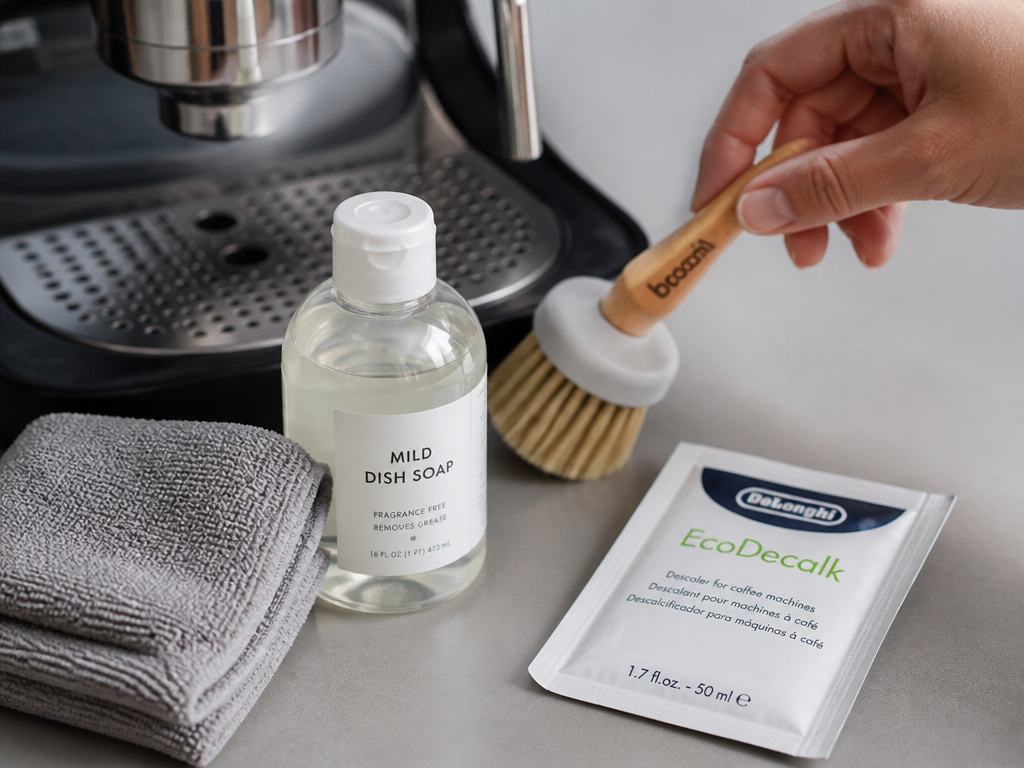
You don’t need a specialty kit. The right basic tools prevent damage.
- Microfiber cloths. They wipe without scratching. Use one for the exterior and a separate one for the group head area to avoid cross-contamination with oils.
- Soft-bristled brush. A baby bottle brush or a dedicated group head brush cleans basket corners and the shower screen. Hard bristles scratch stainless steel.
- Mild dish soap. Avoid heavy detergents or soaps with lotion. They leave a film that tastes terrible in your next cup.
- Manufacturer’s descaling solution. This is non-negotiable for warranty compliance and safety. The chemical formulation is tested for your machine’s materials.
- Fresh, soft water. Using filtered water in the reservoir reduces mineral load from the start, stretching the time between descaling cycles.
TL;DR: A soft cloth, a soft brush, mild soap, and the OEM descaling solution are the only essentials.
What Happens When You Skip Cleaning
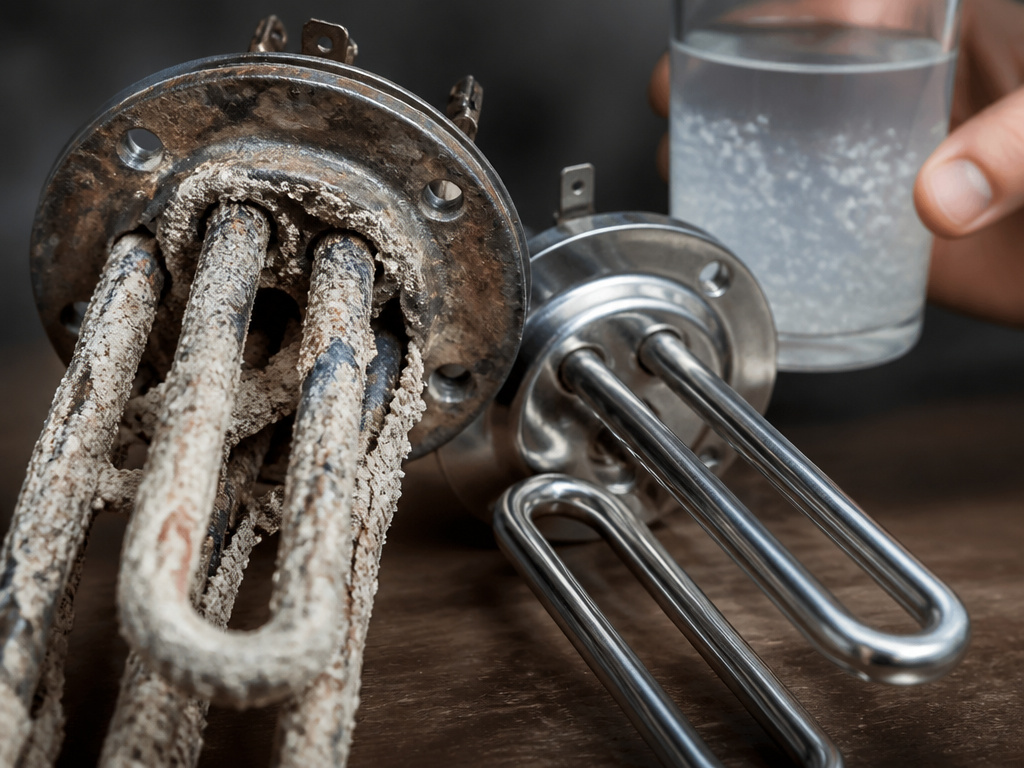
The decline is gradual but predictable. First, the taste changes. Coffee oils oxidize and turn rancid, imparting a bitter, stale flavor even with fresh beans. This happens within a week of not washing a portafilter basket.
Next, performance suffers. Scale buildup in the heating element of a drip machine reduces thermal efficiency. The machine takes longer to reach temperature. In an espresso machine, a clogged shower screen leads to uneven water distribution and channeling, so your shots run fast and sour.
Finally, components fail. Mold can grow in a damp drip tray or water reservoir. The De’Longhi manual warns that not cleaning the infuser monthly allows hardened coffee paste to jam the mechanism. A clogged exit needle on a Keurig can cause the machine to leak or not pierce pods properly.
I ran a Breville machine for four months without descaling, relying only on external wiping. The machine started making a groaning noise during heating. The descaling cycle that followed produced water so clouded with white flakes it needed two extra rinse cycles. The noise stopped, but the element had already been stressed.
TL;DR: Skipping cleaning alters taste, then hurts performance, and eventually breaks parts.
Frequently Asked Questions
Can I use vinegar to descale my coffee machine?
Check your manual first. Many modern manufacturers, including Breville and Keurig, explicitly warn against using vinegar. The acetic acid can damage rubber seals and aluminum components over time, and the smell is difficult to flush out completely. Using it may void your warranty.
How often should I replace the water filter in my machine?
Most machines with charcoal water filters, like many Breville models, recommend replacement every 3 months or after 60 tanks of water. This filter reduces chlorine and sediment, protecting the machine and improving taste, but it does not soften water to replace descaling.
Why does my coffee taste bitter even after cleaning the carafe?
The bitterness likely comes from rancid coffee oils baked onto the heating element (in drip machines) or lining the internal brew path. You need to run a proper descaling cycle and, for espresso machines, a cleaning cycle with a tablet to dissolve those oils. A simple wash doesn’t reach these areas.
What’s the best way to clean a milk frother?
Immediately after use, purge the steam wand by releasing steam into a damp cloth. Then, remove the tip if possible and soak it in warm soapy water. For automatic frothers, run the cleaning cycle specified in the manual, often using a specific cleaning liquid. Milk residue sours and clogs the small apertures quickly.
Is it safe to put the carafe and filter basket in the dishwasher?
Most glass or stainless steel carafes and metal filter baskets are dishwasher safe on the top rack. However, plastic parts, like many drip trays and water reservoirs, can warp from the heat. Check the manual. When in doubt, hand-wash to preserve the parts.
Before You Go
Cleaning your coffee machine isn’t about aesthetics. It’s about preserving the flavor of your beans and the lifespan of your appliance. The system is simple: wipe daily, wash weekly, descale quarterly.
Stick to the products your machine’s maker recommends. That bottle of descaling solution is cheaper than a repair for a scaled-up heating element. Pay attention to the hidden parts, the shower screen, the infuser, the exit needle. They fail first.
Finally, mark your calendar. Set a reminder every three months for descaling. Your morning coffee will taste consistently clean, and your machine will hum along for years instead of groaning to a halt.
