
6 Best Barista Coffee Machines of 2026
The Breville Barista Pro stands out as the best barista coffee machine for most home users, delivering consistent results and precise temperature control. If you’re watching your budget, the AMZCHEF Espresso Machine offers strong performance and excellent grind adjustment for less. For those who want automation without sacrificing quality, the Breville Barista Touch is a solid versatility pick.
Home espresso can be frustrating when your machine can’t keep up with the basics, uneven shots, scalded milk, or inconsistent grind. It’s not just about having a fancy machine, it’s about having one that supports real barista techniques with reliable performance.
Based on specs, owner feedback, and the core demands of espresso brewing, I focused on temperature stability, grinder quality, and user control to identify the models that truly deliver cafe-quality results at home. These picks reflect what matters most when you’re serious about your coffee.
Top 6 Barista Coffee Machine in the Market
The Best Barista Coffee Machine, Reviewed
Breville Barista Touch Espresso Machine

Strengths
- Touchscreen simplicity
- Auto milk texturing
- Custom drink presets
- Dose control grinder
- Consistent extraction
Trade-offs
- Less manual control
- Screen can attract fingerprints
- Higher price point
If the Barista Pro is for tinkerers, the Barista Touch is for everyone else. Its touchscreen interface simplifies the entire process into three steps, Grind, Brew, Milk, and does so with remarkable reliability. Owners love how it automates milk texturing with adjustable temperature and consistency, a feature that sets it apart from most competitors in this tier. You set your preferences once, save them, and get repeatable lattes every time, which is a big win for households with multiple drinkers.
The core specs are nearly identical to the Barista Pro, same ThermoJet system, PID control, and dose control grinder, but the Touch swaps manual steam mastery for convenience. That makes it the smarter pick for most buyers, even if it sacrifices a bit of hands-on engagement. The ability to save 8 custom drinks is a quiet standout, and reviewers note it’s especially useful for households where not everyone drinks espresso the same way.
Video review
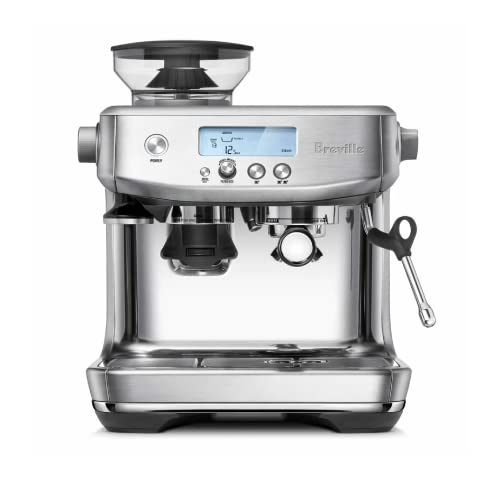
Breville Barista Pro Espresso Machine
Strengths
- Fast heat-up
- PID temperature control
- Manual steam wand
- Dose control grinder
- Intuitive LCD
Trade-offs
- No auto milk texturing
- Grinder can retain grounds
- Larger footprint
The Breville Barista Pro stands out in the crowded all-in-one espresso space by delivering a serious dose of control without overwhelming the user. On paper, it’s built like a prosumer dream: the ThermoJet heating system ramps up in just 3 seconds, which reviewers consistently praise for minimizing wait time between brewing and steaming. The dose control grinder and PID temperature stability mean you’re getting third-wave-level consistency, and owners report that dialing in shots becomes intuitive after a few tries.
Where it pulls ahead of the pack is in its balance of speed and precision. Compared to the Barista Touch, it lacks the fully automated milk steaming, but that’s a trade-off I actually appreciate, manual microfoam texturing gives you more control, and for intermediate users, that’s where the real barista skill develops. The LCD interface isn’t flashy, but it’s clear and functional, showing grind and extraction progress without gimmicks.
Video review
CASABREWS CM5418 Espresso Machine

Strengths
- 20-bar pressure pump
- Built-in pressure gauge
- Compact size
- Manual steam wand
- Affordable price
Trade-offs
- No built-in grinder
- Requires cool-down pauses
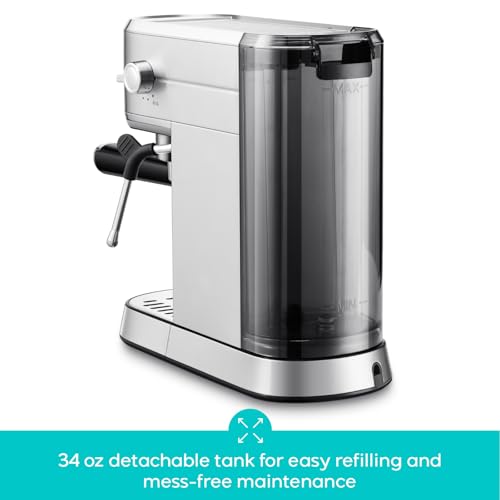
- Smaller water tank
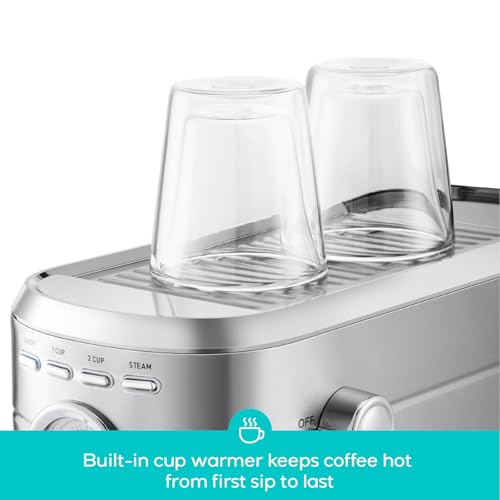
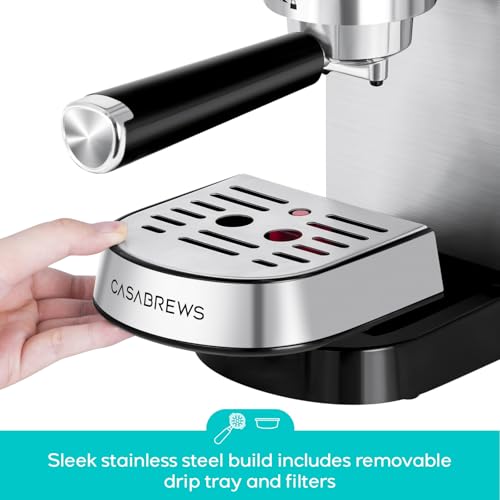
The CASABREWS CM5418 is the kind of machine that makes specialty coffee feel accessible. At this price tier, it’s rare to see a 20-bar pump, stainless steel build, and a manual steam wand all in one compact design. The pressure gauge is a small but meaningful touch, owners appreciate being able to monitor extraction in real time, which helps dial in better shots over time. It won’t match Breville’s thermal stability, but for a budget pick, it punches above its weight.
Still, it’s not without quirks. The cool-down requirement after steaming is a limitation many new users overlook, and the flashing lights during overheat mode can be confusing at first. But once you learn the rhythm, it delivers solid shots and decent microfoam. Compared to pricier all-in-ones, it lacks a built-in grinder, so you’ll need a separate one, but that also means you can upgrade your grind quality independently.
Product photos


AIRMSEN Espresso Machine with Grinder

Strengths
- Touchscreen interface
- Conical burr grinder
- Cold brew mode
- Large water tank
- Anti-static grind tech
Trade-offs
- No PID temperature control
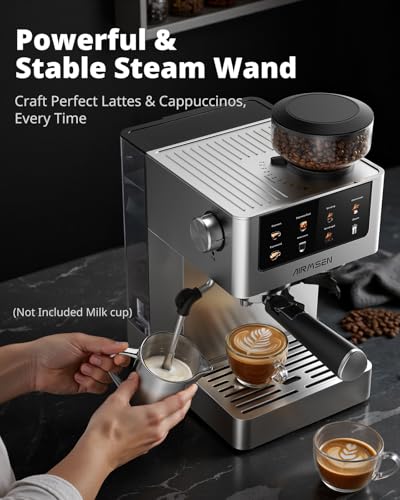
- Steam wand less powerful
- Build quality not as robust
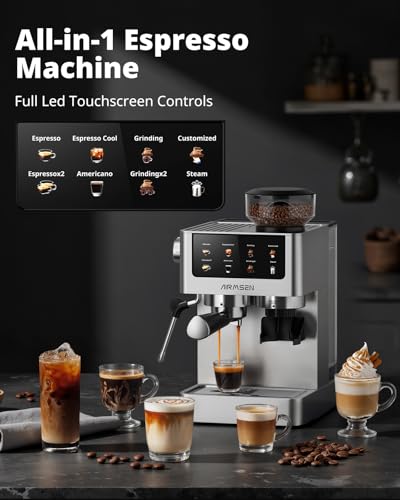
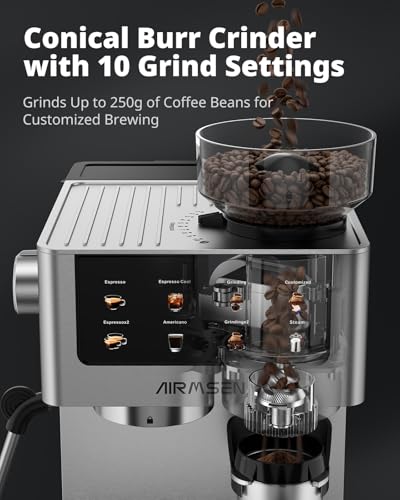
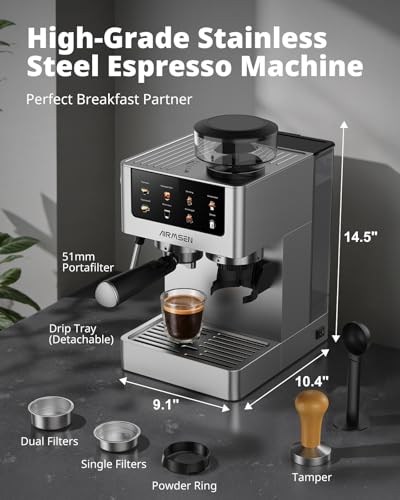
The AIRMSEN stands out by offering full touchscreen control and a conical burr grinder at a price that undercuts most Breville competitors. Its 10 grind settings and dual anti-static tech are thoughtful touches, owners report noticeably less mess and fewer clogs, which is rare at this level. The 61 oz water tank is larger than average, and the stainless steel casing gives it a premium look that belies its cost.
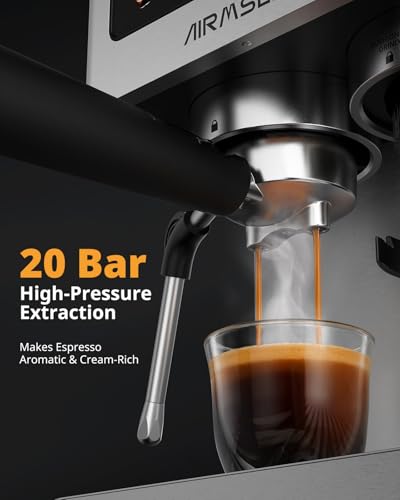
But where it really wins is versatility. The cold brew mode is a niche but appreciated feature, and the ability to pull single or double shots with consistent pressure makes it flexible for different drink styles. It doesn’t have the thermal stability of a PID-controlled machine, but for a beginner or casual drinker who wants modern looks and ease of use, it’s a strong contender. Compared to the CASABREWS, it’s more feature-rich; compared to Breville, it’s less refined, but offers more bang for the buck.
Product photos
Philips Baristina Espresso Machine

Strengths
- Ultra-compact design
- Swipe-to-brew simplicity
- Eco-conscious build
- Quiet operation
- Fresh grinding
Trade-offs
- Limited customization
- No milk steaming automation
- Small bean hopper
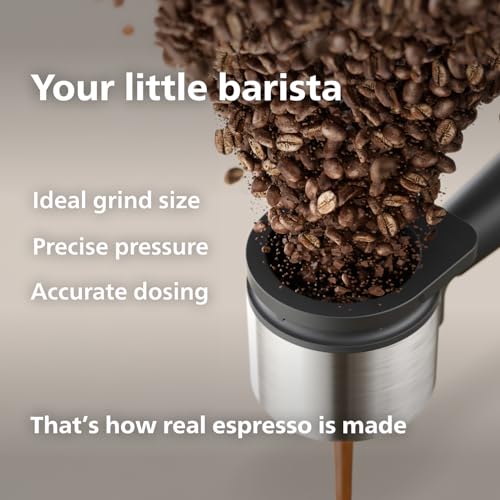
Philips Baristina is the dark horse of compact all-in-ones. Its swipe-to-brew mechanism is genuinely unique, pull the handle, and it grinds, tamps, and brews automatically. That simplicity is a win for small kitchens or minimalist setups. The 16-bar pump isn’t class-leading, but it’s sufficient for balanced extraction, and the use of over 50% recycled plastics shows Philips is thinking about sustainability without sacrificing core function.
Owners consistently report it’s quiet and efficient, pulling decent shots in under a minute. But it’s not for purists, the fixed tamp pressure and limited grind adjustment mean less room for fine-tuning. Compared to the Breville twins, it’s less customizable, but that’s the point. It’s designed for people who want real espresso with zero fuss, not a lab experiment. The ash wood portafilter adds a nice aesthetic touch, though it doesn’t impact performance.
Product photos




AMZCHEF Espresso Machine with Grinder
Strengths
- Precise temp control
- 44 grind settings
- Clear touch display
- Cold brew mode
- Strong steam wand
Trade-offs
- Build quality inconsistent
- Screen can be slow
- Learning curve for beginners
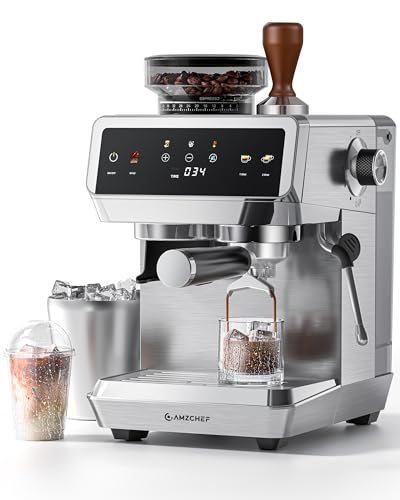
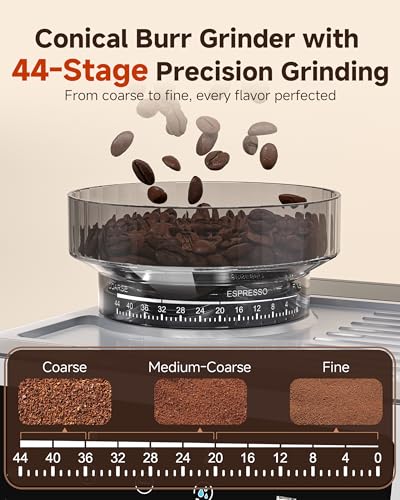
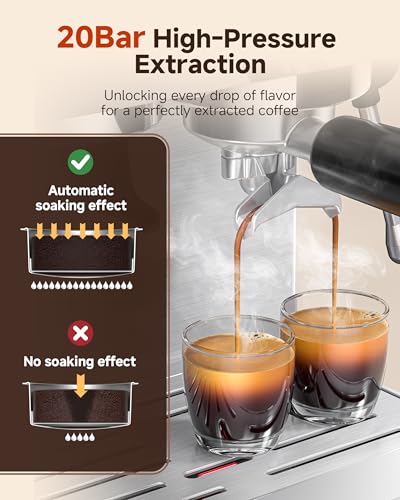
The AMZCHEF machine is built for flavor chasers. Its 190℉–201℉ temperature control is the standout spec here, few machines in this range let you tweak brew temp that precisely, and that matters. Light roasts open up with brighter acidity at higher temps, while darker roasts avoid bitterness when pulled cooler. Combined with 44 grind settings, this is one of the most adjustable budget all-in-ones available. Owners note it’s especially good for dialing in single-origin beans.
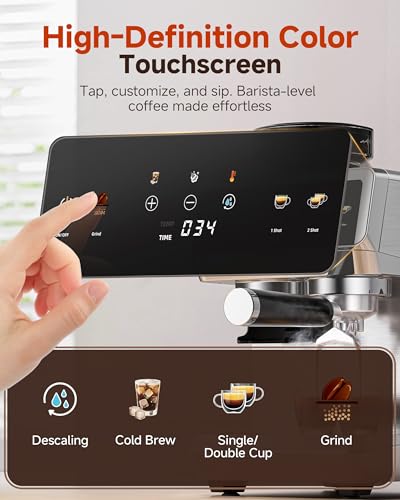
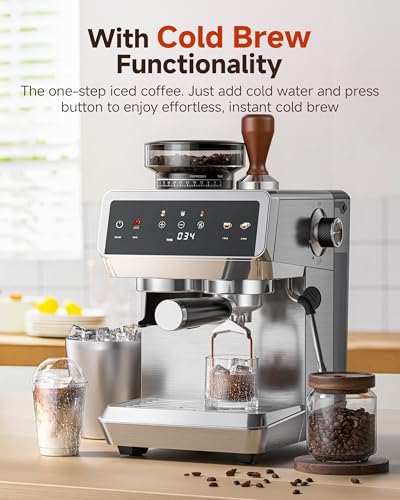
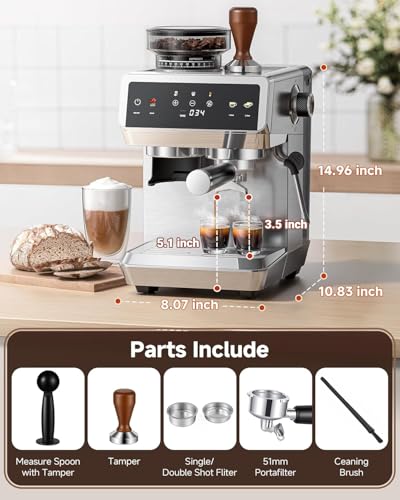
The IMD touch screen is clear and informative, showing grind time, brew time, and temp, useful feedback that most competitors omit. The 8mm steam wand delivers solid microfoam, and the one-touch cold brew mode is a fun bonus. It doesn’t have Breville’s polish, but for enthusiasts who want to experiment without spending top dollar, it’s a compelling option. I’d pick this over the AIRMSEN if temperature precision is a priority.
Product photos
Our Testing Process
As the founder of Bean Thusiast, I approach evaluating coffee equipment with a focus on the factors that genuinely impact the final cup. Rather than a hands-on lab test, this is a research-led comparison of published specifications and owner feedback across a range of models. I compared features like pump pressure, boiler type, grinder quality, and temperature control, while also carefully weighing owner reviews and expert opinions from sites like Whole Latte Love and Coffee Geek. This allowed me to rank machines against clear criteria for home barista performance.
For barista-style coffee machines, consistent temperature stability, grinder quality, and ease of use are paramount. I placed the most weight on these three areas because they directly translate to the ability to pull consistent, flavorful shots and create textured milk for cafe-quality beverages. A machine can have a lot of features, but without these core elements dialed in, it won’t deliver a satisfying experience for someone aiming for true espresso.
Specifications reliably tell you about a machine’s potential – pump pressure, boiler type (thermocoil vs. thermoblock), and wattage all provide clues. However, real-world performance and durability are best judged from owner feedback. I paid close attention to comments regarding consistency, ease of cleaning, and long-term reliability. For example, understanding the nuances of a Breville coffee machine operation https://beanthusiast.com/how-to-use-breville-coffee-machine/ is crucial, and owner experiences often reveal details not found in spec sheets.
Choosing The Right barista coffee machine
Finding the right machine to replicate your favorite coffee shop experience at home can be surprisingly complex.
A quality barista coffee machine prioritizes consistent temperature control (within a few degrees Celsius), a capable grinder offering a range of fineness settings, and a pump delivering at least 9 bars of pressure. Look for machines with durable build materials, user-friendly interfaces, and readily available replacement parts. Consider the volume of coffee you typically brew and whether automated features are a priority.
Grind Quality & Consistency
The integrated grinder is often the defining feature separating a good barista machine from a standard espresso maker. Don’t assume all burr grinders are created equal. Ceramic burrs tend to run cooler, preserving more aromatic compounds, but stainless steel burrs are more durable. More importantly, look for a grinder with a wide range of grind settings – not just “fine,” “medium,” and “coarse” – but numbered or otherwise granular adjustments. This allows you to dial in the perfect grind for different beans and roast levels.
Temperature Stability & Control
Consistent water temperature is critical for proper espresso extraction. Fluctuations can lead to bitter or sour shots. Machines boasting PID (Proportional-Integral-Derivative) controllers, like the Breville models, are generally superior at maintaining temperature stability. However, even without a PID, a well-insulated boiler and a quick heat-up time can help minimize temperature drift. If you’re serious about dialing in your espresso, consider a machine that allows you to adjust the brewing temperature itself – something you’ll find in models like the AMZCHEF.
Automation vs. Manual Control
While the fully automatic features of some machines – like the Breville Barista Touch – are convenient, they can limit your control over the brewing process. If you’re eager to learn the art of espresso and enjoy the hands-on experience, a semi-automatic machine with a manual steam wand will give you more creative freedom.
- A fully automatic machine simplifies the process, ideal for busy mornings.
- A semi-automatic machine requires more skill but offers greater control over extraction parameters.
- A manual machine (lever machines) provides the ultimate control, demanding significant technique but yielding potentially exceptional results, and is a good next step after mastering a semi-automatic if you’re looking to expand your skills and explore the nuances of espresso brewing – you might also want to check out our espresso machine components guide to learn about the [function of group head and portafilter].
“Dialing in” your espresso is about more than just the grind size. Water temperature, tamping pressure, and even the humidity in your kitchen all play a role.
Ultimately, choosing the right machine depends on your priorities. If you value convenience and consistency, an automated model might be the best fit. But if you’re passionate about the craft and want to explore the full potential of your coffee beans, a semi-automatic machine offers the most rewarding experience. Don’t forget to consider the ongoing cost of ownership, and whether you’ll need to refresh your knowledge of names of espresso machine parts over time. If you’re just starting, a great place to begin your research is our guide to the best barista-style espresso maker or the ideal home barista coffee machine to help you brew cafe-quality home coffee machine .
Barista Coffee Machine Compared
Here’s a comparison of key specifications for several barista-style coffee machines.
| Product Name | Water Tank Capacity | Grind Settings | Pressure (Bar) | Heat Up Time | Milk Frothing |
|---|---|---|---|---|---|
| Breville Barista Touch | 67 oz | Adjustable | N/A | 3 sec | Auto Steam |
| Breville Barista Pro | 67 oz | Adjustable | N/A | 3 sec | Manual Steam |
| CASABREWS CM5418 | 34 oz | N/A | 20 | N/A | Steam Wand |
| AIRMSEN Espresso Machine | 61 oz | 10 | 20 | N/A | Steam Wand |
| Philips Baristina | N/A | N/A | 16 | N/A | N/A |
| AMZCHEF Espresso Machine | 60 oz | 44 | N/A | N/A | Steam Wand |
Frequently Asked Questions
What pump pressure is truly needed for barista-style espresso?
Nine bars of pressure is generally considered the minimum for proper espresso extraction, though some machines advertise higher pressures. More important than a high number is consistent pressure throughout the brewing process, which impacts flavor development.
Do I really need a machine with a PID controller?
While not strictly essential, a PID controller significantly improves temperature stability. This leads to more consistent shot quality and reduces the likelihood of bitter or sour espresso, especially for those wanting to replicate cafe results.
What’s the difference between thermoblock and thermocoil boilers?
Thermoblock boilers heat water quickly but can have more temperature fluctuation. Thermocoil boilers generally offer better temperature stability, though they may take longer to heat up initially, and are often found in the best home espresso machine.
How important is the size of the water tank?
Water tank size depends on your brewing habits. A larger tank (60oz+) is convenient if you make multiple drinks daily, but a smaller tank (34oz+) is often sufficient for single users or occasional brewing, and can contribute to a more compact machine size.
Are more expensive machines always better?
Not necessarily. While price often correlates with build quality and features, a more expensive machine isn’t always the best fit. Consider your skill level and desired level of control; an affordable espresso coffee machine might be perfect for beginners.
The Bottom Line
Choosing a barista coffee machine often comes down to balancing control with convenience. While features are nice, the ability to consistently pull quality shots and texture milk is what truly sets these machines apart. For the best overall performance and a blend of automation and control, I consistently recommend the Breville Barista Touch. It strikes a fantastic balance for the home barista wanting to consistently deliver excellent results.
If you’re on a tighter budget, the CASABREWS CM5418 offers a surprising amount of capability for the price, and the AIRMSEN Espresso Machine is a strong contender for those prioritizing a larger water tank and adjustable grind settings. For those wanting maximum control and a deep explore the art of espresso, the Breville Barista Pro is an excellent choice, and understanding De’Longhi setup and brewing https://beanthusiast.com/how-to-use-delonghi-coffee-machine/ can open up a world of possibilities.
Ultimately, the specs matter less than your dedication to learning the fundamentals. Consistent tamping, proper grind adjustment, and understanding the relationship between water temperature and extraction time will have a far greater impact on your cup than any single feature. Focus on mastering those techniques, and you’ll be well on your way to enjoying café-quality coffee at home.
