
How to Use Your De’Longhi Coffee Machine | Setup & Pro Tips
To use a De’Longhi coffee machine, start with the mandatory first-use rinse cycle, set the water hardness level using the provided test strip, load fresh beans into the 250-gram hopper, and adjust the grinder dial only while it is running. Select your drink from the control panel, and always purge the steam wand of water before frothing milk. The machine’s 15-bar pump and pressurized filter basket ensure drinkable espresso even with a basic burr coffee grinder, but skipping the initial water hardness setting leads to premature scale alarms within four months.
Most people unpack the machine, fill the tank, and hit brew. That works for exactly one shot. The second shot tastes metallic, and by week three the “Descale” light blinks because the internal calculator started counting from the wrong water hardness baseline. You followed the quick-start guide but missed the one menu setting that prevents 90% of service calls.
This guide walks through the full lifecycle of a De’Longhi, from that critical first power-on to the monthly cleaning rituals that keep it running for years. We’ll cover the differences between automatic Magnifica models and semi-automatic Dedica machines, explain why the grinder adjustment rule exists, and detail the descaling argument between the manual and veteran repair techs.
Key Takeaways
- Run the first-use rinse cycle immediately to flush manufacturing oils from the brew group. Skipping this leaves a plastic taste in your first dozen shots.
- Set the water hardness using the included test strip before brewing anything. The machine uses this to calculate descaling intervals; a wrong setting triggers the descale alarm months early.
- Adjust the grind setting only while the grinder is running, as per the manual, but for large changes, empty the burrs first to prevent motor strain and stalled beans.
- Purge the steam wand for 3-5 seconds before frothing milk. Condensed water inside the wand dilutes the milk and prevents proper microfoam.
- Descaling frequency is a debate: the manual says the indicator decides, but community consensus says to descale every 3-6 months regardless, especially with tap water.
The First-Time Setup (And the One Thing Everyone Skips)
Unbox the machine and place it on a level, stable surface. Leave a few inches of clearance at the back for ventilation and hose access. The water tank on a model like the ECAM22.110.B Magnifica S holds 1.8 liters. Fill it with fresh, cold water, never use distilled or softened water, as the minerals are needed for the machine’s sensor to function.
Before you start: The machine contains high-pressure components and heating elements. Never open any panels or attempt to remove the brew group while the machine is powered on or hot. The steam wand reaches temperatures above 130°C; always purge it away from your body and wrap it with a cloth before cleaning.
Insert the empty portafilter or the included pre-ground coffee funnel. Power on the machine. It will enter a heating phase, which takes about two minutes. Once ready, the manual instructs you to run a rinsing cycle. This is non-negotiable.
The one thing everyone skips is the water hardness setting. Before you brew any coffee, you must complete this step. Your machine includes a paper test strip. Dip it in your water supply for one second, wait one minute, and match the color change to the chart. Then, navigate the machine’s menu, usually by holding a “Menu” or “Settings” button, to select the corresponding level (1 for soft, 4 for very hard).
The machine’s internal calculator uses the water hardness setting to estimate scale buildup and determine when the descale indicator will illuminate. Setting it incorrectly, especially setting it softer than your actual water, causes the machine to underestimate scale accumulation. The descale light won’t trigger until scale has already begun restricting flow in the thermoblock, which can happen within four months in hard-water areas.
TL;DR: Run the rinse cycle, then set the water hardness via the menu before making coffee. An incorrect setting lets scale build silently.
Daily Use and Drink Selection
For automatic machines (Magnifica, Dinamica), daily operation is simple. Fill the bean hopper, it holds about 250 grams, or roughly a week’s worth of beans for two daily drinkers. The grounds container below holds about 14 pucks before it needs emptying. Get in the habit of emptying it daily. Old, wet grounds grow mold, and that smell gets pulled into the brew group’s air path.
Select your drink from the control panel. Most models offer espresso, coffee (a longer pour), and hot water. The machine doses, grinds, tamps, and brews automatically. For a stronger shot, you can often program the volume: hold the button during brewing until your desired amount is in the cup, then release. The machine will remember that volume for next time.
For semi-automatic models like the Dedica, you control the dose and tamp. Use the machine’s plastic tamper or upgrade to a weighted 51mm metal tamper for consistency. The pressurized filter basket is forgiving, but your results still depend on a consistent coffee grind consistency.
| Drink Type | Machine Action | Key Variable |
|---|---|---|
| Espresso | Grinds ~7-9g, brews under pressure | Grind fineness, dose weight |
| Coffee/Lungo | Grinds same dose, brews longer | Water volume (programmable) |
| Cappuccino | Brews espresso, then switches to steam mode | Milk temperature, foam texture |
| Hot Water | Heats water to ~90°C, dispenses from steam wand | Volume (for Americano or tea) |
The Grinder Adjustment Rule (And When to Break It)
The manual for the ECAM22.110.B states: “Adjust the grind setting only when the coffee grinder is running.” This protects the burrs from being jammed by a piece of bean caught between them. Turn the dial one click at a time, then pull a test shot. Finer = slower, more bitter extraction. Coarser = faster, more sour extraction.
The community edge case is for a major adjustment, like switching from a dark oily roast to a light dry blonde roast coffee. Empty the hopper, run the grinder to clear the chamber, then make your large dial turn with the grinder off. This prevents motor strain. Then run a few grams of new beans through to season the burrs before pulling a real shot.
Common mistake: Making multiple grind adjustments without pulling a test shot in between, you lose your reference point and end up chasing your tail, wasting half a bag of beans.
Milk Frothing on a De’Longhi
The steam wand is on the right side of most models. To froth milk for a cappuccino or latte, first brew your espresso into your cup. Then, switch the machine to steam mode. The icon will usually flash. Wait about 30 seconds for the boiler to reach steam temperature.
Place a jug with cold, fresh whole milk under the wand. Whole milk contains the right fat and protein for stable microfoam. Before inserting the wand tip into the milk, open the steam valve for 3-5 seconds over the drip tray.
Purge the steam wand every single time. Condensed water sits in the wand after brewing. If you don’t eject it, that water shoots into your milk first, watering it down and making it impossible to create dry, velvety foam. You’ll hear a sputter, then a consistent, dry hiss.
Submerge the wand tip just below the milk’s surface, then open the valve fully. You want a gentle paper-tearing sound, not a loud screech. Keep the milk spinning in a vortex. When the jug feels warm to the touch (about 55°C), shut the valve and remove the jug. Wipe the wand immediately with a damp cloth, then purge it again for a second to clear the milk from the interior.
Essential Cleaning and Maintenance
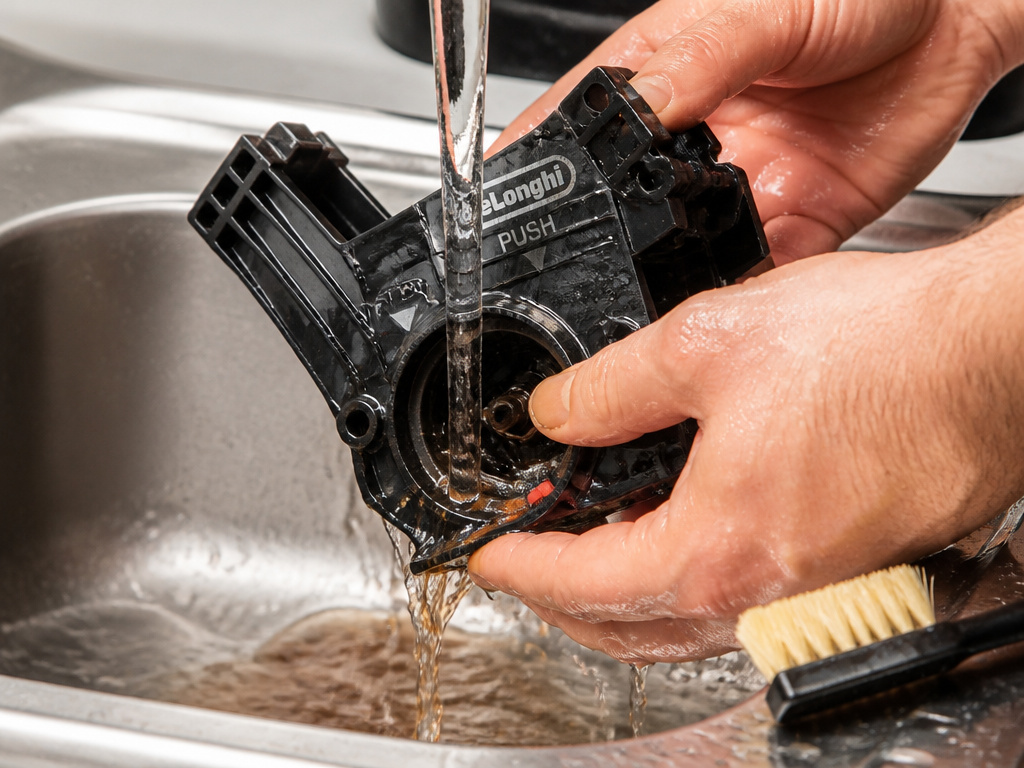
This isn’t optional. Coffee machines are warm, wet environments. Oils and microscopic grounds stick to every surface they touch. A weekly clean prevents rancid flavors and machine errors.
- Daily: Empty the Drip Tray and Grounds Container. Lift them out, dump them, rinse with water, and dry before replacing. This takes 30 seconds. Letting grounds sit creates a damp, moldy ecosystem right under the brew group.
- Weekly: Clean the Brew Group. On automatic models, power off the machine, open the front service door, and pull the brew group straight out. Rinse it under warm running water, using a soft brush to dislodge any packed coffee residue. Let it air dry completely before reinserting. Do not use soap.
- Weekly: Wipe the Steam Wand. After each use, wipe the exterior with a damp cloth. Once a week, remove the outer sleeve if your model allows it, and clean inside with a small brush.
- Monthly: Deep Clean the Milk System (if applicable). For models with an automatic milk frother (LatteCrema), run the cleaning cycle with the recommended De’Longhi milk system cleaner. Stale milk calcifies in the tubes and is a health hazard.
The Descaling Debate: Manual vs. Reality
Your machine will tell you when to descale via an indicator light. The manual says this is sufficient. The repair forums and veteran users say otherwise.
The machine’s algorithm is conservative and designed for average use with perfect water hardness settings. In practice, mineral deposits build up in the thermoblock, the heart of the machine, faster than the algorithm predicts. Waiting for the light means you’re descaling reactively, after scale has already begun restricting flow and reducing heating efficiency.
Descaling a De’Longhi requires its official EcoDecalk solution or a third-party descaler that specifies it contains L-(+)-lactic acid. Vinegar or citric acid is too aggressive and will damage the rubber seals inside the thermoblock and valves over multiple uses. The damage is slow and cumulative, the seals become brittle and start weeping water by the second or third year.
The proactive schedule is every three months if you use tap water, or six months if you use filtered water and have a softness setting of 1 or 2. Run the automated descaling program, which will guide you to add the solution (100ml of descaler + 500ml of water), then flush the system with fresh water.
| Maintenance Task | Frequency | Consequence of Skipping |
|---|---|---|
| Empty grounds container | Daily | Mold growth, foul odors, potential brew group jams |
| Clean brew group | Weekly | Rancid oil buildup, bitter-tasting coffee, poor extraction |
| Purge steam wand | Before every use | Watery, poorly textured milk foam |
| Descaling | Every 3-6 months (proactive) | Reduced heating efficiency, longer heat-up times, eventual thermoblock failure |
| Replace water filter | Every 2 months / 50 liters | Faster limescale buildup, inaccurate descaling indicator |
TL;DR: Clean the brew group weekly and descale every 3-6 months with lactic-acid descaler, regardless of the indicator light. Vinegar destroys internal seals.
Troubleshooting Common Issues
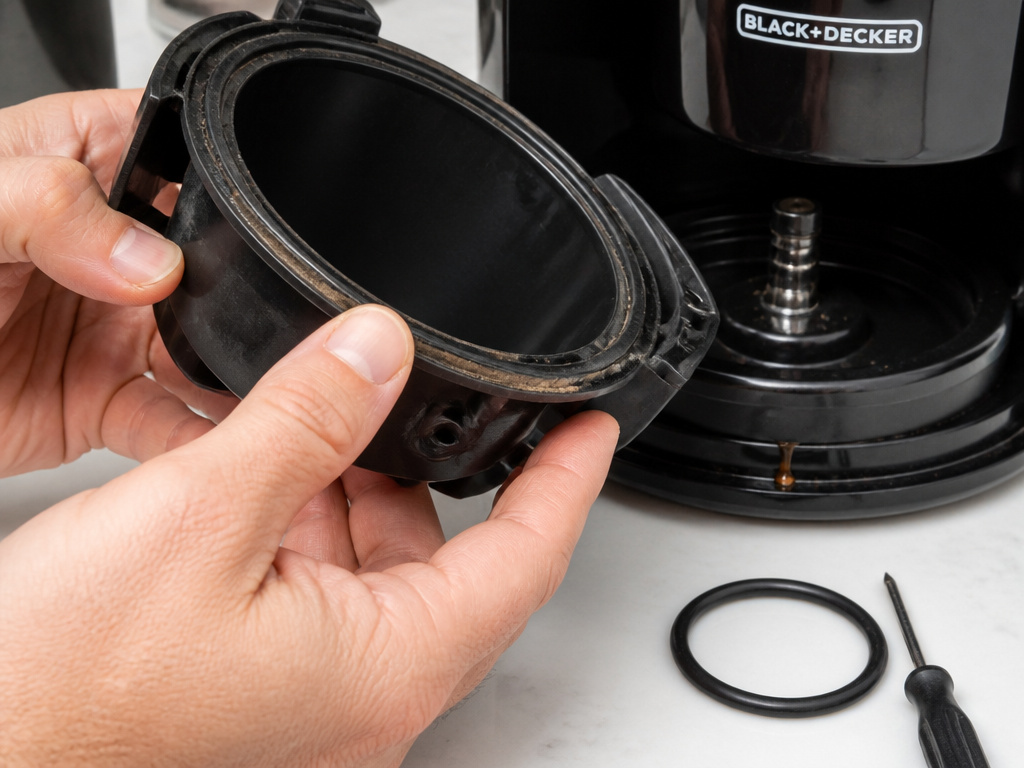
Machine won’t power on / display is blank.
Check that it’s plugged in securely. Some models have a master switch on the back or side. If it was stored in a cold garage, let it sit at room temperature for a few hours before trying again. Cold internal sensors can give false readings.
Coffee runs through too fast and tastes weak/sour.
Your grind is too coarse. Adjust the grinder dial one click finer. If you’re using pre-ground coffee, it may be the wrong grind size for espresso. The pressurized basket helps, but it can’t work miracles.
Coffee drips very slowly or not at all, tastes bitter.
The grind is too fine. Adjust the grinder dial one click coarser. Also, check that the brew group is clean and not clogged with compacted grounds.
“Descale” or “Water Tank” light is on, but tank is full.
Remove the water tank and reseat it firmly. Check the tank’s float valve moves freely. If you’re using a third-party water filter, this is a known edge case. Non-De’Longhi filters can have slightly different flow rates that confuse the machine’s sensor. Try removing the filter and running the machine without it to see if the error clears. For a reliable replacement, understand the specifics of a Breville coffee machine filter as an example of brand-specific design.
Steam wand sputters water, not dry steam.
You didn’t purge it long enough. The wand holds more condensed water than you think. Always purge for a full 3-5 seconds until you get a consistent, dry steam jet.
Machine makes loud grinding or humming noise.
The grinder chamber is empty or a foreign object (like a rock from the coffee bag) is stuck in the burrs. Turn off the machine immediately. Empty the bean hopper and inspect for debris.
Upgrades and Next Steps
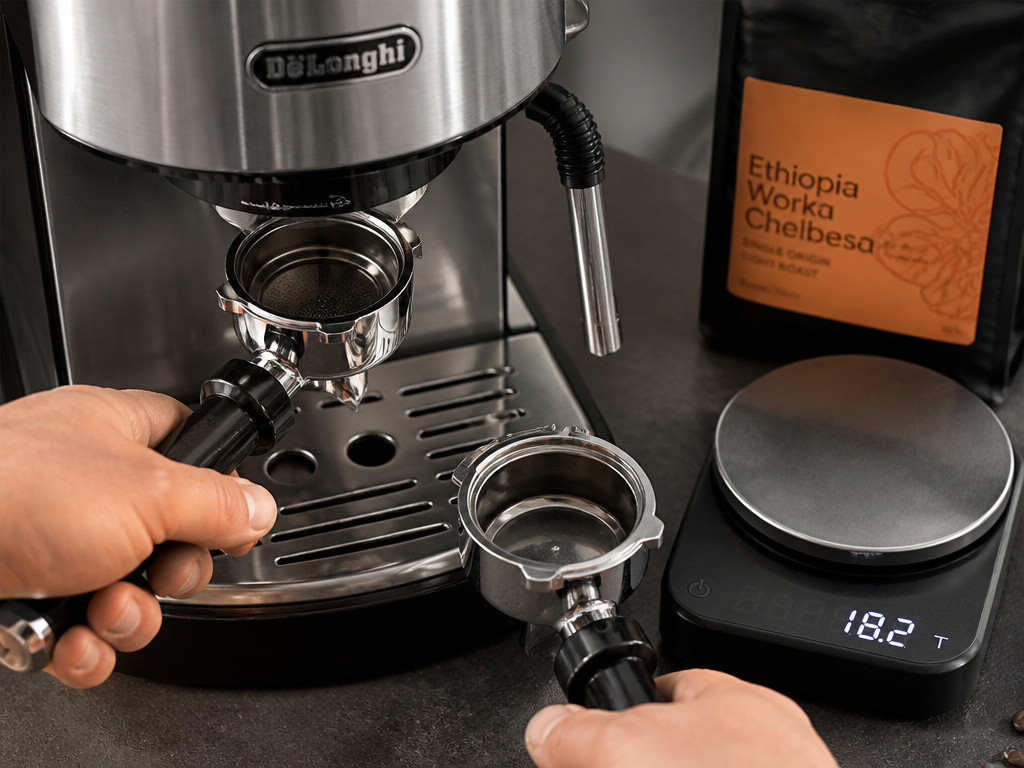
The pressurized portafilter is a great teacher. It forgives imperfect grinds and tamping. Once you’re comfortable, consider a non-pressurized (bottomless) portafilter. This upgrade, often used with a different blend coffee, removes the safety net and forces you to perfect your dose, tamp, and grind. Channeling and extraction flaws become visible in the stream. It’s the single biggest jump in espresso quality you can make on a semi-automatic De’Longhi.
Pair it with a proper scale that measures to 0.1 grams. Dose consistency is everything. Finally, think about your water. If you’re tired of descaling, use third-wave water packets or a high-quality pitcher filter. The difference in cup clarity, especially for delicate single-origin coffee, is dramatic.
Frequently Asked Questions
Can I use pre-ground coffee in my De’Longhi automatic machine?
Yes. Most models come with a pre-ground coffee funnel or a bypass doser. Use it. The machine will not grind, so you miss out on fresh aroma, but it’s a good option for decaf or when you run out of beans. The trade-off in flavor is significant compared to freshly ground beans.
How often should I replace the water softener filter?
De’Longhi states every two months or after 50 liters of water, whichever comes first. The filter icon on the display will remind you. Using the filter extends the time between descaling cycles, but it doesn’t eliminate the need for them. The filter removes some minerals, but scale still forms.
What’s the difference between an Americano and a regular coffee on the machine?
An Americano is made by dispensing espresso, then adding hot water from the steam wand. This creates a different flavor profile, stronger and more espresso-forward, than a Coffee/Lungo, which is a longer extraction through the same coffee grounds. For a deeper dive, compare an Americano coffee to standard drip.
Why does my coffee taste bitter or burnt?
Three likely causes. First, your beans might be over-roasted or stale. Second, your grind is too fine, causing over-extraction. Third, the brew group needs cleaning. Coffee oils turn rancid and taste bitter when heated repeatedly. Clean it weekly.
Is it okay to leave beans in the hopper all the time?
For short periods (a week), yes. For longer storage, no. Coffee beans stale quickly when exposed to air and light. The hopper is not airtight. For best flavor, buy beans in smaller quantities and store the bulk in an airtight container in a cool, dark place. Only fill the hopper with what you’ll use in 3-4 days.
Can I use any descaler, or does it have to be De’Longhi brand?
You can use a third-party descaler, but it must be specifically formulated for espresso machines and should contain L-(+)-lactic acid as the active ingredient. Never use vinegar, lemon juice, or citric acid-based descalers not intended for coffee machines, as they corrode internal seals.
The Bottom Line
A De’Longhi coffee machine removes guesswork but not responsibility. Your job is to set the water hardness correctly on day one, respect the grinder adjustment rule, and commit to a proactive cleaning schedule. The machine’ pressurized system and 15-bar pump deliver consistent, drinkable espresso even with a modest blade coffee grinder, but the potential for a great cup is unlocked by your attention to water quality, bean freshness, and maintenance. Ignore the descaling indicator’s suggested timeline, descaling every three to six months with the right solution is cheaper than a blocked thermoblock. Listen to the machine’s cues, clean what you can see, and it will pull shots for years.
