
Coffee & Miscarriage Risk in First Trimester: The 200mg Limit
Consuming more than 200 milligrams of caffeine per day is linked to an increased risk of miscarriage, particularly in the first trimester. Multiple large-scale studies show a dose-response relationship, where risk rises with intake. The American College of Obstetricians and Gynecologists and the UK’s NHS both set the safe upper limit at 200mg daily.
Most advice stops at the 200mg number. It doesn’t tell you that a single large mug from a diner can hit that limit before you finish breakfast. It doesn’t explain that your afternoon tea or piece of dark chocolate quietly counts against your daily budget. And it certainly doesn’t mention that your genetics might change how your body processes every sip.
This guide breaks down the research behind the 200mg limit, shows you exactly where caffeine hides, and gives you a real method to track your total intake without giving up your ritual.
Key Takeaways
- The 200mg daily limit is based on a dose-response relationship established in peer-reviewed studies, not a guess.
- One “cup” is not a standard measure. A 12oz travel mug of brewed coffee can contain 300mg, blowing the daily budget in one serving.
- Caffeine accumulates from coffee, tea, soda, energy drinks, chocolate, and some medications. Most people underestimate their total intake.
- Genetic differences in the CYP1A2 enzyme mean some individuals metabolize caffeine slower, potentially increasing their exposure.
- Switching to half-caf blends or smaller serving sizes is more sustainable than quitting cold turkey.
What the Research Actually Says
The 200mg guideline isn’t arbitrary. It’s the line drawn from a body of observational studies that consistently show increased risk beyond that point.
The often-cited NEJM study on first-trimester spontaneous abortion found that women who consumed more than 300mg of caffeine daily had nearly twice the risk of miscarriage. Later research refined the threshold. A 2008 prospective cohort study by Weng, Odouli, and Li, published in the American Journal of Obstetrics and Gynecology, found a clear dose-response. Women consuming 200mg or more per day had an adjusted odds ratio of 2.1 for miscarriage compared to non-consumers. That’s a doubling of risk.
Common mistake: Assuming “one cup a day” is safe, a standard 8oz “cup” of coffee can range from 95mg to over 200mg depending on brew strength and bean. The difference between a light roast pour-over and a dark roast French press can be the difference between staying under the limit and exceeding it before lunch.
A 2016 meta-analysis by Chen, Wu, and Pereira in the American Journal of Clinical Nutrition synthesized data from 26 studies. Their conclusion was stark: for every 150mg increase in daily caffeine intake, the risk of pregnancy loss increased by 19%. Consuming 300mg daily was linked to a 32% higher risk compared to no caffeine.
The mechanism isn’t fully proven, but the leading theory involves blood flow. Caffeine is a vasoconstrictor, it narrows blood vessels. In early pregnancy, reduced blood flow to the uterus and the developing placenta could compromise the embryo’s support system. Furthermore, caffeine crosses the placenta freely. A fetus lacks the mature liver enzymes to metabolize it efficiently, leading to prolonged exposure.
TL;DR: The 200mg limit comes from multiple studies showing a dose-response curve where risk increases with intake, with a significant jump observed at the 200-300mg per day range.
How Much Coffee is Too Much?
This is where generic advice fails. A “cup” isn’t a unit of measurement.
| Beverage & Serving | Typical Caffeine Range | What This Means for Your 200mg Budget |
|---|---|---|
| Brewed Coffee (8oz) | 95 – 200 mg | One strong cup could be your entire daily limit. |
| Espresso (1oz shot) | 63 mg | A double shot is 126mg—over half your budget. |
| Black Tea (8oz) | 40 – 70 mg | Your afternoon tea could use up 35% of your allowance. |
| Cola (12oz can) | 35 – 45 mg | Seems small, but it adds up fast with other sources. |
| Dark Chocolate (50g bar) | ~50 mg | A snack can have as much caffeine as half a tea. |
The variability in brewed coffee is the biggest trap. A light roast, single-origin bean brewed in a pour-over might land at the lower end. A dark roast, robusta-blend coffee made in a French press or a standard diner mug can easily surpass 200mg in a single 12oz serving.
A standard 8-ounce cup of brewed coffee contains between 95 mg and 200 mg of caffeine, depending on the bean type, roasting profile, grind size, and brewing method. Espresso, while more concentrated per ounce, is typically served in a 1-ounce shot containing roughly 63 mg.
Your daily “coffee” might actually be several caffeine sources. That morning latte uses espresso. The 3pm slump might be fought with a green tea. A square of dark chocolate after dinner counts. This is the cumulative effect most people miss.
TL;DR: One large mug of strong coffee can exceed 200mg. You must count all sources, espresso drinks, tea, soda, and chocolate, to know your true daily intake.
Tracking Your Total Caffeine
You can’t manage what you don’t measure. Guessing leads to going over.
Start by identifying your baseline drink. If you brew at home, look up your coffee’s typical caffeine content per serving. If you buy out, assume the higher end, a 16oz “grande” brewed coffee from a major chain can contain 300mg or more.
Then, log everything else for 24 hours. I mean everything.
- Morning: Large home-brewed coffee (estimate 180mg).
- Mid-morning: Can of diet cola (45mg).
- Afternoon: Black tea (50mg).
- Evening: Two squares of 70% dark chocolate (20mg).
That’s 295mg. You’ve blown the budget without having a second cup of coffee. The factors affecting caffeine stimulation from tea and the caffeine in milk-based drinks like lattes often get overlooked in a simple “coffee” count.
Common mistake: Only counting coffee, your total daily caffeine intake is a sum of coffee, tea, soda, energy drinks, chocolate, and certain over-the-counter medications like some migraine formulas. Missing one source consistently puts you over the limit.
A simple notepad or notes app log is the most effective tool. Write down the drink, the serving size, and your best estimate of the milligrams. Do this for three days. The pattern will surprise you.
Once you know your number, you can adjust. If your total is 280mg, you need to cut 80mg. That could mean switching your morning coffee to a half-caf blend, swapping your afternoon tea for an herbal infusion, or choosing milk chocolate over dark.
TL;DR: Log all caffeine sources for three days. The total is almost always higher than you think, revealing where to cut back without eliminating coffee entirely.
Why Metabolism Matters (The CYP1A2 Gene)
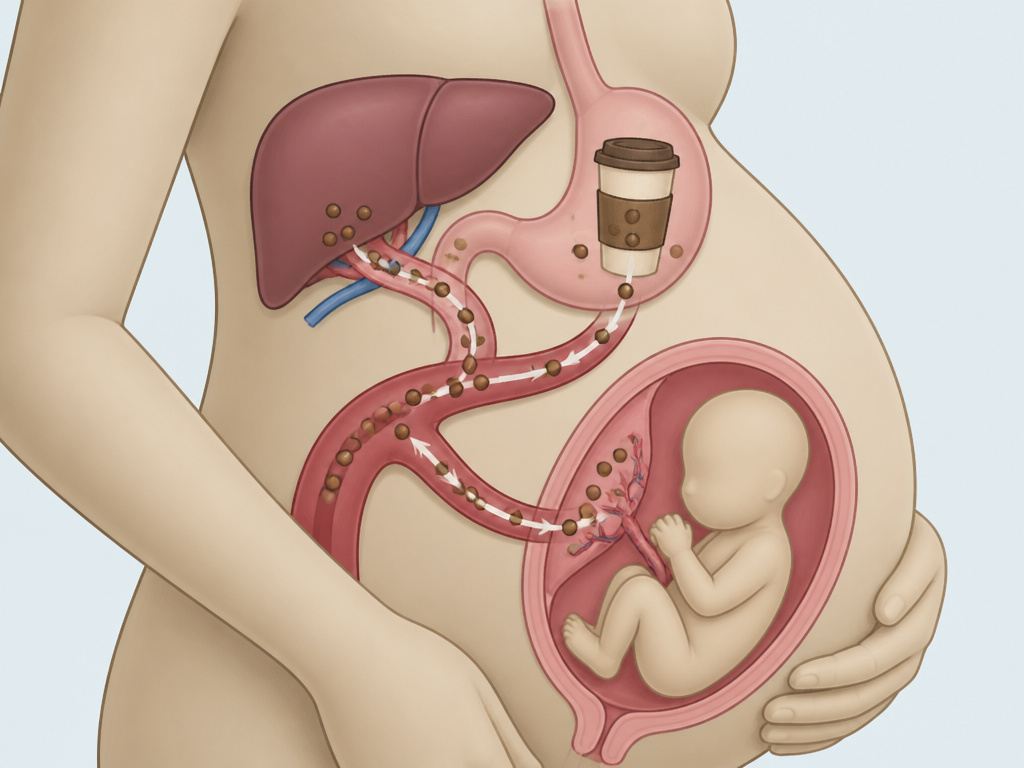
The 200mg guideline is a population-level average. Your individual risk may be higher or lower based on how fast you clear caffeine from your system.
This comes down to genetics, specifically the CYP1A2 enzyme. This liver enzyme is responsible for breaking down about 95% of the caffeine you consume. Some people have a genetic variant that makes this enzyme slower. If you’re a “slow metabolizer,” caffeine stays in your bloodstream longer, and the fetus is exposed to it for a greater duration.
I learned this the hard way after a routine DNA test. I’m a slow metabolizer. What felt like a moderate two-cup habit to me was, in effect, a much higher exposure. It changed how I viewed “moderation” entirely, my personal safe limit was likely lower than the general guideline.
You can’t easily test for this without a commercial genetic panel. The practical takeaway is this: if you’ve always been sensitive to caffeine, if one cup makes you jittery or keeps you awake at night, you’re likely a slower metabolizer. For you, erring on the conservative side of the 200mg limit, or staying well under it, is a prudent choice. This genetic factor is a key reason why blanket statements about safety can be misleading. Your body’s response is unique.
Official Guidelines vs. Real-World Practice
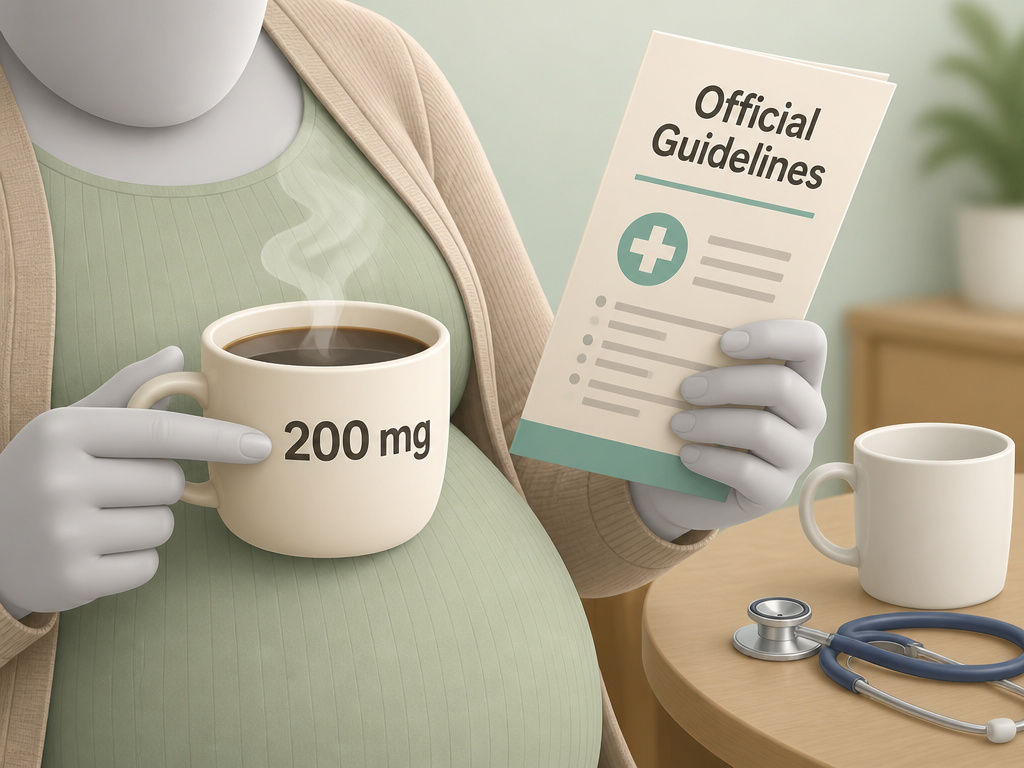
Major health organizations have converged on the 200mg limit, but their phrasing reveals a cautious consensus.
The American College of Obstetricians guidance states that “moderate caffeine consumption (less than 200 mg per day) does not appear to be a major contributing factor to miscarriage or preterm birth.” They acknowledge conflicting data but stand by this recommendation. The UK’s National Health Service is more direct, advising pregnant women to limit caffeine to 200mg daily because “high levels… can also cause a miscarriage.”
These are public health guidelines designed for millions of people. They must be simple and actionable. “Under 200mg” is that. But as the research on coffee and heart problems also shows, individual biology varies. A guideline is a boundary, not a guarantee of safety for every individual at 199mg.
In practice, many obstetricians advise patients who are concerned or who have risk factors for pregnancy loss to reduce or eliminate caffeine, especially in the first trimester. It’s a risk-benefit calculation only you and your provider can make.
Safer Strategies (If You’re Not Quitting)
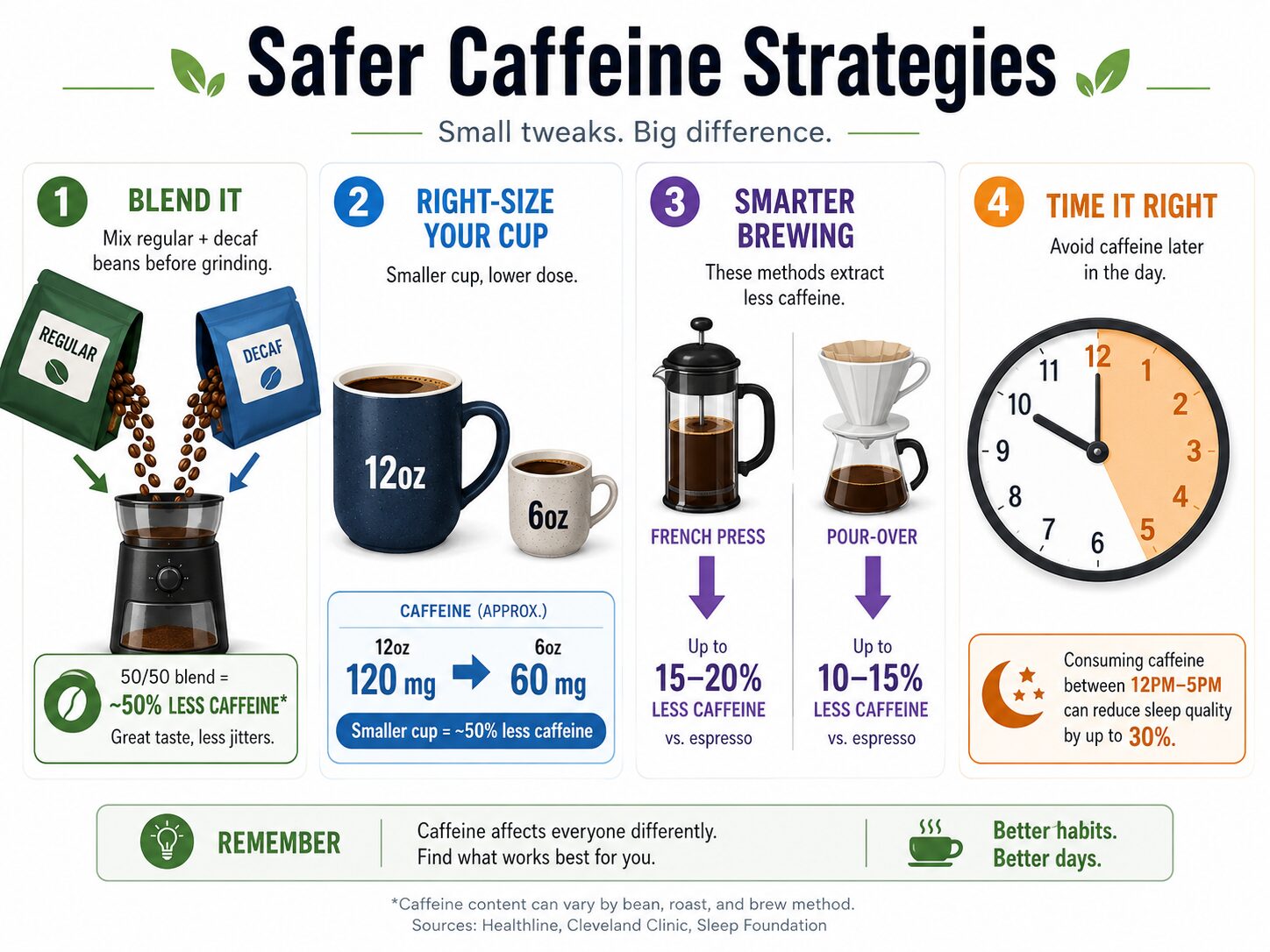
Giving up coffee entirely is a non-starter for many. The good news is you don’t have to.
| Strategy | How It Works | Potential Pitfall |
|---|---|---|
| Half-Caf Blends | Mix equal parts regular and decaf beans before grinding. | Decaf still has 2-5mg caffeine per cup—it’s not zero. |
| Smaller Serving Sizes | Use a 6oz cup instead of a 12oz mug. | You might unconsciously refill it, negating the benefit. |
| Switching Brew Methods | A pour-over typically yields less caffeine than French press. | This is highly variable; tracking is still essential. |
| Earlier Cut-Off Time | No caffeine after 12 PM. | Doesn’t reduce total daily mg, just shifts timing. |
The half-caf approach is the most psychologically sustainable. You get the ritual and taste without the full dose. Buy a bag of your favorite regular beans and a quality Swiss Water Process decaf. Mix them in your storage container. Your espresso caffeine content from a morning latte instantly drops by half.
Another lever is dilution. If you drink brewed coffee, use a lighter roast (it actually has slightly more caffeine by weight, but the brew is often less intense) or a shorter brew time. If you’re a tea drinker, steeping for 3 minutes instead of 5 can cut the caffeine extraction significantly.
TL;DR: Blend regular and decaf beans, use a smaller cup, and steep tea for less time. These tweaks lower your intake while preserving the habit.
When to Talk to Your Doctor
This isn’t just about coffee. It’s about your total health picture.
Bring up caffeine at your first prenatal appointment. Be specific. “I usually drink about two 12-ounce mugs of home-brewed coffee a day, plus sometimes a diet soda in the afternoon. Should I cut back?” That’s a better question than “Is coffee okay?”
The conversation changes if you have other risk factors. A history of pregnancy loss, advanced maternal age, or certain medical conditions might make your provider suggest a more conservative approach, like staying under 100mg or cutting it out entirely during the first trimester. This is a personal decision, and the caffeine limits for nursing mothers you might consider later are different, another reason to have an open dialogue.
Your provider can also help you navigate non-coffee sources. They can clarify the caffeine content in any medications you’re taking and discuss the stimulant effects of beverages like tea versus coffee.
Frequently Asked Questions
Does decaf coffee have any caffeine?
Yes. Decaffeinated coffee is not caffeine-free. The USDA states that an 8oz cup of decaf brewed coffee typically contains 2 to 5 milligrams of caffeine. It’s a trace amount, but if you drink multiple cups, it adds up.
Is the risk only in the first trimester?
The first trimester is the period of highest risk for miscarriage, and it’s when the embryo is most vulnerable. While some studies show associations with caffeine later in pregnancy (like low birth weight), the strongest evidence for miscarriage risk is linked to early pregnancy exposure.
What about other sources of caffeine?
You must count them all. An 8.5oz can of Red Bull caffeine drink has 80mg. A 50g bar of dark chocolate has about 50mg. A mug of black tea has 40-70mg. A can of cola has 35-45mg. These are not trivial amounts when your daily limit is 200mg.
Can I just switch to tea?
Switching from coffee to tea reduces your caffeine dose per serving, but you still need to count it. A strong 8oz black tea can have 70mg. If you have three cups, that’s 210mg, you’re already over the limit. Herbal teas (like peppermint or ginger) are generally caffeine-free and are a safer switch.
What if I accidentally had more than 200mg one day?
single occasional exceedance is unlikely to cause harm. The studies look at habitual daily intake. Don’t panic. Just resume tracking and aim to stay under the limit the next day. The concern is consistent, daily over-consumption.
Before You Go
The 200mg daily caffeine limit is a line drawn from real data, not fear. It exists because a dose-response relationship appears in multiple reputable studies. The coffee and heart attack risk research follows a similar pattern, moderation is key.
Your job isn’t to live in anxiety. It’s to become a detective for a few days. Track everything. See where your number lands. Then, make one or two practical swaps, half-caf beans, a smaller cup, an herbal tea in the afternoon. You keep the ritual and significantly reduce the risk. That’s a trade-off worth making.
For a deeper look at how caffeine affects the body beyond pregnancy, the MotherToBaby caffeine fact sheet is an authoritative, evidence-based resource. And remember, your healthcare provider is your best source for personalized advice tailored to your unique health history.
