
Can Coffee Stunt Growth in Kids? Separating Myth from Fact
No, coffee does not stunt a child’s growth. This is a persistent myth with no basis in modern science. Multiple long-term studies, including a systematic review in the Journal of Pediatric Gastroenterology and Nutrition, have found no evidence that caffeine consumption affects bone growth, bone mineral density, or ultimate adult height.
The universal mistake is getting stuck on the wrong question. Parents worry about an imaginary height chart, while pediatricians are watching the clock. They’re concerned about bedtime, not bone length. Caffeine’s real impact is on sleep cycles and nervous systems, not growth plates.
This guide walks through the origins of the growth myth, the specific studies that debunked it, and the actual health guidelines you should follow instead. We’ll also look at where caffeine actually does matter for kids, from iron absorption to heart rate.
Key Takeaways
- The “coffee stunts growth” myth stems from flawed, outdated studies on osteoporosis in the elderly, not research on children.
- A 2021 systematic review of child and adolescent caffeine studies found the evidence for any growth impact inconclusive and called for more robust research.
- Major health organizations like the AAP and CDC avoid caffeine for kids due to proven effects on sleep, anxiety, and behavior, not unproven effects on height.
- Health Canada’s official guideline is a maximum of 2.5 mg of caffeine per kilogram of a child’s body weight per day.
- The bigger risk is often total caffeine intake from all sources, where a single energy drink can exceed a child’s safe daily limit.
The Myth’s Origin and the Science That Debunked It
This idea didn’t come from nowhere. Decades ago, some early research suggested a link between high caffeine intake and reduced bone mineral density. Those studies, however, focused on elderly populations who often had diets critically low in calcium. Researchers mistakenly extrapolated that caffeine might leach calcium from bones, theoretically impacting development. That tenuous connection morphed into the parental warning we know today.
The science has moved on. A pivotal six-year study followed 81 adolescents, tracking their coffee consumption against bone development. At the end of the study, published findings showed no difference in bone gain or density between the heaviest coffee drinkers and those who drank none. The myth was effectively laid to rest with data.
Technical Overview: The hypothesis that caffeine adversely affects bone mineral accretion in youth lacks supporting evidence. Contemporary analyses, including longitudinal cohort studies, have failed to demonstrate a significant association between moderate caffeine consumption and deficits in bone mineral density or growth velocity in pediatric populations, when controlling for overall calcium and nutrient intake.
Modern reviews, like the 2021 systematic review in the Journal of Pediatric Gastroenterology and Nutrition, have scrutinized all available evidence. Their conclusion is consistent: while caffeine may have other downsides for kids, stunting growth isn’t one of them. The link simply isn’t there.
TL;DR: The growth-stunting myth is a fossil from old, poorly contextualized science. Newer, longer, and better-designed studies on kids find no connection between caffeine and height.
Where Did This Idea Come From? A Look at the Sources
You hear it from a grandparent, see it in an old movie, or read it in a vintage parenting book. The myth’s endurance is a case study in how bad science sticks. The early bone-density studies were real, but their application was wrong.
The mechanism seemed plausible at the time. Caffeine is a mild diuretic, so the theory was it could cause excess calcium loss through urine. Even if that minor effect occurs, subsequent research showed the impact is negligible and easily offset by normal dietary calcium. A glass of milk or a serving of yogurt provides more than enough calcium to counter any potential loss from a cup of coffee.
The narrative also gained power because it was a convenient, tangible scare. “It will stunt your growth” is a more dramatic warning to a child than “it might make you jittery.” It carried moral weight. The real, subtler effects of caffeine, disrupted sleep, increased anxiety, are harder for a child to understand or for a parent to enforce against.
The Real Health Concerns Doctors Actually Have
Pediatricians don’t mention growth charts when they talk about caffeine. They talk about sleep diaries and behavior reports. This is where the evidence is concrete and the concerns are immediate.
The American Academy of Pediatrics states plainly that caffeine has “no place in the diet of children and adolescents.” Their position, reaffirmed in 2018, isn’t about height. It’s about the proven impacts: sleep disturbance, increased anxiety, elevated heart rate and blood pressure, and potential digestive issues. For a developing nervous system, these are non-trivial effects.
Sleep is the biggest battleground. Growth hormone is primarily secreted during deep sleep. While caffeine doesn’t directly block this hormone, the HealthyChildren.org caffeine guide emphasizes that caffeine-induced sleep disruption can indirectly reduce the quality and quantity of that crucial sleep. A tired kid is also more likely to be inactive, which can affect overall health in a roundabout way.
Common mistake: Allowing a soda or iced tea with dinner, the caffeine can have a half-life of 6-8 hours in a child’s system, pushing back their natural sleep onset by over an hour and fracturing their sleep cycle for the whole night.
Then there’s iron. Caffeine can inhibit the absorption of non-heme iron, the type found in plants and fortified foods. For a child who is a picky eater or has borderline iron levels, a daily coffee or tea with meals could contribute to a deficiency over time. It’s a subtle nutrient competition, not a dramatic growth halt.
TL;DR: Doctors worry about tonight’s sleep and this week’s nutrition, not next year’s height percentile. Caffeine disrupts the systems that support healthy development daily.
Official Guidelines: What Do Health Authorities Actually Say?
No major health body cites growth stunting as a reason to limit caffeine. Their guidelines are built on the acute effects we just covered. Knowing the official numbers helps you move from fear to practical decision-making.
Health Canada provides the most specific numerical guideline. They recommend a maximum daily caffeine intake of 2.5 milligrams per kilogram of a child’s body weight. For a 30 kg (66 lb) child, that’s 75 mg of total caffeine. That’s less than a standard 8-ounce cup of brewed coffee, and it must account for all sources, soda, chocolate, and tea included.
| Organization | Recommendation for Children | Primary Stated Reason |
|---|---|---|
| American Academy of Pediatrics (AAP) | Advises against caffeine for children under 12; discourages consumption for all children and adolescents. | Negative effects on sleep, anxiety, cardiovascular system. |
| Health Canada | Maximum of 2.5 mg/kg body weight per day. | To limit potential side effects like nervousness, insomnia, and rapid heart rate. |
| Centers for Disease Control and Prevention (CDC) | Recommends children avoid caffeine. | Potential impacts on sleep, behavior, and heart rate. |
The CDC’s guidance is more general, urging avoidance due to the potential for sleep and behavioral issues. They, like the AAP, frame it as a matter of supporting overall healthy development, not preventing a specific physical outcome.
These guidelines highlight a critical point: the issue is dose-dependent. The occasional sip of a parent’s coffee or a small cup on a special occasion is very different from a daily latte or a habit of energy drinks. The latter scenario is where families cross into the territory these guidelines are designed to prevent.
Expert Tip: I use Health Canada’s 2.5 mg/kg math as my north star. It turns a vague worry into a calculable limit. When my nephew wanted to try a cold brew, we looked up its caffeine (about 200 mg), weighed him (35 kg), and did the math. His limit was 87 mg. We let him have a small portion that fit the budget, talked about why the rest was for later, and skipped dessert soda. It became a lesson in moderation, not prohibition.
Caffeine in Context: It’s Never Just Coffee
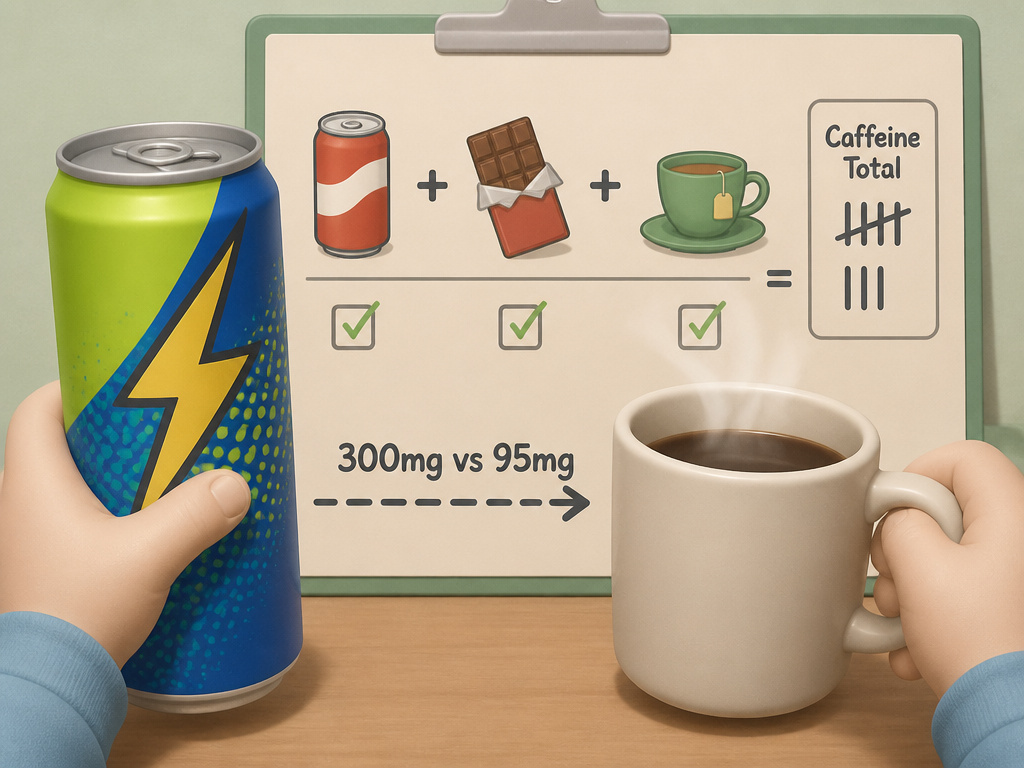
This is where many parents get blindsided. You might vigilantly guard the coffee pot, but a single 16-ounce energy drink can contain 160-300 mg of caffeine, enough to blow past a teenager’s daily limit instantly. The caffeine content in energy drinks is a major concern, often compounded by high sugar content.
You have to audit the whole diet. Chocolate, certain sodas, iced tea, and even some over-the-counter medicines contain caffeine. A morning hot chocolate, an afternoon cola, and a chocolate bar after dinner can add up to a significant dose without a single coffee bean in sight.
| Common Source | Approximate Caffeine (mg) | Notes for Kids |
|---|---|---|
| Cola (12 oz can) | 30-40 mg | Often consumed in multiples; sugar is an additional concern. |
| Black Tea (8 oz) | 40-70 mg | Brewing time dramatically affects strength; a steeped iced tea can be potent. |
| Dark Chocolate (1.5 oz) | 20-30 mg | The darker the chocolate, the higher the caffeine. |
| Energy Drink (16 oz) | 160-300 mg | Often exceeds safe pediatric limits in one serving; high sugar common. |
| Decaf Coffee (8 oz) | 2-5 mg | A truly negligible amount; the “decaf” label is key here. |
Understanding caffeine in soda versus caffeine in tea helps you make smarter swaps. If a child wants a flavorful drink, offering a lightly brewed iced tea or a steamer (steamed milk with flavor) can satisfy the ritual without the stimulant.
TL;DR: Coffee is often the poster child, but the cumulative caffeine from all sources is what matters. An energy drink or several sodas can deliver a bigger jolt than a cup of coffee.
So, Can Kids Ever Have Coffee?
This is the practical question that follows the science. If growth isn’t the risk, but sleep and behavior are, the answer becomes about age, dose, and timing, not an absolute no.
For younger children (under 12), the consensus is clear: avoidance is best. Their smaller body size makes them more sensitive, and they lack the maturity to recognize or articulate the side effects like jitteriness or anxiety. The health impacts for ten-year-olds are more pronounced simply due to lower body weight.
For older adolescents, an occasional, small serving is unlikely to cause harm, provided it doesn’t become a habit that impacts sleep. The key is treating it as a rare treat, not a daily source of hydration or energy. Never serve it after noon if you want them to sleep that night.
Consider the vehicle. A milky, sweet latte delivers caffeine alongside fat, protein, and sugar, which can slow its absorption and mitigate some side effects. A straight black coffee or potent cold brew hits faster and harder. The former is a more gentle introduction, if you choose to allow one.
Rule of Thumb: If you wouldn’t let them have a can of cola at 7 PM, don’t let them have coffee either. The caffeine content is often comparable, and the sleep disruption principle is identical.
Finally, model moderation. If a child sees adults relying on multiple cups of coffee to function or using it as an emotional crutch, they learn the wrong lesson. Show them that caffeine is a occasional tool for enjoyment or slight focus, not a fuel tank.
Frequently Asked Questions
Does decaf coffee stunt growth?
No. Decaffeinated coffee contains only trace amounts of caffeine (2-5 mg per cup). The growth myth is specifically tied to caffeine, so decaf is irrelevant to this concern. The other components of coffee are not linked to growth inhibition.
What about tea? Does that stunt growth?
No, tea does not stunt growth either. It contains caffeine, though typically less than coffee. The same principles apply: the myth is false, but the caffeine in tea can still affect a child’s sleep and anxiety levels. The health benefits of tea are often discussed, but its caffeine content needs the same management as coffee’s.
If it’s a myth, why do so many people still believe it?
Myths are powerful when they offer a simple, scary cause for a complex outcome like a child’s height. Height is heavily influenced by genetics, overall nutrition, and health. Blaming a single beverage is psychologically easier than accepting that multi-faceted reality. The myth also persists through generational repetition, long after the science has changed.
At what age is coffee considered “safe”?
There’s no magic age. Health organizations like the AAP discourage all caffeine for children and teens due to its effects on sleep and developing brains. Culturally, many families introduce small tastes in the mid-teens. Safety is less about calendar age and more about responsible dosing, timing, and ensuring it doesn’t replace nutrient-rich foods or disrupt sleep.
Could coffee affect growth indirectly?
This is the nuanced answer. Coffee itself doesn’t affect growth plates. However, if caffeine consumption leads to chronic sleep loss, poor appetite because it’s a stimulant, or if it replaces milk and other calcium-rich drinks in the diet, then those secondary effects could theoretically impact overall nutrition and well-being, which supports healthy growth. It’s an indirect, lifestyle-mediated effect, not a direct biological one.
Are energy drinks worse than coffee for kids?
Yes, absolutely. While the Monster Energy caffeine content or Red Bull caffeine levels might be similar to coffee, energy drinks often contain extremely high sugar, additional stimulants like guarana, and marketing that appeals directly to youth. They pose a greater risk of exceeding safe caffeine limits and contributing to other health issues like dental problems and weight gain.
The Bottom Line
The fear that coffee stunts a child’s growth is a relic. You can let that particular worry go. The Harvard Health growth myth article and the systematic review of child caffeine consumption are clear: no link exists.
The real conversation is about caffeine, not coffee. It’s about protecting sleep, monitoring anxiety, and teaching mindful consumption. Use the official guidelines from Health Canada or the AAP as your fence posts. Calculate the total daily dose from all sources, with special vigilance around energy drinks and soda.
Make your decisions based on the science of today, not the folklore of yesterday. That means focusing on the afternoon cup that steals sleep, not the morning sip that might, but doesn’t, steal inches.
{
“@context”: “https://schema.org”,
“@type”: “HowTo”,
“name”: “How to Evaluate Caffeine Safety for Children”,
“totalTime”: “PT10M”,
“tool”: [
{
“@type”: “HowToTool”,
“name”: “Reliable health authority websites (CDC, AAP, Health Canada)”
},
{
“@type”: “HowToTool”,
“name”: “Caffeine content reference chart”
},
{
“@type”: “HowToTool”,
“name”: “A journal or notepad”
}
],
“step”: [
{
“@type”: “HowToStep”,
“name”: “Separate myth from fact”,
“text”: “Understand that the belief coffee stunts growth is a decades-old myth with no supporting scientific evidence. Multiple studies, including a six-year study on adolescents, found no link between caffeine consumption and bone growth or final adult height.”
},
{
“@type”: “HowToStep”,
“name”: “Identify the real concerns”,
“text”: “Focus on the documented effects of caffeine that matter for children: sleep disruption, increased anxiety, elevated heart rate, and potential impacts on nutrient absorption like iron, especially when consumed with meals.”
},
{
“@type”: “HowToStep”,
“name”: “Consult official guidelines”,
“text”: “Refer to guidelines from the American Academy of Pediatrics, which advises against caffeine for children under 12, and Health Canada, which sets a maximum daily caffeine limit of 2.5 mg per kilogram of body weight for children and adolescents.”
},
{
“@type”: “HowToStep”,
“name”: “Audit total daily caffeine”,
“text”: “Calculate a child’s total caffeine intake from all sources, not just coffee. Include soda, tea, chocolate, and especially energy drinks, which can contain concentrated caffeine and sugar.”
},
{
“@type”: “HowToStep”,
“name”: “Make an informed decision”,
“text”: “Use the evidence to decide on moderation. While an occasional small serving may be fine for an older child, regular or high intake can interfere with sleep, behavior, and overall well-being, which are the true priorities.”
}
]
}
{
“@context”: “https://schema.org”,
“@type”: “FAQPage”,
“mainEntity”: [
{
“@type”: “Question”,
“name”: “Does decaf coffee stunt growth?”,
“acceptedAnswer”: {
“@type”: “Answer”,
“text”: “No. Decaffeinated coffee contains only trace amounts of caffeine (2-5 mg per cup). The growth myth is specifically tied to caffeine, so decaf is irrelevant to this concern. The other components of coffee are not linked to growth inhibition.”
}
},
{
“@type”: “Question”,
“name”: “What about tea? Does that stunt growth?”,
“acceptedAnswer”: {
“@type”: “Answer”,
“text”: “No, tea does not stunt growth either. It contains caffeine, though typically less than coffee. The same principles apply: the myth is false, but the caffeine in tea can still affect a child’s sleep and anxiety levels. The health benefits of tea are often discussed, but its caffeine content needs the same management as coffee’s.”
}
},
{
“@type”: “Question”,
“name”: “If it’s a myth, why do so many people still believe it?”,
“acceptedAnswer”: {
“@type”: “Answer”,
“text”: “Myths are powerful when they offer a simple, scary cause for a complex outcome like a child’s height. Height is heavily influenced by genetics, overall nutrition, and health. Blaming a single beverage is psychologically easier than accepting that multi-faceted reality. The myth also persists through generational repetition, long after the science has changed.”
}
},
{
“@type”: “Question”,
“name”: “At what age is coffee considered \”safe\”?”,
“acceptedAnswer”: {
“@type”: “Answer”,
“text”: “There’s no magic age. Health organizations like the AAP discourage all caffeine for children and teens due to its effects on sleep and developing brains. Culturally, many families introduce small tastes in the mid-teens. Safety is less about calendar age and more about responsible dosing, timing, and ensuring it doesn’t replace nutrient-rich foods or disrupt sleep.”
}
},
{
“@type”: “Question”,
“name”: “Could coffee affect growth indirectly?”,
“acceptedAnswer”: {
“@type”: “Answer”,
“text”: “This is the nuanced answer. Coffee itself doesn’t affect growth plates. However, if caffeine consumption leads to chronic sleep loss, poor appetite because it’s a stimulant, or if it replaces milk and other calcium-rich drinks in the diet, then those secondary effects could theoretically impact overall nutrition and well-being, which supports healthy growth. It’s an indirect, lifestyle-mediated effect, not a direct biological one.”
}
},
{
“@type”: “Question”,
“name”: “Are energy drinks worse than coffee for kids?”,
“acceptedAnswer”: {
“@type”: “Answer”,
“text”: “Yes, absolutely. While the Monster Energy caffeine content or Red Bull caffeine levels might be similar to coffee, energy drinks often contain extremely high sugar, additional stimulants like guarana, and marketing that appeals directly to youth. They pose a greater risk of exceeding safe caffeine limits and contributing to other health issues like dental problems and weight gain.”
}
}
]
}
