
Can 10 Year Olds Drink Coffee? Official Caffeine Limits & Risks
A 10-year-old should not regularly drink coffee. The official health guidance is clear: major pediatric and government bodies discourage caffeine consumption for children. Health Canada sets a maximum daily limit of 2.5 milligrams of caffeine per kilogram of a child’s body weight. For an average 30 kg (66 lb) 10-year-old, that’s just 75 mg total—less than a single small cup of drip coffee.
The universal mistake is thinking a small sip is harmless. The problem isn’t the single sip. It’s the cumulative dose from coffee, plus soda, plus chocolate, plus the hidden caffeine in some medications or snacks. That total quietly crosses the safety threshold.
This guide breaks down the official caffeine limits, the specific physiological risks to a child’s developing system, and the concrete steps to manage intake. We’ll also look at what a real 75 mg limit looks like in everyday drinks and identify safer alternatives.
Key Takeaways
- Health Canada’s formula is the only government-set limit: 2.5 mg of caffeine per kg of child’s body weight per day. For a 30 kg child, that’s 75 mg.
- A standard 8-ounce cup of brewed coffee contains 95-200 mg of caffeine. One small cup can exceed a 10-year-old’s entire daily limit.
- Energy drinks are categorically different and worse. They are not just sugary coffee; they often exceed 250 mg of caffeine and contain additional stimulants like guarana, which the AAP explicitly warns against for children.
- Caffeine’s primary risk for children is sleep disruption. It blocks adenosine receptors, delaying sleep onset and reducing deep sleep, which is critical for cognitive development and growth.
- The safest path is to defer regular coffee consumption until after puberty. Until then, focus on establishing healthy hydration habits with water, milk, and limited, lower-caffeine alternatives.
What Do Official Health Guidelines Say?
No major pediatric health organization recommends coffee for children. Their positions range from strong discouragement to a specific mathematical limit. This isn’t a matter of opinion—it’s published policy.
The American Academy of Pediatrics (AAP) states plainly in its policy that children and adolescents should avoid caffeine. They cite the developing nervous system’s heightened sensitivity and the potential for sleep and anxiety issues. You can read their detailed reasoning in the official AAP parent guide on caffeine.
The U.S. Food and Drug Administration (FDA) does not set a limit for children but notes they are “more sensitive” to caffeine’s effects and that for adults, 400 mg daily is the point where negative effects may begin. This implicitly suggests a much lower threshold for kids.
Health Canada provides the only quantitative government guideline: a maximum daily intake of 2.5 milligrams of caffeine per kilogram of body weight for children and adolescents. This figure is based on the “lowest observed adverse effect level” in scientific studies.
The math is straightforward. Find your child’s weight in kilograms (pounds ÷ 2.2). Multiply by 2.5. That number is the hard ceiling.
| Child’s Weight | Approximate Daily Caffeine Limit (2.5 mg/kg) |
|---|---|
| 25 kg (55 lbs) | 62.5 mg |
| 30 kg (66 lbs) | 75 mg |
| 35 kg (77 lbs) | 87.5 mg |
| 40 kg (88 lbs) | 100 mg |
TL;DR: The rule is 2.5 mg per kg of body weight. For an average 10-year-old, that’s about 75 mg total from all sources—coffee, soda, chocolate, and medicine combined.
Why Is Caffeine Different for a 10-Year-Old?
Caffeine isn’t inherently toxic. For a grown adult with a fully developed nervous system and a larger body mass, a cup of coffee is a mild stimulant. For a child, the same chemical acts with disproportionate force.
The core mechanism is adenosine blockade. Caffeine molecules fit into the brain’s adenosine receptors, blocking the signal that makes you feel tired. In a child’s brain, which is still forming billions of neural connections, this external interruption has a louder effect. The system is more plastic, more easily nudged off course.
The first and most studied consequence is sleep architecture disruption. Even a small amount of caffeine in the afternoon can delay sleep onset by an hour or more and reduce the amount of deep, slow-wave sleep. This stage is non-negotiable for memory consolidation and the release of growth hormone. A tired child is one thing. A child whose brain isn’t completing its nightly repair cycle is another.
Common mistake: Thinking a morning coffee won’t affect bedtime. Caffeine has a half-life of 4-6 hours. A 75 mg dose at 8 AM still has about 37 mg active in the bloodstream at 2 PM, enough to interfere with the wind-down process for a sensitive child.
Anxiety and jitteriness are next. Children haven’t built the emotional regulation frameworks that adults have. The physiological feeling of a racing heart or jittery hands can be frightening, not just uncomfortable. It can manifest as irritability, restlessness, or even panic.
Finally, there’s the simple issue of substitution. Coffee has zero nutritional value. A drink that displaces water, milk, or a healthy smoothie represents a net loss in vitamins, minerals, and hydration. The AAP emphasizes this in its broader AAP Healthy Beverage Quick Reference Guide, which prioritizes water and milk for growing children.
How Much Caffeine Is in That Drink?
The 75 mg limit sounds abstract. It becomes concrete when you see how little it actually is. Variability is the killer. A weak cup of home-brewed coffee might be 80 mg. A standard café small (12 oz) drip is routinely 150 mg or more.
| Beverage (Standard Serving) | Approximate Caffeine Content | % of a 30 kg Child’s Daily Limit (75 mg) |
|---|---|---|
| Brewed Coffee (8 oz) | 95-200 mg | 125% – 265% |
| Espresso (1 oz shot) | 64 mg | 85% |
| Black Tea (8 oz) | 40-70 mg | 53% – 93% |
| Iced Tea (8 oz) | 25-50 mg | 33% – 66% |
| Cola (12 oz can) | 30-40 mg | 40% – 53% |
| Dark Chocolate (1.5 oz bar) | 20-30 mg | 26% – 40% |
| Hot Chocolate (8 oz) | 5-10 mg | 6% – 13% |
Notice the range for coffee. If your child drinks from your mug, you don’t know which end of the spectrum they’re getting. One generous sip could be 20 mg. Three sips could hit the limit.
This is where auditing matters. That 75 mg isn’t just for coffee. It’s the sum of the morning caffeine in hot chocolate, the afternoon caffeine in soda from a vending machine, the square of dark chocolate after dinner, and any caffeine-containing cold medicine. The total adds up silently.
Energy drinks exist in a separate category of risk. A single 16 oz can of a popular energy drink can contain 250 mg of caffeine plus guarana (which adds more caffeine) and other stimulants. This is why the AAP singles them out. Let’s be blunt: allowing a child to consume an energy drink is a direct violation of every pediatric guideline. The caffeine in energy drinks is packaged for an adult body under physical stress, not a developing child.
What About a Special Occasion or a Single Sip?
The guidance is for regular consumption. The spirit of the rule is to prevent caffeine from becoming a normalized part of a child’s diet and to protect their sleep architecture.
A single small sip of a parent’s coffee on a weekend morning is unlikely to cause harm. The dose is probably under 10 mg. The problem is the pattern it sets. Children are creatures of ritual. The “special treat” can quickly become an expected part of the routine. It also introduces the bitter, acquired taste of coffee, which may make them want to add sugar or flavored syrups, creating a habit around sweetened caffeine.
A better approach for the “special occasion” is to make a parallel, child-appropriate ritual. Brew a small pot of very weak, decaffeinated tea together. Make a fancy steamer with frothy milk and a dash of cinnamon. The experience is in the ceremony and the shared attention, not the stimulant.
I let my nephew try a sip of my black pour-over when he was eleven. He grimaced and said it tasted like burnt dirt. He didn’t ask again for years. The curiosity is often about the ritual, not the drink itself. Offer the ritual without the drug.
If you do allow a taste, keep it minimal, explain what it is (“this is a strong adult drink that can keep kids awake”), and do it early in the day. Never use coffee or caffeinated soda as a reward, a bribe, or a solution for tiredness.
Are Some Children at Higher Risk?
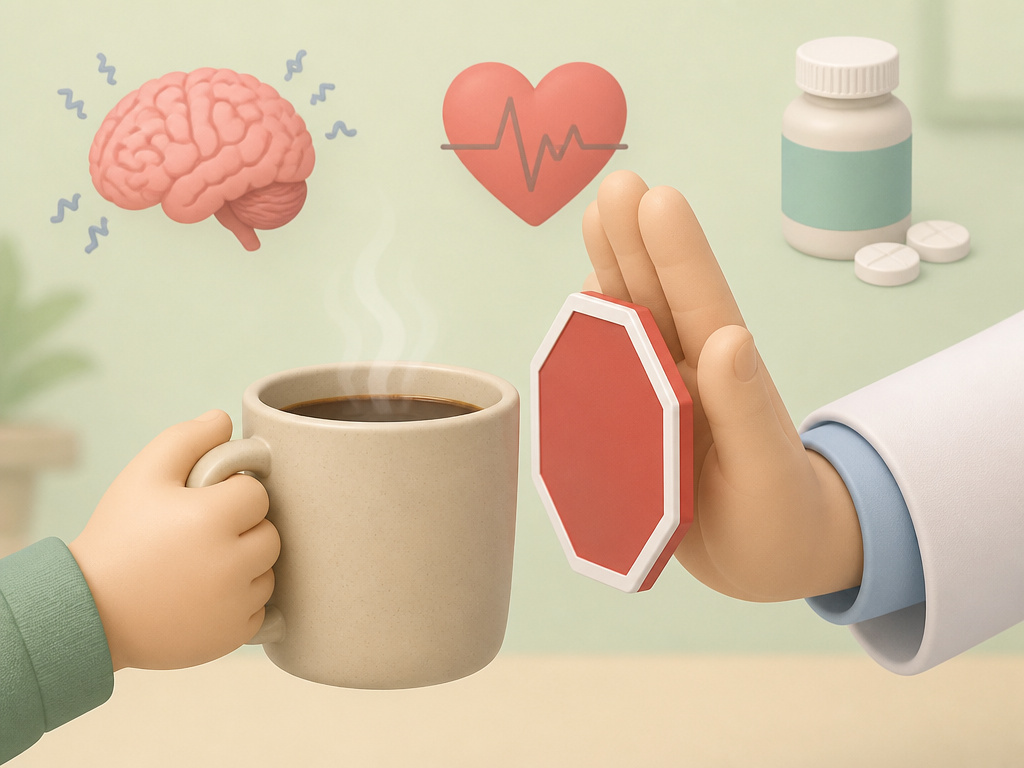
Absolutely. The 2.5 mg/kg guideline is for generally healthy children. Certain conditions lower the threshold to near-zero.
Children with diagnosed anxiety disorders or panic tendencies are acutely sensitive. Caffeine can directly trigger or amplify feelings of panic, restlessness, and a racing heart. For a child already working to manage these feelings, caffeine is an active antagonist.
Kids with heart conditions, even minor ones like a benign murmur, need extra caution. Caffeine increases heart rate and blood pressure. A cardiologist should be consulted before any caffeine is introduced.
Perhaps the most common overlap is with Attention-Deficit/Hyperactivity Disorder (ADHD). The interaction is complex. While some ADHD medications are stimulants, mixing them with caffeine is unpredictable. It can over-stimulate the system or create uncomfortable side-effects like severe headaches or irritability. It never improves the therapeutic effect of the medication.
Common mistake: Giving a child with ADHD a caffeinated soda to “help them focus.” This is counterproductive. The caffeine interferes with the prescribed medication’s metabolism and can worsen side effects like insomnia or loss of appetite.
If your child has any chronic health condition, the rule is simple: consult your pediatrician before considering any regular caffeine consumption. The default answer will likely be “avoid.”
What Are the Safer Alternatives?
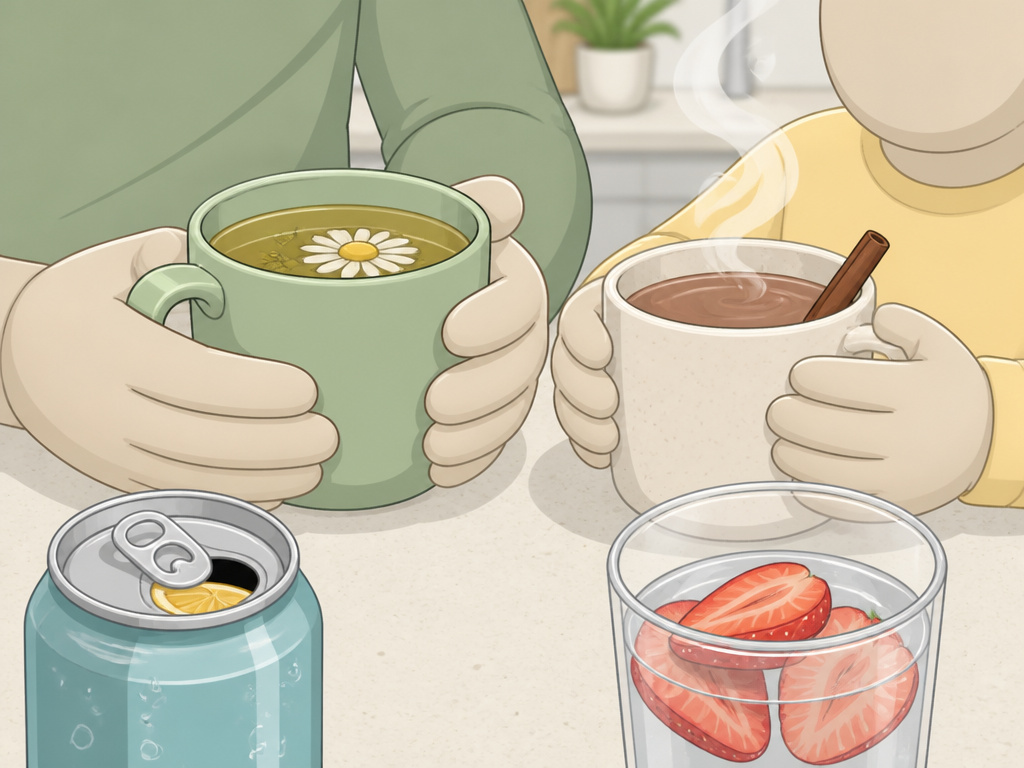
The goal isn’t to create a sense of deprivation. It’s to guide a child toward beverages that support their growth. The AAP’s beverage guide puts water and plain milk in the center of the plate for good reason.
For a warm, comforting drink, options abound:
* Herbal Teas: Naturally caffeine-free. Chamomile, peppermint, or rooibos are great choices. Let them pick their own mug.
* Hot Chocolate (from cocoa powder): Use real unsweetened cocoa powder, milk, and a modest amount of sweetener. The caffeine in hot chocolate is negligible (5-10 mg).
* Steamers: Steamed milk with a drop of vanilla or a sprinkle of cinnamon. It feels like a café drink without the coffee.
For a cold, “grown-up” feeling drink:
* Sparkling Water: A can of plain or naturally flavored sparkling water feels special. Add a squeeze of citrus.
* Homemade Iced Tea: Brew a caffeine-free herbal tea, chill it, and serve over ice. You control the sugar.
* Fruit-Infused Water: Add slices of strawberry, cucumber, or orange to a pitcher of water.
If the draw is the subtle bitterness and complexity of tea, you can explore very weak brews of true tea. A short, 1-minute steep of a black tea caffeine source like Darjeeling might yield 15-20 mg in a small cup. This is a way to introduce the flavor while respecting the limit. The benefits of green tea are often discussed, but its caffeine content is similar to black tea, so the same cautious, weak-brew rule applies.
The key is framing. These aren’t “kid drinks.” They are good drinks. You’re not saying no to coffee; you’re saying yes to exploration within a safe boundary.
Frequently Asked Questions
What’s the worst that could happen from one cup of coffee?
While a single cup won’t cause long-term damage in an otherwise healthy child, the acute effects are unpleasant and telling. Expect jitteriness, a headache, stomach upset, and a significant struggle to fall asleep that night. For a small percentage of kids, it could trigger a panic-like response or a rapid heartbeat that requires calming down. It’s a miserable experience that teaches the wrong lesson about what drinks do.
My 10-year-old already drinks soda. Is coffee worse?
In terms of pure caffeine, a 12 oz cola (~40 mg) is typically less than half the caffeine of a small coffee (~95 mg). So, yes, the coffee is a stronger dose. However, the habitual daily soda is also a problem. It normalizes daily caffeine and sugar intake. The better move is to address the soda habit first, using the 75 mg limit as a teaching tool, rather than adding coffee on top of it.
Does caffeine stunt a child’s growth?
This is a persistent myth. The current scientific consensus, including studies like the one cited in the NIH study on caffeine intake, finds no evidence that caffeine directly stunts skeletal growth. The indirect effect is through sleep. Chronic sleep disruption from caffeine can reduce the secretion of growth hormone, which is primarily released during deep sleep. So, it doesn’t affect the bones directly, but it can sabotage the process that fuels growth.
What about decaf coffee for kids?
Decaffeinated coffee is not caffeine-free. An 8 oz cup of decaf can still contain 2-15 mg of caffeine. For a child already near their limit from other sources, this could push them over. More importantly, it continues the ritual of drinking coffee, which may increase the desire for the real thing later. There are more nutritious and truly caffeine-free warm drinks to offer.
How do I talk to my child about this without making coffee seem forbidden?
Use the science. Explain that their brain is growing super-fast, like a high-performance engine, and it needs clean fuel and good rest. Caffeine is like putting a weird additive in that engine—it might make it rev funny now and mess up the tune-up it gets at night. Frame it as a choice for their health, not a parent-imposed rule. Offer the appealing alternatives we discussed, making them partners in choosing new drinks to try.
Before You Go
The data leads to a straightforward conclusion: regular coffee is an adult beverage. For a 10-year-old, the risks to sleep, anxiety, and healthy habit formation outweigh any perceived benefit or social cool factor.
Anchor your decisions in the Health Canada math: 2.5 mg per kg. That 75 mg limit is a real, science-based guardrail. Use it to audit the total daily intake from all sources, not just the coffee cup. Remember that energy drinks are in a league of their own and have no place in a child’s diet.
The most powerful thing you can do is model healthy beverage choices yourself. If your child sees you reaching for water throughout the day and enjoying your coffee as a specific, mindful ritual (not a constant IV drip), they learn a balanced approach. The teen years will come soon enough, bringing their own negotiations. Laying a foundation of good hydration and respect for how substances affect their body is a gift that lasts far longer than a caffeine buzz.
