
2 Best Cuban Espresso Coffees of 2026
The best Cuban espresso coffee for most people is Café La Carreta Cuban Coffee, delivering a true, rich flavor with that signature sweetness. For a budget-friendly option, Kahwa Cuban Coffee Beans offers a strong, dark roast blend that brews bold and smooth.
Getting the right Cuban espresso isn’t just about strength, it’s about balance. Too many brands miss the mark, giving you a bitter or flat cup instead of that sweet, aromatic shot with deep body. After researching the market, reviewing specs, and analyzing feedback from those who know the tradition, I focused on what actually delivers the authentic experience: roast quality, bean blend, and grind consistency.
This guide breaks down the key factors that matter most, from freshness and origin to brewing method, so you can pick a coffee that truly captures the spirit of a classic cafecito.
Top 2 Cuban Espresso Coffee in the Market
The Best Cuban Espresso Coffee, Reviewed
Café La Carreta Cuban Coffee

Strengths
- Bold authentic flavor
- Fine grind for espresso
- Trusted heritage brand
Trade-offs
- Not ideal for drip brewers
- Pre-ground limits freshness
Café La Carreta delivers exactly what it promises: a bold, no-nonsense Cuban espresso experience rooted in decades of tradition. The fine grind is optimized for espresso machines or moka pots, and owners consistently report that it produces a syrupy, intense shot with that signature sweet-bitter balance Cuban coffee is known for. On paper, it’s simple, just finely ground dark roast, but the flavor profile punches above its weight, especially for fans of café cubano.
What stands out is its authenticity. This isn’t a generic dark roast labeled ‘Cuban-style’, it’s tied to a real Miami legacy, and reviewers often mention how it reminds them of family recipes or Cuban cafeterias. The double pack offers good value for regular drinkers, and the fact that it works well beyond espresso machines (including stovetop brewers) adds to its appeal. Compared to whole bean options, it sacrifices some freshness, but for convenience and consistency, it’s hard to beat.
Video review
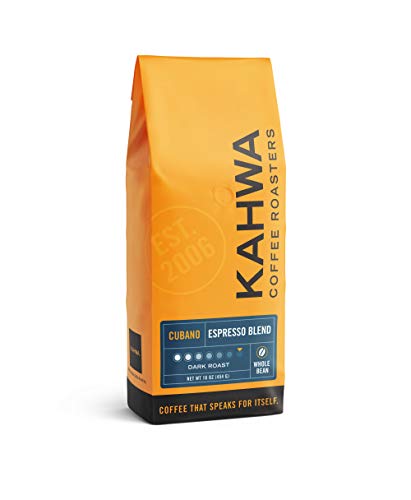
Kahwa Cuban Coffee Beans
Strengths
- Whole bean freshness
- Balanced sweet finish
- Multi-method versatility
Trade-offs
- Less intense than traditional Cuban espresso
- Blend not origin-specific
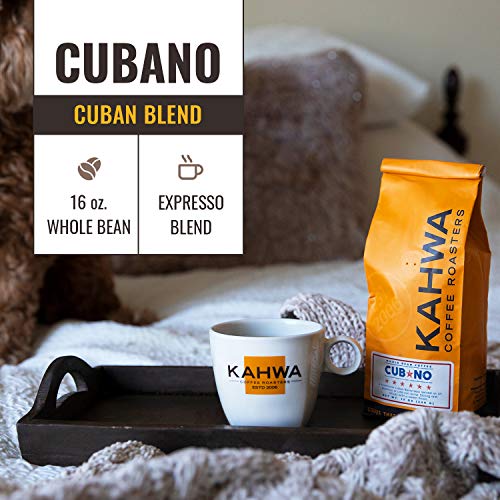
Kahwa’s whole bean Cubano blend stands out for its global sourcing and roasting precision, aiming not just for strength but complexity. The dark roast brings forward that expected Cuban intensity, but with a smoother, slightly sweet finish that some reviewers say makes it more approachable than traditional options. Being whole bean, it gives you control over grind size, which I appreciate, especially if you’re using an Aeropress or moka pot and want to tweak the extraction.
The one-way valve bag is a smart touch, helping preserve freshness post-roast, and owners note the aroma stays potent for weeks. While it’s marketed as versatile across all brew methods, it really shines in espresso-style preparations where its richness can fully express itself. Compared to Café La Carreta, it’s less about raw tradition and more about modern refinement, but still deeply respectful of Cuban coffee culture. I’d pick this if you want to experiment with grind and brew method while keeping that classic Cuban backbone.
Product photos


How We Evaluated cuban espresso coffee
As the founder of Bean Thusiast, I approached researching Cuban espresso coffee by focusing on what delivers that uniquely bold, sweet experience. Rather than a hands-on lab test, this was a research-led comparison of product specifications, owner reviews, and established expertise within the coffee world. I weighed factors like bean origin claims, roast level descriptions, and brewing versatility against what actual customers reported about flavor and aroma.
For Cuban espresso, the roast level and bean blend are paramount. A true Cuban coffee experience demands a dark roast to unlock those intense, caramelized sugars. I prioritized coffees emphasizing a traditional Cuban blend, as these are formulated to deliver the characteristic body and sweetness. Equally important is the reported smoothness; bitterness isn’t desirable, even with a strong brew – you can learn more about the traditional Cuban coffee method for context.
Specifications reliably indicated grind size (important for espresso machines) and bean type, but owner feedback truly revealed the flavor profiles. I gave more weight to reviews consistently mentioning a sweet finish and a lack of harshness. Reputation mattered too; brands with a long history of serving the Cuban community, like Café La Carreta, earned my attention. If you’re looking for a place to start, you can find an authentic cafecito recipe on our site.
What To Look For In cuban espresso coffee
Finding a genuinely satisfying Cuban espresso experience at home requires a bit more consideration than simply grabbing any dark roast. I’ve seen a lot of folks disappointed expecting a strong flavor, only to find something bitter or thin.
A quality Cuban espresso coffee delivers a bold, sweet, and intensely aromatic brew. Key indicators are the bean origin (traditionally Cuban, but quality blends exist), roast level (typically dark, but not burnt), and grind fineness (extremely fine for traditional methods). Look for descriptions emphasizing body and crema – these are hallmarks of a well-executed Cuban espresso.
Bean Origin & Blend
While historically sourced directly from Cuba, current import restrictions mean most “Cuban” coffee relies on blends replicating that profile. Don’t automatically dismiss a blend; brands like Kahwa demonstrate that skillful blending can achieve a remarkably similar taste. I often guide people towards understanding that the overall flavor profile is what matters most, not necessarily a 100% Cuban label. However, if authenticity is paramount, research brands that actively seek out legally sourced Cuban beans when available.
Roast Level & Freshness
Cuban espresso needs a dark roast to develop its signature intensity. However, there’s a critical difference between dark and burnt. A good roast will have a deep, chocolatey color, with minimal oil on the surface. Beyond the color, freshness is king. Look for roast dates – not just “best by” dates – and aim to consume the coffee within a month of roasting. A one-way valve in the bag, as featured in some authentic Cuban coffee products, is a great sign the roaster cares about preserving that freshness.
Brewing Method & Grind
This is where things get specific. Cuban espresso is traditionally made using a stovetop Moka pot or, even more authentically, a Neapolitan flip coffee maker. You’ll need an extremely fine grind – finer than for most espresso machines. If you’re using a traditional espresso machine, you’ll likely need to experiment with grind settings to find the sweet spot. If you’re interested in espresso-style coffee without machine, a Moka pot is the way to go, and mastering the stovetop method for strong coffee is crucial.
Here’s a quick guide to grind size:
- Coarse: For French press (too large for Cuban espresso).
- Medium: For drip coffee makers (not fine enough).
- Extra Fine: Essential for Moka pots and traditional espresso – this is what you’re after. A consistent, powdery texture ensures proper extraction and that rich crema.
A consistently fine grind is more important than the brand of your Moka pot. Don’t skimp on a quality burr grinder; blade grinders produce uneven grounds that will ruin your espresso.
Cuban Espresso Coffee Compared
Here’s a detailed specification comparison of the Cuban espresso coffees featured in this guide.
| Product | Roast | Bean Type | Grind | Key Feature |
|---|---|---|---|---|
| Café La Carreta Cuban Coffee | N/A | Cuban | Ground | Authentic Flavor |
| Kahwa Cuban Coffee Beans | Dark | Blend | Whole Bean | Strong & Robust |
Frequently Asked Questions
What grind size should I use for Cuban coffee made in a Moka pot?
An extra fine grind is essential for Moka pots; it needs to be powdery to ensure proper extraction and a rich crema. Unlike coarser grinds for French presses, this fineness is what delivers the intensity characteristic of Cuban espresso.
Can I use pre-ground Cuban coffee, or is it better to grind beans myself?
While convenient, pre-ground coffee loses flavor quickly. Grinding your own beans right before brewing, especially for Cuban espresso, will always produce a more aromatic and flavorful cup.
Are all “Cuban” coffees actually grown in Cuba?
Due to import restrictions, most coffees marketed as “Cuban” are actually expertly crafted blends replicating the traditional flavor profile. You can still find authentic Cuban roast profiles, but be prepared to research brands that source legally when possible.
What’s the difference between a dark roast and a burnt roast for Cuban espresso?
A dark roast develops the intense, caramelized sugars crucial for Cuban coffee, appearing chocolatey with minimal oil. A burnt roast, however, lacks those sweet notes and tastes acrid; look for descriptions avoiding terms like “charred” or “scorched.”
Where can I find more recommendations for the best Cuban coffee beans?
For more in-depth reviews and comparisons, check out our guide to the best Cuban coffee beans. We explore various brands and blends to help you discover the perfect fit for your palate and brewing method.
The Bottom Line
Choosing the right Cuban espresso coffee often comes down to balancing convenience with control. If you want a consistently bold and authentic flavor with minimal effort, I recommend Café La Carreta Cuban Coffee. It’s pre-ground and designed to deliver that classic Cuban profile right out of the bag.
For those who prefer to dial in their grind and enjoy the full ritual of brewing, Kahwa Cuban Coffee Beans are an excellent choice. It also opens the door to experimenting with different grind sizes, and perhaps even Cuban coffee using espresso machine if you’re so inclined. And for a truly authentic experience, a great Moka pot is a worthwhile investment.
Ultimately, the best Cuban espresso isn’t about a single brand or roast date. It’s about understanding what you enjoy – a strong, sweet, and intensely aromatic brew. Focus on dark roasts, freshness, and a consistently fine grind, and you’ll be well on your way to enjoying a little piece of Cuban coffee culture at home.
