
The Complete Guide on How to Make Cuban Coffee at Home
To make authentic Cuban coffee, brew a strong, dark roast coffee in a Moka pot, catch the first few concentrated drops, and whip them vigorously with sugar to create a sweet, creamy foam called espumita before combining it with the rest of the brew.
Most guides get the sequence backwards. They tell you to brew the coffee first, then try to whip sugar into the full cup. That gives you sweet coffee, not the signature foam-topped café cubano. The foam only forms with the initial, most concentrated extract.
Here is how to build the drink from the first drop, using the traditional greca and a technique that hasn’t changed in generations.
Key Takeaways
- The defining feature is the espumita – a sweet, whipped foam made from the first, most concentrated drops of coffee mixed with sugar.
- Use a stovetop Moka pot (a greca or cafetera), not an espresso machine, for the authentic method and flavor profile.
- Dark roast, finely ground coffee is non-negotiable. Brands like Cafe Bustelo or Pilon are traditional for their bold, almost smoky profile.
- The drink’s identity is in the preparation and roast, not the bean’s origin. Authentic Cuban coffee today uses blends that replicate the traditional taste.
- Serve it in small, strong portions, often shared from a larger cup called a colada.
The Equipment You Actually Need
You do not need a $3,000 espresso machine. The traditional tool is a stovetop Moka pot, known in Cuban households as a greca or cafetera. Its aluminum construction and specific pressure path are part of the flavor signature.
A 3-cup or 6-cup size works best. The smaller pot yields a more concentrated brew, which is ideal for the espumita. You also need a small metal creamer, tacita, or any heatproof bowl for whipping, and a sturdy metal spoon. A whisk is optional but not traditional, the spoon does the job.
The other critical piece is your coffee. You want a finely ground dark roast. The grind should be slightly coarser than true espresso powder but much finer than drip grind. Pre-ground bricks like Cafe Bustelo or Pilon are the standard for a reason. Their consistent, ultra-dark roast delivers the intense, slightly bitter base that balances the sweet foam. Using a light roast or a coarse grind from a blade grinder will produce a weak, sour cup no matter how perfect your technique.
Using a burr coffee grinder set to a fine espresso-like setting is ideal if you grind your own beans, as it ensures the consistent particle size needed for proper extraction in a Moka pot.
TL;DR: Grab a Moka pot, a spoon, a bowl, and a brick of pre-ground dark roast coffee. That’s the authentic toolkit.
Why This Method Works (The Science of Espumita)
The magic isn’t arbitrary. It’s a simple chemical reaction harnessed by necessity. The first liquid that comes out of a Moka pot is not just coffee, it’s a hyper-concentrated extract. This “first run” is loaded with solubles and, crucially, carbon dioxide still trapped in the grounds from roasting.
When you whip this hot, concentrated liquid into sugar, you’re not just mixing. The mechanical action of the spoon creates thousands of tiny air bubbles. The sugar syrup forms the walls of these bubbles, and the CO2 from the coffee helps stabilize the foam. The result is espumita: a stable, creamy, sweet foam that sits atop the drink.
If you wait and use coffee from the middle or end of the brew, most of the CO2 has already escaped. You’ll get a sugary syrup, but it will never whip up into that light, persistent foam. It collapses before you can pour the coffee over it.
This is also why a dark roast is specified. Darker roasts have less density and more brittle cell structure, which allows for faster extraction of those initial solubles. A light roast’s first drops are often more acidic and less concentrated, resulting in a weaker foam.
The Traditional Greca Method: Step-by-Step
Follow this sequence exactly. Timing and temperature matter more than precise measurements.
Step 1: Prep the Moka Pot
Fill the bottom chamber with fresh, cool water up to the bottom of the safety valve or just below it. Do not overfill. Insert the filter basket and fill it generously with your finely ground dark roast coffee. Do not tamp. Just level it off with a finger or the back of a spoon. Screw the top chamber on tightly.
Skipping this: Using hot water or tamping the grounds increases pressure and risk of a bitter, over-extracted brew. The coffee can also jam in the funnel.
Step 2: Start Brewing and Catch the First Drops
Place the assembled pot on a stovetop burner set to medium-low heat. Have your serving cup(s) and your whipping vessel ready. In your creamer or bowl, add 1 to 2 teaspoons of white granulated sugar per serving. More sugar makes a thicker, sweeter foam.
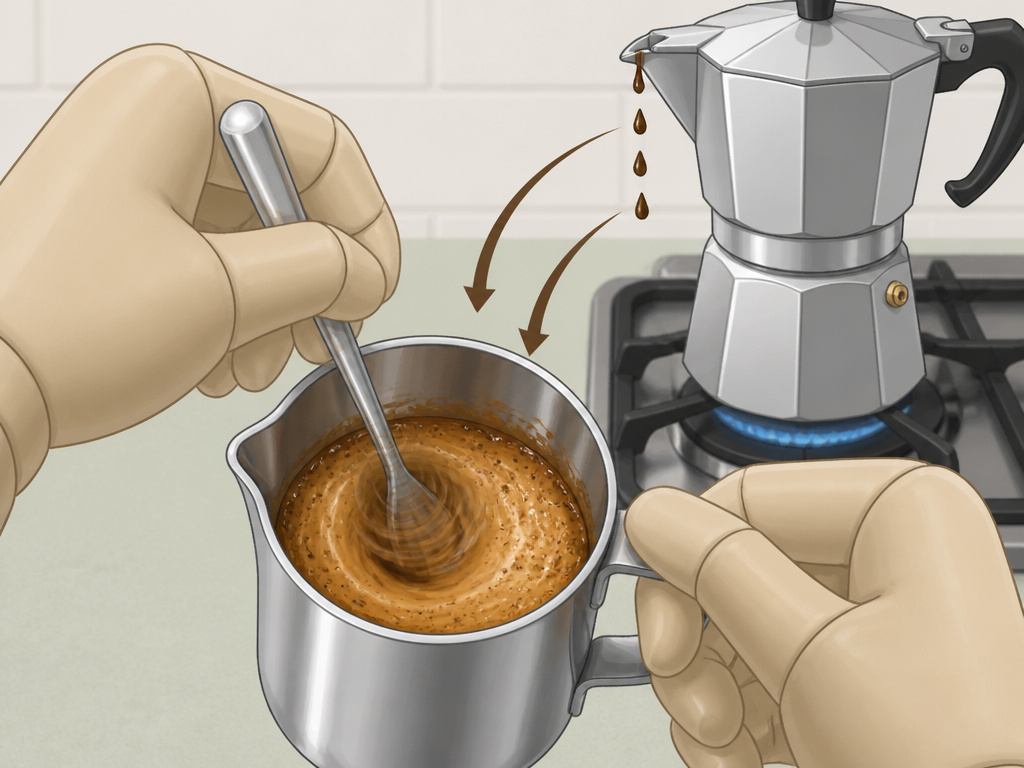
Now, watch the spout. As soon as you see the first dark, almost syrupy coffee begin to drip into the top chamber, act quickly.
Common mistake: Letting the first drops mix with the rest of the brew, you lose the concentrated extract needed to form stable espumita, and your foam will be thin or non-existent.
Catch about one teaspoon of this initial coffee directly into the sugar. You can tilt the pot or use a spoon to gather it. This small amount is your golden ticket.
Step 3: Whip the Espumita
Immediately remove the Moka pot from the heat and set it aside. The remaining coffee will stop brewing momentarily.
Now, whip. Take your spoon and vigorously beat the sugar and coffee mixture. It will start as a dark, gritty paste. Within 30 to 45 seconds of constant whipping, it will lighten in color to a pale golden brown and transform into a creamy, almost meringue-like foam. You cannot overwhip it. Stop when it’s uniform, creamy, and holds soft peaks.
The sound alone will attract any Cuban coffee lover within earshot. It’s a specific, rapid tap-tap-tap against the metal bowl.
I once tried to shortcut this with the last third of the brew from a pot of traditional drip coffee. The mixture stayed liquid. It never foamed. I wasted a cup of sugar and learned the first drops are the only ones that work.
Step 4: Finish the Brew and Combine
Return the Moka pot to the heat to finish extracting the rest of the coffee. You’ll hear it gurgle as the water chamber empties. As soon as the stream from the spout turns to a light blonde froth, remove it from the heat again to avoid burning the coffee.
Pour the hot brewed coffee directly over the espumita in your serving cup. Do not stir yet. Watch as the dense, sweet foam rises to the top, creating a beautiful layered crema.
Step 5: Serve the Cuban Way
For a true cafecito, serve immediately in a small demitasse cup. For a colada, pour the combined coffee and foam into a larger cup or styrofoam cup to be shared among friends or coworkers, accompanied by tiny plastic cups.
TL;DR: Catch the first drops, whip them with sugar into foam, then pour the rest of the brew over the top. Serve small and strong.
Choosing Your Coffee: Bustelo, Pilon, and Beyond
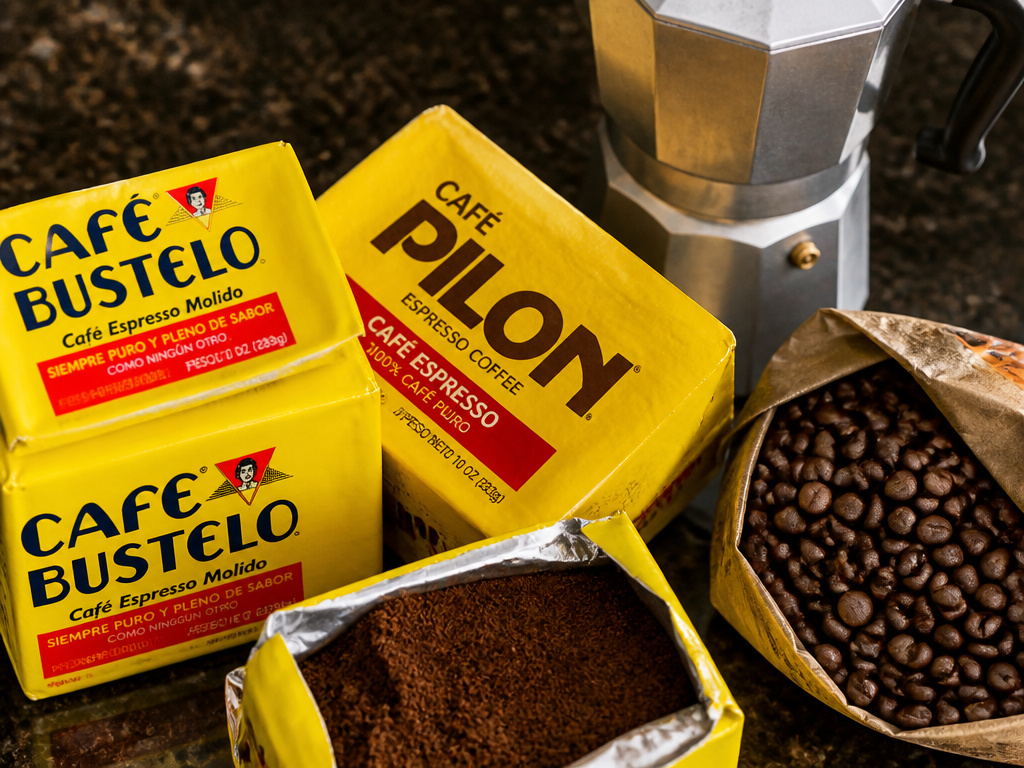
The coffee matters, but not in the way you might think. As noted by the Smithsonian, “Cuban coffee is not necessarily made with coffee beans grown in Cuba today.” The “Cuban” designation refers to the dark roast style and preparation method.
| Brand / Type | Profile | Best For |
|---|---|---|
| Cafe Bustelo | Intense, smoky, bold, with a fine brick grind. | The standard. Consistent, affordable, and widely available. |
| Cafe Pilon | Slightly smoother than Bustelo, with a hint of chocolate. | Those who find Bustelo too aggressive. |
| Dark Roast Arabica coffee beans | More complex acidity and aroma, less bitterness. | Experimenters who want to highlight a specific single-origin coffee character. |
| Pre-ground Espresso Blend | Very fine, designed for pump machines. | Can work in a pinch, but may over-extract and become bitter in a Moka pot. |
The pre-ground bricks win on consistency and texture. Their ultra-fine grind and dark roast are engineered for this method. If you use whole beans, aim for a grind slightly coarser than espresso and choose a blend designed for espresso or Moka pots. A 100% Arabica bean type will be brighter; a blend with some Robusta will give you more of that traditional punch and better foam stability.
Troubleshooting Your Café Cubano
Your espumita didn’t foam, or the coffee tastes burned. Here’s the fix.
Problem: The sugar and coffee mix stayed liquid.
- Cause: You used coffee from the middle or end of the brew cycle, not the first drops. The concentration and dissolved CO2 were too low.
- Fix: Next time, watch the spout like a hawk and catch only the initial, dark drips.
Problem: The foam was grainy, not creamy.
- Cause: You didn’t whip long or vigorously enough. The sugar didn’t fully dissolve into the hot liquid.
- Fix: Whip for a full 45 seconds. The mixture should lighten in color significantly. It’s an arm workout.
Problem: The coffee tastes unpleasantly bitter or burned.
- Cause: Heat was too high, causing over-extraction, or you let the pot run completely dry on the stove.
- Fix: Use medium-low heat and remove the pot as soon as the stream from the spout turns light and frothy. You can also try a pinch of salt in coffee in the basket to counteract bitterness.
Problem: Weak, watery flavor.
- Cause: Coffee grind is too coarse, the roast is too light, or the Moka pot seal is worn.
- Fix: Use a finer, dark roast grind. Check the rubber gasket on your Moka pot and replace it if it’s hardened or cracked.
Variations and Ways to Serve
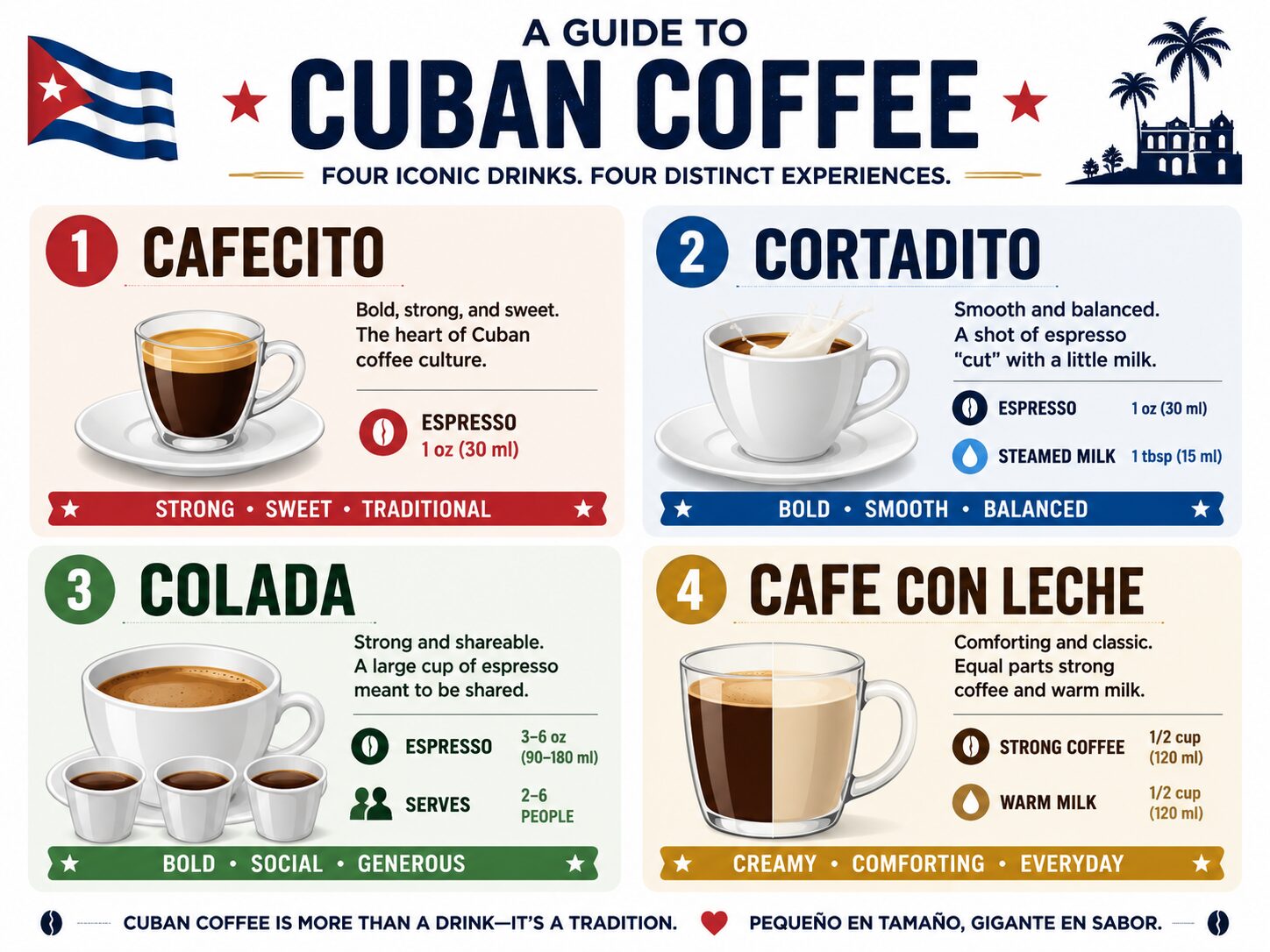
The basic cafecito is just the start. The method adapts for different occasions.
- Cortadito: A cafecito “cut” with a splash of steamed or warmed milk. Make your cafecito first, then add the milk.
- Colada: A larger portion (often 4-6 shots worth) of sweetened Cuban coffee served in a single cup with a stack of small plastic cups. It’s meant for sharing in offices or social gatherings.
- With Brown Sugar: Substitute white sugar with brown sugar sweetener. It adds a molasses depth that pairs wonderfully with the dark roast. The foam may be slightly less stable.
- Café con Leche: Equal parts strong Cuban coffee and scalded milk, served in a larger cup. This is the classic breakfast drink.
For a spiced twist, some add a pinch of cinnamon in coffee to the grounds before brewing. The aroma is incredible.
Frequently Asked Questions
Can I make Cuban coffee without a Moka pot?
You can approximate it with a very strong espresso shot from a machine. Use the first half of the shot to make the espumita. The flavor will be different, cleaner and less robust, but the foam will work. A cafe americano or standard drip coffee lacks the concentration and pressure-extraction notes.
Why white sugar and not another sweetener?
White granulated sugar dissolves completely and whips into the most stable, neutral-flavored foam. Honey or agave syrup are liquid and won’t create the same structure. Natural sweeteners like brown sugar work but alter flavor and texture.
How much caffeine is in a Cuban coffee?
It’s comparable to a strong shot of espresso. Since it’s made with a dark roast, which has slightly less caffeine by volume than a light roast, and a Moka pot extracts differently than a pump machine, a cafecito typically has a bit less caffeine than a standard espresso shot. But it’s still a potent jolt.
Is there a difference between Cuban coffee and espresso?
Yes. The tools are different (Moka pot vs. espresso machine), leading to different pressure and extraction profiles. Cuban coffee is defined by the sweet espumita mixed directly into the brew, whereas espresso crema is created by coffee oils and gases alone. The roast profile for Cuban coffee is also traditionally darker.
Can I use paper filters in my Moka pot?
No. The Moka pot relies on metal-to-metal contact for a seal and the metal filter allows fine coffee oils to pass through, contributing to body and flavor. Using paper coffee filters will clog the system, reduce pressure, and result in a thin, under-extracted coffee.
Where can I learn more about the history?
For a deeper dive into the cultural tradition and its evolution, the Wikipedia entry on Cuban espresso is an excellent starting point that covers terms like cafecito and colada.
Before You Go
Cuban coffee is more than a recipe; it’s a ritual of patience, observation, and a little physical effort. The reward is in that first sip, the intense, sweet foam giving way to the powerful, dark coffee beneath. It’s a social drink, a morning ritual, and a piece of cultural heritage you can recreate on any stovetop.
Remember the three anchors: a dark roast fine grind, a watchful eye for the first drops, and the willingness to whip that sugar like you mean it. Skip any of those and you have sweet coffee. Master them and you have café cubano.
{
“@context”: “https://schema.org”,
“@type”: “HowTo”,
“name”: “How to Make Authentic Cuban Coffee (Café Cubano) with a Moka Pot”,
“totalTime”: “PT10M”,
“tool”: [
{
“@type”: “HowToTool”,
“name”: “3-cup or 6-cup aluminum Moka pot (greca)”
},
{
“@type”: “HowToTool”,
“name”: “Small metal creamer or heatproof bowl”
},
{
“@type”: “HowToTool”,
“name”: “Metal spoon or small whisk”
}
],
“supply”: [
{
“@type”: “HowToSupply”,
“name”: “Finely ground dark roast coffee (e.g., Cafe Bustelo, Pilon)”
},
{
“@type”: “HowToSupply”,
“name”: “White granulated sugar (1-2 tsp per serving)”
}
],
“step”: [
{
“@type”: “HowToStep”,
“name”: “Prepare the Moka pot”,
“text”: “Fill the bottom chamber with fresh, cool water up to the safety valve. Fill the filter basket with finely ground dark roast coffee, leveling it without tamping. Assemble the pot.”
},
{
“@type”: “HowToStep”,
“name”: “Brew on low heat and catch the first drops”,
“text”: “Place the Moka pot on a stovetop burner set to medium-low. Have your sugar ready in a creamer. As soon as the first dark, concentrated coffee drips into the top chamber, catch about a teaspoon’s worth and add it to the sugar.”
},
{
“@type”: “HowToStep”,
“name”: “Whip the espumita”,
“text”: “Remove the Moka pot from the heat. Vigorously whip the sugar and initial coffee together with a spoon until it transforms from a dark paste to a light, golden, creamy foam. This is the espumita.”
},
{
“@type”: “HowToStep”,
“name”: “Finish brewing and combine”,
“text”: “Return the Moka pot to the heat to finish extracting the remaining coffee. Pour the finished brew directly over the espumita in your serving cup(s). The foam will rise to the top, creating a rich crema.”
},
{
“@type”: “HowToStep”,
“name”: “Serve immediately”,
“text”: “Stir gently to integrate the sweet foam and serve right away, traditionally in small cups or shared as a colada.”
}
]
}
{
“@context”: “https://schema.org”,
“@type”: “FAQPage”,
“mainEntity”: [
{
“@type”: “Question”,
“name”: “Can I make Cuban coffee without a Moka pot?”,
“acceptedAnswer”: {
“@type”: “Answer”,
“text”: “You can approximate it with a very strong espresso shot from a machine. Use the first half of the shot to make the espumita. The flavor will be different, cleaner and less robust, but the foam will work. A cafe americano or standard drip coffee lacks the concentration and pressure-extraction notes.”
}
},
{
“@type”: “Question”,
“name”: “Why white sugar and not another sweetener?”,
“acceptedAnswer”: {
“@type”: “Answer”,
“text”: “White granulated sugar dissolves completely and whips into the most stable, neutral-flavored foam. Honey or agave syrup are liquid and won’t create the same structure. Natural sweeteners like brown sugar work but alter flavor and texture.”
}
},
{
“@type”: “Question”,
“name”: “How much caffeine is in a Cuban coffee?”,
“acceptedAnswer”: {
“@type”: “Answer”,
“text”: “It’s comparable to a strong shot of espresso. Since it’s made with a dark roast, which has slightly less caffeine by volume than a light roast, and a Moka pot extracts differently than a pump machine, a cafecito typically has a bit less caffeine than a standard espresso shot. But it’s still a potent jolt.”
}
},
{
“@type”: “Question”,
“name”: “Is there a difference between Cuban coffee and espresso?”,
“acceptedAnswer”: {
“@type”: “Answer”,
“text”: “Yes. The tools are different (Moka pot vs. espresso machine), leading to different pressure and extraction profiles. Cuban coffee is defined by the sweet espumita mixed directly into the brew, whereas espresso crema is created by coffee oils and gases alone. The roast profile for Cuban coffee is also traditionally darker.”
}
},
{
“@type”: “Question”,
“name”: “Can I use paper filters in my Moka pot?”,
“acceptedAnswer”: {
“@type”: “Answer”,
“text”: “No. The Moka pot relies on metal-to-metal contact for a seal and the metal filter allows fine coffee oils to pass through, contributing to body and flavor. Using paper coffee filters will clog the system, reduce pressure, and result in a thin, under-extracted coffee.”
}
},
{
“@type”: “Question”,
“name”: “Where can I learn more about the history?”,
“acceptedAnswer”: {
“@type”: “Answer”,
“text”: “For a deeper dive into the cultural tradition and its evolution, the Wikipedia entry on Cuban espresso is an excellent starting point that covers terms like cafecito and colada.”
}
}
]
}
