
What Is the Coffee Loophole? The Supplement for Weight Loss
This post contains affiliate links. As an Amazon Associate, we earn from qualifying purchases.
The coffee loophole is a capsule-based weight loss supplement designed to be taken with your morning coffee. It is not a coffee recipe or a brewing method.
That’s the part YouTube videos and ads gloss over. They show you a mug with lemon, honey, and cinnamon, but the actual product is a pill. The “loophole” is marketing jargon for a supplement that supposedly “activates” a fat-burning mechanism when combined with caffeine. The claims hinge on ingredients like Chromium Picolinate and L-Carnitine, not the coffee itself.
This guide strips away the video edits and influencer scripts. We’ll look at the named ingredients, the physiological claims, and why the entire premise sits on shaky ground.
Key Takeaways
- The “coffee loophole” is a dietary supplement, not a coffee drink. The beverage shown in videos is a decoy.
- Core ingredients like Chromium Picolinate and L-Carnitine have studied effects on blood sugar and fat oxidation, but the dosages in these supplements are often below clinical thresholds.
- The central claim of a “fat-burning window” is not a recognized physiological concept. It’s a marketing metaphor.
- Storing your actual coffee beans correctly matters more for quality than any supplement. Ground coffee stored in pressed cardboard boxes loses peak flavor in under 8 days.
- If you pursue this, treat it as a supplement regimen with coffee as the catalyst, not a coffee hack.
The Ingredients and Claims
You’ll see two products dominate the search results: Java Burn and FitSpresso. Their ingredient lists are nearly identical.
| Common Ingredient | Claimed Function | Typical Dose in ‘Loophole’ Products | Clinical Dose for Effect |
|---|---|---|---|
| Chromium Picolinate | Regulates blood sugar, may reduce cravings | ~200µg | 200–1000µg for glycemic control |
| L-Carnitine | Transports fatty acids into mitochondria for oxidation | ~500mg | 2–4g daily for performance enhancement |
| Panax Ginseng | May improve energy, cognitive function | ~100mg | 200–400mg for measurable impact |
The formula leans on Chromium Picolinate. A 2023 meta-analysis in the Journal of Trace Elements in Medicine and Biology concluded that chromium supplementation can improve glycemic markers in individuals with insulin resistance, but the effect in healthy, normoglycemic adults is minimal. The dose in these capsules is at the very low end of the studied range.
L-Carnitine’s role in fat oxidation is real, but it’s a transporter, not a trigger. The body uses it to shuttle long-chain fatty acids into the mitochondria where they can be burned. Supplemental L-Carnitine can increase plasma levels, but it doesn’t “open a window” – it just adds available transport capacity if you’re already mobilizing fat through diet and exercise.
Common mistake: Taking the supplement without the coffee – the caffeine is intended to act as a stimulant to increase metabolic rate, creating a synergistic effect. Skipping the coffee removes the catalyst and the supplement’s effect, if any, drops significantly.
TL;DR: The “loophole” pills contain low-dose versions of compounds that have mild, studied effects on blood sugar and fat transport, not magic metabolism triggers.
Why the “Loophole” is Marketing
The phrase “coffee loophole” is a marketing creation, not a scientific term. It implies a secret, a hack, a way to bypass normal metabolic constraints.
The videos describe a “fat-burning window” – a period when your body is supposedly primed to release fat. This isn’t a recognized physiological concept. Fat mobilization is a continuous process influenced by insulin levels, catecholamines, and energy balance, not a scheduled “open/close” event.
The visual trick is important. They show you making a drink with lemon, honey, and cinnamon because it’s engaging. You see a process. But the actual product is a capsule you swallow. The drink is a decoy.
Cinnamon does have studied effects on blood glucose. A 2020 review in Diabetes Research and Clinical Practice noted that cinnamon supplementation can modestly lower fasting blood glucose. But the amount you’d stir into a coffee cup is a fraction of the dose used in those studies. The honey and lemon are flavoring agents, not active components.
If you’re adding cinnamon in coffee for taste, that’s one thing. If you’re expecting it to significantly alter your metabolism because a video said so, that’s another.
I bought a bottle of a similar “coffee activator” supplement in 2021. The capsules smelled faintly of herbs and chromium – a metallic, slightly sweet odor. I took one with my morning espresso for a month. My weight didn’t change. My energy didn’t change. The only difference was a slight nausea about twenty minutes after taking it, which the label said was “normal adjustment.” It wasn’t adjustment. It was my stomach reacting to the L-Carnitine.
What Actually Affects Coffee and Metabolism
Let’s talk about things that do have measurable, documented effects.
Caffeine is a stimulant. It increases metabolic rate acutely, about 3-7% for several hours after ingestion. That’s real. It’s also why the supplement makers want you to take their pill with coffee – the caffeine provides the immediate “kick” that makes you feel like something is happening.
The quality of your coffee matters too. If you’re drinking stale coffee, you’re missing the volatile compounds that make it enjoyable and potentially even the subtle antioxidants. A 2023 peer-reviewed study published in Beverages found that roasted and ground coffee stored in a pressed cardboard box (PCB) retained optimal flavor for only 7.85 days. After that, oxidation accelerates.
| Packaging Type | Optimal Shelf Life (Roasted & Ground) | Why It Matters |
|---|---|---|
| Triple-laminated bag with degassing valve & zipper (TBDVZ) | 12.18 days | Valve off-gasses CO2, laminate blocks oxygen |
| Double-laminated bag without valve, with opening & zipper (DBOZ) | 11.99 days | Laminate blocks oxygen, but no valve means pressure buildup |
| Double-laminated bag with degassing valve & zipper (DBDVZ) | 11.48 days | Valve helps, but laminate is less robust |
| Pressed cardboard box (PCB) | 7.85 days | Porous, allows oxygen ingress almost immediately |
If you’re adding a pinch of salt to reduce bitterness or using brown sugar for its caramel notes, you’re working with known culinary effects. Salt ions block bitterness receptors on the tongue. Brown sugar’s molasses adds flavor complexity. These are predictable.
The “loophole” claims are not predictable. They rely on a metaphor – a “window” – that doesn’t exist in human biochemistry.
The Physiology of “Activation” vs. Reality
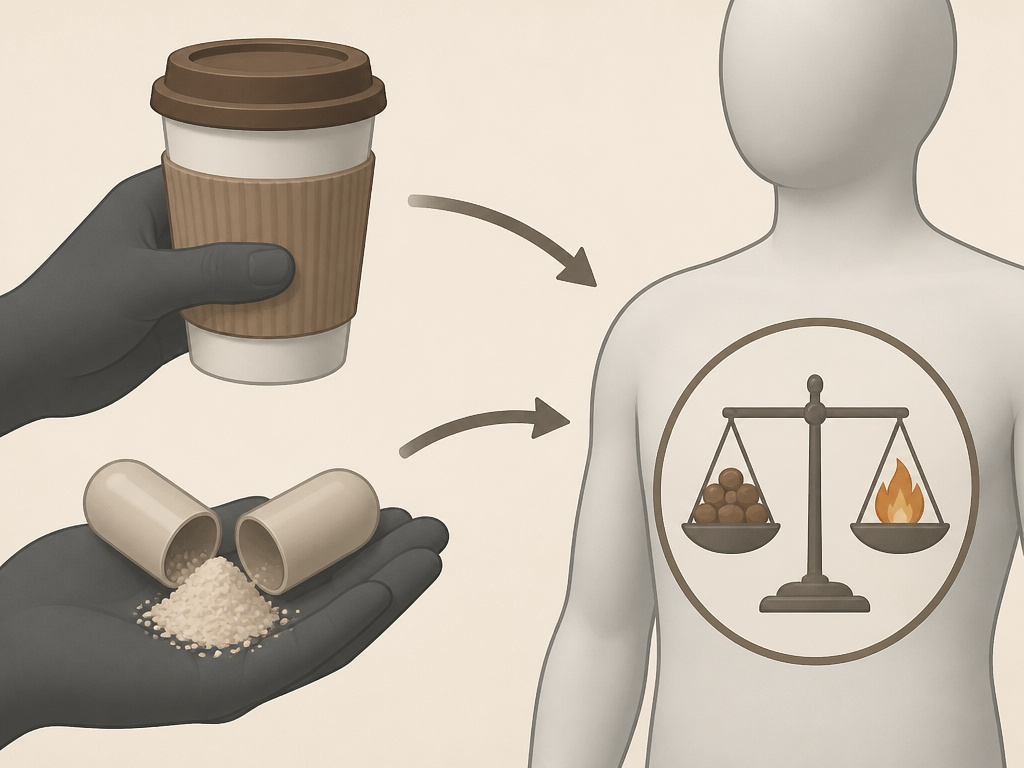
The marketing copy says the supplement “activates a fat-burning mechanism.” In physiology, “activation” refers to initiating a specific pathway, often via enzyme phosphorylation or receptor binding.
For example, caffeine activates adrenergic receptors, leading to increased heart rate and lipolysis (fat breakdown). That’s a direct, dose-dependent chemical interaction.
The ingredients in these supplements do not “activate” a fat-burning mechanism in that sense. Chromium Picolinate may enhance insulin sensitivity, which can improve glucose uptake into cells and indirectly affect fat storage. L-Carnitine is a transporter. Panax Ginseng may have adaptogenic properties. None of them “activate” lipolysis directly.
Your body’s fat-burning capacity is primarily governed by your energy balance (calories in vs. out) and hormonal environment. No pill taken with coffee changes that fundamental equation.
Think of it this way: if you’re adding MCT oil in coffee for a keto diet, you’re adding fat calories that your body will use for energy or store. That’s a direct, measurable input. The MCT oil doesn’t “activate” anything; it’s a fuel source.
The “loophole” premise suggests the pill changes the rules. It doesn’t.
Common mistake: Believing the supplement replaces diet or exercise – it’s an adjunct, not a replacement. Taking it while eating a high-carb, high-calorie diet will not produce weight loss. The clinical doses for the ingredients are also higher than what’s in the capsules.
How to Assess Any “Coffee Hack”
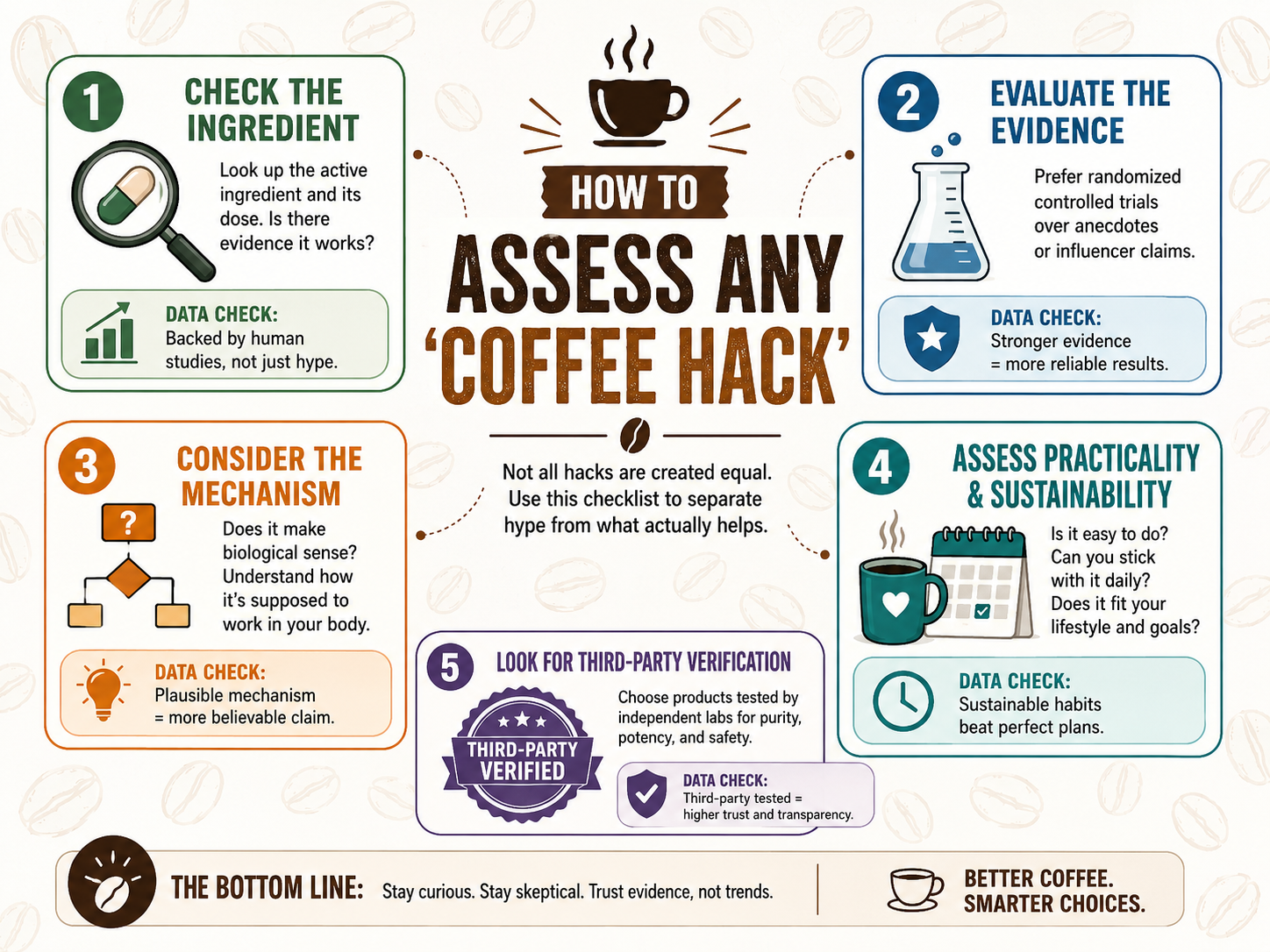
When you see a new coffee-related health claim, run it through this checklist.
- Identify the active component. Is it the coffee, or something added to the coffee? If it’s an added supplement, find the ingredient list.
- Check for clinical doses. Look up the primary ingredient on PubMed or Google Scholar. What dose was used in the study? Compare it to the dose in the product.
- Understand the mechanism. Does the claim use vague terms like “activates,” “boosts,” “opens a window”? Search for the precise physiological pathway. If it doesn’t exist, the claim is metaphorical.
- Consider the vehicle. Why coffee? Is it because caffeine has a synergistic effect, or because coffee is a daily ritual that ensures adherence?
- Look for third-party verification. Is there a USP verification, NSF certification, or any independent lab assay of the contents? Most “loophole” products lack this.
Applying this to the coffee loophole:
– Active component: Chromium Picolinate, L-Carnitine, Panax Ginseng (the supplement).
– Clinical dose: Lower than studied effective doses.
– Mechanism: “Activates fat-burning window” – not a real pathway.
– Vehicle: Coffee, for caffeine synergy and habit adherence.
– Verification: None typically listed.
This framework works for any trend, from coconut oil in coffee to tea vs coffee health comparisons.
What You Can Actually Control
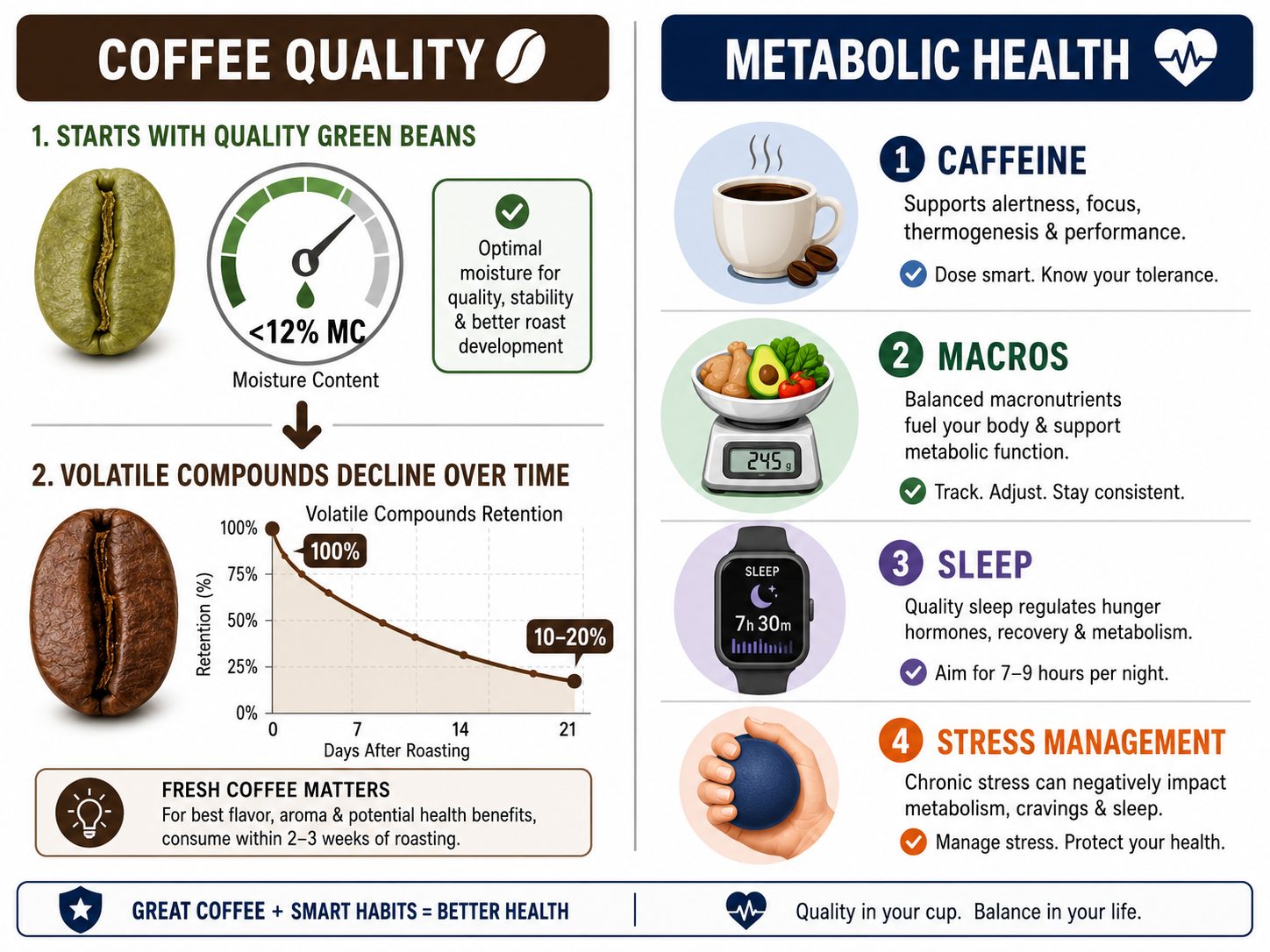
Your coffee’s quality and your metabolic health are separate things, but both are controllable through known actions.
For coffee quality, start with green bean storage. Ian Fretheim’s long-term observational study on water activity in specialty green coffee argues that the standard Aw of 0.7000 is “too lax as to be meaningless” for specialty coffee. He proposes a moisture content (MC) of <12% as a more practical target for producers. That’s a measurable, actionable spec.
Once roasted, volatile compounds like methanethiol and 2-methylpropanal dissipate within two hours. By day 8 post-roast, methanethiol concentration drops to about 30% of its original level. By day 21, it’s at 10-20%. That’s why coffee tastes flat after three weeks, even in sealed bags.
For your metabolism, look at inputs you can measure: caffeine intake, dietary macros, sleep quality, stress management. Caffeine’s effect is real but temporary. The caffeine in espresso vs. brewed coffee matters for dosage. Managing total caffeine intake from all sources affects your sleep and recovery.
Adding a dairy-free coffee creamer like almond milk changes the calorie and macro count. Tracking calories in coffee milk is a tangible step.
These are real variables. A pill that claims to “open a window” is not.
Frequently Asked Questions
Is the coffee loophole a drink or a pill?
It’s a pill. The videos show a drink with lemon, honey, and cinnamon to demonstrate a “recipe,” but the actual product is a capsule you swallow with your coffee.
Does cinnamon in coffee boost metabolism?
Cinnamon has been studied for its potential to modestly lower blood glucose, but the amount used in a cup of coffee is far below the clinical dose shown to have an effect. It’s a flavoring agent, not a metabolic booster at that quantity.
What is the “fat-burning window” they talk about?
It’s a marketing metaphor, not a scientific concept. Fat mobilization is a continuous process influenced by hormones, energy balance, and activity, not a scheduled gate that opens and closes.
Are Java Burn and FitSpresso the same thing?
They are different brands with nearly identical ingredient lists and marketing claims. Both use the “coffee loophole” terminology and instruct you to take one capsule with your morning coffee.
Will this work if I don’t change my diet or exercise?
No. The supplements contain low doses of ingredients that may support metabolic processes, but they cannot override a caloric surplus or sedentary lifestyle. The caffeine in the coffee provides a temporary metabolic increase, but that’s from the coffee, not the pill.
Before You Go
The coffee loophole is a dietary supplement wrapped in coffee ritual marketing. Its ingredients have some clinical backing, but at doses often below the studied thresholds. The core metaphor of a “fat-burning window” is fictional.
If you choose to try it, treat it as a supplement regimen where coffee is the delivery vehicle, not a coffee hack. And store your actual coffee beans better than the supplement makers store their claims – in a triple-laminated bag with a degassing valve, not a pressed cardboard box of hype.
Your morning coffee deserves better than a loophole. It deserves a fact.
