
Why You Should Add Salt to Coffee to Fix a Bitter Taste
Adding salt to coffee works by using sodium ions to physically block your tongue’s bitter taste receptors, suppressing the perception of bitterness and allowing sweet and other flavors to come forward. The effective dose is minuscule—about 1/32 of a teaspoon per cup or a single drop of a specific salt solution.
Most people dump in a random pinch. They either taste nothing or ruin the cup. The difference between a transformative trick and a ruined mug isn’t intention. It’s molarity.
This guide covers the peer-reviewed science, the exact two methods that work, and the three scenarios where salt makes your coffee worse.
Key Takeaways
- Salt suppresses bitterness at a physiological level by blocking specific taste receptors, a finding supported by a 2000 study in Chemical Senses.
- Use a digital scale for precision: 0.1 grams of salt per 250ml (8oz) cup is the ceiling. More than 0.3 grams makes coffee taste brackish.
- Hard water high in existing minerals can render the salt trick ineffective or detrimental; it works best with soft or filtered water.
- Creating a salt solution (1g salt to 13g water) allows for single-drop dosing, giving you control a pinch never can.
- This is a corrective measure for over-extracted or low-quality beans, not a substitute for proper brewing technique.
The Science: Why Salt Blocks Bitterness
It’s not magic. It’s ion exchange. Your tongue has type 2 taste receptor cells (T2Rs) that detect bitter compounds like caffeine and chlorogenic acid. Sodium ions from salt interfere with the signaling process of these specific receptors.
A 2000 peer-reviewed study in the journal Chemical Senses demonstrated that sodium chloride significantly reduces the perceived intensity of bitterness in model solutions. The sodium ion is the active agent. It doesn’t remove bitterness from the coffee; it temporarily blocks your ability to taste it as strongly. This suppression then allows your sweet and umami receptors (which are not blocked) to pick up on the coffee’s inherent flavors more clearly. The effect is immediate and lasts for the duration of the sip.
Salt’s efficacy is rooted in biophysics, not folklore. Sodium ions bind to sites on bitter taste receptors, inhibiting their activation by compounds like caffeine and reducing the neural signal of “bitter” sent to the brain.
Think of it like a temporary mute button for one instrument in the orchestra. When the loud bitterness is turned down, you can hear the subtler sweetness and body.
TL;DR: Sodium ions physically jam the bitter signal on your tongue. This is proven science, not a kitchen myth.
When Adding Salt Makes Coffee Worse (And When to Try It)
This isn’t a universal life hack. It’s a targeted fix. Using it blindly guarantees disappointment.
Reach for the salt shaker in these two scenarios only:
1. You’ve over-extracted your brew. This is the most common home barista mistake. Grinding too fine, brewing too long, or using water that’s too hot pulls out an excess of bitter compounds. Salt can rescue this cup.
2. You’re stuck with stale or low-quality beans. Mass-produced, dark-roasted beans sitting on a grocery store shelf for months are often harsh and one-dimensional. Salt can mask their worst traits and make them palatable.
Do not add salt if:
* Your coffee is already balanced. A well-brewed cup of a high-quality, freshly roasted bean has a complex balance of acidity, sweetness, and bitterness. Adding salt will flatten this profile, muting the pleasant acidity and highlighting only sweetness, making the cup taste bland and dull.
* You have very hard water. The Specialty Coffee Association has standards for ideal brewing water. If your water is already high in minerals like calcium and magnesium, adding sodium can throw the ionic balance further out of whack. The result is a cup that tastes hollow, metallic, or oddly salty even with a tiny pinch.
* You’re trying to fix sourness. Salt does not suppress sourness (acidity). If your coffee is sour from under-extraction, salt will only make it taste sour and weird. You need to adjust your grind or brew time instead.
Common mistake: Adding salt to well-brewed specialty coffee — you pay for nuance, then chemically suppress a core part of its flavor spectrum. The cup loses its vibrancy and tastes flat.
The technique is a corrective tool, not a seasoning. Keep that in mind before you alter every cup.
The Exact Method: A Pinch or a Solution?
The internet says “a pinch.” This is useless advice. My pinch is different from your pinch. For a technique reliant on molecular-level interaction, guesswork fails every time.
You have two reliable paths: the measured pinch and the laboratory-grade solution. The solution wins for control.
| Method | Precision | Best For | Risk If Inaccurate |
|---|---|---|---|
| Measured Pinch | Low-Moderate | Quick correction of a single over-extracted cup. | Exceeding 0.3g makes the cup irreversibly salty. |
| Salt Solution | High | Experimentation, consistency, fixing multiple cups. | Almost none; drop-by-drop control prevents over-salting. |
| Random Pinch | None | Ruining coffee. | Salty, undrinkable coffee. Guaranteed. |
Option 1: The Measured Pinch (The Practical Fix)
This requires a digital kitchen scale with 0.1-gram resolution. The scoop that came with your coffee is not precise enough.
- Brew your coffee as usual. If you know it’s bitter, you’re already at this step.
- Weigh 0.1 grams of fine table salt or sea salt. This is roughly 1/32 of a teaspoon—a few granules. Kosher salt flakes are too voluminous for accurate measurement here.
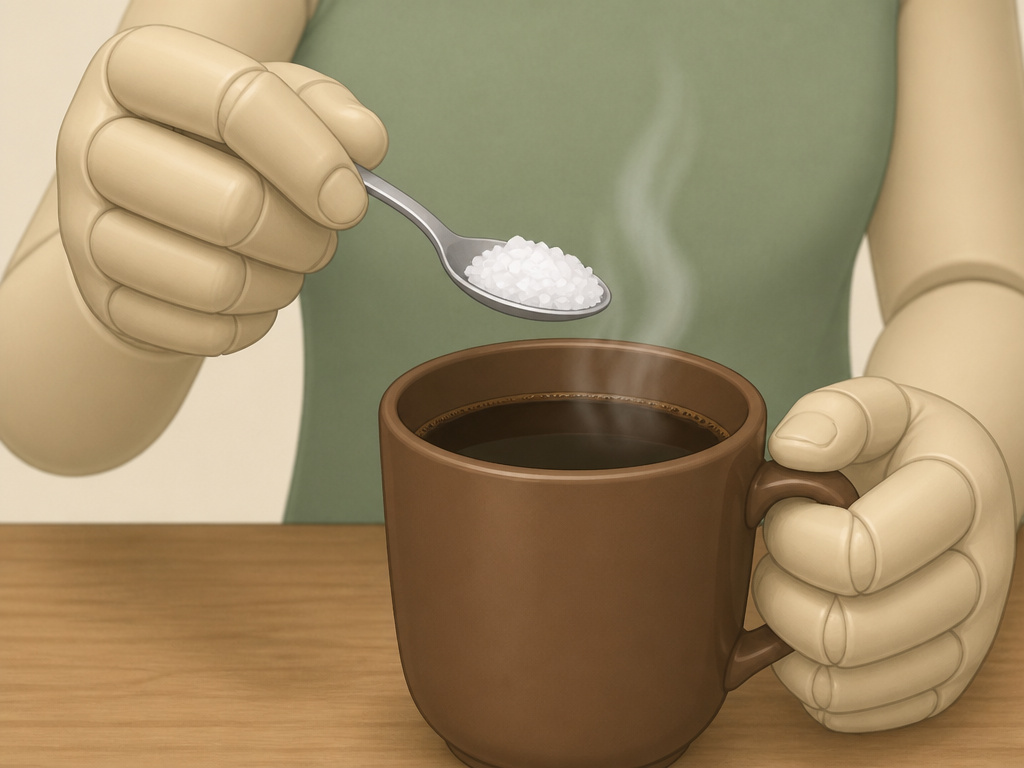
- Sprinkle the salt directly into your hot cup of coffee.
- Stir vigorously for 10 full seconds. Sodium ions need to dissolve and distribute.
- Wait 10 seconds, then taste.
If the bitterness is still overpowering, you can add another 0.1 grams. Do not go beyond 0.3 grams total for an 8-ounce cup. Past that threshold, the salty taste itself becomes perceptible. The goal is undetectable salt presence, only detectable bitterness reduction.
Option 2: The Salt Solution (The Pro Approach)
This is the method pulled from detailed YouTube tutorials and food science labs. It gives you surgical control.
- Mix: Combine 1 gram of salt with 13 grams of distilled or filtered water in a small glass. Stir until fully dissolved. This creates a saturated solution you can’t accidentally over-concentrate.
- Bottle: Use a small dropper bottle to store this solution. Label it clearly.
- Dose: For an 8-ounce cup of coffee, add one drop of the solution. Stir.
- Taste and Adjust: Wait 10 seconds. Taste. If bitterness persists, add a second drop. A third drop is the absolute limit for a standard cup.
The solution method eliminates the “pinch” variable. One drop is a repeatable unit. It also lets you experiment with adding a drop directly to your coffee grounds before brewing, which some find gives a more integrated effect. This approach is ideal if you’re exploring other healthy coffee additives and want consistent results.
TL;DR: A “pinch” is a gamble. 0.1 grams on a scale is a measurement. A pre-made solution is a precision tool.
What Kind of Salt Works Best?

Not all salts are created equal, but for this purpose, the differences are minor. The active ingredient is the sodium ion (Na+).
- Fine Table Salt: The default choice. It’s cheap, dissolves instantly, and is consistently sized. The anti-caking agents (like sodium silicoaluminate) are present in such minute quantities they have no taste impact.
- Sea Salt: A fine-grind sea salt works perfectly. Avoid large, flaky finishing salts as they dissolve too slowly.
- Kosher Salt: Not ideal. The large, irregular crystals make consistent measurement by volume or small weight impossible. A 0.1-gram measure of kosher salt might be one tiny flake.
- Himalayan Pink Salt: This is marketing. The trace minerals that give it color do not enhance the bitterness-blocking effect. You’re paying for color, not performance.
The purity of your salt matters less than the purity of your water. Using hard tap water full of minerals to make your coffee or your salt solution is the bigger variable. If you’re worried about the digestive effects of your brew, know that the salt quantity here is far too small to impact coffee’s digestive impact, which is usually driven by caffeine and acidity.
Stick with plain, fine salt. Save the artisan varieties for your kitchen counter.
Common Questions & Misconceptions
Let’s clear the froth.
Does it make coffee less acidic?
No. Acidity (sourness) and bitterness are detected by completely different taste receptors. Salt does not block sour receptors. If your coffee is harshly sour, that’s an under-extraction issue. Salt will not fix it. For more on this, see our comparison of acidic beverages.
Can I use salt instead of sugar?
Yes, but with a caveat. Salt suppresses bitterness, which can make the inherent sweetness of the coffee more noticeable. It doesn’t add sweetness like sugar does. If you’re trying to cut sugar, salt can help you enjoy bitter coffee more. For actual sweetness without refined sugar, consider other additives like a touch of brown sugar in coffee or cinnamon in coffee.
Will this damage my coffee machine?
The amount of salt added to the brewed cup is far too small to affect your machine. Never add salt directly to your machine’s water reservoir. That could lead to corrosion over time.
Is this just for cheap coffee?
It’s most dramatic with cheap, over-roasted, or stale coffee because those are often intensely bitter. However, even good coffee can over-extract. It’s a tool for a problem, not a judgment on quality. The method works on any bitter cup.
How does this compare to other additives?
It serves a unique purpose. Coconut oil in coffee adds fat and texture. Almond milk in coffee dilutes and adds nutty sweetness. Salt is a flavor modulator, working directly on your physiology. It changes perception, not composition.
Frequently Asked Questions
How much salt do I add to coffee?
For an 8-ounce cup, start with 0.1 grams (about 1/32 tsp) of fine salt. Use a scale. The maximum before saltiness appears is around 0.3 grams. The most precise method is a salt solution: 1g salt dissolved in 13g water, using one drop per cup.
What does salt do to bitter coffee?
Salt doesn’t remove bitter compounds. Sodium ions bind to your tongue’s bitter taste receptors, temporarily reducing their sensitivity. This suppresses the bitter signal to your brain, allowing other flavors like sweetness to become more prominent.
Does salt in coffee reduce acidity?
No. Salt targets bitterness, not acidity (sourness). They are distinct taste perceptions handled by different biological pathways. If your coffee is unpleasantly sour, the issue is under-extraction, not a lack of salt.
Is adding salt to coffee healthy?
The quantity involved is nutritionally insignificant—less than 1% of the daily sodium limit. It is safe for most people. However, it is a workaround for poor-tasting coffee, not a health supplement. For those monitoring intake, consider the calories in coffee from other additives as a bigger dietary factor.
Before You Go
Adding salt to coffee is a legitimate, science-backed technique for managing bitterness. Its power lies in its specificity. It is not a seasoning for all coffee; it is a corrective tool for a specific problem.
Remember the three rules: measure with a scale, use soft water, and only apply it to coffee that is genuinely bitter, not sour or already balanced. The salt solution method offers the kind of repeatable, drop-by-drop control that turns a kitchen hack into a reliable technique. It won’t make bad beans taste great, but it can make a mis-brewed cup from great beans drinkable. Sometimes, that’s the fix you need.
