
Benefits of Coconut Oil in Coffee | The Satiety Trade-Off
Adding coconut oil to coffee provides a measurable energy and satiety boost primarily through its medium-chain triglycerides (MCTs), which are metabolized differently than other fats, but it adds 120 calories per tablespoon and carries specific digestive risks for some individuals.
Most people get the mechanism wrong. They hear “MCTs for energy” and assume all the fat in their spoon converts to instant fuel. The reality is more selective, and the type of MCT matters more than the total fat.
This guide breaks down the proven metabolic pathways, the significant calorie trade-off, and the clear situations where this trend helps or hurts. We’ll compare coconut oil to pure MCT oil, outline the step-by-step method that prevents an oily mess, and name who should skip it entirely.
Key Takeaways
- Coconut oil is about 60-70% MCTs, but half of that is lauric acid (C12), which acts more like a long-chain fat and provides less-consistent ketone production than the caprylic (C8) and capric (C10) acids in dedicated MCT oil.
- That single tablespoon adds 120 calories to your coffee. For weight management, this must be counted as a meal replacement or a significant snack, not an invisible addition.
- The fat stimulates bile release. If you have a compromised gallbladder or a history of gallstones, this can trigger acute pain or discomfort within 30 minutes.
- Blending is non-negotiable. Stirring with a spoon leaves an unappealing oil slick and separates the benefits from the drink.
- Start with one teaspoon. A full tablespoon on an empty stomach, especially for a new user, frequently causes gastrointestinal distress like cramping or diarrhea.
The Energy and Satiety Mechanics of MCTs
Headline claims about sustained energy and reduced hunger point to medium-chain triglycerides. These fats bypass the usual lymphatic absorption route for long-chain fats. The liver processes them directly, converting a portion into ketones—an alternative fuel source for the brain and body—and ostensibly promoting a feeling of fullness.
Virgin coconut oil is approximately 60-70% medium-chain triglycerides (MCTs) by weight, with lauric acid (C12) comprising 45-50% of its total fatty acid profile, according to the USDA FoodData Central database.
The satiety effect isn’t just psychological. A 2003 study in Obesity Research found that MCTs increased energy expenditure and fat oxidation in overweight men compared to long-chain triglycerides. The mechanism is the thermo effect of processing these fats. Your body uses slightly more energy to metabolize them.
TL;DR: The quick energy and hunger suppression come from MCTs being shunted directly to your liver for rapid processing, not from a caffeine-like stimulant effect.
Why Lauric Acid (C12) Is the Middle Child
Not all MCTs are equal. Coconut oil’s primary MCT is lauric acid, a 12-carbon chain. It’s metabolized faster than the 18-carbon chains in olive oil but slower than the 8-carbon (caprylic) and 10-carbon (capric) acids in refined MCT oil.
Lauric acid has antimicrobial properties, which is great. For ketone production, it’s less efficient. It behaves more like a long-chain fat in some metabolic pathways. This is the core nuance most articles gloss over: you’re not getting the same ketogenic punch as from a dedicated C8/C8 supplement.
| MCT Type | Carbon Chain | Primary Source | Ketone Production Efficiency | Notes |
|---|---|---|---|---|
| Caprylic Acid | C8 | Refined MCT Oil | High | Most rapidly converted to ketones, minimal taste. |
| Capric Acid | C10 | Refined MCT Oil / Coconut Oil | Moderate | Good balance of ketone production and digestion. |
| Lauric Acid | C12 | Coconut Oil | Lower | Major component of coconut oil; more gradual energy release. |
The Caloric Reality Check
This is the part people forget to count. That creamy texture has a price.
Every tablespoon of coconut oil adds roughly 120 calories to your drink. If your morning coffee is a 5-calorie black brew, you’ve just turned it into a 125-calorie beverage. For context, that’s the calorie equivalent of a large egg or a slice of toast.
Common mistake: Treating coconut oil coffee as a zero-calorie enhancement — the 120 calories per tablespoon will stall weight loss if not accounted for in your daily total.
The strategy only works for satiety and weight management if that caloric bump replaces a morning snack or part of your breakfast. It’s a trade, not a free addition.
The Cognitive Function Claims: What the Science Actually Says
The link between MCTs, ketones, and brain function is compelling, but the evidence for coconut oil specifically is indirect. The premise is solid: ketones can provide an alternative energy source for brain cells, which is a key area of research for conditions like Alzheimer’s.
A 2017 systematic review in the Journal of Alzheimer’s Disease analyzed MCT supplementation in subjects with memory impairments. It found cognitive benefits, particularly in individuals lacking the APOE4 gene. This research is the bedrock of the brain-boosting claims.
However, this study used formulated MCT supplements, not straight coconut oil. The ketone elevation from coconut oil’s lauric acid is milder and more variable. The cognitive “sharpness” some report may be a combination of stable blood sugar from the fat and a modest ketone bump, rather than a dramatic neurological shift.
For a focused look at the most efficient forms of these fats, our review of the benefits of MCT oil in coffee details the caprylic and capric acid advantage.
Coconut Oil vs. Pure MCT Oil: A Clear Winner
If your goal is maximal ketone production and energy with minimal digestive fuss, the winner is clear. Dedicated MCT oil, typically a blend of caprylic and capric acids, is the more efficient tool.
Coconut oil brings other things to the cup: a distinct, sometimes desirable flavor, and those antimicrobial lauric acid properties. It’s a whole food. MCT oil is a refined extract, often flavorless and more potent per gram for ketosis.
| Factor | Coconut Oil | Refined MCT Oil | Best For |
|---|---|---|---|
| Primary MCT | Lauric Acid (C12) | Caprylic (C8) & Capric (C10) | Rapid ketones: MCT Oil |
| Ketone Yield | Moderate, slower | High, rapid | Cognitive focus: MCT Oil |
| Flavor | Distinct coconut, can alter coffee taste | Neutral, virtually tasteless | Purity of coffee flavor: MCT Oil |
| Digestive Tolerance | Lower for some (high lauric acid) | Higher for pure C8/C10 (start slow) | Sensitive stomachs: MCT Oil (with care) |
| Cost & Use Case | Pantry staple, multi-use | Specialty supplement, single-purpose | Budget & versatility: Coconut Oil |
For general satiety and a pleasant texture, coconut oil works. For targeted nutritional ketosis or research-backed cognitive support, the scientific review of MCT benefits points to refined oils. It’s a purpose-built tool.
How to Make It (The Right Way)
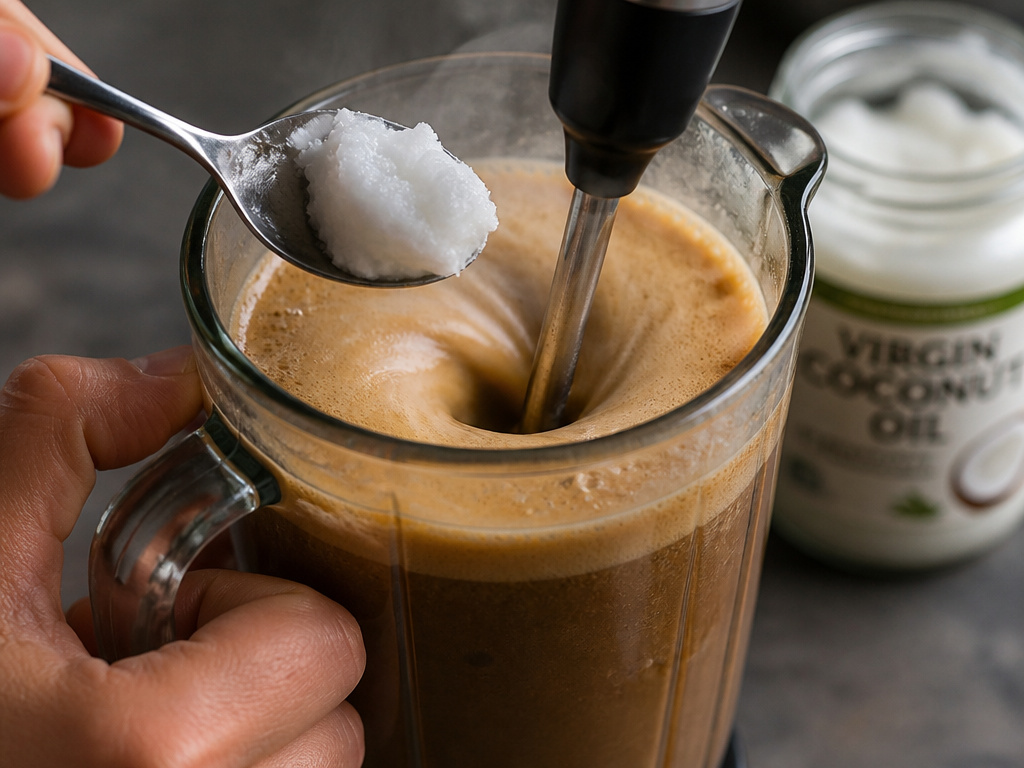
Scooping oil into coffee and giving it a lazy stir is a recipe for disappointment. You’ll get a greasy film on top and uneven sips. The method is everything.
- Start with less than you think. Measure out 1 teaspoon of virgin coconut oil. This is about 40 calories and a gentler introduction for your system. The common advice to use a full tablespoon straight away is why many people quit after one try.
- Brew your coffee hot. The oil needs heat to melt properly. Pour 8-12 ounces into a blender cup, jar with a tight lid, or a vessel that works with your milk frother.
- Add the oil and blend aggressively. This is the non-negotiable step. A blender on high for 20-30 seconds or a powerful handheld frother for 45-60 seconds will emulsify the fat into the coffee. You’re looking for a light, creamy foam with no separation.
- Pour and drink immediately. The emulsion will hold for a few minutes. The flavor is rich and rounded, not oily. If you dislike the coconut note, try a refined (odorless) coconut oil or switch to a pure MCT oil.
Skipping the blending step means the oil never properly incorporates. You drink the coffee, then get a shot of warm oil at the bottom. It’s unpleasant and defeats the purpose.
Who Should Think Twice (Or Avoid It Entirely)
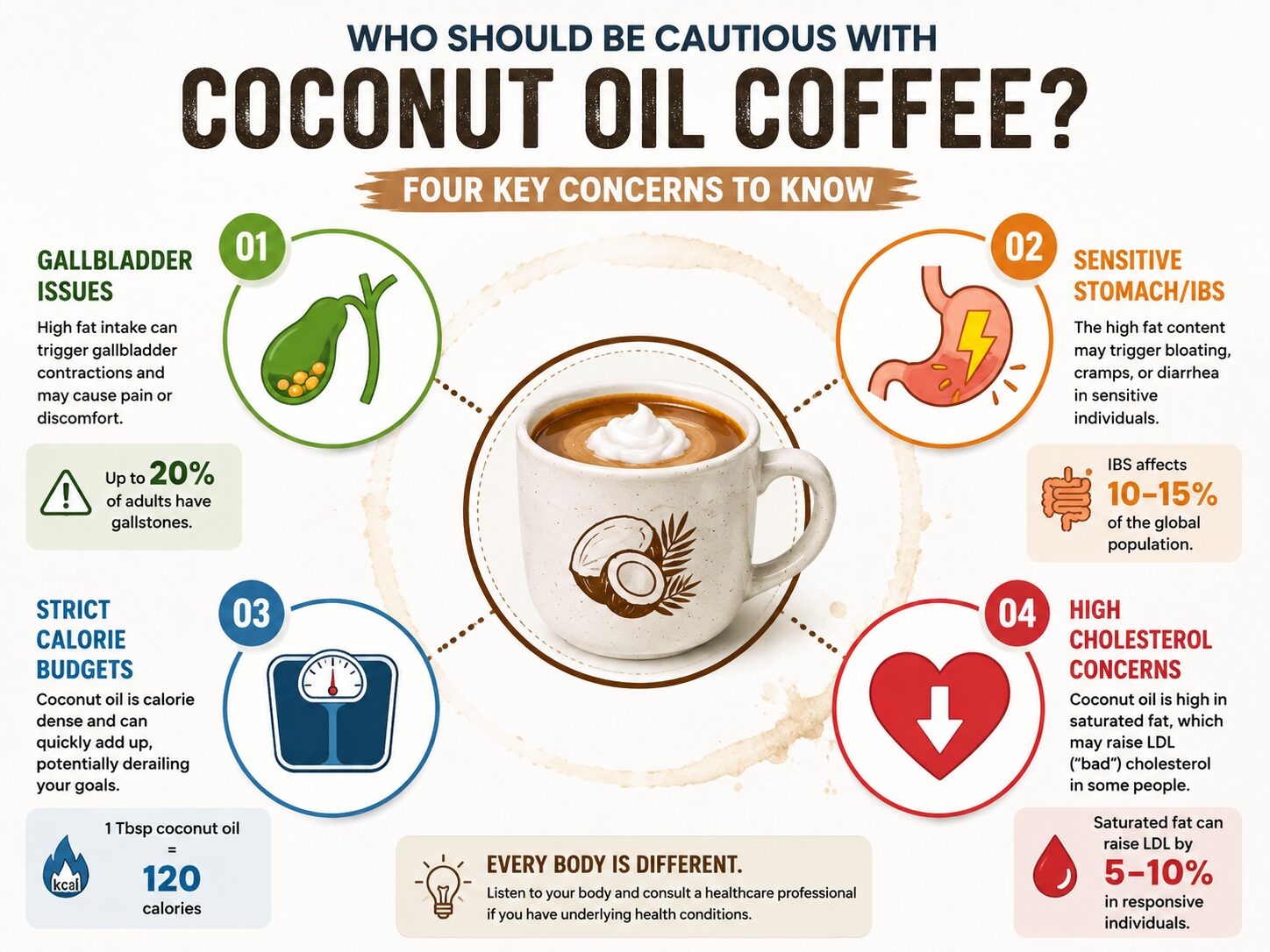
This isn’t a universally benign addition. For some, it can cause real problems.
- Individuals with Gallbladder Issues: Fats trigger the gallbladder to contract and release bile. If you have gallstones or a sluggish gallbladder, this stimulus can cause a painful attack. The pain typically starts within 30-60 minutes of consumption.
- Those with Sensitive Stomachs or IBS: MCTs are rapidly digested and can draw water into the colon. The result, especially with a starting dose that’s too high, is often cramping, bloating, or diarrhea. This is sometimes called the “MCT flush.”
- People on Strict Calorie Budgets: As covered, the calories are significant. If you’re meticulously tracking for weight loss, 120 unaccounted calories is a week’s worth of progress gone in four days.
- Anyone with High Cholesterol Concerns: While the debate on coconut oil and heart health is complex, it is high in saturated fat. If your doctor has you on a diet to lower LDL cholesterol, adding daily tablespoons of saturated fat is counterproductive.
If you fall into one of these categories, consider other flavor and texture enhancers. A pinch of salt can cut bitterness without calories. For sweetness, brown sugar offers molasses notes, and cinnamon in coffee provides antioxidants.
The Flavor and Compatibility Factor
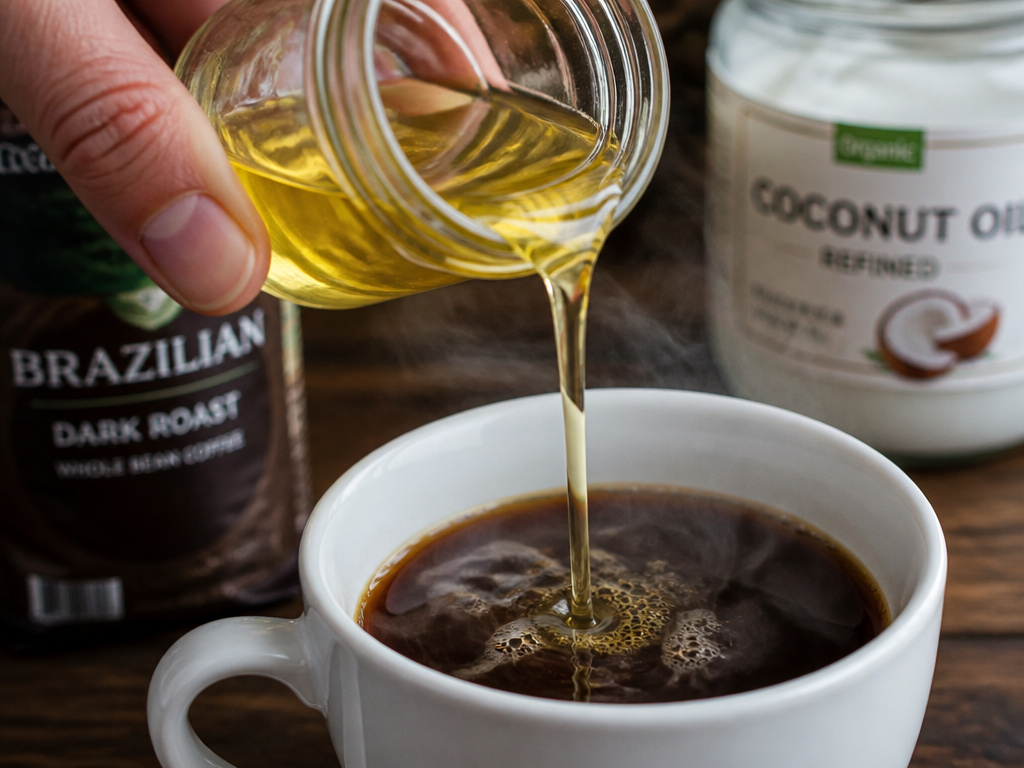
Coconut oil imparts a distinct flavor. Virgin coconut oil has a stronger tropical, nutty taste. Refined coconut oil is more neutral.
This flavor clashes with some coffee profiles. A bright, fruity Ethiopian Yirgacheffe might be overwhelmed. A chocolatey, nutty Brazilian or Sumatran coffee can complement it nicely. It’s a terrible pairing with already flavored coffees (hazelnut, vanilla)—the competing tastes become muddled.
For dairy-free creaminess without the coconut flavor, other plant-based milk options like almond or oat milk are better. They add fewer calories, too. If you’re monitoring your intake, understanding the calorie content of milk is crucial for comparison.
Frequently Asked Questions
Does coconut oil in coffee break a fast?
Yes, unequivocally. Any calorie intake, especially from fat, triggers metabolic processes that break a fasted state. If you’re fasting for metabolic benefits like autophagy, stick to black coffee, tea, or water.
How much coconut oil should I put in my coffee?
Start with 1 teaspoon. After a week with no digestive issues, you can experiment with up to 1 tablespoon. Never start with a full tablespoon.
Will coconut oil in coffee help me lose weight?
It can be a tool for weight management by promoting satiety and potentially reducing subsequent calorie intake. It is not a magic weight-loss solution. You must account for its 120 calories per tablespoon within your daily diet, or you will gain weight.
What’s better for coffee: coconut oil or butter?
Butter (as in Bulletproof coffee) contains butyrate and has a different flavor profile, but it’s also high in saturated fat. Coconut oil has a higher percentage of MCTs. The “better” choice depends on your taste preference and specific health goals. Some people prefer the savory note of butter.
Can I use coconut oil in iced coffee?
It’s challenging. The oil will solidify in cold liquid, creating unpleasant globules. If you must, blend the oil with a small amount of hot coffee first to emulsify, then pour that mixture over ice. It’s not ideal.
Before You Go
The benefits of coconut oil in coffee are specific and measurable, centered on the unique properties of medium-chain triglycerides. The energy and satiety effects are real for many, grounded in how the liver processes these fats.
The trade-offs are just as concrete: a substantial calorie addition, a specific flavor, and real digestive risks for a segment of the population. It’s not a universal upgrade.
Your first move is to try a single teaspoon blended thoroughly into your morning cup. Pay attention to how you feel for the next three hours—your energy, your hunger, your stomach. That personal experiment is more valuable than any generic recommendation. If the coconut taste isn’t for you, explore a neutral MCT oil for energy or stick with traditional low-calorie coffee additions. The goal is a better coffee experience, not just following a trend.
