
How Much Caffeine Is in a Cup of Vietnamese Coffee?
This post contains affiliate links. As an Amazon Associate, we earn from qualifying purchases.
Vietnamese coffee, brewed in a traditional phin filter, typically contains between 100 and 250 milligrams of caffeine per 100-milliliter serving. This wide range stems from its core ingredient. Robusta beans, which hold 2.0% to 4.5% caffeine by weight, and the slow, concentrated phin brewing method that extracts it efficiently.
Most people see the dark, strong brew and assume it’s just a potent coffee. They miss the two-part equation. The bean type sets a high ceiling, but the brewing ritual decides how much of that caffeine actually lands in your glass.
This guide breaks down the numbers from published studies, explains why the phin filter is such an effective caffeine extractor, and shows you how your favorite Vietnamese coffee drink stacks up against a standard American drip.
Key Takeaways
- A 100mL serving of phin-brewed Vietnamese coffee delivers 100–250mg of caffeine, according to a 2018 HPLC study.
- The high base level comes from Robusta beans, which contain 2.0–4.5% caffeine by dry weight, nearly double that of Arabica.
- The phin filter’s slow drip (4–6 minutes) and high coffee-to-water ratio act like a caffeine extraction pump.
- Adding sweetened condensed milk in cà phê sữa đá doesn’t change the caffeine content, but it can mask bitterness and lead to drinking more.
- Compared cup-for-cup, a Vietnamese coffee often has more caffeine than a standard 8-oz American drip but less than a double shot of espresso.
The Core Caffeine Range in a Traditional Cup
You need a specific number, not a guess. Peer-reviewed research provides it. A 2018 study in the Journal of Food Science and Technology used high-performance liquid chromatography (HPLC) to measure caffeine in brewed Vietnamese coffee. The researchers prepared it the standard way, using a phin filter, and found a concentration range of 100 to 250 milligrams of caffeine per 100 milliliters of liquid.
That’s the definitive answer. Your actual cup depends on three variables within that frame.
The study “Caffeine content of Vietnamese coffee as determined by high performance liquid chromatography” reports a range of 100–250 mg caffeine per 100 mL in phin-brewed samples, with variability attributed to grind size, brew time, and coffee-to-water ratio.
First, your serving size matters. A classic Vietnamese coffee glass holds roughly 100–150mL. If you drink the whole thing, you’re consuming the full 100–250mg dose. An American-style 8-ounce mug (about 237mL) filled with the same brew would deliver roughly 237–593mg. Nobody drinks that much in one sitting, but the math shows why the serving size is the first thing to check.
Second, the bean blend is the foundation. Most traditional Vietnamese coffee uses Robusta beans exclusively. The same 2018 study notes these beans have a caffeine content of 2.0% to 4.5% by dry weight. Arabica beans, the global standard, typically range from 1.2% to 1.8%. That’s a significant difference in starting material.
| Coffee Bean Type | Typical Caffeine % (Dry Weight) | Primary Use in Vietnam | Impact on Brew |
|---|---|---|---|
| Robusta | 2.0% – 4.5% | Traditional blends, Trung Nguyen | High caffeine base, strong bitter notes |
| Arabica | 1.2% – 1.8% | Modern specialty blends, some mixes | Lower caffeine, smoother, more acidic |
| Robusta-Arabica Blend | 1.5% – 3.5% (estimated) | Growing market segment | Moderate caffeine, balanced flavor |
Third, the brand can signal potency. While specific milligram-per-serving data from brands is rare, some are known for their high-Robusta recipes. Trung Nguyen’s “Creative 1” blend, for example, uses a high-grade Robusta (Culi) often associated with a powerful kick. You won’t find a nutrition label, but community reports and the Academia.edu caffeine content study on Vietnamese brands confirm these blends test at the higher end of the caffeine spectrum.
TL;DR: A standard small glass of phin coffee contains 100–250mg of caffeine, with the exact amount depending on your serving size, the Robusta percentage in your beans, and the specific brand’s blend.
Why Robusta Beans Are the Caffeine Powerhouse
Vietnamese coffee gets its muscle from its bean of choice. Robusta (Coffea canephora) isn’t just a stronger-tasting bean; it’s a different biological organism that produces more caffeine as a natural pesticide.
The plant grows at lower altitudes with more pests. Caffeine is a toxic alkaloid that protects the seeds. Robusta evolved to synthesize nearly twice the concentration found in high-altitude Arabica. When you see a caffeine percentage of 4.5% on a lab report, that means nearly one-twentieth of the dry bean mass is pure caffeine. It’s a staggering density.
This biological fact changes the entire brewing equation. Even with mediocre extraction, you start with a saturated source. Compare that to using a high-quality Arabica for your espresso caffeine content. The Arabica might taste complex, but its lower caffeine ceiling means you’d need to use significantly more grounds to match the stimulant output of a Robusta brew.
Common mistake: Assuming “strong” flavor equals high caffeine, a light-roast Arabica can taste bright and acidic while still having less caffeine than a darker, smoother-tasting Robusta from Vietnam.
The roast level matters less than people think. Caffeine is stable at roasting temperatures. A dark roast might taste smokier and feel heavier, but the caffeine molecules remain. The real loss is bean mass from moisture evaporation. By weight, a scoop of dark roast might have slightly more caffeine because the beans are less dense. By volume, a scoop of light roast might win. The bean type. Robusta or Arabica, is the dominant variable.
This is why understanding your tea vs coffee caffeine fundamentals is useful. Tea caffeine is bound to antioxidants and releases slowly. Coffee caffeine, especially from Robusta, is mostly free and hits your system fast. The bean choice dictates the potential energy in your cup before you even add water.
How Phin Brewing Maximizes Caffeine Extraction
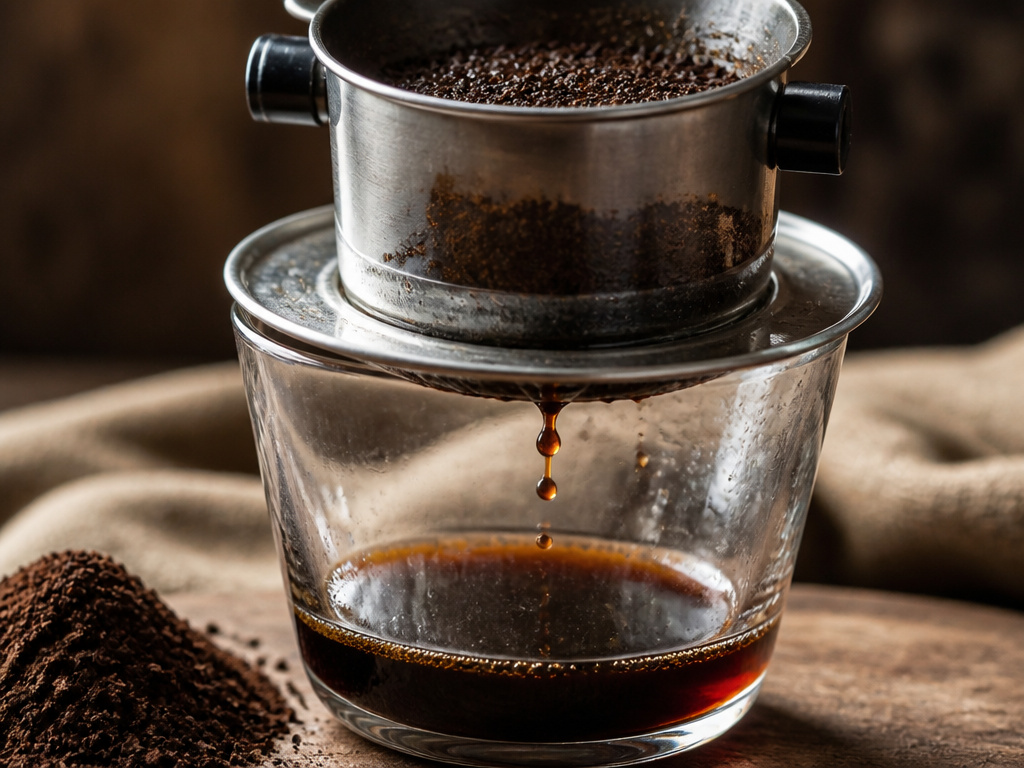
The bean provides the potential. The phin filter realizes it. This metal brewer isn’t a passive drip machine; it’s a slow-extraction chamber designed for a high coffee-to-water ratio.
Here’s the mechanical breakdown. You place a fine-to-medium grind in the chamber, press it with a gravity screen, and add hot water. The water saturates the grounds completely and then drips slowly through a single small hole in the bottom. The typical brew time is four to six minutes.
That extended contact time is the first extraction booster. Water is a solvent. The longer it sits in contact with the coffee grounds, the more caffeine it can dissolve and carry away. A fast pour-over might take three minutes. An espresso shot takes 25–30 seconds. The phin’s slow drip gives caffeine molecules more time to migrate out of the grounds.
The second booster is the concentration. A standard phin recipe uses about 15–20 grams of coffee for 100–150mL of water. That’s a ratio between 1:5 and 1:10. Compare that to a common American drip ratio of 1:17. You have nearly twice the coffee mass per unit of water. More coffee means more total caffeine available for extraction.
The grind size is the final control. A finer grind increases the surface area exposed to water, speeding up extraction. Most pre-ground Vietnamese coffee is cut fine for the phin. If you grind it even finer at home, you’ll pull more caffeine out in the same brew window. Go too fine, and the drip stops completely, a common failure.
This brewing technique is a masterclass in efficiency, a point supported by broader research on brewing technique influence analysis. The study on bioactive compounds confirms that method and time are primary drivers of what ends up in your cup, not just the raw ingredient.
TL;DR: The phin’s slow drip and high coffee-to-water ratio act like a caffeine pump, efficiently pulling the high levels inherent in Robusta beans into a small, potent serving.
Cà Phê Sữa Đá: Does Condensed Milk Change the Math?
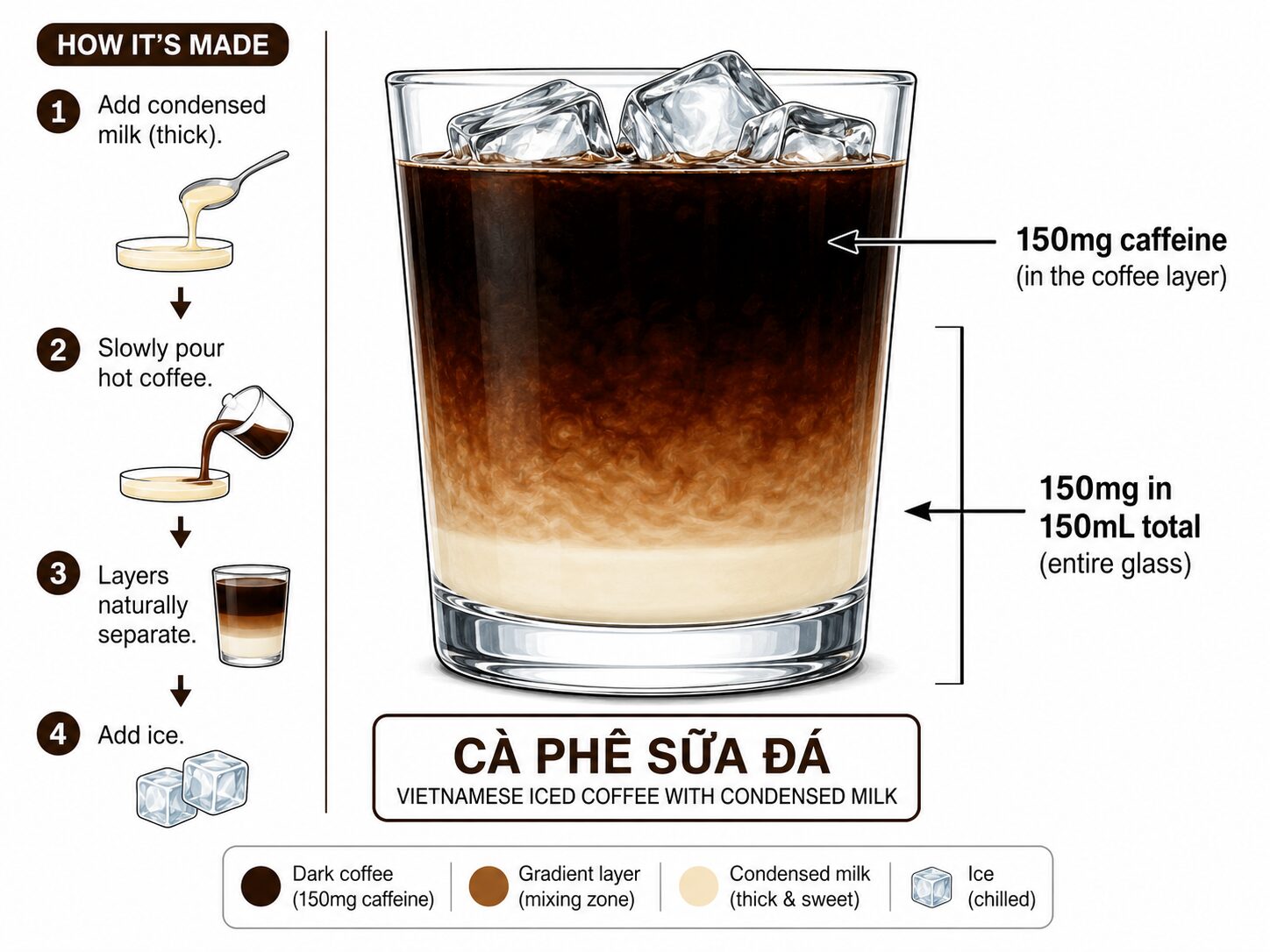
The iconic Vietnamese iced coffee with condensed milk (cà phê sữa đá) is a sensory experience. The thick, sweet milk layers at the bottom of the glass, mixing slowly with the strong hot coffee dripped over ice. It creates a balanced, decadent drink. But it does not alter the caffeine content of the coffee itself.
The caffeine molecules are in the coffee water. Adding milk, sugar, or syrup dilutes the concentration per volume of the total beverage but does not destroy or neutralize the caffeine. If you start with 150mg of caffeine in 100mL of coffee and add 50mL of condensed milk, you now have 150mg of caffeine in 150mL of total liquid. The absolute amount you consume remains 150mg.
The real risk is perceptual. The intense sweetness and creamy texture perfectly mask Robusta’s characteristic bitterness. That bitterness is often the body’s natural cue to slow down. Without it, you might sip through a large serving faster than you would a bitter black brew. You could easily consume a double dose without feeling the usual warning signs.
This is a different consideration than managing the caffeine in milk-based drinks like a cappuccino, where the milk volume is standardized and the espresso shot size is fixed. With cà phê sữa đá, the coffee portion is hyper-concentrated, and the milk addition is to taste. Your personal recipe directly affects your total intake.
If you’re sensitive to caffeine, drink this version slowly. Let the ice melt a little. Stir thoroughly so you taste the coffee’s strength alongside the sweetness. That feedback loop helps you gauge your intake more accurately than gulping down a perfectly masked stimulant bomb.
Vietnamese Coffee vs. Other Caffeine Sources
You need context to know if 250mg is a lot. Placing Vietnamese coffee on the global caffeine map shows where it truly stands.
The most direct comparison is to standard American drip coffee. An 8-ounce (237mL) cup of drip typically contains 95–165mg of caffeine. Our phin-brewed Vietnamese coffee, at 100–250mg per 100mL, is more concentrated. A similar 100mL serving of drip coffee would only have about 40–70mg. Cup for cup, the Vietnamese version is often stronger.
Espresso is a different beast. A single 1-ounce (30mL) shot of espresso averages 64mg of caffeine. Because it uses a finer grind and high pressure, it extracts efficiently but has a tiny serving size. A double shot (2 oz) delivers about 128mg. So, a full glass of Vietnamese coffee can contain roughly the caffeine of two double espressos, but it’s delivered in a larger volume of liquid over a longer drinking time.
| Beverage | Typical Serving Size | Average Caffeine Range | Caffeine per 100mL | Notes |
|---|---|---|---|---|
| Vietnamese Coffee (Phin) | 100–150 mL | 100–250 mg | 100–250 mg | High due to Robusta + slow extraction |
| American Drip Coffee | 237 mL (8 oz) | 95–165 mg | 40–70 mg | Larger volume, lower concentration |
| Espresso (Single Shot) | 30 mL (1 oz) | ~64 mg | ~213 mg | Extremely concentrated by volume |
| Black Tea | 237 mL (8 oz) | 40–70 mg | 17–30 mg | Slow-release caffeine, lower total |
| Energy Drink (e.g., Monster) | 473 mL (16 oz) | 160–240 mg | 34–51 mg | Large can, moderate concentration, plus sugar/synthetics |
When you look at the Monster Energy caffeine comparison, a 16-oz can has 160–240mg. That’s a similar total to a strong Vietnamese coffee, but delivered in a much larger, sweeter, chemically complex package. The coffee offers a cleaner stimulant profile.
For a broader view on stimulant choices, the debate on energy drinks vs coffee covers the additional compounds in energy drinks that can amplify side effects. Pure coffee, even strong Vietnamese Robusta, is a simpler agent.
Finally, consider the health benefits of tea and its slower caffeine release. If Vietnamese coffee’s punch is too much, switching to a strong black tea caffeine levels brew might provide a more manageable and sustained energy lift.
Managing Your Caffeine Intake with Vietnamese Coffee
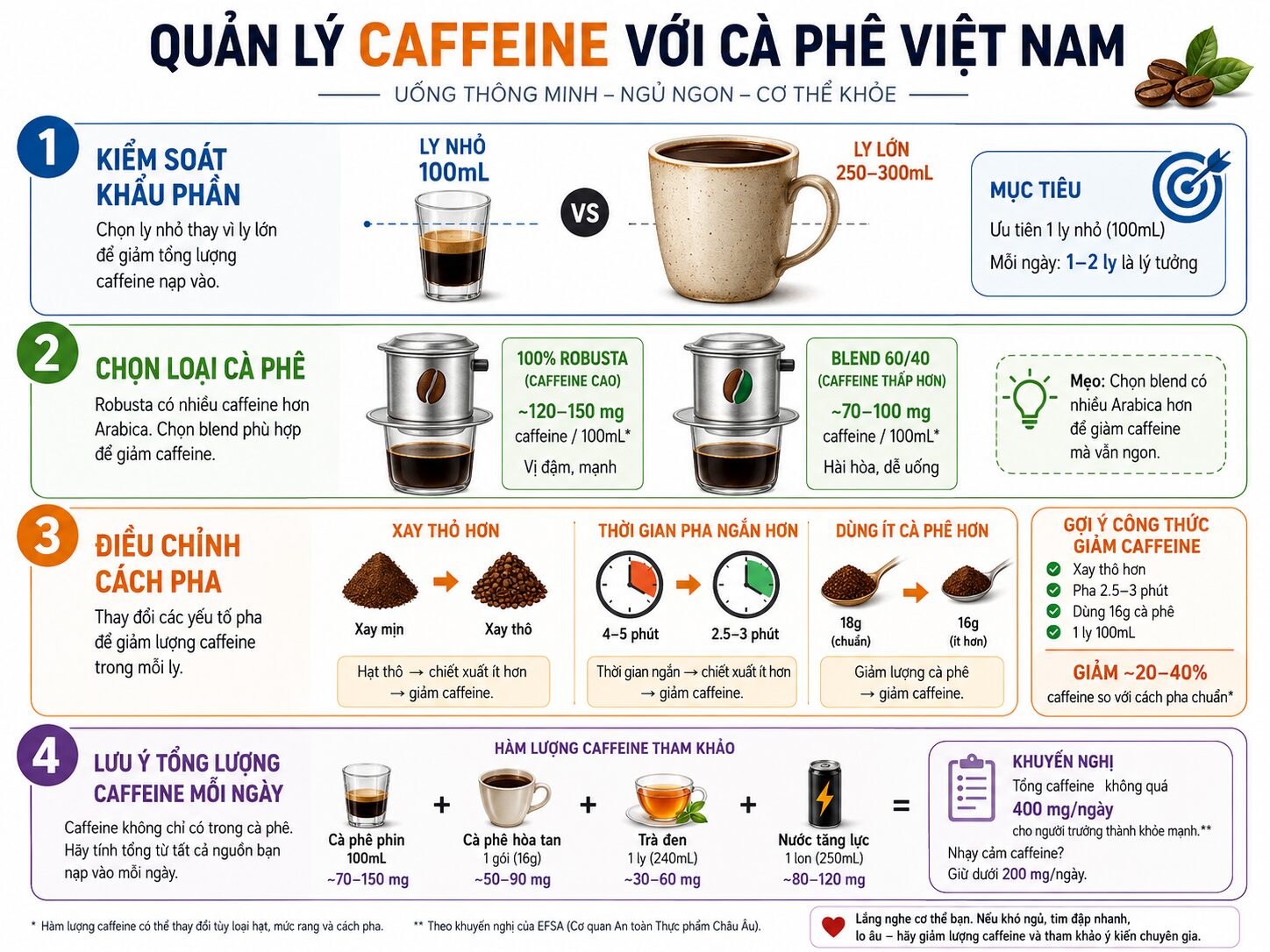
You can enjoy the rich tradition without the jitters. It requires treating the brew with respect and knowing your own limits.
First, measure your serving. Use a small glass or cup that holds around 100mL. This physically limits your dose. If you brew directly into a large mug, you lose this natural control and might consume double without thinking.
Second, know your blend. If you’re caffeine-sensitive, seek out a Robusta-Arabica blend instead of a pure Robusta. The label might say “85% Robusta, 15% Arabica.” That 15% dilution lowers the overall caffeine potential. Some modern Vietnamese roasters are creating these blends for export markets.
Third, adjust the phin technique. You can slightly reduce the caffeine extraction without ruining the drink.
* Use a slightly coarser grind. This reduces surface area and slows extraction.
* Shorten the brew time slightly. After the initial bloom, if the drip is very slow, you can lift the phin lid to release pressure and speed up the final drops.
* Use a gram less coffee. Instead of 18g, try 16g. The flavor will be slightly lighter, but the caffeine drop is noticeable.
I’ll use a 90% Robusta blend on weekend mornings when I want the kick. For an afternoon treat, I switch to a 60/40 Robusta-Arabica mix. The afternoon cup still has the authentic earthy profile, but I can sleep that night.
Fourth, listen to the condensed milk. If you’re making cà phê sữa đá, be mindful of the masking effect. Stir the drink well and taste the coffee layer before it’s fully mixed. If it tastes intensely bitter and strong, you know you have a high-caffeine brew. Let that guide your sipping pace.
Finally, consider the context of your overall daily intake from sources like iced tea caffeine content or green tea antioxidants. One strong Vietnamese coffee might be your entire day’s caffeine budget. Plan accordingly.
Frequently Asked Questions
How does Vietnamese coffee caffeine compare to espresso?
By total milligrams, a serving of Vietnamese coffee (100–250mg) often exceeds a single espresso shot (~64mg) and can rival a double shot (~128mg). However, espresso has a much higher concentration per milliliter. The experience differs: espresso delivers a quick, intense spike, while Vietnamese coffee provides a larger volume of strong brew consumed over several minutes.
Is the caffeine content different in Vietnamese iced coffee?
No, the caffeine content is determined during the hot brewing process in the phin. Pouring that brewed coffee over ice dilutes it with meltwater, slightly lowering the caffeine concentration per sip by the end of the drink, but the total caffeine in the glass remains what was extracted during brewing.
Does Trung Nguyen coffee have more caffeine than other brands?
Trung Nguyen’s classic blends, like Creative 1, use a high percentage of Robusta beans, which places them at the higher end of the caffeine spectrum. While brand-specific milligram data is scarce, the choice of bean suggests a potent brew. Independent analyses, like those referenced in the Vietnamese coffee market analysis, confirm the high-caffeine nature of major Vietnamese brands.
Can I make Vietnamese coffee with less caffeine?
Yes. Use a blend with more Arabica beans, slightly coarser grounds, a bit less coffee in the phin (e.g., 15g instead of 18g), or a slightly faster brew time. Each step reduces extraction efficiency, lowering the final caffeine in your cup while retaining much of the characteristic flavor.
Why does Vietnamese coffee make me feel more jittery than other coffee?
Two reasons. First, the likely higher total caffeine dose (you might be drinking 200mg instead of 100mg). Second, Robusta beans have a different alkaloid and chlorogenic acid profile that some people find more stimulating or anxiety-inducing than Arabica. The rapid hit from the concentrated phin brew can also accelerate the onset of effects.
The Bottom Line
Vietnamese coffee’s caffeine story is a combination of biology and engineering. The Robusta bean provides a high-octane fuel, and the patient phin filter is built to extract every last drop of it. The result is a drink that lives in the 100–250mg range per small glass, often placing it above a standard cup of drip coffee in total potency.
Respect that potency. Measure your servings, understand your blend, and be wary of the sweetness in cà phê sữa đá that lets you drink past your usual limits. Used intentionally, that robust caffeine content is what makes the tradition so revitalizing. It’s a deliberate, powerful ritual in a cup, not just a casual morning pick-me-up.
{
“@context”: “https://schema.org”,
“@type”: “HowTo”,
“name”: “How to Estimate Caffeine in Vietnamese Coffee”,
“totalTime”: “PT5M”,
“tool”: [
{
“@type”: “HowToTool”,
“name”: “Traditional Vietnamese phin filter”
},
{
“@type”: “HowToTool”,
“name”: “Vietnamese Robusta coffee grounds”
},
{
“@type”: “HowToTool”,
“name”: “Kitchen scale or measuring spoon”
}
],
“step”: [
{
“@type”: “HowToStep”,
“name”: “Identify your beans”,
“text”: “Check if your coffee is 100% Robusta or a Robusta-Arabica blend. Pure Robusta contains 2.0–4.5% caffeine by weight.”
},
{
“@type”: “HowToStep”,
“name”: “Measure your coffee dose”,
“text”: “A standard phin uses 15–20 grams of coffee. More grounds mean more available caffeine for extraction.”
},
{
“@type”: “HowToStep”,
“name”: “Time your brew”,
“text”: “Let the phin drip slowly for 4–6 minutes. Longer contact between water and grounds pulls more caffeine into your cup.”
},
{
“@type”: “HowToStep”,
“name”: “Calculate your serving”,
“text”: “A 100mL (about 3.4 oz) serving from this method typically contains 100–250mg of caffeine. Adjust based on your actual cup size.”
}
]
}
{
“@context”: “https://schema.org”,
“@type”: “FAQPage”,
“mainEntity”: [
{
“@type”: “Question”,
“name”: “How does Vietnamese coffee caffeine compare to espresso?”,
“acceptedAnswer”: {
“@type”: “Answer”,
“text”: “By total milligrams, a serving of Vietnamese coffee (100–250mg) often exceeds a single espresso shot (~64mg) and can rival a double shot (~128mg). However, espresso has a much higher concentration per milliliter. The experience differs: espresso delivers a quick, intense spike, while Vietnamese coffee provides a larger volume of strong brew consumed over several minutes.”
}
},
{
“@type”: “Question”,
“name”: “Is the caffeine content different in Vietnamese iced coffee?”,
“acceptedAnswer”: {
“@type”: “Answer”,
“text”: “No, the caffeine content is determined during the hot brewing process in the phin. Pouring that brewed coffee over ice dilutes it with meltwater, slightly lowering the caffeine concentration per sip by the end of the drink, but the total caffeine in the glass remains what was extracted during brewing.”
}
},
{
“@type”: “Question”,
“name”: “Does Trung Nguyen coffee have more caffeine than other brands?”,
“acceptedAnswer”: {
“@type”: “Answer”,
“text”: “Trung Nguyen’s classic blends, like Creative 1, use a high percentage of Robusta beans, which places them at the higher end of the caffeine spectrum. While brand-specific milligram data is scarce, the choice of bean suggests a potent brew. Independent analyses, like those referenced in the Vietnamese coffee market analysis, confirm the high-caffeine nature of major Vietnamese brands.”
}
},
{
“@type”: “Question”,
“name”: “Can I make Vietnamese coffee with less caffeine?”,
“acceptedAnswer”: {
“@type”: “Answer”,
“text”: “Yes. Use a blend with more Arabica beans, slightly coarser grounds, a bit less coffee in the phin (e.g., 15g instead of 18g), or a slightly faster brew time. Each step reduces extraction efficiency, lowering the final caffeine in your cup while retaining much of the characteristic flavor.”
}
},
{
“@type”: “Question”,
“name”: “Why does Vietnamese coffee make me feel more jittery than other coffee?”,
“acceptedAnswer”: {
“@type”: “Answer”,
“text”: “Two reasons. First, the likely higher total caffeine dose (you might be drinking 200mg instead of 100mg). Second, Robusta beans have a different alkaloid and chlorogenic acid profile that some people find more stimulating or anxiety-inducing than Arabica. The rapid hit from the concentrated phin brew can also accelerate the onset of effects.”
}
}
]
}
