
How Many Cups of Coffee a Day Can You Drink? Safety Guide
How many cups of coffee a day can you drink? Most healthy adults can safely have up to 400 mg of caffeine daily. This equals about four 8-ounce cups of brewed coffee, but your actual cup count depends heavily on your mug size, brew strength, and bean type, which dramatically alter caffeine content.
Most healthy adults can safely consume up to 400 milligrams of caffeine per day. That’s roughly the amount in four 8-ounce cups of brewed coffee or five shots of espresso. The number of actual cups you get depends entirely on your mug size, your brew method, and the specific beans you use.
People get this wrong because they hear “four cups” and picture their giant travel mug. They don’t account for the fact that a Starbucks Venti holds 20 ounces, that’s two and a half standard cups in one serving. They also miss that caffeine content swings wildly, from 80 mg to over 200 mg per 8-ounce serving, based on the bean and how it’s brewed.
This guide breaks down the 400 mg rule by brew type, explains the critical exceptions for pregnancy and health conditions, and gives you a simple way to track your real intake without turning it into a daily math test.
Key Takeaways
- The FDA’s 400 mg caffeine limit is for healthy adults, not a universal goal. It translates to about four 8-oz cups of drip coffee.
- A “cup” in health guidelines is 8 fluid ounces. Your 16-oz mug counts as two cups.
- Espresso has less caffeine per volume than drip coffee. A single shot (1 oz) averages 63 mg, so you can have more shots than cups.
- Pregnant women should limit caffeine to under 200 mg per day, per the American College of Obstetricians and Gynecologists.
- Caffeine sensitivity is real. Genetics, medications, and conditions like anxiety or heart arrhythmias mean your personal limit may be far lower.
How Many Cups of Coffee Is Safe Per Day?
Common mistake: Counting cups instead of caffeine, your 12-oz morning pour-over could contain 180 mg, blowing half your daily budget before lunch.
The safe number is not a cup count. It’s a caffeine count: 400 milligrams. That number comes from the FDA and the European Food Safety Authority, who reviewed decades of data on healthy adults. Your job is to translate that milligram limit into your real-world mugs and shots.
Start with your mug. A standard “cup” in nutritional science is 8 fluid ounces. Your kitchen mug probably holds 10 to 12 ounces. Your favorite ceramic cup might be 6. Weigh it with water on a kitchen scale once. That number changes everything.
Then, know your brew. Drip coffee from a typical home machine lands in the 95 mg per 8 oz range, according to Mayo Clinic data. A dark roast might be on the lower end, around 80 mg. A light roast or a strong cold brew could push 150 mg or more for the same volume.
TL;DR: Forget “cups.” Aim for under 400 mg of caffeine. Measure your mug, know your brew’s typical range, and do the math.
The Real Caffeine Content of Your Coffee
Two people can drink the same number of “cups” and ingest completely different amounts of caffeine. The variability is huge.
The FDA notes that an 8-ounce cup of coffee can contain anywhere from 80 to 200 milligrams of caffeine. The bean type matters. Robusta beans have nearly twice the caffeine of Arabica. The roast matters less than people think, dark roast loses some mass, so you use more grounds by weight, which can sometimes mean more caffeine per scoop, not less.
The brewing method is the biggest lever. Espresso uses fine grounds and high pressure to extract quickly, yielding a concentrated shot but a smaller total caffeine payload per serving. Drip coffee uses more water over more time, pulling more caffeine out of a larger quantity of grounds.
| Brewing Method | Typical Serving Size | Average Caffeine Content | Notes |
|---|---|---|---|
| Drip Coffee | 8 fl oz | 95 mg | Light roasts and longer brew times push this toward 150 mg. |
| Espresso | 1 fl oz (one shot) | 63 mg | A double shot is standard; that’s ~126 mg. |
| French Press | 8 fl oz | 80–135 mg | Immersion method; stronger if steeped longer or ground finer. |
| Cold Brew Concentrate | 8 fl oz | 150–200 mg | Often diluted; drinking it straight doubles the typical dose. |
| Instant Coffee | 8 fl oz | 60–80 mg | Less caffeine by volume compared to brewed. |
A shot of espresso has less total caffeine than a cup of drip coffee. That fact surprises most people. They see the dark, intense shot and assume it’s a caffeine bomb. It’s concentrated flavor, not concentrated caffeine. You could have six shots in a day and still be under the 400 mg limit. You wouldn’t want to, but you could.
The caffeine content in espresso versus drip is a fundamental piece of the puzzle. It’s why counting cups is useless without the context of how those cups were made.
Why 400 Milligrams Is the Magic Number (And When It Isn’t)
That 400 mg figure isn’t arbitrary. It’s the level at which studies stopped finding increased risks of negative effects like insomnia, jitters, nervousness, or rapid heart rate in the general adult population. The European Food Safety Authority’s 2015 scientific opinion cemented it as a benchmark.
For a healthy adult without specific sensitivities, staying under 400 mg daily is unlikely to cause harm. Exceed it regularly, and the probability of side effects climbs. The PMC study on safe daily coffee intake reinforces that 3-5 cups, translating to that 400 mg threshold, is where the consensus lies.
But the limit is a ceiling, not a target. You don’t need to hit it.
I used to treat the 400 mg limit as a daily challenge in my twenties. Three large coffees got me there by 2 PM. By 4 PM, my hands would shake slightly when I tried to write. It took a week of logging to see the pattern: the tremor started at 350 mg, every time. My personal limit was lower.
The 400 mg rule has carve-outs. The American College of Obstetricians and Gynecologists advises pregnant women to limit caffeine to less than 200 mg per day. That’s roughly two standard cups of drip coffee. This isn’t about extreme risk, but about minimizing any potential impact on fetal growth.
If you have an anxiety disorder, a heart condition like atrial fibrillation, or take certain medications, some antibiotics, antidepressants, or heart drugs, your doctor will likely give you a lower number. Caffeine can interact with these medications, amplifying or blocking their effects.
TL;DR: 400 mg is the safe upper limit for a healthy adult. It’s not a recommendation. Pregnancy cuts it in half. Health conditions or medications may lower it further.
How to Track Your Intake Without Obsessing
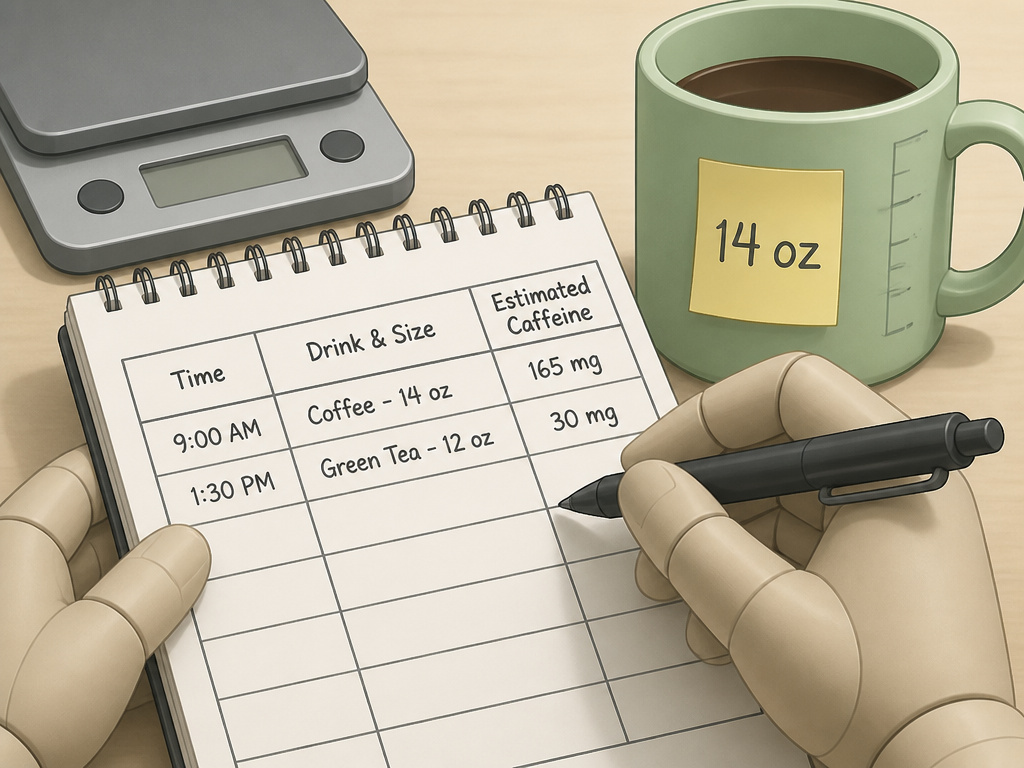
You don’t need a spreadsheet. You need one afternoon of measurement followed by a few days of casual logging.
First, measure your actual drink. Weigh your favorite mug full of water. If it’s 14 ounces, that’s 1.75 “cups” by the 8-oz standard. Write that number on a sticky note inside your kitchen cabinet.
Second, estimate caffeine based on your standard brew. Use the middle of the range: 100 mg per 8 oz for drip, 65 mg per espresso shot. If you always get a dark roast from the same local shop, you can probably find their approximate caffeine content online.
Now, log for three days. Don’t change your habits. Just write down:
– Time
– Drink (e.g., “home drip”)
– Size (e.g., “14 oz mug”)
– Estimated caffeine (e.g., “~175 mg”)
| Day | Time | Drink & Size | Estimated Caffeine | Running Total |
|---|---|---|---|---|
| Monday | 7:30 AM | Home Drip, 14 oz mug | 175 mg | 175 mg |
| Monday | 10:00 AM | Espresso shot, 1 oz | 63 mg | 238 mg |
| Monday | 2:00 PM | Iced Coffee, 16 oz | 200 mg | 438 mg |
That Monday log shows the problem. The iced coffee at 2 PM pushed the total over 400 mg. The fix wasn’t quitting coffee; it was switching that afternoon drink to a half-caff or a smaller size.
Most people are surprised by one entry. The giant afternoon cold brew. The third espresso shot they forget they drank. The log makes it visible.
TL;DR: Measure your mug once. Use a mid-range caffeine estimate for your usual brew. Log honestly for three days to find your one problem drink.
When Your Personal Limit Is Much Lower
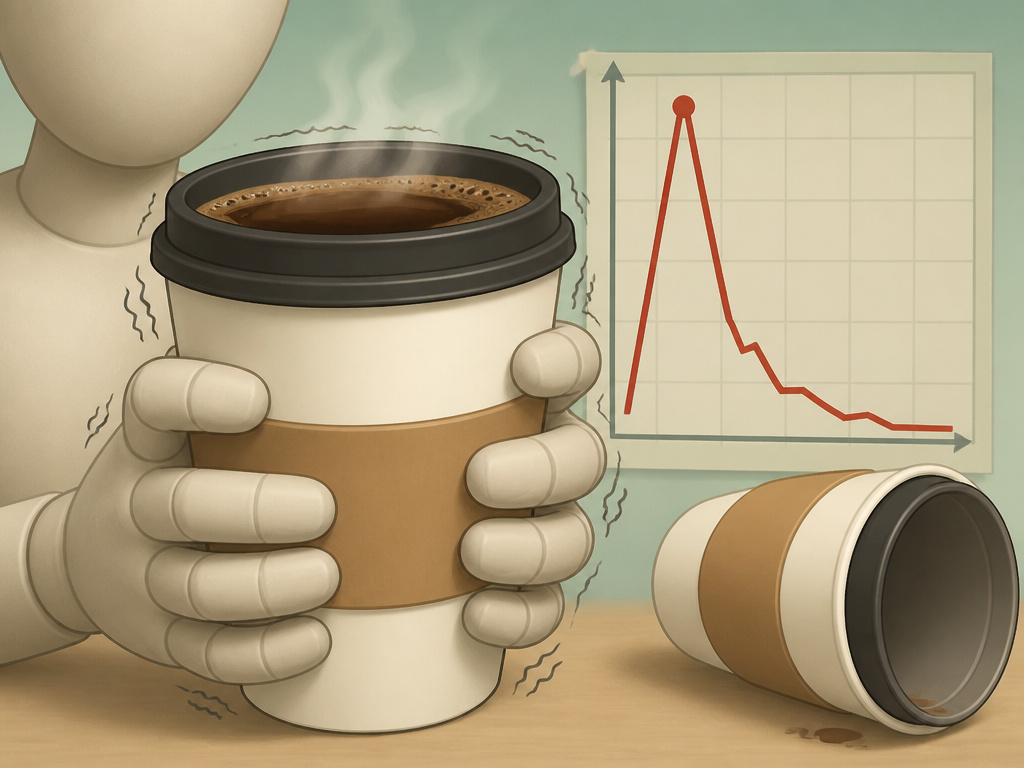
The 400 mg guideline assumes average metabolism. Genetics play a huge role. Some people have a version of the CYP1A2 gene that breaks down caffeine slowly. For them, a single cup can feel like three, and side effects hit harder and last longer.
You might be in this group if you regularly experience:
– Jitters or anxiety after one cup
– Heart palpitations
– Trouble falling asleep even if you had coffee before noon
– A noticeable crash a few hours later
For these individuals, the caffeine for children discussion is relevant, not because adults are children, but because the sensitivity principle is the same. A lower threshold is necessary.
Medications are the other wildcard. Caffeine can interfere with how your body processes certain drugs. It can increase the concentration of some antidepressants (like lithium or clozapine) and reduce the effectiveness of others. If you’re on prescription medication, a quick conversation with your pharmacist can clarify if caffeine is a concern.
Common mistake: Assuming “no heart problems” means the 400 mg limit is safe, untreated high blood pressure or an undiagnosed arrhythmia can be aggravated by caffeine well below that ceiling.
Listen to your body. If two cups leave you wired and uneasy, your limit might be one. The goal is to enjoy coffee, not endure it.
The Health Trade-Offs: Heart, Digestion, and Teeth
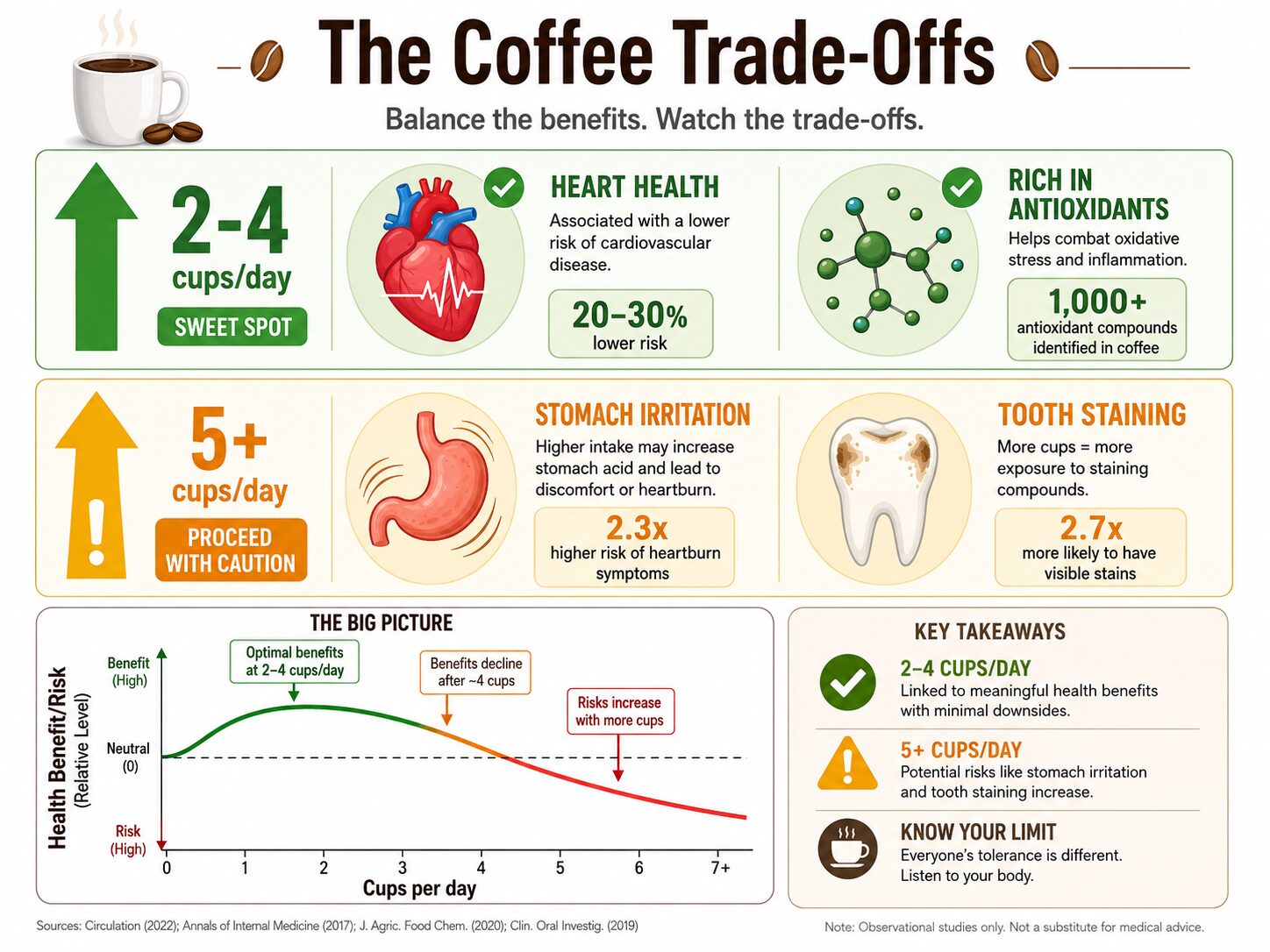
For most people, moderate coffee consumption is neutral or even beneficial. A 2022 meta-analysis in Circulation found that drinking up to four cups a day was associated with a lower risk of cardiovascular disease. The antioxidants and polyphenols in coffee seem to offer some protective effects.
But “moderate” is the key. The coffee and heart health research shows a J-shaped curve. Benefits appear at 2-4 cups, then decline as intake climbs higher. The heart attack risk and caffeine connection is generally weak for moderate drinkers but can become relevant at very high intakes or in individuals with specific vulnerabilities.
Other systems protest sooner. The coffee and digestion link is well-documented for many people. Coffee stimulates colonic activity, which can lead to a urgent bathroom visit. This effect is independent of caffeine to some degree, decaf can do it too, but caffeine amplifies it.
Then there’s your smile. Coffee stains enamel. The dental hygiene and coffee debate isn’t about whether it stains, but how to manage it. Brushing immediately after coffee can actually worsen stains by scrubbing acid into the enamel. Rinsing with water first is better.
If you’re looking for a lower-caffeine alternative with similar antioxidant benefits, consider the tea versus coffee benefits comparison. Green tea, for instance, provides a gentler, slower release of caffeine due to the presence of L-theanine.
TL;DR: Moderate coffee intake (2-4 cups) may support heart health. Higher intakes increase the risk of digestive issues, anxiety, and sleep disruption. Staining is a cosmetic trade-off.
What Counts as a “Cup” in the Real World?
We need to retire the word “cup.” It’s meaningless. When a health organization says “four cups a day,” they mean four 8-ounce servings of brewed coffee. Nobody drinks from an 8-ounce cup.
Here’s what a “cup” actually looks like in common scenarios:
– A “tall” at Starbucks: 12 ounces (1.5 standard cups)
– A “grande” at Starbucks: 16 ounces (2 standard cups)
– A standard ceramic kitchen mug: 10-12 ounces (1.25-1.5 standard cups)
– A gas station travel mug: often 16-20 ounces (2-2.5 standard cups)
– A single espresso shot: 1 ounce (but concentrated; counts as ~0.125 standard cups by volume, but packs the caffeine of about 2/3 of a standard cup)
If you drink two 16-ounce mugs of drip coffee in a day, you’ve had four “cups” by the nutritional standard. You’ve also consumed roughly 380-400 mg of caffeine, hitting the daily limit. A third mug pushes you over.
This is why tracking volume is the first step. Know your vessel.
Frequently Asked Questions
What happens if I drink more than 400 mg of caffeine a day?
You might not feel anything immediately. Over time, consistently exceeding 400 mg daily increases the likelihood of side effects: insomnia, jitters, anxiety, digestive upset, headaches, and elevated heart rate. It can also lead to dependence, making withdrawal headaches more severe if you skip a day.
Does decaf coffee count toward the daily limit?
Decaffeinated coffee contains a small amount of caffeine, usually 2-5 mg per 8-ounce cup. It’s negligible for the 400 mg limit. However, if you’re sensitive to caffeine or adhering to a strict sub-50 mg limit (like some medical advisories), those small amounts can add up over many cups.
How does caffeine in tea compare?
The caffeine release rates differ. An 8-ounce cup of black tea has about 40-70 mg of caffeine, while green tea has 20-45 mg. The caffeine in tea is released more slowly due to other compounds, leading to a gentler, longer-lasting energy lift without the sharp spike and crash of coffee.
Can I drink coffee while breastfeeding?
Yes, but in moderation. Caffeine passes into breast milk. The general advice for caffeine while breastfeeding is to limit intake to less than 200-300 mg per day and to time your coffee feedings to avoid peak caffeine concentration in your milk, usually about 1-2 hours after consumption.
Do additives like milk or sugar change the caffeine limit?
No. Milk, cream, sugar, or syrups add calories and affect the drink’s nutritional profile, but they don’t alter the caffeine content. A latte has the same caffeine as the espresso shot it’s built on. If you’re watching your caloric content of coffee additives, that’s a separate calculation from your caffeine tally.
Before You Go
The number isn’t four cups. It’s 400 milligrams. Your mug size, your bean choice, and your brewing method dictate how many servings that equals. For a healthy adult, staying under that limit is straightforward once you measure once and log for a few days.
If you’re pregnant, cut that number in half. If you have a heart condition, an anxiety disorder, or take certain medications, your personal limit might be lower, ask your doctor.
The goal is to enjoy your coffee, not manage a symptom. If you’re counting cups and feeling jittery, you’ve missed the point. Switch to a smaller mug, try a half-caff blend in the afternoon, or explore the gentler lift of tea. The best daily intake is the one that leaves you feeling good, not wired.
{
“@context”: “https://schema.org”,
“@type”: “HowTo”,
“name”: “How to Determine Your Safe Daily Coffee Intake”,
“totalTime”: “PT10M”,
“tool”: [
{
“@type”: “HowToTool”,
“name”: “Standard kitchen scale”
},
{
“@type”: “HowToTool”,
“name”: “Brewing equipment (drip, espresso, French press)”
},
{
“@type”: “HowToTool”,
“name”: “Notebook or note-taking app”
}
],
“step”: [
{
“@type”: “HowToStep”,
“name”: “Identify your standard serving size”,
“text”: “Measure your usual mug or cup in fluid ounces. A standard ‘cup’ in guidelines is 8 oz, but most mugs hold 10-12 oz.”
},
{
“@type”: “HowToStep”,
“name”: “Estimate caffeine per serving based on brew method”,
“text”: “Use the 80-200 mg per 8 oz range for drip coffee. Espresso shots are about 63 mg each. Cold brew concentrate can be double that.”
},
{
“@type”: “HowToStep”,
“name”: “Apply the 400 mg daily limit for healthy adults”,
“text”: “Add up the caffeine from all your coffee servings in a day. Keep the total under 400 mg, which is about 4-5 standard cups of drip coffee.”
},
{
“@type”: “HowToStep”,
“name”: “Adjust for personal health factors”,
“text”: “If you are pregnant, limit intake to under 200 mg daily. Consult a doctor if you have anxiety, heart conditions, or take certain medications.”
},
{
“@type”: “HowToStep”,
“name”: “Track your intake for a few days”,
“text”: “Write down each coffee you drink, its size, and brew type. This reveals your actual habit versus your perception.”
}
]
}
{
“@context”: “https://schema.org”,
“@type”: “FAQPage”,
“mainEntity”: [
{
“@type”: “Question”,
“name”: “What happens if I drink more than 400 mg of caffeine a day?”,
“acceptedAnswer”: {
“@type”: “Answer”,
“text”: “You might not feel anything immediately. Over time, consistently exceeding 400 mg daily increases the likelihood of side effects: insomnia, jitters, anxiety, digestive upset, headaches, and elevated heart rate. It can also lead to dependence, making withdrawal headaches more severe if you skip a day.”
}
},
{
“@type”: “Question”,
“name”: “Does decaf coffee count toward the daily limit?”,
“acceptedAnswer”: {
“@type”: “Answer”,
“text”: “Decaffeinated coffee contains a small amount of caffeine, usually 2-5 mg per 8-ounce cup. It’s negligible for the 400 mg limit. However, if you’re sensitive to caffeine or adhering to a strict sub-50 mg limit (like some medical advisories), those small amounts can add up over many cups.”
}
},
{
“@type”: “Question”,
“name”: “How does caffeine in tea compare?”,
“acceptedAnswer”: {
“@type”: “Answer”,
“text”: “The caffeine release rates differ. An 8-ounce cup of black tea has about 40-70 mg of caffeine, while green tea has 20-45 mg. The caffeine in tea is released more slowly due to other compounds, leading to a gentler, longer-lasting energy lift without the sharp spike and crash of coffee.”
}
},
{
“@type”: “Question”,
“name”: “Can I drink coffee while breastfeeding?”,
“acceptedAnswer”: {
“@type”: “Answer”,
“text”: “Yes, but in moderation. Caffeine passes into breast milk. The general advice for caffeine while breastfeeding is to limit intake to less than 200-300 mg per day and to time your coffee feedings to avoid peak caffeine concentration in your milk, usually about 1-2 hours after consumption.”
}
},
{
“@type”: “Question”,
“name”: “Do additives like milk or sugar change the caffeine limit?”,
“acceptedAnswer”: {
“@type”: “Answer”,
“text”: “No. Milk, cream, sugar, or syrups add calories and affect the drink’s nutritional profile, but they don’t alter the caffeine content. A latte has the same caffeine as the espresso shot it’s built on. If you’re watching your caloric content of coffee additives, that’s a separate calculation from your caffeine tally.”
}
}
]
}
