
Protein Shake with Coffee | The Science of Avoiding Grit and Gels
This post contains affiliate links. As an Amazon Associate, we earn from qualifying purchases.
To make a protein shake with coffee, use slightly cooled coffee (below 80°C/176°F) and blend whey protein isolate with a liquid base like milk or water first to form a slurry before adding the coffee. This prevents the protein from denaturing on contact with heat, which causes the gritty, clumped texture that ruins most homemade attempts.
The universal mistake is pouring hot coffee directly onto dry protein powder. The heat shock denatures the proteins instantly. They scramble into insoluble clumps before your blender can disperse them. You get a chunky, gritty drink.
This guide walks through why that happens, the protein science behind it, and the exact steps to a smooth shake every time. We will also look at how the commercial ready-to-drink industry solves this problem with chemistry, and what you can learn from them.
Key Takeaways
- Whey protein isolate mixes cleanest with coffee; plant-based and casein powders thicken or grit up much faster, especially with heat.
- Temperature is the trigger. Coffee above 80°C (176°F) will cause most proteins to coagulate on contact. Let it cool for 3-4 minutes.
- Always create a slurry. Mix protein powder with a cool liquid (milk, water, creamer) first to wet every particle before introducing coffee.
- Sedimentation is a chemical reaction. In ready-to-drink products, chlorogenic acids in coffee bind with proteins like β-casein to form insoluble sediment over time.
- Industrial stabilizers like microcrystalline cellulose (MCC) are why store-bought protein coffees stay smooth for months; at home, drinking it fresh is your stabilizer.
Why Protein Coffee Grits Up (It’s Not Your Blender)
The problem is protein denaturation. Think of a protein molecule as a tiny, precisely folded piece of origami. Heat, acid, or physical agitation can unfold it. Once unfolded, the sticky, hydrophobic parts that were tucked inside get exposed. These parts immediately grab onto other unfolded proteins, forming a tangled, insoluble network. That network is what you feel as grit or see as clumps.
Coffee is a triple threat: it’s hot, acidic (pH around 5), and contains polyphenols like chlorogenic acids that actively bind to proteins. A ScienceDirect coffee sedimentation study details how chlorogenic acids bind with milk proteins like β-casein to form complexes that fall out of solution. This isn’t just a visual defect; it removes both the protein and the antioxidant compounds from your drink.
Common mistake: Adding protein powder to boiling hot coffee — the proteins denature in under a second, forming micro-clumps that no amount of blending can fully break apart. The drink will have a persistent sandy texture.
Different proteins denature at different rates. Whey protein isolate is processed to remove most fats and lactose, making it more soluble and heat-resistant. Casein, the other main milk protein, forms micelles that gel readily with heat. Plant proteins from peas or brown rice often contain starches and fibers that absorb liquid and swell, creating a thicker, grittier mouthfeel in hot liquids.
TL;DR: Heat + acid + coffee polyphenols = unfolded, sticky proteins that clump. Use cooler coffee and a fast-dissolving protein like whey isolate.
The Protein Powder Menu: Which One Won’t Ruin Your Coffee?
Not all proteins behave the same in your mug. Your choice dictates your method.
| Protein Type | Best Use Case | Risk in Hot Coffee | Mixing Tip |
|---|---|---|---|
| Whey Isolate | Default choice | Low clumping risk if coffee is <80°C | Pre-mix with cold liquid. Dissolves in seconds. |
| Whey Concentrate | Budget option | Can foam excessively; slight grittiness if poorly mixed | Use a blender bottle; let foam settle. |
| Casein | Avoid for hot drinks | Thickens and gels into pudding-like consistency | Only use in iced coffee or cold brew. |
| Plant-Based (Pea, Rice) | Vegan requirement | High grit risk; starches swell with heat | Blend with ice and cold coffee only. |
| Collagen Peptides | For joints/skin, not muscle | Dissolves easily, no clumping. Incomplete protein. | Stir directly into hot coffee. No pre-mix needed. |
Whey isolate wins for a reason. It’s the purified version, often 90% protein or higher. The ATHLEAN-RX X-PRESSO product uses this principle, combining 30g of protein with 150mg of caffeine in a formulation designed to mix. Plant-based blends are the hardest. They don’t dissolve as much as they suspend, and heat accelerates their tendency to settle into a sludge at the bottom of your shaker.
If your goal is simple flavor and a protein boost without the fuss, a scoop of collagen peptides stirs seamlessly into any temperature coffee. Just know it lacks the complete amino acid profile for optimal muscle protein synthesis. It’s a supplement, not a meal replacement.
TL;DR: For a hot shake, whey isolate. For cold, almost anything works. For vegan hot coffee, expect to blend aggressively and drink immediately.
The Step-by-Step Method for a Silky Shake
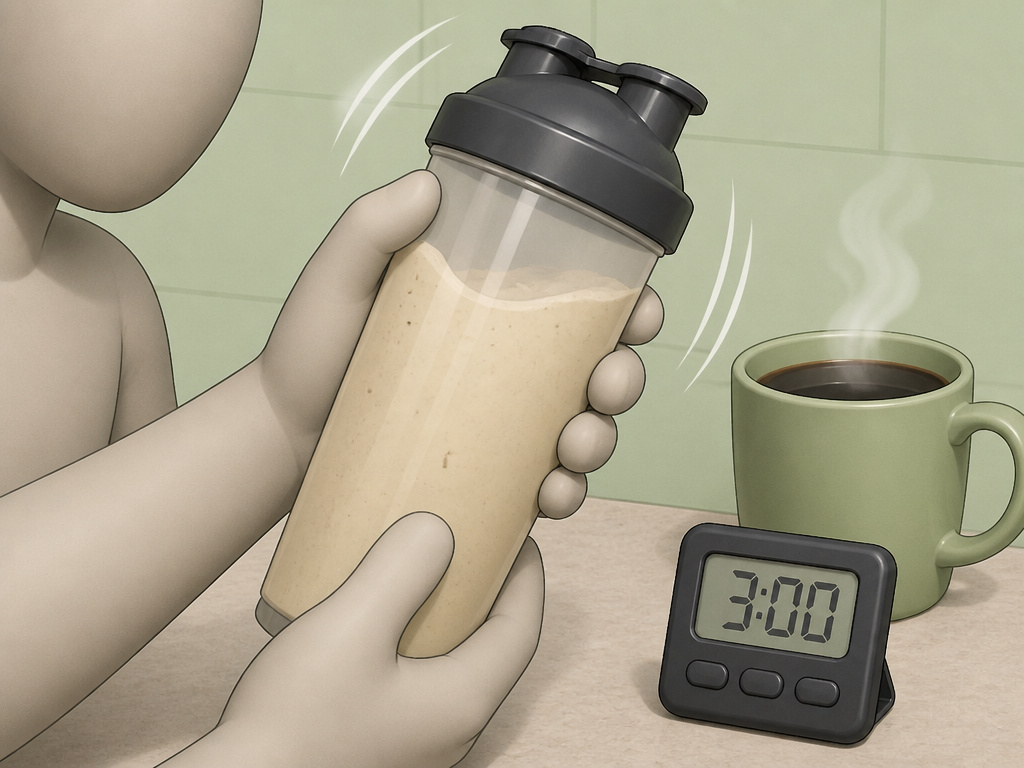
This process is about controlling variables. You are managing temperature and ensuring full hydration of the powder before it meets the main solvent.
Before you start: Make sure your blender bottle seal is intact. A leaking valve mid-shake makes a sticky, caffeinated mess. Have a towel handy.
- Brew and Cool. Brew your coffee as normal. Immediately pour it into your mug or blender bottle. Let it sit untouched for 3-4 minutes. This brings it down from near-boiling to a safe mixing temperature below 80°C. You can speed this up with an ice cube or two.
- Build Your Slurry. In your blender bottle, add one scoop of protein powder. Next, add your cold liquid base—two tablespoons of half-and-half, a splash of almond milk coffee, or even plain water. The goal is to use just enough cold liquid to saturate every granule of powder.
- Shake the Slurry. Seal the bottle and shake vigorously for 15 seconds. You should hear no rattling of dry powder. The mixture will be a thick, smooth paste. This step is non-negotiable. Skipping it means dry powder pockets will hit the coffee and clump instantly.
- Add the Coffee. Pour the slightly cooled coffee into the blender bottle with the slurry.
- Final Blend. Seal and shake for a full 30-45 seconds. For ultimate smoothness, use a handheld immersion blender for 10 seconds. The agitation incorporates air and ensures homogeneity.
- Sweeten and Adjust. Taste. If you need sweetness, stir in a bit of brown sugar in coffee or a sugar-free syrup. For a richer texture, a teaspoon of MCT oil coffee or coconut oil coffee can be blended in at this stage.
- Serve Immediately. Pour into a glass. Drink within 10 minutes. The longer it sits, the more time sedimentation has to occur, especially with plant-based proteins.
I tried to shortcut this for a week, adding powder directly to the bottle with coffee and hoping the extra shaking would fix it. It never did. A faint grit always remained, coating my tongue. The three-minute cool-down and pre-mix ritual takes less time than cleaning a clump-clogged blender ball.
TL;DR: Cool coffee. Make a cold slurry first. Shake twice as long as you think you need to.
The Industrial Fix: Stabilizers and Emulsifiers
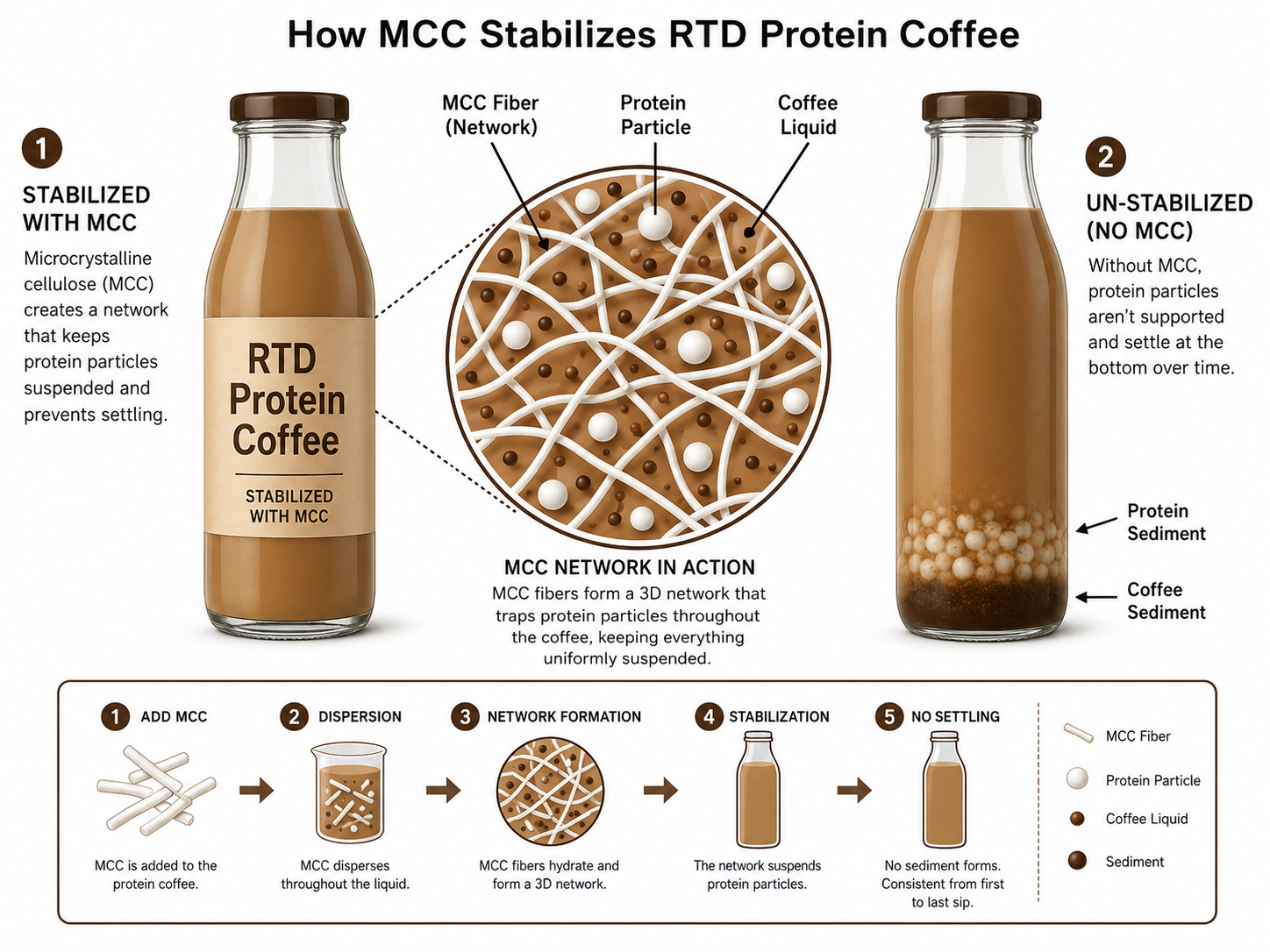
Your homemade shake is a temporary emulsion. Commercial ready-to-drink (RTD) protein coffees need to stay smooth on a shelf for months. They use food science you can’t replicate at home, but understanding it explains why your shake behaves as it does.
The core challenge is that protein beverages are complex colloidal systems. They are prone to phase separation—creaming, flocculation, and sedimentation. A 2024 study in Foods journal optimized stabilizers for protein drinks, finding microcrystalline cellulose (MCC) at 0.35% concentration provided the best physical stability during accelerated storage. MCC acts as a thickening and suspending agent, creating a microscopic network that traps protein particles and prevents them from settling.
Common mistake: Thinking store-bought stability is just better blending. It’s chemistry. An RTD High Protein Shelf Stable formula includes 4.0 g/100g of Milk Protein Concentrate and 0.05 g/100g of Dipotassium Phosphate, a buffering agent that controls pH and prevents protein precipitation.
Acidity is another lever. According to a U.S. whey proteins in RTD beverages guide, stabilizers like pectin are used for whey proteins in the pH range of 3.5 to 4.6 to protect them during thermal processing. Below pH 3.5, whey proteins are stable enough that extra stabilizers often aren’t needed. Your black coffee, at pH ~5, sits in a tricky zone where proteins are less stable, hence the need for careful mixing.
This is why your perfect shake will still eventually separate if left in the fridge overnight. You lack the stabilizer matrix. The takeaway isn’t to source MCC, but to manage expectations: blend fresh, drink fresh.
TL;DR: Factories use stabilizers like MCC and pH buffers to achieve shelf stability. Your kitchen doesn’t have these tools, so drink your shake immediately.
Hot vs. Iced: Two Different Recipes
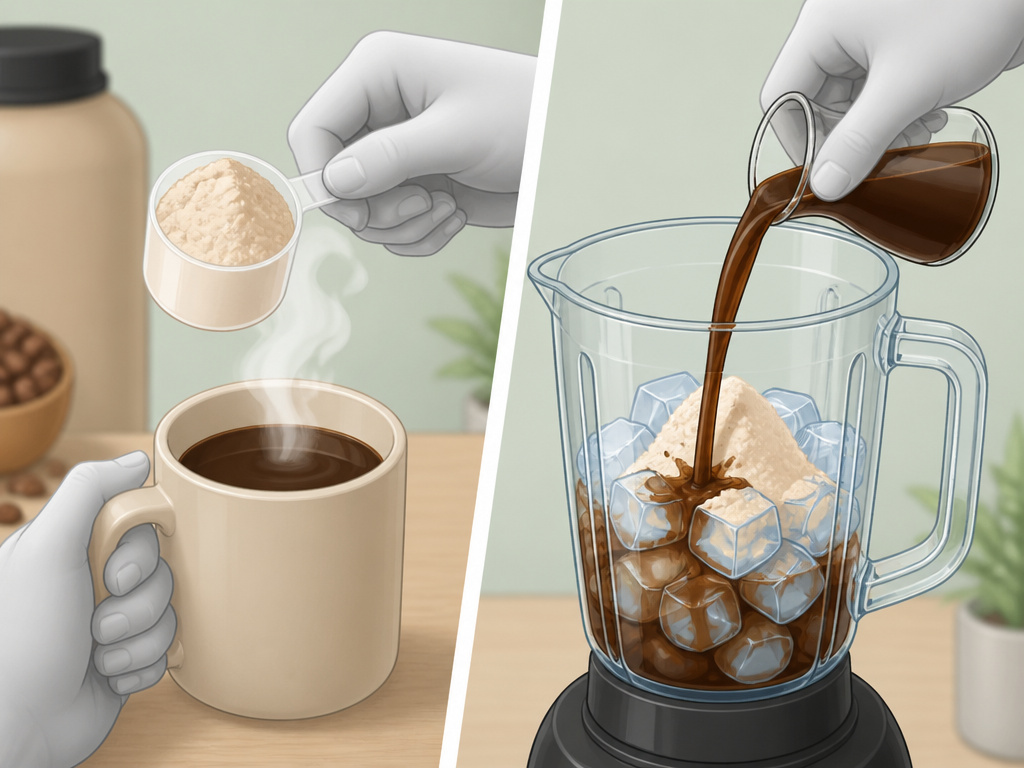
The thermal rules change completely with temperature. Iced coffee is the forgiving path.
For a Hot Protein Coffee:
Use the slurry method above. Consider adding a pinch of salt in coffee to the dry powder before making the slurry; it can help mask any slight bitterness from the protein and enhance overall flavor. A dash of cinnamon in coffee also pairs well with vanilla or chocolate protein. Be mindful of the total calories in coffee if you’re using whole milk and sweeteners.
For an Iced Protein Coffee:
This is simpler. Brew strong coffee and chill it completely, or use cold brew concentrate. Add the cold coffee, protein powder, milk, and a handful of ice directly to a powerful blender. Blend on high for 20-30 seconds. The ice provides agitation and dilution, resulting in a frothy, smooth, and cold shake. Plant-based proteins perform much better here.
The ATHLEAN-X Cold Brew Vanilla Protein Shake recipe follows this logic: half a scoop of vanilla protein with cold brew concentrate over ice. No heat, no clumps.
Troubleshooting Your Protein Coffee
Even with the right steps, things can go wrong. Here’s the fix.
- It’s still gritty. Your coffee was too hot. Next time, use a thermometer or wait 5 minutes. Switch to whey isolate.
- It’s foamy like a latte. You used a concentrate or over-shook the final blend. Let it sit for 60 seconds; the foam will rise and can be spooned off.
- It separated in the fridge. This is normal, especially for casein or plant proteins. Shake or stir vigorously to recombine. Texture may be slightly grainy.
- It tastes chalky. You might be sensitive to the sweeteners (sucralose, stevia) in flavored powders. Try an unflavored, unsweetened whey isolate and add your own sweetener.
- It upsets your stomach. The combination of caffeine in coffee and a large protein dose can be intense. Have it with a small solid food, or split the scoop between two drinks. Be aware that for some, coffee alone can lead to coffee and digestion issues.
If you’re comparing the stimulant effect to other sources, note that the espresso caffeine content is higher per ounce, but a full cup of coffee provides a similar total. The tea vs coffee caffeine dynamic is different, as tea’s L-theanine can modulate the caffeine jitteriness that protein coffee might exacerbate.
Frequently Asked Questions
Can you put protein powder in hot coffee?
Yes, but the coffee must be slightly cooled (below 80°C/176°F). You must also pre-mix the protein powder with a cold liquid to form a slurry before adding the hot coffee. Pouring powder directly into steaming coffee guarantees clumps.
Does protein powder dissolve in iced coffee?
It blends much more easily. The cold temperature doesn’t denature the proteins as aggressively. Combine all ingredients with ice in a blender for the smoothest result. A shaker bottle works but may leave minor grit.
What is the best protein powder for coffee?
Whey protein isolate is the best overall for hot coffee due to its high solubility and low fat/carb content. For iced coffee, whey concentrate, casein, and many plant-based blends work adequately. Collagen peptides dissolve effortlessly in any temperature but are not a complete protein.
Why does my protein coffee get thick and gel-like?
You are likely using a casein-based powder or a blend high in casein. Casein proteins are designed to gel and digest slowly. This property is amplified by heat. Switch to a whey isolate or reserve that powder for cold applications.
Is protein coffee good for weight loss?
It can be a tool within a calorie-controlled diet. It provides satiating protein and caffeine, which may suppress appetite and boost metabolism slightly. However, the calories add up quickly if you use whole milk, sweeteners, and adding fats to coffee like MCT oil. Track it as a meal or large snack.
The Bottom Line
A perfect protein shake with coffee is within reach. It demands respect for the ingredients. Treat hot coffee as the aggressive element it is—cool it down. Treat protein powder as a thirsty powder that needs a gentle introduction—make a slurry. The industrial magic of stabilizers is impressive, but unnecessary for the single serving you’re about to drink.
Start with a quality whey isolate and slightly cooled coffee. Master the two-stage shake. From there, experiment with coffee flavor enhancement and different milks. The goal is a smooth, satisfying drink that fuels your morning, not a science experiment with chunks.
{
“@context”: “https://schema.org”,
“@type”: “HowTo”,
“name”: “How to Make a Protein Shake with Coffee That Isn’t Gritty”,
“totalTime”: “PT5M”,
“tool”: [
{
“@type”: “HowToTool”,
“name”: “Blender bottle or immersion blender”
},
{
“@type”: “HowToTool”,
“name”: “Kitchen scale (optional)”
},
{
“@type”: “HowToTool”,
“name”: “Measuring scoop”
}
],
“supply”: [
{
“@type”: “HowToSupply”,
“name”: “8-12 oz brewed coffee, cooled slightly”
},
{
“@type”: “HowToSupply”,
“name”: “1 scoop whey protein isolate (vanilla or unflavored)”
},
{
“@type”: “HowToSupply”,
“name”: “2 tbsp half-and-half or almond milk”
},
{
“@type”: “HowToSupply”,
“name”: “Ice (optional)”
}
],
“step”: [
{
“@type”: “HowToStep”,
“name”: “Cool the coffee”,
“text”: “Let hot coffee sit for 3-4 minutes after brewing. Target temperature is below 80°C (176°F) to prevent instant protein denaturation and clumping.”
},
{
“@type”: “HowToStep”,
“name”: “Pre-mix the powder”,
“text”: “Add the protein powder to your blender bottle first. Pour in the half-and-half or a splash of cool water to create a slurry. Shake vigorously until no dry powder remains.”
},
{
“@type”: “HowToStep”,
“name”: “Combine and blend”,
“text”: “Add the slightly cooled coffee to the blender bottle. Seal and shake for 30-45 seconds, or use an immersion blender for 10 seconds. The mixture should be uniformly frothy with no specks.”
},
{
“@type”: “HowToStep”,
“name”: “Adjust and serve”,
“text”: “Taste for sweetness. Add ice if desired. Drink immediately for the best texture, as sedimentation can begin within 10-15 minutes for some plant-based proteins.”
}
]
}
{
“@context”: “https://schema.org”,
“@type”: “FAQPage”,
“mainEntity”: [
{
“@type”: “Question”,
“name”: “Can you put protein powder in hot coffee?”,
“acceptedAnswer”: {
“@type”: “Answer”,
“text”: “Yes, but the coffee must be slightly cooled (below 80°C/176°F). You must also pre-mix the protein powder with a cold liquid to form a slurry before adding the hot coffee. Pouring powder directly into steaming coffee guarantees clumps.”
}
},
{
“@type”: “Question”,
“name”: “Does protein powder dissolve in iced coffee?”,
“acceptedAnswer”: {
“@type”: “Answer”,
“text”: “It blends much more easily. The cold temperature doesn’t denature the proteins as aggressively. Combine all ingredients with ice in a blender for the smoothest result. A shaker bottle works but may leave minor grit.”
}
},
{
“@type”: “Question”,
“name”: “What is the best protein powder for coffee?”,
“acceptedAnswer”: {
“@type”: “Answer”,
“text”: “Whey protein isolate is the best overall for hot coffee due to its high solubility and low fat/carb content. For iced coffee, whey concentrate, casein, and many plant-based blends work adequately. Collagen peptides dissolve effortlessly in any temperature but are not a complete protein.”
}
},
{
“@type”: “Question”,
“name”: “Why does my protein coffee get thick and gel-like?”,
“acceptedAnswer”: {
“@type”: “Answer”,
“text”: “You are likely using a casein-based powder or a blend high in casein. Casein proteins are designed to gel and digest slowly. This property is amplified by heat. Switch to a whey isolate or reserve that powder for cold applications.”
}
},
{
“@type”: “Question”,
“name”: “Is protein coffee good for weight loss?”,
“acceptedAnswer”: {
“@type”: “Answer”,
“text”: “It can be a tool within a calorie-controlled diet. It provides satiating protein and caffeine, which may suppress appetite and boost metabolism slightly. However, the calories add up quickly if you use whole milk, sweeteners, and adding fats to coffee like MCT oil. Track it as a meal or large snack.”
}
}
]
}
