
Matcha vs Coffee: Which Drink Offers Better Energy and Focus?
Matcha green tea vs coffee comes down to a biochemical trade-off: coffee delivers isolated caffeine for a sharp, 90-minute spike, while a 2g serving of ceremonial-grade matcha pairs roughly 68mg of caffeine with 90mg of L-theanine for a sustained, calm focus that lasts four to six hours.
Most people pick their morning drink by habit, not chemistry. They reach for coffee because it’s there, because the office pot is free, because it’s the default. The problem isn’t the drink. It’s the mismatch between what your body actually needs to function and the stimulant you’re pouring into it. You get the jolt, then the crash, then the second cup, and the cycle reinforces itself until you call it a ritual.
This guide breaks down the matcha versus coffee debate with specific numbers, gear implications, and the real-world timeline of switching. We’ll cover the caffeine mechanics, the health compounds you’re actually consuming, the equipment each drink demands, and what happens to your energy after two weeks off the coffee rollercoaster.
Key Takeaways
- Ceremonial-grade matcha provides a 1:1.3 caffeine-to-L-theanine ratio (68mg to 90mg per 2g serving), which promotes alpha brain waves for calm alertness, unlike coffee’s isolated caffeine.
- Coffee’s caffeine hits your bloodstream in 15–45 minutes, causing a sharp energy spike and crash; matcha’s caffeine absorbs slower due to fiber, offering a steady 4–6 hour release.
- Matcha contains 60–70 mg/g of EGCG, a potent catechin, while coffee’s primary antioxidants are chlorogenic acids, both are beneficial, but their mechanisms and studied health outcomes differ.
- The preparation gap is vast: matcha needs a bowl and whisk; proper coffee requires a grinder and machine like a Breville Barista Express, representing a significant cost and counter space decision.
- Low-quality culinary matcha, often from China, has tested higher for lead contamination; Japanese ceremonial-grade from regions like Uji is your safety benchmark.
The Caffeine and L-Theanine Difference: Why Matcha Feels Different
The experience gap starts at the molecular level. Coffee gives you caffeine, period. Matcha gives you caffeine plus L-theanine, an amino acid that changes how your brain responds to the stimulant.
A 2g serving of ceremonial-grade matcha contains approximately 68 milligrams of caffeine and 90 milligrams of L-theanine. This 1:1.3 ratio modulates the caffeine’s effect, increasing alpha brain wave activity associated with wakeful relaxation and reducing the cortisol spike typical of coffee consumption.
L-theanine is the reason you feel focused but not jittery. It crosses the blood-brain barrier and promotes the production of GABA, a neurotransmitter that calms nervous system activity. When paired with caffeine, the combination improves sustained attention and reaction time more than caffeine alone, according to a 2024 systematic review. Coffee lacks this partner compound. Your adrenal glands get the full, unmoderated signal to release stress hormones.
The physical timeline is predictable. Drink a black coffee on an empty stomach. You’ll feel the buzz in 15–20 minutes. It peaks around the 45-minute mark. By hour two, you’re digging for a snack or another cup. That’s the spike-crash cycle.
Matcha’s caffeine releases slower. You consume the whole ground leaf, so the caffeine is bound within plant fiber. Digestion takes longer. The rise is gradual. The peak is lower but wider. You get a stable plateau that lasts. The crash, if you notice one, is a gentle slope, not a cliff.
TL;DR: Matcha’s L-theanine changes caffeine from a siren into a metronome, steady, rhythmic, and sustainable for hours.
Health Compounds: Antioxidants, EGCG, and Chlorogenic Acids
Both drinks are packed with beneficial plant compounds, but they’re not the same ones. Calling them both “antioxidants” is like calling a wrench and a screwdriver both “tools.” They work on different problems.
Matcha’s star is EGCG (epigallocatechin gallate). Ceremonial-grade powder contains 60 to 70 milligrams of EGCG per gram. A 2g serving delivers 120–140mg. This catechin is studied for its role in cellular health and metabolism. The chlorophyll that gives matcha its vibrant green color also has a gentle detoxifying effect, helping bind to heavy metals for elimination.
Coffee’s primary antioxidants are chlorogenic acids. These are linked to improved cardiovascular and metabolic health in long-term studies. A 2024 meta-analysis found that 400–800 mg of catechins daily (a category that includes EGCG) over 8+ weeks led to modest improvements in fasting glucose and LDL cholesterol. You can approach that catechin dose with 3–4g of matcha daily.
Common mistake: Assuming “antioxidant” means equal benefit. EGCG in matcha and chlorogenic acids in coffee have different research-backed effects, from neuroprotection to heart health, and you might want one profile over the other.
The vitamin profile isn’t close. Matcha provides measurable amounts of vitamins A and C from the fresh leaf. Coffee offers trace amounts at best after the high-heat roasting process destroys most heat-sensitive vitamins.
| Compound | Matcha (2g serving) | Black Coffee (8oz brew) | Primary Studied Benefit |
|---|---|---|---|
| Caffeine | ~68 mg | ~95 mg | Alertness, cognitive function |
| L-Theanine | ~90 mg | 0 mg | Stress reduction, alpha waves |
| EGCG | ~120 mg | 0 mg | Cellular antioxidant, metabolism |
| Chlorogenic Acids | Low | High (~200mg) | Heart health, blood sugar regulation |
| Chlorophyll | Present | 0 mg | Gentle detoxification |
Which matrix matters more depends on your health priorities. For calm focus and a high dose of a specific catechin, matcha leads. For cardiovascular research anchored in decades of large population studies, coffee has a deeper dossier. The health benefits of tea and coffee are both compelling, but they stem from different chemical families.
Brewing and Preparation: A Gear Comparison
Your choice dictates your kitchen counter. Matcha requires minimal hardware. Coffee, done right, demands an arsenal.
A proper matcha setup is three items: a fine powder (ceremonial grade), a bamboo whisk (chasen), and a small bowl (chawan). Heat water to 175°F, never boiling, which scalds the leaf and makes it bitter. Sift 2g of powder into the bowl, add about 2oz of water, and whisk in a quick “W” motion until frothy. Top with more water if you want it as a tea. Total time: two minutes. Total cost for a starter set: under fifty dollars.
Coffee is a different universe. To get the studied health benefits and flavor, you start with whole beans. That means a burr grinder. A blade grinder creates uneven particles that extract poorly, making your cup simultaneously bitter and sour. Then you need a brewing device. An automatic drip machine like a Technivorm Moccamaster is one path. It’s built to hold a precise 200°F brew temperature for the entire 4–6 minute cycle, which is why it carries ECBC certification.
The espresso route is more complex. A machine like the Breville Barista Express BES870 integrates a conical burr grinder and a 15-bar pump. You must weigh your dose (18g is standard), grind, distribute the grounds in the portafilter, tamp with even pressure, and pull the shot for 25–30 seconds. It’s a five-minute ritual with a steep learning curve. The machine itself costs several hundred dollars.
| Aspect | Matcha | Proper Coffee |
|---|---|---|
| Core Tool | Bamboo whisk, bowl | Burr grinder, brewing machine |
| Water Temp | 175°F (80°C) | 200°F (93°C) for drip; 200°F for espresso |
| Prep Time | 2 minutes | 5+ minutes (including grinding) |
| Skill Floor | Low (whisking technique) | High (grind size, distribution, tamping) |
| Counter Space | Minimal | Significant |
| Cleaning | Rinse bowl and whisk | Grind chamber, portafilter, drip tray |
The gear commitment is a real filter. Matcha is accessible. Coffee, as a craft, is a hobby. This difference alone decides for many people. They want the benefit without becoming a home barista. The brewing methods for caffeine extraction also play a role here, steeping whole leaves versus forcing water through a packed puck of grounds changes everything.
Acidity, Stomach Feel, and Long-Term Tolerance

How a drink makes your stomach feel is a deal-breaker. Coffee is acidic, with a pH around 5. Matcha is alkaline, with a pH around 9. This isn’t just a number on a strip.
Coffee’s acidity can trigger acid reflux or gastritis, especially on an empty stomach. The oils and compounds irritate some people’s digestive lining. You’ll know within an hour, a sour, unsettled feeling. Over years, this chronic irritation matters.
Matcha’s alkalinity is gentler. The L-theanine may also have a mild anti-inflammatory effect in the gut. Most people report no stomach upset, even when drinking it first thing in the morning. The difference in perceived acidity in drinks is stark, and for those with sensitive digestion, it’s the primary reason to switch.
Then there is caffeine tolerance and addiction. Coffee’s rapid, high-dose caffeine spike reliably leads to dependency. Your brain’s adenosine receptors downregulate. You need more to get the same effect. Skip a day, and the headache and fatigue are real withdrawal symptoms.
Matcha’s slower, moderated release seems to bypass this cycle for many. The L-theanine likely smooths out the neurochemical edges. In the YouTube transcript, the creator states she was a coffee addict who stopped experiencing cravings after switching to matcha. The stable energy doesn’t create the same boom-bust pattern that reinforces dependency.
I used to schedule my day around coffee breaks. The 3pm slump demanded a second pot. Switching to matcha was a two-week experiment that stuck. The first three days were a fog. By day seven, the 3pm craving was gone. Now, if I skip a day, I’m tired, but there’s no headache, no desperate search for a fix. That’s the L-theanine difference.
This isn’t universal. Some people have a high caffeine sensitivity regardless of source. But the anecdotal evidence from long-term users is consistent: matcha dependency feels psychological, not physical. Coffee dependency is both.
Safety, Quality, and What to Actually Buy
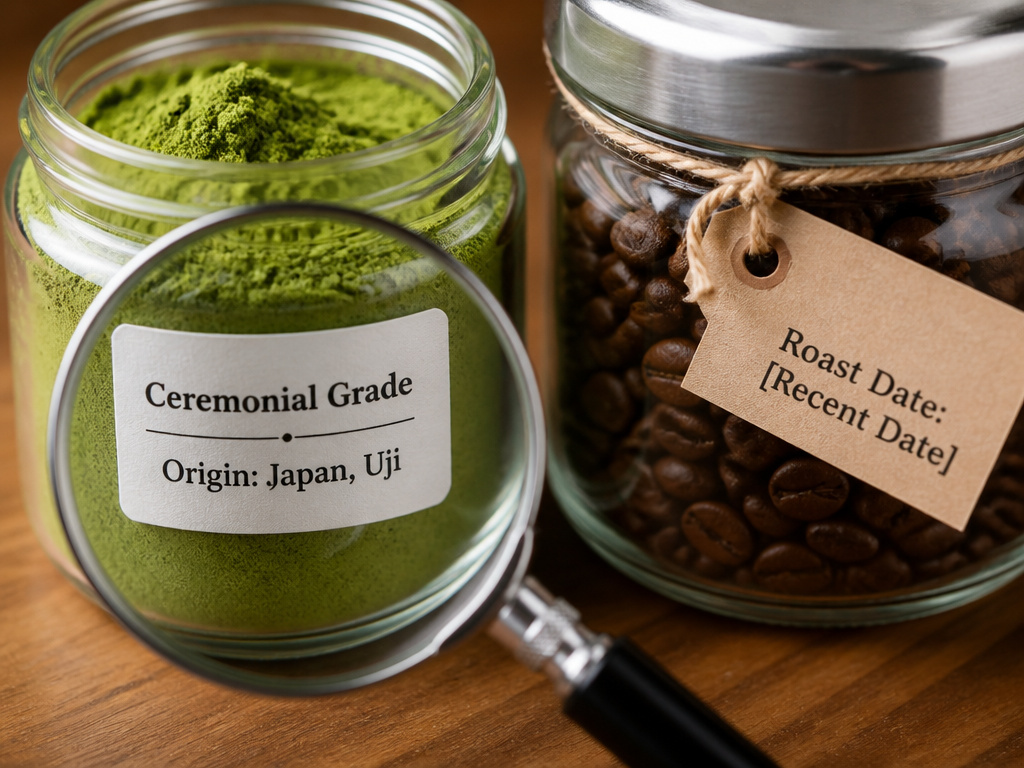
Not all matcha is equal. The “green tea powder” sold in some supermarkets or blended into sweet lattes is often culinary-grade, sometimes from China. This matters for two reasons: flavor and safety.
Ceremonial-grade matcha, from Japanese regions like Uji, Nishio, or Yame, is made from the youngest, shade-grown tea leaves. It’s stone-ground, producing a fine, vibrant powder that tastes vegetal, sweet, and umami. Culinary-grade uses older leaves, often steam-rolled before grinding. It’s paler, more bitter, and designed for mixing into smoothies or baked goods where sugar masks its flavor.
The safety concern is lead. Tea plants absorb lead from the soil. A 2023 review noted that Chinese-origin culinary-grade matcha has tested higher for lead content than Japanese ceremonial grade. Japan has stricter agricultural controls. When you buy ceremonial grade from a reputable Japanese source, you’re buying a product with a known safety profile.
Look for two things on the label: “Ceremonial Grade” and “Origin: Japan” (specifying a region is even better). Avoid anything that just says “green tea powder” or lists multiple countries of origin. The price tells a story. Authentic ceremonial matcha costs about a dollar per gram. If you’re paying ten cents a gram, you’re not getting the real thing.
For coffee, the quality markers are different. Look for roast date, not best-by date. Coffee is best within 3–4 weeks of roasting. Buy whole beans and grind them fresh. The optimal black tea brewing principles emphasize fresh leaves; the same is true for coffee beans. Stale beans taste flat and woody, regardless of your machine.
Your choice here is a choice about transparency. The matcha world has a clarity problem with undisclosed origins and grades. The coffee world has a freshness problem. You must become a slightly detective-like consumer for both.
The Cost Analysis: Daily Habit vs. Upfront Investment
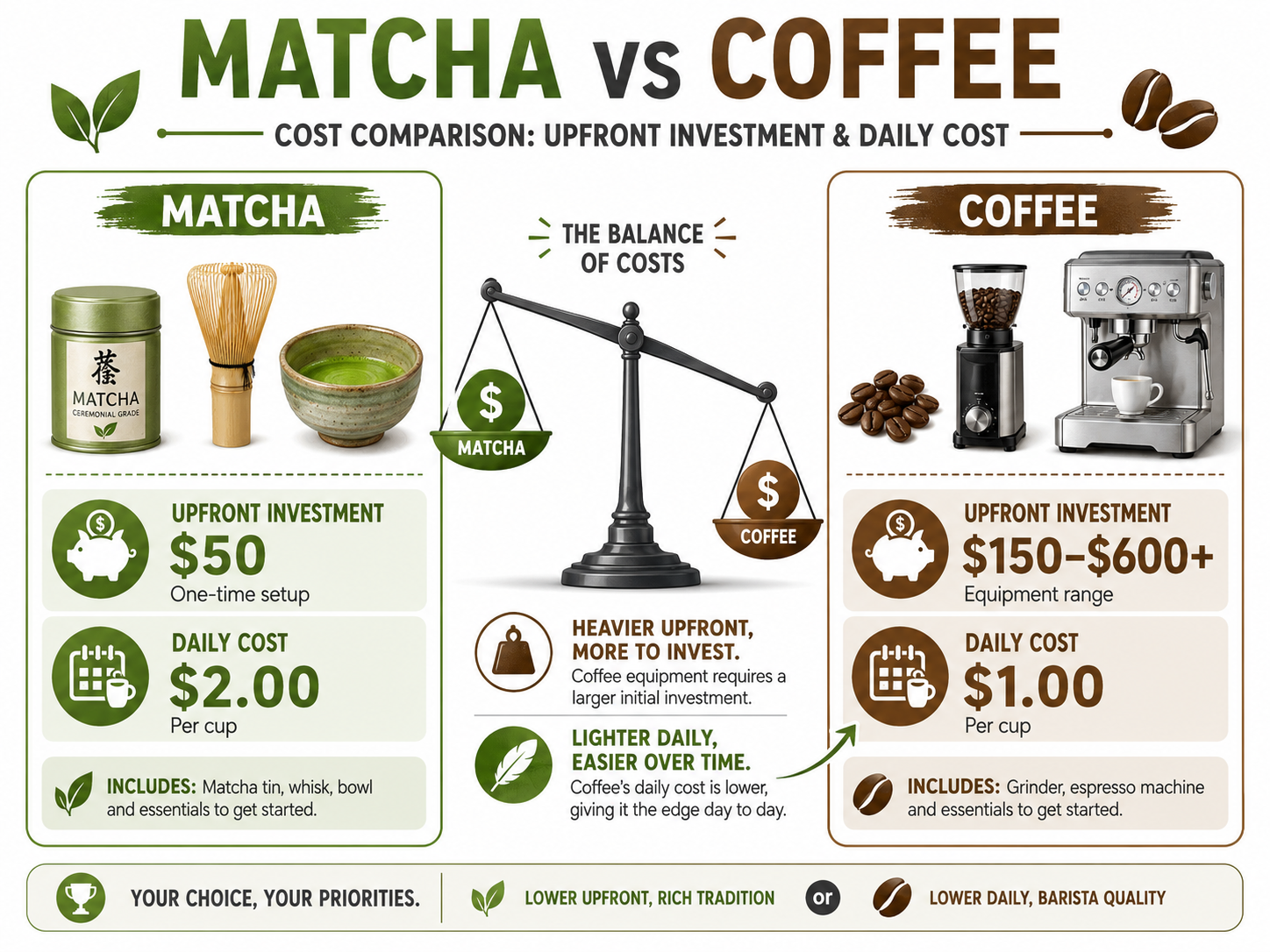
Let’s run the numbers. A 30g tin of good ceremonial matcha runs about thirty dollars. At 2g per serving, that’s fifteen servings, or two dollars a day. A 12oz bag of specialty coffee beans costs around eighteen dollars. At 18g per double shot, you get about 18 servings, or one dollar a day for the beans.
The bean cost is lower. The equipment cost is not.
The matcha setup, bowl, whisk, sifter, tin, is a one-time fifty-dollar outlay. The coffee setup, if you go beyond a basic drip machine, is hundreds. A Baratza Encore burr grinder is a hundred and fifty dollars. A Breville Barista Express is six hundred. Even a Technivorm Moccamaster is over three hundred. This upfront investment dwarfs the daily bean cost.
But you must factor in the machine’s purpose. A Philips EP3347/90 fully automatic machine makes lattes and cappuccinos with the press of a button. It’s a convenience appliance that replicates a cafe. The matcha ritual has no automation. You are the machine.
The financial decision isn’t just about the drink. It’s about what else you’re buying. With coffee, you’re buying a countertop appliance, a hobby, and a maintenance routine (descaling, cleaning grinder burrs). With matcha, you’re buying a quiet two-minute manual practice. Some people find the coffee gear worth every penny and inch of space. Others want the simplest path to caffeine. The caffeine content in popular drinks like energy drinks often sidesteps this preparation debate entirely, offering a canned solution.
Frequently Asked Questions
Does matcha have more caffeine than coffee?
No, by weight, coffee beans have more caffeine. But by serving, it’s close. A 2g serving of matcha has about 68mg of caffeine. A double shot of espresso (using 18g of coffee) has about 95mg. The difference is in the release and the companion compounds, not the total milligrams.
Can matcha help you lose weight compared to coffee?
Matcha’s EGCG can slightly increase thermogenesis (calorie burning), and its stable energy may help avoid snack cravings triggered by a coffee crash. However, neither drink is a magic weight-loss solution. The effect is modest and must be paired with diet and exercise. Black coffee has nearly zero calories, while matcha has about five per serving.
Why is matcha so expensive?
Authentic ceremonial-grade matcha is hand-picked from shade-grown plants, deveined, and stone-ground slowly to avoid heat damage. This labor-intensive process, combined with import costs from Japan, drives the price. Culinary-grade is cheaper but lacks the flavor and nutrient profile.
I get jittery from coffee. Will matcha do the same?
Probably not, due to the L-theanine. The amino acid counteracts the jittery, anxious side effects of caffeine by promoting relaxation. Most people sensitive to coffee can tolerate matcha. Start with half a serving (1g) to test your response.
How do I prepare matcha without a whisk?
You can use a small kitchen whisk, a milk frother, or even shake it vigorously in a sealed jar with hot water. It won’t be as traditionally frothy, but it will mix. The bamboo whisk is designed to aerate and suspend the fine powder evenly.
The Bottom Line
Choose coffee if you love the ritual of the machine, the deep roasted flavor, and you don’t mind the energy rollercoaster. Your kitchen will house a gleaming appliance, and your mornings will smell like a cafe.
Choose matcha if you want a calm, focused energy that builds slowly and lasts for hours, if you have a sensitive stomach, or if you want to minimize gear and cleanup. Your investment is in the powder itself, not the hardware.
The real test is a two-week swap. Drink matcha every morning for fourteen days. Note your energy at 11am and 3pm. Note your sleep. The difference isn’t in the first sip; it’s in the shape of your entire day. For many, that shape changes from a jagged peak to a sustainable plateau. That’s the quiet advantage in the matcha green tea vs coffee debate. It’s not about which is better. It’s about which is better for the way you actually need to live and work.
{
“@context”: “https://schema.org”,
“@type”: “HowTo”,
“name”: “How to Choose Between Matcha Green Tea and Coffee”,
“totalTime”: “PT5M”,
“tool”: [
{
“@type”: “HowToTool”,
“name”: “Ceremonial-grade matcha powder”
},
{
“@type”: “HowToTool”,
“name”: “Matcha whisk (chasen) and bowl”
},
{
“@type”: “HowToTool”,
“name”: “Burr coffee grinder”
},
{
“@type”: “HowToTool”,
“name”: “Scale for precise measurement”
}
],
“step”: [
{
“@type”: “HowToStep”,
“name”: “Assess your energy needs”,
“text”: “Decide if you need a sharp, immediate jolt (coffee) or sustained, calm focus for 4-6 hours (matcha).”
},
{
“@type”: “HowToStep”,
“name”: “Measure the caffeine”,
“text”: “Weigh a 2g serving of ceremonial matcha for ~68mg caffeine, or 18g of coffee grounds for a double shot with ~95mg caffeine.”
},
{
“@type”: “HowToStep”,
“name”: “Consider preparation time”,
“text”: “Allocate 2 minutes to whisk matcha with 175F water, or 5+ minutes to grind, dose, tamp, and pull an espresso shot.”
},
{
“@type”: “HowToStep”,
“name”: “Taste for flavor profile”,
“text”: “Sample matcha for vegetal, umami sweetness and coffee for roasted, bitter notes to see which palate you prefer daily.”
},
{
“@type”: “HowToStep”,
“name”: “Evaluate long-term routine”,
“text”: “Choose matcha if you want to avoid acid reflux and energy crashes; choose coffee if you enjoy the ritual of brewing with machines.”
}
]
}
{
“@context”: “https://schema.org”,
“@type”: “FAQPage”,
“mainEntity”: [
{
“@type”: “Question”,
“name”: “Does matcha have more caffeine than coffee?”,
“acceptedAnswer”: {
“@type”: “Answer”,
“text”: “No, by weight, coffee beans have more caffeine. But by serving, it’s close. A 2g serving of matcha has about 68mg of caffeine. A double shot of espresso (using 18g of coffee) has about 95mg. The difference is in the release and the companion compounds, not the total milligrams.”
}
},
{
“@type”: “Question”,
“name”: “Can matcha help you lose weight compared to coffee?”,
“acceptedAnswer”: {
“@type”: “Answer”,
“text”: “Matcha’s EGCG can slightly increase thermogenesis (calorie burning), and its stable energy may help avoid snack cravings triggered by a coffee crash. However, neither drink is a magic weight-loss solution. The effect is modest and must be paired with diet and exercise. Black coffee has nearly zero calories, while matcha has about five per serving.”
}
},
{
“@type”: “Question”,
“name”: “Why is matcha so expensive?”,
“acceptedAnswer”: {
“@type”: “Answer”,
“text”: “Authentic ceremonial-grade matcha is hand-picked from shade-grown plants, deveined, and stone-ground slowly to avoid heat damage. This labor-intensive process, combined with import costs from Japan, drives the price. Culinary-grade is cheaper but lacks the flavor and nutrient profile.”
}
},
{
“@type”: “Question”,
“name”: “I get jittery from coffee. Will matcha do the same?”,
“acceptedAnswer”: {
“@type”: “Answer”,
“text”: “Probably not, due to the L-theanine. The amino acid counteracts the jittery, anxious side effects of caffeine by promoting relaxation. Most people sensitive to coffee can tolerate matcha. Start with half a serving (1g) to test your response.”
}
},
{
“@type”: “Question”,
“name”: “How do I prepare matcha without a whisk?”,
“acceptedAnswer”: {
“@type”: “Answer”,
“text”: “You can use a small kitchen whisk, a milk frother, or even shake it vigorously in a sealed jar with hot water. It won’t be as traditionally frothy, but it will mix. The bamboo whisk is designed to aerate and suspend the fine powder evenly.”
}
}
]
}
