
Is Drinking Decaf Coffee Safe? Health and Chemical Analysis
Decaf coffee is safe to drink. Regulatory bodies like the US FDA strictly limit chemical residues, methylene chloride to 10 parts per million, to levels deemed safe after decades of consumption data. The primary health consideration is the 2-15 milligrams of caffeine still present per cup, not the decaffeination process itself.
The fear comes from the names of the chemicals used, like methylene chloride. People hear “paint stripper” and understandably panic. The reality of trace residues and rigorous food safety gets lost.
This guide cuts through the chemical fear-mongering. We’ll break down exactly how your decaf is made, what the limits mean, and how to pick a bean that aligns with your comfort level.
Key Takeaways
- The FDA limits methylene chloride in decaf to 10 parts per million (ppm); Australia’s limit is even stricter at 2 ppm. Residues in your cup are virtually undetectable.
- Swiss Water Process and Carbon Dioxide (CO2) Process decaf use no chemical solvents, offering a clear choice if you want to avoid them entirely.
- Decaf is not caffeine-free. It contains 2-15 mg per cup, which can still affect those with extreme sensitivity or certain health conditions.
- The EPA’s 2024 ban on most industrial uses of methylene chloride explicitly exempts its use in food processing, including decaffeination.
- The health benefits of coffee, antioxidants, reduced risk of some diseases, are largely preserved in decaf, as the polyphenols remain.
The 3 Main Decaffeination Methods Explained
All methods start with green, unroasted beans. Caffeine is water-soluble, but so are many coffee flavor compounds. The challenge is removing only the caffeine.
The direct solvent method soaks steamed beans in methylene chloride or ethyl acetate, which bonds with caffeine molecules. The solvent is then drained and the beans are steamed again to evaporate any residue, leaving flavor compounds largely intact.
First, the Direct Solvent Method. Beans are steamed and then rinsed repeatedly with either methylene chloride or ethyl acetate. These solvents selectively bind to caffeine molecules. After the caffeine is washed away, the beans undergo a final steaming cycle. This evaporates nearly all the solvent. The FDA’s 10 ppm limit is a safety threshold for any microscopic trace that might remain.
The Swiss Water Process uses only water and osmosis. Green beans are soaked in hot water, which dissolves both caffeine and flavor compounds. This flavor-charged water is then passed through a carbon filter that traps only the caffeine molecules. The now flavor-rich, caffeine-free water is used to soak a new batch of beans. Since the water is already saturated with flavor compounds, only the caffeine leaves the new beans. It’s a physical, chemical-free system.
Finally, the Carbon Dioxide (CO2) Process uses pressurized CO2 as a “supercritical fluid.” In this state, CO2 acts like both a gas and a liquid, penetrating the beans and selectively bonding with caffeine. The caffeine-laden CO2 is then depressurized, letting the caffeine fall away, and the CO2 is recycled. It’s highly efficient and used for large commercial batches.
| Method | Agent Used | Best For | Potential Concern |
|---|---|---|---|
| Direct Solvent | Methylene Chloride or Ethyl Acetate | Most common; cost-effective; preserves body. | Reliance on chemical solvents, despite safe residue limits. |
| Swiss Water | Water, Osmosis, Carbon Filters | Consumers avoiding all chemical solvents. | Can sometimes produce a slightly flatter flavor profile. |
| CO2 Process | Pressurized Carbon Dioxide | Large-scale production; excellent flavor retention. | Less common on retail shelves; often more expensive. |
TL;DR: Your decaf is made by soaking beans in solvents, water, or pressurized CO2 to remove caffeine. Solvent residues are regulated to minuscule, safe levels.
Is the Methylene Chloride in Decaf Dangerous?
This is the core of the safety debate. Methylene chloride is indeed an industrial chemical. Inhaling high concentrations can cause nervous system depression. The Environmental Defense Fund has petitioned the FDA to ban its use in food, arguing no carcinogen is safe for consumption.
Common mistake: Equating industrial use with food-grade application, the EPA’s April ban on methylene chloride in paint strippers and other industrial settings does not apply to its regulated use in food processing like decaffeination.
Regulatory science operates on dose. The FDA’s 10 ppm limit is not arbitrary. It’s based on a lifetime of consumption safety data. To ingest a potentially harmful dose from decaf, you’d need to consume an impossible volume. A 2024 C&EN decaffeination safety analysis notes that observational studies spanning decades have not linked decaf consumption to the health risks associated with industrial exposure.
The stance difference is fundamental. Public health bodies set enforceable limits based on risk assessment. Advocacy groups often push for precautionary bans based on hazard identification. Both are valid viewpoints, but your daily cup is governed by the former.
Australia enforces a stricter limit of 2 mg/kg (2 ppm). This regulatory variance shows how limits are set conservatively, with a wide safety margin. Neither limit implies danger at those levels; they define the boundary of safety.
If this distinction doesn’t sit right with you, you have a simple option. Choose a Swiss Water or CO2 process decaf. Their existence makes the solvent debate almost purely academic for the concerned consumer. You can opt out entirely.
Decaf vs. Regular: Health Benefits and Caffeine Content
The health narrative around coffee has flipped. It’s now seen as a source of beneficial antioxidants and polyphenols. A key Harvard School of Public Health report confirms that decaf retains most of these compounds. The benefits for liver health, type 2 diabetes risk, and even longevity are linked to these plant compounds, not the caffeine.
The significant difference is the stimulant. An 8-ounce cup of regular coffee packs 80-100 mg of caffeine. Decaf contains 2-15 mg. This is why decaf is a fantastic tool for managing caffeine consumption while breastfeeding or for those watching their caffeine and blood pressure.
For the caffeine-sensitive, this small amount matters. Fifteen milligrams might be enough to trigger jitters or disrupt sleep. If you’re switching to decaf for absolute zero caffeine, you’ll be disappointed. Know your own tolerance.
I once served a friend a third cup of my favorite Swiss Water decaf in an evening. She couldn’t sleep until 2 a.m. and was baffled, it was “just decaf.” The 30+ mg of caffeine she’d unknowingly consumed was the culprit. Now I warn everyone.
This residual caffeine also means decaf isn’t a solution for conditions requiring strict caffeine avoidance, like certain arrhythmias. For general coffee and heart health, however, the polyphenols in both regular and decaf are the stars.
How to Choose the Safest Decaf Coffee for You
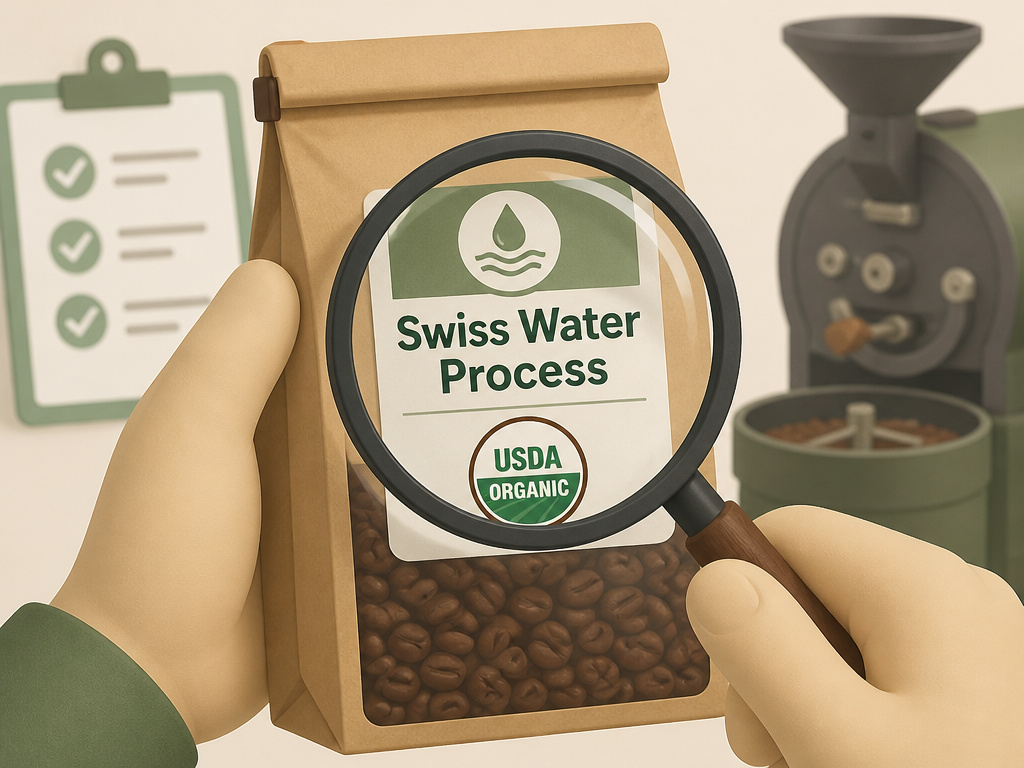
Your personal definition of “safe” dictates your choice. Is it about strict regulatory compliance, or a preference for chemical-free processes? Your grocery aisle provides answers.
First, read the label. Brands using the Swiss Water Process or CO2 Process will shout it from the package. It’s a major selling point. If you see “Naturally Decaffeinated,” it often means the ethyl acetate solvent was derived from fruit, but it’s still a chemical process.
Second, look for certifications. USDA Organic certification prohibits the use of synthetic solvents like methylene chloride. An organic decaf is almost certainly processed with the Swiss Water method or CO2. Fair Trade or Rainforest Alliance certifications speak to ethical sourcing, not decaffeination.
Third, consider the roast. The decaffeination process happens on green beans. A skilled roaster can develop great flavor from any type of decaf bean. Don’t assume decaf tastes flat; a high-quality, fresh roast from a specialty roaster will surprise you.
| Priority | Your Best Choice | What to Look For |
|---|---|---|
| Avoid All Chemical Solvents | Swiss Water Process or CO2 Process | Explicit labeling, USDA Organic seal. |
| Maximize Flavor Retention | CO2 Process or High-Quality Direct Solvent | Roaster’s tasting notes, “sugarcane” or “ethyl acetate” method. |
| Manage Caffeine Sensitivity | Swiss Water Process (99.9% caffeine-free) | Guaranteed 99.9% caffeine-free label. |
| Budget-Friendly & Widely Available | Major Brand, Direct Solvent Method | “Decaffeinated” without specific method. |
If you’re exploring alternatives, understanding the caffeine release rates in tea or the health benefits of tea and coffee can help. For those with sensitivity to acidity, comparing the pH levels of beverages is wise.
TL;DR: Pick Swiss Water or CO2 for solvent-free decaf, check for organic labels, and buy from a roaster who cares about flavor.
Frequently Asked Questions
Does decaf coffee have any caffeine?
Yes. Decaf coffee typically contains 2 to 15 milligrams of caffeine per 8-ounce cup. The Swiss Water Process gets closest to zero, but no method removes 100% of caffeine. This is why those with severe sensitivity or certain medical conditions need to be cautious.
What is the healthiest decaffeination process?
From a chemical-exposure perspective, the Swiss Water Process and Carbon Dioxide (CO2) Process are healthiest as they use no synthetic solvents. However, all FDA-approved methods are deemed safe. “Healthiest” may also mean the method that preserves the most beneficial antioxidants, which varies by bean and processor.
Why is methylene chloride banned in paint stripper but allowed in decaf?
The EPA’s 2024 ban targets high-concentration, occupational inhalation risks in open industrial settings. Its regulated use in closed-loop food processing, with strict residue limits and no inhalation risk, is considered a separate issue. The ABC News decaf chemicals report explains this regulatory distinction clearly.
Can I drink decaf coffee if I have high blood pressure?
For most people, yes. The negligible caffeine in decaf is unlikely to affect blood pressure. The polyphenols may even offer benefits. However, you should discuss any dietary change with your doctor, especially if managing hypertension and coffee consumption.
Is decaf coffee bad for your heart?
No. Large-scale studies show no increased risk. Decaf may be beneficial for heart health due to its antioxidant content, without the potential short-term stimulant effects of regular coffee on heart rate that concern some.
Does decaf coffee dehydrate you?
No. The diuretic effect of coffee is mild and tied directly to caffeine. The minimal caffeine in decaf has no clinically significant dehydrating effect. It contributes to your daily fluid intake just like water or herbal tea.
Before You Go
Decaf coffee’s safety is backed by decades of consumption and strict, science-based limits on processing chemicals. The real risk in your cup is the 2-15 mg of caffeine, not parts-per-million of solvent.
Your choice is straightforward. If the science of regulatory limits satisfies you, enjoy your decaf freely. If you prefer to avoid the chemistry altogether, the Swiss Water and CO2 processes are your clear, market-ready answers. Both paths lead to a safe cup.
The conversation shouldn’t stop at safety. Explore the health implications of black tea or the ingredients in energy drinks to fully understand your beverage options. Your perfect, comfortable cup is out there.
{
“@context”: “https://schema.org”,
“@type”: “HowTo”,
“name”: “How to Choose a Safe Decaf Coffee”,
“totalTime”: “PT5M”,
“step”: [
{
“@type”: “HowToStep”,
“name”: “Identify the decaffeination method”,
“text”: “Look for labels like ‘Swiss Water Process’, ‘Carbon Dioxide (CO2) Process’, or ‘Naturally Decaffeinated’ (often ethyl acetate). Avoid products that only say ‘decaffeinated’ without specifying the method if you are concerned about solvents.”
},
{
“@type”: “HowToStep”,
“name”: “Check for third-party certifications”,
“text”: “Look for certifications like USDA Organic, which prohibits synthetic solvents, or labels from the Swiss Water Process company itself, guaranteeing 99.9% caffeine-free beans without chemicals.”
},
{
“@type”: “HowToStep”,
“name”: “Understand your sensitivity”,
“text”: “Know that even decaf contains 2-15 mg of caffeine per cup. If you are highly sensitive, opt for a Swiss Water or CO2 process decaf and monitor your reaction, or switch to a naturally caffeine-free herbal tea.”
},
{
“@type”: “HowToStep”,
“name”: “Consult reliable sources for updates”,
“text”: “Stay informed on regulatory changes by reviewing reports from authoritative sources like the Harvard School of Public Health or the FDA, as guidelines on approved solvents can evolve.”
}
]
}
{
“@context”: “https://schema.org”,
“@type”: “FAQPage”,
“mainEntity”: [
{
“@type”: “Question”,
“name”: “Does decaf coffee have any caffeine?”,
“acceptedAnswer”: {
“@type”: “Answer”,
“text”: “Yes. Decaf coffee typically contains 2 to 15 milligrams of caffeine per 8-ounce cup. The Swiss Water Process gets closest to zero, but no method removes 100% of caffeine. This is why those with severe sensitivity or certain medical conditions need to be cautious.”
}
},
{
“@type”: “Question”,
“name”: “What is the healthiest decaffeination process?”,
“acceptedAnswer”: {
“@type”: “Answer”,
“text”: “From a chemical-exposure perspective, the Swiss Water Process and Carbon Dioxide (CO2) Process are healthiest as they use no synthetic solvents. However, all FDA-approved methods are deemed safe. “Healthiest” may also mean the method that preserves the most beneficial antioxidants, which varies by bean and processor.”
}
},
{
“@type”: “Question”,
“name”: “Why is methylene chloride banned in paint stripper but allowed in decaf?”,
“acceptedAnswer”: {
“@type”: “Answer”,
“text”: “The EPA’s 2024 ban targets high-concentration, occupational inhalation risks in open industrial settings. Its regulated use in closed-loop food processing, with strict residue limits and no inhalation risk, is considered a separate issue. The ABC News decaf chemicals report explains this regulatory distinction clearly.”
}
},
{
“@type”: “Question”,
“name”: “Can I drink decaf coffee if I have high blood pressure?”,
“acceptedAnswer”: {
“@type”: “Answer”,
“text”: “For most people, yes. The negligible caffeine in decaf is unlikely to affect blood pressure. The polyphenols may even offer benefits. However, you should discuss any dietary change with your doctor, especially if managing hypertension and coffee consumption.”
}
},
{
“@type”: “Question”,
“name”: “Is decaf coffee bad for your heart?”,
“acceptedAnswer”: {
“@type”: “Answer”,
“text”: “No. Large-scale studies show no increased risk. Decaf may be beneficial for heart health due to its antioxidant content, without the potential short-term stimulant effects of regular coffee on heart rate that concern some.”
}
},
{
“@type”: “Question”,
“name”: “Does decaf coffee dehydrate you?”,
“acceptedAnswer”: {
“@type”: “Answer”,
“text”: “No. The diuretic effect of coffee is mild and tied directly to caffeine. The minimal caffeine in decaf has no clinically significant dehydrating effect. It contributes to your daily fluid intake just like water or herbal tea.”
}
}
]
}
