
Is Coffee Harmful in Pregnancy? The Nuance Most Sources Miss
Moderate daily caffeine intake, staying under 200 milligrams, is the consensus guideline for pregnancy, supported by major health bodies. However, newer research indicates this level, particularly in the first trimester, may still be associated with an increased risk of delivering a smaller baby, suggesting a more cautious approach is warranted.
The problem isn’t a lack of information. It’s a pile of conflicting studies, outdated summaries, and well-intentioned but vague advice that leaves you guessing. One major medical organization says under 200 mg is fine. A recent European study says that same limit might not be safe for fetal growth. Who do you trust?
This guide cuts through the noise. We’ll look at the official guidelines, the specific research they’re based on, and the 2024 data that’s making experts reconsider blanket recommendations. You’ll get a clear picture of the risks, the critical timing, and practical steps for making an informed choice.
Key Takeaways
- The standard 200 mg daily caffeine limit comes from the American College of Obstetricians and Gynecologists (ACOG), but it’s based on older data with conflicting conclusions on miscarriage.
- A 2024 Finnish cohort study found that even moderate caffeine intake (51–200 mg/day) in the first trimester was linked to an 87% higher odds of having a small-for-gestational-age baby.
- Caffeine’s impact appears trimester-specific. First-trimester exposure seems most critical for fetal growth, while third-trimester intake in the same study showed no significant association.
- Coffee is the dominant source, accounting for about 75% of caffeine intake in populations like the Finnish study, making your brewing habits the primary lever for control.
- Always discuss your personal caffeine consumption with your healthcare provider, especially if you have other risk factors or a history of pregnancy complications.
The Official Guidelines (and Why They’re Being Questioned)
Most articles will tell you 200 milligrams of caffeine a day is safe. They’re citing the ACOG committee opinion on caffeine from 2010. That document defines “moderate consumption” as less than 200 mg per day and states this level does not appear to be a major factor in miscarriage or preterm birth.
It also admits a final conclusion can’t be made. The opinion explicitly highlights two large, high-quality studies published around the same time that reached opposite conclusions. The Savitz et al. study of over 2,400 pregnancies found no link between caffeine and miscarriage. The Weng et al. study found that intake of 200 mg per day or more was associated with more than double the risk.
The 2010 ACOG opinion notes that “conflicting results” and “methodologic limitations” prevent a definitive statement on higher caffeine intake and miscarriage. This built-in uncertainty is often glossed over.
TL;DR: The common 200 mg rule is a cautious consensus from 2010, but its own source material shows the science was never settled.
| Guideline Source | Recommended Limit | Key Stated Reason / Caveat |
|---|---|---|
| ACOG (2010) | < 200 mg per day | Based on review of available data; notes conflicting evidence on miscarriage. |
| MotherToBaby (NCBI) | ≤ 200 mg per day | Suggests this limit for pregnancy; notes higher intake (>500 mg) in third trimester linked to infant tremors and alertness. |
| Health Canada | ≤ 300 mg per day | A slightly higher threshold, but still advises caution. |
The takeaway isn’t that the guidelines are wrong. It’s that they represent a conservative interpretation of messy data. They are a safety floor, not a guarantee. For a deeper look at how professionals assess reproductive risk, the MotherToBaby caffeine fact sheet is a valuable resource. This is especially relevant if you are also considering caffeine while breastfeeding, as limits and timing strategies differ postpartum.
What the Latest Research Says (First vs. Third Trimester)
Newer research is shifting the focus from miscarriage to fetal growth, and it’s highlighting a critical detail: timing matters. A 2024 study from the Kuopio Birth Cohort in Finland, published in Archives of Gynecology and Obstetrics, provides some of the most compelling recent data.
The study tracked caffeine intake and birth outcomes. Its headline finding was that moderate (51–200 mg/day) and high (>200 mg/day) caffeine intake during the first trimester was associated with significantly increased odds of having a baby small for gestational age (SGA). The risk was highest in the moderate group. Intake during the third trimester showed no such association.
Common mistake: Assuming caffeine risk is constant throughout pregnancy, the 2024 Kuopio data suggests the first trimester is a uniquely vulnerable window for fetal growth related to caffeine exposure.
This implies the mechanism might be related to early placental development or cell proliferation. The study’s authors went a step further, stating that their results suggest “intake within recommendation limits does not necessarily appear to be safe.” That’s a direct challenge to the 200 mg standard.
Why the conflict with older guidelines? Study design and context. The Finnish cohort had high coffee consumption (median 121 mg/day first trimester). Their food-frequency questionnaire also captured pre-pregnancy intake for some, hinting that recommendations might need to start for women who are planning to conceive. Furthermore, isolating caffeine’s effect is famously tricky because of confounders like smoking and nausea.
TL;DR: First-trimester caffeine intake, even at “moderate” levels under 200 mg/day, is now linked to impaired fetal growth in recent studies. The third trimester may be less sensitive.
How Much Caffeine Is Actually In Your Drink?
You can’t manage what you don’t measure. The 200 mg limit is useless if you don’t know what 200 mg looks like in your mug. Estimates vary wildly based on bean, roast, and brew method.
A standard 8-ounce cup of home-brewed coffee contains about 95 mg of caffeine. That’s the baseline. From there, everything changes.
* A 16-ounce Starbucks blonde roast can have over 350 mg.
* A single shot of espresso (1 ounce) has about 64 mg.
* A 12-ounce can of cola has 30-40 mg.
* An 8-ounce cup of black tea has about 47 mg.
I used to eyeball my morning pour. When I finally measured, my “large mug” was holding 14 ounces of a light roast. That one mug was nearly 170 mg, almost my entire daily pregnancy budget before I’d even left the house.
The variability makes tracking essential. If you’re a dedicated coffee drinker, switching to a measured brewing method like a pour-over or AeroPress for a week gives you real data. This precision is more valuable than guessing. For those looking to cut back, exploring tea vs coffee caffeine content can reveal meaningful swaps, like choosing a black tea caffeine source that’s naturally lower.
| Beverage (Standard Serving) | Approximate Caffeine (mg) | Equivalents to Reach 200 mg Limit |
|---|---|---|
| Home-brewed Coffee (8 oz) | 95 | Just over 2 cups |
| Starbucks Blonde Roast (16 oz) | 360 | About half a cup |
| Espresso (1 oz shot) | 64 | 3 shots |
| Black Tea (8 oz) | 47 | About 4 cups |
| Green Tea (8 oz) | 28 | About 7 cups |
| Cola (12 oz can) | 35 | About 5.5 cans |
| Dark Chocolate (1 oz) | 24 | About 8 squares |
This table shows why coffee is the primary lever. It’s the most concentrated common source. Managing your coffee consumption when nursing later will involve similar math, but with a focus on timing relative to feeds.
A Practical Framework for Making Your Decision
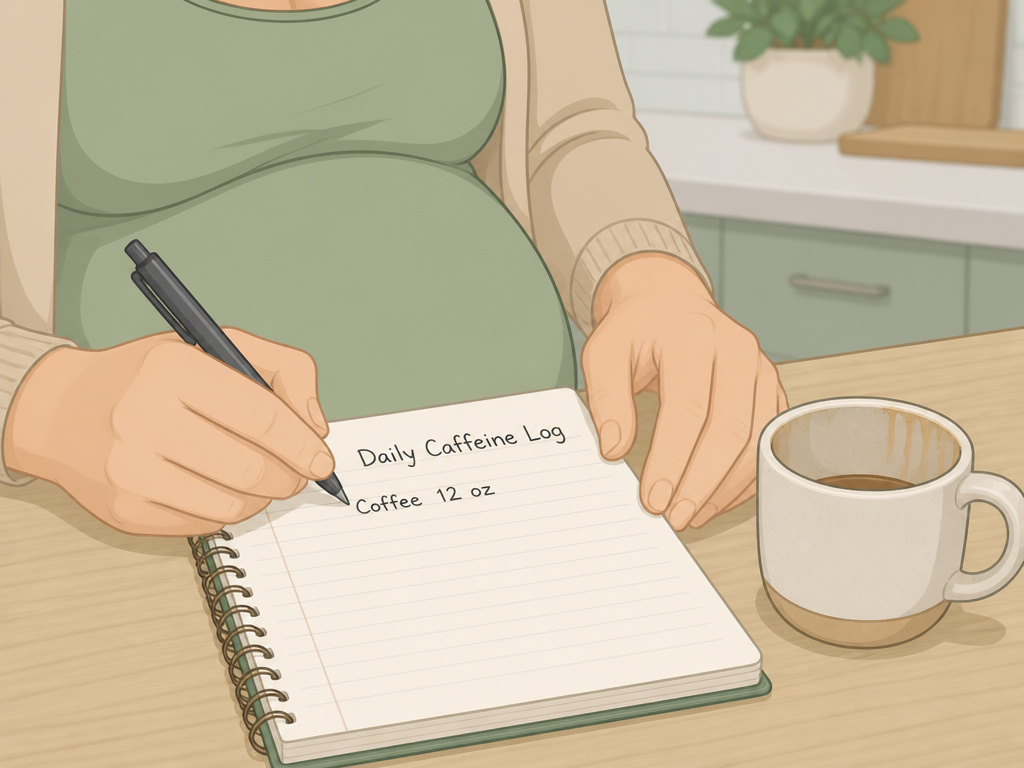
You have the guidelines. You have the new research. Now you need a personal strategy. This isn’t about fear; it’s about informed choice based on your risk tolerance.
First, calculate your baseline. Spend three days writing down every caffeinated thing you consume and its rough size. Use the table above to get a daily average. The number might surprise you.
Second, weigh your personal context. Are you in your first trimester? Do you have other risk factors for growth restriction, like hypertension? Is your pregnancy considered high-risk for other reasons? This context matters more than any generic article. The NIH review on caffeine safety reinforces that for healthy pregnancies under 300 mg/day, risks appear low, but individual factors can change that calculus.
Here is a simple decision pathway:
1. If your intake is over 300 mg/day: Reduce. This level exceeds all major guidelines and is where the most consistent signals of potential risk (for growth, miscarriage, and fertility) appear in studies.
2. If your intake is between 200-300 mg/day: You’re at or above the common guideline. Consider cutting back to below 200 mg, especially during the first trimester. This is a prudent, low-cost adjustment.
3. If your intake is under 200 mg/day: You’re following the standard advice. However, given the 2024 data, you might choose to reduce further or switch part of your intake to gentler stimulant options during the first trimester as an extra precaution.
Reduction doesn’t have to mean misery. Try a half-caff blend. Embrace the ritual of a warm herbal tea options. If you love the taste of coffee, a great decaf is infinitely better than white-knuckling through withdrawal. The goal is sustainable habit change, not perfection.
Frequently Asked Questions
What does 200 mg of caffeine look like in real coffee drinks?
It’s roughly two 8-ounce mugs of home-brewed coffee. It’s one “grande” (16 oz) cup of a medium-roast coffee from a major chain. It is not a venti blonde roast, which can contain nearly double that limit. Always check serving sizes.
Is decaf coffee completely safe during pregnancy?
Decaffeinated coffee is considered a safe alternative, as it removes at least 97% of the caffeine. The trace amounts left (usually 2-5 mg per cup) are negligible. Choose a decaf processed using the Swiss Water Method or carbon dioxide process if you are also concerned about chemical solvents, though the residual solvents in other methods are well below safety limits.
Could my morning sickness (aversions to coffee) be protective?
Absolutely. Nausea and food aversions in the first trimester are thought to be an evolutionary protective mechanism. If the smell of coffee suddenly makes you sick, your body might be steering you away from a potential teratogen during that critical developmental window. Don’t fight it.
Are energy drinks worse than coffee during pregnancy?
Yes, categorically. While the caffeine is a concern, energy drinks vs coffee is a dangerous comparison during pregnancy. Energy drinks add high doses of sugar, artificial additives, and often unregulated herbal stimulants like guarana or taurine, whose safety in pregnancy is completely unstudied. They should be avoided entirely.
When should I talk to my doctor about caffeine?
Bring it up at your first prenatal appointment. Be honest about your typical intake. The conversation should factor in your complete health profile. If you’re struggling to cut back, they can offer support and resources, which is far better than hiding the struggle.
The Bottom Line
The question “is coffee harmful in pregnancy?” doesn’t have a yes/no answer. The evidence shows a dose-dependent relationship where risk likely increases with amount, and timing, especially the first trimester, is a key factor.
The 200 mg per day guideline is a reasonable, cautious standard. It is not a guarantee of safety, as newer research on fetal growth indicates. Your most powerful move is to get a clear handle on your actual intake, discuss it with your provider, and make adjustments that feel sustainable for you. For many, that means savoring a single, well-measured cup and finding comfort elsewhere, perhaps in the health benefits of tea or the simple pleasure of a caffeine in hot chocolate that’s mostly just warm milk.
The goal is a healthy pregnancy, not a perfect one. Informed choices, not anxiety, should guide your cup.
{
“@context”: “https://schema.org”,
“@type”: “HowTo”,
“name”: “How to Manage Coffee and Caffeine Intake During Pregnancy”,
“totalTime”: “PT10M”,
“tool”: [
{
“@type”: “HowToTool”,
“name”: “Standard 8-ounce coffee mug”
},
{
“@type”: “HowToTool”,
“name”: “Kitchen scale or measuring spoon”
},
{
“@type”: “HowToTool”,
“name”: “Notebook or phone app for tracking”
}
],
“step”: [
{
“@type”: “HowToStep”,
“name”: “Identify your current caffeine sources”,
“text”: “List everything you drink and eat that contains caffeine: coffee, tea, soda, energy drinks, and chocolate. An 8-ounce brewed coffee has about 95 mg.”
},
{
“@type”: “HowToStep”,
“name”: “Measure your typical daily intake”,
“text”: “For one day, measure or note the size and type of each caffeinated item. Add up the total milligrams using standard estimates.”
},
{
“@type”: “HowToStep”,
“name”: “Compare to the 200 mg guideline”,
“text”: “Check if your total is under the 200 mg per day limit set by organizations like ACOG. This is roughly two 8-ounce cups of home-brewed coffee.”
},
{
“@type”: “HowToStep”,
“name”: “Plan reductions if needed”,
“text”: “If you’re over the limit, switch one coffee for a half-caff blend, a [lower caffeine alternative](https://beanthusiast.com/caffeine-in-tea-vs-coffee/), or a fully decaffeinated option.”
},
{
“@type”: “HowToStep”,
“name”: “Track and adjust based on trimester”,
“text”: “Be most vigilant during the first trimester. Some newer research suggests even intake under 200 mg may pose a risk for fetal growth restriction during this critical period.”
}
]
}
{
“@context”: “https://schema.org”,
“@type”: “FAQPage”,
“mainEntity”: [
{
“@type”: “Question”,
“name”: “What does 200 mg of caffeine look like in real coffee drinks?”,
“acceptedAnswer”: {
“@type”: “Answer”,
“text”: “It’s roughly two 8-ounce mugs of home-brewed coffee. It’s one \”grande\” (16 oz) cup of a medium-roast coffee from a major chain. It is not a venti blonde roast, which can contain nearly double that limit. Always check serving sizes.”
}
},
{
“@type”: “Question”,
“name”: “Is decaf coffee completely safe during pregnancy?”,
“acceptedAnswer”: {
“@type”: “Answer”,
“text”: “Decaffeinated coffee is considered a safe alternative, as it removes at least 97% of the caffeine. The trace amounts left (usually 2-5 mg per cup) are negligible. Choose a decaf processed using the Swiss Water Method or carbon dioxide process if you are also concerned about chemical solvents, though the residual solvents in other methods are well below safety limits.”
}
},
{
“@type”: “Question”,
“name”: “Could my morning sickness (aversions to coffee) be protective?”,
“acceptedAnswer”: {
“@type”: “Answer”,
“text”: “Absolutely. Nausea and food aversions in the first trimester are thought to be an evolutionary protective mechanism. If the smell of coffee suddenly makes you sick, your body might be steering you away from a potential teratogen during that critical developmental window. Don’t fight it.”
}
},
{
“@type”: “Question”,
“name”: “Are energy drinks worse than coffee during pregnancy?”,
“acceptedAnswer”: {
“@type”: “Answer”,
“text”: “Yes, categorically. While the caffeine is a concern, energy drinks vs coffee is a dangerous comparison during pregnancy. Energy drinks add high doses of sugar, artificial additives, and often unregulated herbal stimulants like guarana or taurine, whose safety in pregnancy is completely unstudied. They should be avoided entirely.”
}
},
{
“@type”: “Question”,
“name”: “When should I talk to my doctor about caffeine?”,
“acceptedAnswer”: {
“@type”: “Answer”,
“text”: “Bring it up at your first prenatal appointment. Be honest about your typical intake. The conversation should factor in your complete health profile. If you’re struggling to cut back, they can offer support and resources, which is far better than hiding the struggle.”
}
}
]
}
