
Is Coffee Good Before a Workout? A Guide to Dosing & Timing
Coffee is an effective pre-workout when consumed at a dose of 3–6 mg of caffeine per kilogram of body weight, finished roughly 60 minutes before exercise. For a 70 kg person, that’s 210–420 mg of caffeine, typically found in two to four cups of brewed coffee. This protocol improves endurance, muscular power, and can specifically counteract fatigue in hot environments.
Most people just drink their morning cup whenever and head to the gym. They miss the timing window by half an hour or undershoot the dose by two hundred milligrams. The performance boost they expect never materializes, so they write off coffee and buy expensive pre-workout mixes.
This guide breaks down the exact coffee protocol from sports nutrition research. We’ll cover the optimal dose, the critical one-hour timing rule, how it stacks up against pure caffeine and pre-workout supplements, and what to do for long sessions or hot-weather training.
Key Takeaways
- Drink your coffee 60 minutes pre-workout. A study on resistance training found this timing maximized force and power production for lower-body movements.
- Dose at 3–6 mg of caffeine per kg of body weight. This is the ergogenic range per the International Society of Sports Nutrition. Less does little; more increases side effects without more benefit.
- Heat changes the math. In hot environments (around 33°C), a 6 mg/kg dose was superior to 3 mg/kg for improving respiratory function and reducing fatigue.
- Men respond more consistently than women to caffeine’s performance benefits for muscular power, according to one randomized trial. Individual genetics and tolerance matter more for women.
- Pre-workout supplements are mostly caffeine. Research shows the other common ingredients like beta-alanine and taurine offer minimal additional strength benefit for most lifters.
The Ideal Coffee Protocol for Performance
Forget the vague “cup of coffee” advice. The performance benefit is dose-dependent and time-sensitive. You need a specific amount of caffeine in your system when you start lifting, running, or cycling.
The International Society of Sports Nutrition (ISSN) provides the clearest roadmap. Their position stand translates the caffeine research into a coffee-specific protocol. You need approximately two to four cups of typical hot-brewed coffee, consumed 60 minutes before exercise. This volume, roughly 473–946 ml (16–32 oz), delivers the target caffeine dose of 3–6 mg per kilogram of body mass and a meaningful dose of chlorogenic acids.
A 2024 ISSN position stand recommends two to four cups (473–946 ml) of typical hot-brewed or reconstituted instant coffee, providing a caffeine equivalent of 3–6 mg/kg, 60 minutes prior to exercise. This also provides 100–400 mg of chlorogenic acids per cup, compounds with antioxidant and anti-inflammatory properties.
TL;DR: Brew 2–4 cups of coffee. Drink it all about an hour before you start. That’s the foundation.
Nailing the Dose: 3–6 mg/kg Is the Sweet Spot
The 3–6 mg/kg range isn’t a guess. It’s the result of decades of studies showing consistent ergogenic effects. Doses below 2 mg/kg often show minimal benefit for trained individuals. Doses above 6 mg/kg, like 9 mg/kg, sharply increase the incidence of side effects, jitters, anxiety, rapid heartbeat, without providing more performance boost.
Let’s translate that to a real person. If you weigh 70 kg (about 154 lbs), your target caffeine intake is 210–420 mg. An 8-oz cup of home-brewed coffee contains roughly 80–100 mg of caffeine. So you’re looking at 2–4 cups. Use a kitchen scale for your beans if you want precision; 18–20 grams of light-roast coffee brewed properly will hit the higher end of that caffeine range.
Common mistake: Drinking one small cup of coffee 15 minutes before a workout, the caffeine hasn’t hit your bloodstream yet, and the dose is too low to affect neuromuscular performance. You’ll finish your session before the compound peaks.
The higher end of the range (6 mg/kg) is particularly relevant for two scenarios: endurance athletes and anyone training in the heat. A 2025 study in Life journal found that a 6 mg/kg dose was superior to 3 mg/kg at counteracting the performance-sapping effects of exercise in a 33.2°C environment.
Why 60 Minutes Is the Magic Number for Timing
Caffeine needs time to absorb, distribute, and reach peak concentration in your blood. The 60-minute pre-workout target isn’t arbitrary. Research on resistance-trained individuals pinpointed this window for maximizing lower-body muscular performance.
The study measured force and power production. The group that took caffeine 60 minutes before testing showed the most robust improvement. Taking it 30 minutes before was less effective; 90 minutes before might see you starting to crash before your session ends. The goal is to have plasma caffeine concentration peaking as you pick up the first weight or start your first mile.
Caffeine gum, like Military Energy Gum used in some studies, changes this timing. Absorption through the buccal mucosa in your mouth is faster. If you use gum, you might only need 10–20 minutes before starting. But for liquid coffee, plan for the full hour.
| Timing Before Exercise | Best For | Mechanism & Caveat |
|---|---|---|
| 60 minutes | Strength training, sprint intervals, most gym sessions | Allows for full gastric emptying and absorption; aligns peak plasma concentration with workout onset. |
| 30–45 minutes | High-skill sports where jitters are a concern | Slightly lower peak, may reduce risk of fine-motor interference. |
| 10–20 minutes (Gum) | Rapid adaptation or missed morning window | Buccal absorption bypasses the gut; hits bloodstream in minutes. |
| Mid-workout (60+ min in) | Endurance events, long cycling/running | Counters central fatigue as glycogen depletes; use gels, chews, or a small amount of cold brew. |
Coffee vs. Pure Caffeine vs. Pre-Workout
This is where personal tolerance and your goals dictate the tool. Coffee is a complex beverage. A pre-workout powder is a formulated product. A caffeine pill is a pure stimulant.
The Case for Coffee Over Isolated Caffeine
Pure caffeine, in a pill or as an additive, works. But coffee might work better for you, and it offers more. The ISSN notes that while isolated caffeine consistently improves performance, coffee can produce similar ergogenic effects with the bonus of additional bioactive compounds.
Those compounds, primarily chlorogenic acids, have antioxidant and anti-inflammatory properties. For the athlete focused on recovery as much as performance, that’s a tangible benefit. Furthermore, some individuals simply tolerate coffee better than a bolus of pure caffeine, it seems to cause less gastrointestinal distress for many. The ritual and warmth can also provide a psychological boost that a pill can’t match.
The variability in coffee’s caffeine content is its main drawback. A light-roast Ethiopian brewed with a pour-over might have 50% more caffeine than a dark-roast French press. If you’re using coffee as a precise performance tool, you need to know your brew. Weigh your beans, use a consistent recipe, and treat it like fuel.
What About Pre-Workout Supplements?
Look at the label of any mainstream pre-workout. The first listed ingredient is often a “proprietary energy blend” that is overwhelmingly caffeine citrate or anhydrous caffeine. The other stars, beta-alanine (causes the tingles), taurine, arginine, have far less evidence for directly improving strength performance in isolation.
As one sports nutrition researcher put it, you’re mostly paying for caffeine and a marketing story. If you already drink coffee, you have the primary ergogenic ingredient covered. Adding a pre-workout on top likely just increases your caffeine dose into the side-effect zone without meaningful extra benefit for the average lifter.
This doesn’t mean pre-workouts are useless. The convenience is real. The placebo effect of a specific ritual is powerful. But from a strict cost-benefit and ingredient transparency perspective, coffee is the foundational item. You can always add a specific ingredient like citrulline malate separately if you want its vascular benefits, rather than buying a bundled product.
TL;DR: Your pre-workout’s main job is delivering caffeine. Coffee does that, plus adds antioxidants. Save your money unless you crave the specific formula or convenience.
Critical Adjustments: Heat, Sex, and Long Durations
The standard 3–6 mg/kg at 60 minutes is your baseline. Now you must adjust for context. Three factors significantly alter the equation: environmental temperature, your sex, and the length of your session.
Training in the Heat Demands a Higher Dose
Heat stress crushes performance. It increases perceived effort, reduces plasma volume, and accelerates fatigue. Caffeine can be a powerful countermeasure. The same 2025 study in Life found that both 3 mg/kg and 6 mg/kg doses improved endurance performance in 33.2°C heat compared to a placebo. But the 6 mg/kg dose was superior.
It more effectively improved respiratory function, enhanced aerobic capacity, and reduced subjective ratings of fatigue. If you’re running a summer marathon, cycling in midday sun, or even working out in a non-air-conditioned gym, lean toward the higher end of the dosing range. The physiological strain justifies the increased stimulant load.
The Sex Difference in Response Is Real
Research isn’t always clear-cut, but a trend appears. A randomized trial on lower-body muscular performance found that male participants responded more consistently to caffeine than female participants. The female response was more variable.
This doesn’t mean caffeine doesn’t work for women. It means individual factors, hormonal cycle phase, genetics of caffeine metabolism (CYP1A2 enzyme activity), training status, play a larger role. Women should be more meticulous about tracking their response. Start at 3 mg/kg and note how you feel during different phases of your cycle. The standard protocol is a starting point, not a guarantee.
For Endurance, You Need a Second Dose
Coffee’s half-life is about 5–6 hours. For a one-hour gym session, the single pre-workout dose is perfect. For a three-hour bike ride or a long run, it’s not enough. Fatigue accumulates, and the stimulant effect wanes.
The ISSN position stand on caffeine notes that the benefit of caffeine actually increases with the duration of a time-trial event. For these long efforts, a strategy of caffeine during exercise is often more beneficial than caffeine only beforehand. The research on coffee specifically suggests its ergogenic effect is most clear in acute settings, not with chronic daily dosing for long-term adaptation.
Plan for a mid-race or mid-ride top-up. This is where caffeine gum, gels, or even a small bottle of cold brew shines. Consume it after the first 60–75 minutes of exercise to maintain central nervous system drive as muscular fatigue builds.
| Scenario | Recommended Protocol | Rationale & Warning |
|---|---|---|
| Hot-Weather Endurance | 6 mg/kg caffeine via coffee 60 min pre, plus a caffeine gel at 75 min. | Higher initial dose combats heat stress; intra-workout dose maintains effect as caffeine peaks decline. |
| Strength Training (Male) | 5 mg/kg caffeine via coffee 60 min pre. | Consistent response data supports a mid-to-high dose for maximal force production. |
| Strength Training (Female) | 3 mg/kg caffeine via coffee 60 min pre. Track response across cycle. | Higher variability; start low to assess tolerance and identify personal optimal timing. |
| Long-Duration Team Sport | 3 mg/kg caffeine via coffee pre-game, caffeine gum at halftime. | Pre-game dose for alertness; fast-acting gum provides a second peak without GI distress during play. |
What to Put In Your Pre-Workout Coffee
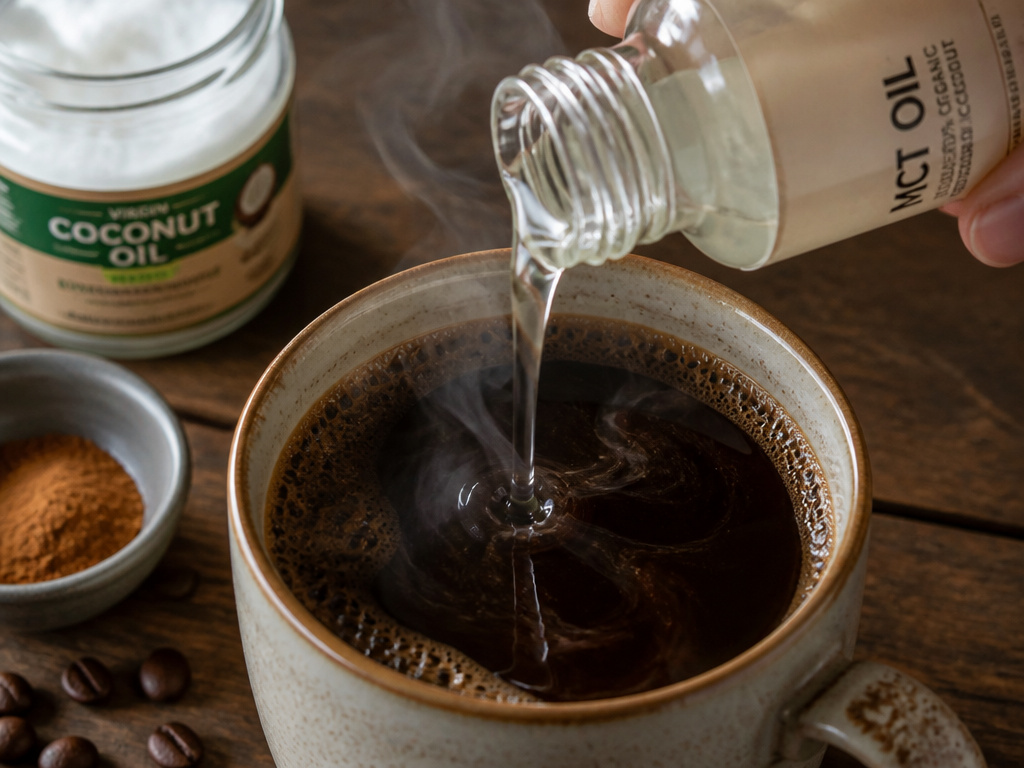
Black coffee is the purest test. But people add things, often for good reason. Some additions are performance-oriented; others are just for taste.
If you’re adding milk, be aware of the coffee calorie count. A splash of whole milk is insignificant, but a large latte can turn your pre-workout into a meal, which might sit heavy in your stomach. For fasted training, keep additions minimal.
Many explore fats for sustained energy. Coconut oil coffee provides medium-chain triglycerides (MCTs), which are a quick energy source. For a more concentrated MCT boost, the specific MCT oil benefits for cognitive function and fat oxidation are well-documented. This is the basis of “bulletproof” style coffees.
For flavor and a potential metabolic nudge, consider the cinnamon coffee benefits related to blood sugar modulation. If bitterness is an issue, a pinch of salt in coffee can neutralize harsh notes without adding calories or affecting the caffeine content.
The rule is simple: test your additions during training, not on race day. Know how your stomach handles fat and protein before intense effort.
Frequently Asked Questions
Does espresso have more caffeine than coffee before a workout?
Not necessarily in total caffeine. The espresso caffeine content is more concentrated per ounce, but a standard 1-oz shot has about 64 mg of caffeine. A 12-oz brewed coffee has about 120 mg. You would need 2-3 shots of espresso to match the dose of a large coffee. The faster consumption of espresso might suit a tighter timeline.
Are energy drinks better than coffee before a workout?
No, and often they are worse. A comparison of Red Bull vs coffee shows similar caffeine levels, but Red Bull adds sugar and other stimulants. A Monster Energy drink can have twice the caffeine of a coffee, easily pushing you into the high-dose side-effect zone. The broader analysis of energy drink health impacts cites concerns over sugar, artificial ingredients, and the risk of overconsumption compared to a single-ingredient coffee.
Can coffee cause stomach issues before a workout?
Yes, it’s a common concern. The coffee digestion effects are primarily due to caffeine stimulating colonic activity and the acidity of the brew. If you have a sensitive stomach, ensure you have a small, bland snack with your coffee, allow the full 60 minutes for digestion, or try a cold brew, which is typically less acidic.
I don’t like coffee. What’s the best alternative?
Caffeine gum is the most efficient alternative, offering rapid absorption. A caffeine pill is the most precise. A strong black tea can work, but you’ll need to drink more volume. Avoid sugary sodas or most “energy” shots, which are just expensive, poorly dosed caffeine deliveries.
The Bottom Line
Coffee is a proven, cost-effective performance enhancer. To use it correctly, stop thinking of it as just a morning drink. Treat it as a supplement with a specific dose and timing window.
Weigh yourself. Do the math for 3–6 mg/kg. Brew your coffee strong and finish it an hour before you start. If it’s hot outside or you’re going long, lean toward the higher dose and plan a second source of caffeine for later in the session. Remember that men and women may respond differently, so your own experience is the final judge.
Skip the expensive pre-workout unless you’ve mastered the coffee protocol first. The evidence from the International Society of Sports Nutrition coffee position stand and the broader ISSN caffeine and exercise performance position stand is clear: caffeine is the engine. Coffee is simply one of the most effective and enjoyable ways to fuel it.
{
“@context”: “https://schema.org”,
“@type”: “HowTo”,
“name”: “How to Use Coffee as a Pre-Workout for Exercise Performance”,
“totalTime”: “PT75M”,
“tool”: [
{
“@type”: “HowToTool”,
“name”: “Coffee maker or method of choice”
},
{
“@type”: “HowToTool”,
“name”: “Kitchen scale for measuring beans (optional)”
},
{
“@type”: “HowToTool”,
“name”: “Timer or watch”
}
],
“step”: [
{
“@type”: “HowToStep”,
“name”: “Calculate your caffeine dose”,
“text”: “Weigh yourself and calculate a target dose of 3–6 mg of caffeine per kilogram of body weight. For a 70 kg person, this is 210–420 mg of caffeine.”
},
{
“@type”: “HowToStep”,
“name”: “Brew your coffee”,
“text”: “Brew two to four cups (16–32 oz) of typical hot-brewed or instant coffee. This volume typically delivers the target caffeine range and 100–400 mg of chlorogenic acids per cup.”
},
{
“@type”: “HowToStep”,
“name”: “Time your consumption”,
“text”: “Finish your coffee approximately 60 minutes before you begin your exercise session to allow peak plasma caffeine concentration to align with your workout start.”
},
{
“@type”: “HowToStep”,
“name”: “Assess tolerance and environment”,
“text”: “If exercising in heat, consider the higher end of the dose range (6 mg/kg). If you are caffeine-naive or sensitive, start at the lower end (3 mg/kg) to assess side effects.”
},
{
“@type”: “HowToStep”,
“name”: “Consider intra-workout caffeine for long sessions”,
“text”: “For workouts or events lasting over 90 minutes, plan a secondary caffeine source, like a gel or caffeine gum, to be consumed after the first hour to maintain performance.”
}
]
}
{
“@context”: “https://schema.org”,
“@type”: “FAQPage”,
“mainEntity”: [
{
“@type”: “Question”,
“name”: “Does espresso have more caffeine than coffee before a workout?”,
“acceptedAnswer”: {
“@type”: “Answer”,
“text”: “Not necessarily in total caffeine. The espresso caffeine content is more concentrated per ounce, but a standard 1-oz shot has about 64 mg of caffeine. A 12-oz brewed coffee has about 120 mg. You would need 2-3 shots of espresso to match the dose of a large coffee. The faster consumption of espresso might suit a tighter timeline.”
}
},
{
“@type”: “Question”,
“name”: “Are energy drinks better than coffee before a workout?”,
“acceptedAnswer”: {
“@type”: “Answer”,
“text”: “No, and often they are worse. A comparison of Red Bull vs coffee shows similar caffeine levels, but Red Bull adds sugar and other stimulants. A Monster Energy drink can have twice the caffeine of a coffee, easily pushing you into the high-dose side-effect zone. The broader analysis of energy drink health impacts cites concerns over sugar, artificial ingredients, and the risk of overconsumption compared to a single-ingredient coffee.”
}
},
{
“@type”: “Question”,
“name”: “Can coffee cause stomach issues before a workout?”,
“acceptedAnswer”: {
“@type”: “Answer”,
“text”: “Yes, it’s a common concern. The coffee digestion effects are primarily due to caffeine stimulating colonic activity and the acidity of the brew. If you have a sensitive stomach, ensure you have a small, bland snack with your coffee, allow the full 60 minutes for digestion, or try a cold brew, which is typically less acidic.”
}
},
{
“@type”: “Question”,
“name”: “I don’t like coffee. What’s the best alternative?”,
“acceptedAnswer”: {
“@type”: “Answer”,
“text”: “Caffeine gum is the most efficient alternative, offering rapid absorption. A caffeine pill is the most precise. A strong black tea can work, but you’ll need to drink more volume. Avoid sugary sodas or most \”energy\” shots, which are just expensive, poorly dosed caffeine deliveries.”
}
}
]
}
