
Is Coffee an Appetite Suppressant? The Study That Settles It
This post contains affiliate links. As an Amazon Associate, we earn from qualifying purchases.
Yes, coffee is a mild, short-term appetite suppressant for some people, but the effect is inconsistent. It’s not primarily driven by caffeine; timing (30 min–4 hours before a meal), coffee type (decaf may work better), and individual biology are key factors. Relying on it for significant weight loss lacks strong evidence.
Coffee can act as a mild, short-term appetite suppressant for some people, but the effect is inconsistent, temporary, and not primarily driven by caffeine. The key factors are timing (30 minutes to 4 hours before a meal), the type of coffee (decaf may be more effective), and individual biology. Relying on it for significant weight loss is not supported by robust evidence.
Most people get this wrong because they blame caffeine alone. They slam an espresso, skip breakfast, and wonder why they’re ravenous by noon. The reality is messier. Coffee is a complex brew of hundreds of compounds, and some of the non-caffeine parts might be doing the heavy lifting on hunger hormones.
This guide breaks down the conflicting studies, explains why decaf coffee is the dark horse in appetite research, and shows you what the long-term data actually says about coffee and weight.
Key Takeaways
- The appetite-suppressing effect is short-lived, lasting 3–4 hours at most, and is followed by a potential compensatory eat-later effect.
- Decaffeinated coffee may suppress appetite more effectively than regular coffee for some, likely due to higher levels of chlorogenic acids.
- A 2023 study of over 150,000 people found drinking unsweetened coffee was linked to gaining about a quarter-pound less per year compared to non-drinkers, a modest, long-term benefit.
- Adding high-calorie cream, sugar, or syrups completely negates any minor metabolic or appetite advantages.
- Individual responses vary wildly based on weight, genetics of caffeine metabolism, and even bitter taste perception.
The Short Answer: What the Science Says
Research presents a nuanced picture, not a simple yes or no. A pivotal 2017 PubMed review of coffee and appetite framed the timeline. It found that coffee consumed 3 to 4.5 hours before a meal had little impact on how much people ate. However, caffeine taken 0.5 to 4 hours before a meal could reduce acute energy intake.
The key word is “could.” It doesn’t work for everyone, and the mechanism isn’t straightforward.
A 2018 study in the Journal of the Academy of Nutrition and Dietetics gave participants juice with caffeine equivalent to 1 mg/kg or 3 mg/kg of body weight (about the amount in 4 or 8 ounces of coffee, respectively). The lower dose group ate about 70 fewer calories at breakfast. But by the end of the day, they had made up the difference. The study concluded caffeine is not an effective appetite suppressant or weight-loss aid because of this compensation.
TL;DR: Coffee might briefly curb your hunger before one meal, but it’s unlikely to reduce your total daily calories.
How It Might Work: The Biological Levers
Coffee influences appetite through several potential pathways, which is why the evidence feels contradictory.
| Potential Mechanism | How It Works | Evidence Strength |
|---|---|---|
| Caffeine Stimulation | Acts on the central nervous system, potentially reducing the perception of hunger and increasing alertness, which can distract from hunger cues. | Moderate for short-term effect; weak for sustained impact. |
| Gastrointestinal Effects | May speed up gastric emptying for some, making you feel empty sooner, or stimulate colon activity, which some interpret as reduced appetite. | Highly variable; can cause discomfort instead of satiety. |
| Hormone Influence | May increase Peptide YY (PYY), a hormone that promotes feelings of fullness. This effect is more strongly linked to decaf coffee’s chlorogenic acids. | Emerging, but promising for non-caffeine components. |
| Metabolic Boost | Caffeine can slightly increase metabolic rate (burning 80-150 more calories/day), creating a minor energy deficit. | Consistent in short-term studies, but the body may adapt. |
The most honest read is that coffee is a mild metabolic and behavioral modifier, not a powerful hunger-off switch.
Decaf’s Paradoxical Power
Here’s where the story gets interesting. If caffeine were the sole hero, decaf would be useless. But several research threads suggest the opposite might be true.
Common mistake: Assuming all appetite effects come from caffeine, some studies point to chlorogenic acids, abundant in decaf, as the key players in boosting fullness hormones like PYY.
Decaffeination doesn’t strip out chlorogenic acids. In fact, because the process often uses water or solvents that preserve these compounds, decaf can have a relatively high concentration of them. These acids are thought to influence glucose metabolism and gut hormones. Some controlled studies have shown decaf coffee elevating PYY levels more than regular coffee.
This creates a practical dilemma. If you’re using coffee to blunt morning hunger, a decaf Americano might be a better tool than a double shot of espresso. You avoid the caffeine jitters and potentially get a stronger hormonal signal for fullness. It’s a counterintuitive tactic that most people never try because the caffeine-centric myth is so strong.
Of course, this interacts with your other dietary choices. The benefits are easily wiped out by high-calorie additions. Choosing a low-calorie coffee addition like a pinch of salt to cut bitterness makes more sense than loading it with brown sugar sweetener.
Caffeine Alone Is a Weak and Unreliable Suppressant
Extracting caffeine from its coffee context changes the game. Pure caffeine, like in a pill or added to juice, has a shakier relationship with appetite.
The 2018 study mentioned earlier is the clearest example. The reduced breakfast calories didn’t stick. People compensated later. This compensation is the core reason isolated caffeine fails as a weight-loss aid. Your body’s hunger-regulation systems are robust; they will eventually demand the energy you missed.
Furthermore, caffeine can backfire for some.
* It can increase anxiety, which triggers stress-eating in susceptible individuals.
* The bitter taste of caffeine alone (without coffee’s balancing flavors) might negatively influence appetite signals for some people.
* The subsequent “caffeine crash” can lead to fatigue, which many misinterpret as hunger, leading to cravings for quick energy from sugary snacks.
I used to take caffeine tablets before long work sessions to stay sharp and skip lunch. By 3 PM, I’d be shaky, headachy, and would devour a muffin or two from the office kitchen. The net calorie intake was higher, not lower. I switched to a small, protein-rich lunch and a single black coffee. The cravings vanished.
This individual variability is huge. Your genetics determine how fast you metabolize caffeine (are you a “fast” or “slow” metabolizer?). Your habitual intake builds tolerance, diminishing any subtle effects. Even your bitter taste perception can change how your brain responds to the signal.
The Real-World Impact on Weight
Appetite is one thing. Weight is the ultimate metric people care about. Does the occasional hunger blip translate to less weight over time?
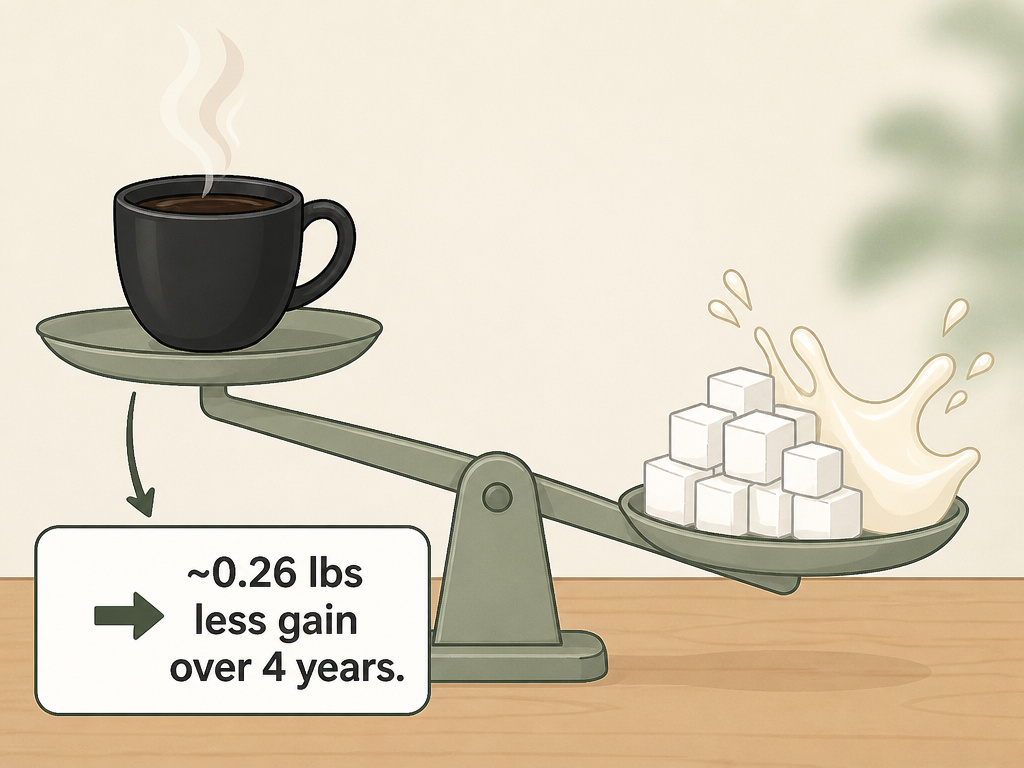
The most compelling recent data comes from a 2023 study published in The American Journal of Clinical Nutrition. Researchers tracked over 150,000 health professionals for up to four years. They found a modest but measurable link: drinking unsweetened coffee was associated with less age-related weight gain.
For every extra cup of plain coffee per day, participants gained about 0.26 pounds (roughly a quarter-pound) less than their peers over a four-year period. The effect was stronger for caffeinated than decaf, but both showed a benefit.
| Coffee Type | Average Weight Gain Reduction (per extra cup/day over 4 years) | Likely Contributing Factors |
|---|---|---|
| Unsweetened Caffeinated | ~0.29 lbs less gain | Mild metabolic boost, potential short-term appetite reduction, increased physical activity. |
| Unsweetened Decaffeinated | ~0.17 lbs less gain | Chlorogenic acid effects on metabolism, possible hormone influence. |
| Sweetened Coffee | Weight Gain | Added sugar calories dominate, overwhelming any minor coffee benefits. |
This isn’t a “coffee melts fat” story. It’s a “coffee might help you not slowly gain as much weight as you age” story. The mechanism is likely a combination of that slight metabolic bump, the potential for replacing high-calorie drinks, and maybe a small reduction in cumulative calorie intake.
TL;DR: Over years, drinking black coffee might help you be a pound or two lighter than you otherwise would have been. It’s a tool for weight maintenance, not a weight-loss miracle.
Why Your Coffee Additions Matter More Than the Coffee
This is the non-negotiable fine print. The study above specified unsweetened coffee. The moment you add caloric extras, the math flips.
- Two tablespoons of cream and two sugars can add 100+ calories to your cup.
- A medium flavored latte can easily hit 250-300 calories.
- Trendy additions like coconut oil in coffee or MCT oil in coffee are pure fat calories (120+ per tablespoon). They might affect hunger hormones, but they are not calorie-free.
If you’re adding these, you’re not using an appetite suppressant; you’re drinking a liquid snack. The primary lever for weight management is total calorie balance. You cannot out-suppress a 300-calorie drink.
For a lower-calorie alternative, consider almond milk in coffee or exploring spices like cinnamon for blood sugar management instead of sweeteners.
How to Test Coffee’s Effect on Your Appetite
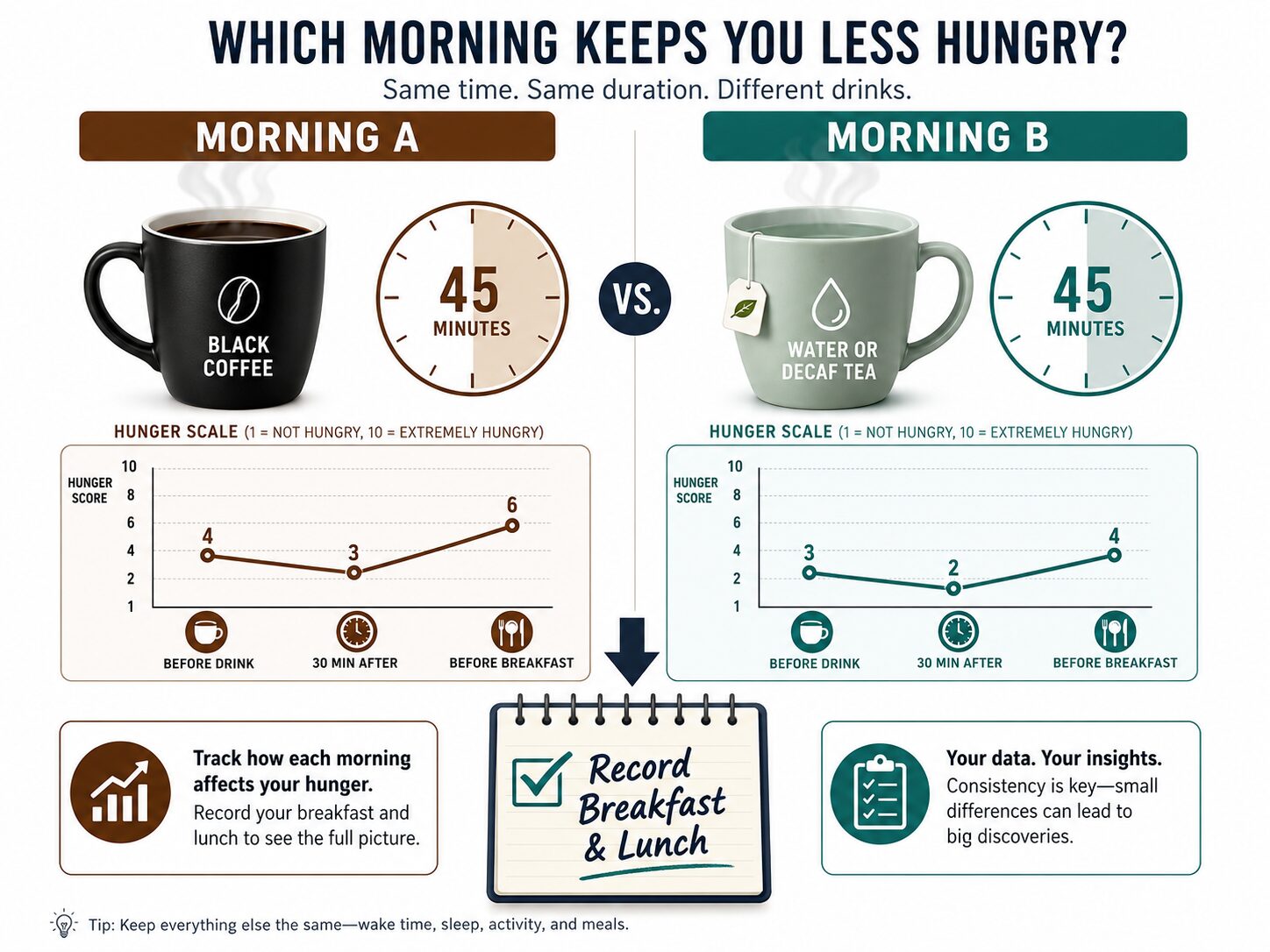
Since the science shows high variability, the only expert that matters is you. Run a simple, controlled self-experiment.
- Pick two similar mornings. Ensure your sleep, stress, and previous night’s dinner are roughly the same.
- Morning A: Drink your normal coffee (e.g., 16 oz black brewed coffee) 45 minutes before your typical breakfast time. Do nothing else different.
- Morning B: Drink an equal volume of hot water or decaf tea 45 minutes before breakfast. Alternatively, try a cup of decaffeinated coffee to test the non-caffeine hypothesis.
- Record your hunger. Use a simple 1-10 scale right before you drink, 30 minutes after, and right before you eat. Note what you eat for breakfast and, crucially, how you feel and what you eat at lunch.
- Check for compensation. Did you eat less at breakfast but more at lunch on the coffee day? That’s the compensation effect in action.
The goal isn’t to prove coffee “works.” It’s to learn how your unique system responds. You might find coffee lets you comfortably push breakfast back an hour. You might find it does nothing. You might find decaf is more effective. That personal data is worth more than any generalized study.
Frequently Asked Questions
Does black coffee suppress appetite more than coffee with milk?
Yes, theoretically. Black coffee has negligible calories, so any mild suppressant effect isn’t counteracted. Adding milk, especially full-fat, adds calories and sugars (lactose) that your body registers as energy intake, which can blunt hunger signals from the coffee itself. For the purest test, go black.
Can coffee suppress appetite all day?
No. The effect is acute and temporary, lasting between 30 minutes and 4 hours for most people. The 2017 scientific review established this window clearly. Relying on multiple cups throughout the day to suppress appetite leads to caffeine tolerance, sleep disruption, and potential anxiety, all of which can negatively impact hunger and food choices.
Why do I feel hungry after coffee sometimes?
Several reasons. Caffeine can stimulate stomach acid production and colon activity, which some brains interpret as hunger pangs. The diuretic effect can cause mild dehydration, often confused with hunger. If you add sugar, the subsequent blood sugar spike and crash can trigger real hunger. Also, if coffee replaces a meal, your body’s energy deficit will eventually demand food.
Is coffee or tea better for appetite control?
It depends on the compounds. Coffee generally has more chlorogenic acids, which may influence fullness hormones. Black tea has other compounds like theaflavins. The caffeine release rates differ due to tannins in tea, potentially providing a smoother, longer energy curve without a sharp crash that triggers hunger. For pure caffeine content, compare our guide on caffeine in tea versus coffee.
Can coffee cause digestive issues that affect appetite?
Absolutely. For some, coffee’s acidity and stimulant effect can lead to coffee and bowel movements or general gastric distress. This discomfort can suppress appetite in the short term, but it’s an adverse side effect, not a healthy mechanism for managing hunger. It’s a sign to adjust your brew method, bean, or intake.
The Bottom Line
Coffee is not a reliable appetite suppressant in the way a pharmaceutical would be. Its effect is mild, short-term, and hijacked by what you add to it.
The smarter way to think about it is as a modest tool within a broader system. A black coffee 30 minutes before a meal might help you eat 70 fewer calories at that meal, but only if you don’t repay those calories later. Its real superpower, according to long-term data, might be in subtly aiding weight maintenance over decades, not in driving dramatic loss.
If you’re using coffee to skip meals entirely, you’re fighting a losing battle against your biology. Use it to complement a balanced diet, not replace it. And if you’re curious, experiment with decaf. The science suggests the hunger-hormone key might not be caffeine at all.
