
How to Make Mocha Iced Coffee: The Starbucks Ratio for Home
To make mocha iced coffee, combine 2 tablespoons of chocolate sauce with 2 shots of hot espresso in a glass, stir until smooth, then add ice and 3/4 cup of milk. This mirrors the standard Starbucks Grande build of 4 pumps mocha sauce, 2 espresso shots, milk, and ice.
Most homemade versions turn out weak, gritty, or sickly sweet because they treat “chocolate” as a single ingredient. They grab the first syrup from the pantry, dump it over cold brew, and wonder why it tastes like watery candy. The difference between a cloying mess and a balanced, coffee-shop-quality drink is in three specific choices.
This guide walks through the exact ingredient ratios, the critical mixing step every barista uses, and how to adapt the core recipe for everything from a quick morning fix to a decadent dessert drink.
Key Takeaways
- Use hot espresso or coffee to melt your chocolate component first; adding chocolate to cold liquid guarantees a gritty or separated drink.
- Starbucks’ Grande Iced Caffe Mocha uses a 2:1 pump-to-shot ratio (4 pumps sauce to 2 shots); scale this down for home use with 2 tbsp sauce to 2 shots.
- For a richer, less sweet flavor, opt for a mocha sauce made with real cocoa or Dutch-processed cocoa powder over standard chocolate syrup.
- If using cold brew concentrate, adjust the milk quantity down, its stronger, smoother profile can be overwhelmed by too much dairy.
- Always taste your base mixture (chocolate + coffee) before adding ice and milk; this is your only chance to correct sweetness or strength.
The Core Four Ingredients (And Why They Matter)
An iced mocha isn’t just coffee plus chocolate milk. Each component has a job, and substituting without understanding the role leads to a drink that’s out of balance before you even add ice.
The standard build from Starbucks lists “Sugar, Water, Cocoa Processed With Alkali, Natural Flavor.” That’s their mocha sauce. It’s not the same as the chocolate syrup you’d put on ice cream, which often leans heavier on corn syrup and stabilizers. The sauce is designed to blend with espresso, not just sweeten it.
A Starbucks Grande Iced Caffe Mocha contains 4 pumps of mocha sauce, 2 shots of espresso, 2% milk, and ice. This 2:1 pump-to-shot ratio is the commercial baseline for a balanced chocolate-coffee flavor.
Your choice of chocolate form dictates the entire process. Cocoa powder needs a hot liquid to dissolve properly, skip this and you’ll have silt at the bottom of your glass. Chocolate syrup is ready to go but often sweeter. Melted baking chocolate offers depth but requires gentle heating to avoid seizing. Pick one path and follow its rules.
Your coffee base sets the intensity. Two shots of espresso provide a concentrated punch that stands up to milk and chocolate. Strong brewed coffee works if you reduce the milk slightly. Using a cold brew caffeine concentrate changes the game; its low acidity and high strength mean you might want less chocolate to avoid a muddled flavor.
Milk is the moderator. Whole milk adds creaminess that carries the chocolate. Almond milk or oat milk can lighten the calorie content but may thin the body. The milk’s temperature matters, adding it cold, after the hot coffee-chocolate mix, is what prevents a watery drink.
Ice is a ingredient, not just a cooler. It dilutes. Using too little lets the drink get warm; using too much waters it down before you finish. The goal is enough to chill without drowning.
TL;DR: Your chocolate must blend with hot coffee, your coffee must be strong, your milk must be cold, and your ice must be plentiful but not excessive.
Chocolate Decisions: Sauce, Syrup, or Powder?
This is where most recipes talk about “chocolate” and leave you guessing. The type you choose changes your method, your sweetness level, and your final texture.
| Chocolate Form | Best For | Key Preparation | Risk If Skipped |
|---|---|---|---|
| Mocha Sauce (Starbucks-style) | Replicating cafe taste, consistent sweetness | Stir directly with hot espresso | Can be overly sweet if brand is high in sugar |
| Chocolate Syrup | Convenience, easy mixing | Also stir with hot coffee | Often contains HFCS, leading to a one-note sweet flavor |
| Dutch-Processed Cocoa Powder | Deep, rich chocolate flavor, less sweetness | Whisk with 1-2 tbsp of hot coffee first to make a paste | Will remain gritty and float on top of the cold drink |
| Melted Baking Chocolate | Decadent, dessert-like intensity | Melt gently, then whisk into hot coffee | Can seize and clump if added to cold liquid |
If you want the genuine cafe profile, seek out a sauce labeled “mocha” or make your own. A simple version is equal parts sugar, water, and Dutch-processed cocoa powder heated until smooth. Dutch-processed cocoa is less acidic and darker, which pairs better with coffee’s bitterness than natural cocoa.
Common mistake: Adding cocoa powder directly to cold milk or iced coffee, the powder won’t hydrate fully, leaving a gritty sludge at the bottom of your glass that no amount of stirring will fix.
Chocolate syrup is the easy button. It’s already fluid and sweetened. The trade-off is control. You’re getting whatever sweetness and flavor blend the manufacturer decided on. It works, but it won’t taste like the coffee shop version.
For a flavor upgrade without extra work, add a pinch of salt to your chocolate-coffee mix. This isn’t about making it salty; it’s about using salt in coffee to reduce perceived bitterness and round out the sweetness. A single granule does the work of a spoonful of sugar.
Choosing Your Coffee Base
Espresso is the traditional choice for a reason. Its small volume and intense flavor create a distinct layer of taste that survives the dilution from ice and milk. Two shots (about 2 ounces) is the standard.
If you don’t have an espresso machine, you can mimic it. Make a very strong cup of coffee using a burr grinder benefits to get a consistent fine grind, and use twice the coffee you normally would. A Moka pot also produces a concentrated, espresso-like brew that works perfectly.
Cold brew concentrate is a popular modern swap. It has a different chemical profile, smoother, less acidic, but often with a higher espresso caffeine content per ounce. When using it, treat it like espresso: use 2-3 ounces of concentrate. Because it lacks espresso’s sharp bitterness, you might want to slightly reduce the sweetness of your chocolate component to keep the drink from tasting flat.
I used a dark roast cold brew concentrate for a week straight, keeping the chocolate syrup amount the same. By the third day, every drink tasted vaguely sweet and murky, like a coffee-flavored chocolate milk. Cutting the syrup by a third brought the coffee notes back front and center.
Your coffee should be hot when it meets the chocolate, even if you’re using cold brew concentrate. Heat is the agent that dissolves cocoa powder and fully integrates syrups. If your base is cold, the chocolate will sit on top or sink to the bottom in a sticky layer.
Step-by-Step: The Barista Method

This sequence is lifted directly from cafe practice. It ensures the chocolate is fully incorporated and the drink stays cold without immediately turning watery.
- Start with chocolate in a dry glass. Add 2 tablespoons of your chosen chocolate sauce or syrup to the bottom of a 16-ounce glass. If using cocoa powder, put it in first with a tiny splash of hot water to make a paste.
- Pour hot espresso directly over the chocolate. Immediately stir with a spoon or small whisk for 15-20 seconds. You’re looking for a completely homogeneous, dark brown liquid with no streaks. This is your only chance to adjust flavor, taste it now. Too bitter? Add a hint more chocolate or a dash of brown sugar syrup. Too sweet? A drop of vanilla extract can help balance it.
- Add ice to fill the glass halfway. Don’t skimp. The ice will chill the hot mixture quickly, locking in the integrated flavor before dilution starts.
- Pour cold milk over the ice. Use about 3/4 cup, or until the glass is nearly full. The milk will pool on top initially.
- Stir from the bottom up. Use a long spoon or a straw to lift the sweet coffee mixture from the bottom and mix it with the milk and melting ice. A few vigorous strokes should turn the whole drink a uniform light brown.
- Add toppings and serve. Whipped cream and a drizzle of chocolate sauce are classic. For a different twist, a sprinkle of cinnamon or a teaspoon of MCT oil can add complexity.
The most common fumble happens at step two. People don’t stir long enough. They see the syrup swirl into the coffee and think it’s mixed. It’s not. Undissolved syrup sinks and forms a sickly-sweet layer at the bottom that ruins the last few sips. Stir until your spoon moves through liquid with no resistance.
Customizations and Twists
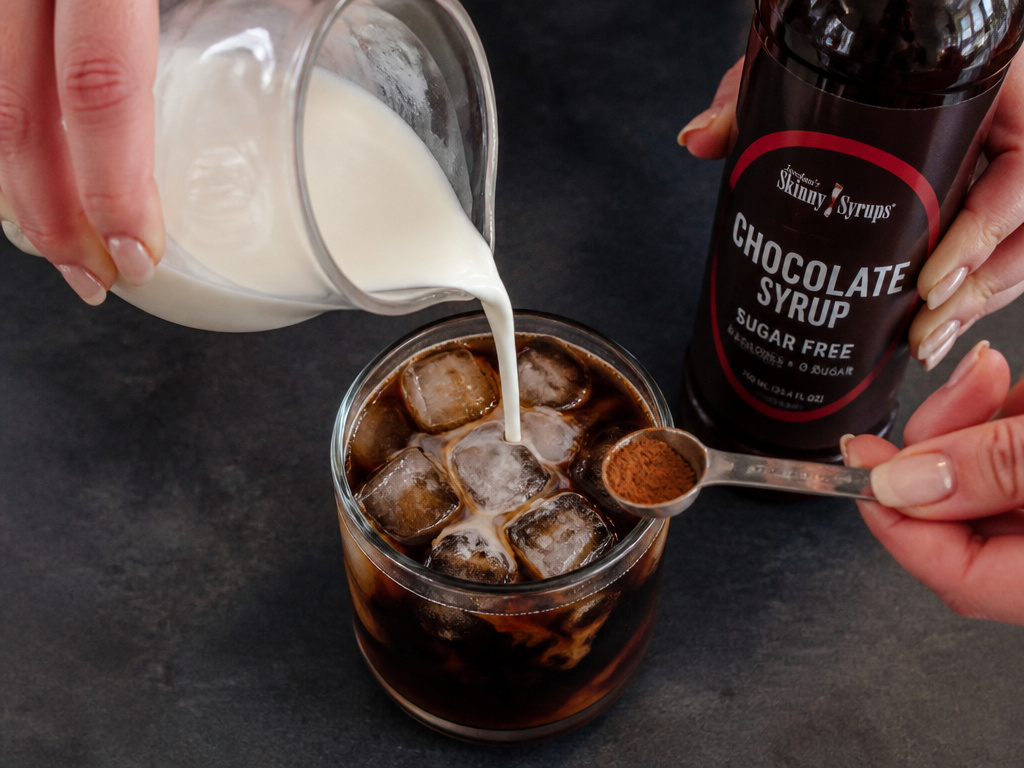
Once you have the basic method down, you can bend it. The foundation, hot coffee melts chocolate, then ice, then milk, remains the same.
For a dairy-free version, oat milk or almond milk in iced coffee works well. Just know that these milks are often thinner. You might want to reduce the quantity by an ounce or use a “barista blend” version that’s formulated to steam and blend better.
To make it a dessert, blend it. Combine the completed drink (hold the ice) with a scoop of vanilla ice cream in a blender. You get a coffee-chocolate milkshake that still tastes like coffee.
For a health-conscious spin, reduce the sugar by using a sugar-free chocolate syrup or less sauce. You can add functional boosts like a dash of cinnamon coffee for antioxidants or a spoonful of coconut oil coffee for sustained energy. These additions change the mouthfeel and flavor, so start with small amounts.
I prefer a half-and-half mix of mocha sauce and cocoa powder. The sauce gives immediate sweetness and body, the cocoa powder adds a deeper chocolate note that lingers after each sip. It takes an extra 30 seconds to make the paste, but the flavor payoff is obvious.
You can also change the serving style. Layer it by pouring the cold milk in first, then adding ice, then slowly pouring the sweetened coffee mixture over the back of a spoon. It looks impressive but requires you to stir before drinking anyway. The visual is the only benefit.
Troubleshooting Your Iced Mocha

Even following the steps, things can go sideways. Here’s how to diagnose and fix the most common problems.
Problem: The drink is watery by the time I finish it.
Cause: Warm ingredients or not enough ice. If your coffee wasn’t hot enough to melt the chocolate fully, you likely added extra milk to compensate. Or, you used a small amount of ice that melted instantly upon contact with the warm coffee mixture.
Fix: Make sure your coffee is piping hot. Use a glass full of ice, it should chill the liquid on contact. Consider pre-chilling your glass in the freezer for 5 minutes.
Problem: There’s gritty cocoa powder at the bottom.
Cause: The powder wasn’t dissolved in a hot liquid first. Cocoa powder is hydrophobic when cold.
Fix: Next time, make a slurry. Mix the cocoa powder with a tablespoon or two of your hot coffee in a separate cup until it’s a smooth paste, then add it to the glass and proceed.
Problem: It’s not sweet enough / too sweet.
Cause: Inconsistent measuring or using a new brand of chocolate with a different sugar content.
Fix: Always taste the chocolate-coffee mixture before adding ice and milk. That base should taste slightly too strong and sweet on its own, the milk and ice will dilute it to perfection. Keep simple syrup or extra chocolate sauce on hand for mid-drink adjustments.
Problem: The chocolate and coffee separate into layers.
Cause: Insufficient initial stirring or using a chocolate form that doesn’t incorporate well (like hardened sauce from the fridge).
Fix: Stir the hot coffee and chocolate for a full 20 seconds. If your sauce is thick and cold, warm it slightly in the microwave for 10 seconds to make it more fluid before adding the coffee.
Frequently Asked Questions
Can I make mocha iced coffee with cold brew?
Yes, but you must adapt the method. Heat a small portion of your cold brew concentrate (like 1/4 cup) to mix with the chocolate, ensuring it dissolves. Then, combine that mixture with the remaining cold concentrate, add ice, and then milk. Using all cold concentrate will leave you with undissolved chocolate.
What’s the difference between a mocha and an iced chocolate coffee?
mocha specifically implies espresso as the coffee base, giving it a stronger, more concentrated coffee flavor that balances the chocolate. “Iced chocolate coffee” often uses regular brewed coffee, which can result in a milder, more chocolate-forward drink.
How can I make a less sugary version?
Use a sugar-free chocolate syrup, or make your own sauce with unsweetened cocoa powder and a sugar substitute like monk fruit or stevia. You can also simply reduce the amount of chocolate sauce by half and add a pinch of salt or a drop of vanilla to enhance the perception of sweetness.
Can I prepare a batch of mocha iced coffee ahead of time?
You can prepare the sweetened coffee base (chocolate + coffee) and store it in the fridge for up to 3 days. When ready to serve, pour the cold base over ice and add fresh cold milk. Do not mix the milk in ahead of time, as it can separate and taste stale.
Does the type of milk make a big difference?
Absolutely. Whole milk provides a creamy, rich body that carries flavor well. Skim milk will make the drink taste thinner and slightly sweeter. Plant-based milks like oat or almond add their own flavor notes and usually create a lighter texture. The choice significantly impacts the final experience.
The Bottom Line
A great mocha iced coffee hinges on a simple, physical rule: chocolate needs heat to dissolve. Start with that, and the rest is adjustment. Use the Starbucks ratio of 2 tablespoons sauce to 2 espresso shots as your baseline. Taste the base before diluting it. And don’t be afraid to tweak, reduce the chocolate for a stronger coffee hit, swap the milk for a plant-based alternative, or add a functional boost like cinnamon or MCT oil.
The goal isn’t to perfectly clone a cafe drink every time. It’s to understand the mechanics so you can build the version you actually want to drink, without the guesswork or the disappointing, watery finish. Now you know why the order matters, you’ll never make a gritty one again.
