
How to Make Cold Coffee That’s Smooth & Low-Acidity Every Time
To make cold coffee, you have two primary paths: cold brew, which involves steeping coarse grounds in cold water for 12-16 hours, or Japanese iced coffee, which is hot coffee brewed directly over ice. Cold brew yields a smooth, low-acidity concentrate with about 65-70% of the volatile aromatics of hot coffee, while the iced method preserves brighter, fruitier notes.
Most people reach for the jar and wait a day. That works, but it misses half the flavor spectrum.
This guide walks through both core methods, the science behind them, and the tweaks that turn a good cup into a great one.
Key Takeaways
- Cold brew coffee is less acidic because lower water temperatures extract fewer acidic compounds, a fact supported by PMC study on cold brew variables.
- Japanese iced coffee (flash chilling) captures the bright, aromatic notes of hot brewing that are lost in long, cold steeps.
- Your coffee grinders matter more for cold brew than for any other method—inconsistent grind leads to uneven extraction and muddiness.
- Steeping cold brew at room temperature, not in the fridge, cuts extraction time by nearly half and produces a more balanced flavor.
- Always dilute cold brew concentrate. Drinking it straight overwhelms the palate and can taste harsh.
The 2 Core Methods for Making Cold Coffee
You are choosing between patience and immediacy, between smoothness and complexity.
Cold brew is the marathon. It uses time instead of heat to pull flavor from the beans. Japanese iced coffee is the sprint. It uses heat for full extraction, then ice to lock in aromatics before they evaporate. Each has a distinct chemical profile that changes how your cup tastes.
Cold brew coffee, prepared at ambient or refrigerated temperatures (typically 4-25°C), generally has a higher pH (less acidic) compared to hot brewed coffee. This is attributed to the reduced extraction of acidic compounds at lower temperatures.
The difference isn’t subtle. Cold brew tastes round, chocolatey, and smooth. Japanese iced coffee tastes bright, tea-like, and fruity. Your bean choice should follow this split. Use a dark or medium roast for cold brew; its soluble sugars extract easily in cold water. Use a light or blonde roast beans for the iced method; the hot water will pull out its delicate floral and citrus notes.
TL;DR: Choose cold brew for a smooth, low-acid drink you can batch for the week. Choose Japanese iced coffee for a bright, aromatic cup you make fresh.
Method 1: Immersion Cold Brew (The Overnight Standard)
This is the set-it-and-forget-it approach. The gear is simple: a large container, a filter, and time. The real work happens in the ratios and the grind.
Start with a 1:8 coffee-to-water ratio by weight. That means 100 grams of coffee to 800 grams of water. This makes a concentrate. Weigh it. Volume measurements with spoons and cups will throw your strength off by 20 percent. Combine coarse-ground coffee and cold, filtered water in your jar. Stir until all grounds are wet. This prevents dry clumps that never extract.
Now, the waiting game. Let it steep at room temperature for 12 to 16 hours. Do not put it in the fridge. Cold slows molecular movement, and your extraction will take 24 hours and still taste weak. The sweet spot is around 14 hours at a steady 20°C. Filter twice: first through a metal mesh to catch the bulk, then through a paper filter or cheesecloth to remove the fine silt. That second pass is what gives cold brew its clean, silky mouthfeel.
Common mistake: Using a fine grind to speed up extraction — the increased surface area over-extracts bitter compounds from the outer layers of the bean while the core remains underextracted, creating a hollow, astringent cup within 8 hours.
The final product is a concentrate. Dilute it 1:1 with water or your choice of milk. For a richer drink, try it with almond milk or a splash of cream.
Method 2: Japanese Iced Coffee (Flash Chilled)
This method is for people who want their cold coffee now, with all the nuance of a freshly brewed pour-over. The principle is simple: brew hot coffee directly onto ice. The ice instantly chills the brew, trapping volatile aromatic compounds that normally escape as steam.
You need your standard hot-brewing gear: a pour-over cone like a Hario V60 or a Chemex, a gooseneck kettle, and a carafe. The key is accounting for the ice in your recipe. The ice is part of your water total.
Use a 1:15 coffee-to-water ratio. If you want 300 grams of final beverage, put 150 grams of ice in your carafe. Brew with 150 grams of hot water (just off the boil) as you normally would. As the hot coffee drips onto the ice, it melts it, creating a perfectly diluted, chilled coffee. Grind your beans slightly finer than for hot pour-over, as the rapid cooling slightly mutes perceived acidity.
The result is a crisp, vibrant cup that showcases a bean’s origin characteristics. It’s the best way to drink a light roast cold.
| Method | Best For | Time Commitment | Flavor Profile |
|---|---|---|---|
| Immersion Cold Brew | Batch preparation, low acidity | 12-16 hours (hands-off) | Smooth, chocolatey, rounded |
| Japanese Iced Coffee | Single-serve freshness, aromatic clarity | 5 minutes (active) | Bright, tea-like, complex |
The Non-Negotiables: Gear, Grind, and Water
You can make cold coffee with a mason jar and a sieve. You can make great cold coffee with three specific upgrades.
First, a scale. Coffee is a dry ingredient, and its density varies wildly by roast and grind. A $20 kitchen scale that measures to 0.1 grams eliminates the guesswork. Second, filtered water. Tap water minerals, especially chlorine and high calcium, bind with coffee oils and create off-flavors during the long steep. Third, and most critical, a proper grinder.
A blade grinder pulverizes beans into dust and boulders. For cold brew, this is a death sentence. The dust over-extracts into bitterness, while the boulders contribute nothing but weakness. A burr grinder produces a consistent coarse grind, which is the single most important variable for even extraction. The target texture is coarse sea salt or breadcrumbs.
Your water-to-coffee ratio sets the strength. The standard 1:8 makes a versatile concentrate. For a ready-to-drink batch, use 1:12. Going stronger than 1:8 risks a harsh, overly concentrated flavor that’s difficult to balance, even with dilution.
Advanced Tweaks for the Perfect Cup
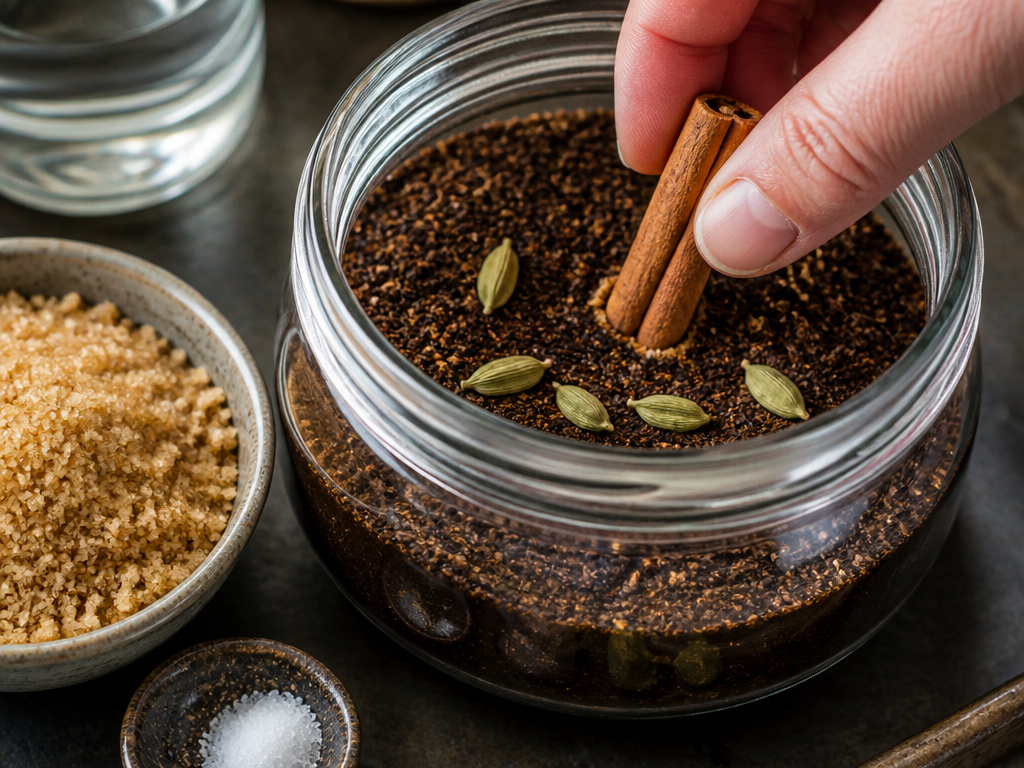
Once you have the basics down, small adjustments create your signature cup. These are the moves that separate a good home barista from a great one.
The steep time is a dial, not a switch. Twelve hours gives you a lighter, more tea-like body. Sixteen hours pulls more oils and deeper flavors. I found my preference at 14 hours using a medium-dark Brazilian roast. Past 18 hours, the brew can develop woody, over-extracted notes, especially with a dark roast. Taste it at 12, 14, and 16 hours to find your line.
Agitation helps. Give the jar one gentle stir at the 6-hour mark. This re-saturates grounds that have settled and promotes even extraction. Don’t shake it vigorously—that incorporates bitter fines back into the solution.
Your choice of sweetener changes everything. Simple syrup integrates seamlessly. Brown sugar syrup adds a molasses depth that pairs beautifully with cold brew. For a flavor enhancer that cuts bitterness without sweetness, consider a tiny pinch of salt. It works.
Flavor Infusions and Add-Ins
Cold brew is a fantastic canvas for flavors. Add them during the steep, not after.
For a spiced brew, add a cinnamon stick or a few whole cardamom pods to the grounds before adding water. The long steep gently extracts their oils. This creates a cinnamon-infused coffee with no gritty sediment. For a creamy, energy-focused version, blend your finished cold brew with a teaspoon of MCT oil or coconut oil. The fat emulsifies and creates a rich, satisfying texture while providing sustained energy.
If you’re watching your intake, be mindful of your milk calories. Switching from whole milk to a nut milk can significantly lower the calorie count of your daily cup.
Troubleshooting Your Cold Coffee
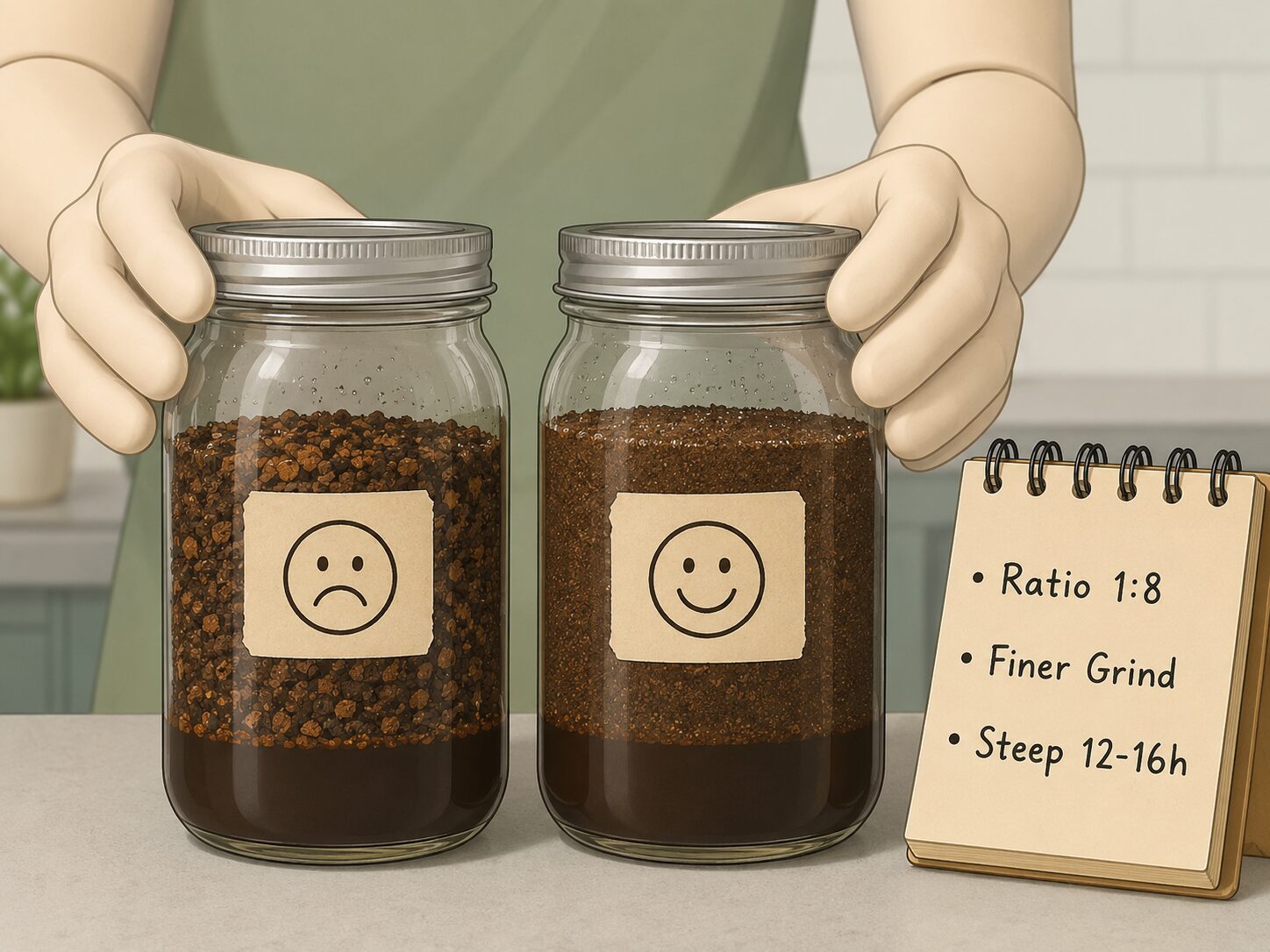
Your brew tastes off. Here’s how to diagnose and fix the most common problems.
Problem: The coffee is weak and watery.
- Cause: The grind is too coarse, the ratio has too little coffee, or the steep time was too short (especially if done in the fridge).
- Fix: Confirm your 1:8 ratio by weight. Use a finer grind next time, but stay in the “coarse” range. Ensure a full 12-16 hour steep at room temperature.
Problem: The coffee is bitter and astringent.
- Cause: The grind is too fine, causing over-extraction. Alternatively, the steep time exceeded 18 hours, or the water was too warm.
- Fix: Grind coarser. Cap your steep at 16 hours. Always use cold water.
Problem: The coffee tastes sour or fermented.
- Cause: This is often a cleaning issue. Oils and residue from previous batches have gone rancid in your equipment.
- Fix: Wash your brewing jar, filter, and serving pitcher with hot, soapy water after every use. A vinegar soak once a month removes stubborn coffee oils.
Problem: The final cup is murky with sediment.
- Cause: Inadequate filtration. A single pass through a metal mesh isn’t enough.
- Fix: Filter sequentially: metal mesh, then a paper coffee filter or a few layers of cheesecloth. Pour slowly to avoid forcing fines through.
Frequently Asked Questions
Can I use pre-ground coffee for cold brew?
You can, but you sacrifice control. Pre-ground is typically a medium grind designed for drip machines, which is too fine for ideal cold brew extraction. It will work in a pinch, but expect more bitterness and a less clean finish. For the best results, invest in a burr grinder and grind fresh.
Does cold brew have more caffeine than hot coffee?
It depends entirely on your recipe. A cold brew concentrate, drunk straight, can have significantly more caffeine per ounce than hot coffee. However, when properly diluted, the caffeine content comparisons are similar. The Scientific Reports caffeine concentration study shows that longer steep times can extract comparable or higher caffeine levels, but the perceived strength is often smoother due to the lack of acidity.
How long does homemade cold brew last?
Store your filtered concentrate in a sealed container in the refrigerator. It will stay at peak flavor for about one week. After that, it begins to oxidize and taste stale. Do not store it at room temperature after filtering.
What’s the difference between cold brew and iced coffee?
The terms are often used interchangeably, but they are technically different. “Cold brew” refers specifically to the long, cold-steeping method. “Iced coffee” is a broader category that can mean cold brew, Japanese iced coffee, or even hot coffee that has been chilled down and poured over ice. The latter often tastes dull and watered-down.
Can I make cold brew in a French press?
Absolutely. A French press is one of the best tools for small-batch cold brew. Add coarse grounds and cold water, stir, place the lid on top (but do not plunge), and steep. After 12-16 hours, press the plunger down slowly. For a cleaner cup, still pour the brew through a paper filter afterward to catch the silt that gets past the mesh screen.
Before You Go
Making exceptional cold coffee is a simple equation: good beans, consistent coarse grind, clean water, and patience. Choose your method based on the flavor profile you crave—deep and smooth from cold brew, or bright and complex from Japanese iced coffee. Remember to dilute your concentrate, keep your gear clean, and don’t be afraid to tweak steep times or add flavors during the brew. Your perfect summer cup is a few hours away.
