
How Much Sugar in Coffee? From Black Brews to Syrupy Lattes
Plain black coffee, brewed, espresso, or filter, contains zero grams of sugar. The sugar in your cup comes entirely from what you add: granulated sugar, syrups, milk, or cream. A Starbucks Grande Caffè Latte with 2% milk and Classic Syrup delivers 28g of sugar, while a single teaspoon of granulated sugar adds 4g.
Most people miss the milk. They count the sugar packet but forget that the dairy or oat milk brings its own sugars to the party. That changes the math completely.
This guide breaks down the numbers from primary sources like the USDA, shows you exactly where the sugar hides in popular coffee shop orders, and lays out smarter swaps that cut sweetness without sacrificing flavor.
Key Takeaways
- Black coffee has 0g of sugar. All sugar content comes from added sweeteners or dairy.
- A single teaspoon (4g) of granulated sugar adds 4g of total sugars to your cup, per USDA data.
- Milk contains natural sugar (lactose). One ounce of whole milk adds about 1.5g of sugar.
- Flavored syrups are the biggest hidden source. Each standard pump adds about 5g of sugar.
- You can reduce sugar by 75% or more by switching to unsweetened plant milk and using spices like cinnamon.
How Much Sugar is Actually in Your Coffee?
Start with the baseline. Brewed coffee beans contain carbohydrates, but the brewing process does not extract simple sugars like sucrose in any meaningful amount. Peer-reviewed analysis, like the microwave extraction method detailed in the Arabian Journal of Chemistry sugar analysis method, confirms that detectable sugars in the final cup are negligible.
According to the USDA FoodData Central database, a 1-fluid-ounce serving of restaurant-prepared espresso with added sugar contains 2.7g of total sugars. The same serving with added sugar and milk contains 2.9g. A single teaspoon (4g) of granulated sugar itself contains 4g of total sugars.
The numbers from chains make the scale clear. A Starbucks Grande (16 fl oz) Caffè Latte made with 2% milk and the standard two pumps of Classic Syrup packs 28g of sugar. Only about 12g of that comes from the lactose in the milk. The rest is added sugar, primarily from the syrup.
A Dunkin’ Medium (14 fl oz) Hot Coffee with cream and sugar has 12g of sugar total. The cream contributes some, but the pre-stirred sugar does the heavy lifting.
TL;DR: Your black coffee is sugar-free. The milk, syrups, and sugar packets you add are what get counted. A fancy latte can have more sugar than a can of soda.
The Three Main Sources of Coffee Sugar
You need to track three things. Most people only watch the first one.
1. Added Granulated Sweeteners
This is the obvious one. You see the packet or spoon.
* Granulated White Sugar: 4g of sugar per teaspoon (4g serving).
* Raw or Turbinado Sugar: Slightly less processed, but still about 4g of sugar per teaspoon.
* Brown Sugar: Also about 4g per teaspoon. The molasses adds flavor but not a meaningful reduction in sugar content compared to white. For a deeper look at this option, consider the flavor profile of brown sugar in your brew.
What happens if you skip measuring: You’ll consistently underestimate. “One spoon” can vary from 3g to 6g. Over a week, that slop adds up to an extra 50-100g of sugar you didn’t account for.
2. Liquid Syrups and Sauces
This is where the numbers explode. Coffee shops use flavored syrups (vanilla, caramel, hazelnut) and sauces (mocha, white chocolate).
* Standard Pump Volume: About 5ml (1/6 oz).
* Sugar per Pump: Roughly 5g.
* Common Order: A “Grande Vanilla Latte” typically gets three or four pumps. That’s 15-20g of sugar before the milk.
Common mistake: Ordering a “sugar-free” syrup but keeping the whipped cream and drizzle, the sauces on top often contain sugar, negating the swap.
3. Milk, Cream, and Non-Dairy Creamers
Dairy contains the natural sugar lactose. Plant-based milks often have added sugars to mimic dairy’s sweetness.
| Milk/Creamer (1 oz / 30ml) | Total Sugars | Primary Source |
|---|---|---|
| Whole Milk | ~1.5g | Lactose (natural) |
| 2% Milk | ~1.5g | Lactose (natural) |
| Half & Half | ~0.6g | Lactose (natural) |
| Sweetened Vanilla Almond Milk | ~3-5g | Added cane sugar |
| Original Oat Milk (barista) | ~3-4g | Added sugars & natural oat sugars |
| Heavy Cream | ~0.4g | Lactose (natural) |
A 16-oz latte uses about 10-12 oz of milk. That’s 15-18g of sugar from lactose alone if you use dairy. Switching to a sweetened plant milk can sometimes increase the total sugar. If you’re tracking calories from milk, the sugar content is a major component.
TL;DR: The milk in your latte contributes more sugar than most people realize. Sweetened plant milks can be even worse.
How to Calculate Sugar in Your Own Cup
You don’t need a lab. You need a scale and some basic math.
- Weigh your dry sweetener. Place your cup on a digital scale, tare it, then add your sugar. Every gram you see is a gram of sugar.
- Measure your liquid sweetener. Use a measuring spoon for syrups you add at home. 1 teaspoon (5ml) of a typical syrup ≈ 5g sugar.
- Check your milk’s label. Find “Total Sugars” per serving. Note the serving size (usually 1 cup or 240ml). Measure how much you use and do the math.
- Add it all up. (Dry sugar grams) + (Syrup grams) + (Milk sugar grams) = Total sugar in your cup.
Let’s walk through a real example: a homemade 12-oz latte.
* You use 10 oz of 2% milk. That’s about 30ml per oz, so 300ml total. Milk has ~1.5g sugar per 30ml. (300ml / 30ml) * 1.5g = 15g sugar from milk.
* You add two teaspoons of granulated sugar. 2 tsp * 4g = 8g sugar from sugar.
* You add a half-teaspoon of vanilla syrup. 0.5 tsp * 5g = 2.5g sugar from syrup.
* Total: 15 + 8 + 2.5 = 25.5g of sugar.
That homemade treat is nearly identical to the Starbucks Grande. Seeing the breakdown changes how you build your next cup.
The Smart Swaps (That Aren’t Just Sugar)
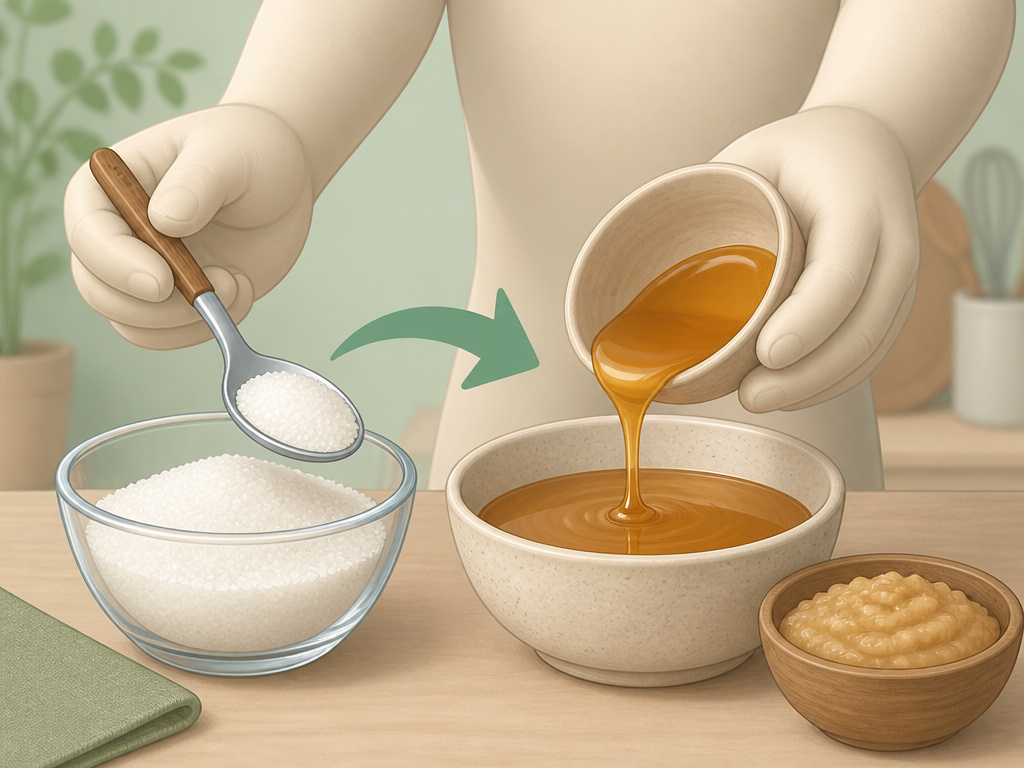
Reducing sugar doesn’t mean drinking bitter, unpleasant coffee. It means swapping high-sugar ingredients for ones that add flavor through other means.
Swap 1: Change Your Milk
This is the highest-impact move. Switch from sweetened dairy or plant milk to an unsweetened alternative.
* Unsweetened Almond Milk: Adds a nutty flavor with less than 1g of sugar per serving. It’s a top choice among dairy-free milk alternatives.
* Unsweetened Coconut Milk Beverage: Imparts a slight tropical sweetness from fat, not sugar.
* Heavy Cream or Half & Half: Lower in lactose than milk, so they add creaminess with minimal sugar (0.4g-0.6g per oz).
Swap 2: Use Spices and Extracts
Flavor your coffee directly, bypassing sweeteners entirely.
* Cinnamon: Add a dash to your grounds before brewing or stir a pinch into your cup. It provides a perceived sweetness and warmth. Explore other natural sweet spices for variety.
* Vanilla Extract or Paste: A few drops of real extract add deep aroma and flavor without the sugar of syrup.
* Cardamom or Nutmeg: Used in many traditional coffee preparations to enhance complexity.
Swap 3: Try Fat-Based “Creamers”
Fats carry flavor and create a rich mouthfeel that can satisfy the craving for sweetness.
* A dab of butter or ghee: The cornerstone of “bulletproof” style coffee.
* Coconut Oil or MCT Oil: Adds a subtle sweetness and sustained energy. While not sweeteners, these fatty coffee additions change the drinking experience. Similarly, MCT oil coffee is popular in keto circles for its metabolic effects.
* A pinch of salt: This is the oldest trick in the book. Salt neutralizes bitterness. Just a grain or two on the tongue before sipping can make black coffee taste smoother. It’s a powerful bitterness reduction technique.
I used to drink my afternoon coffee with two sugars and a splash of cream. Switching to unsweetened almond milk and a tiny pinch of salt cut my added sugar by over 20 grams a day. The first week tasted thin. By week two, my palate adjusted and now sweet coffee tastes cloying.
TL;DR: Ditch sweetened milk first. Use spices and extracts for flavor. A pinch of salt can make bitter coffee palatable without a single gram of sugar.
How Coffee Compares to Other Caffeinated Drinks
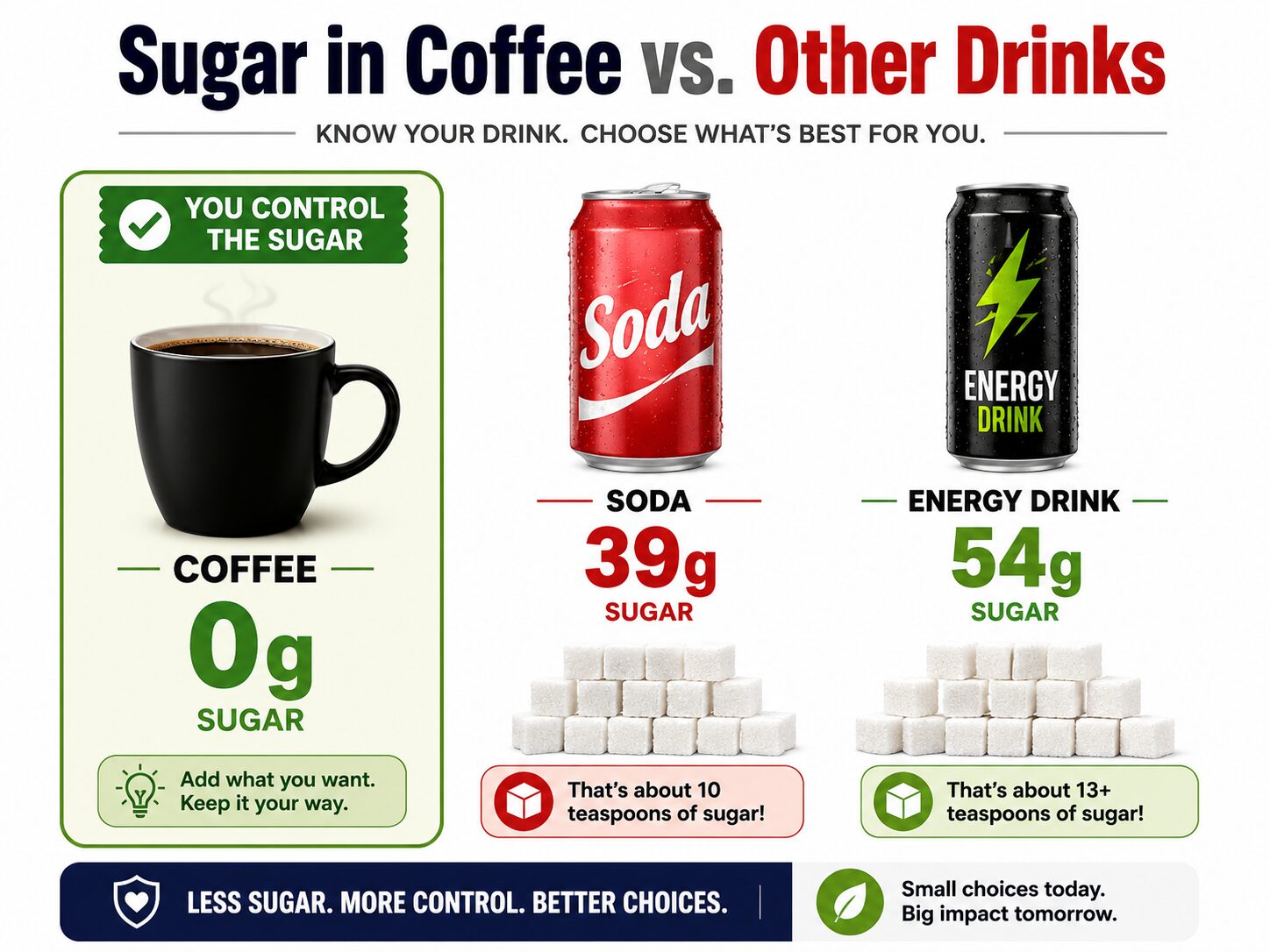
People often switch from soda or energy drinks to coffee for health reasons. But is a sugary latte actually better?
| Beverage (Typical Serving) | Approx. Sugar | Key Context |
|---|---|---|
| Black Coffee (16oz) | 0g | The baseline. |
| Grande Caffè Latte (16oz) | 28g | Mostly from syrup and milk lactose. |
| Dunkin’ Coffee w/ Cream & Sugar (14oz) | 12g | A common “regular” order. |
| Can of Cola (12oz) | 39g | All added sugar. |
| Red Bull (8.4oz can) | 27g | High for a small volume. Learn more about Red Bull sugar content. |
| Monster Energy (16oz can) | 54g | Extremely high. Details on Monster drink sugar are staggering. |
The comparison is stark. A flavored latte can have sugar content rivaling a soda. A large energy drink like Monster can double it. This makes understanding sugar in energy drinks crucial if you’re managing your intake.
The advantage of coffee is control. You can choose to have zero sugar. With soda or a pre-bottled sweetened energy drink, the sugar is locked in.
Frequently Asked Questions
Does coffee have natural sugar?
No. Coffee beans contain some carbohydrates, but the brewing process does not extract measurable amounts of simple sugars like sucrose or fructose into your cup. Any sugar in black coffee is negligible.
Is the sugar in milk bad for you?
The sugar in milk is lactose, a natural sugar. It comes packaged with protein, fats, and vitamins. For most people, it’s not a concern. The problem is the added sugars, from table sugar, syrups, and sweetened creamers, that pile on top of the lactose.
How much sugar is in a standard coffee creamer?
single tablespoon of a typical liquid non-dairy coffee creamer can contain 5-6 grams of sugar. The powdered versions often have even more. Always check the label; “French Vanilla” usually means “sugar-added.
Can I drink coffee on a no-sugar diet?
Yes, absolutely. Stick to black coffee, or use unsweetened plant milks and fat-based additives like a splash of heavy cream or MCT oil. Avoid all syrups, table sugar, and sweetened creamers.
Why does my coffee taste bitter without sugar?
Bitterness in coffee is often a sign of over-extraction (brew time too long, grind too fine) or stale beans. Try a fresher, lighter roast, a coarser grind, or a shorter brew time. A pinch of salt can also neutralize bitterness without adding sweetness.
Before You Go
The sugar in your coffee is 100% under your control. Black coffee starts at zero. From there, every addition, a teaspoon of sugar, a splash of milk, a pump of syrup, adds a known, measurable amount.
The big wins come from swapping high-sugar components for smarter ones. Choose unsweetened almond milk over sweetened oat milk. Reach for cinnamon instead of a second sugar packet. Learn to brew your coffee so it tastes good without needing to be masked.
Track what you add for just three days. The total will likely surprise you. Then make one change. Your coffee will still be yours, just a little lighter.
{
“@context”: “https://schema.org”,
“@type”: “HowTo”,
“name”: “How to Measure and Reduce Sugar in Your Coffee”,
“totalTime”: “PT5M”,
“tool”: [
{
“@type”: “HowToTool”,
“name”: “Digital kitchen scale”
},
{
“@type”: “HowToTool”,
“name”: “Measuring spoons”
}
],
“step”: [
{
“@type”: “HowToStep”,
“name”: “Identify your starting point”,
“text”: “Check the nutrition label of your pre-made drink or measure your added sweeteners. One teaspoon of granulated sugar adds 4g of sugar.”
},
{
“@type”: “HowToStep”,
“name”: “Measure your milk”,
“text”: “Weigh or measure the milk or creamer you add. A 1-ounce serving of whole milk adds about 1.5g of natural sugar (lactose).”
},
{
“@type”: “HowToStep”,
“name”: “Calculate syrup pumps”,
“text”: “Each standard coffee shop pump of flavored syrup holds about 5ml and adds roughly 5g of sugar. Two pumps in a Grande means 10g from syrup alone.”
},
{
“@type”: “HowToStep”,
“name”: “Swap one element”,
“text”: “Replace one sweetener source. Try unsweetened almond milk for dairy, or a dash of cinnamon instead of a sugar packet. Taste and adjust.”
},
{
“@type”: “HowToStep”,
“name”: “Re-measure and track”,
“text”: “After your swap, re-measure your total added sugar for the week. Cutting even 10g per day removes over 1.5 pounds of sugar from your diet annually.”
}
]
}
{
“@context”: “https://schema.org”,
“@type”: “FAQPage”,
“mainEntity”: [
{
“@type”: “Question”,
“name”: “Does coffee have natural sugar?”,
“acceptedAnswer”: {
“@type”: “Answer”,
“text”: “No. Coffee beans contain some carbohydrates, but the brewing process does not extract measurable amounts of simple sugars like sucrose or fructose into your cup. Any sugar in black coffee is negligible.”
}
},
{
“@type”: “Question”,
“name”: “Is the sugar in milk bad for you?”,
“acceptedAnswer”: {
“@type”: “Answer”,
“text”: “The sugar in milk is lactose, a natural sugar. It comes packaged with protein, fats, and vitamins. For most people, it’s not a concern. The problem is the added sugars, from table sugar, syrups, and sweetened creamers, that pile on top of the lactose.”
}
},
{
“@type”: “Question”,
“name”: “How much sugar is in a standard coffee creamer?”,
“acceptedAnswer”: {
“@type”: “Answer”,
“text”: “single tablespoon of a typical liquid non-dairy coffee creamer can contain 5-6 grams of sugar. The powdered versions often have even more. Always check the label; \”French Vanilla\” usually means \”sugar-added.”
}
},
{
“@type”: “Question”,
“name”: “Can I drink coffee on a no-sugar diet?”,
“acceptedAnswer”: {
“@type”: “Answer”,
“text”: “Yes, absolutely. Stick to black coffee, or use unsweetened plant milks and fat-based additives like a splash of heavy cream or MCT oil. Avoid all syrups, table sugar, and sweetened creamers.”
}
},
{
“@type”: “Question”,
“name”: “Why does my coffee taste bitter without sugar?”,
“acceptedAnswer”: {
“@type”: “Answer”,
“text”: “Bitterness in coffee is often a sign of over-extraction (brew time too long, grind too fine) or stale beans. Try a fresher, lighter roast, a coarser grind, or a shorter brew time. A pinch of salt can also neutralize bitterness without adding sweetness.”
}
}
]
}
