
Does Instant Coffee Have Caffeine? Measuring MG Per Serving
Yes, instant coffee contains caffeine. A standard 8-ounce cup made with one teaspoon of powder delivers between 30 and 90 milligrams, with the exact amount depending on the brand, the specific coffee used, and how much powder you actually scoop into your mug.
The confusion starts because the answer is never a single number. You get a range, and that range overlaps with brewed coffee but sits on the lower end. Most generic articles stop there.
This guide gives you the specific numbers from government databases and brand websites, shows you where decaf fits in, and explains why your morning cup might be stronger or weaker than you think.
Key Takeaways
- The USDA’s primary data lists 31.8 mg of caffeine per gram of instant coffee powder. For a 2-gram serving, that’s about 64 mg.
- Major brands like Starbucks VIA, Nescafé, and Folgers publish their own ranges, typically 60–80 mg per 8-ounce serving.
- Decaffeinated instant coffee is not caffeine-free. USDA data shows it contains about 0.7 mg per 100ml of prepared drink.
- Your preparation method is the biggest variable. Using two heaping teaspoons instead of one level teaspoon can easily double the caffeine content.
- Compared to a standard cup of drip coffee, instant coffee generally provides a lighter, more manageable caffeine boost for many people.
The USDA & EFSA Numbers
Forget estimates. The U.S. Department of Agriculture maintains a public nutrient database called FoodData Central. It’s the gold standard for this kind of information. According to their entry for “Coffee, instant, regular, powder,” there are 31.8 milligrams of caffeine in every single gram of powder.
Do the math for a typical serving. One measured teaspoon of instant coffee granules weighs roughly 2 grams. That means your cup starts with about 64 mg of caffeine before you even add water. The prepared drink, “Coffee, instant, regular, prepared with water,” lists 28.3 mg per 100ml. Since a standard cup is about 237ml (8 ounces), that comes out to roughly 67 mg.
According to the USDA FoodData Central, instant coffee powder contains 31.8 mg of caffeine per 1 gram. This primary-source figure is the baseline for calculating the caffeine in any serving you make at home.
The European Food Safety Authority (EFSA) provides a wider, more practical range in its scientific assessments. Their 2015 opinion on caffeine safety states that a typical 150ml cup of instant coffee contains 70–100 mg. This accounts for regional preparation habits that might use more powder per cup.
The takeaway is consistency. Two major government bodies point to the same ballpark: a single serving sits between 60 and 100 mg. This is less than the 95 mg often cited for brewed coffee, but it’s far from negligible.
TL;DR: The USDA says 31.8 mg of caffeine per gram of instant powder. For a 2-gram teaspoon, that’s about 64 mg in your cup.
What the Major Brands Actually Say
Brands know you’re looking for this number. The smart ones publish it right on the product page or jar. These aren’t estimates, they’re disclosures based on their own lab testing.
| Brand & Product | Caffeine per Serving | Serving Size Defined |
|---|---|---|
| Starbucks VIA Instant Pike Place Roast | 80 mg | 1 packet (2.1g) in 8 fl oz water |
| Nescafé Clasico Dark Roast Instant | 60–80 mg | 1 rounded tsp (approx. 2g) in 8 fl oz water |
| Folgers Classic Roast Instant | 60–80 mg | 1 rounded tsp (approx. 2g) in 8 fl oz water |
Notice the pattern. Starbucks gives a single, precise number (80 mg) because they control the portion with a single-serve packet. Nescafé and Folgers give a range (60–80 mg) because they know you might scoop a little more or a little less. That range aligns perfectly with the USDA’s calculated figure.
If you’re comparing your morning ritual to a café drink, remember that a standard caffeine in espresso shot has about 64 mg, and a typical cappuccino caffeine content uses one of those shots. Your mug of instant is in the same league as a single espresso.
Common mistake: Assuming all instant coffee brands are equal, a Starbucks VIA packet delivers a confirmed 80 mg, while a heaping spoon of a generic brand could be under 60 or over 100 depending on the scoop.
The brand-specific number is your best starting point. If you need a predictable dose, use a scale and stick to the brand’s defined serving size.
Your Spoon Is The Biggest Variable
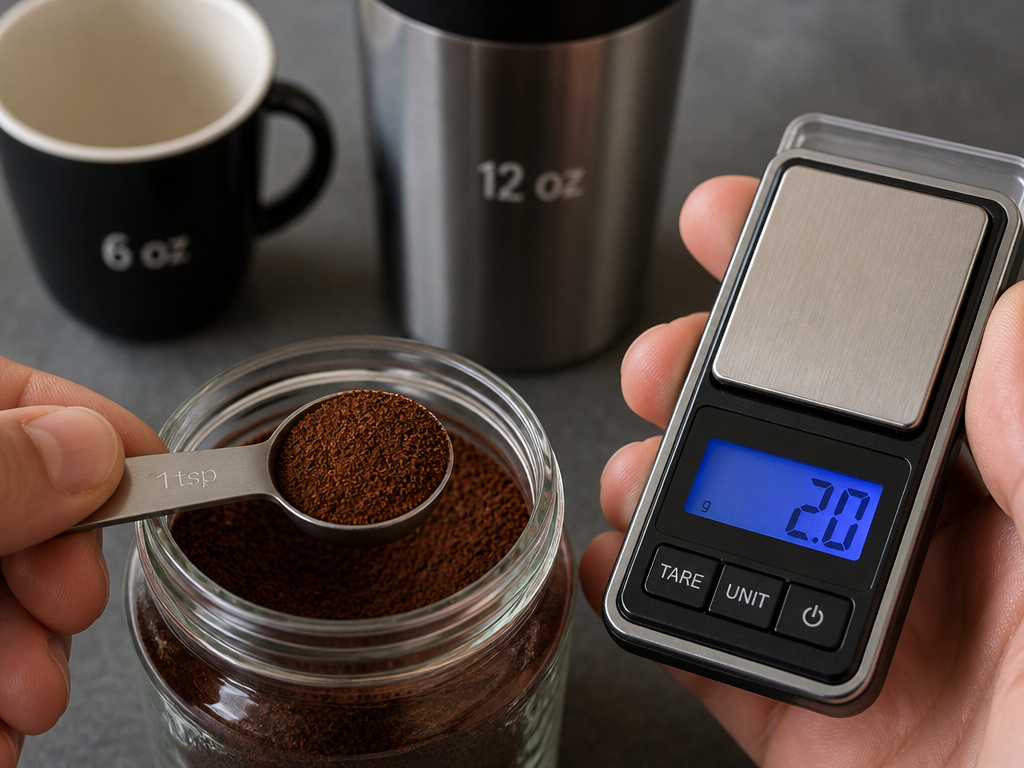
Laboratory measurements use precise grams. Your kitchen uses a teaspoon from the drawer. This is where the 30–90 mg range comes from.
A level teaspoon of fine instant powder might weigh 1.8 grams. A heaping teaspoon of coarse granules could be 3.5 grams. That’s almost double the coffee mass. Using the USDA’s 31.8 mg-per-gram constant, your caffeine intake swings from 57 mg to 111 mg based on your scooping habit alone.
Water volume is the other lever. Making a “strong” cup in a small 6-ounce mug concentrates the caffeine. Diluting a single serving in a 12-ounce travel mug cuts the concentration in half. The brewing methods for caffeine extraction in tea operate on similar principles, more leaf, less water, longer steep equals a stronger result.
Here’s how to lock it in: 1. Weigh your coffee. A $20 digital kitchen scale removes all guesswork. Aim for 2 grams for a standard cup. 2. Use a measured scoop. If the jar includes a scoop, use it. Don’t substitute with a random spoon. 3. Measure your water. Use 8 fluid ounces (one cup) as your baseline for any standard serving recommendation.
Do this for three days. The consistency becomes automatic, and you’ll know exactly what you’re drinking.
Decaf Instant Coffee: The “Almost Zero” Truth
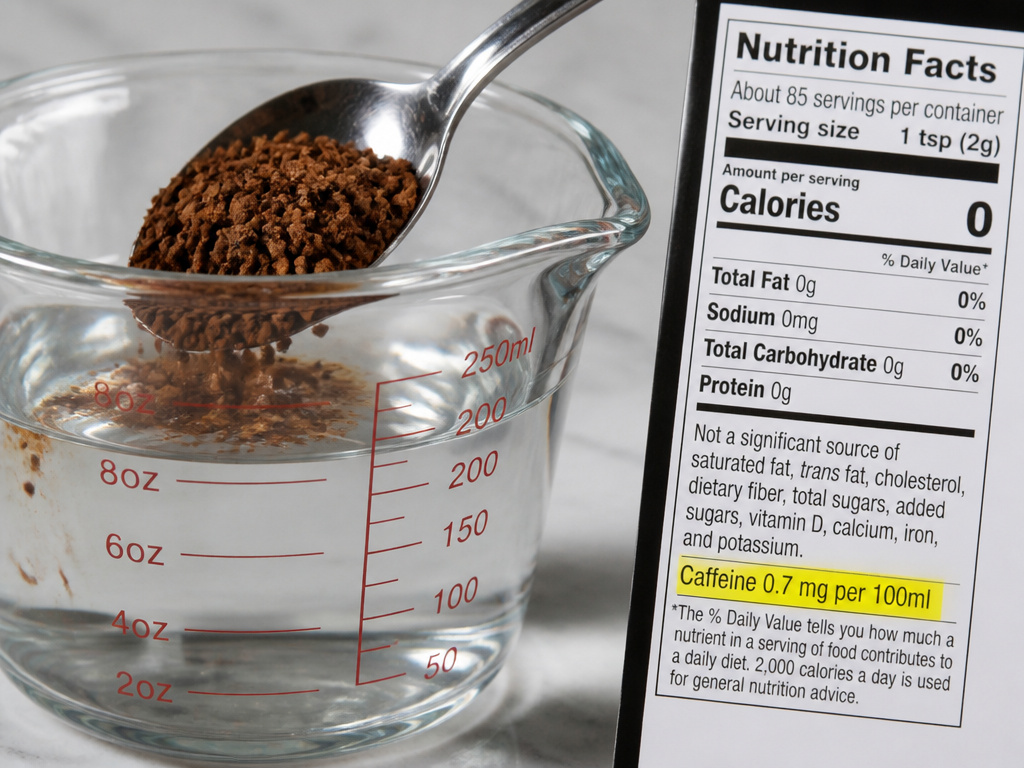
Decaffeinated does not mean caffeine-free. The USDA data is clear on this. Their entry for “Coffee, instant, decaffeinated, prepared with water” lists 0.7 mg of caffeine per 100ml.
For an 8-ounce cup (237ml), that’s about 1.7 mg of caffeine. Compare that to the 60–80 mg in regular instant. It’s a reduction of over 97%, but it’s not zero.
I switched to decaf instant in the afternoons for years thinking it was completely inert. Then I read the USDA spec sheet. That 1.7 mg won’t keep you awake, but if you’re sensitive or consuming multiple cups, it’s a data point worth having.
This trace amount exists because the decaffeination process, typically using water, solvents, or carbon dioxide, is highly efficient but not perfect. A tiny fraction of the original caffeine remains. For the vast majority of people, this is irrelevant. But if you are strictly avoiding caffeine for medical or religious reasons, you need to know that decaf instant coffee, like decaf brewed coffee, still contains a trace.
If you’re exploring low-caffeine options, understanding the caffeine in black tea (about 40-70 mg per cup) or the iced tea caffeine levels in cold brew can help you map out your daily intake.
Instant vs. Brewed: A Caffeine Comparison
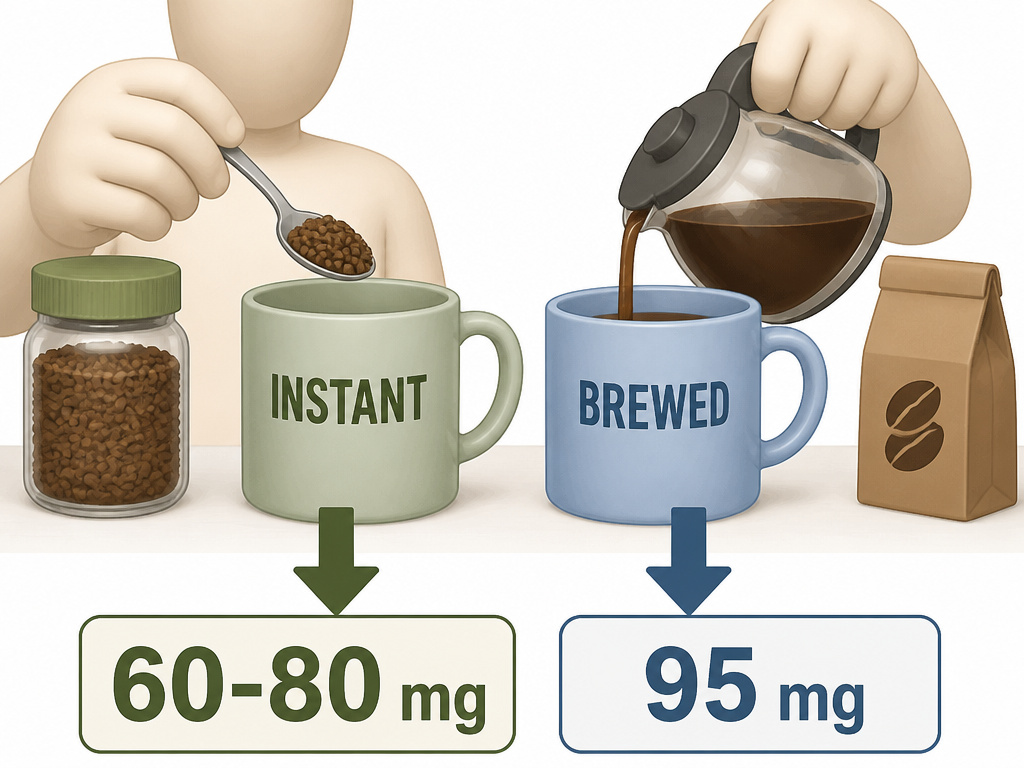
So how does it stack up against the coffee from your drip machine or French press? The typical 8-ounce cup of brewed coffee contains about 95 mg of caffeine, according to USDA data for “Coffee, brewed from grounds.”
This means your instant cup, at 60-80 mg, generally provides about 20-40% less caffeine than its brewed counterpart. The difference comes down to the manufacturing process. Instant coffee is brewed at high concentration, then freeze-dried or spray-dried. Some volatile compounds and oils are lost in this process, which can include caffeine.
For a visual comparison: – Instant Coffee (8 oz): 60–80 mg – Home-Brewed Drip Coffee (8 oz): 95 mg – Espresso Shot (1 oz): 64 mg – Black Tea (8 oz): 40–70 mg – Coca-Cola (12 oz): 34 mg – Red Bull (8.4 oz): 80 mg
This puts instant coffee’s stimulant effect closer to a strong cup of tea or a single espresso than to a large mug of drip coffee. It’s why many people find it a good afternoon option, it delivers a perceptible lift without the jitters that can come from a full-strength brew. The caffeine release rates from tea are often slower, but the peak concentration from instant coffee hits faster.
Health & Chemistry: Beyond Just Caffeine
Caffeine is the headline, but it’s not the only compound in your cup. The conversation about instant coffee often includes acrylamide and antioxidants.
Acrylamide is a chemical that forms naturally in certain foods, including coffee, during high-temperature processes like roasting. Some studies, including a PMC study on coffee product contents, note that instant coffee can contain higher levels of acrylamide than regular brewed coffee because of the additional high-heat drying step. Regulatory bodies like the EFSA monitor this, and the consensus is that the levels in coffee are not a concern for most people at typical consumption levels. If you drink instant coffee as part of a varied diet, the risk is considered low.
On the beneficial side, coffee is a source of antioxidants like chlorogenic acids. The same study linked above analyzes these contents. The drying process for instant coffee may reduce some antioxidant levels compared to fresh brewing, but instant coffee still contributes to your overall antioxidant intake.
For those monitoring other sources of stimulants, it’s useful to know how instant coffee compares to a Monster Energy caffeine drink (about 160 mg) or the hot chocolate caffeine content (usually under 5 mg). It’s about context and total daily intake.
Frequently Asked Questions
Does all instant coffee have the same amount of caffeine?
No. The caffeine content varies by brand, roast (dark vs. light), and the specific coffee bean blend used. Always check the brand’s nutritional information or website for their disclosed range.
Can I make instant coffee completely caffeine-free?
No. Even decaffeinated instant coffee contains trace amounts of caffeine (about 1-2 mg per cup). Truly caffeine-free options would be herbal teas or coffee substitutes like roasted grain beverages.
Is the caffeine in instant coffee stronger or weaker than in espresso?
It’s about total milligrams. A single 1-ounce espresso shot has about 64 mg of caffeine. A standard 8-ounce cup of instant coffee has 60-80 mg. So, they are similar in total caffeine, but the espresso delivers it in a concentrated, rapid dose.
Does adding more instant coffee powder double the caffeine?
Yes, approximately. Caffeine content is directly proportional to the mass of powder you use. Two teaspoons have roughly twice the caffeine of one teaspoon.
Why does instant coffee sometimes feel weaker than brewed?
It’s usually a combination of lower total caffeine (60-80 mg vs. 95 mg for brewed) and the absence of certain oils and compounds that contribute to coffee’s full body and sustained sensory effect. The “feel” isn’t just about caffeine.
The Bottom Line
Instant coffee has caffeine, anywhere from 30 to 90 milligrams in your cup. The exact number depends on three things: the brand’s specific product, the amount of powder you use, and the volume of water in your mug.
For a precise answer, trust the primary sources. The USDA says 31.8 mg per gram of powder. Starbucks says 80 mg per packet. Your heaping teaspoon says something else entirely. If you need a consistent, moderate caffeine boost with zero brewing hassle, instant coffee delivers. Just know what you’re scooping.
