
Does Coffee Make You Pee? The Caffeine Tolerance Threshold
Coffee can make you pee, but whether it does depends entirely on your personal caffeine tolerance and the specific dose you consume. For someone new to caffeine, a single 8-ounce cup containing around 100 mg can act as a mild diuretic. For a daily drinker, that same cup has little to no extra effect on urine output because the body adapts within days.
Most people assume the coffee itself is the trigger. They miss the real variable: the caffeine content of that particular cup and their own physiological history with the stimulant. A dark roast pour-over and a large blonde roast from a chain cafe deliver completely different doses. Your body’s response to each is not the same.
This guide breaks down the exact mg threshold that matters, the science of why tolerance develops so fast, and what this means for your hydration. You’ll learn why the old “coffee dehydrates you” rule is mostly wrong for regular drinkers.
Key Takeaways
- The diuretic effect is dose-dependent, with studies pointing to a 250-300 mg caffeine threshold for a noticeable acute increase in urine output.
- Habitual coffee drinkers develop a rapid tolerance, often within 4-5 days, making their daily cup a net hydrator, not a dehydrator.
- The mechanism isn’t just “stimulating the kidneys”; caffeine inhibits sodium reabsorption in the renal tubules, pulling more water into urine.
- The total fluid volume you drink with your coffee matters. A large glass of water with a high-caffeine shot causes more diuresis than a small, weak cup alone.
- For caffeine-naïve individuals (non-regular consumers), even a modest cup can have a pronounced diuretic effect, making their experience completely different from a daily drinker’s.
The One Factor That Decides Your Bathroom Trips
Your caffeine habit is the master switch. The body adapts to consistent caffeine exposure with a speed that surprises most people. This adaptation, or tolerance, fundamentally changes how your renal system reacts.
Caffeine acts as a mild diuretic by increasing renal blood flow and inhibiting sodium reabsorption in the renal tubules. This physiological mechanism is well-established, but its magnitude depends directly on the consumer’s habitual intake.
If you drink coffee every day, your brain and kidneys have already adjusted. The adenosine receptors that caffeine blocks have upregulated, and the renal system no longer overreacts to its presence. For you, that morning cup contributes to your daily fluid intake almost as effectively as water. A 2017 systematic review in PLoS One solidified this, concluding that caffeine intake does not lead to dehydration or significantly increase urine output in habitual consumers.
The opposite is true for the caffeine-naïve. For someone who never drinks coffee, tea, or soda, that first cup is a shock to the system. The adenosine blockade is novel, the renal signal is unmoderated, and the diuretic effect is real and noticeable. This split in experience is why the internet is full of contradictory personal reports. Both sides are right, for their own physiology.
TL;DR: If you drink coffee daily, you’re likely immune to its diuretic effect. If you don’t, your first cup will probably send you to the bathroom.
The Science of the Signal: How Caffeine Talks to Your Kidneys
It’s not a simple “stimulation.” The process is a specific biochemical interference. Caffeine’s structure allows it to block adenosine receptors in the brain, which is why you feel alert. But it also blocks them in the kidneys, where adenosine normally helps promote sodium reabsorption.
When sodium is reabsorbed, water follows it back into the bloodstream. By inhibiting this process, caffeine causes more sodium and water to remain in the tubule, destined for the bladder. This is the primary mechanical reason for increased urine volume. A foundational 2002 review in Kidney International detailed this pathway, describing how caffeine increases renal blood flow and exerts this inhibitory effect on sodium channels.
The dose controls the strength of this signal. A low dose creates a minor interference. A high dose creates a strong blockade. This is why the specific milligrams in your mug are more important than the mere presence of coffee.
The Milligram Threshold: When Coffee Actually Becomes a Diuretic
So, how much caffeine triggers the effect? Research points to a clear range. The acute diuretic effect becomes significant with a dose of 250-300 mg of caffeine consumed alongside a large volume of fluid (roughly 500-600 ml).
Let’s translate that to real coffee. An 8-ounce cup of brewed coffee typically holds 95 to 165 mg, according to Mayo Clinic data. You’d need at least two strong cups, or one very large specialty drink, to hit that 250 mg threshold in one sitting.
| Beverage (Standard Serving) | Typical Caffeine Range | Diuretic Risk (for non-habitual drinker) |
|---|---|---|
| Brewed Coffee (8 oz) | 95–165 mg | Low to Moderate |
| Espresso (1 shot) | 64 mg | Very Low |
| Blonde Roast Coffee (16 oz) | 360–400 mg | High |
| Cold Brew (16 oz) | 200–300 mg | Moderate to High |
| Decaf Coffee (8 oz) | 2–5 mg | None |
This table shows why ordering a large, light-roast coffee as an occasional drinker is a guaranteed recipe for extra bathroom breaks. You’re hitting the pharmacological threshold in a single serving. Meanwhile, a single espresso shot, even for a novice, is unlikely to cross the line.
The total fluid volume is the other half of the equation. Drinking that high-caffeine dose with a lot of water (like having a big glass alongside your coffee) accelerates and amplifies the diuretic response. The kidneys have more fluid to process, and the caffeine is telling them to release it.
Common mistake: Assuming all “cups of coffee” are equal — a 12-oz dark roast from your home machine and a 20-oz blonde roast from a cafe can differ by 300 mg of caffeine. The latter will act as a strong diuretic for an occasional drinker.
Caffeine Naïve vs. Habitual Consumer: Two Different Worlds

This is the core dichotomy that explains every argument about coffee and pee. Your status dictates your reality.
The Caffeine-Naïve Individual:
- Definition: Consumes caffeine less than 3 times per week.
- Response: Pronounced diuretic effect. Even a 100 mg dose can increase urine output noticeably for 2-3 hours.
- Why-Layer: The adenosine receptors in their kidneys are unadapted. The blockade by caffeine is total and novel, leading to a strong signal for sodium and water excretion.
- Practical Implication: If you’re in this group, plan accordingly. Your post-coffee window might involve a bathroom trip. This group is also more susceptible to other caffeine side effects like jitters or sleep disruption.
The Habitual Consumer:
- Definition: Drinks caffeinated coffee daily.
- Response: Minimal to no diuretic effect from typical consumption. The body treats the fluid as contributory hydration.
- Why-Layer: Tolerance develops rapidly, often within 4-5 days of consistent intake. The kidneys adjust to the constant presence of caffeine, and the adenosine receptor response dampens. The sodium reabsorption inhibition becomes less efficient.
- Practical Implication: You can count your coffee toward your daily fluid goals. The old warning that “coffee dehydrates you” is largely irrelevant for you, as confirmed by the CDC meta-analysis on caffeine which found no significant fluid loss in habituated individuals.
The shift from naïve to habitual is fast. That’s why someone who starts drinking coffee daily might notice the bathroom urgency for the first week, then barely notice it thereafter. The body’s adaptation is the silent fix.
Debunking the Dehydration Myth
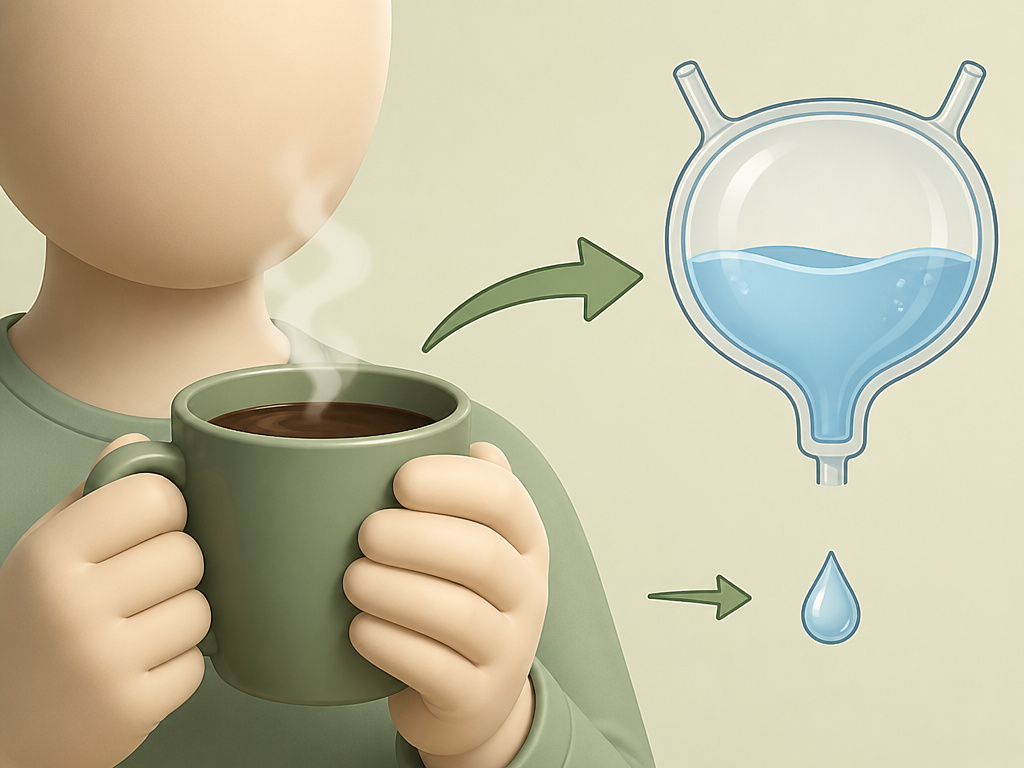
The persistent idea that coffee dehydrates you is a fossil from less nuanced science. It stems from observing the acute diuretic effect in studies using caffeine-naïve subjects or very high doses and incorrectly applying it to the general population.
For the habitual drinker, the net fluid balance is positive. You ingest 300 ml of fluid in your coffee. Even if the caffeine causes you to excrete an extra 50 ml beyond baseline, you’re still 250 ml ahead. Furthermore, the Frontiers in Nutrition caffeine study on high-caffeine coffee showed that while electrolyte excretion increased at rest, it did not create a state of clinical dehydration in regular consumers.
The truth is simpler: coffee is mostly water. Unless you are consuming extreme amounts of very high-caffeine coffee in a dehydrated state, it contributes to your hydration needs. The diuretic effect, when present, is a short-term redistribution of fluid, not a net loss.
I used to skip my afternoon coffee if I was going on a long hike, fearing dehydration. I’d feel sluggish and headachy. Then I read the actual research. Now I have my cup, drink some water with it, and start the hike perfectly hydrated and alert. The headache was caffeine withdrawal, not dehydration.
Practical Implications for Your Coffee Routine
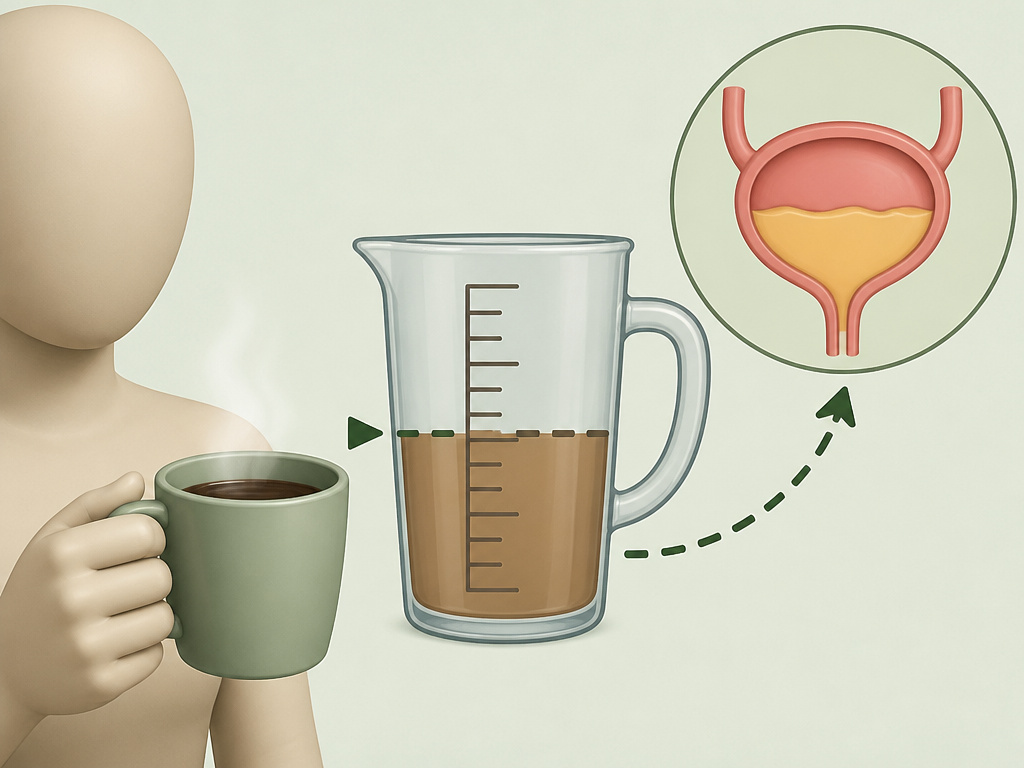
Knowing this, you can tailor your consumption to manage the outcome.
If you want to minimize bathroom trips:
- Know your dose. Stick to single servings of standard brewed coffee or espresso.
- Avoid the threshold. Stay below 250 mg of caffeine in a single sitting if you’re sensitive.
- Space it out. Drinking your coffee slowly over an hour gives your kidneys a gentler signal than bolting it down.
- Consider brewing method. A French press or espresso typically has less caffeine per ounce than a long-drip or pour-over of the same bean.
If you are a regular drinker and care about hydration:
- Drink your coffee. It counts. Don’t avoid it thinking you’re saving water.
- Listen to your thirst. It’s a better guide than old myths.
- Pair with water if you’re concerned. Having a glass of water alongside your coffee is never a bad idea, but it’s for general wellness, not to “cancel out” dehydration.
For those exploring other beverages, understanding caffeine content in espresso versus drip is crucial, as is knowing how tea caffeine levels create a slower, gentler stimulation. Parents should also review safe coffee intake for nursing mothers, as caffeine tolerance in infants is virtually non-existent.
Frequently Asked Questions
Does decaf coffee make you pee?
Decaf coffee contains only 2-5 mg of caffeine per cup, far below the diuretic threshold. Any increase in urination is almost certainly due to the volume of fluid you’re drinking, not the coffee itself. It hydrates you like any other non-caffeinated beverage.
How long after drinking coffee do you need to pee?
The diuretic effect, if it occurs, usually begins within 30-45 minutes of consumption as caffeine enters the bloodstream. The peak effect is typically between 1-2 hours after drinking, and the signal tapers off over the next 2-3 hours.
Does coffee make you pee more than water?
For a caffeine-naïve person who drinks a high-dose coffee, yes, it can cause more urine output than an equal volume of water in the short term (2-3 hours). For a habitual drinker, the urine output from coffee and an equal volume of water is virtually identical. The PubMed abstract for coffee study supports this nuanced view, showing augmented excretion is not a universal rule.
Can building a tolerance reduce other coffee side effects?
Yes, tolerance develops to multiple effects, including the diuretic response, increased heart rate, and the “jittery” feeling. However, tolerance to caffeine’s alertness benefits also develops, which is why some people feel they need more coffee over time to get the same focus. This is distinct from its impact on coffee and bowel movements, a separate digestive effect largely mediated by other compounds.
Do energy drinks make you pee more than coffee?
It depends on the total caffeine dose. A standard 8.4-oz Red Bull has about 80 mg of caffeine—less than a cup of coffee. A 16-oz Monster Energy drink can have 160 mg, similar to a strong coffee. The diuretic effect would follow the same dose-dependent and tolerance rules. However, the high sugar content in many energy drinks can also have an osmotic diuretic effect, potentially increasing urination further.
Before You Go
Coffee’s relationship with your bladder is not a yes-or-no question. It’s a conditional response governed by pharmacology and personal history. The 250-300 mg caffeine threshold is the key number, and your own drinking habit is the lock it fits into.
For the daily drinker, relax. Your ritual is not dehydrating you. For the occasional sipper, now you know why that large latte has a predictable consequence. This knowledge strips away the old wives’ tales and lets you enjoy your cup based on how your body actually works. Whether you’re comparing cappuccino caffeine content to plan your day or considering the health benefits of tea for a calmer focus, it all starts with understanding the dose.
