
Does Coffee Make You Fat? The 70-Calorie Add-In That Does
No, black coffee does not make you fat. An 8-ounce cup contains just 2-5 calories and zero fat. The weight gain linked to coffee comes entirely from high-calorie additions like sugar, cream, and flavored syrups, which can turn a simple brew into a dessert drink packing hundreds of calories.
People get this wrong because they blame the coffee, not the candy bar’s worth of sugar and fat they stir into it. A daily habit of these loaded drinks creates a consistent calorie surplus that leads to weight gain over weeks and months.
This guide breaks down the science, shows you the exact calorie math on common add-ins, explains how black coffee might actually support your metabolism, and gives you a plan to enjoy your brew without the baggage.
Key Takeaways
- Black coffee is essentially calorie-free (2-5 calories per cup). Fat gain comes from added sugar, dairy, and syrups.
- A Starbucks Venti Caramel Macchiato has about 350 calories and 42g of sugar, similar to a slice of cheesecake.
- Caffeine can boost metabolism and fat burning slightly, but this effect is small and not a weight-loss solution.
- Poor sleep caused by late-day caffeine disrupts appetite hormones (ghrelin and leptin), which can increase hunger and cravings.
- Your genetics (CYP1A2 gene) determine how fast you process caffeine, affecting its impact on your sleep and anxiety levels.
The Real Culprit: What You Add to the Cup
Headline health studies look at black coffee. Your morning mug probably isn’t that. The transition from a 5-calorie beverage to a 350-calorie dessert happens with a few quick pours.
The USDA’s FoodData Central lists an 8-ounce black coffee at 2-5 calories. Two tablespoons of whole milk add about 18 calories. Two teaspoons of granulated sugar pile on another 32 calories. That’s a 70-calorie coffee, a common baseline. Now scale that up. A Starbucks Venti (20 oz) Caramel Macchiato with whole milk and syrup clocks in at roughly 350 calories and 42 grams of sugar. You are not drinking coffee. You are drinking a milkshake with espresso.
Common mistake: Assuming “a little cream and sugar” is harmless, a daily Venti-sized sweetened coffee drink can add over 1,000 extra calories to your weekly intake, leading to a pound of weight gain every 3-4 weeks if not offset.
This is the core of the issue. The coffee is innocent. The calorie-dense additions are not. The problem is behavioral, not chemical.
| Addition (Typical Serving) | Approximate Calories | Equivalent In… |
|---|---|---|
| 2 tsp Granulated Sugar | 32 calories | 2.5 small sugar cubes |
| 2 tbsp Half & Half | 40 calories | 1 pat of butter |
| 2 tbsp Flavored Syrup | 80-100 calories | 2 packets of gummies |
| Whipped Cream Topping | 50-100 calories | 1-2 tbsp of frosting |
TL;DR: Your coffee isn’t making you fat; the sugar, cream, and syrup are. Track those additions like you would food.
How Black Coffee Might Actually Help
Epidemiological research consistently finds an inverse relationship between coffee consumption and body weight. A 2020 meta-analysis in Obesity Reviews of 26 studies concluded that higher coffee intake was linked to lower body fat percentage and waist circumference, particularly in women.
The mechanisms aren’t magic, but they are measurable. Caffeine is a mild stimulant that increases thermogenesis, your body’s heat production, and promotes lipolysis, the breakdown of stored fat for energy. This can give a slight, temporary bump to your metabolic rate.
Caffeine intake stimulates the sympathetic nervous system, increasing the release of neurotransmitters like norepinephrine. This signals fat cells to break down triglycerides and release fatty acids into the bloodstream for use as energy, a process confirmed in controlled lab studies.
More significant may be coffee’s other bioactive compounds, like chlorogenic acids. These antioxidants may slow the absorption of carbohydrates from your gut and improve how your body uses insulin. Better insulin sensitivity helps manage blood sugar spikes and reduces fat storage signals. Some newer research, like a 2025 Frontiers in Nutrition article, is digging into how different coffee compounds distinctly affect body composition parameters.
The appetite-suppressing effect is real for many people. Caffeine can blunt the feeling of hunger for a short period. This is why it’s a staple in many pre-workout supplements and why some people use black coffee as a tool during intermittent fasting windows.
It’s crucial to frame this correctly. These are modest, supportive effects. Drinking black coffee is not a weight-loss strategy. It is a neutral, or slightly beneficial, beverage that can be part of a healthy diet. Relying on it to “burn fat” while ignoring diet and exercise is a dead end. For a deeper look at compounds that may offer more targeted metabolic support, some explore adding MCT oil in coffee.
The Indirect Pathways: Sleep, Genetics, and Substitution
Coffee’s impact on weight isn’t always direct. Two hidden pathways can sabotage your efforts: sleep disruption and what you’re not drinking because you’re drinking coffee.
Caffeine has a half-life of about 5-6 hours. A 3 p.m. coffee means half that caffeine is still in your system at 8 p.m. For many, this impairs sleep quality or quantity. Chronic sleep deprivation is a well-established driver of weight gain. It throws your appetite hormones out of balance.
Sleep loss increases ghrelin (the “hunger hormone”) and decreases leptin (the “satiety hormone”). You feel hungrier, less full, and you crave energy-dense, sugary foods. So, that afternoon coffee might not add calories directly, but the poor sleep it causes can lead to poorer food choices the next day. It’s a cascade.
Your genetics load the gun. Variations in the CYP1A2 gene determine if you’re a fast or slow caffeine metabolizer. Slow metabolizers feel caffeine’s effects longer and more intensely. They are far more susceptible to the sleep-disrupting side effects. If you’re jittery after one cup or can’t sleep if you drink coffee after noon, you’re likely a slow metabolizer. For this group, caffeine’s indirect weight-risk through sleep is highest.
The substitution effect is simpler. If you’re drinking coffee, you’re probably not drinking water or other zero-calorie fluids. That’s fine. But if your coffee habit replaces a healthier behavior, like a balanced breakfast, or accompanies a pastry every time, that’s a problem. Furthermore, if your “coffee” is actually a high-sugar energy drink vs coffee, you’ve chosen a far worse alternative. The calorie and sugar load in a can of Monster energy drink or a bottle of sugary sodas dwarfs that of black coffee.
Your Action Plan: Keeping Coffee Lean
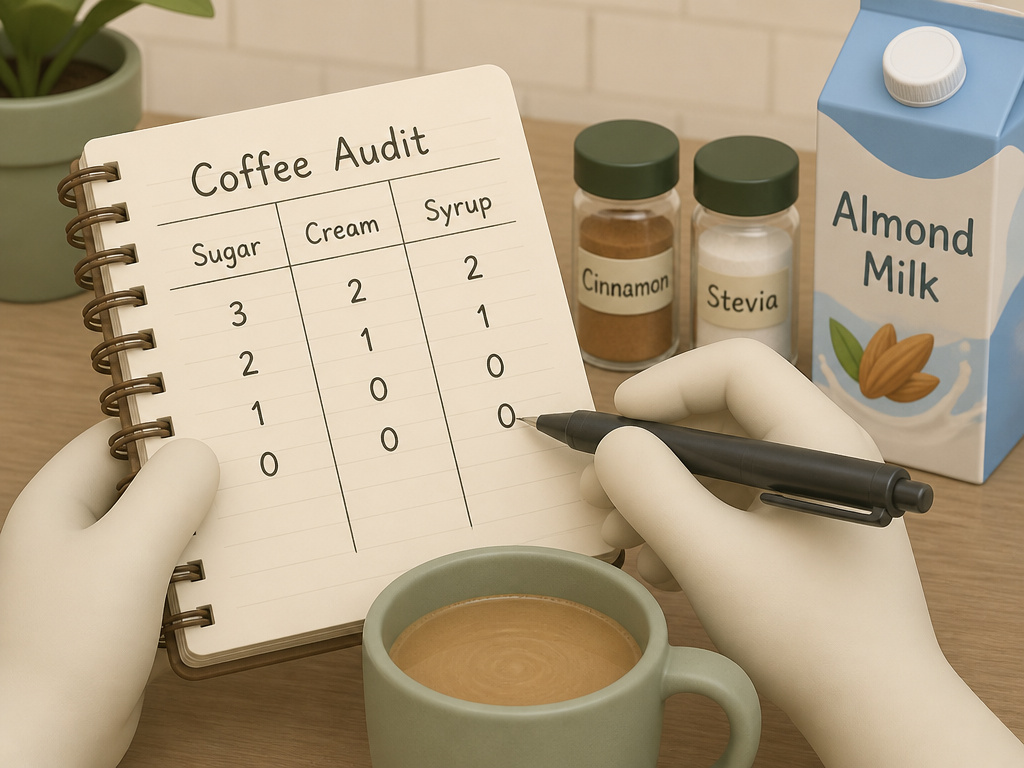
You don’t need to quit. You need to audit and adjust. The goal is to minimize hidden calories while maximizing enjoyment and minimizing side effects.
First, know your numbers for a week. Write down what you actually put in your coffee. Two sugars? Cream? Syrup? Be honest. Then, run a gradual reduction protocol. If you use two sugars, try one and a half for three days. Then one. Your taste buds adapt surprisingly fast.
Second, make smarter swaps.
– Milk: Switch from whole milk or half-and-half to skim milk, or a low-calorie almond milk.
– Sweetener: Ditch brown sugar sweetener for a zero-calorie option like stevia or monk fruit, or use a tiny amount of honey.
– Flavor: Use spices like cinnamon, nutmeg, or cocoa powder instead of flavored syrups. For a creamy texture without the dairy calories, some people blend in a teaspoon of coconut oil in coffee.
Third, enforce a caffeine curfew. Cut off all caffeinated coffee at least 6-8 hours before your target bedtime. If you go to bed at 10 p.m., your last cup should be at 2-4 p.m. Switch to decaf, herbal tea, or water after that. Protecting your sleep is non-negotiable for weight management.
Finally, listen to your body. If coffee makes you anxious or wrecks your sleep, you’re a slow metabolizer. The minor metabolic boost isn’t worth the hormonal chaos. Consider switching to decaf or tea. Your coffee’s impact on digestion is another signal to heed.
Frequently Asked Questions
Does coffee boost your metabolism enough to help you lose weight?
Yes, but barely. Caffeine can increase metabolic rate by 3-11% for a short period. This translates to burning an extra 20-50 calories over a few hours. It’s a trivial effect in the context of a full day’s calorie balance and is easily wiped out by adding cream and sugar.
Is black coffee a good appetite suppressant?
It can be for some people. Caffeine affects the central nervous system and may temporarily reduce feelings of hunger. This is why many fasters drink black coffee in the morning. However, the effect varies widely and diminishes with habitual use.
What’s worse for weight gain: sugar or cream in coffee?
Sugar is typically the bigger problem for weight gain and metabolic health. Cream adds fat and calories, which can lead to a surplus. But sugar spikes blood glucose and insulin, promotes fat storage, and doesn’t satiate you, often leading to more calories eaten later. The combination of both is the worst-case scenario.
Can I drink coffee while on a diet?
Absolutely. Black coffee is a zero-calorie, compliant beverage on almost any diet. It’s the additions that break your plan. If you need it creamy, budget for the calories from milk or a low-calorie creamer within your daily limits.
How does coffee compare to other caffeinated drinks for weight management?
Black coffee is the clear winner. It has minimal calories and no added sugar. Compare it to a Red Bull energy drink (about 110 calories and 27g of sugar per 8.4 oz can) or a sweetened latte. Coffee gives you the caffeine without the calorie baggage of soda, energy drinks, or sweetened tea.
The Bottom Line
Coffee itself is not the enemy in the battle of the bulge. It is a nearly calorie-free vehicle for caffeine and antioxidants. The enemy is the automated, mindless dumping of sugar and fat into that vehicle every single day.
The research from sources like a major PMC systematic review meta-analysis suggests coffee might be a minor ally, not a foe, for weight management. But this only holds if you drink it black or very nearly so. The moment you turn it into a dessert, the math flips. A daily high-calorie coffee habit is a direct path to a calorie surplus.
Your move is simple. Audit your additives. Gradually reduce them. Respect the caffeine curfew to protect your sleep. Make your coffee a lean, mean, stimulating machine. Do that, and you can enjoy every cup without a single worry about your waistline.
{
“@context”: “https://schema.org”,
“@type”: “HowTo”,
“name”: “How to Drink Coffee Without Gaining Weight”,
“totalTime”: “PT2M”,
“step”: [
{
“@type”: “HowToStep”,
“name”: “Start with black coffee”,
“text”: “Pour an 8-ounce cup of black coffee, which contains only 2-5 calories according to USDA data.”
},
{
“@type”: “HowToStep”,
“name”: “Choose low-calorie additions mindfully”,
“text”: “If you need milk, opt for a small splash of almond milk or skim milk instead of full-fat creamer to avoid adding 40+ calories.”
},
{
“@type”: “HowToStep”,
“name”: “Skip the flavored syrups and whipped cream”,
“text”: “Avoid pre-sweetened flavored syrups and whipped cream toppings, which can add hundreds of empty calories and grams of sugar per serving.”
},
{
“@type”: “HowToStep”,
“name”: “Time your last cup”,
“text”: “Finish your last caffeinated coffee at least 6-8 hours before bedtime to protect sleep quality, which is crucial for regulating appetite hormones.”
}
]
}
{
“@context”: “https://schema.org”,
“@type”: “FAQPage”,
“mainEntity”: [
{
“@type”: “Question”,
“name”: “Does coffee boost your metabolism enough to help you lose weight?”,
“acceptedAnswer”: {
“@type”: “Answer”,
“text”: “Yes, but barely. Caffeine can increase metabolic rate by 3-11% for a short period. This translates to burning an extra 20-50 calories over a few hours. It’s a trivial effect in the context of a full day’s calorie balance and is easily wiped out by adding cream and sugar.”
}
},
{
“@type”: “Question”,
“name”: “Is black coffee a good appetite suppressant?”,
“acceptedAnswer”: {
“@type”: “Answer”,
“text”: “It can be for some people. Caffeine affects the central nervous system and may temporarily reduce feelings of hunger. This is why many fasters drink black coffee in the morning. However, the effect varies widely and diminishes with habitual use.”
}
},
{
“@type”: “Question”,
“name”: “What’s worse for weight gain: sugar or cream in coffee?”,
“acceptedAnswer”: {
“@type”: “Answer”,
“text”: “Sugar is typically the bigger problem for weight gain and metabolic health. Cream adds fat and calories, which can lead to a surplus. But sugar spikes blood glucose and insulin, promotes fat storage, and doesn’t satiate you, often leading to more calories eaten later. The combination of both is the worst-case scenario.”
}
},
{
“@type”: “Question”,
“name”: “Can I drink coffee while on a diet?”,
“acceptedAnswer”: {
“@type”: “Answer”,
“text”: “Absolutely. Black coffee is a zero-calorie, compliant beverage on almost any diet. It’s the additions that break your plan. If you need it creamy, budget for the calories from milk or a low-calorie creamer within your daily limits.”
}
},
{
“@type”: “Question”,
“name”: “How does coffee compare to other caffeinated drinks for weight management?”,
“acceptedAnswer”: {
“@type”: “Answer”,
“text”: “Black coffee is the clear winner. It has minimal calories and no added sugar. Compare it to a Red Bull energy drink (about 110 calories and 27g of sugar per 8.4 oz can) or a sweetened latte. Coffee gives you the caffeine without the calorie baggage of soda, energy drinks, or sweetened tea.”
}
}
]
}
