
Does Coffee Keep You Awake? Caffeine’s Mechanism Explained
Coffee keeps you awake by chemically blocking adenosine, a sleep-promoting molecule in your brain. Caffeine’s molecular structure is similar enough to adenosine to fit into the brain’s adenosine receptors, but different enough that it doesn’t activate them. This blockade prevents the normal slowdown of neural activity, delaying feelings of tiredness. The effect lasts for about 3 to 5 hours for the average person, but genetic factors can stretch this to over 9 hours.
Most people think coffee’s wakefulness is a simple energy boost. It’s not. It’s a chemical takeover. Your brain produces adenosine as a byproduct of daily activity, and it builds up throughout the day. When enough adenosine binds to its dedicated receptors, you feel sleepy. Caffeine hijacks that system.
This guide breaks down the adenosine blockade, why a standard cup’s alertness has a hard expiry time, and how your genes dictate whether that 3pm latte is a brilliant idea or a sleep-wrecking mistake. We’ll cover the half-life science, the real difference between a slow and fast metabolizer, and how to use coffee without it using you.
Key Takeaways
- Caffeine doesn’t give you energy; it blocks the chemical signal for sleep (adenosine) by occupying its receptors.
- The average caffeine half-life is 3–5 hours, meaning it takes that long for your body to clear half the caffeine from a single cup.
- Genetic variants in the CYP1A2 enzyme cause massive differences in how long caffeine affects you, from 1.5 to over 9 hours.
- Drinking caffeine within 6 hours of bedtime significantly reduces sleep quality and total sleep time, even if you fall asleep.
- Withdrawal headaches occur because quitting caffeine suddenly leaves a surplus of adenosine receptors unblocked, causing a flood of sleep signals.
How Caffeine Blocks Adenosine to Promote Wakefulness
Your brain isn’t tired because you’re out of fuel. It’s tired because of a chemical tally. Every moment you’re awake and mentally active, your neurons consume adenosine triphosphate (ATP) for energy. The breakdown of ATP releases adenosine into the synaptic space between neurons.
Caffeine is an adenosine receptor antagonist. Its molecular shape is close enough to adenosine’s to slot into the brain’s adenosine receptors, but not close enough to trigger the biochemical cascade that slows neural firing and induces drowsiness. This blockade keeps the brain’s alertness pathways running unimpeded.
Think of adenosine receptors as locks, and adenosine as the only key that fits them. When the key turns, the brain gets the signal to wind down. Caffeine is a broken key that jams the lock. It fits in the keyhole, but it can’t turn. The real key can’t get in either. The “go to sleep” signal never gets sent.
This process is detailed in resources from the National Institute of Neurological Disorders and Stroke (NINDS), which explains caffeine’s role as a central nervous system stimulant through this precise mechanism. The effect is immediate and systemic.
TL;DR: Caffeine keeps you awake by physically jamming the brain’s “sleep signal” receptors, preventing adenosine from delivering its drowsiness message.
The 3–5 Hour Half-Life (And Why It Varies)
Half-life isn’t an estimate. It’s a measurement. For caffeine in a typical, healthy adult, the half-life ranges from 3 to 5 hours. This means if you drink a coffee with 200mg of caffeine at noon, by 5 PM your body has processed about 100mg of it. By 10 PM, you’d still have about 50mg circulating. This data comes directly from the American Academy of Sleep Medicine’s fact sheet on caffeine and sleep.
That’s the average. The range is what matters. Your personal half-life is dictated almost entirely by one liver enzyme: CYP1A2.
| Metabolizer Type | CYP1A2 Enzyme Activity | Typical Half-Life | Practical Impact |
|---|---|---|---|
| Fast Metabolizer | High | 1.5 – 3 hours | Clears caffeine quickly. Can often drink coffee later in the day without major sleep disruption. |
| Normal Metabolizer | Standard | 3 – 5 hours | Follows the textbook average. A 2 PM cutoff is a safe rule for an 11 PM bedtime. |
| Slow Metabolizer | Low | 6 – 9+ hours | Caffeine lingers. An afternoon coffee can significantly reduce sleep quality and delay sleep onset. |
Your genetics determine which column you’re in. There’s no easy home test, but your lived experience is a strong proxy. If a single cup at 4 PM guarantees a restless night, you’re likely a slow metabolizer. Smoking induces the CYP1A2 enzyme, shortening the half-life for smokers. Pregnancy and oral contraceptives do the opposite, dramatically slowing metabolism.
Common mistake: Assuming “a few hours” means caffeine is gone by bedtime, if you’re a slow metabolizer, a 3 PM coffee can mean 25% of its caffeine is still active in your system at midnight, fragmenting your deep sleep cycles.
The half-life also explains why the “caffeine nap” works. If you drink a coffee and immediately nap for 20 minutes, you wake up as the caffeine is hitting your bloodstream and blocking the adenosine that built up during the short sleep. It’s a brutal but effective reset.
When Does Coffee Stop Keeping You Awake?
It stops working in two distinct phases. First, the alertness boost diminishes as caffeine is metabolized and adenosine begins to reclaim its receptors. Second, a “caffeine crash” can occur if the blocking effect wears off while adenosine levels are still high, leading to sudden, profound tiredness.
The crash isn’t a sugar crash. It’s a chemical reckoning. You postponed sleep signals, you didn’t cancel them. Adenosine continues to accumulate while caffeine is active. When the caffeine clears, all that pent-up adenosine floods the now-unblocked receptors at once. The result is that heavy-lidded, can’t-think-straight feeling around 3 or 4 PM after a morning of coffee.
To avoid the crash, you need to understand your personal cutoff time. Use the half-life table as a starting point, but track your own response.
Your Caffeine Cutoff Calculator:
- Target bedtime: ______
- Subtract your estimated half-life (use 5 hours if unsure): ______
- Your caffeine cutoff time: ______
Example: Bedtime 11 PM, half-life 5 hours → last caffeine at 6 PM.
For slow metabolizers, this math is non-negotiable. A 2013 study published in the Journal of Clinical Sleep Medicine found that caffeine consumed even 6 hours before bedtime significantly reduced sleep quality. The participants didn’t always feel more awake, but their sleep architecture was objectively worse, with less deep sleep and more awakenings.
Factors That Intensify or Weaken Coffee’s Wakefulness
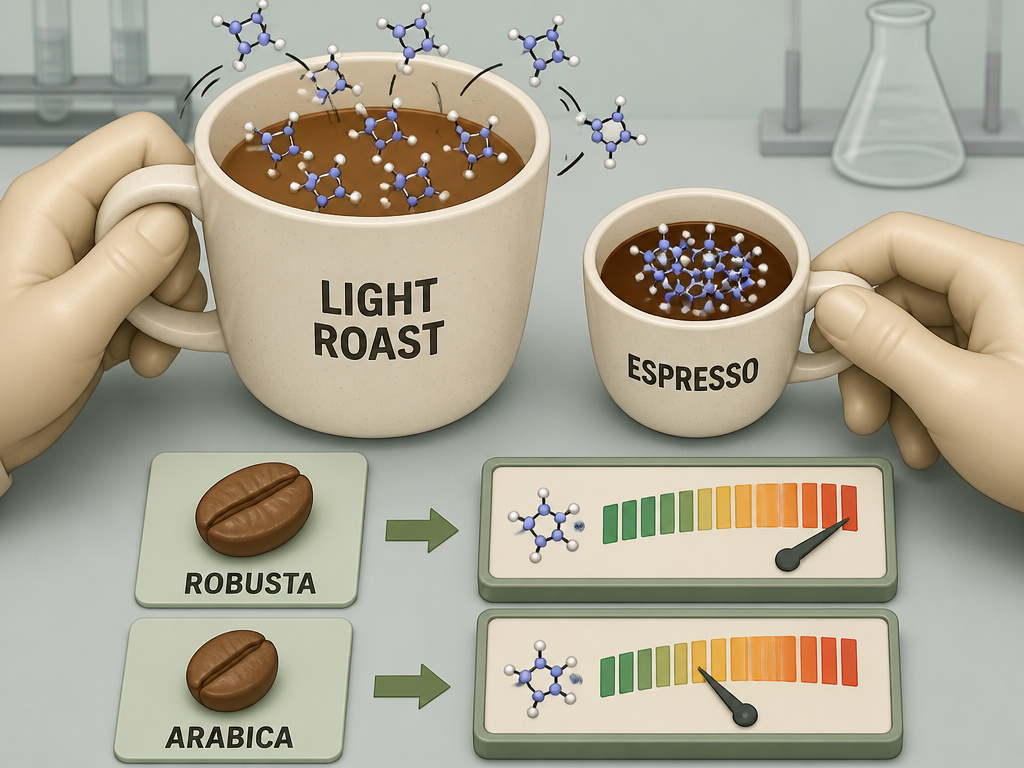 Not all cups are created equal. The wakefulness you get from a coffee depends on more than just the milligrams of caffeine.
- Your Baseline Adenosine Level: If you’re well-rested, caffeine has less “sleep pressure” to counteract. Its effects feel more like sharp focus. If you’re severely sleep-deprived, caffeine can feel like a weak life raft in a storm of adenosine, you’re still exhausted, but now also jittery.
- Tolerance: Regular consumption causes your brain to grow more adenosine receptors. This is a compensatory mechanism. With more receptors, you need more caffeine to block the same percentage. This is why a 3-cup-a-day drinker might not feel a buzz from a single espresso, while a novice would be wired.
- The Coffee’s Caffeine Content: A standard 8-ounce brewed coffee has about 95mg of caffeine. But this varies wildly.
- Light roast vs. dark roast: Light roasts actually retain slightly more caffeine by weight.
- Brew method: Espresso has more caffeine per ounce, but you drink less volume. A typical shot has about 64mg. A 16-ounce cold brew or drip coffee can pack 200mg or more.
- Bean origin: Robusta beans contain nearly twice the caffeine of Arabica beans.
This is why comparing your caffeine content in espresso to your friend’s drip coffee is misleading without also comparing volume. The brewing method is just one factor affecting caffeine stimulation.
I switched to exclusively single-origin Arabica for a year and found my afternoon jitters vanished. I assumed it was tolerance. Then I tried a blend with Robusta, one cup at 10 AM and my hands were shaking by noon. The bean type changed the dose more than my habits did.
The Role of Genetics: Are You a Fast or Slow Metabolizer?
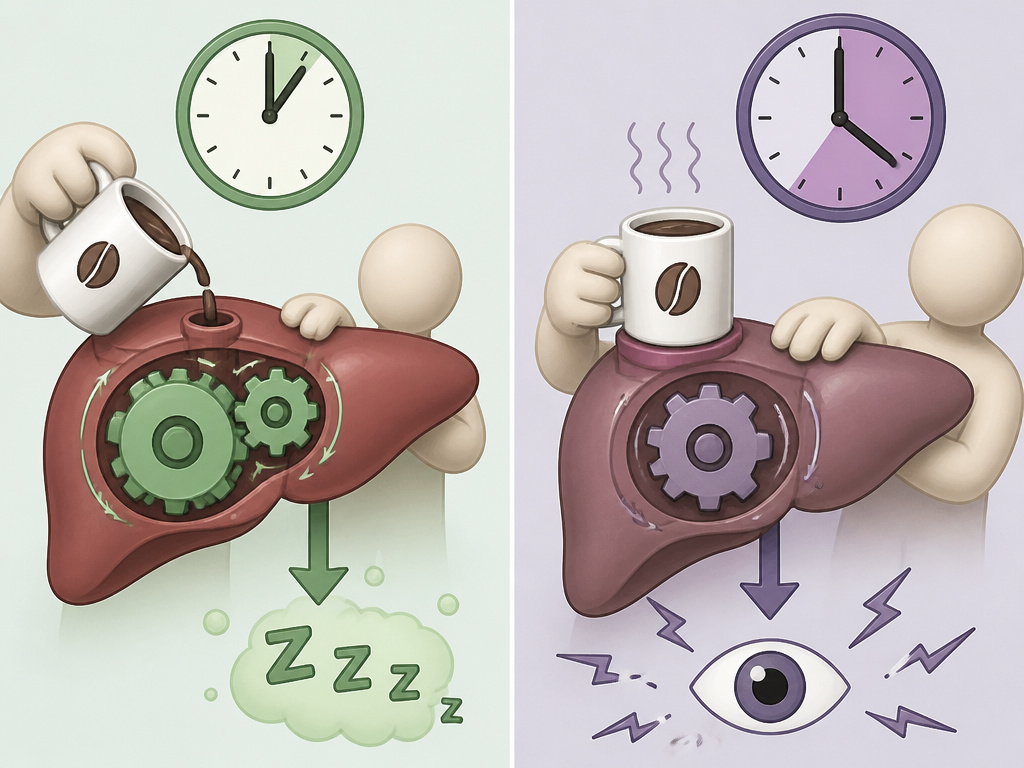 This is the single biggest variable most guides ignore. The gene that codes for the CYP1A2 enzyme has common variants. You inherited your version from your parents.
- Fast Metabolizers (CYP1A2 *1A allele): Your liver processes caffeine rapidly. You clear it from your system quickly. You might be able to drink an after-dinner espresso and sleep fine. You also may feel the effects of caffeine more briefly and be more prone to the afternoon crash.
- Slow Metabolizers (CYP1A2 *1F allele): Your liver is sluggish with caffeine. It stays in your system much longer, amplifying and prolonging its effects. You are at a higher risk for caffeine-induced anxiety, insomnia, and even increased blood pressure. An afternoon coffee is very likely to harm your sleep.
You can’t change your genetics. But you can observe the outcome. If caffeine affects you strongly and for a long time, operate as a slow metabolizer. Respect the longer half-life. This genetic lens also helps explain why some people can seemingly drink coffee all day and sleep like a log, while others have one cup at breakfast and feel edgy until evening.
Coffee vs. Other Caffeine Sources
Coffee’s wakefulness isn’t unique, but its delivery system changes the experience. The caffeine in coffee is absorbed relatively quickly, leading to a sharper spike in alertness. Other sources come with different compounds that modulate the effect.
| Source | Typical Caffeine | Onset & Duration | Key Differentiator |
|---|---|---|---|
| Brewed Coffee (8oz) | 95mg | Fast onset (15-45 min), 3-5 hr duration | Contains antioxidants and acids that can speed gastric emptying. |
| Black Tea (8oz) | 40-70mg | Slower onset, longer, smoother duration | Contains L-theanine, an amino acid that promotes relaxed focus and can take the edge off caffeine jitters. |
| Energy Drink (8oz can) | 80mg (varies) | Very fast onset, often shorter duration | High sugar content can cause a crash; other stimulants like taurine may alter the effect. |
| Dark Chocolate (1oz) | 20mg | Very slow, mild, sustained release | Theobromine, a related stimulant, provides a longer, gentler lift. |
The caffeine in milk-based drinks like lattes and cappuccinos is the same as in black coffee, but the fat and protein in milk slow absorption, leading to a more gradual rise in alertness. This is a crucial distinction for managing that “wired” feeling.
Similarly, the caffeine in cold beverages like cold brew or iced tea is chemically identical, but the temperature and often higher concentration can lead to quicker consumption and a more intense peak. Understanding these differences helps you choose your source based on the desired wakefulness profile, sharp and short, or smooth and long.
Can You Build a Tolerance to Coffee’s Wakefulness?
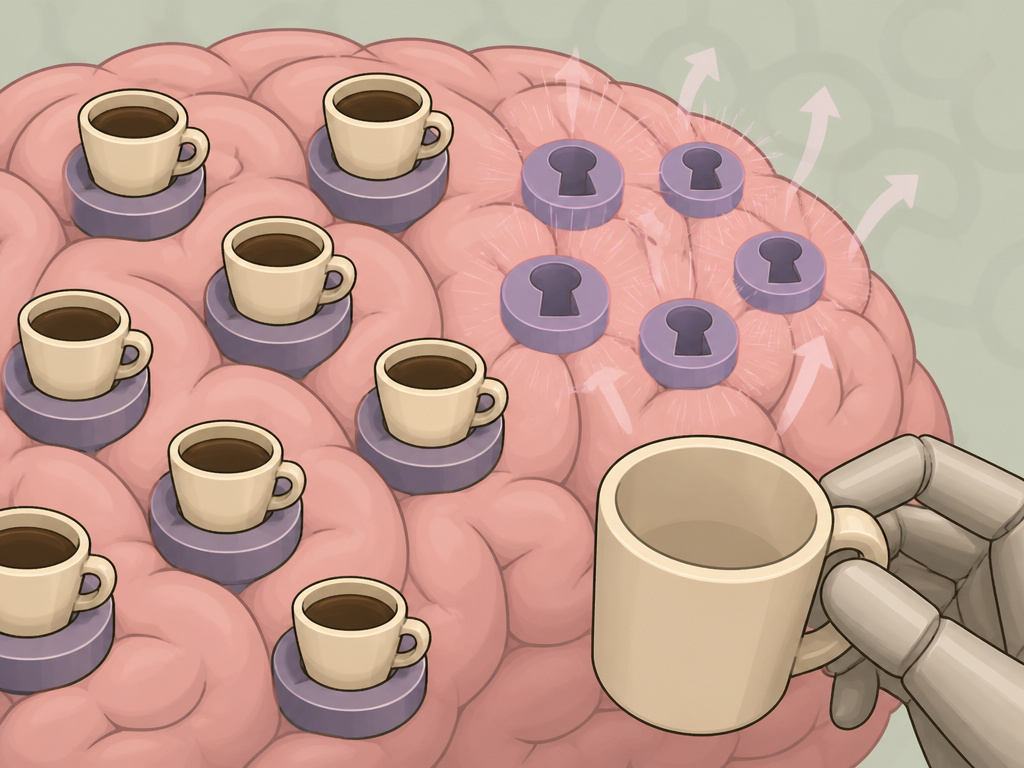 Absolutely, and most regular drinkers do. Tolerance is your brain’s adaptation to the blockade. If you consistently block 50% of your adenosine receptors with caffeine, your brain’s response is to create more receptors. This is upregulation.
With more receptors, you need more caffeine to achieve the same level of blockade. This is why your first cup of the day feels strongest, and why you might need a second or third to recapture that feeling later. It’s also the root cause of withdrawal.
Common mistake: Chasing the “first cup” feeling with more cups throughout the day, this just pushes your receptor count higher, deepening tolerance and making withdrawal worse when you eventually stop.
Building tolerance isn’t inherently bad if you’re comfortable with a stable intake. The problem is the escalation curve and the dependency it creates. To reset tolerance, you need a complete break, often 2-4 weeks, to allow receptor levels to return to baseline.
The Crash and Withdrawal: When the Wakefulness Ends
The crash is the adenosine reckoning. The withdrawal is the receptor reckoning.
The Crash: As caffeine is metabolized and clears from receptors, the accumulated adenosine binds rapidly. If you’ve been blocking receptors for hours, the sudden onset of signaling feels like a wall of fatigue. This is why timing your last cup based on your half-life is critical, it spreads the landing out over hours instead of minutes.
The Withdrawal: If you are a regular consumer and stop abruptly, you face two problems. First, you have an upregulated number of adenosine receptors. Second, you have zero caffeine blocking them. Adenosine binds freely, causing extreme sleepiness, lethargy, and the classic withdrawal headache. The headache is likely caused by adenosine’s effect on cerebral blood flow. The only fixes are time (receptors down-regulate over days) or more caffeine.
This physical dependency is why the health impacts of caffeine from sources like energy drinks can be more severe, they often deliver a higher, faster dose, leading to sharper crashes and a stronger drive to re-dose.
Practical Tips for Using Coffee Without Harming Sleep
You can have your alertness and your sleep, too. It requires treating caffeine like the potent drug it is, not just a morning beverage.
- Find your personal cutoff. Use the half-life math. If you’re unsure, assume you’re a slow metabolizer and set a hard cutoff at least 8 hours before bed.
- Consider your source. If you’re sensitive to jitters but need afternoon alertness, switch to black tea. The L-theanine smooths out the experience.
- Hydrate deliberately. Caffeine is a mild diuretic. For every cup of coffee, drink a cup of water. Dehydration mimics and worsens fatigue.
- Taper, don’t quit cold turkey. To reduce intake or reset tolerance, cut your daily consumption by half every 3-4 days. This minimizes withdrawal headaches.
- Use decaf strategically. After your cutoff time, switch to Swiss Water Process decaf. It removes 99.9% of caffeine, eliminating the sleep impact while preserving the ritual.
The goal isn’t to avoid coffee’s wakefulness, but to harness it predictably. Knowing that your Monster Energy caffeine hit will wear off in a predictable window lets you plan your crash. Understanding that your Red Bull caffeine content is comparable to a strong coffee lets you make informed swaps.
Frequently Asked Questions
Does decaf coffee keep you awake?
True decaf coffee processed via the Swiss Water Method or carbon dioxide process has about 2-5mg of caffeine per 8-ounce cup. For most people, this is not enough to significantly block adenosine receptors or affect sleep. If you are extremely caffeine-sensitive, even this trace amount might be noticeable.
How long before bed should I stop drinking coffee?
The conservative rule is 8 hours. The clinical research from a PMC caffeine timing study shows significant sleep disruption when caffeine was consumed 6 hours before bedtime. For guaranteed undisturbed sleep, stop all caffeine at least 8 hours before you plan to sleep. Use your personal half-life to refine this.
Can you build a permanent tolerance to caffeine?
Tolerance is reversible. If you stop consuming caffeine completely, your brain will gradually reduce the number of adenosine receptors over a period of 2-4 weeks. After that reset, your sensitivity to caffeine will return to near-baseline levels. The “permanent” feeling comes from never taking a long enough break.
Does adding milk or sugar change how long coffee keeps you awake?
No. Milk and sugar affect the rate of gastric emptying and blood sugar levels, which can alter the perception of the caffeine kick, sometimes making it feel sharper if sugar causes a spike. However, the caffeine molecule itself is unaffected. Its absorption rate and half-life remain dictated by your metabolism, not what you put in the cup.
Why does coffee sometimes make me tired instead of awake?
Two reasons. First, if you are severely sleep-deprived, the adenosine overwhelm is too great for caffeine to fully block, leaving you in a tired-but-wired state. Second, the “caffeine crash” occurs when the drug wears off and the backlog of adenosine hits all at once. For some, the mild diuretic effect of coffee can also lead to dehydration, which compounds fatigue.
Before You Go
Coffee keeps you awake through a straightforward chemical hijacking, caffeine blocks adenosine receptors. The duration of that effect, however, is deeply personal. Your genetic blueprint for the CYP1A2 enzyme sets your half-life, somewhere between 90 minutes and over 9 hours. Your daily habits, like when you drink that last cup, determine whether that blockade helps or hurts your sleep.
The most powerful tool you have isn’t a fancier grinder or a lighter roast. It’s a clock and a notepad. Track your intake and your sleep for a week. Note when you drink your last cup and how you feel at bedtime. The pattern will tell you more about your personal caffeine metabolism than any generic guide ever could. Use that data. Drink smarter, not just more.
