
Can You Put Honey in Coffee? Preserving Flavor and Enzymes
You can absolutely put honey in coffee. It is not toxic when heated, but adding it to boiling coffee destroys its delicate enzymes and aromatic compounds, turning a nuanced sweetener into simple syrup. For hot coffee, let the brew cool for a minute first. For iced coffee, whip the honey into a frothy paste with instant coffee first.
Most people ruin honeyed coffee by dumping it into a scalding cup. The heat shock mutes the flavor and wastes what you paid for. They also pick the wrong honey for their roast, creating a clash instead of a complement.
This guide walks through the science behind heating honey, matches specific honey varieties to coffee roasts, and gives you two proven methods, one for hot, one for iced, that preserve the honey’s character.
Key Takeaways
- Honey is safe in hot coffee but loses beneficial enzymes and complex flavors above 140°F (60°C). Let your coffee cool for 60-90 seconds before adding it.
- Pair light, floral honeys like Acacia with light roast coffee. Use bold, dark honeys like Buckwheat with dark roasts. A mismatch overpowers the cup.
- Always stir honey for at least 15 seconds. It’s thicker than sugar and will settle into a sticky layer at the bottom if you don’t.
- For iced lattes, whip raw honey with instant coffee and a little water first. This creates a sweet, frothy paste that blends perfectly with cold milk.
- The belief that heated honey becomes toxic is a myth. The real concern is the formation of HMF (hydroxymethylfurfural), a compound that increases with heat and storage time but is not a significant health risk at normal consumption levels.
The Myth of Toxicity and the Real Science
A persistent rumor claims honey turns toxic in hot drinks. This is false. If it were true, millions of people drinking honey-sweetened tea daily would be ill.
The YouTube transcript from a nutrition-focused channel states it plainly: “honey becomes toxic if we put it in something extremely hot… there’d be millions and millions of people worldwide being sick all day long… it’s not going to make you toxic.” The speaker clarifies that extreme heat destroys honey’s beneficial properties, but it does not create poison.
Common mistake: Adding honey to boiling coffee, the heat above 160°F (71°C) degrades nearly all volatile aromatics and enzymes within seconds, leaving you with a flat, overly-sweet cup that could have been made with simple syrup.
The real scientific conversation centers on HMF, or hydroxymethylfurfural. HMF forms naturally in honey over time and its production accelerates with heat. While very high levels of HMF can indicate adulteration or poor storage, the amounts found in honey added to hot coffee are not considered a health risk for most people. The National Honey Board and food safety agencies monitor HMF as a quality indicator, not a toxicity alarm.
Your focus should be on flavor and nutrient preservation, not fear. Heat is the enemy of honey’s nuance.
TL;DR: Honey in hot coffee isn’t toxic, but heat above 140°F destroys its delicate flavors and enzymes. Let your coffee cool a bit first.
What Actually Happens When You Heat Honey
Honey is a complex substance. Heating it changes its physical and chemical makeup in three key ways.
First, heat destroys enzymes. Raw honey contains natural enzymes like glucose oxidase, which slowly produces hydrogen peroxide and contributes to honey’s mild antibacterial property. Invertase, another key enzyme, helps break down sucrose. These proteins are denatured, their structure unravels, at temperatures sustained above 104°F (40°C). By the time your coffee hits 160°F, that process is instantaneous.
Second, volatile aromatic compounds evaporate. The floral, fruity, or herbal notes that distinguish a good honey from a bland one are carried by delicate molecules. These volatiles have low boiling points. Pouring honey into a near-boiling liquid flashes them off, stripping the honey’s personality. What remains is the basic sugar profile, sweetness without soul.
Third, the color and viscosity can change. Prolonged or high heat darkens honey due to the Maillard reaction between its sugars and amino acids. It can also make honey runnier in the short term, though it may crystallize differently later.
| Heating Stage | Temperature Range | Primary Effect on Honey |
|---|---|---|
| Warm | 95–104°F (35–40°C) | Ideal for easing crystallization; no significant damage. |
| Enzyme Degradation Zone | 105–140°F (41–60°C) | Enzymes begin to denature; slow loss of beneficial properties. |
| Flavor Loss Zone | 141–160°F (61–71°C) | Rapid destruction of enzymes and evaporation of aromatic compounds. |
| High HMF Formation | 160°F+ (71°C+) | Significant darkening, flavor flattening, accelerated HMF increase. |
The goal is to stay out of the Flavor Loss Zone. This is why the one-minute cooldown for your coffee is non-negotiable if you care about the honey’s character.
Choosing Your Honey: A Pairing Guide
Not all honey works with all coffee. Using a dark, robust honey in a delicate light roast is like adding a shot of bourbon to a white wine spritzer. The principle is similar to pairing tea vs coffee, you’re matching flavor intensities and complementary notes.
Your coffee’s roast level is the primary driver. A light roast coffee highlights origin characteristics, think citrus, floral, or tea-like notes. A dark roast trades those for deeper, chocolatey, and roasted flavors.
Here is a breakdown of common honey varieties and their ideal coffee matches.
| Honey Variety | Flavor Profile | Best Paired With | Why It Works |
|---|---|---|---|
| Acacia | Very light, floral, clean, mild sweetness. | Light roast, single-origin (Ethiopian, Costa Rican). | Its subtlety won’t mask the coffee’s delicate origin notes. |
| Wildflower | Medium amber, balanced floral & fruity notes. | Medium roast, breakfast blends. | A versatile all-rounder that complements without dominating. |
| Orange Blossom | Bright, citrusy, perfumed aroma. | Light to medium roast, naturally citrusy coffees. | The citrus notes amplify similar tones in the coffee. |
| Manuka | Earthy, herbaceous, medicinal, intensely rich. | Bold medium or dark roast. Can overpower delicate coffees. | Its strong personality stands up to and complements roasted flavors. |
| Buckwheat | Dark, molasses-like, malty, robust. | Dark roast, espresso, French roast. | Its deep, almost bitter-sweet notes pair with the roast char. |
If you’re exploring other natural sweeteners, the process of matching flavor intensity is the same. The flavor of brown sugar, with its caramel and molasses notes, naturally pairs better with darker roasts for the same reason buckwheat honey does.
A jar of generic, commercially blended honey often tastes one-dimensional. It will sweeten your cup but won’t create a synergistic experience. Investing in a named varietal honey transforms the practice from mere sweetening to active flavor pairing.
How to Add Honey to Hot Coffee Correctly
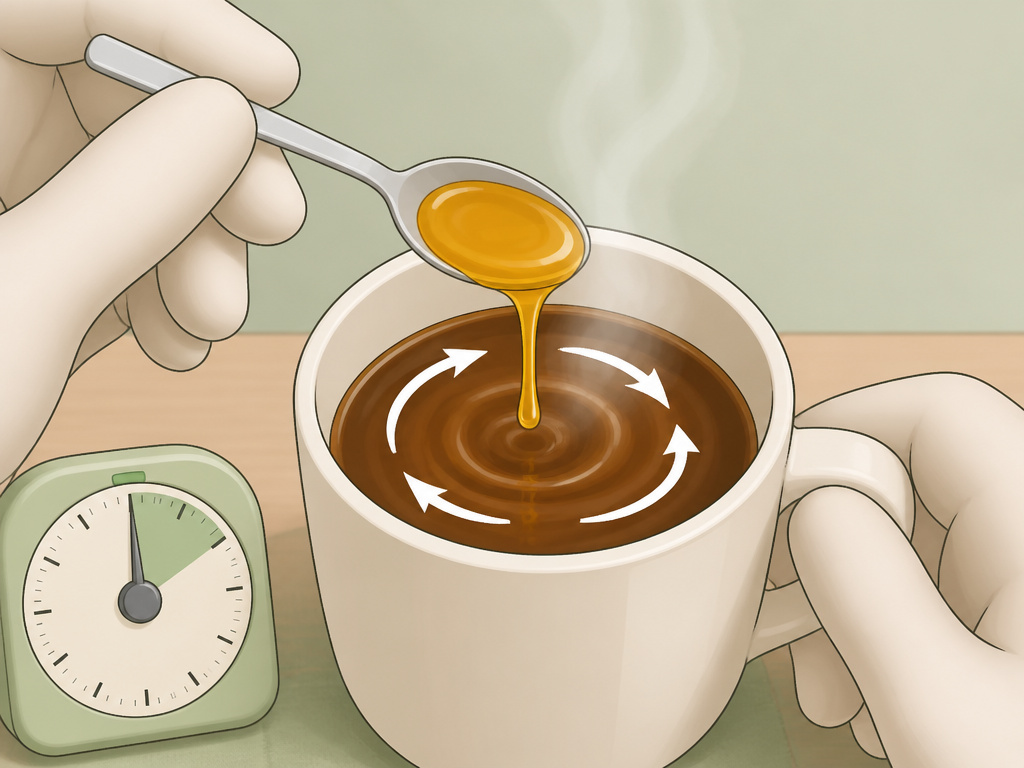
This is a two-minute ritual that protects your investment in good honey.
Before you start: Have your honey and a spoon ready. Brew your coffee as you normally would, whether pour-over, French press, or drip machine. The brewing method matters less than the post-brew temperature management.
- Let the coffee rest. After brewing, set your cup aside for 60 to 90 seconds. This allows the temperature to drop from near-boiling (200°F) to a safer range below 160°F, ideally around 150°F. You can speed this up by pouring it into a cooler mug first.
- Add the honey. Start with about one teaspoon for a standard 8-ounce cup. For a bolder honey like Buckwheat, you might need less; for a mild Acacia, you might need a bit more.
- Stir aggressively and patiently. This is the step everyone rushes. Honey is viscous. Stir for a full 15-20 seconds, scraping the bottom and sides of the cup. Incomplete dissolution leads to a stratified drink, sweet at the bottom, bitter on top.
- Taste and adjust. Sip. Honey sweetness is different from granular sugar; it can feel rounder and slower to hit the palate. If needed, add another half teaspoon and stir again thoroughly.
The stirring is non-negotiable. I learned this the hard way after months of wondering why my last few sips were cloyingly sweet. The honey had just sunk and sat there.
I prefer raw, unpasteurized honey for my daily cup, not because it’s magically healthier, but because the subtle, complex flavors are intact. Pasteurization heats honey to kill yeast cells, which also flattens its taste profile before it even hits my coffee.
For those managing their intake, remember that honey is calorically dense. Understanding the calorie content of milk and other additives is part of building a conscious coffee ritual.
TL;DR: Brew, wait 90 seconds, add honey, stir for 20 seconds. This preserves flavor and ensures even sweetness.
The Whipped Honey Method for Iced Coffee
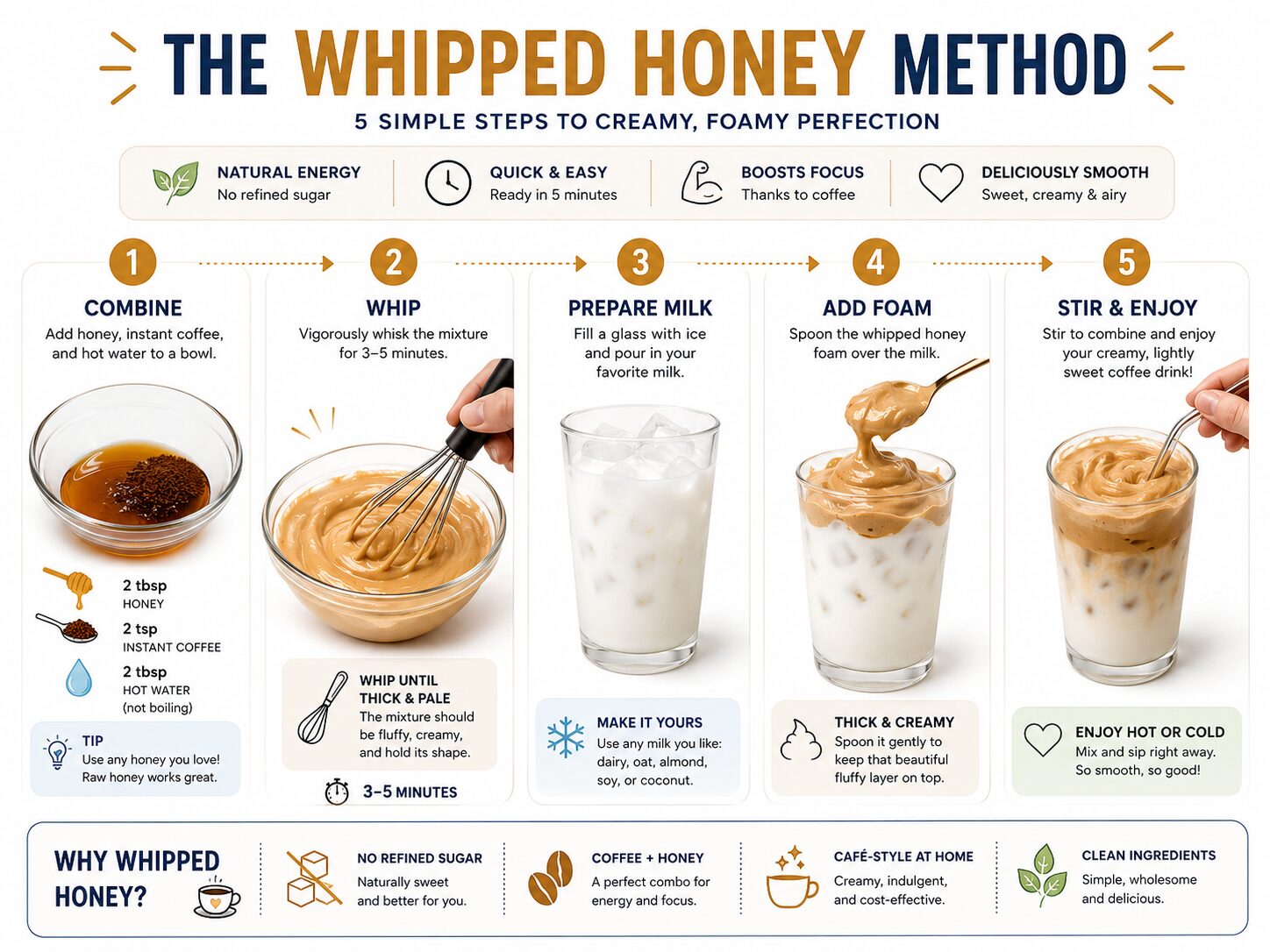
Cold coffee presents a different problem. Honey doesn’t mix well with cold liquids. It seizes up and sinks to the bottom in sticky globs. The solution, popularized by social media “whipped coffee” trends, is to pre-dissolve it.
A YouTube creator demonstrates this specifically with raw honey, countering critics who claimed only fake honey would whip: “I got some raw honey to show you that yes raw honey does WHIP to give you that fluffy texture for lattes.”
Here’s the adapted method for a perfect iced honey latte:
- 2 tablespoons raw honey
- 2 tablespoons instant coffee (a fine powder works best)
- 2 tablespoons very hot water (not boiling, just hot enough to dissolve)
- Ice
-
Milk or a plant-based milk in coffee like oat or almond
-
Combine the honey, instant coffee, and hot water in a deep bowl.
- Whip vigorously with a hand mixer, milk frother, or whisk for 2-3 minutes until it becomes a thick, pale, foamy paste. It should hold soft peaks.
- Fill a glass with ice and pour your milk of choice over it, leaving some room at the top.
- Spoon the whipped honey-coffee paste over the milk. It will float beautifully.
- Stir to combine before drinking. The paste incorporates seamlessly into the cold milk, delivering sweetened coffee flavor in every sip.
This method guarantees even distribution and a luxurious texture. It turns the mixing problem into a feature. The small amount of hot water dissolves the honey and coffee without subjecting the bulk of the honey to destructive heat.
Health Considerations and Comparisons
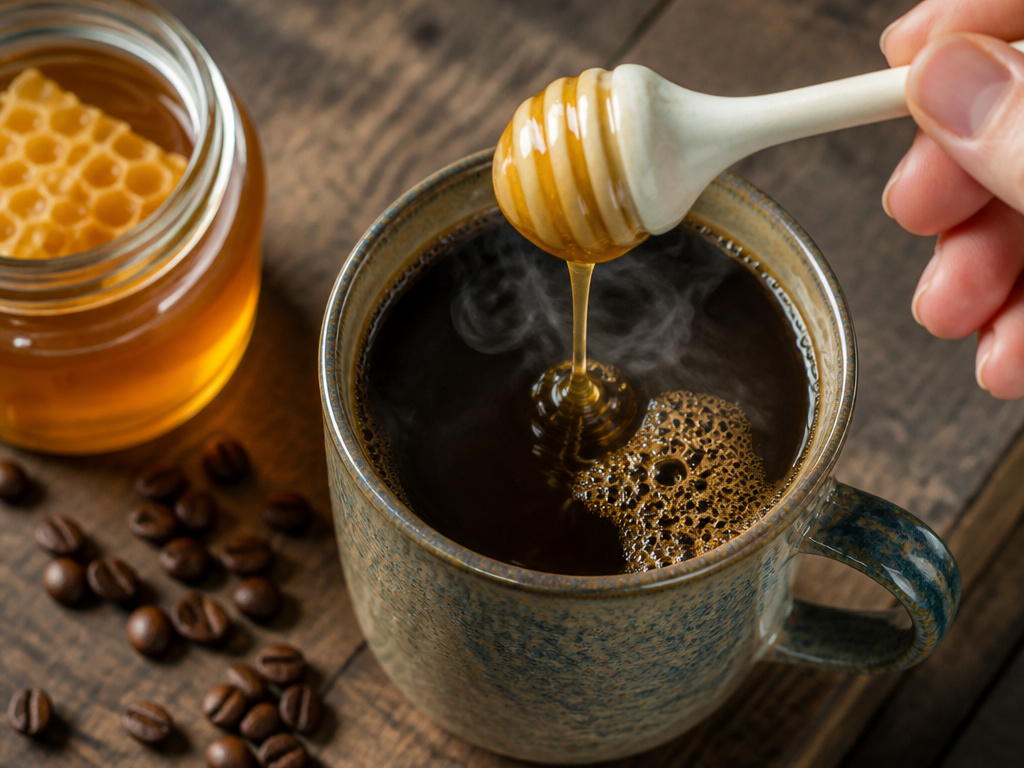
Honey is more than just sugar. It contains trace enzymes, minerals, vitamins, and antioxidants. The main reason to use it over white sugar is flavor complexity, not a dramatic health boost. The quantities used in coffee are too small to be a significant nutrient source.
Common mistake: Using honey as a “healthy” sweetener in boiling coffee, by destroying its enzymes and antioxidants with heat, you negate the primary benefit that distinguishes it from table sugar.
Its glycemic index varies but is generally lower than pure glucose, meaning it may cause a slightly slower rise in blood sugar. However, for anyone closely monitoring sugar intake, it must be counted like any other sweetener.
Some people explore additives for specific functional benefits. For instance, coconut oil in coffee is popular for sustained energy, while MCT oil in coffee is sought for cognitive focus. Honey’s role is primarily gustatory, not metabolic.
If you’re using honey to mitigate bitterness, know that it’s effective. Its sweetness masks bitter compounds. For a more direct approach to taming bitterness, a pinch of salt is a proven, zero-calorie trick that works on a chemical level.
Frequently Asked Questions
Does honey make coffee taste better?
It can, if paired correctly. Honey adds a floral, fruity, or earthy sweetness that white sugar lacks. A light Acacia honey can elevate a floral Ethiopian coffee, while a dark honey can make a bitter dark roast more palatable. A bad pairing will make it taste worse.
What is the best honey for coffee?
There is no single “best.” For light roast coffee, choose a light honey like Acacia or Orange Blossom. For dark roast coffee, choose a bold honey like Buckwheat or Manuka. Wildflower honey is a safe, versatile choice for medium roasts.
Can you put honey in hot tea?
Yes, the same rules apply. Let the tea cool slightly before adding honey to preserve its delicate flavors and enzymes. Green and white teas, which are more delicate, benefit especially from this practice.
Is raw honey better for coffee?
For flavor, yes. Raw, unprocessed honey retains its full spectrum of aromatic compounds, giving you more complexity. Pasteurized honey is more shelf-stable but often tastes flatter. If you’re heating it in coffee anyway, the raw honey’s edge is in its initial flavor, not its post-heat enzyme content.
Why does my honey sink to the bottom?
You didn’t stir long enough. Honey is thick and dense. It requires vigorous, prolonged stirring to fully integrate into the liquid. Always stir for at least 15 seconds.
Can I use honey in espresso?
Absolutely. Let the espresso shot cool in the cup for 30 seconds after pulling. Then add honey and stir thoroughly before adding steamed milk for a latte or drinking it as a macchiato. The intense concentration of espresso pairs well with bold honeys.
Before You Go
You can put honey in coffee. Dump it in boiling brew and you’ll waste its nuance. Let your coffee cool for a minute, then stir it in properly.
Match your honey to your roast, light with light, dark with dark. For iced drinks, whip the honey with instant coffee first. It solves the mixing problem.
The toxic honey myth is just that. The real loss is flavor, not safety. Your morning ritual deserves that extra bit of attention. Try a varietal honey you’ve never used before. The difference isn’t subtle.
