
Mushroom Coffee & Pregnancy: Can You Drink It? Medical Guidance
You should not drink mushroom coffee while pregnant unless your healthcare provider explicitly approves it. The official medical stance, from organizations like the American College of Obstetricians and Gynecologists (ACOG), advises against the use of herbal and dietary supplements during pregnancy due to a fundamental lack of safety data. Mushroom coffee combines two separate concerns: the caffeine from the coffee and the novel supplement blend of mushroom extracts.
Most people get this wrong because they focus only on the caffeine. They see “30mg per serving” and think it’s safe. The real issue is the supplement side of the equation, which operates in a regulatory gray area with no pregnancy-specific studies.
This guide breaks down the official guidance, the two-part risk, and what you need to ask your doctor.
Key Takeaways
- The ACOG’s Committee Opinion No. 640 explicitly advises pregnant women against using herbal remedies due to limited safety data.
- Mushroom coffee is a dietary supplement, not a food, meaning its safety and purity are not pre-approved by the FDA.
- The risk is two-part: managing your total daily caffeine intake (stay under 200mg) and the unknown effects of concentrated mushroom extracts.
- Common functional mushrooms like Lion’s Mane, Reishi, and Chaga have no established safety profile for pregnant or breastfeeding individuals.
- The only way to get a personalized green light is to bring the specific product label to your OB-GYN or midwife.
What Do Doctors and Health Organizations Say?
The answer doesn’t come from blogs or product marketing. It comes from the professional medical bodies that set care standards. Their position is not based on evidence of harm, but on the absence of evidence for safety. This is a critical distinction.
Common mistake: Assuming “natural” equals “safe” during pregnancy — many potent compounds are plant- or fungi-based, and their effects on fetal development are simply unknown.
The American College of Obstetricians and Gynecologists (ACOG) is the leading authority. Their Committee Opinion No. 640, reaffirmed in 2022, is blunt: “Given the limited data on efficacy and safety, obstetrician–gynecologists should advise pregnant women against the use of herbal remedies.” This opinion classifies mushroom extracts as herbal supplements, placing them in the same category of caution.
A 2019 systematic review in BMC Complementary Medicine and Therapies on herbal medicine use in the EU reached a similar conclusion, highlighting the widespread lack of robust safety data. When you look at a PMC study on mushroom coffee composition, you’ll find detailed analysis of bioactive compounds like beta-glucans and antioxidants, but zero human trials on pregnant populations.
The U.S. Food and Drug Administration (FDA) regulates dietary supplements under a different set of rules than conventional foods. Manufacturers are responsible for ensuring their products are safe, but they do not need FDA approval before marketing. The label must carry a disclaimer if it’s intended for use by pregnant or nursing women. If you see that warning, it’s there for legal and medical liability.
TL;DR: Official medical guidance is to avoid herbal supplements, including mushroom extracts, during pregnancy due to a lack of safety data, not proven harm.
The Caffeine Question

Let’s separate the coffee from the mushroom. The caffeine in mushroom coffee is a known variable with established limits.
Most mushroom coffee blends use a base of instant coffee or coffee extract. A single serving typically contains between 30mg and 50mg of caffeine. For comparison, an 8-ounce cup of brewed coffee has about 95mg. This means one serving of mushroom coffee uses only a fraction of your daily caffeine budget.
| Beverage | Typical Caffeine (mg) | % of Daily Pregnancy Limit (200mg) |
|---|---|---|
| Mushroom Coffee (1 serving) | 30–50 mg | 15–25% |
| Brewed Coffee (8 oz) | 95 mg | 47.5% |
| Black Tea (8 oz) | 47 mg | 23.5% |
| Green Tea (8 oz) | 28 mg | 14% |
The consensus from major health organizations is clear: consuming up to 200 milligrams of caffeine per day is generally considered safe during pregnancy. This limit is based on a large body of research. The key is accounting for all sources—your mushroom coffee, plus any regular coffee, tea, soda, or chocolate you consume.
If your mushroom coffee has 40mg per cup and you have two cups, that’s 80mg. You then have 120mg left for the rest of the day. This is where understanding caffeine content comparison between beverages becomes practical. A mistake is focusing solely on the mushroom coffee cup and forgetting the espresso caffeine content in your afternoon latte.
The Supplement Question
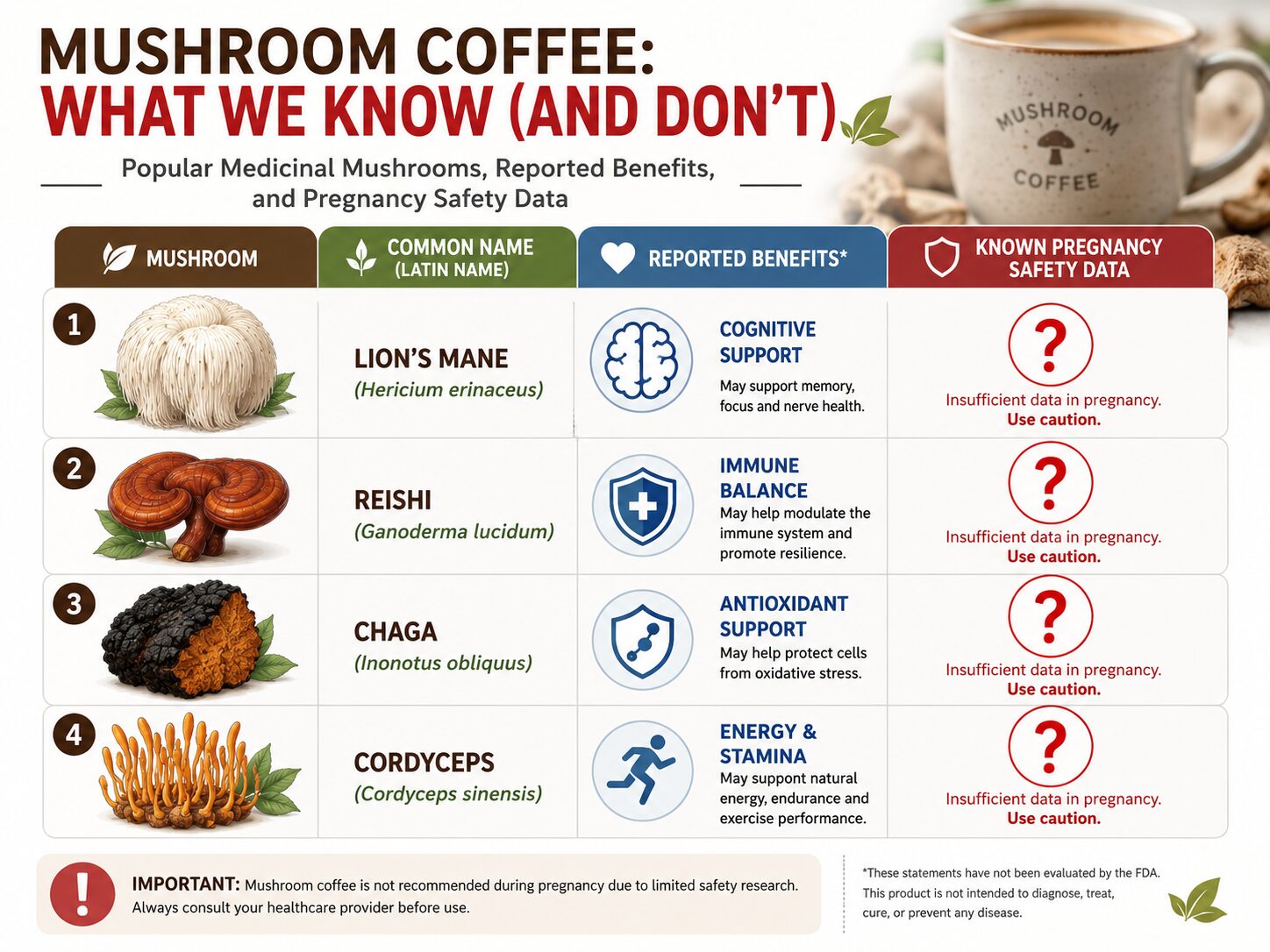
This is the non-negotiable half of the equation. Mushroom coffee is marketed as a dietary supplement, not a food. This changes everything.
When you drink a cup of regular coffee, you’re consuming a food product with a long history of use. When you drink mushroom coffee, you’re consuming a coffee beverage plus a concentrated dose of fungal extracts. These extracts—often from Lion’s Mane, Chaga, Reishi, or Cordyceps—are the novel variable.
I bought a popular Lion’s Mane and Chaga blend during my wife’s first trimester, thinking the cognitive benefits were a win. Our midwife took one look at the label and asked, “Where are the human pregnancy trials for these extracts?” The answer was nowhere. We finished the bag ourselves after the baby arrived.
The supplement industry is not required to prove safety or efficacy before selling a product. The FDA’s Dietary Supplement Labeling Guide mandates that manufacturers are responsible for their own labeling and warnings. This is why you’ll see the boilerplate: “These statements have not been evaluated by the Food and Drug Administration. This product is not intended to diagnose, treat, cure, or prevent any disease.” It’s also why many add: “Consult your physician if you are pregnant or nursing.”
The biological activity of these mushrooms is the entire point of drinking them. Lion’s Mane is studied for nerve growth factor support. Reishi is an adaptogen. Chaga is high in antioxidants. These compounds interact with your body’s systems. Without clinical trials, there is no data on how those interactions might affect hormonal balance, uterine tone, or fetal development.
| Common Mushroom in Coffee | Reported Benefit | Known Pregnancy Safety Data |
|---|---|---|
| Lion’s Mane (Hericium erinaceus) | Cognitive support, nerve health | None |
| Reishi (Ganoderma lucidum) | Immune support, stress adaptation | None |
| Chaga (Inonotus obliquus) | Antioxidant, anti-inflammatory | None |
| Cordyceps (Cordyceps militaris) | Energy, endurance | None |
Choosing to consume them while pregnant is an experiment with an unknown outcome. This is the core of the medical community’s caution.
How to Talk to Your Doctor About It
Don’t go in with a vague question. “Is mushroom coffee okay?” will get you a vague, risk-averse “no.” Go in prepared. This turns the conversation from a permission slip into a collaborative risk assessment.
First, bring the physical product or a photo of its complete Supplement Facts panel and ingredient list. Your provider needs to see the exact mushrooms, the form (extract vs. powder), the dosage per serving, and any other additives like MCT oil in coffee or coconut oil coffee blends.
Second, frame your question specifically: “Based on my health history and this product’s ingredient list, do you see any red flags? How does this fit into my total daily caffeine intake?” This acknowledges their expertise and the complexity of the decision.
Third, be honest about why you want it. Is it for energy? The taste? Habit? There may be safer, well-established alternatives. For example, if fatigue is the issue, they can discuss dietary iron or sleep strategies. If you miss the ritual, a high-quality decaf or a cinnamon in coffee routine might scratch the itch without the supplement risk.
Before you start: Do not stop or start any supplement, including mushroom coffee, based on online advice alone. Schedule a consultation with your prenatal care provider. Bring the product label. Disclose all supplements and medications you are currently taking.
What Are the Safer Alternatives?
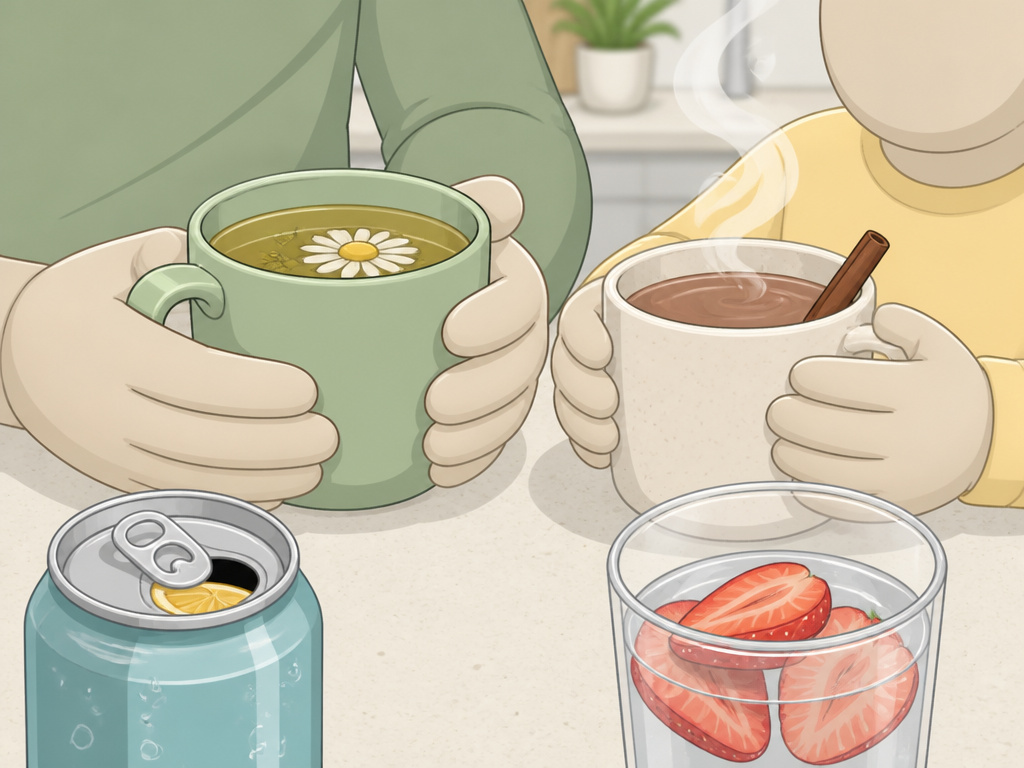
If your provider advises against mushroom coffee, or if you decide the unknown risk isn’t worth it, you have clear paths. The goal is to manage caffeine and find enjoyable rituals without the supplement component.
For a caffeine-containing alternative, simply switch to regular coffee or tea and monitor your total intake. This eliminates the unknown extract variable. Understanding the benefits of tea vs coffee can help you choose. Black tea has about half the caffeine of coffee, and green tea benefits include L-theanine, which promotes calm focus.
For a caffeine-free ritual, the options open up significantly:
– Roasted Chicory or Dandelion Root “Coffee”: These herbal blends mimic the dark, roasty flavor of coffee without caffeine or supplements.
– Decaffeinated Coffee: Choose a Swiss Water Process decaf to avoid chemical solvents. It provides the full coffee taste and ritual.
– Herbal Teas: Peppermint, ginger, or rooibos are generally considered pregnancy-safe and can be enjoyed hot or iced.
– Golden Milk: A warm drink made with turmeric, ginger, cinnamon, and milk (or a milk alternative).
The act of preparing and savoring a warm drink is powerful. You don’t need a functional supplement to maintain that comfort.
Frequently Asked Questions
Can I drink mushroom coffee while breastfeeding?
The same principle of caution applies. Compounds in supplements can pass into breast milk. The Academy of Breastfeeding Medicine notes that while many medications are compatible, herbal supplements lack data. Always consult your provider and reference guides on caffeine while breastfeeding for the caffeine component.
What if the mushroom coffee is decaf?
Decaf removes the caffeine concern but not the supplement concern. You are still consuming concentrated mushroom extracts. The lack of safety data remains the primary issue.
Are any mushrooms considered safe during pregnancy?
Culinary mushrooms like button, cremini, portobello, and shiitake are safe to eat when cooked, as they are a food. The concern is with medicinal-grade extracts and powders used in supplements, which are highly concentrated and not evaluated for pregnancy.
Why is mushroom coffee so popular if it’s not proven safe?
It’s popular for its reported cognitive and energy benefits in the general adult population. The market for functional coffee additives is growing. However, popularity and trendiness are not indicators of safety for a vulnerable population like pregnant women.
I drank it before I knew I was pregnant. What should I do?
Stop drinking it now. Then, mention it at your next prenatal appointment. The likelihood of harm from short-term, early exposure is very low, but your care team should have your complete history.
The Bottom Line
The official, data-driven advice is to avoid mushroom coffee during pregnancy. This isn’t about fearmongering; it’s about the application of a fundamental medical precaution. When there is no safety data for a bioactive supplement, the responsible recommendation is to avoid it.
Your two concrete action steps are to check the caffeine count against your daily total and to have a specific conversation with your healthcare provider about the supplement ingredients. They can weigh the unknowns against your personal health profile.
For now, stick to the warm drinks with long histories of safe use. The mushroom coffee will still be there after you’ve finished nursing.
{
“@context”: “https://schema.org”,
“@type”: “HowTo”,
“name”: “How to Evaluate Mushroom Coffee Safety During Pregnancy”,
“totalTime”: “PT10M”,
“tool”: [
{
“@type”: “HowToTool”,
“name”: “Product label for your mushroom coffee”
},
{
“@type”: “HowToTool”,
“name”: “Communication with your healthcare provider”
}
],
“step”: [
{
“@type”: “HowToStep”,
“name”: “Check the caffeine content per serving”,
“text”: “Locate the caffeine amount on your mushroom coffee’s nutrition label. Compare it to the recommended pregnancy limit of 200 milligrams per day.”
},
{
“@type”: “HowToStep”,
“name”: “Identify the mushroom species and extract type”,
“text”: “Look for the ingredient list. Note the specific mushrooms used (e.g., Lion’s Mane, Chaga) and whether they are listed as extract, powder, or mycelium.”
},
{
“@type”: “HowToStep”,
“name”: “Review the supplement disclaimer”,
“text”: “Find the warning label, which should advise pregnant or nursing individuals to consult a doctor before use. Its presence confirms the manufacturer’s stance.”
},
{
“@type”: “HowToStep”,
“name”: “Schedule a conversation with your OB-GYN or midwife”,
“text”: “Bring the product label to your appointment. Discuss the ingredients, your caffeine intake from all sources, and any personal health considerations.”
}
]
}
{
“@context”: “https://schema.org”,
“@type”: “FAQPage”,
“mainEntity”: [
{
“@type”: “Question”,
“name”: “Can I drink mushroom coffee while breastfeeding?”,
“acceptedAnswer”: {
“@type”: “Answer”,
“text”: “The same principle of caution applies. Compounds in supplements can pass into breast milk. The Academy of Breastfeeding Medicine notes that while many medications are compatible, herbal supplements lack data. Always consult your provider and reference guides on caffeine while breastfeeding for the caffeine component.”
}
},
{
“@type”: “Question”,
“name”: “What if the mushroom coffee is decaf?”,
“acceptedAnswer”: {
“@type”: “Answer”,
“text”: “Decaf removes the caffeine concern but not the supplement concern. You are still consuming concentrated mushroom extracts. The lack of safety data remains the primary issue.”
}
},
{
“@type”: “Question”,
“name”: “Are any mushrooms considered safe during pregnancy?”,
“acceptedAnswer”: {
“@type”: “Answer”,
“text”: “Culinary mushrooms like button, cremini, portobello, and shiitake are safe to eat when cooked, as they are a food. The concern is with medicinal-grade extracts and powders used in supplements, which are highly concentrated and not evaluated for pregnancy.”
}
},
{
“@type”: “Question”,
“name”: “Why is mushroom coffee so popular if it’s not proven safe?”,
“acceptedAnswer”: {
“@type”: “Answer”,
“text”: “It’s popular for its reported cognitive and energy benefits in the general adult population. The market for functional coffee additives is growing. However, popularity and trendiness are not indicators of safety for a vulnerable population like pregnant women.”
}
},
{
“@type”: “Question”,
“name”: “I drank it before I knew I was pregnant. What should I do?”,
“acceptedAnswer”: {
“@type”: “Answer”,
“text”: “Stop drinking it now. Then, mention it at your next prenatal appointment. The likelihood of harm from short-term, early exposure is very low, but your care team should have your complete history.”
}
}
]
}
