
Can You Drink Coffee While Intermittent Fasting? The Truth
You can drink black coffee while intermittent fasting, but it introduces a metabolic compromise. A standard 240ml cup contains about 3 calories and 100mg of caffeine. While the calorie load is negligible, research shows caffeine can acutely impair insulin sensitivity, potentially interfering with a core metabolic goal of fasting. Adding any milk, sugar, or creamer unequivocally breaks the fast.
Most guides get this wrong by focusing only on calories. They repeat the “under 50 calories” rule like a mantra, a number pulled from thin air with no scientific backing. The real question isn’t about an arbitrary calorie threshold. It’s about whether the substance triggers a metabolic response that halts the physiological state you’re fasting to achieve.
This guide cuts through the noise. We’ll look at the research on caffeine’s direct effect on insulin, break down why every additive is a problem, and give you a clear protocol for using coffee as a tool without sabotaging your fast.
Key Takeaways
- Black coffee’s ~3 calories won’t break a fast, but its caffeine content can temporarily reduce insulin sensitivity, which is a key benefit you’re fasting for.
- Any additive with calories, sugar, milk, cream, immediately breaks the fast by provoking an insulin response.
- The popular “under 50 calories” rule is a myth with zero scientific evidence; the goal is zero calories from non-water sources.
- Excessive caffeine (over 400mg) while fasted can cause heart palpitations, anxiety, and ruin sleep, undermining your health goals.
- For a purely metabolic fast, only water is guaranteed. Using coffee is a practical trade-off for adherence, not a metabolic free pass.
How Black Coffee Affects Your Fasting State
Black coffee is not metabolically inert. A single 8-ounce cup delivers roughly 100 milligrams of caffeine and trace amounts of protein, fat, and minerals totaling about three calories. The calorie count is so low it’s considered negligible by every dietary standard.
One 240ml serving of black coffee contains approximately 3 calories and 100mg of caffeine. The nutrient content is insufficient to initiate a significant metabolic shift or halt processes like autophagy for most individuals following time-restricted eating protocols.
The problem is caffeine, not the calories. A PubMed study on black coffee and other research indicates that acute caffeine intake can impair insulin sensitivity and glucose tolerance. Your body still recognizes and processes the compound. For a fasting protocol aimed at improving metabolic flexibility, this is a direct contradiction.
If your primary fasting goal is weight loss through simple calorie restriction, a black coffee is a non-issue. It might even help by suppressing appetite. I’ve gone through phases where my morning espresso was the only thing that stopped me from breaking an 18-hour fast early. It works.
But if you’re fasting for improved insulin sensitivity, cellular repair (autophagy), or managing prediabetes, you’re introducing a compound that works against that specific aim. It’s a trade-off.
TL;DR: Black coffee is fine for fasting for weight loss but presents a metabolic compromise if your goal is optimal insulin sensitivity.
Why Additives Like Milk or Sugar Will Break Your Fast
This is the line that cannot be crossed. Adding anything with measurable calories to your coffee will break your fast. It’s not a debate.
The mechanism is straightforward. Your body’s fasting state is characterized by low insulin. Introducing carbohydrates (sugar) or protein (milk) triggers an insulin response. Insulin tells your body to store energy and stop burning fat. It also suppresses autophagy. The fast is over.
Let’s break down common culprits:
* Dairy Milk & Cream: Even a “splash” of whole milk (~9 calories per tablespoon) contains lactose (a sugar) and protein. It prompts an insulin release.
* Sugar & Syrups: Obviously. One teaspoon of sugar has 16 calories and causes an immediate blood sugar spike.
* Artificial Sweeteners: While zero-calorie, studies suggest they may still provoke an insulin response in some people due to the sweet taste. The data is mixed, but why risk it during a fast?
* Plant-Based Milks: Unsweetened almond milk may have only 30-40 calories per cup, but a splash still adds calories and carbs. It breaks the fast.
The calories in milk or any sweetener are not the main issue, it’s the metabolic signal they send. Your body isn’t using a calorie counter. It’s responding to nutrients.
Common mistake: Adding a “tiny splash” of milk to coffee, the 10-15 calories still elicit an insulin response, halting fat-burning and autophagy within minutes of consumption.
If you need something in your coffee, your fasted window is not the time. Save the almond milk coffee or brown sugar sweetener for your eating window.
The “Under 50 Calories” Myth and Other Fasting Gray Areas
You’ll see this everywhere: “You won’t break your fast if you stay under 50 calories.” Some sources even say 75. This rule is completely fabricated.
No reputable scientific study defines a fasting threshold at 50 calories. The National Institute of Diabetes and Digestive and Kidney Diseases (NIDDK) defines fasting periods as times with no or very minimal calorie intake. The goal is zero.
This myth likely exists to give people wiggle room for things like adding milk to coffee or taking supplements. It’s a practical hack for adherence, not a metabolic fact. If you’re fasting for gut rest or strict autophagy, there is no gray area. Only water.
Other gray areas include:
* Herbal Tea: Non-caffeinated teas like chamomile contain plant compounds (xenobiotics) that must be processed by your liver. This stimulates digestive processes, technically moving you out of a pure fasted state.
* Supplements & Medications: Fat-soluble vitamins or pills with fillers can trigger digestive enzymes. Water-soluble vitamins like B12 are generally considered okay.
* Coconut oil coffee or MCT oil coffee: These are pure fat, which doesn’t spike insulin like carbs or protein. Some argue they’re “fasting-friendly.” However, they provide significant calories (over 100 per tablespoon), which breaks a fast for weight loss or autophagy. They are tools for a ketogenic fast, not a clean fast.
| Addition | Caloric Impact | Insulin Response | Breaks a Clean Fast? |
|---|---|---|---|
| Black Coffee | ~3 calories | Possible (via caffeine) | Gray Area |
| Sugar (1 tsp) | 16 calories | High | Yes |
| Whole Milk (1 tbsp) | 9 calories | Moderate | Yes |
| Heavy Cream (1 tsp) | 17 calories | Very Low | Yes |
| MCT Oil (1 tbsp) | 130 calories | None | Yes |
| Artificial Sweetener | 0 calories | Debated | Likely |
The table makes it clear. If your fast has a strict metabolic goal, the only safe bet is water.
Caffeine’s Side Effects: Jitters, Sleep, and Hunger Cues
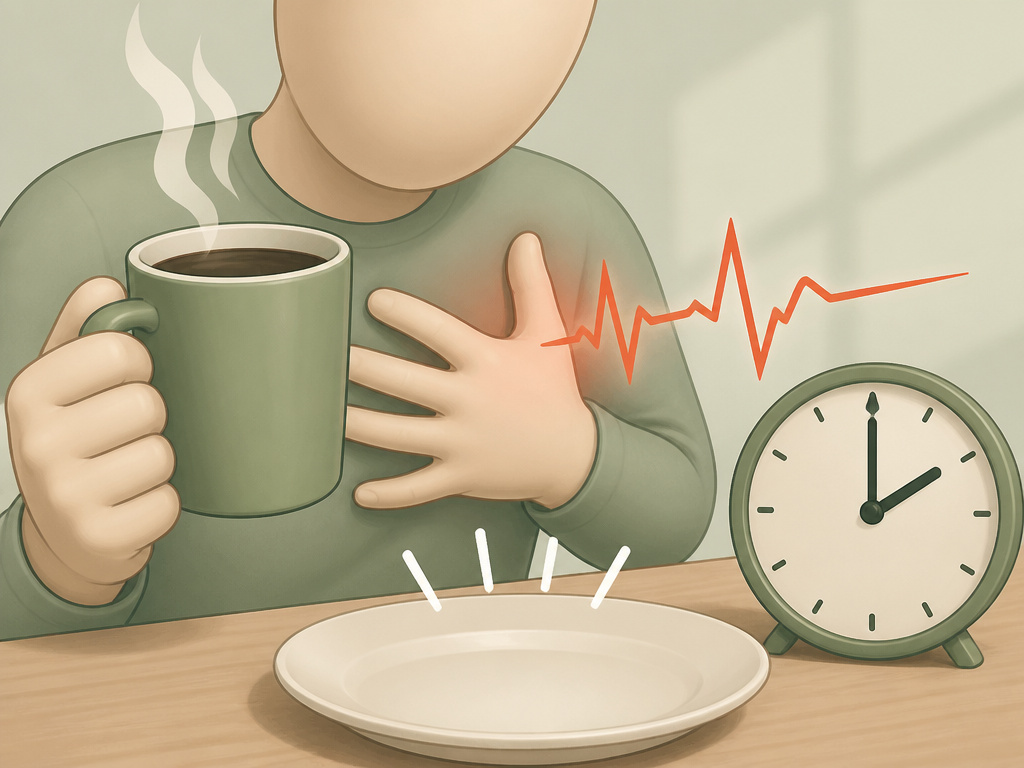
Drinking coffee on an empty stomach amplifies caffeine’s effects. That 100mg hit feels more like 150mg. This can backfire.
The most common issue is the jitter-and-crash cycle. You get a sharp energy boost, followed by a slump that can trigger intense hunger. This defeats the appetite-suppressing benefit you wanted. I learned this after a week of 20-hour fasts supported by two large americanos. By 11 AM I was wired; by 2 PM I was ravenous and irritable. The fast became harder, not easier.
More serious side effects include:
* Heart Palpitations: Caffeine stimulates your nervous system. In a fasted state, with no food to buffer its absorption, some people feel a fluttering or racing heart.
* Increased Blood Pressure: A temporary spike is common.
* Ruined Sleep: Consuming caffeine, especially later in the day, can severely impact sleep quality. Poor sleep increases cortisol and hunger hormones, sabotaging fat loss and metabolic health, the very things you’re fasting to improve.
Furthermore, caffeine is a diuretic. While it doesn’t cause dehydration, it can increase fluid loss. During a fast, you need to be diligent about water and electrolyte intake. Coffee doesn’t replace water.
If you’re sensitive, consider a lower caffeine option like black tea during your fast, or simply stick to water. Chasing the energy boost can undermine your entire effort.
Practical Protocol: How to Use Coffee While Fasting
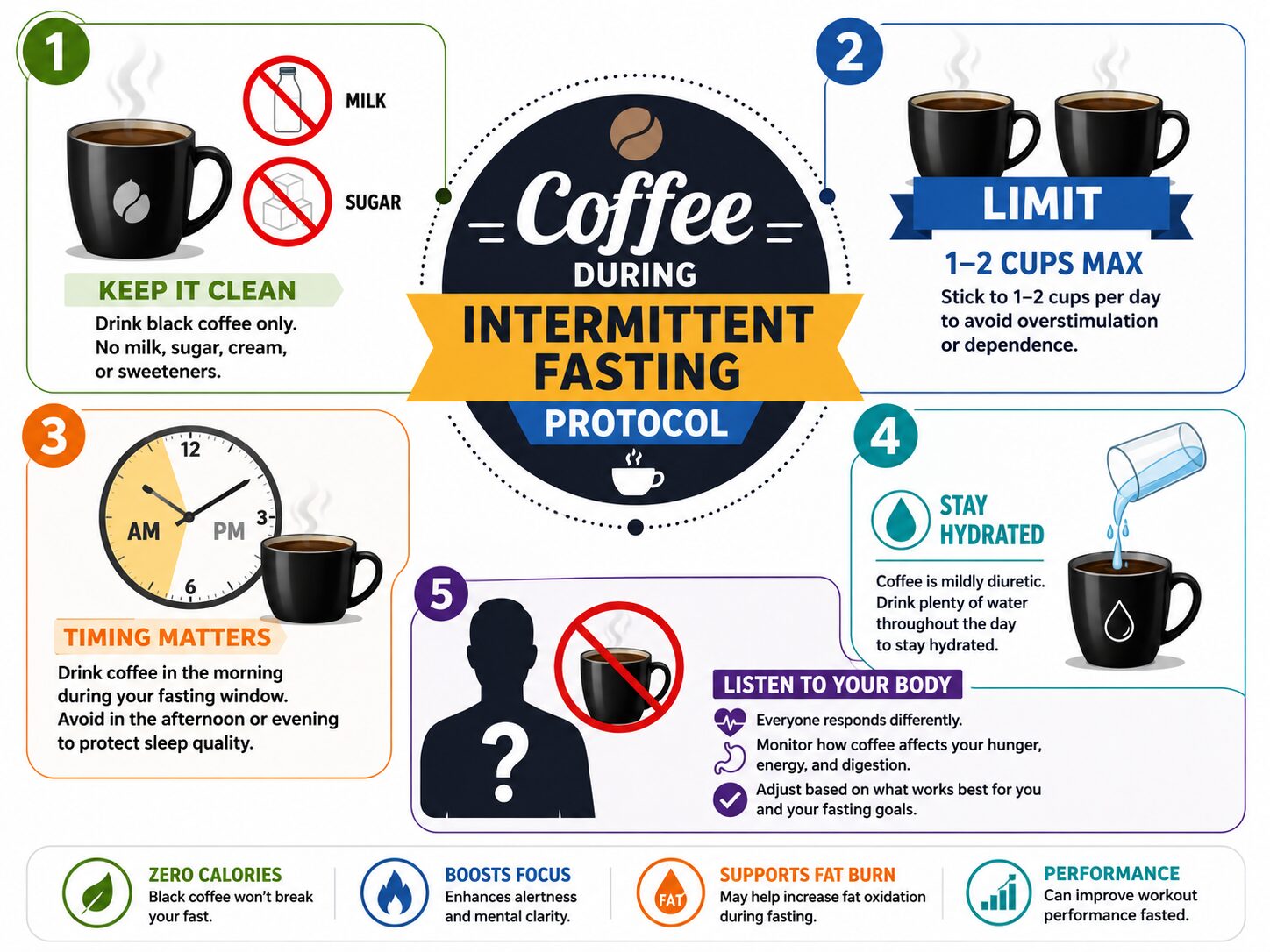
If you’ve weighed the trade-offs and want to include coffee, here’s how to do it with minimal downside.
- Brew It Black. This is non-negotiable. Use good beans to enjoy it without additives. A salt trick for coffee can reduce perceived bitterness without calories.
- Limit Quantity. Stick to one, maybe two, standard cups during your fasting window. This keeps caffeine under 200mg for most people.
- Drink It Early. Consume your coffee at the start of your fasting window (e.g., first thing in the morning). This gives your body the entire day to metabolize the caffeine, protecting your sleep.
- Hydrate First. Drink a large glass of water before your coffee. Fasting can be dehydrating, and coffee is a diuretic.
- Listen to Your Body. If coffee makes you jittery and then ravenous, it’s not helping. Skip it. The fast is the priority, not the coffee.
For flavor without breaking your fast, explore spices. Steeping a cinnamon stick in your grounds for cinnamon coffee adds flavor with negligible calories.
Remember, coffee is a tool for adherence. If it helps you comfortably extend your fast, the minor metabolic compromise of black coffee is worth it. If you’re chasing perfect metabolic optimization, you’re drinking water.
Frequently Asked Questions
Does black coffee break a fast for autophagy?
It might. Autophagy is a cellular cleaning process activated by nutrient scarcity. While the calories in black coffee are negligible, caffeine’s stimulation of metabolic pathways could theoretically dampen the autophagic signal. For maximum autophagy, water fasting is the gold standard.
Can I have bulletproof coffee (with butter/MCT oil) while fasting?
No. Adding fats to coffee like butter or MCT oil provides a substantial calorie load (200-300 calories). This breaks a fast for weight loss and autophagy. It’s a keto-friendly meal replacement, not a fasting aid.
Will coffee with a splash of heavy cream break my fast?
Yes. Heavy cream has about 50 calories per tablespoon. It will cause a minimal insulin response compared to sugar, but calories and nutrients are present. Your fast is broken.
Is espresso better than drip coffee while fasting?
In terms of fasting, no. A single espresso shot has slightly less caffeine (~64mg) and volume than a cup of drip coffee, but the same rules apply. Drink it black. The choice is about caffeine dosage and personal preference, not fasting integrity.
How does tea compare to coffee during a fast?
Black tea has less caffeine (~50mg per cup) and may be gentler on an empty stomach. Herbal teas have no caffeine but contain plant compounds your liver must process. For the purest fast, water is still superior, but unsweetened black tea is a common compromise.
The Bottom Line
Black coffee is a permissible crutch for intermittent fasting, not a free pass. Its tiny calorie count is irrelevant, but its caffeine content presents a real, though minor, metabolic compromise. If your fast is about weight loss through calorie restriction and coffee keeps you sane, use it. Drink it black, keep it to a cup or two, and do it early in the day.
If your fast is a targeted tool for improving insulin sensitivity, managing blood sugar, or maximizing autophagy, understand that even black coffee works against those mechanisms. The purest path is water. Any addition of milk, sugar, or cream, no matter how small, immediately resets the clock on your fast. Ditch the “under 50 calories” myth. Your body’s metabolic response doesn’t care about internet rules. It cares about nutrients.
