
Can Kids Have Decaf Coffee? The Safe Limits for Children
Yes, kids can have decaf coffee, but you must account for the residual caffeine, about 5.69 mg in an 8 oz cup, against their body weight. The European Food Safety Authority sets a safe daily caffeine intake for children at 3 milligrams per kilogram of body weight. A 44-pound (20 kg) child hits that limit with just over ten cups of decaf. The bigger risk isn’t the caffeine; it’s the chemical solvents used in most decaffeination, which leave trace residues you wouldn’t want a developing system to process regularly.
Most parents think “decaf” means “caffeine-free.” It doesn’t. They pour a half-cup for their seven-year-old, assuming it’s just warm, coffee-flavored milk. They miss the two critical variables: the exact milligrams of caffeine per ounce and the decaffeination method stamped on the bag. That oversight turns a harmless treat into a daily dose of a stimulant and industrial solvent.
This guide walks through the math, the chemistry, and the pediatric guidelines. You’ll know exactly how much decaf is safe for a 30-pound toddler versus a 100-pound preteen, which decaffeination process to avoid, and the one sign that means your kid shouldn’t have any at all.
Key Takeaways
- An 8 oz cup of brewed decaf coffee contains 5.69 mg of caffeine according to USDA data, not zero.
- The safe daily caffeine limit for a child is 3 mg per kilogram of body weight, per the European Food Safety Authority.
- Most decaf is processed with chemical solvents like ethyl acetate; the Swiss Water Process leaves no chemical residue.
- Children on stimulant medications for ADHD may experience amplified effects from even trace caffeine.
- Serving size is everything: a small 4 oz serving halves the caffeine intake instantly.
How Much Caffeine Is Actually in Decaf?
You see “decaffeinated” on the bag and assume it’s caffeine-free. The USDA’s FoodData Central database says otherwise. Their entry for “Coffee, brewed, decaffeinated, prepared with tap water” lists 2.4 mg of caffeine per 100 grams. A standard 8 fluid ounce cup weighs about 237 grams. Do the math: that’s roughly 5.69 mg of caffeine per cup.
Common mistake: Assuming decaf is caffeine-free, a child drinking two full 8 oz cups in a day consumes over 11 mg of caffeine, which for a small toddler could approach half their safe daily limit.
That number isn’t a guess. It’s a measured average from brewed coffee. Instant decaf might be lower. A dark roast decaf might be slightly higher. But 5.69 mg per 8 oz cup is the working number from the primary source. It’s the baseline.
Why does this matter? Because pediatric guidelines don’t deal in cups. They deal in milligrams per kilogram. If you don’t know the milligrams in the cup, you can’t do the safety math.
| Beverage | Serving Size | Approximate Caffeine | Equivalent in Decaf Cups |
|---|---|---|---|
| Decaf Coffee (brewed) | 8 fl oz | 5.69 mg | 1 |
| Coca-Cola | 12 fl oz | 34 mg | ~6 cups |
| Black Tea (brewed) | 8 fl oz | 47 mg | ~8 cups |
| Regular Coffee (brewed) | 8 fl oz | 95 mg | ~17 cups |
TL;DR: An 8 oz cup of decaf coffee has about 5.69 mg of caffeine. Use that number to calculate against your child’s weight.
The Safe Limit Math: 3 mg/kg Explained
General advice says “moderation.” That’s useless. The European Food Safety Authority (EFSA) isn’t vague. Their 2015 scientific opinion states a single dose of caffeine up to 3 mg per kilogram of body weight does not raise safety concerns for children and adolescents. That same level applies to daily intake.
This is the rule. You need your child’s weight in kilograms. If you only know pounds, divide by 2.2.
- A 30 lb child (13.6 kg): 13.6 kg x 3 mg = 40.8 mg safe daily limit.
- A 50 lb child (22.7 kg): 22.7 kg x 3 mg = 68.1 mg safe daily limit.
- A 70 lb child (31.8 kg): 31.8 kg x 3 mg = 95.4 mg safe daily limit.
Now plug in the 5.69 mg per 8 oz cup.
– The 30 lb child: 40.8 mg / 5.69 mg = 7.2 cups of decaf to hit the limit.
– The 50 lb child: 68.1 mg / 5.69 mg = 12 cups.
– The 70 lb child: 95.4 mg / 5.69 mg = 16.8 cups.
Those cup counts look high. Nobody’s giving a kid seven cups of decaf a day. But this is where parents blunder. They don’t add up all the sources.
A child might have a morning hot chocolate (5-10 mg caffeine), an afternoon iced tea (20-50 mg), a piece of dark chocolate (10-20 mg), and then a decaf latte after dinner. Suddenly, that single decaf serving pushes them over their personal threshold. Tracking caffeine intake for children means looking at the whole day, not just the coffee mug.
The EFSA limit is a ceiling. It’s not a recommendation. The American Academy of Pediatrics advises no caffeine for children under 12, and no more than 100 mg daily for adolescents 12-18. Their stance is more conservative, focusing on health impacts for kids like sleep disruption and nervous system effects. The EFSA number gives you a precise, calculable boundary.
The Decaffeination Process: Why the Method Matters
The caffeine content is one thing. What’s left behind is another. Most decaf coffee isn’t just soaked in water. It’s washed in chemical solvents to strip the caffeine out. The most common solvent is ethyl acetate. It’s derived from fruit, but the industrial version used in coffee processing isn’t something you’d want to drink.
The beans are steamed, then rinsed repeatedly with ethyl acetate, which bonds with the caffeine molecules and is washed away. Regulators say the trace residues are safe. I don’t trust that for a developing child’s regular exposure. Your kid’s liver is still learning its job.
The alternative is the Swiss Water Process. It uses only water, temperature, and time. Green coffee beans are soaked in hot water to dissolve the caffeine. That water is passed through a carbon filter that traps the caffeine molecules. The now caffeine-free, flavor-charged water is used to soak a new batch of beans. The flavor compounds stay in the bean because the water is saturated with them; the caffeine diffuses out. It’s a physical process, not a chemical one.
You pay more for Swiss Water or CO2 Process decaf. You’re paying for the absence of ethyl acetate or methylene chloride residues. For a child’s occasional cup, it’s the only kind I’d use. The flavor is often better, too, less of the flat, washed-out taste that plagues solvent-decaffeinated beans.
TL;DR: Choose decaf labeled “Swiss Water Process” or “CO2 Process” to avoid trace chemical solvents. The bag will say it.
When Decaf Is a Bad Idea: Sensitivity and Medications
The AAP policy notes children may be more susceptible to caffeine’s effects due to their smaller size and developing nervous systems. Some kids are just wired to react more. For them, even 5 mg can cause jitters, anxiety, or stomach upset.
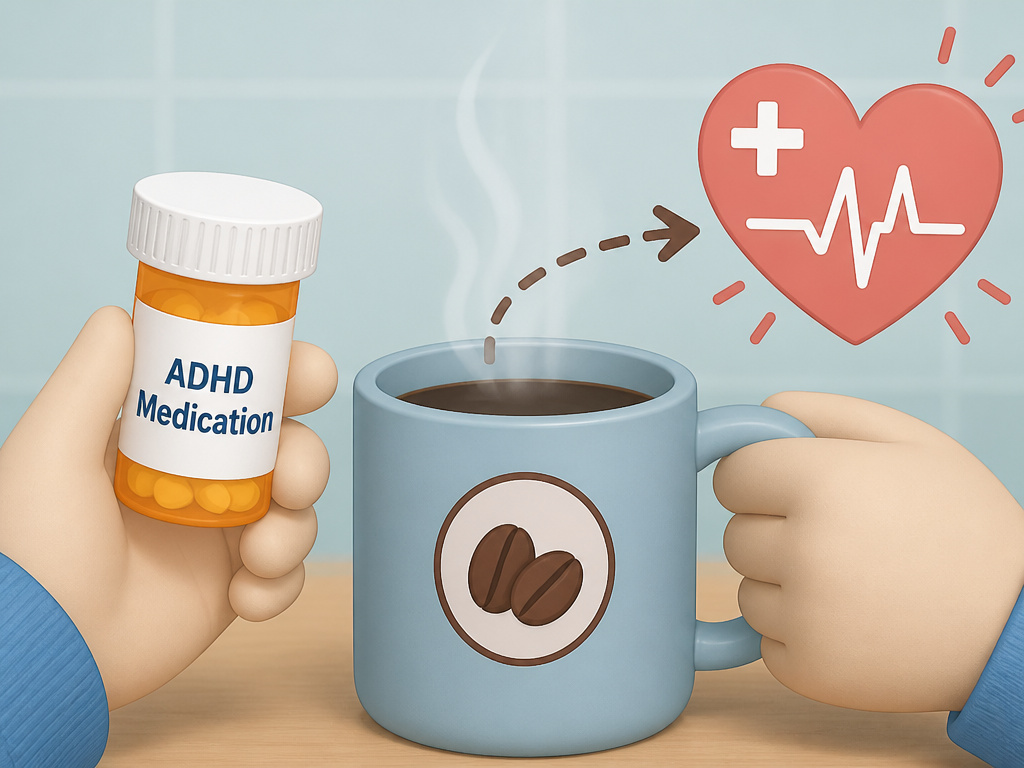
The bigger red flag is medication. The EFSA opinion notes potential interactions between caffeine and certain drugs. If your child is on a stimulant medication for ADHD, like methylphenidate (Ritalin, Concerta) or amphetamine (Adderall), adding a CNS stimulant, even a tiny amount, can amplify side effects. Heart rate, blood pressure, anxiety. It’s stacking a mild stimulant on top of a prescribed one.
You have to think in totals. The caffeine and children guide from the American Academy of Pediatrics stresses monitoring total intake from all sources, not just coffee. A child on ADHD medication has a lower effective threshold. Their safe “3 mg/kg” might be closer to 1 mg/kg.
The same logic applies to caffeine while breastfeeding. A nursing infant gets a dose of whatever the mother consumes. While decaf passes much less caffeine, the solvent residues are a separate concern. If you wouldn’t give it directly to a baby, think twice about drinking solvent-decaffeinated coffee while nursing.
Practical Serving Guide for Parents
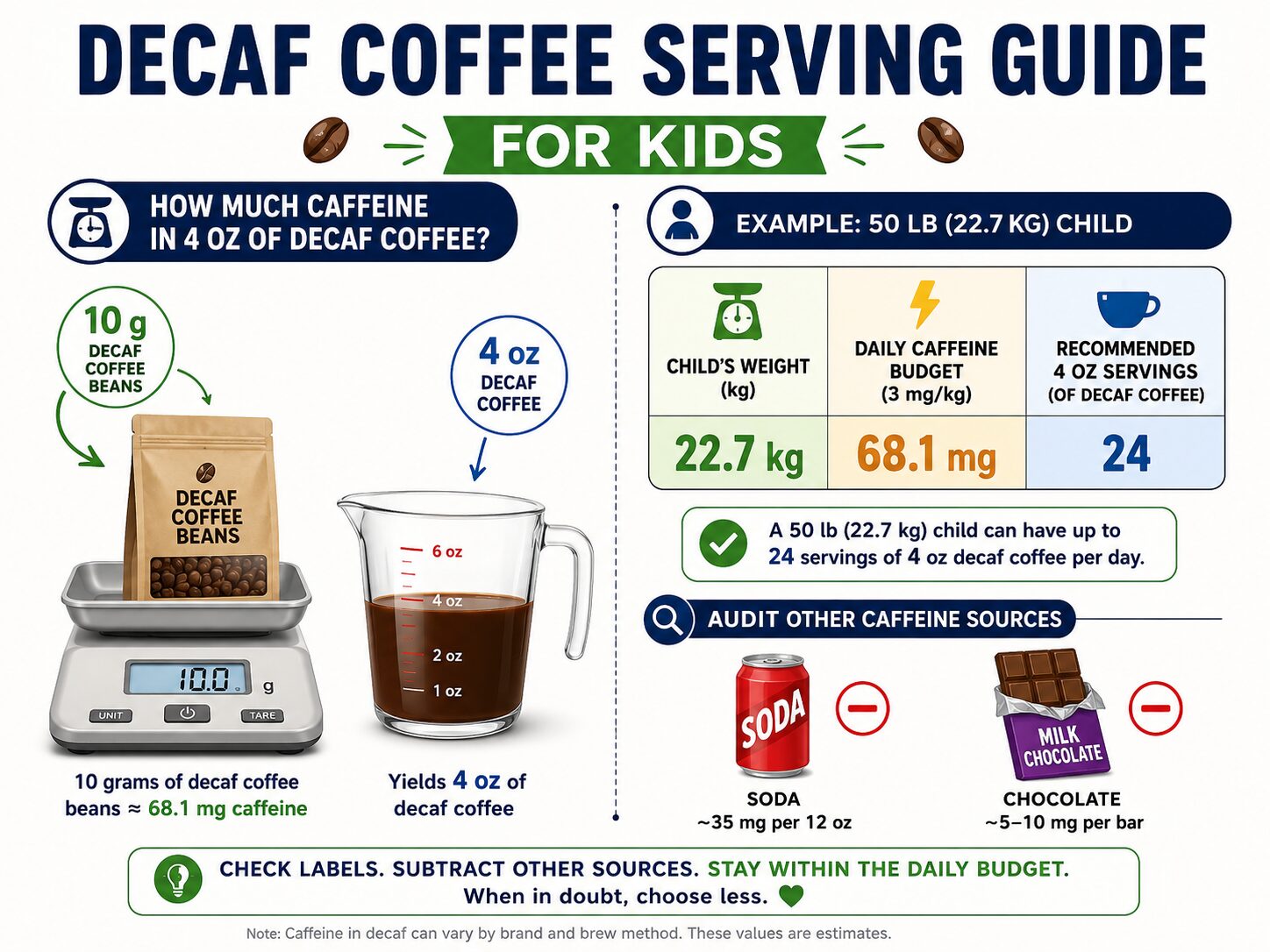
Forget the adult-sized mug. The tool you need is a kitchen scale and a measuring cup.
- Weigh your child. Convert pounds to kilograms (lbs / 2.2). A 40 lb child is 18.2 kg.
- Calculate their daily caffeine budget. 18.2 kg x 3 mg = 54.6 mg.
- Audit other sources. A can of Coke (34 mg) uses up over half that budget. A square of dark chocolate (10 mg) takes another chunk. See where caffeine content in soda and other common items fit.
- Assign a decaf allowance. If the day is otherwise caffeine-free, maybe 2 cups of decaf (11.4 mg) is fine. If they had chocolate milk, maybe just one.
- Measure the serving. A “cup” is 8 fluid ounces. Use a liquid measuring cup. A small 4 oz serving cuts the caffeine to 2.85 mg instantly.
- Choose the right decaf. Buy Swiss Water Process. It’s behind most major specialty roasters’ decaf offerings.
- Observe. Give the small, measured serving. Watch for any changes in behavior, focus, or sleep over the next six hours.
This isn’t about fear. It’s about precision. You’re managing a psychoactive substance, even at trace levels. The systematic review of caffeine in Food and Chemical Toxicology confirms that effects are dose-dependent and individual. Your child’s reaction is the final test.
| Child’s Weight | Weight in kg | Safe Daily Caffeine (3 mg/kg) | Max 8 oz Decaf Cups | Recommended 4 oz Servings |
|---|---|---|---|---|
| 30 lbs | 13.6 kg | 40.8 mg | 7 cups | 14 small servings |
| 50 lbs | 22.7 kg | 68.1 mg | 12 cups | 24 small servings |
| 70 lbs | 31.8 kg | 95.4 mg | 16 cups | 32 small servings |
The table shows the maximums. You should never serve the maximum. Start with one 4 oz serving on a weekend morning when you can watch for effects. See how they react. The goal is informed permission, not restriction.
Decaf vs. Other “Kid-Friendly” Drinks
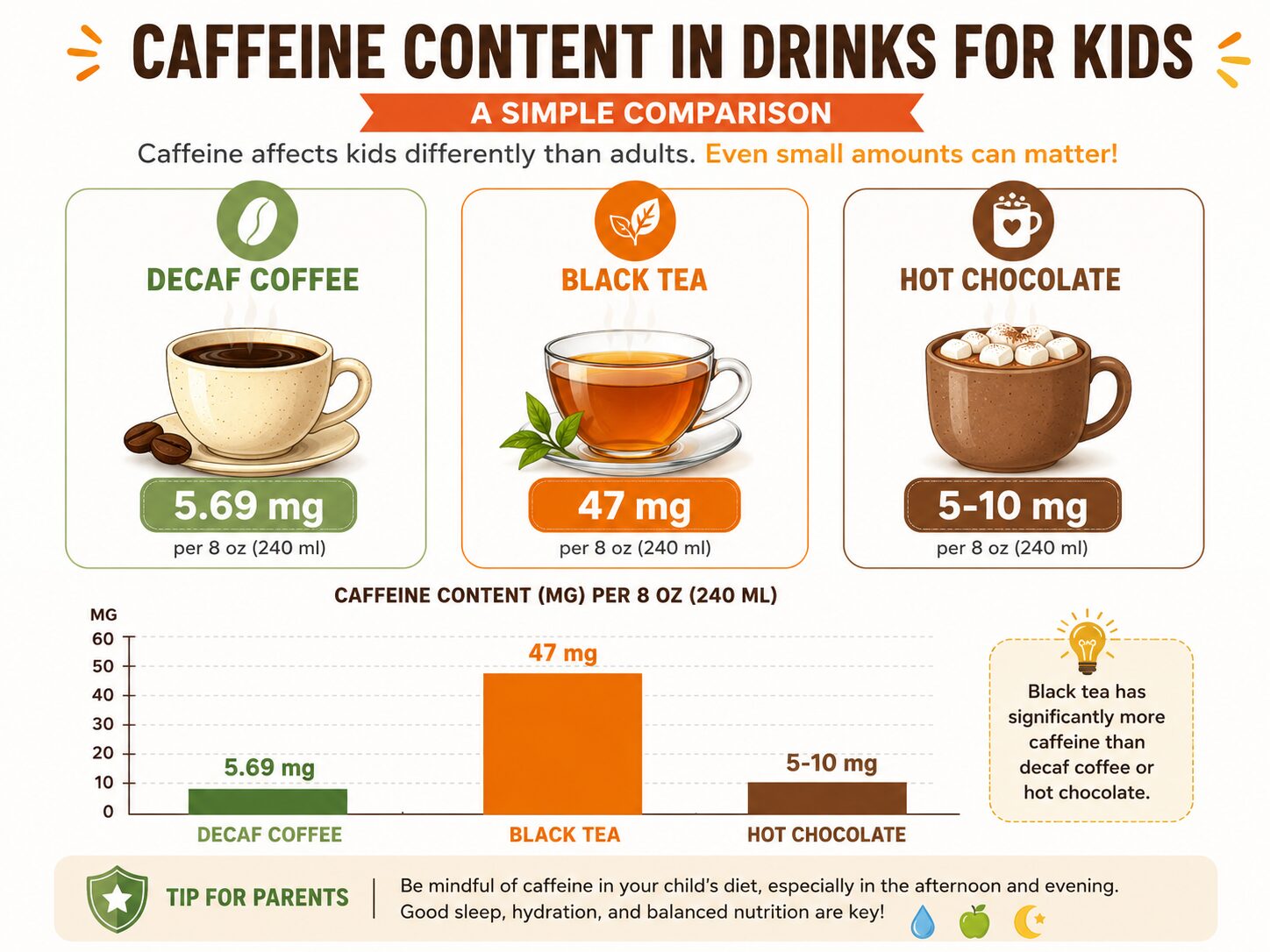
Parents often swap coffee for tea or hot chocolate, thinking they’re safer. Let’s compare.
Black tea has about 47 mg of caffeine per 8 oz cup. That’s more than eight times the caffeine in decaf coffee. Green tea has about 28 mg. Even black tea caffeine content is a serious dose for a child. Herbal teas are truly caffeine-free, but check the label, some blends include black or green tea.
Hot chocolate mixes vary wildly. A packet made with water might have 5-10 mg of caffeine from the cocoa. Made with milk, it’s a decent source of calcium and protein, but it’s also packed with sugar. It’s not a health drink.
The real advantage of decaf coffee over these alternatives is control. You know the exact caffeine content (5.69 mg/8 oz). You can measure the serving. You can choose a chemical-free processing method. With tea or hot chocolate, you’re guessing. For managing caffeine intake for children, certainty beats guesswork every time.
If you’re looking for a warm, cozy drink with zero caffeine, your best bets are roasted grain beverages (like Postum or Pero), herbal teas (peppermint, chamomile, rooibos), or warm milk with a dash of cinnamon. These are true zero-caffeine options, unlike decaffeinated coffee options which still contain a trace amount.
Frequently Asked Questions
At what age can a child have decaf coffee?
There’s no official age. The AAP recommends no caffeine for children under 12, but that’s for caffeinated drinks. The decision hinges on the child’s weight, sensitivity, and total diet. A small taste at age 8 or 9 is physiologically harmless for most, but making it a regular habit before age 12-13 introduces unnecessary stimulant exposure. Wait until adolescence for any routine consumption.
Can decaf coffee stunt a child’s growth?
The old myth that caffeine stunts growth is not strongly supported by science. The concern is that caffeine can interfere with calcium absorption, which is crucial for bone building. A single cup of decaf poses negligible risk. The real growth threat is if caffeine-filled sodas or coffees replace milk, depriving a child of calcium and vitamin D. Decaf coffee with milk is far less risky than a diet soda habit.
My child has ADHD. Can they have decaf?
Talk to your pediatrician first. Stimulant medications and caffeine, even in small amounts, can interact. The combined effect on heart rate and anxiety can be uncomfortable. Many caffeine effects on children are amplified in kids with ADHD. It’s often wiser to avoid it altogether while on medication.
Is decaf coffee acidic and bad for their teeth?
Coffee is acidic, decaf or regular. The pH is roughly the same (around 5). Acid can soften tooth enamel. If a child sips decaf slowly over an hour, the acid exposure is prolonged. Serve it with a meal to neutralize acid with saliva, and have them drink water afterward. Don’t let it be a all-day sipping drink.
Before You Go
Decaf coffee for kids isn’t a yes/no question. It’s a math problem with three variables: the child’s weight in kilograms, the 5.69 milligrams of caffeine in the cup, and the decaffeination method on the bag. Get those three right, and an occasional small serving is fine. Get any one wrong, and you’re either worrying needlessly or missing a real risk.
The safest path is to treat it like any other occasional treat, measured, intentional, and made with the cleanest ingredients you can find. Choose Swiss Water Process decaf. Use a 4 oz cup, not a mug. And always, always count it toward the day’s total caffeine budget. That’s how you share the ritual without the regret.
