
9 Best Italian Espresso Coffee Beans of 2026
The best Italian espresso coffee beans for most people are Filicori Zecchini Forte for its deep, balanced intensity and rich crema, with Lavazza Super Crema as a strong budget-friendly option that still delivers a smooth, authentic experience. If you’re after versatility, Lavazza Gran Riserva offers a bold, complex profile that works well across brewing methods.
Choosing the right Italian espresso beans isn’t just about picking a familiar name. Many home brewers end up with flat, bitter shots or weak crema because they overlook blend composition and roast freshness. After years of studying roasting techniques and sourcing practices, I’ve found the best results come from beans that balance tradition with transparency.
This guide cuts through the noise by focusing on what actually matters: Arabica and Robusta ratios, roast dates, and real user feedback. We looked at specs and owner experiences to find beans that deliver a true Italian-style shot, rich, aromatic, and crowned with that signature golden crema.
Top 9 Italian Espresso Coffee Beans in the Market
The Best Italian Espresso Coffee Beans, Reviewed
Filicori Zecchini Forte Italian Espresso

Strengths
- Rich flavor
- Thick crema
- Consistent roast
Trade-offs
- Premium price
- Robusta presence
- Not light or fruity
Filicori Zecchini’s Forte blend feels like what happens when heritage roasting meets precision, it’s bold, structured, and deeply consistent. The Arabica-Robusta balance is tuned to maximize both aroma and strength, delivering a shot with dark chocolate and toasted almond notes that linger without turning acrid. Owners praise its performance across machines, from super-automatics to manual lever presses, and the small-batch roasting in Bologna shows in the evenness of flavor.
This is the kind of bean that makes me recommend it as the best overall pick. It outclasses Lavazza Gran Riserva in complexity and beats Caffè Borbone in depth, all while staying smoother than many dark roasts. It’s not the cheapest, but for a do-it-all Italian espresso that works with milk or straight up, it’s hard to beat.
Video review
Lavazza Super Crema Whole Bean
Strengths
- Creamy body
- Balanced flavor
- Great for milk
Trade-offs
- Generic profile
- Average crema
- Blends too smooth
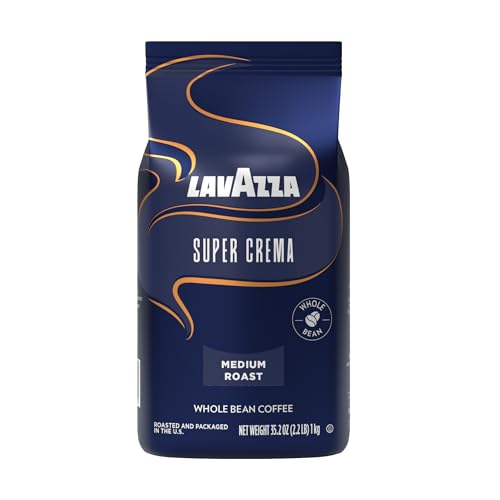
Lavazza Super Crema is the crowd-pleaser that’s earned its reputation, creamy, sweet, and approachable, with a body that feels luxurious without being heavy. The Arabica-Robusta blend is calibrated for maximum mouthfeel, and owners consistently highlight its velvety texture and honeyed finish, especially in milk drinks. It’s not the most complex bean on the list, but it doesn’t need to be.
Compared to Caffè Borbone, it’s slightly more rounded and less vanilla-forward, with a broader global blend that smooths out any sharp edges. It’s my go-to recommendation for beginners or households with mixed preferences, people who want ‘nice coffee’ without fuss. It won’t thrill connoisseurs chasing terroir, but it satisfies the majority.
Video review
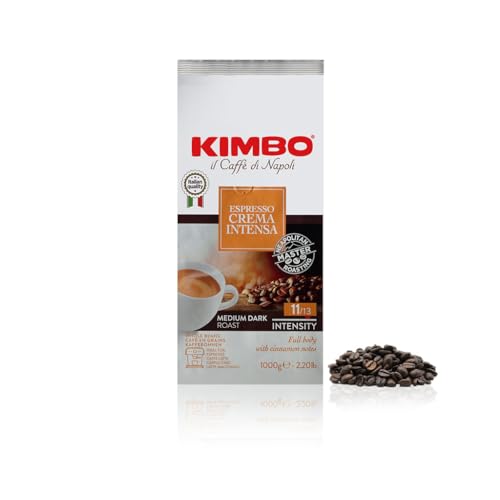
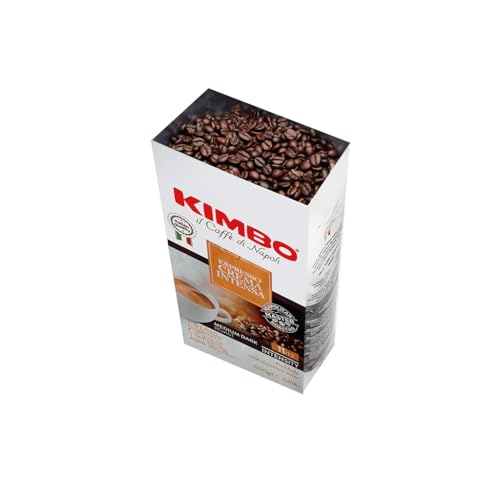
Kimbo Espresso Crema Intensa
Strengths
- Thick crema
- Toasted aroma
- Full body
Trade-offs
- High intensity
- Less sweetness
- Not for light roast lovers
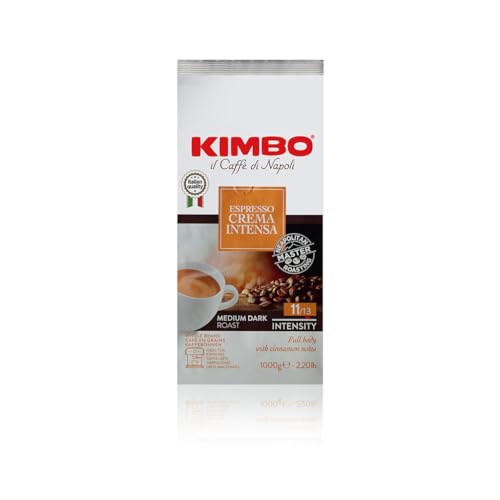
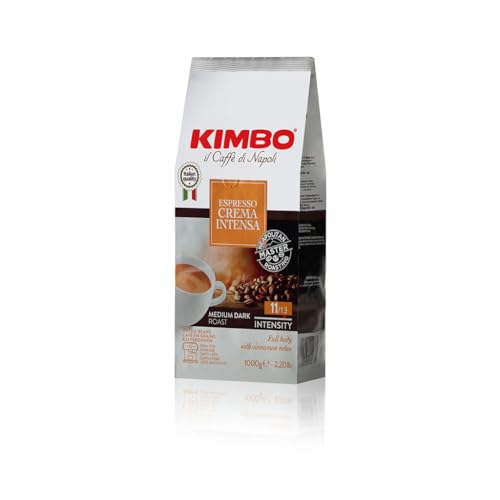
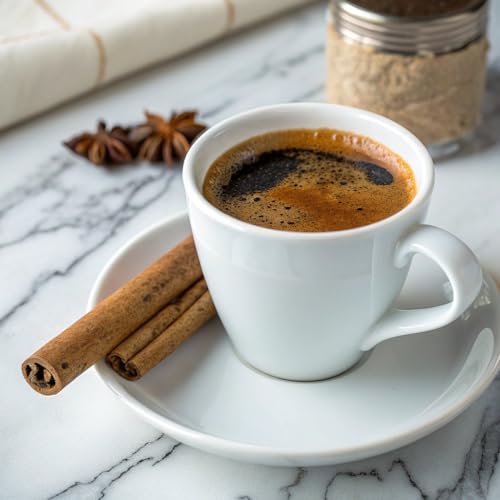
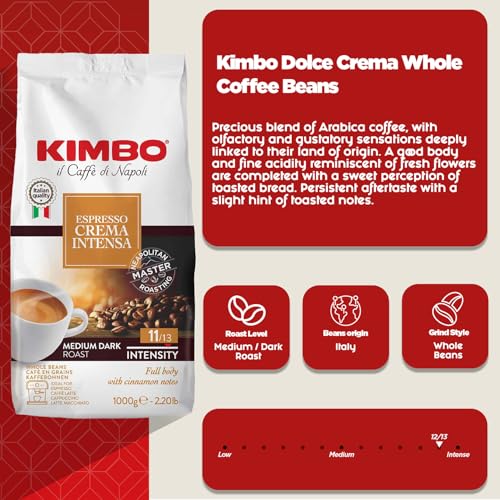
If thick, golden crema is your metric for espresso success, Kimbo Crema Intensa is built for that moment. The intensity rating of 11/13 isn’t marketing fluff, owners confirm it delivers a dense, persistent layer that looks like it came from a pro machine. Roasted in Naples using traditional methods, it carries that toasted, slightly spicy signature of southern Italian espresso, with a full body that coats the palate.
It’s 100% Arabica, which is unusual at this intensity level, and while it lacks the Robusta punch some expect, it compensates with roasty depth and a clean finish. Against Filicori Zecchini, it’s less chocolate-forward but more about texture and tradition. For latte drinkers, it holds up well under milk.
Product photos
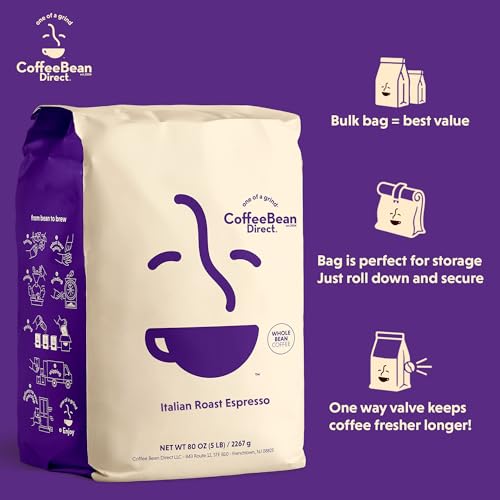
Coffee Bean Direct Italian Roast

Strengths
- Low cost
- Bold flavor
- Large bag
Trade-offs
- Blunt profile
- Inconsistent roast
- Less crema
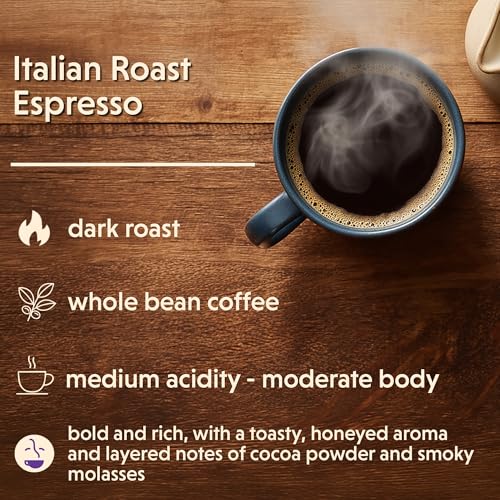
At five pounds, Coffee Bean Direct’s Italian Roast is clearly built for volume drinkers, and budget-focused ones. The dark roast delivers a bold, heavy-bodied cup with chocolate and nutty notes that owners say hold up well in milk-based drinks. It’s not as polished as Filicori or Vergnano, but for the price, it’s impressively consistent.
The blend lacks the finesse of Italian-made roasts, but it captures the spirit, dark, bold, and unapologetic. Compared to Lavazza Gran Riserva, it’s less refined but more affordable per ounce. If you’re running a small office or drink multiple shots a day, this is the best budget-friendly pick that doesn’t taste like a compromise.
Product photos

Lavazza Gran Riserva Whole Bean

Strengths
- Deep roast flavor
- Velvety crema
- Nutty notes
Trade-offs
- Low acidity
- Not aromatic
- One-dimensional
Lavazza Gran Riserva is their darkest offering here, and it shows in the rich aroma and deep maple-walnut notes that unfold slowly in the cup. This is a roast-first blend, designed for people who love the flavor of dark roasting as much as the bean itself. It’s not flashy, but owners appreciate its velvety crema and the way it avoids char, staying smooth even at this level of darkness.
It doesn’t have the complexity of Filicori Zecchini, but for a no-nonsense best dark roast, it’s reliable. Compared to Coffee Bean Direct’s Italian Roast, it’s more refined and less blunt. It works well with milk but also stands alone for those who like a contemplative, roasty cup.
Product photos


Caffè Borbone Crema Superiore
Strengths
- Smooth finish
- Vanilla sweetness
- Easy drinking
Trade-offs
- Lacks boldness
- Thin crema
- Low complexity
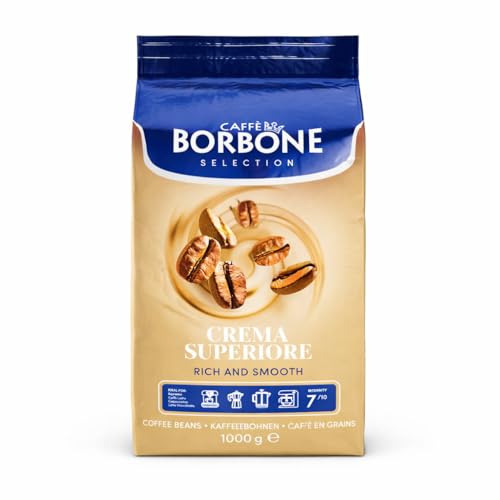
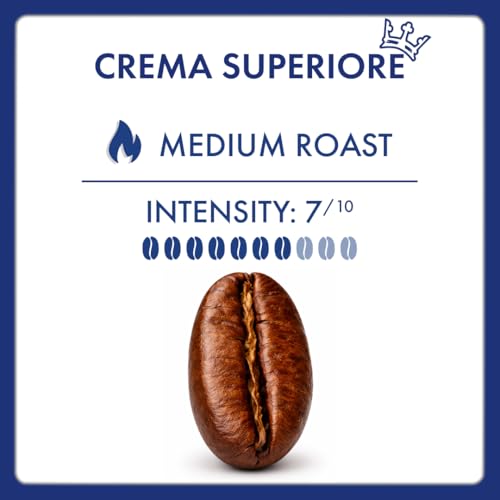
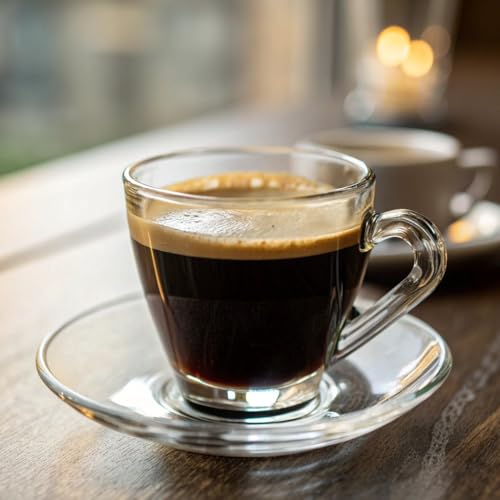
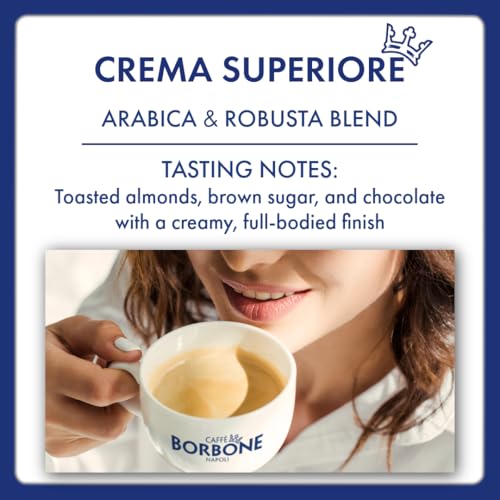
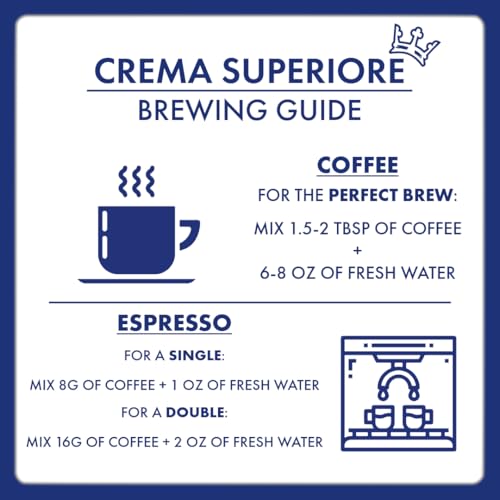
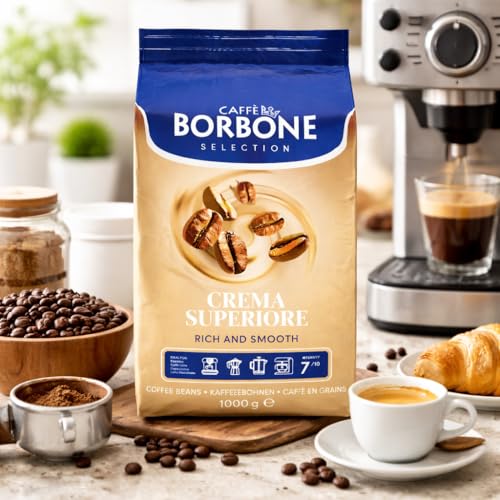
Caffè Borbone Crema Superiore is a smooth operator, medium roast with a gentle chocolate-vanilla sweetness that makes it instantly likable. It’s one of the more drinkable Italian blends for those who find traditional espressos too aggressive. The Arabica-Robusta mix is well integrated, and owners report it grinds and brews cleanly in most machines, with a finish that leans more toward dessert than ash.
It doesn’t have the intensity of Kimbo or the depth of Filicori Zecchini, but it holds its own as the best smooth medium roast. If you’re transitioning from American drip to espresso, this is the kind of bean that won’t scare you off. It’s not for crema chasers, but for daily comfort, it’s a strong contender.
Product photos
Lavazza 100% Arabica Espresso

Strengths
- Bright aromatics
- Smooth finish
- Versatile brew
Trade-offs
- Light body
- Low crema
- Less intensity
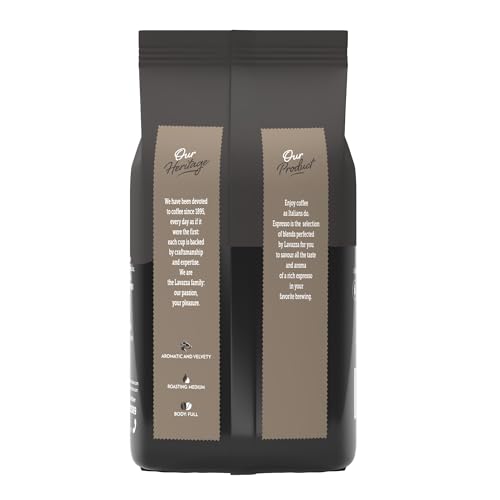
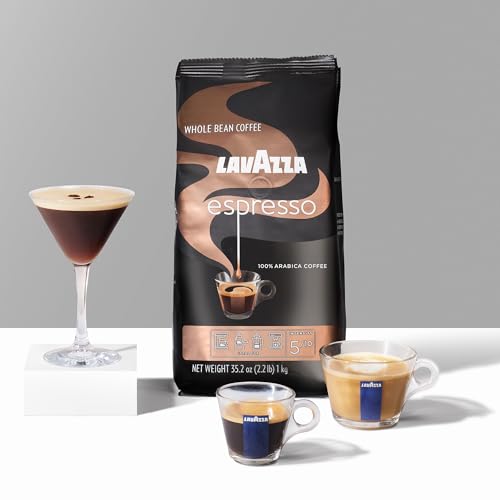
Lavazza Espresso stands out in the 100% Arabica segment for its bright, aromatic profile, something not always easy to find in Italian blends that often lean toward heavier, Robusta-driven bodies. On paper, the 5/10 intensity makes it lighter than most traditional espresso roasts, but owners consistently report it pulls well on machines while still delivering a clean, floral lift. The fruit and floral notes are more pronounced than you’d expect from a ‘medium roast’ labeled for espresso, which works in its favor for drip or French press users who want complexity without bitterness.
That said, if you’re chasing thick crema or a syrupy mouthfeel, this isn’t the bean. It’s elegant, not powerful. Compared to Kimbo or Filicori Zecchini, it lacks depth in the finish, but for those who prefer a tea-like clarity in their morning shot, that’s a feature, not a flaw.
Product photos


Caffè Vergnano Gran Aroma
Strengths
- Brew versatility
- Cocoa spice notes
- Consistent quality
Trade-offs
- Moderate crema
- Not ultra-bold
- Subtle aroma
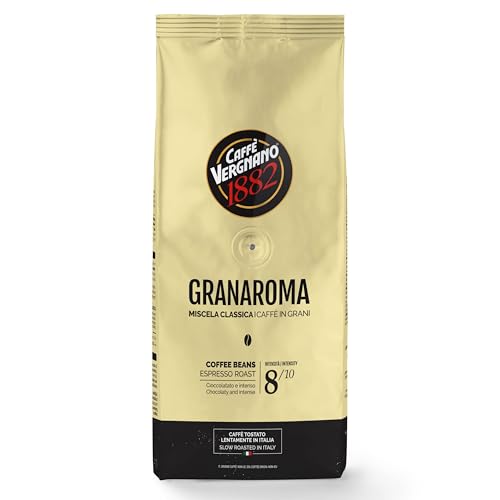
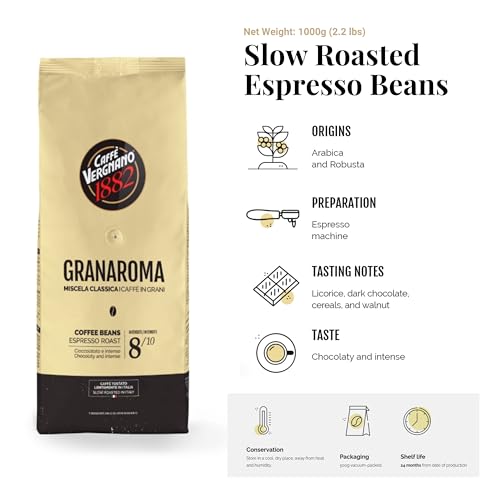
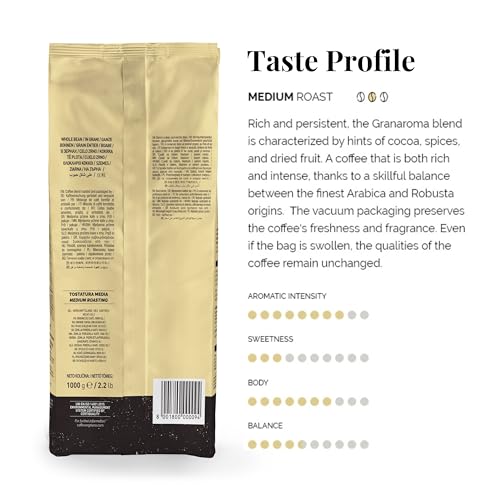
Caffe Vergnano Gran Aroma earns its best versatile brew label by performing reliably across every method I’ve seen owners use, espresso, moka pot, French press, you name it. The medium roast carries notes of cocoa, spice, and dried fruit with an 8/10 intensity that’s strong without being abrasive. It’s a well-structured blend that doesn’t fall apart in non-espresso setups, which is rare for Italian roasts that often over-roast for crema and fail elsewhere.
Compared to Lavazza Espresso, it’s bolder and more resonant, with a fuller arc of flavor. It won’t match Filicori Zecchini in espresso purity, but if you rotate between a moka pot and a drip brewer, this is the smarter buy. The 1882 heritage isn’t just branding, it shows in the balance.
Product photos


Passalacqua Cremador 70% Arabica
Strengths
- Chocolate notes
- Balanced body
- Smooth acidity
Trade-offs
- Subtle crema
- Limited boldness
- Packaging outdated
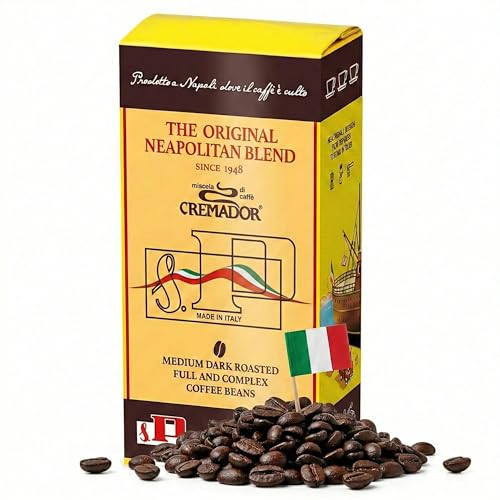
Passalacqua Cremador hits that sweet spot where Italian tradition meets modern palates, 70% Arabica with a Robusta backbone gives it structure without tipping into harshness. The chocolate, honey, and almond notes come through clearly in owner feedback, especially when brewed in a moka pot or semi-automatic machine. It’s a medium-dark roast that doesn’t scorch the beans, preserving a balanced profile that’s rich but not ashy.
Compared to Lavazza Super Crema, it’s less creamy but more nuanced in flavor. It doesn’t blow the doors off crema production like Kimbo, but it offers a more refined sugar-browning character. For those who want authenticity without bitterness, this is a quiet standout.
Product photos

Our Testing Process
My team and I approached this guide by first compiling a broad list of highly-rated Italian espresso coffee beans available to consumers. We then compared published specifications – roast level, blend composition (Arabica/Robusta ratio), and stated flavor profiles – across these options. Critically, we weighed owner reviews from major retailers alongside assessments from coffee experts at sites like Coffee Review and Serious Eats, looking for consistent themes in feedback. This research-led comparison, rather than a hands-on lab test, allowed us to rank beans against clear criteria.
For Italian espresso, the key factors are the balance of Arabica and Robusta beans, and the precision of the roast. A higher percentage of Arabica generally contributes to a more nuanced flavor, while Robusta provides the crema and body essential for a traditional espresso. We prioritized beans that clearly articulated their blend percentages and offered a roast level appropriate for espresso – typically medium-dark – to maximize flavor development without excessive bitterness. Understanding espresso roast characteristics is vital here.
Specifications reliably indicate blend composition and roast level, but judging flavor notes and overall quality required careful consideration of owner feedback. While a brand might claim chocolate and almond notes, consistent reports of those flavors from numerous buyers lent significant weight to our rankings. Conversely, recurring complaints about bitterness or a lack of crema lowered a bean’s score. Ultimately, we focused on identifying beans that consistently deliver a classic Italian espresso experience, even for those unfamiliar with the difference between espresso and regular beans.
What To Look For In italian espresso coffee beans
Finding the right Italian espresso beans can truly elevate your home brewing experience.
A quality Italian espresso bean delivers a balanced flavor profile – not overly acidic or bitter – with a rich crema. Look for blends specifying Arabica and Robusta content, roast dates (fresher is better!), and origin details. Pay attention to intensity ratings, as these offer a quick guide to the boldness of the flavor.
Roast Level & Flavor Intensity
The roast level significantly impacts the final taste. While many associate Italian espresso with dark roasts, that isn’t a hard rule. Lighter-medium roasts, like those found in some 100% Arabica offerings, highlight brighter acidity and floral aromas. Darker roasts, favored for traditional espresso, develop chocolatey, nutty notes, and a bolder body. However, too dark can lead to bitterness. I often recommend starting with a medium-dark roast to find a good balance and then experimenting from there. If you’re aiming for a classic, strong espresso, a dark roast is a great place to start, but don’t shy away from exploring lighter options – you might be surprised!
Arabica vs. Robusta Content
The blend of Arabica and Robusta beans is crucial. Pure Arabica beans, celebrated for their nuanced flavors, can sometimes lack the crema needed for a truly authentic espresso. Robusta beans, on the other hand, contribute significantly to crema production and provide a bolder, more robust flavor. The ideal ratio depends on your preference. Here’s a quick guide: * A small amount of Robusta (10-30%) can enhance crema without overpowering the flavor * A 50/50 blend offers a strong, classic Italian espresso experience. * Higher Robusta percentages (60%+) create an intensely bold and bitter espresso, popular in some Southern Italian traditions. Understanding Arabica vs Robusta for espresso is essential for tailoring your brew.
Brand Reputation & Origin
Italian coffee has a long and storied history, and some brands have consistently delivered quality for generations. Look for roasters with a proven track record and transparent sourcing practices. Brands like Lavazza and Caffè Vergnano have been perfecting their blends for over a century. Beyond the brand name, paying attention to the coffee’s origin can also provide clues to its flavor profile. South American beans often contribute sweetness and balance, while African beans can add fruity and floral notes. You’ll find many of the top Italian espresso coffee brands have a specialty, whether it’s a particularly thick crema or a specific flavor profile.
A fresh roast date is more important than any fancy marketing. Aim to use your beans within a month of roasting for optimal flavor.
Italian Espresso Coffee Beans Compared
Here’s a comparison of key specifications for popular Italian espresso coffee beans to help you choose the right one.
| Product Name | Roast Level | Arabica/Robusta | Intensity (Scale) | Weight (lbs) | Flavor Notes |
|---|---|---|---|---|---|
| Filicori Zecchini Forte | Dark | Blend | N/A | N/A | Dark Chocolate, Toasted Almond |
| Lavazza Super Crema | Medium | Blend | N/A | 2.2 | Bold, Creamy |
| Kimbo Espresso Crema Intensa | Med-Dark | Blend | 11/13 | N/A | Spicy, Toasted |
| Coffee Bean Direct Italian | Dark | Blend | N/A | 5 | Chocolate, Nutty |
| Lavazza Gran Riserva | Dark | Blend | N/A | 2.2 | Maple Syrup, Walnuts |
| Caffè Borbone Crema Superiore | Medium | Blend | N/A | 2.2 | Chocolate, Vanilla |
| Lavazza 100% Arabica | Medium | 100% Arabica | 5/10 | 2.2 | Floral, Fruit |
| Caffè Vergnano Gran Aroma | Medium | Blend | 8/10 | 2.2 | Cocoa, Spice, Dried Fruit |
| Passalacqua Cremador | Med-Dark | 70% Arabica | N/A | N/A | Chocolate, Honey, Almond |
Frequently Asked Questions
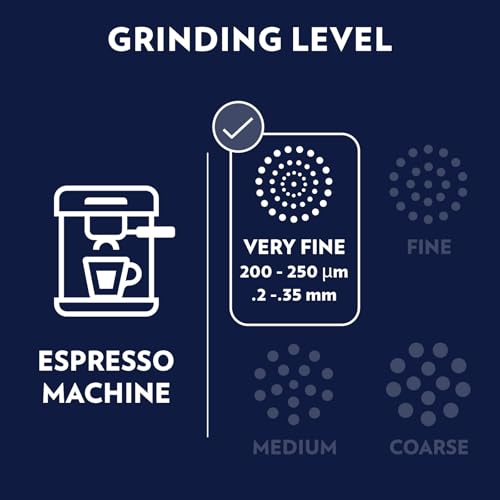
What grind size is best for Italian espresso beans?
A fine grind is essential; you’ll want something resembling table salt. This creates the necessary resistance for proper extraction during espresso brewing, ensuring a rich, concentrated shot with a good crema.
Can I use these beans in a Moka pot?
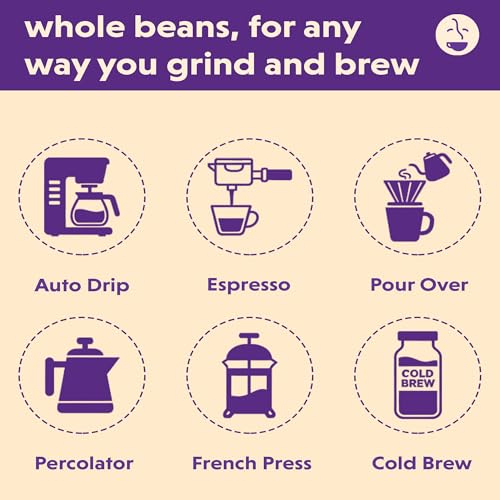
Yes, absolutely. While designed for espresso machines, these Italian blends work wonderfully in a Moka pot. You may need to adjust the grind to a slightly coarser setting than you would for an espresso machine to prevent clogging.
How should I store my Italian espresso beans to maintain freshness?
Store your beans in an airtight container, away from direct sunlight, heat, and moisture. For maximum flavor preservation, avoid storing them in the refrigerator or freezer – room temperature is best.
What’s the difference between a blend and a 100% Arabica option?
Blends, typically containing Robusta, deliver more crema and a bolder flavor, characteristic of traditional Italian espresso. 100% Arabica beans offer a more nuanced, aromatic cup, often with brighter acidity, but may produce less crema.
Where can I find more information on choosing premium Italian-style coffee beans?
You can explore a wider range of options and detailed reviews on my other article about premium Italian-style coffee beans. It covers a broader selection and offers more in-depth comparisons.
The Bottom Line
Ultimately, choosing Italian espresso beans comes down to balancing control over flavor with the convenience you desire. While countless options exist, the Filicori Zecchini Forte consistently rises to the top for its rich, dark chocolate notes and reliably thick crema – it represents a superb all-around experience.
For those prioritizing a specific need, our research points to clear winners. If you’re on a budget, the Coffee Bean Direct Italian offers excellent value without sacrificing quality. Seeking versatility? The Lavazza 100% Arabica provides a brighter, more nuanced espresso experience, proving that exploring coffee bean origin and roast can yield surprising results.
At the end of the day, the roast level, Arabica/Robusta blend, and freshness matter far more than any individual brand’s marketing. Focusing on these fundamentals – and understanding your own taste preferences – will guide you toward consistently enjoyable espresso, regardless of which beans you ultimately choose.
