
Espresso Beans vs Coffee Beans | The Pressure and Roast Truth
Espresso beans and coffee beans come from the same plant species. Arabica or Robusta. The difference is not botanical but practical: espresso beans are roasted and often blended with the intention of being brewed under high pressure (around 9 bars), which demands a finer grind and typically favors a darker, more soluble roast profile to balance the intense extraction.
Most people get this wrong because they look for a bag labelled “espresso.” They think it’s a special type of bean. It isn’t. That label is a roaster’s suggestion, not a botanical classification. The real choice hinges on your brewing method and how a bean’s roast level interacts with the physics of pressure or gravity.
This guide cuts through the marketing. You’ll learn why any coffee bean can become espresso, how roast changes what the machine pulls out, and the three things to check on a bag before you buy.
Key Takeaways
- There is no “espresso bean” plant. Espresso is a brewing method using high pressure, not a bean type. Any coffee bean can be used for espresso.
- Roast level is the primary differentiator. Beans labelled for espresso are often roasted darker to withstand high-pressure extraction and produce more body and less acidity.
- Grind size is non-negotiable. Espresso requires a fine, powdery grind to create resistance against 9 bars of pressure. Using a coarse filter grind in an espresso machine will result in a watery, underextracted mess in under 15 seconds.
- Blends are common for espresso because they create consistency. A roaster combines beans to ensure a balanced flavor profile shot after shot, which is harder to guarantee with a single-origin.
- Your taste decides. A light roast single-origin Ethiopian can make a fantastic, tea-like espresso. A dark roast Brazilian blend can make a classic, chocolatey shot. The machine doesn’t care about the label.
The Real Difference Isn’t the Bean
You walk into a store and see two bins: “Espresso Beans” and “Coffee Beans.” This is a lie of convenience. Both bins hold Coffea arabica or Coffea robusta seeds. The separation exists to guide you, not to define a species.
Espresso is a coffee concentrate brewed under high pressure at high temperature. Any coffee from any roaster can be used to make this beverage. The “espresso bean” label signals a roast profile and blend designed by the roaster to taste best under that specific extraction.
The foundational mix-up comes from conflating a drink with an ingredient. It’s like searching for “soup vegetable” versus “salad vegetable.” The vegetable is a carrot. How you prepare it, boil it for soup or shred it for salad, changes the outcome. The bean is the carrot. Espresso and drip coffee are the recipes.
TL;DR: Espresso is a brewing method, not a bean type. The “espresso bean” label is a roaster’s recipe suggestion based on roast and blend, not a botanical fact.
Where the Confusion Starts: Marketing and Labels
Roasters use the “espresso” label for two practical reasons. First, it simplifies the buying decision for someone walking up to a counter with a Breville machine at home. Second, it communicates intent. A roaster who crafts a coffee blend for espresso is engineering for consistency, solubility under pressure, and a flavor profile that stands up to milk.
The label is a promise about performance, not origin. A bag of single-origin Ethiopian Yirgacheffe might be spectacular as a pour-over but taste intensely sour as espresso if not roasted with that method in mind. The roaster’s “espresso” tag says, “We tested this under pressure, and it works.”
The One Actual Distinction: Robusta’s Role
While Arabica dominates specialty coffee for its complex flavors, Robusta beans have a traditional place in some espresso blends, particularly in Italy. Robusta contains more caffeine and creates a thicker, more persistent crema. It also contributes a distinct, earthy, sometimes bitter note.
| Bean Type | Common Role in Espresso | Contribution |
|---|---|---|
| Arabica | Primary component of most blends and single-origins. | Provides acidity, sweetness, and complex flavor notes (fruit, chocolate, nuts). |
| Robusta | Often used as a minority component (10-30%) in traditional blends. | Boosts caffeine, adds body and crema, introduces earthy/woody notes. |
You won’t often find a bag of 100% Robusta labelled for filter coffee. Its use is almost exclusively tied to the espresso tradition, where its functional attributes are valued. This association reinforces the false idea of a separate “espresso bean.”
How Roast Level Changes the Game
If the bean itself isn’t the key variable, roast level is. Heat transforms the raw seed, driving out moisture, caramelizing sugars, and developing oils. The degree of this transformation dictates how the bean will behave in your portafilter or filter basket.
A study in the Journal of Food Science quantified this. It found medium-roasted Arabica beans hit a sweet spot of balanced acidity, sweetness, and body, making them versatile across brew methods. Dark roasts trade acidity for body and bitter compounds; light roasts highlight origin character but can taste sharp under pressure.
Common mistake: Assuming all espresso requires a dark, oily roast. This leads to overdeveloped, charred flavors that mask every bean’s origin. A medium roast often extracts more clearly, revealing the coffee’s actual profile.
The Pressure vs. Gravity Dynamic
This is the core mechanical reason roast matters. An espresso machine forces near-boiling water through a compacted puck of coffee at 9 bars of pressure. This is an aggressive, fast extraction (25-30 seconds). A dark roast is more brittle and porous, so it dissolves easier under this assault. It gives up its sugars and oils quickly, leading to that classic espresso body.
Filter methods like pour-over or drip coffee use gravity or gentle immersion. Water contacts the grounds for minutes, not seconds. A light roast, with its denser structure, extracts slowly, allowing delicate floral and fruity acids to emerge without being overwhelmed by bitterness.
TL;DR: Dark roasts extract easily under high pressure for a bold shot. Light roasts extract best with slower, gentler water contact for complex filter cups. Medium roasts are the adaptable compromise.
How to Pick a Bean for Espresso
Forget the label. Look at the roast date, the roast level, and the suggested brew method. A bean roasted three months ago has lost the volatile compounds that create aroma and brightness, regardless of what the bag says. Start fresh, within 3-4 weeks of roasting is ideal.
Your first decision is blend versus single-origin. A coffee blend is a roaster’s crafted recipe for consistency. They combine beans from different origins to balance acidity, body, and flavor so that every shot tastes the same. This is why many cafe espressos are blends. A single-origin is a snapshot of one farm, region, or varietal. It can be brilliant and unique, but its flavor may shift slightly with each new harvest.
Your Three-Step Selection Checklist
- Check the Roast Profile. Look for descriptors. “Chocolate,” “nutty,” “caramel” suggest a medium to medium-dark roast that will perform reliably. “Berry,” “floral,” “tea-like” indicate a lighter roast, it can make amazing espresso, but it requires more precise grinding and dosing to avoid sourness.
- Match the Grind. This is non-negotiable. You must use a burr grinder capable of a fine, consistent powder. A blade grinder or a coarse setting will not create the necessary resistance. The machine will push water through too fast, producing a weak, sour shot.
- Start with the Roaster’s Recipe. If the bag suggests an 18g dose yielding 36g in 28 seconds, start there. It’s their tested starting point for that specific bean. Deviate after you’ve tasted their baseline.
Can You Use “Coffee Beans” in an Espresso Machine?
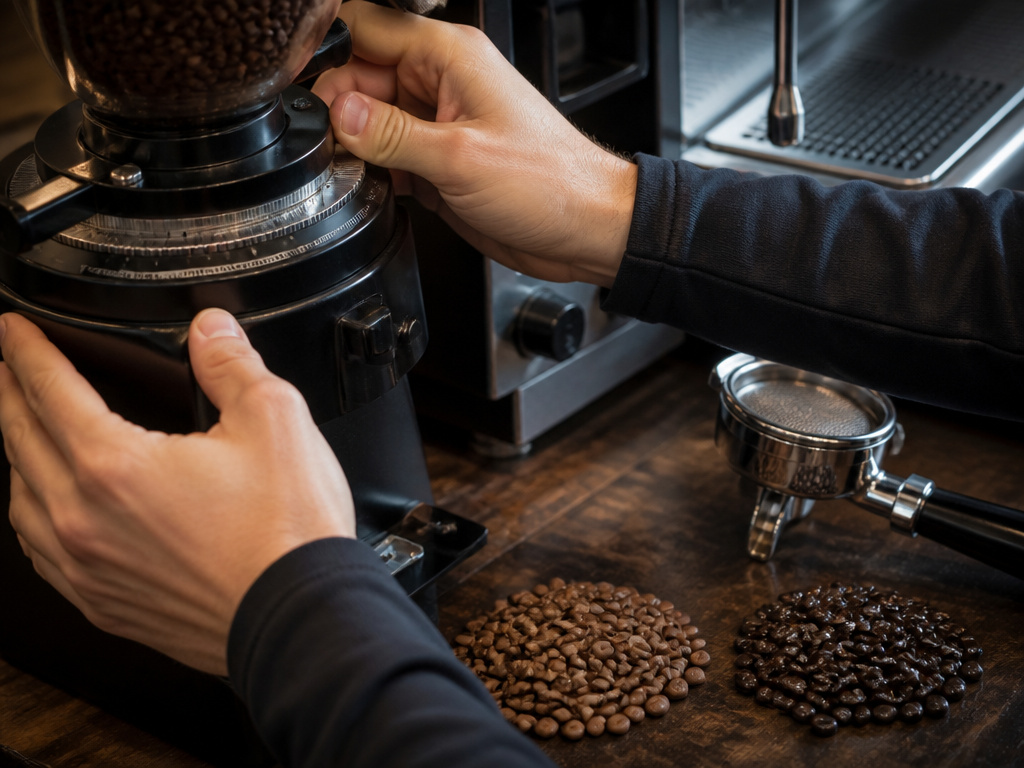
Yes. Absolutely. The machine only knows pressure, temperature, and resistance. It doesn’t read labels.
The practical challenge is dialing it in. A bean roasted for filter coffee might be a very light blonde roast. To extract it properly under pressure, you’ll likely need to grind it finer than usual and use a higher brew temperature to overcome its density. Your shot might run longer, say 35-40 seconds, to achieve balance. It’s more work, but the reward can be a spectacularly bright and unique espresso.
Conversely, using a classic Italian dark roast “espresso bean” in a French press will give you a cup that is overwhelmingly bitter and oily. The long steep time and coarse grind will over-extract the bitter compounds and allow the oils to muddy the brew.
I once used a fantastic Kenyan pour-over roast in my espresso machine. The first shot was pure lemon juice. I ground finer, increased the dose by half a gram, and extended the yield. The third shot was a revelation, black tea and raspberry. The bag didn’t say “espresso,” but the bean could do it.
TL;DR: Any bean can be used in any brewer. Success depends on adjusting grind size, dose, and brew time to match the bean’s roast and density to the mechanics of your machine.
Espresso vs. Filter: A Side-by-Side Breakdown
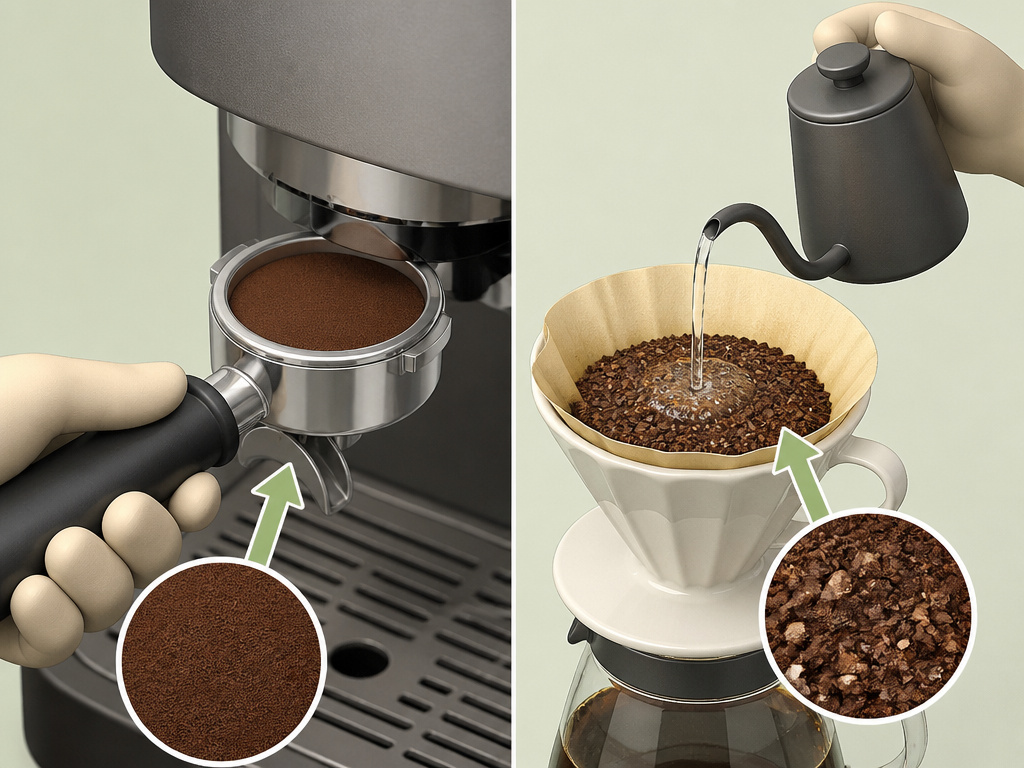
The end result in your cup is defined by the brewing physics. Here’s how the two main methods pull different qualities from the same coffee.
| Aspect | Espresso | Filter / Drip Coffee |
|---|---|---|
| Brewing Method | High pressure (9 bar) forced through a fine, compacted puck. | Gravity or immersion with coarser grounds. |
| Brew Time | 25–35 seconds. | 3–5 minutes. |
| Coffee-to-Water Ratio | 1:2 (e.g., 18g in, 36g out). | 1:15 to 1:17 (e.g., 20g in, 300g out). |
| Grind Size | Very fine, like table salt or powder. | Coarse, like breadcrumbs or coarse sand. |
| Final Product | A concentrated syrup (espresso shot). | A larger, diluted beverage. |
| Typical Serving | 1–2 oz shot, often the base for milk-based espresso drinks like lattes. | 8–12 oz mug, drunk black or with minimal additions. |
| Extraction Focus | Speed and intensity. Extracts oils and suspended solids for body and crema. | Clarity and separation. Minimizes oils for a cleaner, brighter cup. |
Notice the caffeine content is often similar per serving because you use a similar mass of coffee. The espresso is just concentrated into a tiny, potent volume.
Grinding: The Make-or-Break Step
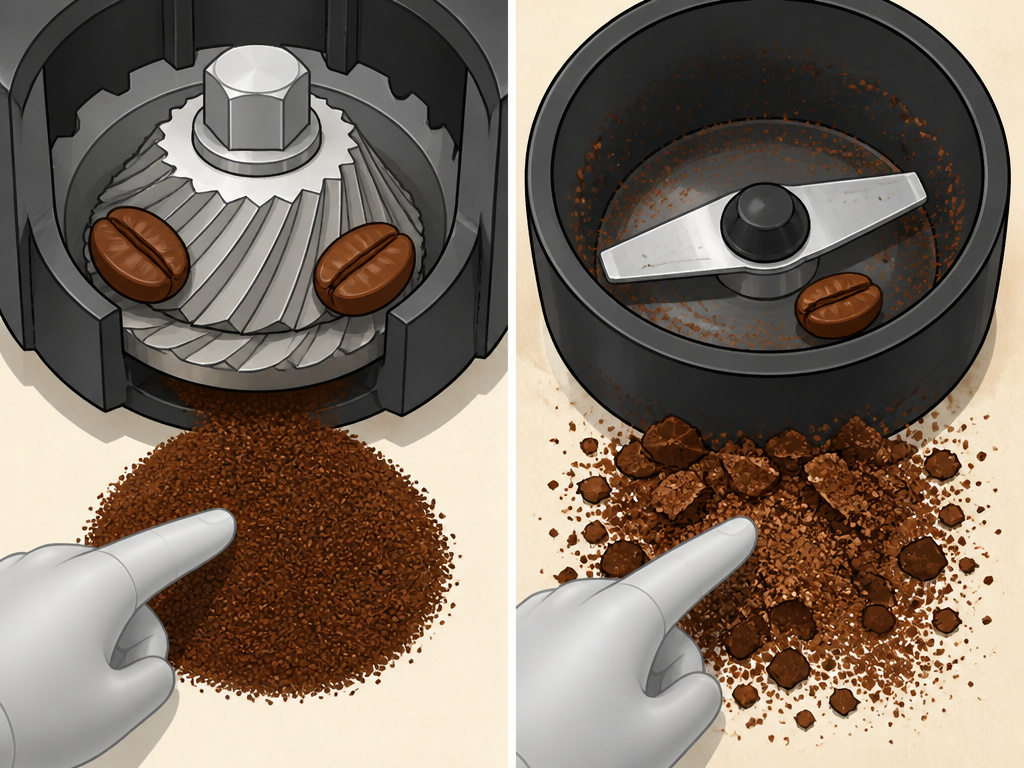
Your grinder is more important than your machine when it comes to flavor. For espresso, consistency is king. A burr grinder crushes beans between two surfaces to produce uniform particles. A blade grinder chops them randomly, creating a mix of dust, chunks, and everything in between.
Common mistake: Using a blade grinder for espresso. The uneven particles create inconsistent resistance. Water finds the path of least resistance through the puck (channeling), leading to a shot that is both sour (from underextracted chunks) and bitter (from overextracted dust) at the same time.
Under pressure, water is lazy. It will blast through any gap or loose zone in the puck. If your grind has fine dust, those particles will over-extract and turn bitter. If it has boulders, water will flow around them, leaving them underextracted and sour. A good burr grinder minimizes this range, giving you a fighting chance at balance.
If you’re in a pinch, some blenders can handle grinding coffee beans to a coarse setting for cold brew, but they cannot achieve the precise, fine uniformity needed for espresso. Don’t try it.
Frequently Asked Questions
Can I use espresso beans for regular coffee?
Yes, but you may not enjoy the result. Beans roasted for espresso are often darker. When brewed with a filter method, the long contact time with water can extract too many bitter, smoky compounds. You might get a cup that tastes harsh and flat compared to a bean roasted specifically for filter coffee.
Are espresso beans stronger?
They are more concentrated, not inherently stronger in caffeine. A 1-ounce espresso shot and a 12-ounce brewed coffee can contain similar total caffeine because the latter uses more coffee grounds. The espresso delivers that caffeine in a dense, quick sip. The perception of strength comes from its intense flavor and body.
Why do espresso beans often look oilier?
The oils inside the coffee bean migrate to the surface during a longer, darker roast. A shiny, oily bean is a sign of a dark roast, not necessarily a bean destined for espresso. Many modern specialty espresso roasts are medium-dark and not visibly oily.
What’s the best espresso bean for beginners?
Start with a medium-dark roast blend from a reputable roaster. Blends are designed for consistency and forgiveness. They typically offer familiar flavors like chocolate, caramel, or nuts that are easy to appreciate and easier to dial in than a finicky light roast single-origin.
Is an Americano the same as drip coffee?
No. An Americano is made by diluting an espresso shot with hot water. It has the flavor profile of espresso, body, crema, intensity, but in a larger, black-coffee-style volume. Drip coffee is brewed directly with hot water passing through grounds, resulting in a different extraction and flavor profile, often brighter and cleaner.
The Bottom Line
Stop looking for a magical “espresso bean.” It doesn’t exist as a separate category of plant. Start thinking like a roaster and a mechanic. You are matching a agricultural product, a roasted coffee seed, to a specific physical process: high-pressure extraction.
Your best guide is the roast level, not the marketing label. A medium or medium-dark roast will be the most versatile and forgiving. Your most critical tool is a quality burr grinder. Without it, even the most expensive “espresso” bean will disappoint. Finally, trust your taste. If a light roast Ethiopian makes an espresso you love, that’s the right bean for you. The machine is just the engine. You are the driver.
