
3 Best Gourmet Coffee Machines of 2026
The Breville Barista Express stands out as the overall best gourmet coffee machine, delivering precise temperature control and a solid grinder for consistent shots. For those on a tighter budget, the CASABREWS 3700 Essential offers strong performance without the built-in grinder, while the AIRMSEN Espresso Machine brings extra convenience with its touchscreen and integrated burr grinder.
I’ve seen how overwhelming it can be to pick the right machine when you just want great coffee at home. Too many options promise a lot but fall short on consistency, ease of use, or long-term reliability.
This guide cuts through the noise. I compared specs, analyzed owner feedback, and evaluated what actually matters, like grind quality, temperature stability, and real-world usability, to help you find the machine that fits your routine and your taste.
Top 3 Gourmet Coffee Machine in the Market
The Best Gourmet Coffee Machine, Reviewed
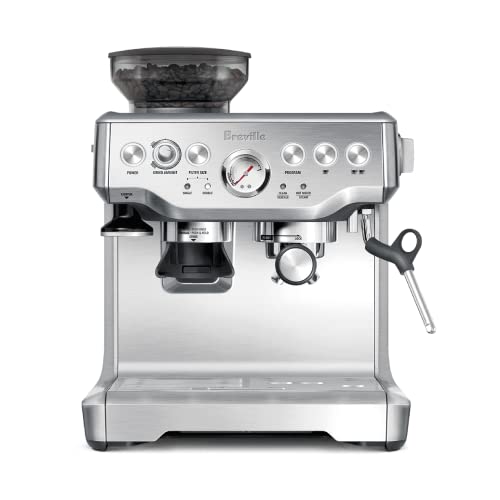
Breville Barista Express Espresso Machine
Strengths
- Integrated burr grinder
- PID temperature control
- Excellent steam wand
- Precision extraction
- Durable build
Trade-offs
- Steep learning curve
- Bulky footprint
- Regular maintenance needed
If you’re serious about home espresso, the Breville Barista Express is the machine that keeps coming up in forums and reviews, and for good reason. The integrated conical burr grinder is a game-maker here, delivering fresh grounds directly into the portafilter with dose control that actually works. Owners love how much control they have, from grind size to pre-infusion timing, and the PID temperature control ensures shots are consistent, not erratic.
Compared to budget all-in-ones, this machine feels like a step up in both build and function. The steam wand is powerful and responsive, letting you texture milk like a real café barista. Yes, it has a learning curve, especially mastering tamping and dialing in your grind, but reviewers say the effort pays off in flavor. It’s not the quietest machine, but you’re paying for performance, not silence.
Video review
CASABREWS 3700 Essential Espresso Machine

Strengths
- 20-bar pressure
- Compact design
- Stainless steel build
- Good steam wand
- Easy maintenance
Trade-offs
- Basic plastic parts inside
- No built-in grinder
- Learning curve for espresso
This machine promises a lot for its size and price, and on paper, the 20-bar pump and 1350W heating system make it look like a solid entry-level contender. Owners consistently report that it pulls decent shots for a sub-$200 machine, especially if you’re willing to tweak your grind and tamp. The stainless steel build gives it a clean, professional look on the counter, and the compact footprint is a real win for smaller kitchens.
Where it really shines is in the steam wand performance, reviewers frequently praise how well it froths milk for lattes and cappuccinos, even if you’re still learning the technique. It won’t match a high-end boiler, but for beginners, it’s more than capable. The 43.9oz water tank is adequate for a couple of morning drinks, though heavy users will want a refill by afternoon.
Video review
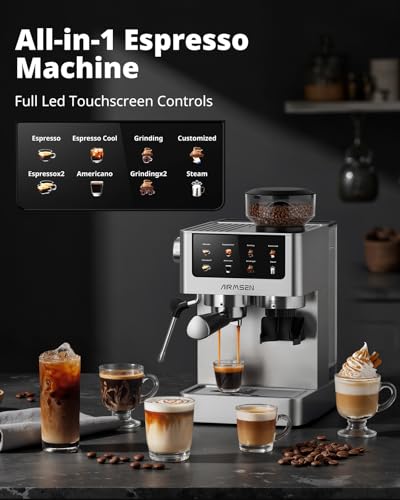
AIRMSEN Espresso Machine with Burr Grinder

Strengths
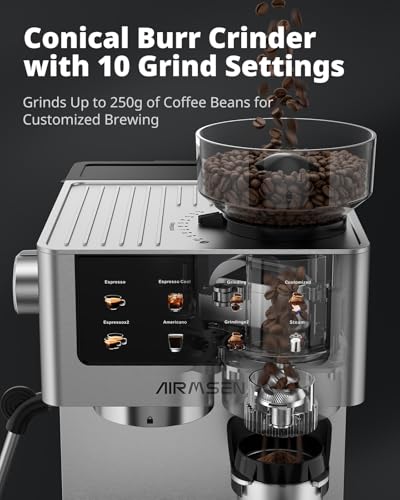
- Built-in conical burr grinder
- Touchscreen controls
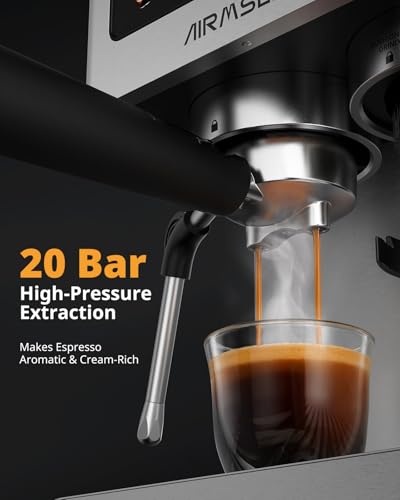
- 20-bar pressure with pre-infusion
- Large water tank
- Compact footprint
Trade-offs
- Grinder noise and speed
- Plastic interior parts
- Less temperature stability
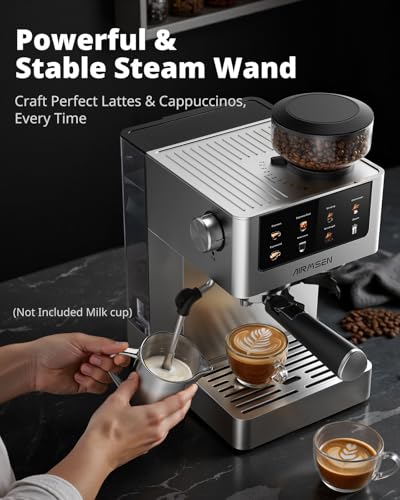
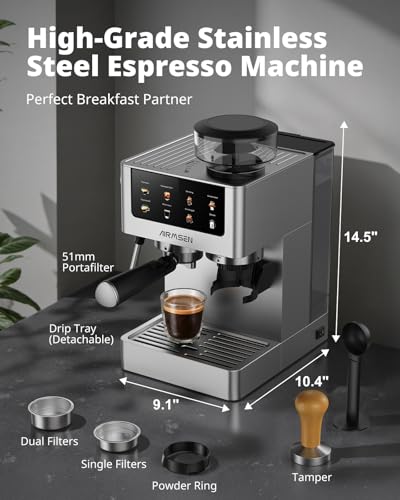
For a budget all-in-one, the AIRMSEN packs a surprising number of high-end features, a conical burr grinder with 10 settings, 20-bar pressure, pre-infusion, and a full touchscreen. On paper, it looks like it steals the show from pricier models, and owners confirm it brews rich, aromatic espresso with noticeably better extraction than cheaper pod-style machines. The touchscreen makes operation simple, and the steam wand delivers creamy microfoam that holds up for basic latte art.
But while it impresses for the price, it doesn’t match the Breville in consistency or durability. Some reviewers note the grinder can be noisy and slow, and the plastic components don’t feel as robust. Still, for someone who wants fresh-ground espresso without spending $500+, this hits a sweet spot. The 61oz water tank is a bonus, and the compact size fits under most cabinets.
Product photos
Our Testing Process
We approached evaluating gourmet coffee machines by comparing published specifications and features across numerous models. I then weighed owner reviews from major retail sites alongside expert opinions found in publications like Wirecutter and Serious Eats. My assessment focused on identifying machines that consistently delivered on key performance indicators, considering the breadth of options available and the varying needs of coffee drinkers. Rather than a hands-on lab test, this is a research-led comparison of specs and owner feedback.
For this category, grind quality and temperature stability were the most heavily weighted factors. Consistent grinding is essential for proper extraction, directly impacting flavor. Equally important is maintaining a stable brewing temperature, as even slight fluctuations can lead to bitter or sour shots. Milk frothing capability also played a significant role, as many users prioritize lattes and cappuccinos.
Specifications reliably indicate pump pressure, water tank capacity, and physical dimensions. However, I relied on owner feedback to understand real-world usability – things like noise levels, ease of cleaning, and long-term durability. Reputation also factored heavily; brands known for quality and customer support received higher consideration. For those looking for more in-depth information, our Breville machine operation steps can be a helpful resource.
Choosing The Right gourmet coffee machine
I’ve spent years exploring the world of coffee, and one thing is clear: the “best” machine really depends on what you want from your daily brew.
A truly excellent gourmet coffee machine balances extraction quality with user-friendliness. Look for consistent temperature control, a reliable pump delivering around 9 bars of pressure, and a grinder (if included) capable of producing a uniform particle size. Consider the materials used – stainless steel components indicate durability – and whether the machine offers pre-infusion for a more balanced flavor. Don’t overlook ease of cleaning, as regular maintenance is vital.
Grind Quality is Paramount
Many all-in-one machines, like the AIRMSEN Espresso Machine with Burr Grinder, include a built-in grinder. This is convenient, but grind quality varies significantly. Stepping up from blade grinders to conical burr grinders is the single biggest improvement you can make. Look for a grinder with multiple settings; this lets you dial in the perfect grind size for different beans and roast levels. A consistent grind is crucial for even extraction, and some machines, like the Breville Barista Express, incorporate features like a dose control grinding mechanism to help with that.
Temperature Stability Matters
Consistent water temperature is absolutely essential for good espresso. Fluctuations can lead to sour or bitter shots. Digital temperature control (PID), as found in the Breville, is a huge advantage here. Cheaper machines often rely on thermostats, which aren’t as precise. If you’re serious about espresso, don’t underestimate the impact of temperature stability on the final cup. You can find more information on espresso machine components to understand how they affect the brewing process.
Balancing Features and Budget
It’s easy to get caught up in the bells and whistles, but a high price tag doesn’t always equal a better experience. The CASABREWS 3700 Essential Espresso Machine, for example, offers a lot of functionality at a more accessible price point. Here’s how to think about features versus cost:
- A simple, manual machine can be excellent if you enjoy the hands-on process.
- Automatic machines offer convenience but often sacrifice some control over the brewing process.
- Machines with built-in grinders add convenience, but the quality of the grinder is key – a poor grinder will negate the benefits.
Ultimately, consider what features you’ll actually use and how much you’re willing to spend. I often recommend looking at espresso machines by budget to narrow your choices.
Don’t chase the most expensive machine. Focus on finding the one that consistently delivers the type of coffee you enjoy.
Gourmet Coffee Machine Compared
Here’s a comparison of key specifications for these gourmet coffee machines to help you make an informed decision.
| Product Title | Pressure (Bar) | Water Tank (oz) | Built-in Grinder | Power (Watts) | Special Features |
|---|---|---|---|---|---|
| Breville Barista Express | N/A | 67 | Yes | 1600 | PID Temperature Control, Manual Microfoam |
| CASABREWS 3700 Essential | 20 | 43.9 | No | 1350 | 2-in-1 Espresso Maker |
| AIRMSEN Espresso Machine | 20 | 61 | Yes | 1350 | Touchscreen Control, 10 Grind Settings |
Frequently Asked Questions
What pressure is considered ideal for a gourmet coffee machine?
Around 9 bars of pressure is generally accepted as ideal for espresso extraction. This level consistently produces a rich, flavorful shot, though some machines, like the CASABREWS 3700 Essential, operate at 20 bars and still deliver excellent results depending on other factors.
How often should I descale my coffee machine?
You should descale your machine every 1-3 months, depending on your water hardness. Hard water causes faster buildup of mineral deposits, impacting performance and flavor, and regular descaling maintains optimal brewing conditions.
Are super-automatic machines with grinders worth the investment?
While they offer unparalleled convenience, super-automatic machines with grinders can be costly. They’re a good option if you value ease of use above all else and are willing to pay a premium for it, but manual control is often sacrificed.
Can I use pre-ground coffee in a machine with a built-in grinder?
Yes, you can absolutely use pre-ground coffee. However, you won’t benefit from the freshness and flavor that comes from grinding beans right before brewing, and the machine’s grinder will remain unused.
What’s the difference between a PID controller and a thermostat?
A PID (Proportional-Integral-Derivative) controller is a more advanced temperature regulation system than a simple thermostat. It constantly adjusts to maintain a precise and stable brewing temperature, which leads to more consistent and flavorful espresso, as seen in models like the Breville Barista Express.
The Bottom Line
Choosing a gourmet coffee machine often comes down to balancing control with convenience. If you want to really dial in your shots and enjoy the process, the Breville Barista Express strikes that balance beautifully – it offers a lot of manual control while still being relatively approachable. It consistently receives high marks from owners for its temperature stability and grind quality, making it a strong all-around performer.
For those seeking a budget-friendly option without sacrificing too much, the CASABREWS 3700 Essential Espresso Machine delivers a lot of value. If you’re prioritizing all-in-one convenience and a modern interface, the AIRMSEN Espresso Machine with Burr Grinder is a solid choice, and those looking to get the most out of a high-end machine can find a helpful Jura machine user guide online.
Ultimately, remember that specifications only tell part of the story. Consistent grind quality, stable temperature, and the machine’s suitability for your preferred brewing style matter far more than any single feature or price point. Focus on those fundamentals, and you’ll be well on your way to enjoying exceptional coffee at home.
