
8 Best Flavored Decaf Coffee Beans of 2026
The best flavored decaf coffee beans come down to Bones Coffee Butterscotch Caramel Decaf for overall quality and flavor balance, with Christopher Bean Butter Pecan Decaf as a top versatility pick and Door County Highlander Grogg DECAF as a solid budget-friendly option.
Finding a flavored decaf that doesn’t taste like a chemical afterthought is harder than it should be. Too many brands rely on artificial flavors and stale beans, masking poor quality with overwhelming sweetness.
As the founder of Bean Thusiast, I’ve spent years studying coffee sourcing and roasting practices, and this guide reflects what matters most: natural flavorings, clean decaffeination like the Swiss Water Process, and freshness. These picks are based on a deep explore specs, roaster reputation, and consistent owner feedback across trusted review platforms.
Top 8 Flavored Decaf Coffee Beans in the Market
The Best Flavored Decaf Coffee Beans, Reviewed
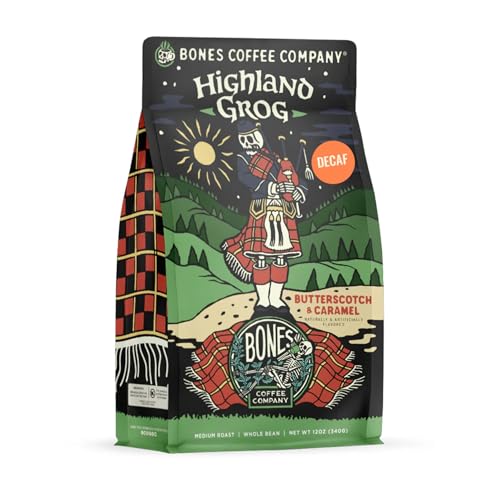
Bones Coffee Butterscotch Caramel Decaf
Strengths
- Well-balanced sweet flavor
- Low acid
- Resealable packaging
Trade-offs
- Flavor may fade after opening
- Similar profile to other Bones blends
This is my pick for best overall, not just because of the fun Scottish theme, but because it nails the balance between flavor and drinkability. The butterscotch and caramel notes are rich but not syrupy, and the medium roast keeps acidity low while preserving sweetness.
Owners love how versatile it is across brewing methods, and the resealable bag helps maintain freshness. Compared to other flavored decafs, this one tastes less artificial. When you want a flavorful, guilt-free cup that still feels like a treat, this is the smarter buy.
Video review
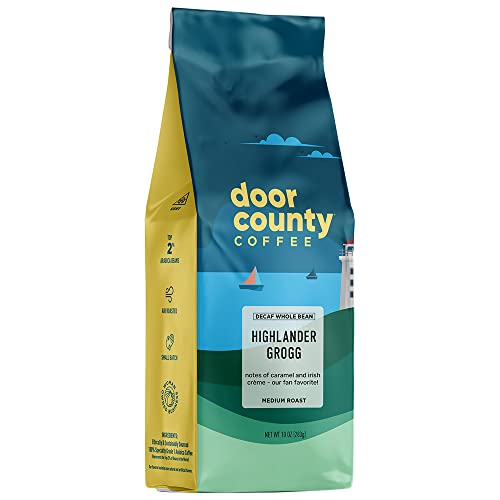
Door County Highlander Grogg DECAF
Strengths
- Air-roasted for evenness
- Specialty-grade beans
- Complex flavor blend
Trade-offs
- Smaller quantity
- Higher price per ounce
This is where flavor complexity shines. The blend of Irish crème and caramel creates a layered, almost spiced sweetness that goes beyond typical flavored coffee. Door County’s air-roasting process ensures even development, and owners note a remarkably smooth, clean cup every time.
Using only Specialty Class 1 Arabica beans puts this in a higher tier quality-wise. The 10-ounce bag is smaller than others, but the roast precision and unique flavor profile justify it for those who treat coffee as an experience, not just a caffeine fix.
Video review
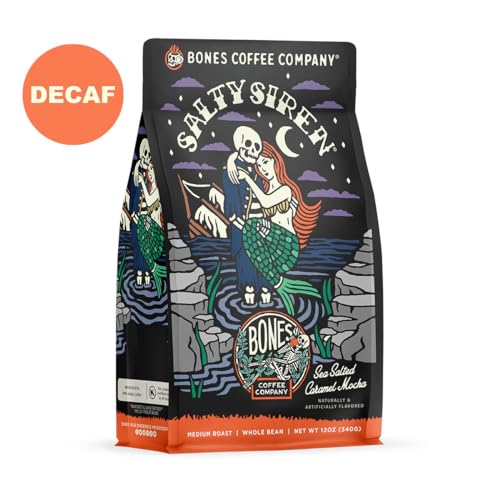
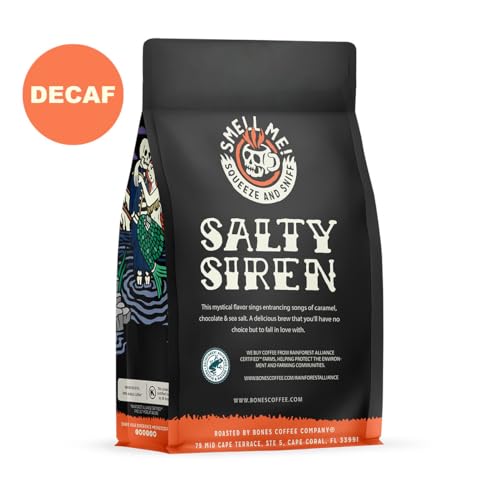
Bones Coffee Sea Salted Caramel Chocolate

Strengths
- Innovative flavor profile
- Balanced sweetness
- Whole bean versatility
Trade-offs
- Niche taste preference
- May not suit traditionalists
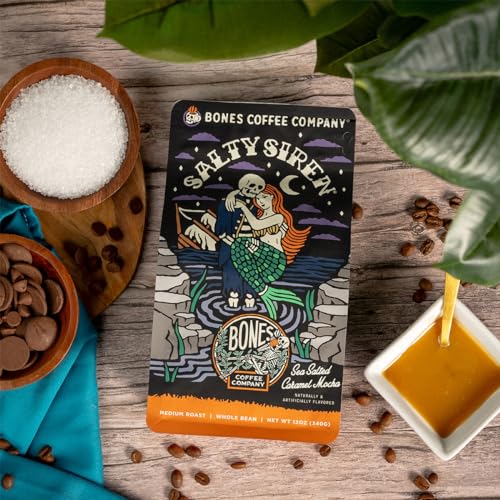
Sea salt, caramel, and chocolate in one decaf? That’s a bold combo, and it works. This is the most unique flavor in the lineup, think gourmet salted caramel brownie in coffee form. Owners say it brews smoothly and the flavor layering stands out without being overwhelming.
The medium roast and low acidity keep it drinkable, and the whole bean format supports freshness. If you’re bored with standard vanilla or hazelnut, this is the one to try. It’s not for purists, but for adventurous sippers, it’s a fun, satisfying twist.
Product photos


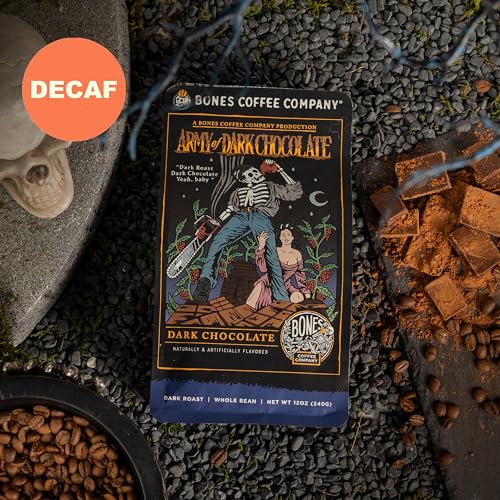
Bones Coffee Army of Dark Chocolate
Strengths
- True dark roast profile
- Low acidity
- Whole bean freshness
Trade-offs
- Flavor may overpower purists
- Niche branding not for everyone
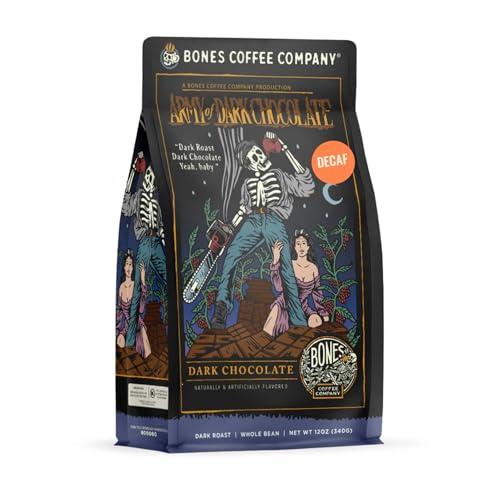
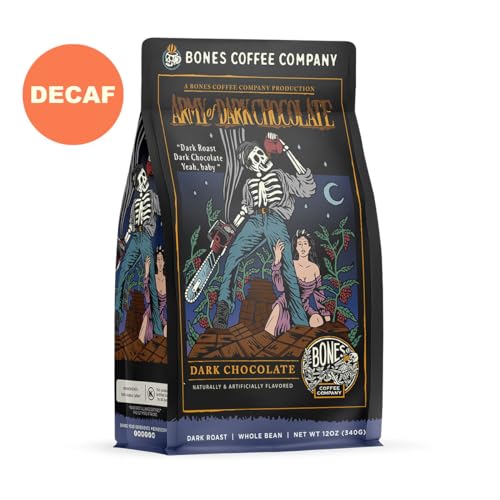
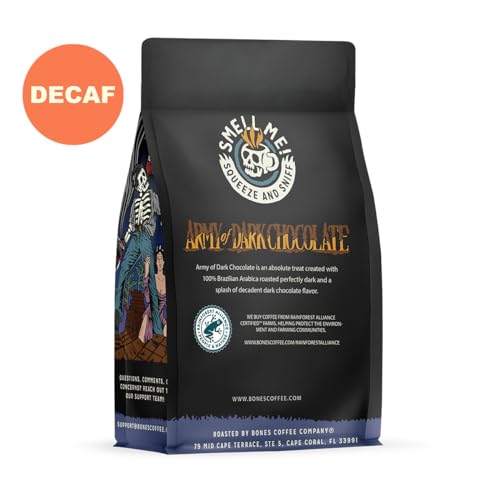
Dark roast decaf lovers, this one’s for you. The blend of Brazilian Arabica and dark chocolate flavor hits with a rich, almost mocha-like depth that’s rare in decaffeinated beans. The low acidity makes it gentle on the stomach, and the whole bean format lets you control grind freshness.
I like that Bones roasts in small batches, owners say it shows in the consistency. The branding leans quirky, but the coffee doesn’t play around. Compared to other flavored decafs, this one feels more like a specialty dark roast with a flavor accent than a novelty.
Product photos

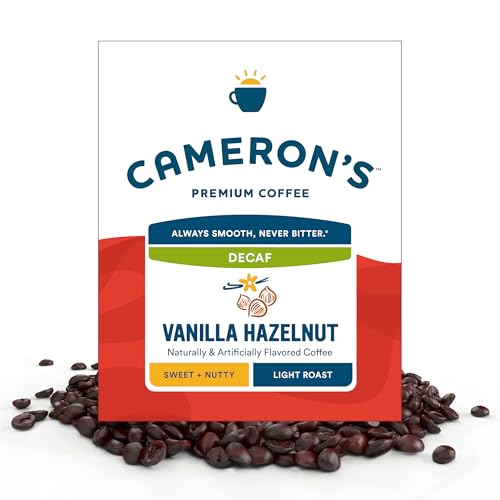
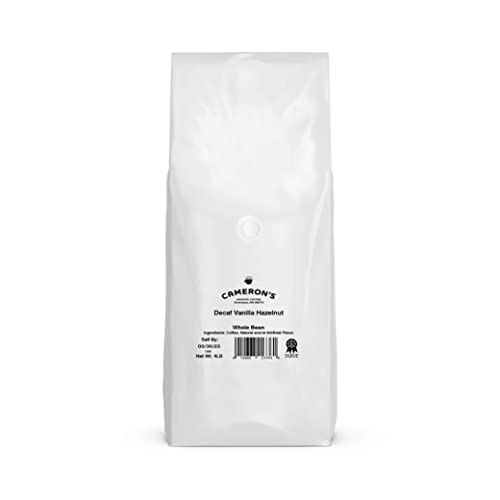
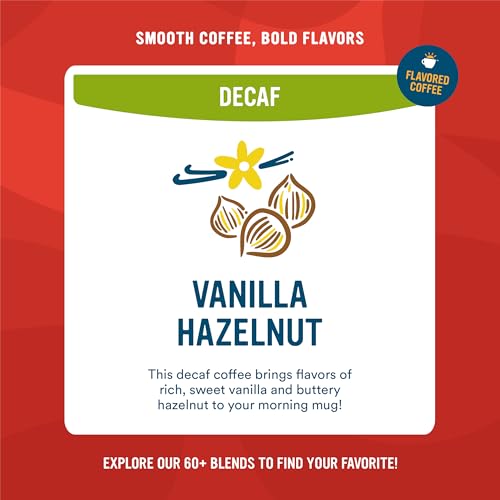
Cameron’s Decaf Vanilla Hazelnut
Strengths
- 4-pound economy size
- Smooth flavor balance
- Sustainably sourced
Trade-offs
- Bulk size risks staleness
- Less flavor intensity over time
Four pounds of decaf flavored coffee? That’s a marathon, not a sprint. Cameron’s delivers serious value here, especially for households or offices where decaf gets heavy rotation. The vanilla hazelnut blend is well-balanced, neither cloying nor faint, and the small-batch roasting helps maintain quality across such a large volume.
Some reviewers mention the flavor doesn’t hold as long as smaller bags, so proper storage is key. But if you go through coffee fast and want a smooth, consistent cup without constantly repurchasing, this bulk option is hard to beat.
Product photos



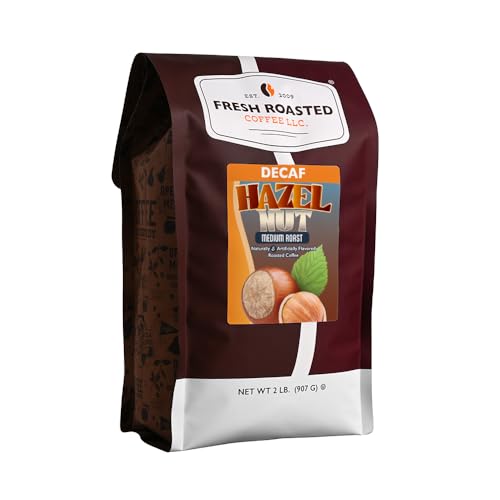
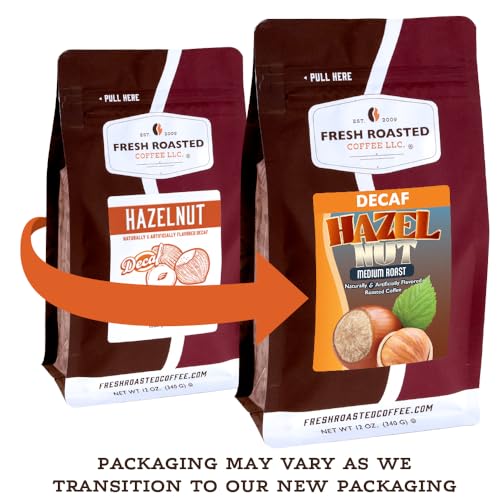
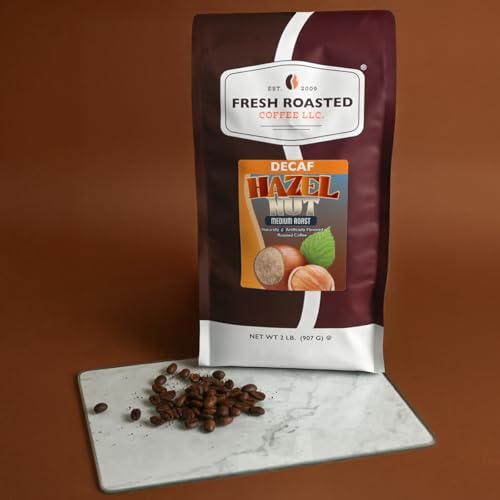
Fresh Roasted Decaf Hazelnut
Strengths
- Eco-friendly roasting
- Nitrogen sealed freshness
- Large 2 lb bag
Trade-offs
- Mild flavor impact
- Limited roast depth options
This one stands out for buyers who care about roast sustainability as much as flavor. The Loring SmartRoaster and upcoming solar array are serious differentiators for eco-conscious coffee drinkers. On paper, the 2-pound size and nitrogen-flushed bag suggest longer shelf life and fewer repeat purchases, which aligns with low-waste lifestyles.
The hazelnut flavor is described as smooth and balanced, not overpowering, which I appreciate in a flavored decaf. Some reviewers note it leans mild, so if you want bold nutty punch, this might feel too subtle. But for a clean, fresh-tasting medium roast with gentle sweetness, it’s a solid daily sipper.
Product photos

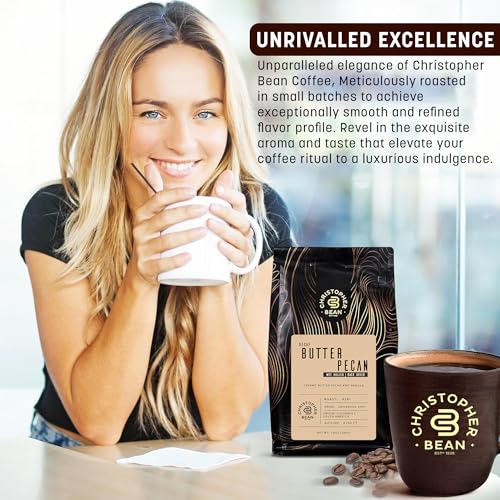
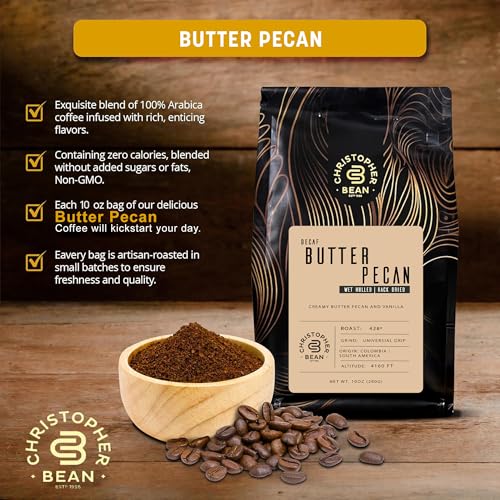
Christopher Bean Butter Pecan Decaf
Strengths
- Affordable price
- No sugar or fats
- Kosher and non-GMO
Trade-offs
- Pre-ground limits use
- Smaller bag size
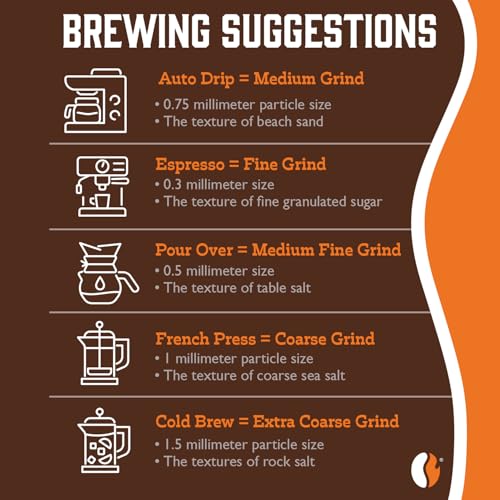
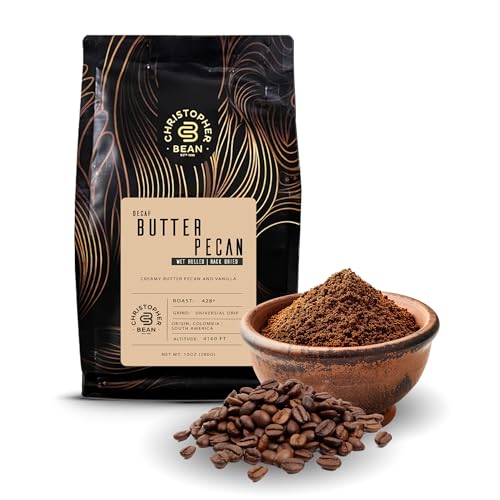
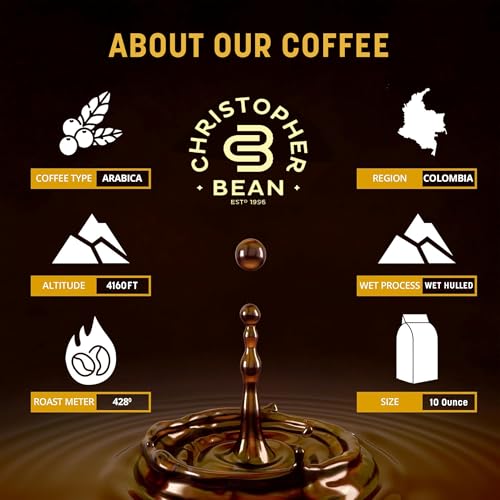
At this price point, it’s one of the most accessible flavored decafs out there. The butter pecan flavor is warm and nutty, not artificial-tasting, and the Kosher, non-GMO, no-sugar formula keeps it diet-friendly. It’s pre-ground, so you lose some freshness control, but for drip machine users who want a cozy, nostalgic flavor, it gets the job done.
It won’t impress specialty coffee snobs, but as a budget-friendly option that still delivers on taste and clean ingredients, it’s a standout. I’d recommend it for occasional drinkers or as a low-risk intro to flavored decaf.
Product photos
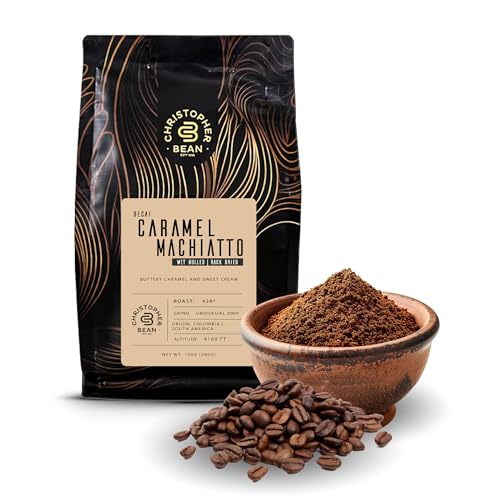
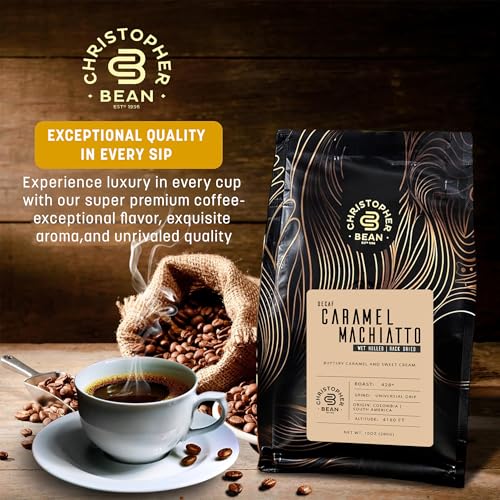
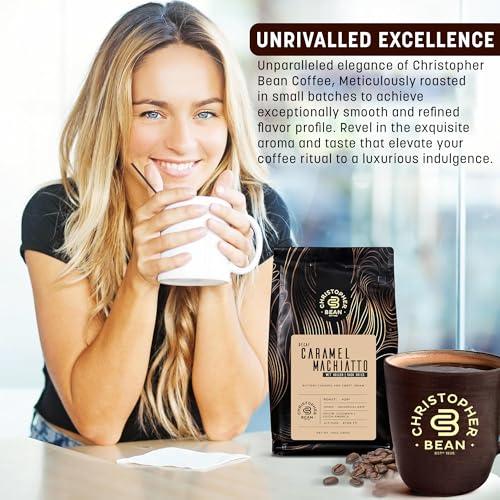
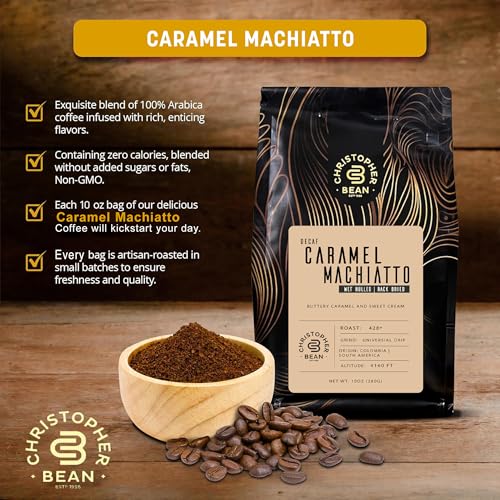
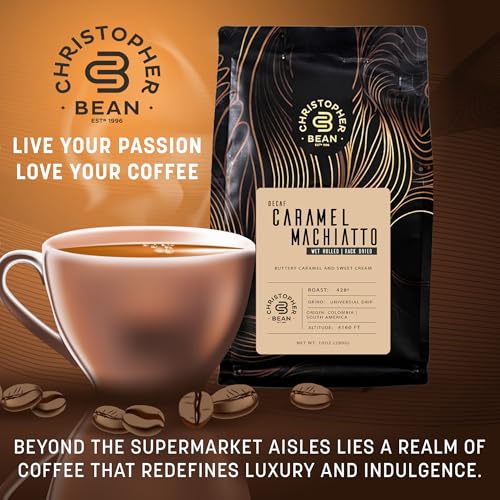
Christopher Bean Caramel Macchiato Decaf
Strengths
- No sugar or fats
- Kosher certified
- Dessert-like aroma
Trade-offs
- Small bag size
- Pre-ground limits freshness
If you love dessert-like coffee without the sugar crash, this caramel macchiato delivers on its promise. Owners consistently report a creamy, aromatic cup that tastes like a flavored latte without any dairy or additives. The non-GMO flavorings and Kosher certification add to its clean-label appeal, which matters to health-focused drinkers.
That said, the 10-ounce size means it won’t last long for frequent sippers. And since it’s pre-ground, freshness depends heavily on storage. But for a sweet, comforting decaf that works in drip machines without fuss, this is a reliable go-to. I’d pick it over syrup-laden alternatives any day.
Product photos
How We Chose These flavored decaf coffee beans
As a long-time coffee enthusiast, I wanted to find the best options for those who enjoy a flavored, decaffeinated cup. Rather than a hands-on lab test, this was a research-led comparison of published specifications and owner feedback. I compared features like bean origin, roast level, and flavoring details across numerous brands, then weighed those against what owners are saying about taste, aroma, and overall satisfaction. Reputable coffee review sites were also considered to get a broader perspective.
For flavored decaf, the intensity and naturalness of the flavor, alongside the quality of the underlying coffee, were paramount. A strong, artificial taste can ruin even the best beans, so I prioritized options where owners consistently praised the balance. The roast level also mattered; a well-executed medium roast tends to showcase flavors without becoming bitter, which is crucial in a decaf bean.
Specifications reliably indicate bean origin and roast level, giving a baseline expectation of flavor profile. However, judging the success of the flavoring itself, and its longevity, required careful reading of owner reviews. Understanding the flavoring process for coffee beans also helped me assess whether the advertised flavors aligned with user experiences. Reputation and brand consistency played a role, too – established roasters often have more predictable results.
How To Pick The Right flavored decaf coffee beans
Finding a truly satisfying decaf flavored coffee can be trickier than it seems. It’s not just about removing the caffeine; it’s about preserving the flavor and adding complementary notes without artificiality.
A quality flavored decaf coffee starts with good beans – typically 100% Arabica – and a gentle decaffeination process (Swiss Water Process is preferred). Flavorings should be natural and complement the bean’s inherent qualities, not mask them. Freshness, indicated by a roast date, is paramount, as is the roaster’s reputation for consistency.
The Decaffeination Process Matters
The method used to remove caffeine dramatically impacts the final flavor. While several processes exist, the Swiss Water Process is widely considered the gold standard. It uses only water, temperature, and time to remove caffeine, avoiding harsh chemicals that can strip away flavor compounds. Direct and methylene chloride methods are more common (and cheaper) but often leave a noticeable taste. Look for coffees specifically stating they use the Swiss Water Process if nuanced flavor is your priority. Many brands don’t advertise their process, which is a red flag, but selecting the best coffee beans requires understanding these details.
Flavoring: Natural vs. Artificial
Flavored coffees live and die by their flavoring. Sadly, many rely on artificial flavors that taste… well, artificial. The best brands use natural flavor extracts or infuse the beans with real ingredients (like cocoa powder for a chocolate flavor). Be wary of overly sweet or intensely flavored coffees; subtlety is key. I often find that a coffee described as “caramel macchiato” is better in theory than in practice. Instead, consider more nuanced pairings like vanilla hazelnut or butter pecan, and explore flavored decaf coffee reviews to see what others are saying.
- A short description like “natural flavors” isn’t enough information; push for specifics if the brand offers it.
- A longer list of ingredients is generally a good sign, showing a conscious effort to use real components.
- Reading reviews for flavor accuracy is crucial. If many people say the “butterscotch” tastes like butterscotch flavoring, that’s a warning.
Roast Level and Freshness
Even the best decaffeination and flavoring can’t save a stale or poorly roasted bean. Medium roasts are generally ideal for flavored coffees, as they provide enough body to support the added flavors without becoming overly bitter. Dark roasts can mask the subtleties of the flavoring, and light roasts might not have enough structure. Always check for a roast date (not a “best by” date) on the bag. Ideally, you want to brew your coffee within a few weeks of the roast date. Maintaining roast level and bean freshness is vital to a good cup.
Don’t settle for a flavored decaf that tastes like chemical sweetness. Freshly roasted beans, a gentle decaffeination process, and natural flavorings are the keys to a truly enjoyable experience.
Flavored Decaf Coffee Beans Compared
Here’s a comparison of key specifications for popular flavored decaf coffee beans to help you make an informed decision.
| Product Name | Roast Level | Flavor Profile | Bag Size (oz) | Bean Type | Keto Friendly |
|---|---|---|---|---|---|
| Bones Coffee Butterscotch Caramel Decaf | Medium | Butterscotch, Caramel | N/A | Arabica | Yes |
| Door County Highlander Grogg DECAF | Medium | Irish Crème, Caramel | 10 | Arabica | Yes |
| Bones Coffee Sea Salted Caramel Choc | Medium | Caramel, Chocolate, Salt | N/A | Arabica | Yes |
| Bones Coffee Army of Dark Chocolate | Dark | Dark Chocolate | N/A | Arabica | Yes |
| Cameron’s Decaf Vanilla Hazelnut | N/A | Vanilla, Hazelnut | 64 | Arabica | N/A |
| Fresh Roasted Decaf Hazelnut | N/A | Hazelnut | N/A | N/A | N/A |
| Christopher Bean Butter Pecan Decaf | Medium | Butter Pecan | 10 | Arabica | Yes |
| Christopher Bean Caramel Macchiato Decaf | Medium | Caramel Macchiato | 10 | Arabica | Yes |
Frequently Asked Questions
What decaffeination process is best for preserving flavor?
The Swiss Water Process is widely considered best because it uses only water, temperature, and time to remove caffeine, avoiding harsh chemicals that can diminish the coffee’s natural taste. While other methods exist, they often leave behind undesirable flavors.
How can I tell if a flavored coffee uses natural or artificial flavors?
Look for specific flavor ingredient listings beyond just “natural flavors.” A longer ingredient list, detailing real components like cocoa powder or vanilla bean extract, usually indicates a focus on natural flavoring.
Is a dark roast better for flavored decaf coffee?
Generally, no. A medium roast is typically ideal for flavored coffees, allowing the added flavors to shine without being overpowered by bitterness often found in darker roasts.
Where can I find reliable reviews of flavored decaf coffee?
You can find helpful reviews and comparisons of different brands by exploring sites dedicated to coffee, like those that discuss the best pre-flavored coffee beans. Owner feedback is especially valuable for assessing flavor accuracy.
What should I do if the flavored coffee I bought tastes artificial?
Unfortunately, there’s not much you can do with a bag that tastes artificial. It’s best to experiment with different brands and explore options that prioritize natural flavorings and quality beans; consider looking at vanilla and hazelnut coffee beans for more subtle flavorings.
The Bottom Line
Choosing a flavored decaf coffee often comes down to balancing convenience with quality. If you want a reliably tasty cup with minimal fuss, I recommend the Bones Coffee Butterscotch Caramel Decaf. It consistently receives high marks for a well-balanced flavor and a smooth finish, and Bones Coffee generally delivers on freshness.
However, for those with very specific preferences, there are excellent options tailored to different tastes. If you enjoy a richer, more indulgent flavor, the Christopher Bean Butter Pecan Decaf is a standout. And for those seeking a lighter, nuttier profile, the Cameron’s Decaf Vanilla Hazelnut offers a classic pairing. If you struggle with acidity, exploring low-acid decaf coffee brands could be the best path for you.
Ultimately, the “best” flavored decaf isn’t about a single bean or brand. It’s about finding a coffee that suits your palate and prioritizing freshness. Look for a recent roast date, understand the decaffeination process, and don’t be afraid to experiment until you discover a flavor profile you truly enjoy.
