
8 Best Espresso Machines for Home Use 2026
The Breville Barista Express delivers the most consistent, high-quality espresso for home users who want precision and control, making it my top pick. For those on a tighter budget, the CASABREWS 20 Bar Espresso Machine offers solid performance and build quality at a much lower price point.
Most people buying a home espresso machine want café-quality results without the steep learning curve or pro-level price tag. The real challenge is cutting through the marketing hype to find a machine that actually delivers balanced shots, good crema, and reliable long-term use.
This guide cuts through the noise. I compared specs, analyzed owner feedback, and applied what I’ve learned from years of studying coffee extraction to identify the machines that truly perform. These picks balance pressure, temperature stability, and usability, so you can make great espresso without guesswork.
Top 8 Espresso Coffee Machines For Home Use in the Market
The Best Espresso Coffee Machines For Home Use, Reviewed
Breville Barista Express Espresso Machine
Strengths
- Built-in precision grinder
- PID temperature control
- Manual steam wand
Trade-offs
- Steep learning curve
- Bulky design
- Higher price
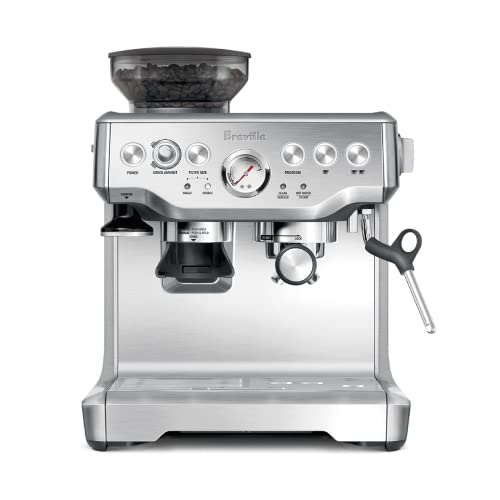
This is the gold standard for all-in-one home espresso machines, and owner feedback backs that up. The integrated conical burr grinder, PID temperature control, and manual steam wand give you full control from bean to cup, something no other machine here matches. The low-pressure pre-infusion ensures even extraction, and reviewers consistently praise the rich, balanced shots.
Yes, it’s expensive and has a learning curve, but if you’re serious about espresso, it pays off. Compared to the Ninja, it’s far more hands-on but delivers a superior coffee experience. The included tamper, milk jug, and dose trimming tool add real value. I’d pick this over any other here if you’re committed to mastering espresso at home.
Video review
CASABREWS 20 Bar Espresso Machine

Strengths
- 20 bar Italian pump
- Comes with full accessories
- Good steam power
Trade-offs
- Slight learning curve
- No pre-infusion
- Average gauge accuracy
This machine delivers a strong balance of performance, features, and price, no wonder it’s a bestseller. The 20 bar Italian pump and 1350W boiler match top competitors, and owners consistently praise the crema quality and steam power. The included tamper, filters, and milk jug make it a complete starter kit right out of the box.
It’s nearly identical in specs to the Gevi, but with a slightly sleeker look and better accessory inclusion. Compared to the Espresso Machine 20 Bar (B0GY74JMX3), it offers similar speed and pressure but with a more refined preheating process. I’d call this the smarter buy if you want proven performance without overspending.
Video review
SHARDOR 3.5 Bar Espresso Maker
Strengths
- Very affordable
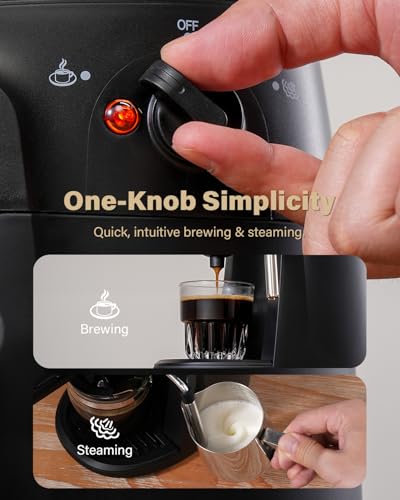
- Simple one-knob operation
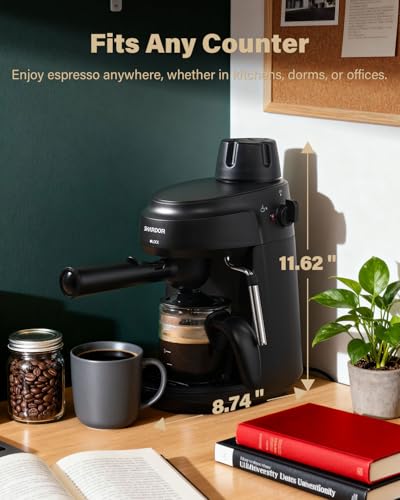
- Compact and lightweight
Trade-offs
- Low 3.5 bar pressure
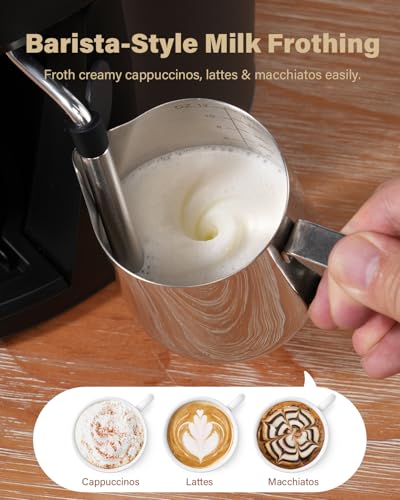
- Limited milk frothing
- Not true espresso
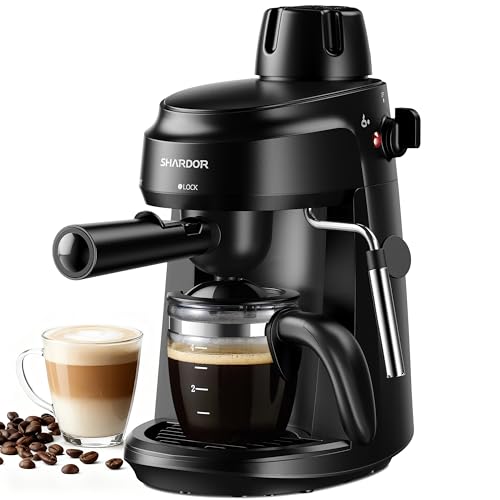
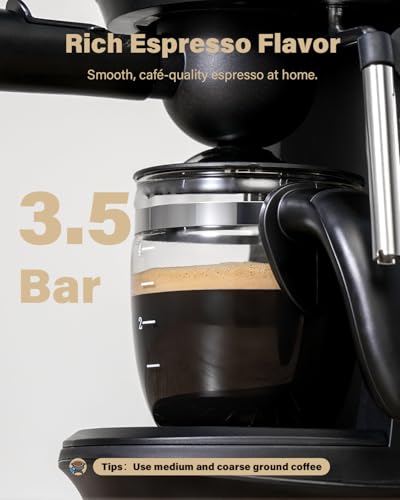
Let’s be clear, 3.5 bars isn’t true espresso, which starts at 9. But what this machine lacks in pressure, it makes up for in simplicity and price. It brews a smooth, mellow coffee that’s closer to a Moka pot than a café shot, but with a surprisingly decent crema for its class.
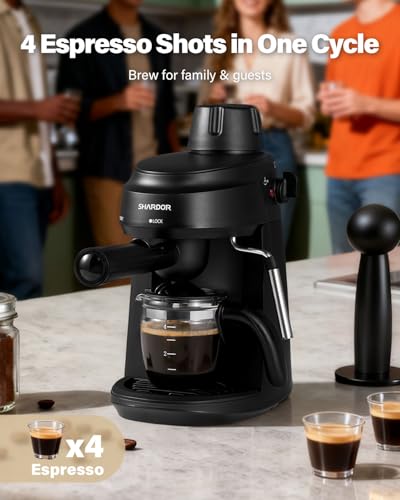
The single-knob control and compact size make it a favorite for dorm rooms or secondary kitchens. Owners say it’s reliable for basic coffee and light frothing. If you’re comparing it to the Gevi or CASABREWS, understand it’s in a different category. I’d recommend this only if you want a no-fuss, low-cost entry into home coffee and don’t care about authentic espresso.
Product photos
Ninja Espresso & Coffee Barista System
Strengths
- Capsule and ground coffee use
- Built-in frother
- Large carafe option
Trade-offs
- Capsules sold separately
- Less authentic steam wand
- Average crema
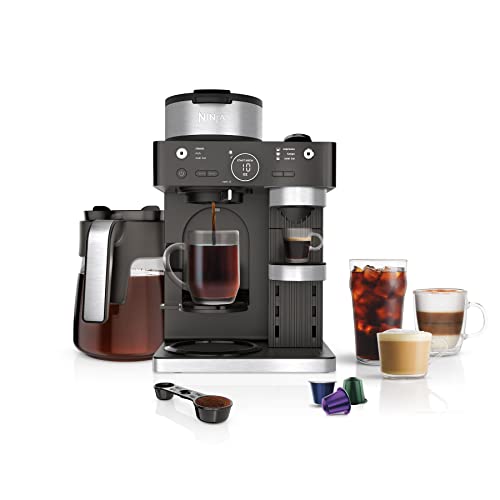
This is the Swiss Army knife of home coffee machines, espresso, drip coffee, and pod brewing in one unit. The 19-bar system doesn’t quite hit 20, but combined with PID-like temperature control, it pulls surprisingly good shots. More importantly, the fold-away frother and 12-cup carafe make it ideal for mixed-use households where not everyone drinks espresso.
Owners love the versatility, especially for entertaining. But if you’re a dedicated espresso drinker, the capsule reliance and lack of manual steam control may feel limiting. Compared to the Breville Barista Express, this trades craftsmanship for convenience. I’d recommend it over the Breville only if you regularly serve both espresso and drip coffee.
Product photos


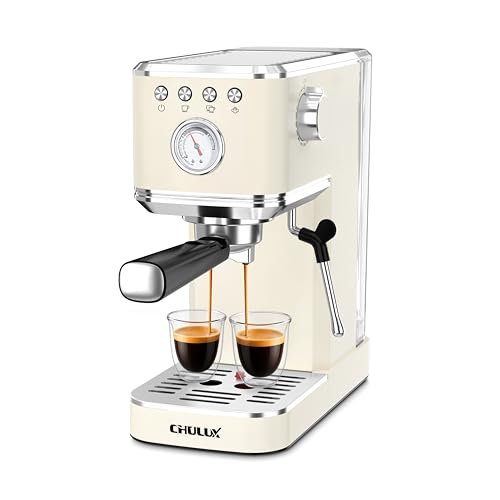
CHULUX Slim 20 Bar Espresso Machine
Strengths
- Ultra-slim design
- Includes pre-infusion
- Pressure gauge included
Trade-offs
- Smaller water tank
- Basic frothing performance
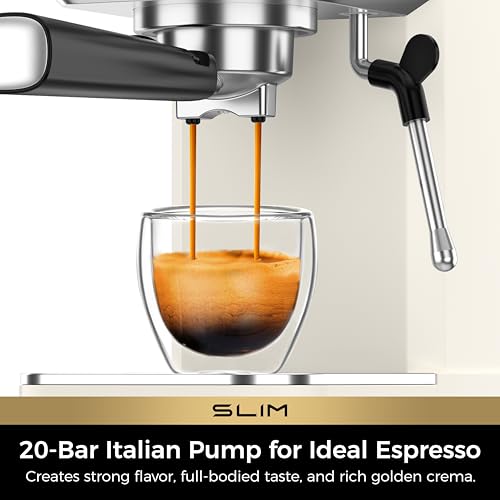
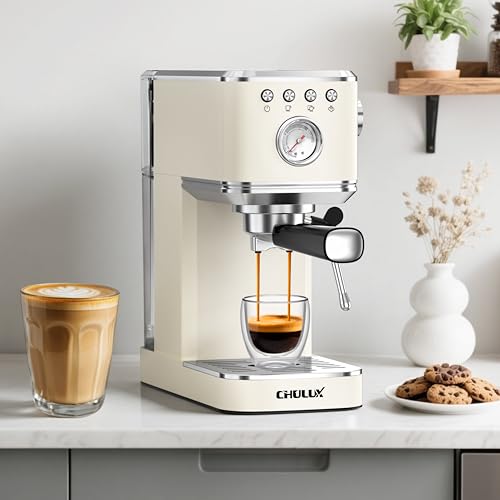
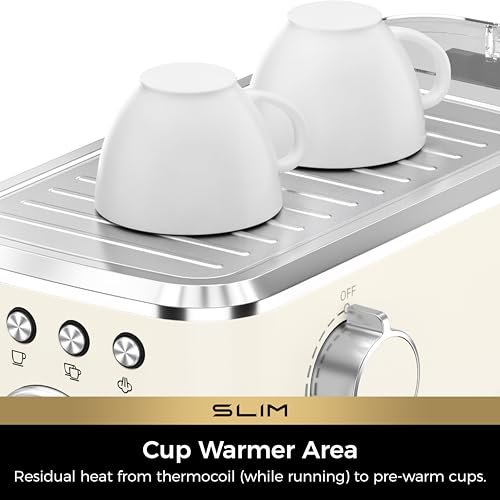
At just 5.5 inches wide, this is one of the most space-efficient 20 bar machines available, and it still manages to include a pressure gauge and pre-infusion, features often missing in compact builds. The Italian pump and 1350W boiler deliver what owners describe as rich crema and solid shot quality, especially for the size.
It’s clearly designed for small kitchens or office desks where counter space is tight. While the steam wand works, it doesn’t match the dryness of the Gevi or CASABREWS. If you’re choosing between this and the Aromaster, I’d go with the CHULUX for size, but only if you don’t need touchscreen controls or dual-circuit brewing.
Product photos


Aromaster 20 Bar Touchscreen Espresso Maker
Strengths
- Touchscreen interface
- Dual-circuit brewing
- Swivel steam wand
Trade-offs
- Plastic trim on control panel
- No built-in grinder
- Average build weight
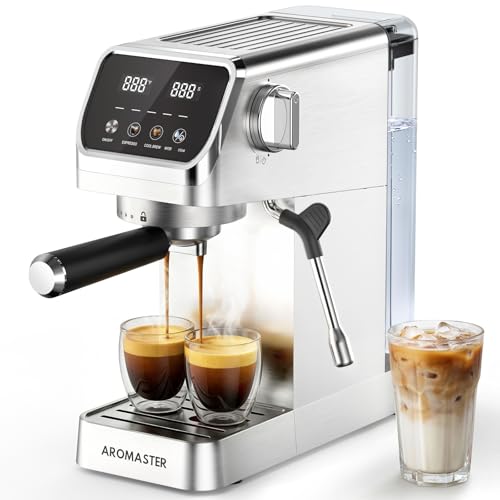
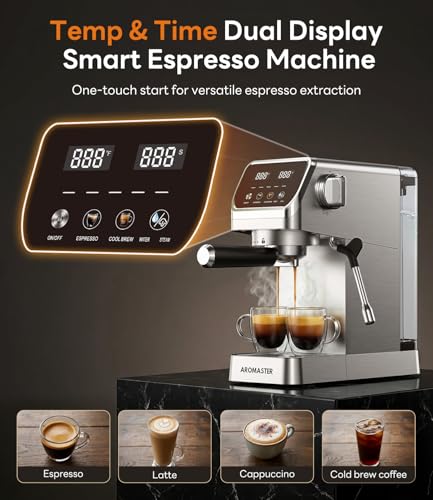
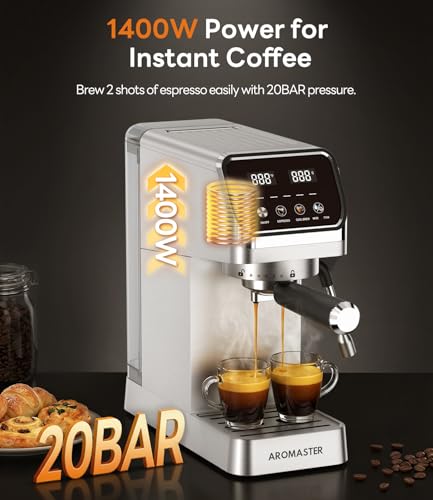
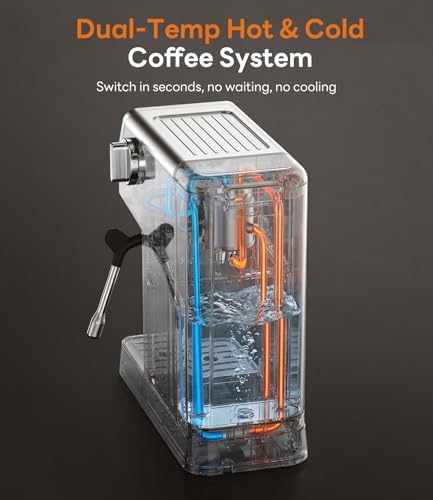
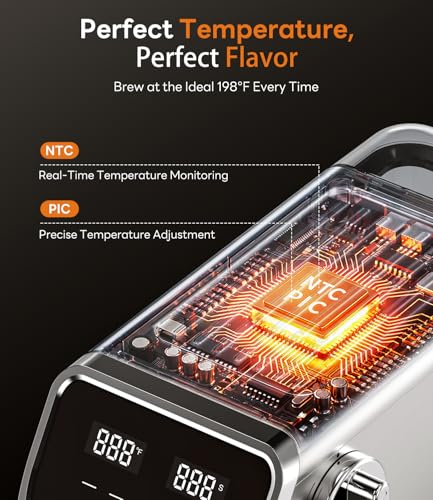
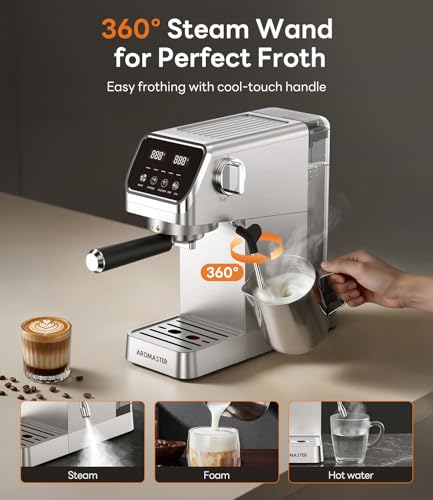
The touchscreen interface and dual-circuit system make this one of the most user-friendly machines here, especially for beginners who want café drinks without the fuss. The 1400W heater and PID + NTC control deliver consistent temperatures, and owners report it handles back-to-back brewing without cooldown delays, a real advantage over single-boiler rivals.
The 360° swivel steam wand is comfortable to use and beginner-friendly, though it doesn’t produce the same dry microfoam as the Breville. If you’re choosing between this and the CASABREWS, I’d go with the Aromaster for ease of use, but only if you don’t mind a slightly plasticky feel in the controls.
Product photos
20 Bar Stainless Steel Espresso Machine
Strengths
- 20 bar pump
- Fast 20-second heat-up
- Compact footprint
Trade-offs
- No pre-infusion
- Basic build finish
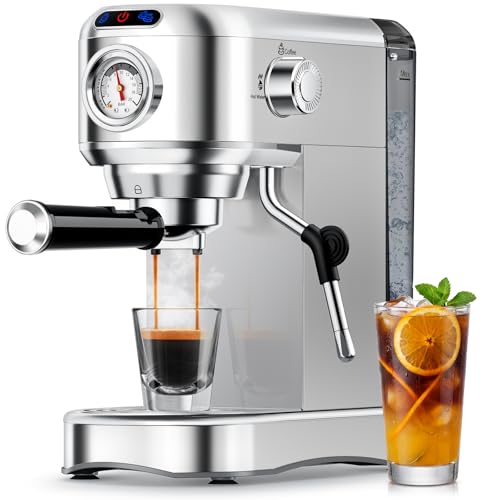
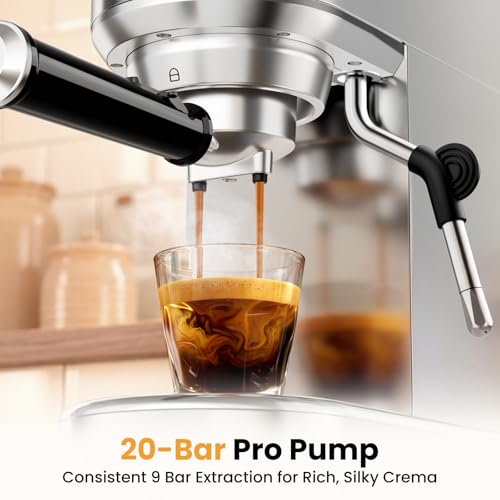
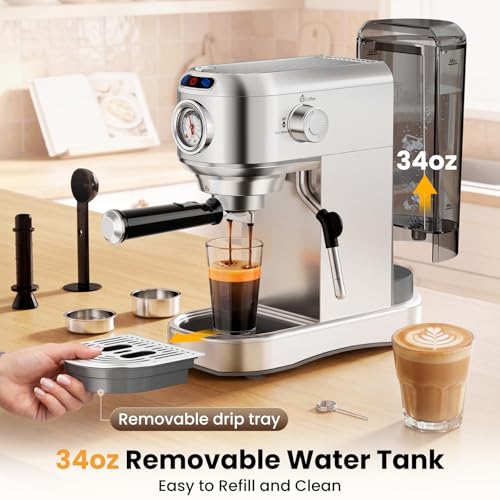
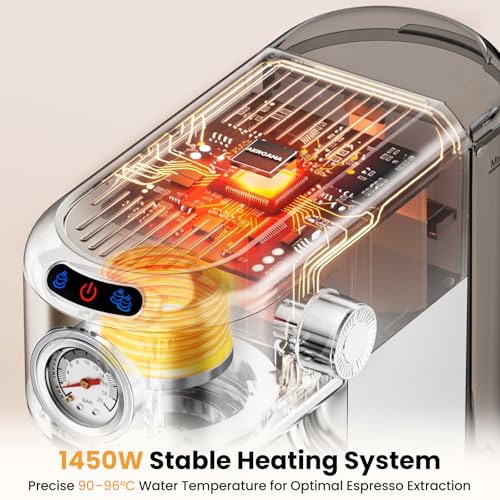
This machine hits the sweet spot for buyers who want speed and solid performance without a steep learning curve. The 20 bar pump and 1450W heating system stand out on paper, and owners consistently report it heats up in about 20 seconds, faster than most in this class. That makes it a real time-saver during rushed mornings, especially compared to bulkier models that take longer to stabilize.
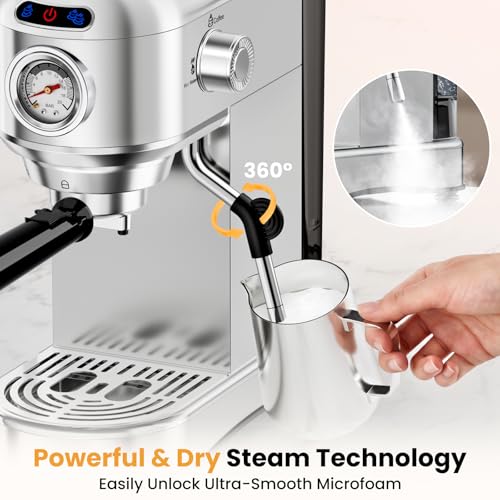
The steam wand delivers dry, consistent steam, which reviewers say lets beginners make decent microfoam without much practice. It’s not quite at Breville level, but for the price, it outperforms expectations. I’d pick this over the SHARDOR if you want real espresso pressure and don’t mind a slightly larger footprint.
Product photos
Gevi 20 Bar Stainless Steel Espresso Maker

Strengths
- Full stainless steel body
- Pre-infusion support
- Hot water function
Trade-offs
- Steam wand lacks fine control
- No included accessories
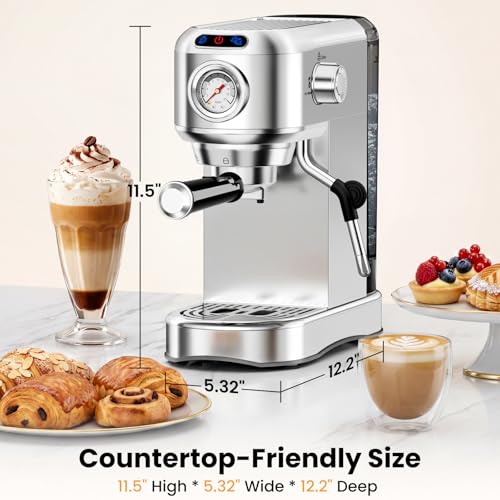
The full stainless steel housing gives this machine a noticeably sturdier feel than most budget semi-autos, and owners confirm it holds up well over months of daily use. That durable build, combined with NTC temperature control and pre-infusion, makes it a standout for consistent extraction, especially when compared to similarly priced models that skip those features.
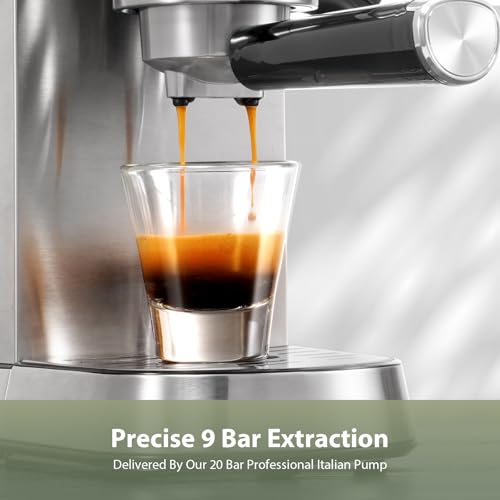
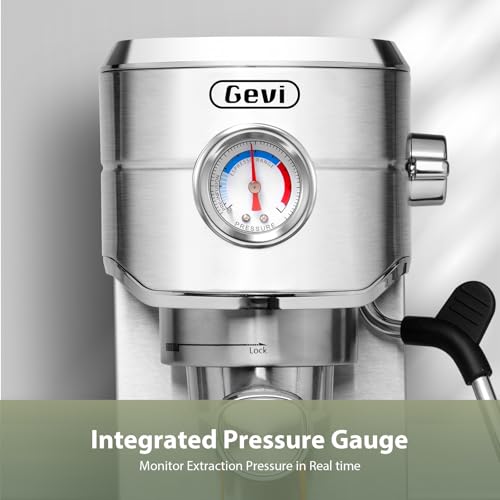
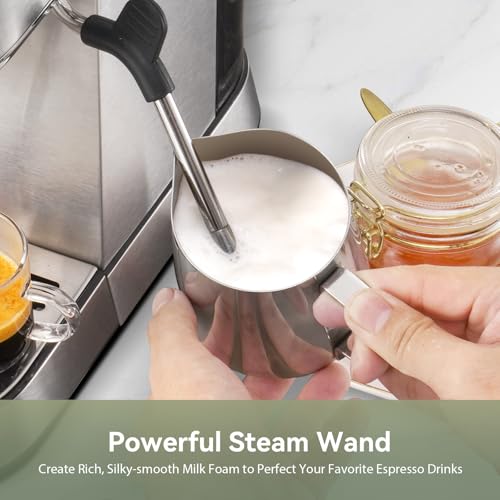
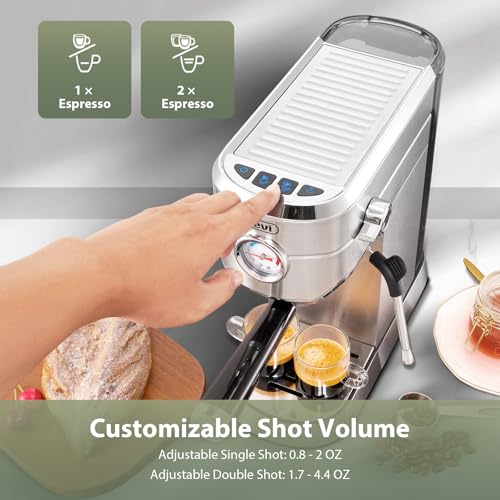
It doesn’t have the bells and whistles of the Ninja or Breville, but for someone who wants a no-nonsense, long-lasting machine that pulls balanced shots, this is a smart choice. The hot water function is a small but appreciated bonus for Americanos or tea drinkers. I’d recommend this over the CHULUX if durability and temperature stability matter more than ultra-slim design.
Product photos

How We Picked These espresso coffee machines for home use
Rather than a hands-on lab test, my research for these recommendations involved a detailed comparison of published specifications and features across numerous models. I weighed owner reviews from major retailers alongside expert opinions found in coffee-focused publications. As the founder of Bean Thusiast, I applied my years of experience exploring coffee and brewing methods to rank these machines against a set of criteria focused on delivering quality espresso in a home setting.
For home espresso machines, consistent temperature stability, pump pressure, and ease of use were the most heavily weighted factors. Temperature control directly impacts flavor extraction, while adequate pressure (around 19-20 bars) is crucial for creating proper crema. Ease of use – from filling the water tank to cleaning – is vital, as infrequent users won’t want a complex, time-consuming process when making espresso at home.
Specifications reliably indicate a machine’s potential – pump pressure, boiler type, and wattage. However, I placed significant value on owner feedback regarding long-term durability and real-world performance. Consistent complaints about overheating or build quality, even with promising specs, heavily influenced rankings. Reputation, particularly from experienced home baristas discussing pulling perfect espresso shots, also played a key role in my assessment.
How To Choose The espresso coffee machines for home use
Choosing the right espresso machine can feel overwhelming, but focusing on a few key areas will quickly narrow your options.
A truly good espresso machine balances pressure, temperature stability, and user control. Look for models with at least 9 bars of pressure (though 15-19 bars are increasingly common), PID temperature control for consistency, and features that allow you to adjust grind size and extraction time. Build quality and ease of cleaning are also crucial for long-term satisfaction.
Grind Quality & Consistency
The quality of your espresso is fundamentally tied to the quality of your grind. While some machines, like the Breville Barista Express, integrate a grinder, others require a separate unit. Integrated grinders are convenient, but often lack the finesse of standalone burr grinders. If you opt for a separate grinder, consider a conical burr grinder for consistent particle size. Even with a built-in grinder, look for machines that offer a wide range of grind settings to truly dial in your espresso.
Temperature Stability & Pressure
Consistent temperature is paramount for extracting balanced, flavorful espresso. Machines boasting PID (Proportional-Integral-Derivative) temperature control are worth the investment. These systems actively maintain the water temperature within a very narrow range, preventing fluctuations that lead to bitter or sour shots. Equally important is adequate pressure. While 9 bars is the traditional standard, many modern machines now operate at higher pressures (15-20 bars) – this isn’t necessarily better, but it allows for more flexibility in dialing in your extraction. For guidance on maximizing your machine’s performance, check out our Breville machine operation.
Value, Features & Ease of Use
Beyond the core performance metrics, consider what features align with your needs and budget. Some machines, like the Ninja Espresso & Coffee Barista System, prioritize versatility with multiple brewing methods. Others, like the SHARDOR 3.5 Bar Espresso Maker, focus on affordability. Here’s what I typically advise buyers to prioritize: * A stainless steel boiler (durability). * A steam wand with good articulation (for milk texturing). * Removable parts (easy cleaning – this is huge).
Don’t obsess over the number of “automatic” features. Learning to control the brewing process manually, even with a semi-automatic machine, will yield far better results in the long run.
Ultimately, finding the right machine is about balancing features, price, and ease of use. If you’re still unsure, reading home espresso machine reviews can offer valuable insights from other users. And don’t underestimate the value of a machine that’s easy to clean; you’re much more likely to use it regularly!
Espresso Coffee Machines for Home Use Compared
Here’s a comparison of specifications for various espresso machines designed for home use.
| Product Title | Pressure (Bar) | Water Tank Capacity (oz) | Power (Watts) | Built-in Grinder | Milk Frothing | Special Features |
|---|---|---|---|---|---|---|
| Breville Barista Express Espresso Machine | N/A | 67 | 1600 | Yes | Manual | PID Temp Control, Dose Control |
| CASABREWS 20 Bar Espresso Machine | 20 | 34 | 1350 | No | Steam Wand | Pressure Gauge |
| SHARDOR 3.5 Bar Espresso Maker | 3.5 | N/A | 800 | No | Steam Wand | One-Knob Control |
| Ninja Espresso & Coffee Barista System | 19 | N/A | N/A | No | Fold-Away | Single-Serve & Carafe Brewing |
| CHULUX Slim 20 Bar Espresso Machine | 20 | 40 | 1350 | No | Steam Wand | Compact Design, Pressure Gauge |
| Aromaster 20 Bar Touchscreen Espresso Maker | 20 | N/A | 1400 | No | 360° Swivel | Dual-Circuit, Fast Heating |
| 20 Bar Stainless Steel Espresso Machine | 20 | 34 | 1450 | No | Steam Wand | Rapid Heating, Pressure Gauge |
| Gevi 20 Bar Stainless Steel Espresso Maker | 20 | N/A | N/A | No | Steam Wand | Stainless Steel Build, Hot Water Func |
Frequently Asked Questions
What pressure is truly necessary for good espresso?
While 9 bars is the traditional standard, many machines now offer 15-20 bars. Higher pressure isn’t inherently better; it provides more flexibility for dialing in your shots, but consistent temperature control is more impactful on flavor.
Can I use pre-ground coffee with these machines?
Yes, you can, but the quality will suffer. These machines are designed to work best with freshly ground beans, as pre-ground coffee loses flavor quickly and lacks the consistency needed for optimal extraction. If you’re looking for best all-in-one coffee and espresso machines, consider one with an integrated grinder.
How often do I need to clean an espresso machine?
Daily rinsing of portafilters and drip trays is essential. A more thorough cleaning, including descaling, should be done at least every 1-3 months depending on water hardness and usage. Regular cleaning prevents buildup that affects performance and flavor.
Are the steam wands on these machines powerful enough for latte art?
Some are, but it depends on the machine and your skill. Machines with more powerful boilers and articulating steam wands (like the Breville Barista Express) make creating microfoam for latte art easier. Expect a learning curve regardless of the machine.
What’s the difference between single, dual, and heat exchanger boilers?
Single boilers are the most affordable but require waiting between brewing espresso and steaming milk. Dual boilers allow simultaneous operation, and heat exchanger boilers (found in some higher-end models) offer excellent temperature stability and quick switching between functions. For most home users, a dual boiler isn’t essential, but it’s a benefit if you frequently make milk-based drinks and appreciate high-performing coffee and espresso machines.
The Bottom Line
Choosing an espresso machine often comes down to how much control you want versus how much convenience you’re willing to sacrifice. While there are many options, the Breville Barista Express consistently rises to the top as the strongest overall performer, offering a great balance of features, build quality, and user control for those wanting to really dial in their shots. It’s an investment, but one that delivers exceptional results.
For readers on a tighter budget, the SHARDOR 3.5 Bar Espresso Maker provides an accessible entry point to home espresso, and the Ninja Espresso & Coffee Barista System is your best bet if versatility is key – offering multiple brewing styles alongside espresso. If you’re looking for a compact machine with good pressure, the CHULUX Slim 20 Bar Espresso Machine is a solid choice. Understanding the portafilter and boiler functions will help you appreciate the nuances of any machine you select.
Ultimately, remember that no machine will compensate for poor-quality beans or improper technique. Focus on sourcing fresh, whole bean coffee, investing in a quality grinder (if your machine doesn’t have one), and learning the fundamentals of espresso extraction. Getting these basics right will have a far greater impact on your daily cup than any specific specification or price point.
