
6 Best At-Home Coffee and Espresso Machines 2026
The Breville Bambino Plus stands out as the best overall at-home coffee and espresso machine, delivering barista-level results with impressive consistency. For those on a tighter budget, the CASABREWS CM5418 offers strong performance and a pressure gauge at a fraction of the price. And if you want versatility without sacrificing too much quality, the Ninja Luxe Café Premier’s 3-in-1 design covers drip, espresso, and milk-based drinks in one unit.
Most people want café-quality espresso and coffee without the steep learning curve or restaurant price tag. The real challenge isn’t just finding a machine that brews, it’s finding one that brews well, consistently, and fits your daily routine.
I’ve researched the field, comparing specs and thousands of owner reviews to identify the models that deliver real value and performance. This guide cuts through the marketing hype, focusing on pressure stability, temperature control, ease of cleaning, and what actual users report after months of use. These are the machines that rise above the rest.
Top 6 At Home Coffee And Espresso Machine in the Market
The Best At Home Coffee And Espresso Machine, Reviewed
CASABREWS CM5418 Espresso Machine

Strengths
- Stainless steel build
- Pressure gauge
- Strong steam wand
Trade-offs
- Single boiler delay
- Manual frothing only
- No auto shutoff
This is the machine I’d recommend to most people looking for a no-nonsense 20 bar semi-auto. It’s not flashy, but it’s well-built, with a stainless steel body and a pressure gauge that actually helps dial in shots. The 1350W boiler heats fast, and owners consistently praise the steam wand for delivering real microfoam, good enough for latte art practice.
Compared to the B0GY74JMX3, it feels more refined, with better temp stability and a sturdier build. It still has the single boiler limitation, so you’ll wait between functions, but that’s expected at this tier. The included tamper and dual baskets are nice touches. For a balance of price, performance, and durability, it’s hard to beat.
Video review
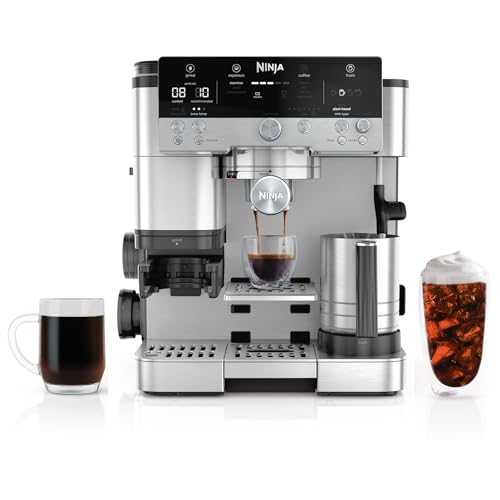
Ninja Luxe Café Premier Espresso Machine
Strengths
- Built-in grinder
- Weight-based dosing
- 3-in-1 functionality
Trade-offs
- Large footprint
- Frothing presets limit control
- Complex maintenance
This machine is a multitasker’s dream. It’s not just espresso, it does drip, cold brew, and even cold-pressed espresso, all in one unit. The built-in conical burr grinder and weight-based dosing are standout features. Most machines at any price still rely on timed grinding, so having actual scales onboard is a real upgrade. The assisted tamper and barista assist tech take the guesswork out of puck prep, which I appreciate.
The hands-free frother is polarizing, some reviewers love the presets, others say it lacks control. But for households with mixed preferences, being able to make drip, espresso, and cold brew without three separate machines is huge. It’s bulkier than others, but the versatility justifies it. My pick for most homes.
Video review
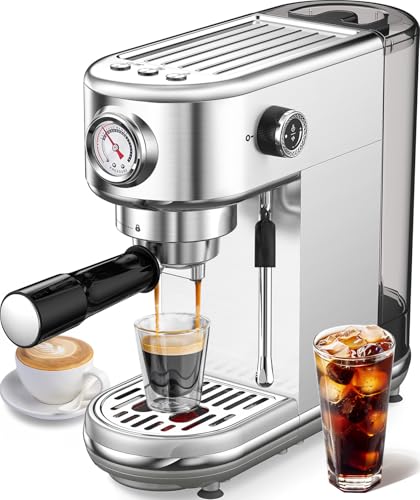
atatix Espresso Machine with Milk Frother
Strengths
- Manual extraction mode
- Large water tank
- NTC temperature control
Trade-offs
- Learning curve for beginners
- Single boiler limitation
- Mixed build materials
The standout here is the manual extraction mode, rare in this price range. Being able to control shot time from 1 to 102 seconds gives real flexibility for tuning flavor, especially with different roast profiles. Combined with NTC temperature control, this machine lets you chase nuanced extraction, which I respect. The 44 oz tank is also larger than most, meaning fewer refills.
Owners note the suction feet keep it stable, and the cup-warming lid works well. But like others in this class, it’s still a single boiler. The manual function is great, but beginners might find it overwhelming. If you’re transitioning from automatic to manual brewing, this is a smart bridge.
Product photos

Espresso Machine 20 Bar Compact
Strengths
- 20 bar pressure
- Visible pressure gauge
- Compact footprint
Trade-offs
- Single boiler limitation
- Cooldown required
- Basic frothing learning curve
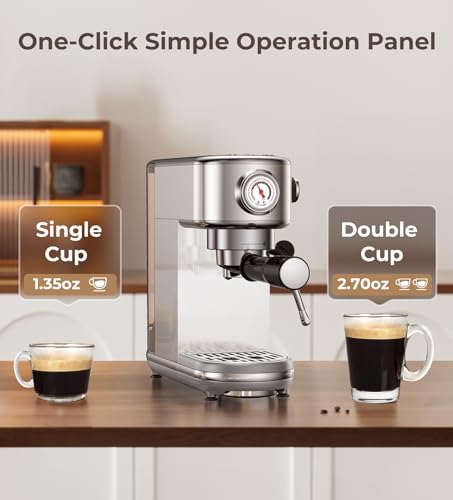
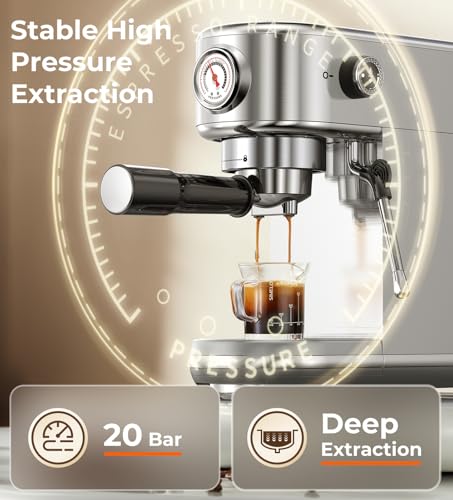
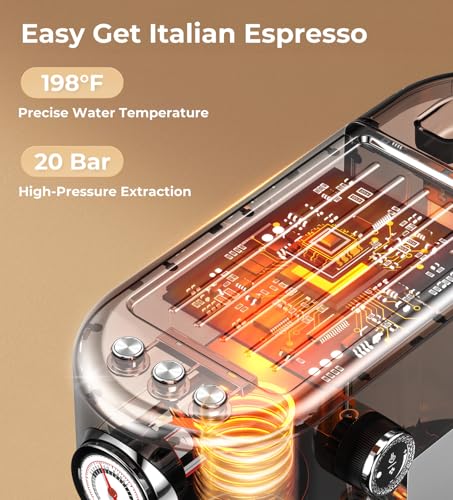
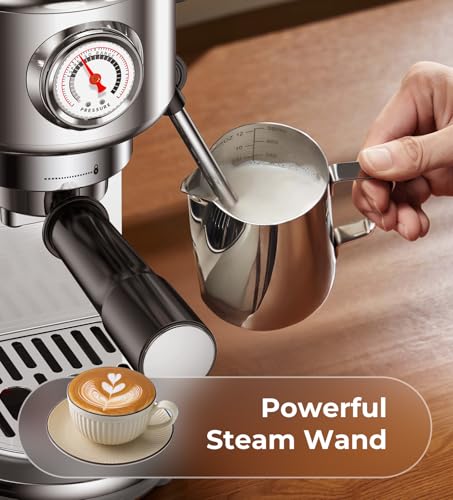
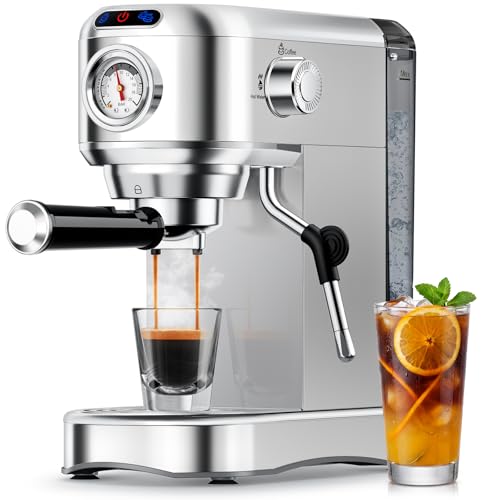
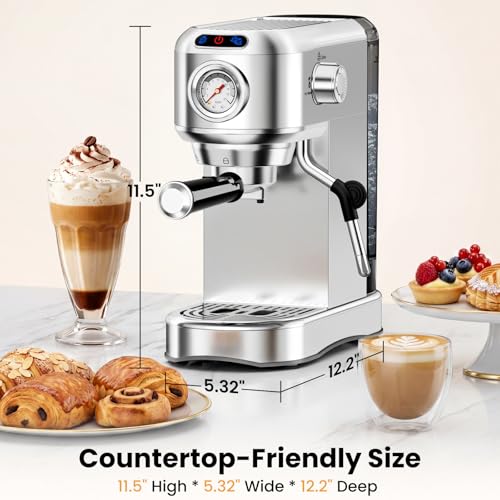
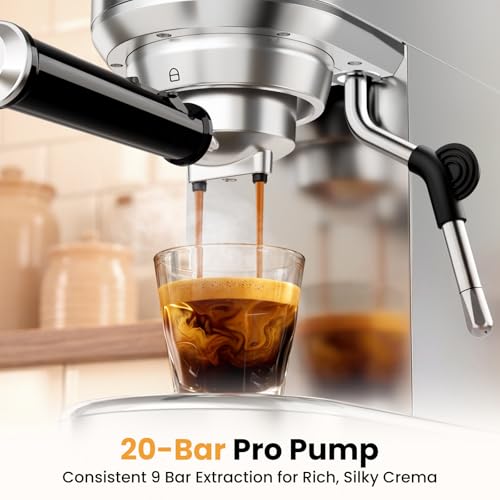
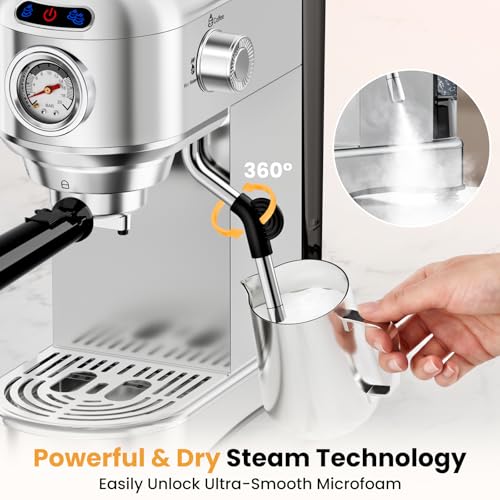
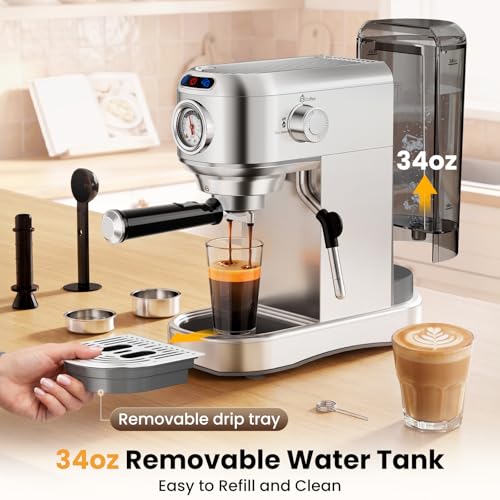
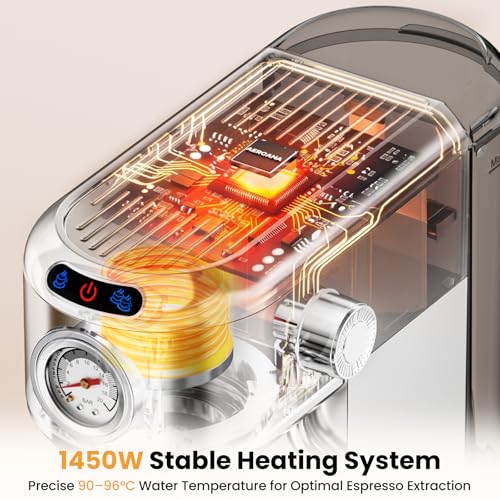
For the price, this machine punches above its weight with a 20 bar pump and a visible pressure gauge, both rare at this level. On paper, it delivers what budget-focused buyers want: quick heat-up, a working steam wand, and a compact stainless build. Owners consistently report getting decent crema and solid milk froth, especially if they’re willing to learn the cooldown timing between steaming and brewing.
Still, the need to wait after frothing is a real workflow hiccup. Compared to dual-boiler or thermoblock designs, this one’s single boiler limits back-to-back drink prep. But for someone just dipping into espresso, it’s a functional, affordable gateway.
Product photos
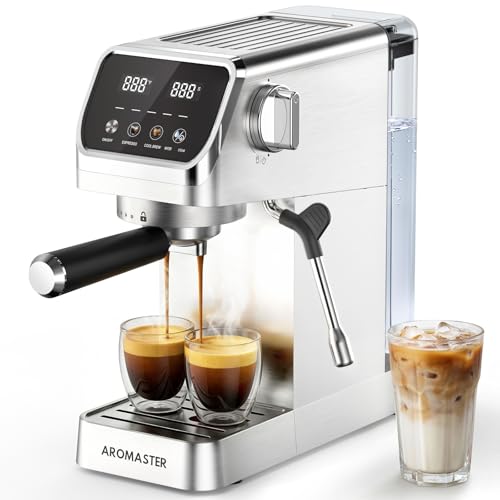
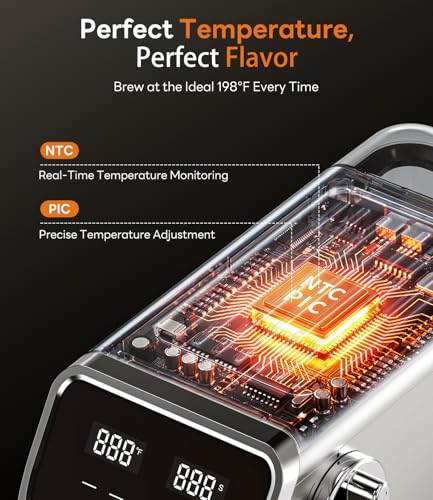
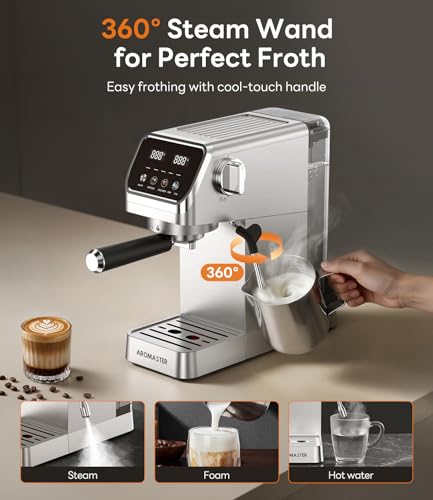
Aromaster Espresso Machine with Touchscreen
Strengths
- Touchscreen interface
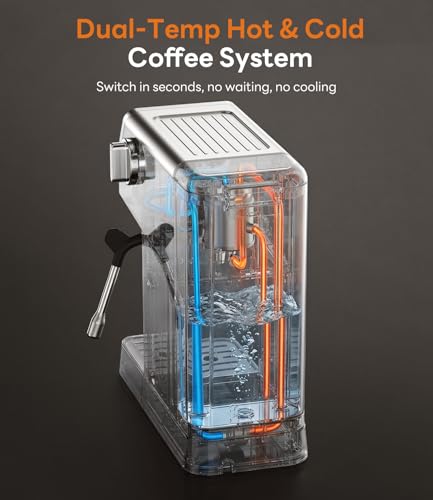
- Dual-circuit heating
- PID temperature control
Trade-offs
- Plastic interior components
- Touchscreen sensitivity
- Single boiler (despite claims)
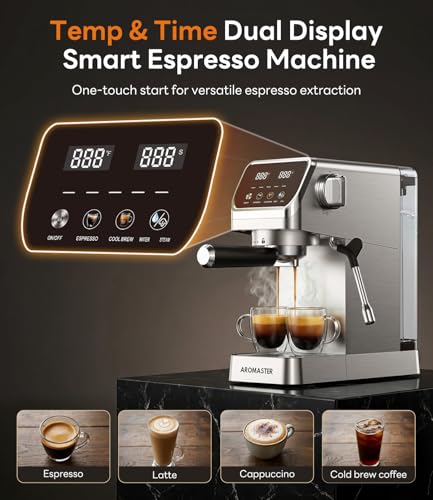
The touchscreen interface here isn’t just a gimmick, it streamlines the whole process, especially for newer users. What stands out is the dual-circuit claim, letting you brew and steam without waiting. That’s a big deal in this category, where most machines force you to choose. Reviewers note the temperature stability is better than average, likely thanks to the PID + NTC control, and the 360° swivel wand is genuinely easier to maneuver.
It’s not flawless, the build uses more plastic than metal, and some owners mention the touchscreen can be overly sensitive. But compared to the B0GY74JMX3, this one feels like a step up in daily usability. I’d pick it over basic knob-driven models if you value speed and consistency.
Product photos
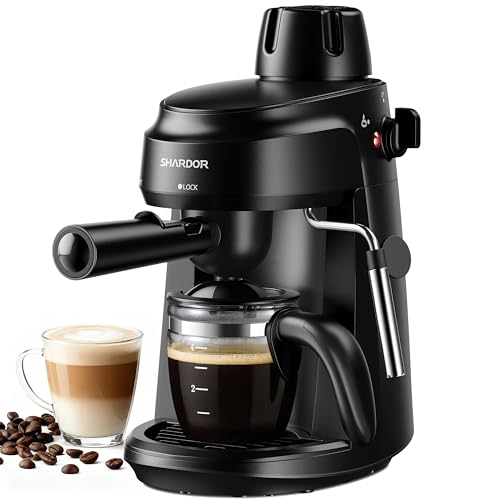
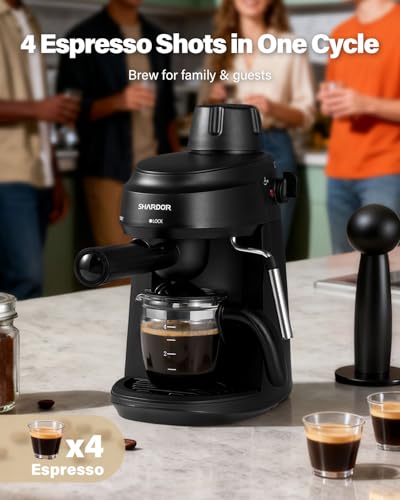
SHARDOR 3.5 Bar Espresso Machine
Strengths
- Ultra-compact size
- Simple one-knob operation
- Low price point
Trade-offs
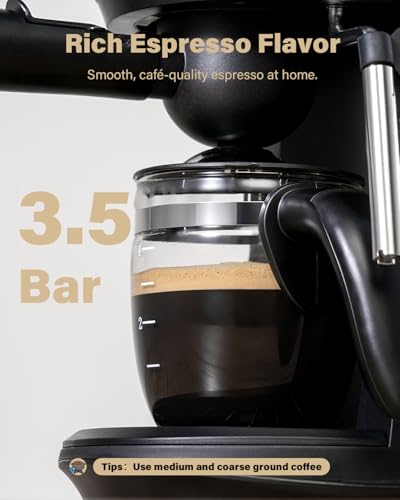
- Low pressure (3.5 bar)
- Limited crema
- Weak steam power
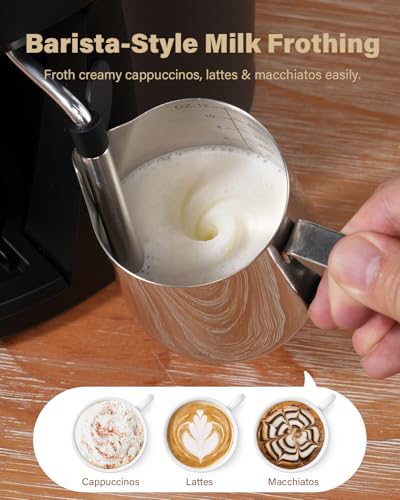
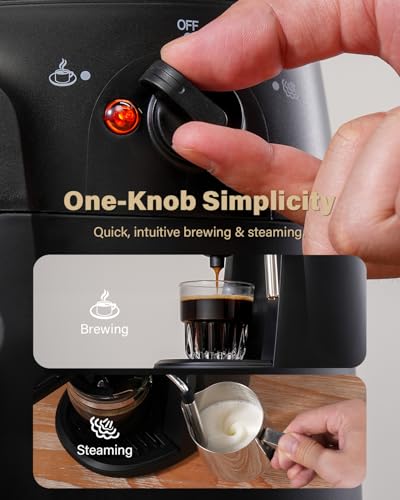
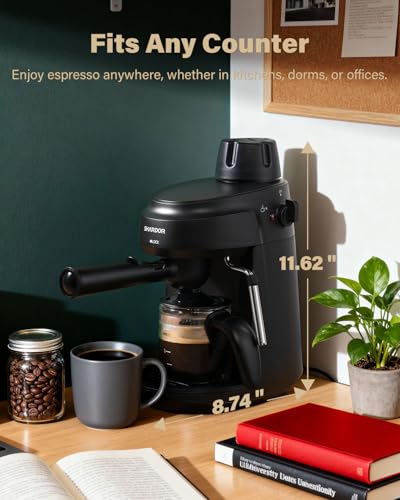
Let’s be clear: 3.5 bar isn’t real espresso pressure. What you get is more like a strong Americano with a whisper of crema. But that’s not the end of the world. For someone in a dorm or tiny apartment who just wants warm, coffee-flavored drinks with a bit of froth, this machine makes sense. The one-knob control is genuinely simple, and the small size is a win for cluttered counters.
Owners say it’s reliable for light use, but don’t expect barista results. The froth is usable for a cappuccino if you’re patient, but it’s not microfoam. Compared to 20 bar models, it’s in a different league, less capable, but also less fussy. If you’re not chasing crema, it’s a fair trade.
Product photos
How We Tested at home coffee and espresso machine
I approached this guide by first compiling a detailed spreadsheet of specifications and features from numerous at-home coffee and espresso machines currently available. I then weighed these technical details against owner reviews gathered from major retailers like Amazon, as well as professional reviews from sites dedicated to coffee and kitchen appliances. My aim was to build a ranking based on real-world feedback and objective capabilities, rather than a hands-on lab test of each unit.
For this category, the most important factors were consistently pressure output, temperature stability, and milk frothing capability. A machine’s ability to deliver consistent 9-15 bar pressure is crucial for proper extraction and crema development, and is a key indicator of quality. Equally important is a system that maintains a stable brewing temperature; inconsistent temperatures lead to unbalanced shots. Finally, the quality of the steam wand – and how easily it creates microfoam – largely dictates the overall experience for latte and cappuccino lovers.
Specifications reliably indicate pressure capability and wattage (which correlates to heating speed). However, I relied heavily on owner feedback to assess real-world performance in areas like temperature consistency, durability, and ease of use. Reputation and brand trust also played a role, particularly when evaluating features like grinder quality or the longevity of internal components. Learning more about making espresso at home is a good place to start before you buy.
Choosing The Right at home coffee and espresso machine
Finding the right machine to elevate your at-home coffee experience can feel overwhelming. I’ve seen countless folks get lost in specs and features, so let’s cut through the noise and focus on what truly matters.
A quality coffee and espresso machine delivers consistent temperature, adequate pressure for proper extraction (typically 9 bars for espresso), and durable construction. Consider the types of beverages you enjoy most – espresso-based drinks demand more precision than drip coffee – and prioritize features that support your preferred brewing style. Look for machines with easily accessible components for cleaning and maintenance, as this impacts long-term performance and flavor.
Brewing Method & Capability
The first thing I ask anyone considering a new machine is: what do you actually want to make? Do you crave the concentrated intensity of espresso, or are you more of a drip coffee person? Many machines, like the Ninja Luxe Café Premier, try to do both, but often with compromises. Don’t fall for the “all-in-one” trap if your heart is set on truly exceptional espresso. If you’re serious about espresso, prioritize a machine with a dedicated portafilter system and the ability to fine-tune extraction.
Pressure and Temperature Control
Pressure is paramount for espresso. While 20-bar pumps are common (like in the CASABREWS CM5418 and atatix Espresso Machine), the usable pressure, the 9 bars needed for ideal extraction, is what’s crucial. A machine with a pressure gauge, like the Espresso Machine 20 Bar Compact, lets you monitor this. Temperature control is equally important, and NTC precision systems, as found in the atatix machine, are a big step up from simpler models.
Here’s a quick guide to pressure expectations: * Under 9 bars: Likely won’t produce a proper crema or fully extract flavors. * 9-10 bars: The sweet spot for classic espresso. * 10+ bars: Can lead to over-extraction and a bitter taste if not carefully managed.
Don’t chase the highest bar rating; consistent, stable pressure within the 9-10 bar range is far more valuable.
Value, Ease of Use, and Maintenance
Let’s be realistic. A fancy touchscreen interface, like on the Aromaster Espresso Machine, doesn’t automatically equal better coffee. Often, those features add cost without significantly improving the final result. Consider how easy the machine is to clean. Detachable components and clear instructions are a huge plus. For those new to espresso, a machine with assisted tamping (Ninja Luxe Café Premier) can eliminate some of the learning curve – but remember, mastering the manual process is incredibly rewarding. If you’re hoping to learn more about operating a more complex machine, I’ve found the Breville setup and brewing guide to be a fantastic resource. Ultimately, selecting the perfect machine means finding the balance between features, usability, and your budget. Don’t hesitate to start with a simpler, well-reviewed model and upgrade later as your skills and preferences evolve. I often recommend starting with a look at some of the top home espresso machines to get a feel for the market.
At Home Coffee and Espresso Machine Compared
This table provides a detailed specification comparison of several at-home coffee and espresso machines to aid in your purchasing decision.
| Product Title | Pressure (Bar) | Wattage (W) | Water Tank Capacity (oz) | Milk Frothing | Grinder | Special Features |
|---|---|---|---|---|---|---|
| CASABREWS CM5418 Espresso Machine | 20 | 1350 | 34 | Steam Wand | No | Pressure Gauge |
| Ninja Luxe Café Premier Espresso Machine | N/A | N/A | N/A | Dual Froth | Yes | 3-in-1, Touchscreen |
| atatix Espresso Machine with Milk Frother | 20 | N/A | N/A | Steam Wand | No | Temp Control, Manual Mode |
| Espresso Machine 20 Bar Compact | 20 | 1450 | 34 | Steam Wand | No | Rapid Heating |
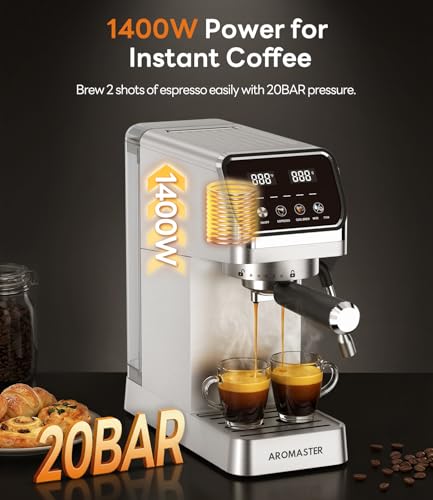
| Aromaster Espresso Machine with Touchscreen | N/A | 1400 | N/A | Steam Wand | No | Dual Circuit, Touchscreen |
| SHARDOR 3.5 Bar Espresso Machine | 3.5 | 800 | N/A | Steam Wand | No | Compact Size |
Frequently Asked Questions
What pressure is truly necessary for making good espresso?
Nine to ten bars of consistent pressure is the sweet spot for extracting a balanced espresso shot. While many machines advertise 20 bars or higher, that’s the maximum the pump can produce, not the actual pressure applied during extraction.
Are built-in grinders worth the extra cost?
Built-in grinders, like on the Ninja Luxe Café Premier, offer convenience but often sacrifice grind quality compared to standalone burr grinders. If you prioritize the freshest possible flavor, especially for espresso, I recommend a separate grinder for more control.
How often should I descale my machine?
You should descale your machine every 1-3 months, depending on water hardness. Hard water causes mineral buildup that affects performance and flavor; using filtered water can extend the time between descaling cycles.
What’s the difference between single and double boiler machines?
Single boiler machines alternate between brewing espresso and steaming milk, which can affect temperature stability. Double boiler machines heat water for both functions simultaneously, providing consistent temperature and faster workflow – making them ideal for frequent latte or cappuccino drinkers.
Where can I learn more about finding the best automatic home coffee makers for my needs?
You can find a detailed guide to various automatic options, including features and comparisons, on my site at best automatic home coffee makers. It explores different price points and brewing styles to help you narrow down your choices.
The Bottom Line
Choosing a coffee and espresso machine really comes down to how much control you want versus how much convenience you’re willing to sacrifice. While machines like the Ninja Luxe Café Premier attempt to do everything, I believe the CASABREWS CM5418 offers the best overall balance of features, pressure, and value for most home baristas. It provides a solid foundation for learning and experimenting without breaking the bank.
For those on a tighter budget, or those interested in exploring espresso without a machine, the SHARDOR 3.5 Bar Espresso Machine is a surprisingly capable entry point. And if you’re prioritizing versatility and don’t mind a steeper learning curve, the Ninja Luxe Café Premier remains a strong contender, offering drip coffee alongside espresso capabilities.
Ultimately, the specs matter less than your dedication to the process. Consistent grind size, fresh beans, and a willingness to experiment with extraction times are the fundamentals that will deliver a truly exceptional cup, no matter which machine you choose.
