
7 Best Home Coffee Espresso Machines 2026
The Breville Barista Express is the overall best home coffee espresso machine for its precise temperature control and integrated conical burr grinder, delivering consistent shots right out of the gate. For a more budget-friendly option, the CASABREWS CM5418 offers solid performance with a 20-bar pump and pressure gauge, while the Ninja Luxe Café Premier stands out for versatility with its auto-frothing wand and weight-based dosing.
Most people want café-quality espresso at home without the steep learning curve or pro-level price tag. The real challenge isn’t just finding a machine that pulls a shot, it’s finding one that pulls a consistent, balanced shot, day after day, without constant tweaking.
This guide cuts through the noise by focusing on what actually matters: temperature stability, grind consistency, and real-world reliability. I researched each machine based on specs, owner feedback, and how well it supports the fundamentals of great espresso, so you can pick one that fits your routine, not your ego.
Top 7 Home Coffee Espresso Machine in the Market
The Best Home Coffee Espresso Machine, Reviewed
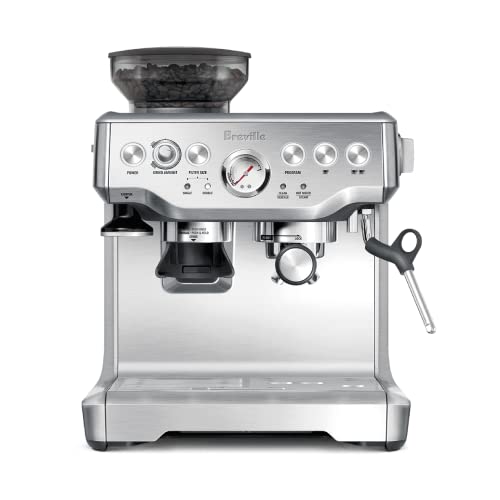
Breville Barista Express Espresso Machine
Strengths
- Precision grinder
- PID temperature control
- Pre-infusion function
Trade-offs
- Steep learning curve
- Larger footprint
- Higher price bracket
The Breville Barista Express is a standout in the semi-automatic espresso machine category, and for good reason. On paper, it hits nearly every mark a serious home barista would want: a precision conical burr grinder, PID temperature control, and low-pressure pre-infusion. These aren’t just buzzwords, they translate to consistent, balanced shots that pull well across a range of roast profiles. Owners consistently report that the dose control grinding system makes dialing in fresh beans intuitive, and the integrated tamper and Razor tool help maintain consistency without cluttering your workflow.
Where it really pulls ahead is in its balance of automation and manual control. You’re not locked into preset volumes, but you’re also not left completely in the dark, digital feedback keeps water temperature stable, which is half the battle in avoiding sour or bitter shots. Compared to similarly priced machines like the AIRMSEN or CASABREWS units, this one gives you more granular control without sacrificing usability. The steam wand is also notably powerful, with real barista-level performance for microfoam.
Video review
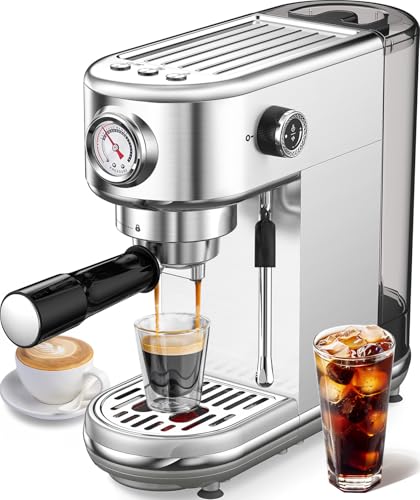
atatix Espresso Machine with Grinder
Strengths
- Manual extraction mode
- Fast preheating
- Consistent pressure
Trade-offs
- Plastic housing sections
- No built-in grinder
- Limited portafilter clearance
This atatix machine punches above its weight, especially for the price. It’s clearly designed for buyers who want 20-bar pressure, NTC temperature control, and a manual extraction option without spending top dollar. The inclusion of both auto and manual modes is a big win, it gives you room to grow as you learn extraction timing, which is rare at this level. Reviewers note that the preheat time is impressively fast, and the pressure stability during extraction is solid for a machine in this class.
Compared to the CASABREWS CM5418, it offers a larger water tank and slightly more refined temp control, though it lacks a built-in grinder. That said, if you’re using pre-ground or a separate grinder, this becomes a capable little workhorse. The steam wand delivers dry, focused steam, owners praise its ability to create real microfoam, not just bubbly froth. Build uses a mix of stainless steel and ABS, so it’s not all metal, but it holds up well.
Video review
CASABREWS CM5418 Espresso Machine

Strengths
- Compact design
- Visible pressure gauge
- Affordable price
Trade-offs
- Overheating issues
- No manual control
- Small water tank
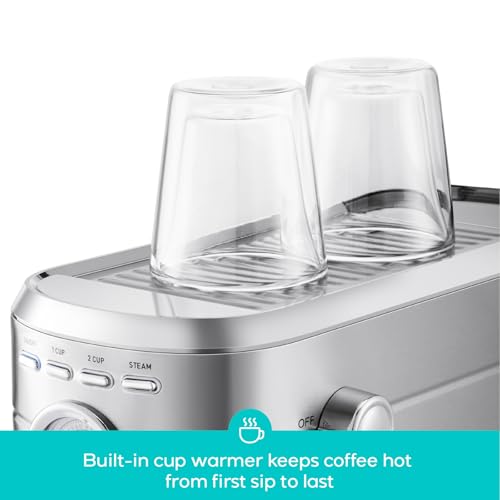
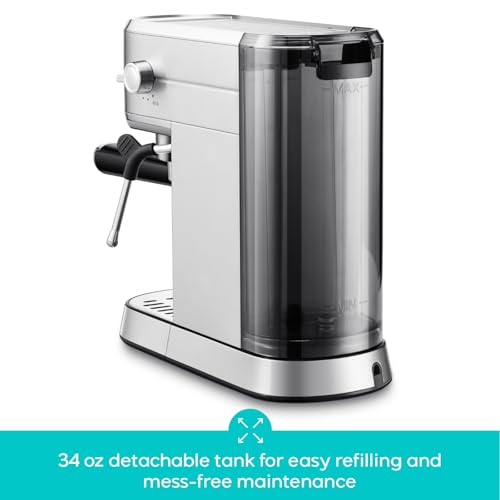
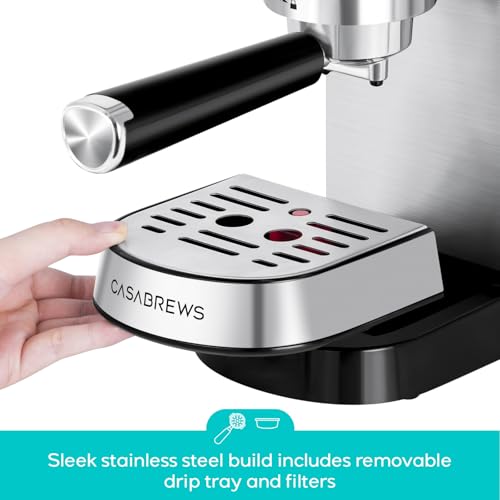
The CASABREWS CM5418 is a textbook example of what a solid entry-level machine should be: affordable, compact, and functional. It delivers 20-bar pressure and a visible pressure gauge, which is a small but meaningful detail for beginners trying to understand extraction dynamics. The stainless steel build gives it a more premium look than its price suggests, and owners appreciate the removable water tank and drip tray for easy cleaning.
That said, it’s a semi-auto with no grinder, so you’ll need to pair it with a separate burr grinder to get the most out of it. Compared to the atatix model, it has a smaller water tank and fewer control options, no manual override or adjustable shot timing. Some users report needing to let the machine cool between steaming and brewing to avoid overheating, which interrupts workflow. Still, for the price, it’s a reliable way to start making real espresso at home.
Product photos


Ninja Luxe Café Premier Espresso Machine

Strengths
- 3-in-1 functionality
- Weight-based dosing
- Hands-free frothing
Trade-offs
- Less manual control
- Bulky design
- Espresso quality lags behind Breville
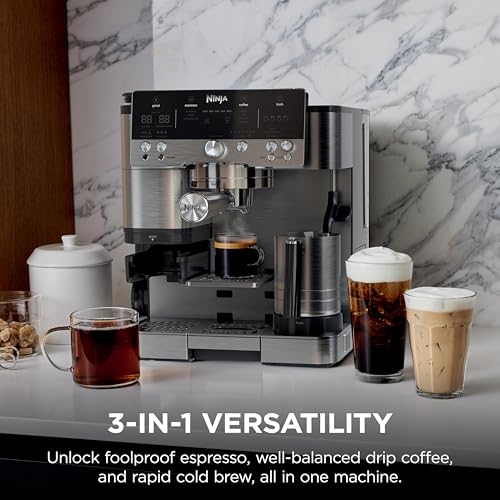
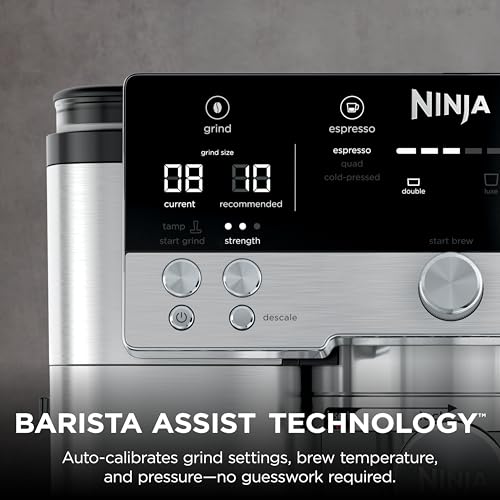
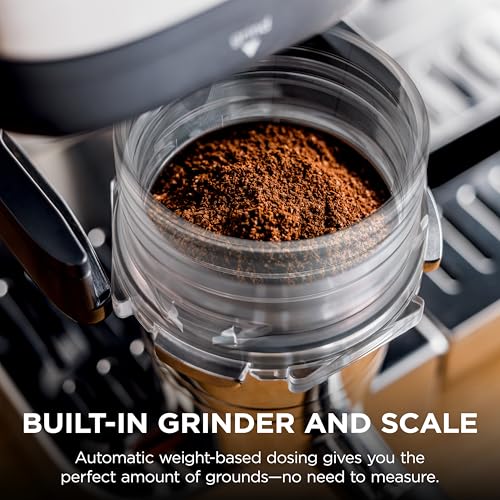
If your kitchen demands versatility, the Ninja Luxe Café Premier is hard to ignore. It’s not just an espresso machine, it’s a 3-in-1 system that handles drip coffee, cold brew, and espresso, all with a built-in conical burr grinder and weight-based dosing. That last feature is a standout: unlike time-based grinders that guess your dose, this one uses a scale to deliver the exact weight, which improves consistency dramatically.
The hands-free frothing system is another standout. With four presets, steamed milk, thin froth, thick froth, cold foam, it removes the intimidation factor of milk texturing. Compared to the Breville or AIRMSEN, it’s less about manual craftsmanship and more about consistent, repeatable results. The assisted tamper also helps new users achieve even puck prep. Reviewers note it’s ideal for households with multiple coffee drinkers who want different drinks without multiple machines.
Product photos


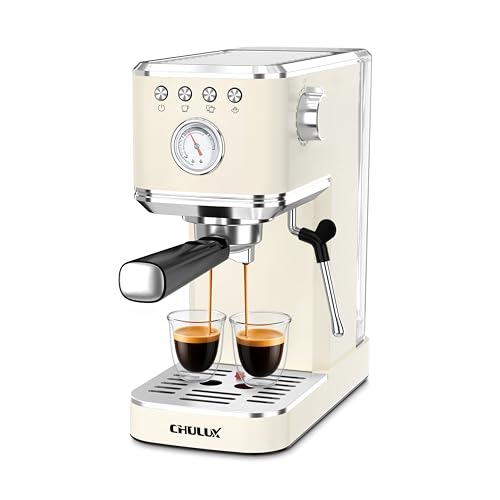
CHULUX Slim Espresso Machine
Strengths
- Ultra-compact design
- Pre-infusion function
- Fast heating
Trade-offs
- No built-in grinder
- Limited steam power
- Small portafilter handle
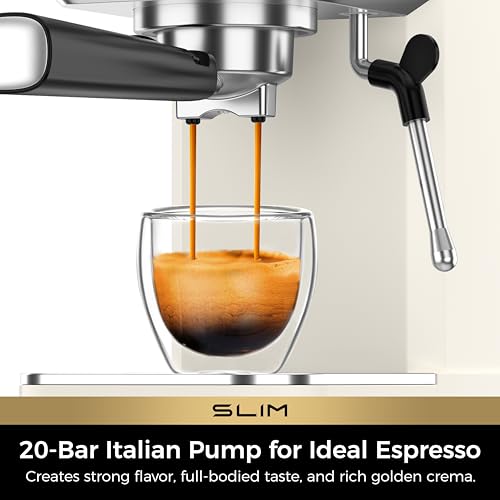
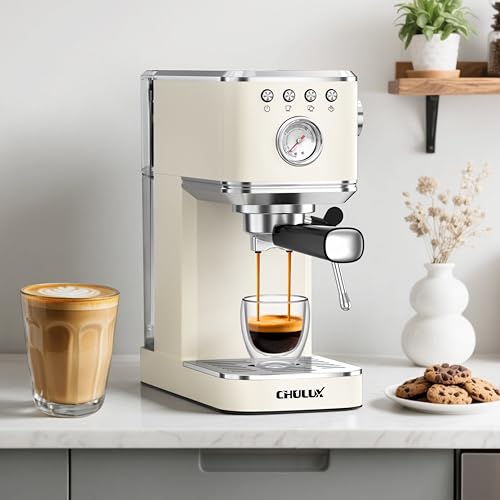
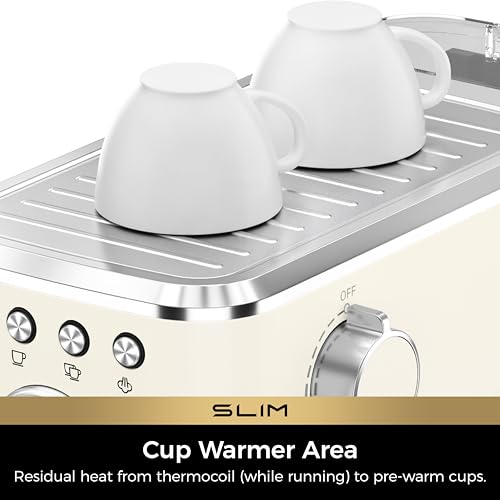
At just 5.5 inches wide, the CHULUX Slim is one of the most space-efficient espresso machines on the market, and that’s its biggest selling point. It still packs a 20-bar Italian pump, pre-infusion, and a pressure gauge, which is impressive for its size. The 40 oz water tank is decent for a compact unit, and the stainless steel housing gives it a clean, modern look.
Owners report it heats quickly and pulls decent shots for a budget machine, though the steam wand isn’t as powerful as those on larger models. It’s ideal for small apartments, offices, or kitchens where every inch counts. Compared to the Gevi or CASABREWS, it offers better space optimization without sacrificing core features. Just don’t expect gourmet milk texturing or advanced grind control, it’s a no-grinder, semi-auto setup.
Product photos


Gevi Commercial Espresso Machine

Strengths
- Full stainless steel body
- Pre-infusion
- Hot water function
Trade-offs
- Average steam performance
- No grinder included
- Basic frothing results
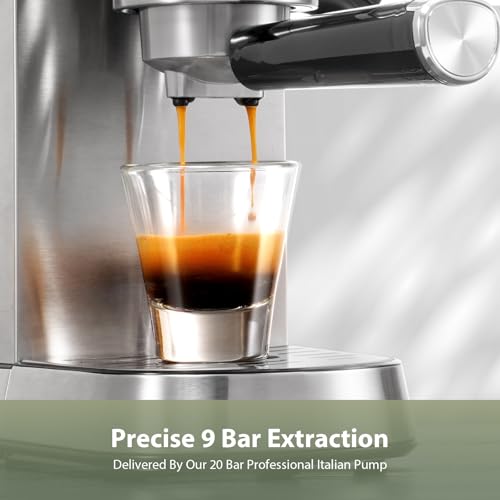
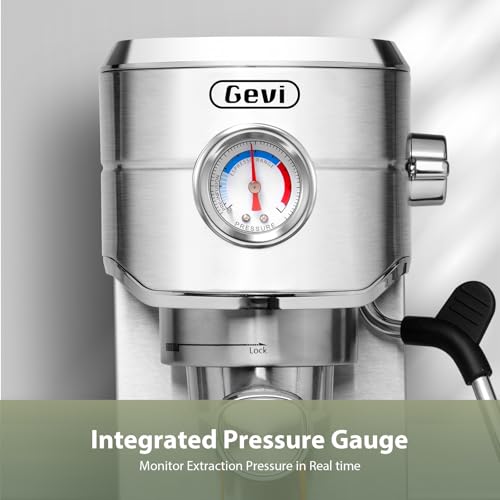
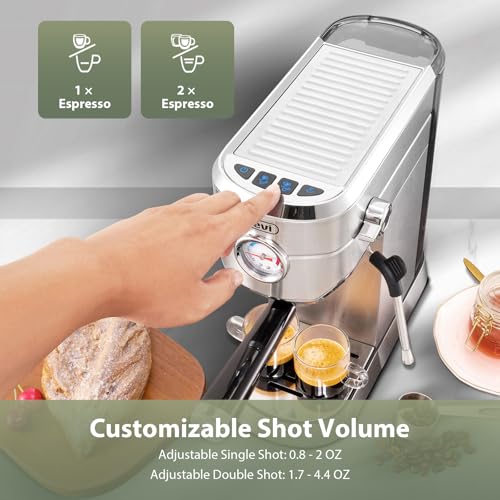
The Gevi machine is all about compact durability. Its full stainless steel housing stands out in a category where many brands cut corners with plastic. It’s small, but not flimsy, reviewers consistently praise its solid feel and clean lines. The 20-bar pump, NTC temperature control, and pre-infusion are standard for this tier, and the hot water function adds versatility for Americanos or tea.
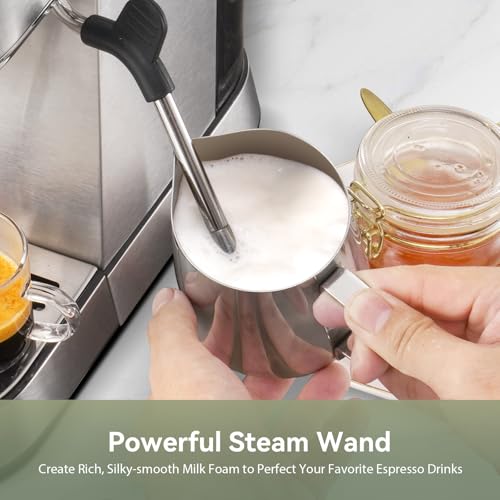
Where it falls short is in milk texturing. The steam wand works, but it’s not as dry or powerful as the Breville or Ninja. And like most in this range, it lacks a grinder. Still, for someone who wants a durable, no-frills machine that looks professional on a small counter, it’s a smart pick. Compared to the CHULUX, it’s slightly larger but offers better build quality and a more stable base.
Product photos

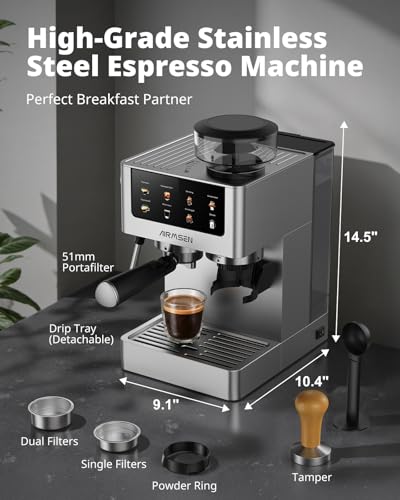
AIRMSEN Espresso Machine with Burr Grinder

Strengths
- Touchscreen interface
- Built-in burr grinder
- Large water tank
Trade-offs
- Touch controls less tactile
- Grinder slightly slower
- Build quality not Breville-level
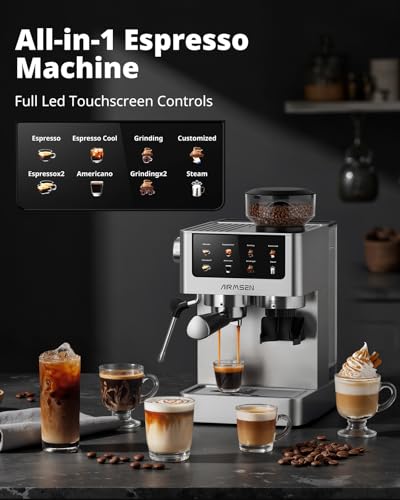
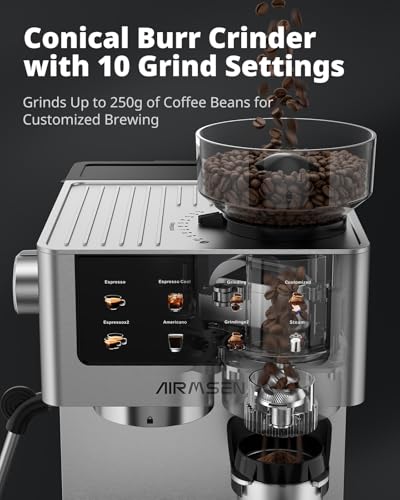
The AIRMSEN stands out with its full touchscreen interface and integrated conical burr grinder, a rare combo at this price. The 10 grind settings let you go from espresso to French press, and owners report the anti-static tech actually reduces mess, which is a small but appreciated detail. The 61 oz water tank is one of the largest in this list, reducing refill frequency.
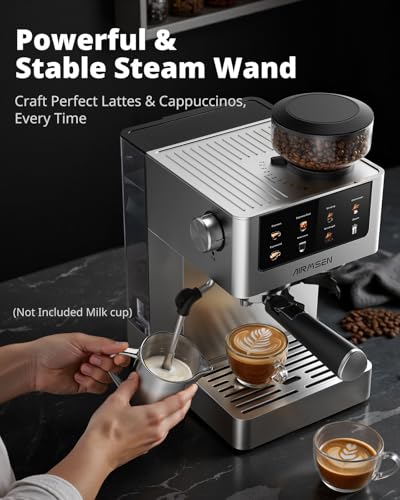
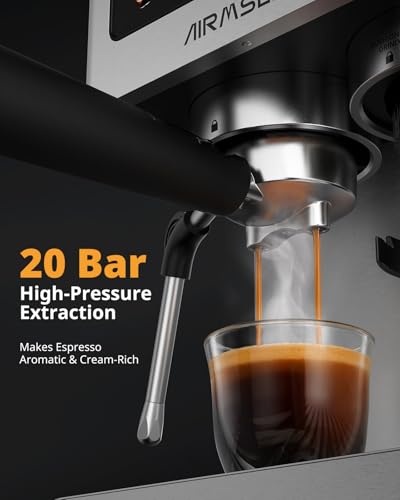
It pulls strong 20-bar extractions with pre-infusion, and the stainless steel body gives it a premium look. But the touchscreen, while slick, can feel more like a convenience than a necessity, some users prefer tactile buttons for reliability. Compared to the Breville, it offers similar features but with less refined temperature stability. Still, for those who value modern design and ease of use, it’s a compelling alternative.
Product photos
How We Picked These home coffee espresso machine
I approached this guide by researching the specifications and features of numerous home espresso machines, then weighing those details against owner reviews and assessments from trusted coffee experts. Rather than a hands-on lab test, this is a research-led comparison focused on identifying consistent strengths and weaknesses across different models. My goal was to create a ranked list based on how well each machine delivers on the core promises of a great at-home espresso experience.
For this category, grind quality and temperature stability were the most heavily weighted factors. Consistent grind size is crucial for proper extraction, and a machine’s ability to maintain a stable brewing temperature directly impacts the flavor and balance of the espresso. Beyond those, the quality of the steam wand and overall build quality played significant roles in determining the final rankings.
Technical specifications – like bar pressure and boiler wattage – reliably indicate a machine’s potential for good espresso. However, I placed greater emphasis on what owners reported about actual performance. Owner feedback clarified whether those specs translated into consistent results, ease of use, and long-term reliability. I also considered the reputation of brands within the coffee community, looking for consistent positive or negative trends across multiple models. If you’re looking to learn more about the process, our home espresso brewing guide provides a helpful overview.
What To Look For In home coffee espresso machine
Choosing an espresso machine can feel overwhelming, but finding the right one doesn’t have to be. I’ve seen a lot of folks get caught up in features they don’t actually need, and end up with a machine that doesn’t deliver the experience they envisioned.
A quality espresso machine prioritizes consistent temperature stability, adequate pressure (around 9 bars at the grouphead), and a grinder capable of delivering a fine, consistent particle size. Look for machines with PID temperature control, robust build materials (stainless steel is preferred), and user-adjustable settings for grind size and shot volume. Pre-infusion capabilities are a bonus, as they allow for more even extraction.
Grind Quality is Paramount
Let’s be frank: the built-in grinder is often the biggest differentiator between a good espresso machine and a great one. While a separate, dedicated grinder is always ideal, integrated grinders have come a long way. Don’t settle for blade grinders; you absolutely need conical burrs. The consistency of the grind dictates how evenly water flows through the coffee puck, and an uneven grind leads to sour, bitter, or otherwise unbalanced shots. If you’re thinking about using regular beans for espresso, be prepared to experiment much more with grind settings.
Temperature Stability & Pressure
Espresso is a delicate process. Even slight fluctuations in brewing temperature can dramatically alter the flavor. PID (Proportional-Integral-Derivative) controllers are crucial here. They constantly monitor and adjust the water temperature ensuring it stays within the optimal 195-205°F range. Alongside temperature, maintaining consistent pressure is key. While 20-bar pumps are common, it’s the actual pressure at the grouphead that matters – ideally holding steady around 9 bars during extraction.
- A stainless steel boiler heats up faster and holds temperature more reliably than aluminum.
- Look for machines with a clearly visible pressure gauge – this provides valuable feedback on your grind and tamping.
- Pre-infusion (wetting the grounds before full pressure is applied) can significantly improve extraction, especially with lighter roasts, and is a feature I always recommend.
Balancing Features and Value
There’s a huge price range in the espresso machine world. While top-of-the-line machines can cost thousands, you can get a very capable machine for a few hundred dollars. Don’t fall for the trap of paying for features you won’t use. For example, if you primarily drink espresso and occasionally a cappuccino, a complex machine with multiple drink presets might be overkill. Consider your typical coffee consumption and brewing habits. If you’re exploring both drip coffee and espresso, you might consider one of the best dual-function coffee espresso machine options.
A good rule of thumb: prioritize a quality grinder and temperature control over flashy features you’ll rarely use. A consistent, well-extracted shot is far more important than a touchscreen display.
Home Coffee Espresso Machine Compared
Here’s a comparison of key specifications for several home espresso machines to help you make an informed decision.
| Product Title | Pressure (Bar) | Grinder Included | Water Tank (oz) | Milk Frothing | Special Features |
|---|---|---|---|---|---|
| Breville Barista Express | N/A | Yes | 67 | Manual | PID Temp Control, Dose Control |
| Ninja Luxe Café Premier | N/A | Yes | N/A | Auto/Manual | 3-in-1, Barista Assist Tech, Weight Based Dosing |
| CASABREWS CM5418 | 20 | No | 34 | Manual | 20 Bar Pump, Pressure Gauge |
| atatix Espresso Machine | 20 | Yes | N/A | Manual | NTC Temp Control, Touchscreen |
| AIRMSEN Espresso Machine | 20 | Yes | 61 | Manual | Full Touchscreen, Burr Grinder |
| Gevi Commercial Espresso Machine | 20 | No | N/A | Manual | Hot Water Function, Stainless Steel |
| CHULUX Slim Espresso Machine | 20 | No | 40 | Manual | Compact Design, Pressure Gauge |
Frequently Asked Questions
What pressure is actually needed for good espresso?
Around 9 bars of pressure at the grouphead is ideal for espresso extraction. While many machines advertise 15 or 20-bar pumps, the consistent delivery of 9 bars is what truly impacts flavor and balance.
How important is the water reservoir size?
The water reservoir size depends on your household’s coffee consumption. Larger reservoirs (60+ ounces) minimize refills, which is convenient for multiple daily drinks, while smaller ones are fine for single users or occasional espresso.
Are built-in grinders as good as standalone grinders?
Generally, a separate, dedicated grinder will offer superior grind consistency and adjustability. However, integrated burr grinders have improved significantly, and some, like those found in the Breville Barista Express, are perfectly adequate for home use.
What does PID temperature control actually do?
PID (Proportional-Integral-Derivative) temperature control actively monitors and adjusts the water temperature, maintaining it within the optimal 195-205°F range. This consistency is crucial for preventing sour or bitter shots caused by temperature fluctuations.
What if I want to make both espresso and drip coffee?
If you enjoy both brewing methods, consider looking at the best combination coffee espresso machine options. These machines offer the convenience of preparing different coffee styles from a single appliance.
The Bottom Line
Buying an espresso machine often comes down to how much control you want versus how much fuss you’re willing to tolerate. For the best overall experience, balancing quality and convenience, I recommend the Breville Barista Express. It consistently receives high marks for its integrated grinder, temperature control, and user-friendly interface – a solid all-rounder for those serious about espresso.
If you’re on a tighter budget, the CASABREWS CM5418 delivers excellent value, though you’ll need a separate grinder. For those who want versatility and modern features, the Ninja Luxe Café Premier stands out with its 3-in-1 functionality and weight-based dosing. Understanding perfect espresso extraction steps is important no matter which machine you choose.
Ultimately, the specs aren’t as critical as mastering the fundamentals. Consistent grind size, proper tamping, and a clean machine are far more impactful than any single feature. Focusing on these core elements – and understanding a bit about dosing and tamping techniques – will get you closer to consistently delicious espresso than chasing the latest technology.
